作者: admin

  • Sam Kerr is back to captain Australia for her fifth Women’s Asian Cup

    Sam Kerr is back to captain Australia for her fifth Women’s Asian Cup

    Australian women’s football team coach Joe Montemurro has unveiled his squad selection for the upcoming AFC Women’s Asian Cup, set to commence on home soil in just ten days. The announcement confirms superstar striker Sam Kerr will captain the side in her fifth appearance at the continental tournament.

    In a significant development, Montemurro has included Manchester City forward Mary Fowler, marking her return to international duty following a lengthy rehabilitation from a serious knee injury. Fowler sustained an anterior cruciate ligament rupture during last April’s Women’s FA Cup semifinal, requiring reconstructive surgery and limiting her to merely fifteen minutes of competitive play since.

    The squad features experienced veterans Steph Catley and Ellie Carpenter as vice-captains, providing leadership support to Kerr as Australia seeks its second Asian Cup title, having previously triumphed in 2010. This tournament, along with next year’s World Cup in Brazil, potentially represents the final major international competitions for many Matildas veterans who featured prominently in the 2023 World Cup.

    Montemurro emphasized the selective process, stating: “Selecting a squad is never easy. But it is a privilege to bring together players who truly represent the identity and spirit of the Matildas, and who understand the responsibility of representing Australia.”

    Australia begins its campaign against the Philippines in Perth on March 1, followed by group stage matches against Iran on the Gold Coast (March 5) and 2022 finalists South Korea in Sydney (March 8). The twelve-team tournament, featuring defending champions China, will conclude with the final at Sydney’s Olympic stadium on March 21, with matches distributed across five venues in Perth, Sydney, and the Gold Coast.
  • Philippines marks 3 important events in 3 days; rare succession will repeat only in 2189

    Philippines marks 3 important events in 3 days; rare succession will repeat only in 2189

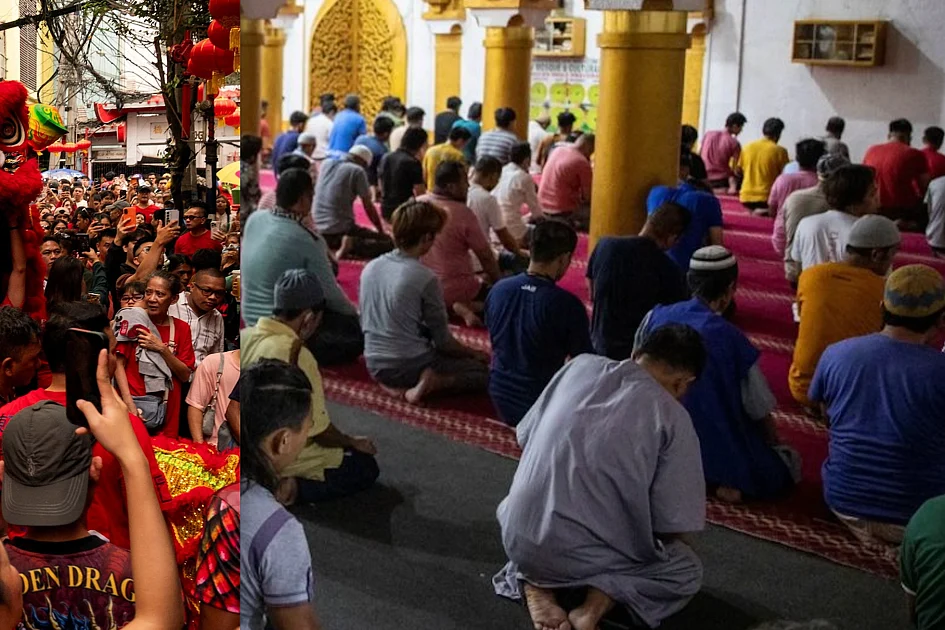
    The Philippines is currently witnessing an extraordinary alignment of three major religious observances occurring within a consecutive three-day period—a celestial phenomenon so rare that it won’t repeat for another 163 years until 2189. This remarkable convergence began with Lunar New Year celebrations on Tuesday, followed immediately by Ash Wednesday marking the Christian Lenten season, and culminates with the commencement of Ramadan on Thursday, February 19th, as declared by Bangsamoro Mufti Sheikh Abdulrau Guialani.

    This triple religious synchronization represents the first such occurrence since 1961, when similar circumstances unfolded on February 15th of that year. While these events typically realign every three decades, the specific three-day succession pattern witnessed this year possesses exceptional rarity, last occurring 65 years ago.

    The astronomical mechanics behind this phenomenon involve Ramadan’s annual backward movement of approximately ten days through the Gregorian calendar, completing a full cycle every 33 years. In contrast, both Lunar New Year and the Christian Lenten period maintain fixed positions within the February-March timeframe.

    Across the predominantly Christian archipelago, Roman Catholics, Anglicans, Lutherans, Methodists, and numerous Presbyterian and Reformed congregations participated in Ash Wednesday ceremonies, receiving ash crosses on their foreheads as symbolic reminders of mortality and repentance. Meanwhile, Muslim communities prepared for Ramadan’s spiritual introspection through fasting and prayer.

    The concurrent observances create a unique tapestry of cultural expression: Lunar New Year celebrations featuring vibrant food traditions and festive gatherings, contrasting with the solemn piety characterizing both Christian Lent and Muslim Ramadan. This intersection highlights the Philippines’ rich religious diversity while demonstrating how different faith traditions can coexist within shared temporal spaces.

  • Martial law, protests and a president tried for insurrection: How did South Korea get here?

    Martial law, protests and a president tried for insurrection: How did South Korea get here?

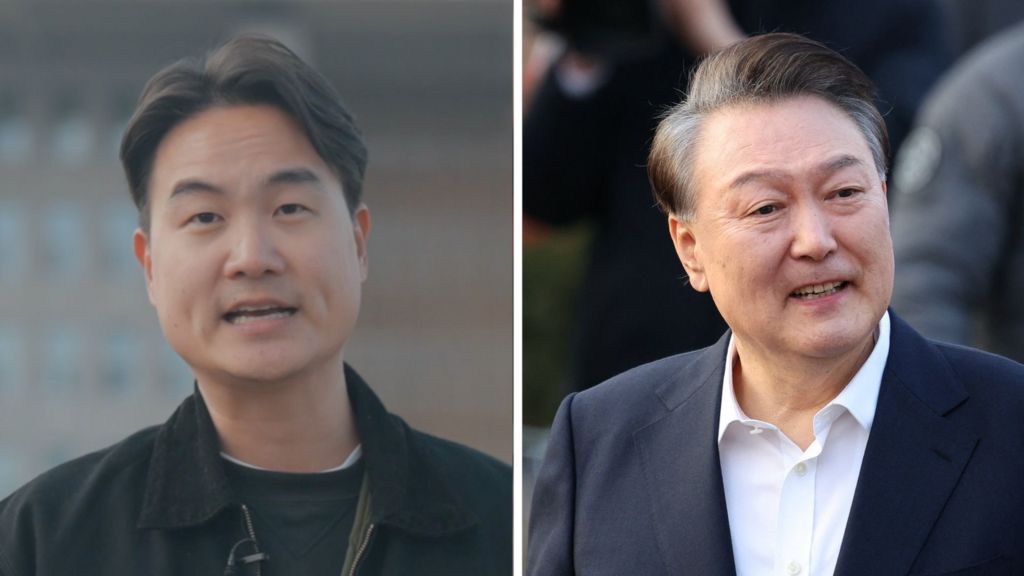
    South Korea’s political sphere stands at a pivotal moment as the nation’s judicial system prepares to issue a landmark ruling in the unprecedented insurrection trial of President Yoon Suk Yeol. This extraordinary legal proceeding represents the culmination of months of political turmoil that has gripped the Asian democracy.

    The current constitutional crisis finds its origins in escalating tensions between the executive and legislative branches, exacerbated by controversial policy initiatives and governance approaches that sparked widespread public dissent. The situation deteriorated significantly when opposition parties and civil society groups accused the administration of overstepping constitutional boundaries, leading to massive organized demonstrations across major urban centers.

    These protests, unprecedented in scale since the country’s democratic reforms, created a political impasse that ultimately prompted judicial intervention. The insurrection charges represent one of the most serious legal challenges ever brought against a sitting South Korean president, testing the resilience of the nation’s democratic institutions and separation of powers.

    Legal experts highlight that this case establishes critical precedents for presidential accountability and the limits of executive authority within South Korea’s constitutional framework. The verdict’s implications extend beyond the current administration, potentially reshaping the balance of power between government branches for future generations.

    International observers and diplomatic corps are closely monitoring developments, recognizing that the outcome could significantly influence South Korea’s geopolitical standing and democratic stability in a region marked by complex security dynamics. The court’s decision is expected to trigger varied responses across the political spectrum, with potential implications for both domestic governance and international relations.

  • Search dogs, rescuers and helicopters as Mexico City holds earthquake drill

    Search dogs, rescuers and helicopters as Mexico City holds earthquake drill

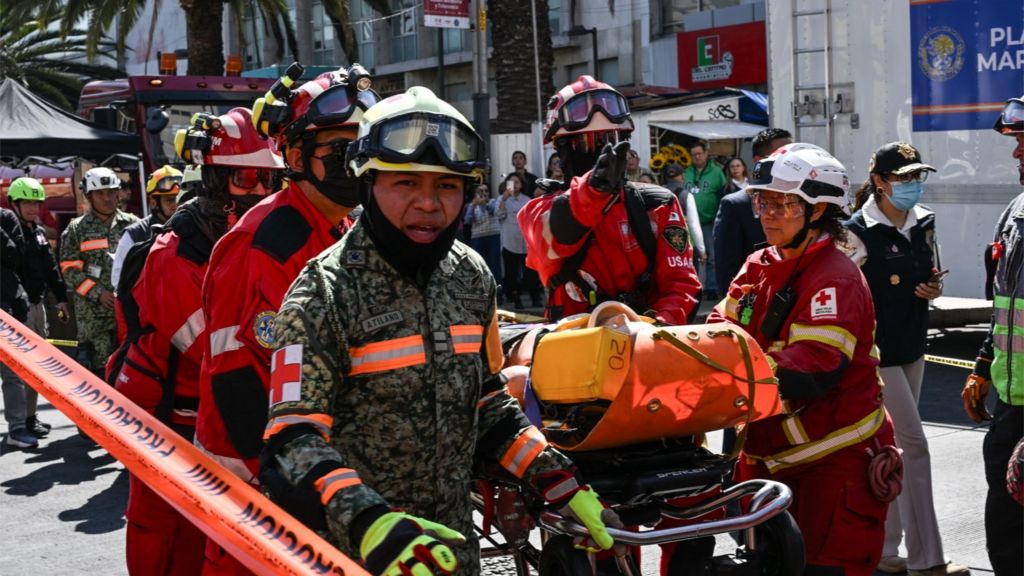
    Mexico City executed its first major earthquake preparedness exercise of the year, mobilizing specialized search dogs, emergency response teams, and helicopter units in a comprehensive simulation. The drill saw unprecedented participation from approximately 8.2 million residents who practiced coordinated evacuation procedures across the metropolitan area. Emergency services demonstrated advanced rescue capabilities while civilians rehearsed safety protocols in workplaces, schools, and public spaces. The operation achieved remarkable efficiency with an average evacuation time of just 1 minute and 52 seconds, reflecting the city’s ongoing commitment to disaster readiness following historical seismic events. This large-scale drill incorporated modern emergency response technologies and traditional rescue methods, highlighting Mexico’s evolving approach to disaster management. The exercise served as both a practical training session and a public awareness campaign about earthquake safety measures in one of the world’s most seismically active regions.

  • India, Pakistan, Bangladesh announce first day of Ramadan

    India, Pakistan, Bangladesh announce first day of Ramadan

    In a significant religious announcement spanning South Asia, India, Pakistan, and Bangladesh have collectively confirmed the sighting of the Ramadan crescent moon on Wednesday, February 18th, 2026. This celestial observation officially marks the commencement of the holy month of Ramadan beginning Thursday, February 19th for millions of Muslims across the region.

    The formal declaration in Pakistan was delivered by Maulana Abdul Khabir Azad, Chairman of the Central Ruet-i-Hilal Committee. The official moon-sighting committee convened in the city of Peshawar, where, after thorough verification, they confirmed the visibility of the new crescent, as widely reported by local media outlets.

    Concurrent sightings were verified across multiple Indian states, including Assam, Bihar, the national capital territory of New Delhi, and the region of Jammu & Kashmir. This multi-location confirmation ensured a unified start to the religious observance, preventing the fragmentation of the holy month’s commencement that sometimes occurs due to differing sighting reports.

    The synchronized announcement facilitates a harmonious beginning to Islam’s most sacred month, characterized by fasting from dawn to sunset, prayer, and spiritual reflection. This coordination is particularly significant given the historical and political complexities between the neighboring nations, demonstrating a shared commitment to religious tradition that transcends geopolitical boundaries.

  • More than 80 filmmakers denounce ‘censorship’ over Gaza at Berlinale

    More than 80 filmmakers denounce ‘censorship’ over Gaza at Berlinale

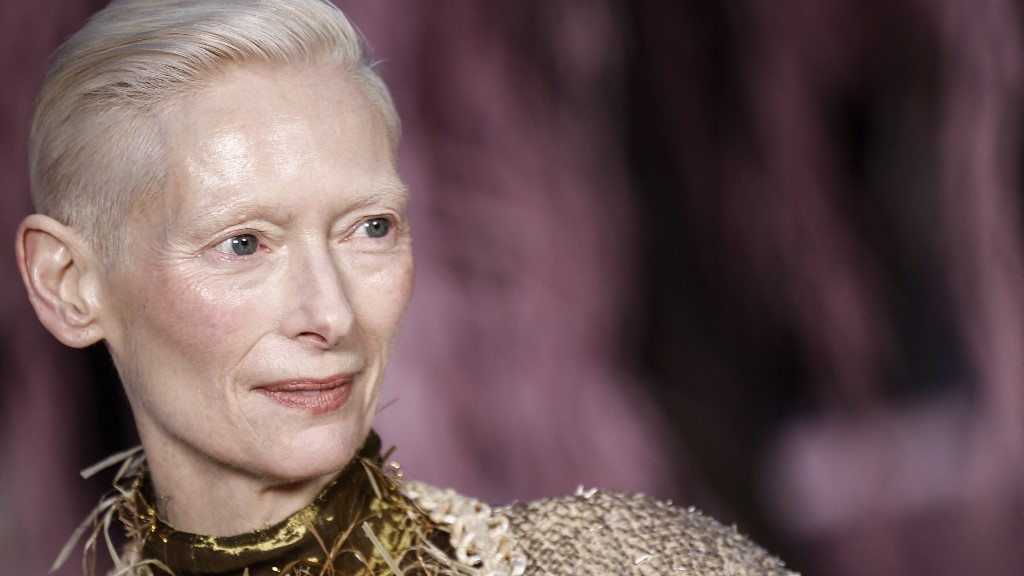
    The Berlin International Film Festival (Berlinale) is confronting significant backlash from the global film community following an open letter signed by over 80 prominent filmmakers. The signatories, including Tilda Swinton, Javier Bardem, Mike Leigh, Adam McKay, and Avi Mograbi, have sharply criticized the festival’s perceived stance on Gaza, accusing its leadership of engaging in censorship and attempts to silence discourse on the issue.

    The letter references incidents from the previous year, alleging that filmmakers who expressed solidarity with Palestinians from the festival stage were ‘aggressively reprimanded’ by senior programmers. One individual was reportedly subjected to a police investigation, with festival leadership falsely labeling a speech grounded in ‘international law and solidarity’ as discriminatory.

    This wave of criticism was largely catalyzed by comments from this year’s jury president, acclaimed German director Wim Wenders. Despite his roots in the politically charged New German Cinema movement, Wenders stated at a press conference that filmmakers must ‘stay out of politics,’ describing cinema as a ‘counterweight’ and the ‘opposite of politics.’ These remarks were met with accusations of hypocrisy, given his 2024 praise for the Berlinale’s tradition of being ‘the most political of the major festivals.’

    The controversy deepened with the reaction of other jury members. When questioned on Germany’s support for Israel, Polish producer Ewa Puszczyńska dismissed the query as ‘unfair,’ arguing that other genocides are not discussed. This climate prompted award-winning Indian author Arundhati Roy to withdraw her participation from the festival, raising further concerns about the event’s funding ties to the German government.

    Parallel to the main festival, the Cinema for Peace gala became another stage for protest. Tunisian filmmaker Kaouther Ben Hania rejected a ‘most valuable film’ prize for her work, ‘The Voice of Hind Rajab,’ which chronicles the killing of a young Palestinian girl. In a powerful address attended by figures like Hillary Clinton and Bob Geldof, Ben Hania condemned the decision to honor a former Israeli general, stating that ‘peace is not a perfume sprayed over violence’ and that ‘cinema is not image-laundering.’

    This is not the first time the 2024 Berlinale has been mired in controversy; it previously faced outcry over an invitation to a far-right political party and was accused of antisemitism by German officials after comments by Israeli filmmaker Yuval Abraham. His documentary, ‘No Other Land,’ co-directed with Palestinian Basel Adra, highlights discriminatory legal systems in the West Bank and later won an Oscar, amidst further controversy involving German Culture Minister Claudia Roth.

    The unfolding situation presents a profound challenge to one of the world’s preeminent film festivals, pitting artistic freedom and political expression against accusations of bias and censorship, all against the backdrop of the ongoing conflict in Gaza.

  • Argentina’s Milei heads to the US again, balancing Trump ties with growing China trade

    Argentina’s Milei heads to the US again, balancing Trump ties with growing China trade

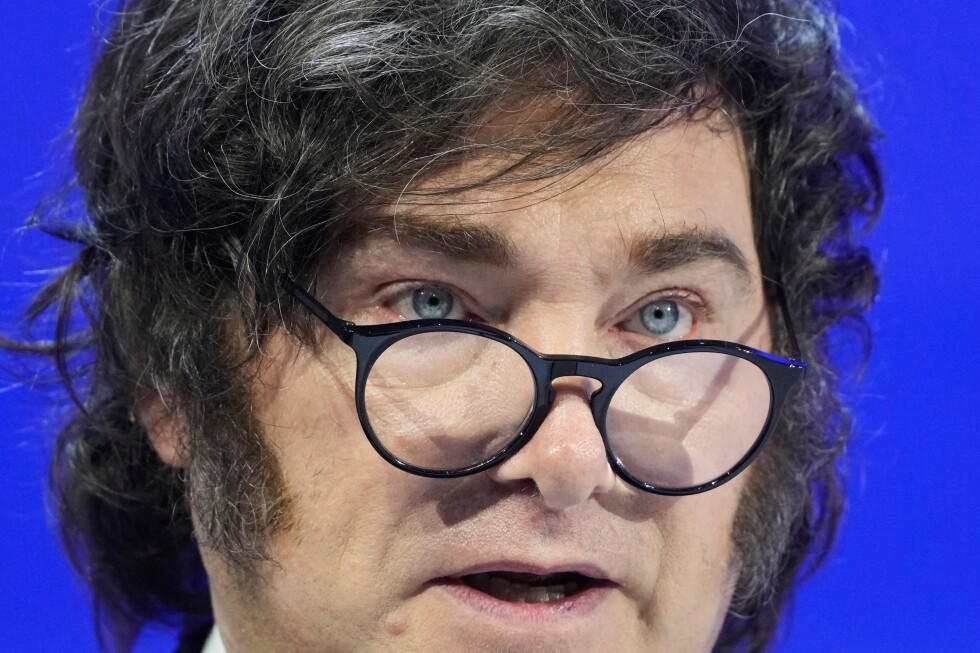
    Argentine President Javier Milei embarked on his fourteenth official visit to the United States this Wednesday to participate in the inaugural session of former President Donald Trump’s Board of Peace initiative. The diplomatic mission continues with his scheduled attendance at Trump’s regional summit in Miami on March 7, gathering Latin American leaders aligned with Washington’s political objectives.

    This diplomatic engagement occurs against a complex backdrop of competing geopolitical interests. While the Trump administration seeks to strengthen alliances countering Chinese influence across Latin America, President Milei faces the pragmatic reality of China’s entrenched economic position in Argentina. Despite his previous campaign rhetoric labeling Beijing’s Communist government as ‘assassins,’ Milei’s administration maintains crucial economic ties with China, which surpassed Brazil as Argentina’s primary trading partner last December.

    According to recent data from Argentina’s official statistics agency, exports to China skyrocketed by 125% year-on-year, while imports increased by 26% during the same period. This economic interdependence creates a paradoxical situation where Milei’s rhetorically anti-communist government has actually facilitated China’s expanding market presence.

    Benjamin Gedan, director of the Latin American Program at the Wilson Center, emphasizes the irreplaceable nature of this relationship: ‘Argentina relies on China’s insatiable demand for South America’s energy, food and minerals, and the United States will never replace that market.’

    This diplomatic balancing act manifests in policy contradictions. While Milei’s economic reforms have eased capital controls and curbed inflation, the removal of tariff barriers has exposed local manufacturers to intensified Chinese competition. Recent developments include the first-ever delivery of Chinese electric vehicles at Argentine ports, coinciding with factory closures and the shutdown of Fate tire manufacturing operations affecting 900 employees.

    Meanwhile, China continues significant investments in Argentina’s infrastructure, financing hydroelectric dams, solar energy parks, and lithium mining operations through companies like Ganfeng Lithium. A Chinese space facility in Neuquén province, which the U.S. claims could serve military purposes, continues operations without disruption.

    The Trump administration has attempted to bolster Milei’s position through substantial financial support, offering $20 billion in relief to stabilize Argentina’s economy ahead of critical 2025 midterm elections. This intervention aligns with Washington’s modern interpretation of the Monroe Doctrine, asserting American dominance in the Western Hemisphere.

    Despite U.S. Treasury Secretary Scott Bessent’s claims that Milei was ‘committed to getting China out’ of Argentina, evidence suggests otherwise. Argentine officials consistently maintain that strengthened U.S. relations don’t compromise China ties, with Foreign Minister Pablo Quirno recently affirming that recent trade agreements ‘do not imply that China cannot participate or will not participate in investments in Argentina.’

    As Gedan concludes, Argentina exemplifies ‘the limitations of the Monroe Doctrine’—demonstrating how economic necessities ultimately transcend ideological alignments in international relations.

  • Style and celebration as stars turn out for DDF Tennis WTA Players’ Party

    Style and celebration as stars turn out for DDF Tennis WTA Players’ Party

    Dubai’s sporting and social calendars converged this week as the world’s top-ranked women’s tennis professionals attended the exclusive WTA Players’ Party, an elegantly orchestrated precursor to the Dubai Duty Free Tennis Championships. The event transformed an exquisite garden venue into an Arabian-chic sanctuary where athletic excellence met sophisticated entertainment.

    Amidst a backdrop of curated live performances and roaming artistic displays, newly crowned Australian Open champion Elena Rybakina, World No. 4 Coco Gauff, and rising phenom Mirra Andreeva joined former Dubai champions Jasmine Paolini and Elina Svitolina in a evening of relaxed camaraderie. The carefully designed atmosphere provided players with a sanctuary from competitive pressures, fostering genuine connections between athletes, tournament organizers, and corporate partners.

    Attendees demonstrated sartorial excellence while engaging with representatives from Dubai Duty Free and other tournament stakeholders, reinforcing the strong community ethos that characterizes the women’s event in Dubai. The party’s sophisticated programming—featuring a seamless blend of musical performances and interactive entertainment—created both vibrant energy and intimate moments throughout the venue.

    This annual gathering has solidified its status as a premier off-court experience within the WTA tour, showcasing the tournament’s unique capacity to merge world-class athletic competition with unparalleled lifestyle offerings. The event strategically precedes the main draw of the WTA 1000 tournament, which runs from February 15-21 at the Dubai Duty Free Tennis Stadium and features an impressive field including 16 of the world’s top 20 ranked players.

  • Farhan’s maiden ton fires Pakistan into T20 World Cup Super Eight

    Farhan’s maiden ton fires Pakistan into T20 World Cup Super Eight

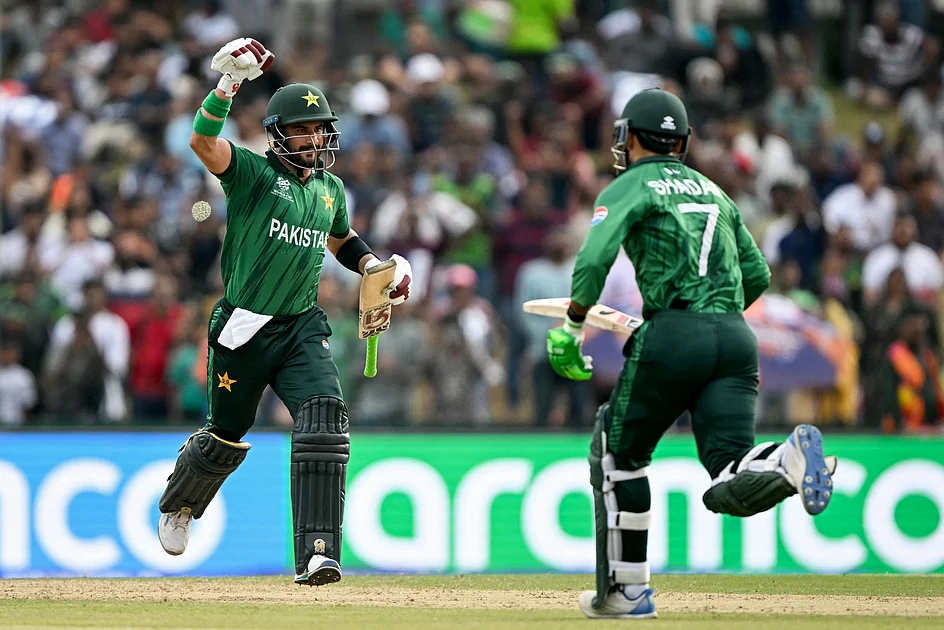
    Pakistan secured their place in the Twenty20 World Cup Super Eight phase with a commanding 102-run victory against Namibia in Colombo on Wednesday, concluding the Group A matches with a spectacular performance. The qualification came through opener Sahibzada Farhan’s exceptional maiden international century, marking a triumphant moment for the team in this crucial must-win encounter.

    Farhan delivered a masterclass in controlled aggression, remaining unbeaten on exactly 100 runs from just 58 deliveries. He reached his milestone in the final over of Pakistan’s innings, propelling his team to a formidable total of 199-4 at the Sinhalese Sports Club Ground. Despite a cautious beginning on what he described as a challenging pitch, Farhan’s innings exploded with 11 boundaries and four sixes, demonstrating both technical precision and power-hitting capability.

    Captain Salman Agha provided valuable support with 38 runs, while all-rounder Shadab Khan contributed an unbeaten 36 that included two decisive sixes in the final over. The partnership between Farhan and Khan proved particularly devastating to Namibia’s bowling attack, with Farhan explaining their strategy: ‘The idea was to build a partnership and once it got going, I would take charge while Shadab could continue hitting.’

    Namibia’s response never threatened Pakistan’s dominance despite opener Louren Steenkamp’s promising start of 23 runs. The African side collapsed to 97 all out as wickets fell consistently throughout their innings. Shadab Khan demonstrated his all-round excellence with bowling figures of 3-19, including the crucial dismissals of captain Gerhard Erasmus and Alexander Busing-Volschenk, who was stumped for 20 while attempting an aggressive charge against the mounting required run rate.

    Spinner Usman Tariq delivered a career-best performance, cleaning up the tail with impressive figures of 4-16. Namibia concluded their World Cup campaign without a single victory, finishing at the bottom of Group A.

    Captain Salman Agha praised the comprehensive team effort, describing it as a ‘complete performance.’ He particularly highlighted Farhan’s development: ‘Sahibzada has been outstanding, the way he’s been batting for us for the last six months. He scored a hundred today and I’m very happy for him.’ Agha also commended the bowling unit’s ruthless efficiency: ‘When it comes to bowling, we were lethal and we were ruthless. We bowled in the right areas.’

    With this victory, Pakistan becomes the final team to advance to the Super Eight stage, where all qualifying teams have simultaneously secured automatic entry to the next T20 World Cup edition scheduled for 2028 in Australia and New Zealand.

  • UAE launches Mother of the Nation Endowment to support orphaned children

    UAE launches Mother of the Nation Endowment to support orphaned children

    In a landmark humanitarian initiative, the United Arab Emirates has established the Mother of the Nation Endowment for Orphans, creating a sustainable financial framework to support vulnerable children nationwide. Launched on February 18, 2026, under the patronage of President Sheikh Mohamed bin Zayed Al Nahyan, this program represents a transformative approach to social welfare through strategic endowment management.

    The endowment system operates by investing contributed capital and utilizing generated returns to cover comprehensive orphan care expenses, including educational tuition, healthcare services, living costs, and seasonal necessities. This innovative financial model ensures perpetual support rather than temporary assistance, converting single donations into long-term community investment.

    Inspired by Sheikha Fatima bint Mubarak, honored as the ‘Mother of the Nation’ for her decades of advocacy for women and children, the initiative embodies the humanitarian principles established by the late Sheikh Zayed bin Sultan Al Nahyan. The timing coincides strategically with the UAE’s ‘Year of Family,’ emphasizing that familial bonds in Emirati society transcend biological connections to encompass collective community responsibility.

    The implementation strategy involves curated family-oriented events across Abu Dhabi and Al Ain, combining cultural, educational, and recreational activities to simultaneously raise awareness and generate funding. Sponsorship contributions and event proceeds will bolster the endowment’s financial foundation.

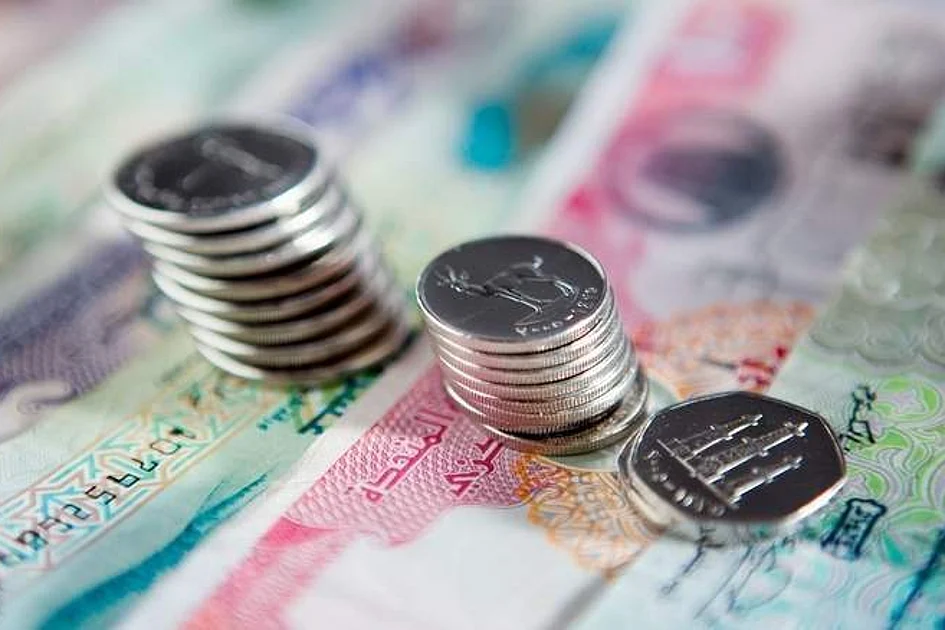
    This initiative builds upon the remarkable success of Awqaf Abu Dhabi’s previous ‘Life Endowment’ campaign, which secured nearly Dh1 billion within four weeks through 200,000+ donors to support chronic disease treatments. The authority consistently develops programs aligning with national priorities while promoting endowment models as instruments for social development and strengthened community solidarity.