作者: admin

  • ‘We’re still on edge’: Toy firms look to US Supreme Court as tariffs hit profits

    ‘We’re still on edge’: Toy firms look to US Supreme Court as tariffs hit profits

    NEW YORK — At the recent annual Toy Fair convention, industry executives gathered under the shadow of persistent trade policy anxieties, with one figure drawing particular attention: Rick Woldenberg, CEO of educational toy firm Learning Resources. His legal confrontation with the Trump administration has positioned him as an unlikely champion for manufacturers grappling with import tariffs.

    Woldenberg’s lawsuit challenges the sweeping global tariffs imposed by former President Donald Trump, which at one point reached 145% on Chinese goods. The Supreme Court is poised to issue a ruling on the case imminently, a decision that could force the government to refund billions of dollars collected from businesses and potentially reshape U.S. trade policy.

    The toy industry, heavily reliant on Chinese manufacturing, found itself disproportionately vulnerable to these import taxes. Many firms absorbed significant profit losses and were compelled to implement price increases—a move Learning Resources and others hope might be reversible should the court rule against the administration.

    Despite initial fears, the overall consumer impact has been more moderate than anticipated. Harvard Business School Professor Alberto Cavallo, who tracks tariff effects on pricing, notes that while cheaper items have seen noticeable increases, the measures have had “little impact” on overall toy prices. The average tariff on Chinese imports has stabilized around 20%, partly due to White House exemptions and rate adjustments.

    Interviews with numerous executives at the Toy Fair revealed a sector cautiously optimistic about avoiding further price hikes in 2026, yet few are complacent. Jay Foreman, CEO of Basic Fun—which suffered a 65% profit drop last year—expressed industry-wide apprehension: “We’re still on edge. We’ll be on edge for at least another three years.” His company raised the price of its iconic Tonka truck from $30 to $35, a level he expects to maintain.

    Sensory toy company Glo Pals implemented its first price increase in six years last April, raising its bestselling light-up cubes by 20% to $12.99. Co-founder Anna Barker described the economic landscape as “completely temperamental,” emphasizing that “all that uncertainty is still omnipresent for us.”

    The White House has indicated it will pursue alternative mechanisms to impose tariffs should the Supreme Court invalidate the current measures. For international manufacturers like Tim Hislop of UK-based Floss & Rock, whose majority revenue comes from the U.S. market, a favorable ruling could lower future costs even if refunds remain unlikely. “I have a little prayer every night,” Hislop remarked wryly.

    As the industry awaits the judicial decision, Woldenberg’s legal stand represents both a specific challenge to presidential trade authority and a symbol of the broader business community’s struggle to adapt to an era of unpredictable economic policy.
  • White House presses Iran to make deal, while ramping up military presence

    White House presses Iran to make deal, while ramping up military presence

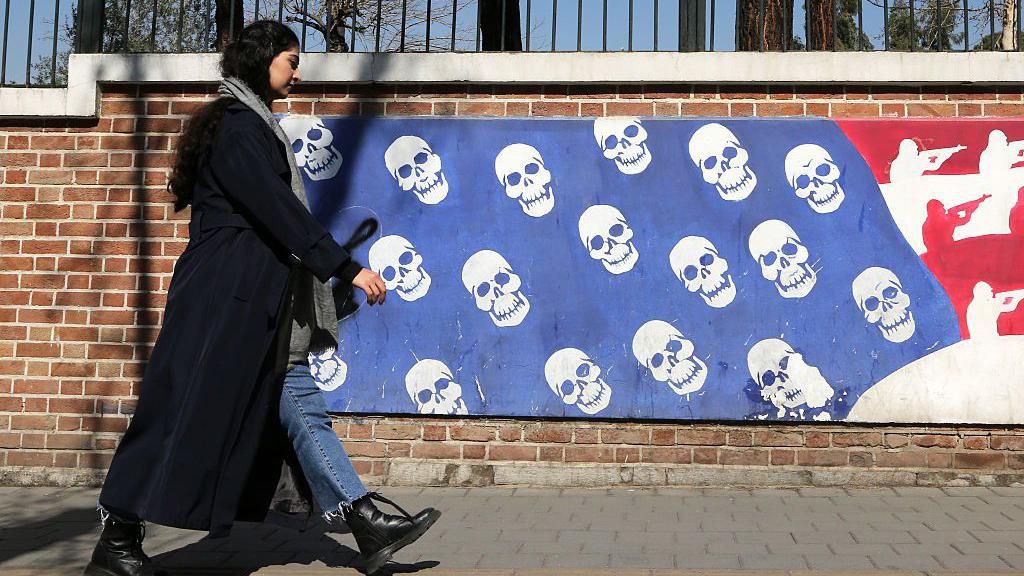
    The White House has delivered a pointed admonition to Tehran, asserting it would be “very wise” for Iran to secure a diplomatic agreement with the United States. This warning emerges amidst escalating military posturing and reports that the Trump administration is actively considering renewed offensive actions against the Islamic Republic.

    White House Press Secretary Karoline Leavitt, addressing journalists, emphasized that President Trump continues to prioritize a negotiated settlement concerning Iran’s contentious nuclear program. Her statements coincide with the strategic deployment of a second U.S. battleship to the Middle Eastern theater and follow a recent round of talks in Geneva, Switzerland, where both nations reported incremental progress.

    According to intelligence sourced from U.S. media and CBS News, President Trump has engaged in high-level consultations with security advisors to evaluate potential strike options, with one scenario allegedly planned for execution as early as the coming weekend. These deliberations were characterized as highly fluid, with no definitive decision yet reached. This echoes the precedent set last summer when U.S. forces targeted three Iranian nuclear facilities.

    Leavitt substantiated the rationale for military action, stating there exist “many reasons and arguments that one could make for a strike against Iran,” while simultaneously urging Tehran to return to the bargaining table.

    The recent indirect negotiations in Geneva, mediated by Oman, yielded no definitive breakthrough. However, participants from both camps acknowledged constructive movement. Iranian Foreign Minister Abbas Araghchi confirmed an understanding on core “guiding principles” for future dialogue, though he conceded significant work remains. Omani Foreign Minister Badr Albusaidi similarly reported “good progress” on mutual objectives and technical matters.

    Contrasting this cautiously optimistic tone, the White House maintained that Washington and Tehran remain “far apart” on several pivotal issues. Leavitt indicated that Iran is anticipated to provide more detailed proposals in the coming weeks, which will critically inform the President’s subsequent decisions.

    The rhetorical and diplomatic friction is matched by a tangible military buildup. BBC Verify has geolocated the USS Abraham Lincoln carrier strike group—comprising guided missile destroyers and fighter jet squadrons—near Iranian territorial waters. Furthermore, the USS Gerald R. Ford, the world’s largest warship, is reportedly en route to the region, with a full U.S. military contingent expected to be operational by mid-March.

    Iran has responded with defiant rhetoric and military exercises. Supreme Leader Ayatollah Ali Khamenei disseminated an AI-generated image depicting the sunken USS Ford, accompanied by a statement proclaiming that the capability to sink a warship is more formidable than the warship itself. Concurrently, the Islamic Revolutionary Guard Corps initiated maritime drills in the strategically critical Strait of Hormuz, a vital global oil transit corridor.

    The escalating standoff is further complicated by divergent negotiation priorities. Iran seeks to center discussions on its nuclear activities and the alleviation of crippling economic sanctions, whereas the U.S. has historically insisted on including Iran’s ballistic missile program in any comprehensive agreement. The fundamental distrust underpinning the crisis persists, with Western nations suspecting Iran of pursuing nuclear weapons capability—an allegation Tehran consistently denies.

  • Tokyo’s strategic US investment surge puts China on edge

    Tokyo’s strategic US investment surge puts China on edge

    Japan has initiated the first phase of a monumental investment initiative into the United States, marking a significant milestone in international economic relations. This development follows the decisive electoral triumph of Prime Minister Sanae Takaichi’s Liberal Democratic Party, which has paved the way for strengthened bilateral cooperation.

    The initial investment tranche, valued at approximately $36 billion, represents merely the beginning of a comprehensive commitment that could ultimately reach $550 billion. This massive financial undertaking stems from a trade agreement finalized in July, wherein Japan secured reduced US tariffs on its exports. In September, Washington lowered its reciprocal tariffs on Japanese goods from 25% to 15%, creating favorable conditions for enhanced economic collaboration.

    US President Donald Trump celebrated the development through social media, proclaiming: “Our massive trade deal with Japan has just launched! Japan is now officially, and financially, moving forward with the first set of investments under its $550 billion commitment to invest in the United States of America.” The President emphasized that this agreement would revitalize American industry, generate hundreds of thousands of jobs, and bolster national economic security.

    The initial investment portfolio includes three strategic projects: oil and gas infrastructure in Texas, power generation facilities in Ohio, and critical minerals processing in Georgia. The Ohio power plant is projected to become the largest gas-powered facility in history, while the LNG export terminal aims to strengthen America’s energy dominance. The critical minerals initiative seeks to reduce foreign dependency, though China’s global rare earth dominance remained unmentioned in official statements.

    Chinese analysts perceive this economic shift as potentially detrimental to China’s interests. Commentator Xu Sanlang argues that strengthened US-Japan ties could accelerate supply chain diversification away from China toward American allies. Since 2010, Japan has systematically reduced its reliance on Chinese manufacturing, redirecting investments toward Southeast Asia, the United States, and Europe.

    The tariff structure further incentivizes this realignment, with US tariffs on Chinese goods averaging 53.6% compared to approximately 15% on Japanese products. This differential approach appears designed to economically isolate China while strengthening alliances.

    The agreement mandates Japan to immediately increase US rice imports by 75%, purchase $8 billion in American goods including agricultural products and energy exports, acquire Boeing aircraft and defense equipment, and lift restrictions on US automotive imports.

    Geopolitical tensions have concurrently escalated, particularly following Prime Minister Takaichi’s November statement regarding Taiwan potentially constituting a “survival-threatening situation” for Japan. Beijing responded with tightened export controls on dual-use items to Japan, though recent approvals suggest possible diplomatic thaw following February discussions between Trump and Chinese President Xi Jinping.

    Analysts recommend measured response from China, emphasizing the country’s strengths in renewable energy, artificial intelligence, and quantum computing as counterbalancing factors. The evolving situation represents a complex interplay of economic strategy, geopolitical positioning, and global supply chain restructuring that will likely define international relations for years to come.

  • Italy wins the toss and elects to field against West Indies in its last T20 World Cup game

    Italy wins the toss and elects to field against West Indies in its last T20 World Cup game

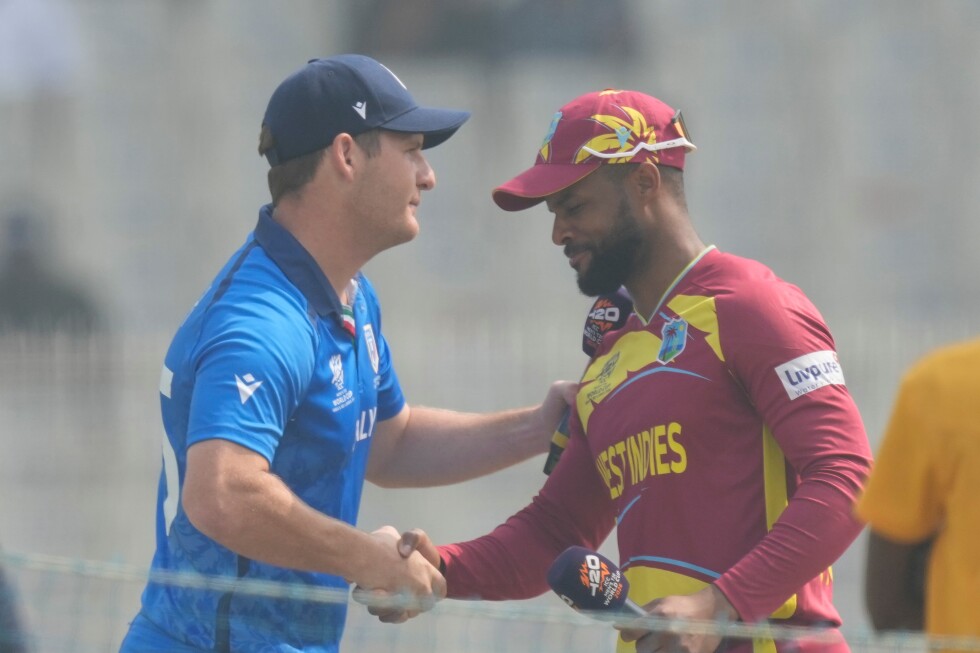
    KOLKATA, India — In their concluding Group C match of the T20 World Cup on Thursday, the West Indies, having already secured their advancement to the Super 8s, faced an Italian squad seeking to conclude its inaugural ICC global tournament on a high note. Italy’s captain, Harry Manenti, won the toss and elected to field first, hoping his bowlers could exploit any early swing in the daytime conditions at the venue.

    Manenti continues to lead the Italian side after a tournament-ending shoulder injury to regular captain Wayne Madsen during their opening fixture. Despite losses to Scotland and England, the team garnered significant confidence from a stunning 10-wicket victory over Nepal. “We take some confidence from the England game and West Indies is another powerful team,” Manenti stated at the toss, expressing hope for early breakthroughs.

    The West Indies, entering the match with an unchanged lineup from their dominant nine-wicket win over Nepal, boast a formidable top order. Captain Shai Hope, along with Shimron Hetmyer and Sherfane Rutherford, have all recorded half-centuries throughout the group stage, demonstrating aggressive and powerful batting form. Hope expressed a philosophical view on losing the toss, noting, “it’s not in our hands.”

    In other tournament developments, Zimbabwe—the team responsible for eliminating Australia—was set to conclude its group stage against Sri Lanka in Colombo. Meanwhile, Afghanistan, fresh from a narrow double tiebreaker defeat to South Africa, prepared to meet Canada in its final Group D match.

  • Verona prepares its ancient arena for the Olympics closing ceremony on Sunday

    Verona prepares its ancient arena for the Olympics closing ceremony on Sunday

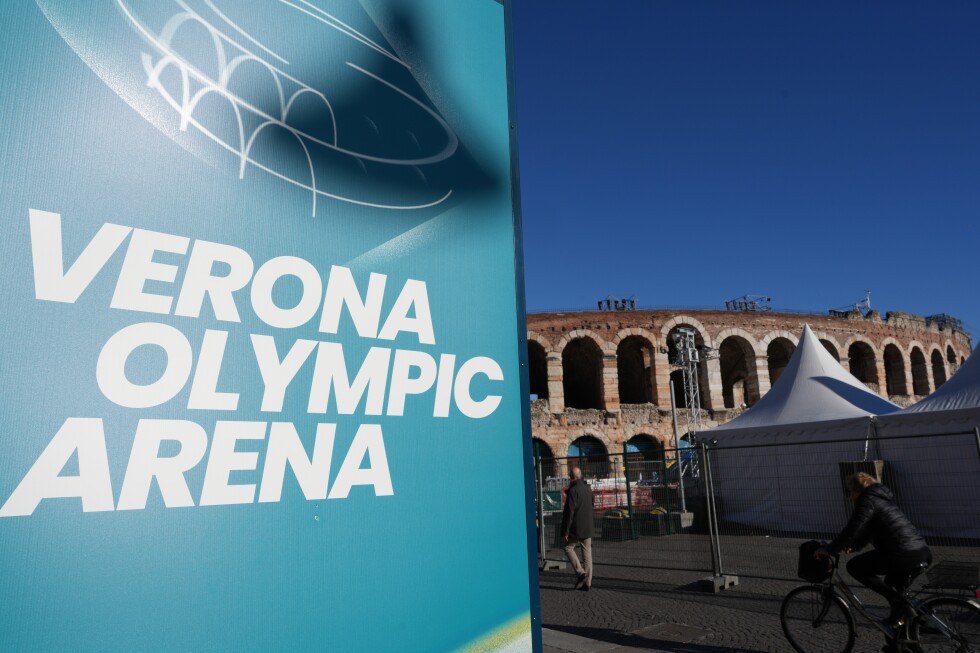
    VERONA, Italy — The historic Roman Arena in Verona, a monument dating back to 1 A.D., served as the magnificent backdrop for the final celebration of the Milan Cortina Winter Olympics on Sunday. Approximately 1,500 athletes gathered within the ancient amphitheater for a closing ceremony titled “Beauty in Motion,” which blended athletic achievement with Italian cultural artistry.

    Under the guidance of producer Alfredo Accatino, the production featured acclaimed ballet dancer Roberto Bolle and 350 volunteers who rehearsed secretly throughout the week. The conceptual framework explored beauty as a dynamic force, with Accatino explaining: “Beauty cannot be fixed in time. This ancient monument is beautiful if it is alive, if it continues to change. We want to narrate an Italy that is changing, and also the beauty of movement, sport, and nature.”

    The ceremony showcased prominent Italian performers including singer Achille Lauro and DJ Gabry Ponte, whose music echoed through the ancient structure during preparations. Elaborate costumes inspired by opera traditions were meticulously crafted by seamstresses in temporary dressing rooms.

    The production design incorporated a stage resembling a water droplet, symbolically connecting the mountain venues with the Po River Valley while acknowledging how climate change is transforming winter sports. The ceremony opened with athletes processing triumphantly through Piazza Bra into the Arena—a space that historically hosted gladiatorial combat and exotic animal hunts.

    Maria Laura Iascone, head of ceremonies for the local organizing committee, explained Verona’s selection over the smaller Cortina d’Ampezzo: “Only Italians can use such monuments to do special events. This is very unique, very rare.” The event maintained an intimate atmosphere with approximately 12,000 attendees, contrasting with the 60,000 spectators at Milan’s San Siro stadium opening.

    Logistical considerations included athletes traveling from six mountain venues, with some journeys lasting up to four hours. Environmental protections led to the replacement of traditional fireworks with a light show to prevent disturbing local wildlife.

    The Arena, recently upgraded with wheelchair ramps and accessible facilities, will host the Paralympic opening ceremony on March 6, with events continuing in Milan and Cortina until March 15.

  • Former South Korean President Yoon faces verdict on rebellion charges

    Former South Korean President Yoon faces verdict on rebellion charges

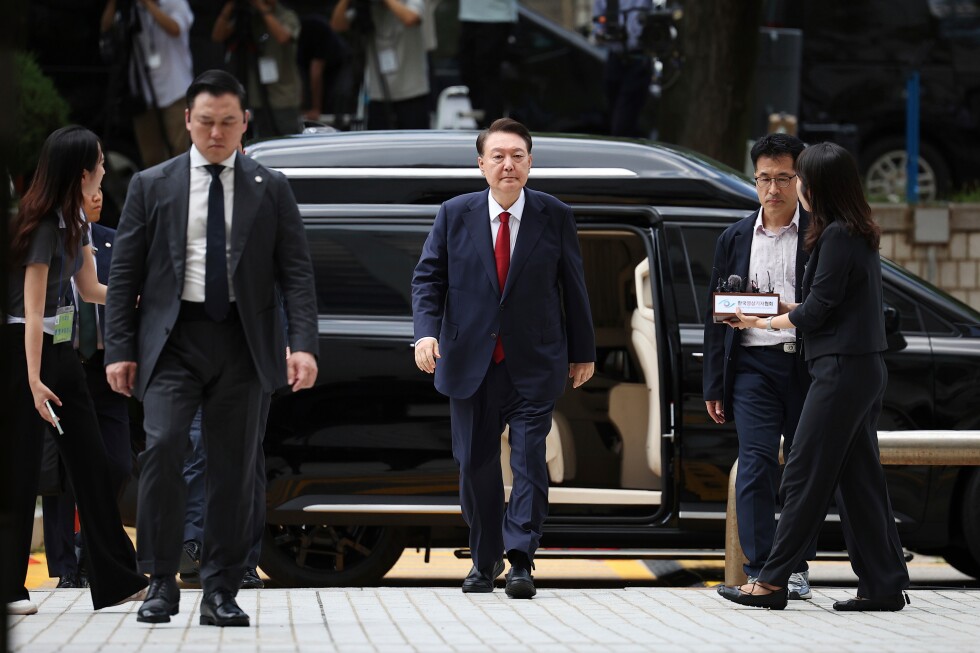
    SEOUL, South Korea — Former President Yoon Suk Yeol appeared at Seoul Central District Court on Thursday for a landmark verdict regarding rebellion charges stemming from his unprecedented attempt to impose martial law in December 2024. The ousted conservative leader arrived under heavy police security as both supporters and protesters gathered outside the judicial complex.

    The case represents the most severe political crisis in decades for South Korea, triggered when Yoon declared martial law and deployed military forces to surround the National Assembly on December 3, 2024. Special prosecutors have pursued capital punishment for the former president, arguing his actions constituted a grave threat to the nation’s democratic foundations.

    Legal experts anticipate a life imprisonment sentence rather than execution, noting that Yoon’s poorly executed power grab resulted in no casualties. South Korea maintains an unofficial moratorium on capital punishment, with no executions carried out since 1997.

    Presiding Judge Jee Kui-youn will also deliver rulings for seven former military and police officials accused of enforcing Yoon’s martial law decree, including ex-Defense Minister Kim Yong Hyun.

    Yoon has maintained that his actions were necessary to counter what he characterized as ‘anti-state’ liberal forces obstructing his governance agenda. The martial law declaration lasted approximately six hours before legislators breached the military blockade and unanimously voted to overturn the measure.

    The former president was initially suspended from office on December 14, 2024, following impeachment by lawmakers, and was formally removed by the Constitutional Court in April 2025. He has remained in custody since July facing multiple criminal trials.

    Last month, Yoon received a five-year prison sentence on separate charges including resisting arrest, fabricating the martial law proclamation, and bypassing mandatory Cabinet procedures. Former Prime Minister Han Duck-soo received a 23-year sentence for attempting to legitimize the decree through manipulated Cabinet meetings and falsified records, though he has appealed the verdict.

  • Trump gathers members of Board of Peace for first meeting, with some US allies wary of new body

    Trump gathers members of Board of Peace for first meeting, with some US allies wary of new body

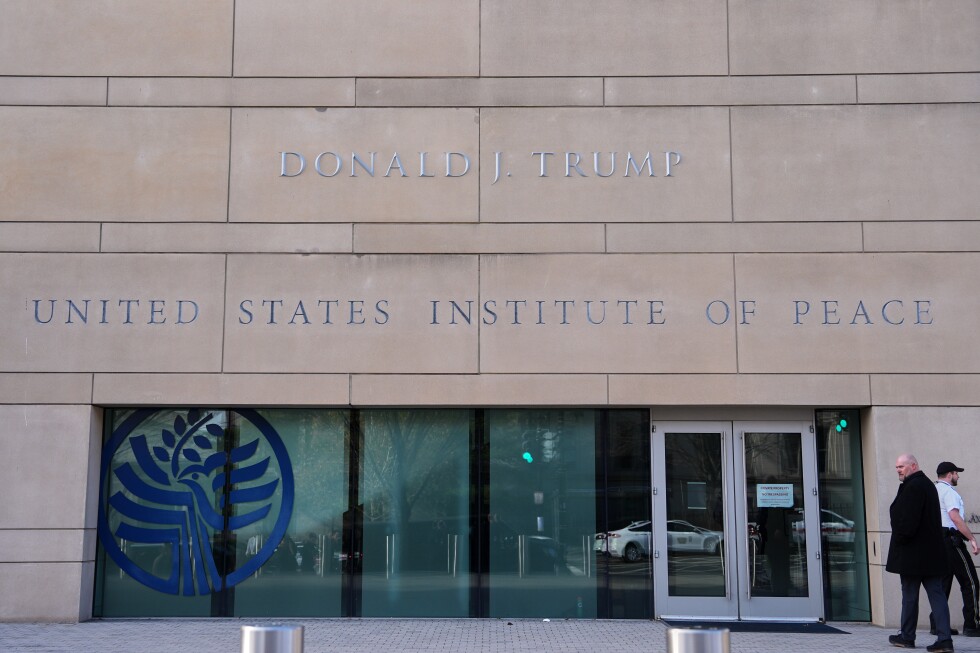
    WASHINGTON — In a significant diplomatic gathering, President Donald Trump convened representatives from over two dozen nations for the inaugural meeting of his newly formed ‘Board of Peace’ on Thursday. The assembly focused on two primary objectives: mobilizing reconstruction efforts for war-devastated Gaza and establishing an international stabilization force for the territory, where a fragile ceasefire remains in effect.

    Ahead of the meeting, Trump announced that board members had committed approximately $5 billion toward reconstruction initiatives—a substantial sum yet merely a fraction of the estimated $70 billion required to rebuild the Palestinian territory following two years of destructive conflict. Additionally, participating nations are expected to contribute thousands of personnel to international security and police forces aimed at maintaining stability in the region.

    The board represents a cornerstone of Trump’s ambitious 20-point peace plan originally designed to resolve the Gaza conflict. However, since October’s ceasefire agreement, the president has expanded the board’s mandate beyond Middle Eastern peacemaking to include global conflict resolution—a development that has raised concerns among some international partners about creating a potential rival to the United Nations.

    Despite more than 40 countries and the European Union sending representatives to the meeting, notable absentees from full membership include Germany, Italy, Norway, and Switzerland, who attended as observers. This cautious participation reflects broader international skepticism about the initiative’s scope and structure.

    The timing of Trump’s meeting notably influenced international diplomacy, prompting the UN Security Council to reschedule its own high-level discussion on the Gaza ceasefire from Thursday to Wednesday. This adjustment avoided scheduling conflicts for diplomats who would have otherwise needed to be in two places simultaneously.

    Central to Thursday’s discussions was the critical challenge of disarming Hamas and establishing an armed international stabilization force. Thus far, only Indonesia has made a firm commitment to contribute to this proposed security force. Indonesian President Prabowo Subianto pledged to collaborate with other Islamic nations invited by Trump to pursue lasting peace in Palestine, acknowledging significant obstacles while emphasizing the necessity of the effort.

    The Trump administration defended the initiative against skepticism, with White House press secretary Karoline Leavitt describing it as ‘a legitimate organization’ and U.S. Ambassador to the UN Mike Waltz asserting that the board is action-oriented rather than merely discursive. However, analysts like Michael Hanna of the International Crisis Group suggested that allied skepticism is warranted, noting that many participating nations likely joined primarily to focus U.S. attention and leverage on Israel regarding Gaza’s future.

  • How rescuers raced against time to reach skiers trapped in avalanche

    How rescuers raced against time to reach skiers trapped in avalanche

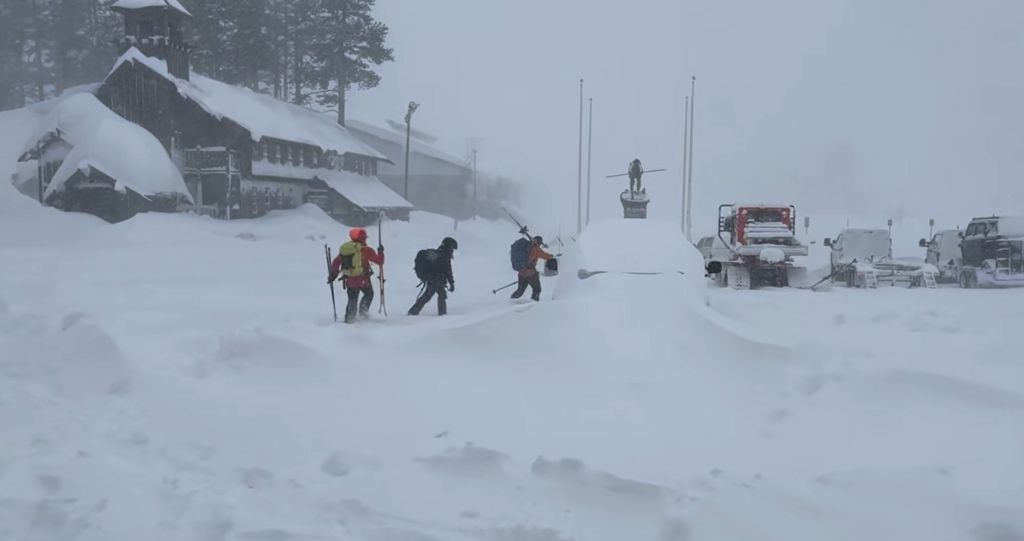
    A devastating backcountry skiing expedition in California’s Sierra Nevada mountains has culminated in tragedy, with eight of nine missing skiers confirmed deceased following a massive avalanche. The catastrophic event unfolded on Tuesday when emergency signals from both a guide’s satellite-enabled iPhone and another skier’s distress beacon alerted authorities in Truckee, California.

    The group of 15 individuals—comprising 11 recreational skiers and four professional guides—was concluding their three-day excursion at the Frog Lake Huts within the renowned Castle Peak region when the avalanche struck. Rescue operations faced immediate challenges as Highway 80 remained impassable due to severe winter storms, forcing authorities to implement unconventional access strategies.

    Nearby resorts including Boreal Mountain Ski Resort and Tahoe Donner’s Alder Creek Adventure Center deployed specialized rescue teams, utilizing snow-cats—vehicles designed for deep snow traversal—to navigate the treacherous conditions. By afternoon, approximately 50 rescuers had converged on the mountain from both northern and southern approaches.

    The rescue team eventually located six survivors sheltering in makeshift tents, though two required medical evacuation due to avalanche-related injuries. Placer County Sheriff Wayne Woo confirmed these survivors included one guide and five clients of Blackbird Mountain guided tours. Tragically, one deceased individual was identified as the spouse of a rescuer, adding profound personal dimension to the tragedy.

    Avalanche experts from the Sierra Avalanche Center had previously issued warnings about naturally occurring avalanches in the region, citing unstable snowpack conditions and continuing precipitation that increased loading on dangerous slopes. The accident site spanned approximately the area of a football field, complicating recovery efforts.

    Authorities have postponed recovery of the seven women and two men killed until weather conditions improve, citing ongoing safety concerns. The search for the one remaining missing skier continues, though officials presume this individual has also perished.

    Backcountry safety equipment—including avalanche beacons, shovels, and probes—proved critical in this incident, though officials remain uncertain whether any skiers carried inflatable avalanche airbag systems. The tragedy highlights the inherent dangers of winter backcountry travel despite technological advancements and professional guidance.

  • Float featuring Brazil’s Lula comes last at Rio Carnival

    Float featuring Brazil’s Lula comes last at Rio Carnival

    Rio de Janeiro’s iconic Carnival parade reached its spectacular climax as samba school Unidos do Viradouro claimed the championship title with their artistic homage to legendary drum director Master Ciça. The victory came amidst unprecedented political tensions that overshadowed portions of the world’s largest carnival celebration.

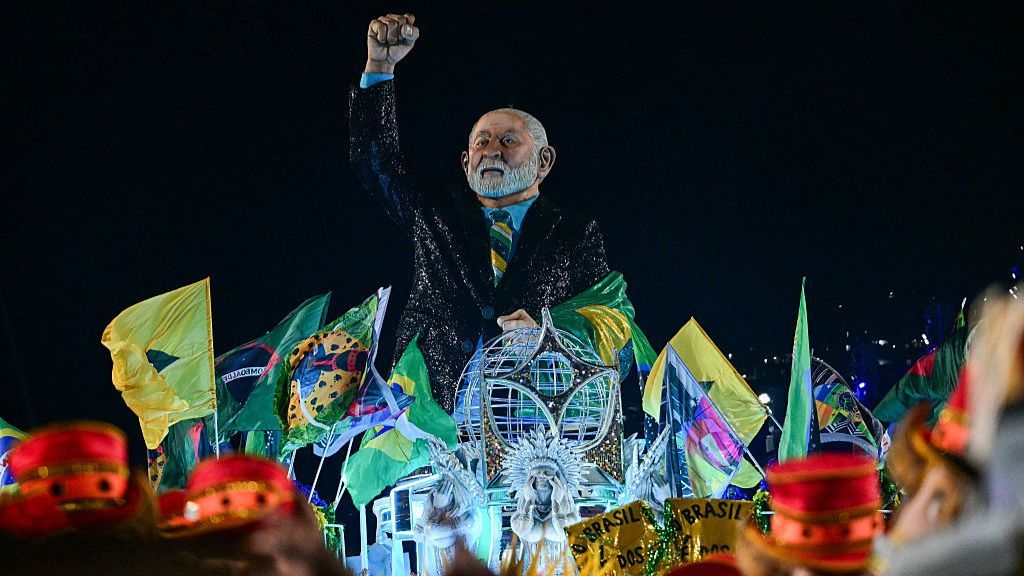
    The Academicos de Niteroi samba school found itself at the center of controversy with their politically-charged parade honoring President Luiz Inácio Lula da Silva’s journey from impoverished shoeshine boy to national leadership. The performance, which designer Tiago Martins described as ‘a deeply personal story of social mobility,’ finished in last place following substantial backlash from opposition groups.

    Political tensions escalated as opposition parties filed multiple legal challenges attempting to block the presidential tribute, alleging violation of electoral campaign regulations ahead of October’s elections. Despite judicial rejections of these petitions, the performance generated intense debate across Brazilian society.

    The parade’s provocative elements included a controversial depiction of former President Jair Bolsonaro as ‘Bozo the Clown’ behind bars, alongside segments that critics argued mocked traditional Christian values through performances titled ‘preserved neoconservatives.’

    President Lula personally attended the festivities, watching from the Sambadrome stands alongside thousands of spectators who witnessed the spectacular displays of giant lions, dancing books, and rainbow-colored plumes that characterized this year’s celebrations.

    The competition, judged across ten categories by forty officials, maintained its tradition of artistic excellence while unexpectedly becoming a platform for Brazil’s ongoing political divisions. Despite the controversies, the carnival’s vibrant spirit prevailed with breathtaking displays of color, choreography, and cultural expression that define Rio’s most celebrated annual event.

  • Watch: Filipina sensation Alexandra Eala’s dream Dubai run continues

    Watch: Filipina sensation Alexandra Eala’s dream Dubai run continues

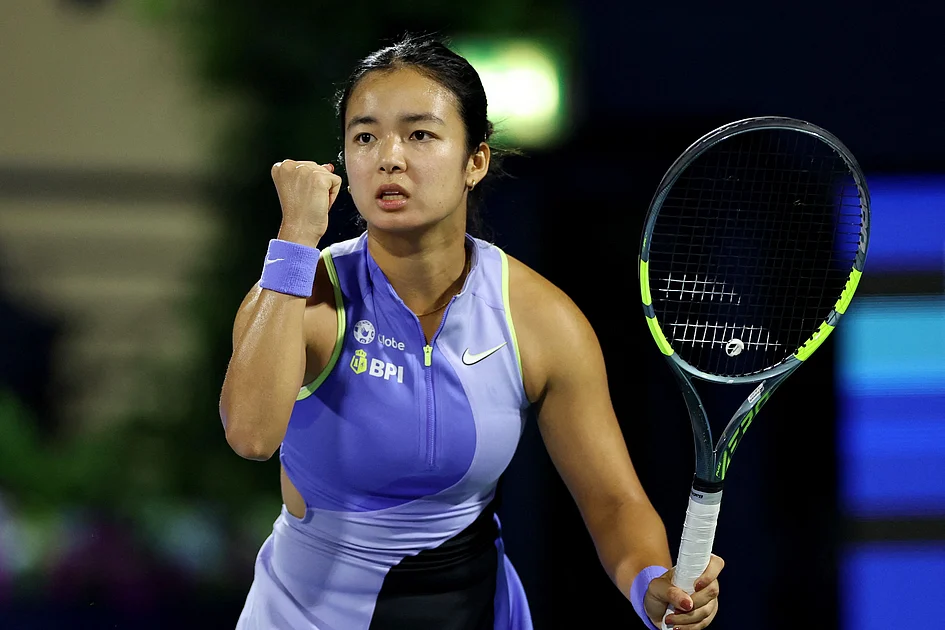
    In a stunning display of composure and skill, Philippine tennis prodigy Alexandra Eala extended her remarkable campaign at the Dubai Duty Free Tennis Championships with a decisive victory over seasoned Romanian Sorana Cîrstea. The 20-year-old sensation secured her quarterfinal berth with a 7-5, 6-4 triumph before an enthusiastic crowd that included numerous Filipino supporters.

    Eala’s performance demonstrated both tactical maturity and offensive prowess as she navigated a tightly contested opening set before dominating the second with aggressive shot-making. This victory follows her impressive upset against world number eight Jasmine Paolini in the previous round, cementing her status as a rising force in women’s tennis.

    The win propels the history-making Filipina—currently ranked 40th globally and her nation’s highest-ranked player ever—into a highly anticipated quarterfinal confrontation with American star Coco Gauff. The two-time Grand Slam champion survived her own dramatic encounter, saving three match points against Belgium’s Elise Mertens in a three-set thriller.

    Eala acknowledged the significance of facing an established champion, stating: ‘I view this as an exceptional opportunity for growth. Regardless of Thursday’s outcome, the experience against a player of Coco’s caliber in a prestigious quarterfinal represents invaluable learning for my development.’

    Gauff, recognizing both Eala’s talent and the electric atmosphere expected for their match, commented: ‘Such vibrant crowd engagement ultimately benefits our sport. Alexandra has demonstrated her capabilities by defeating top-ten opponents convincingly, ensuring our match will present considerable challenges.’

    The marquee quarterfinal is scheduled for 7 PM Thursday on Centre Court, where Eala’s supporters are expected to create a passionate, football-like environment. Other quarterfinal matchups feature defending champion Mirra Andreeva against Amanda Anisimova, Jessica Pegula versus Clara Tauson, and Elina Svitolina taking on Antonia Ruzic.