作者: admin

  • Buddhist monks rally in Sri Lanka to pressure the government for a wider role in affairs of state

    Buddhist monks rally in Sri Lanka to pressure the government for a wider role in affairs of state

    COLOMBO, Sri Lanka — Hundreds of Buddhist monks organized a peaceful demonstration in Sri Lanka’s capital on Friday, voicing concerns over perceived governmental disregard for their religious authority and the erosion of traditional consultation practices in state affairs.

    The protest proceeded without incident or violence, highlighting the ongoing tension between religious institutions and political leadership in the predominantly Buddhist nation. Sri Lanka’s constitution explicitly recognizes Buddhism as the state religion while simultaneously guaranteeing freedom of religion for all citizens. The charter further mandates that the government must actively protect and nurture Buddhist traditions.

    With Buddhism representing over 70% of the island’s 22 million inhabitants, the clergy maintains substantial influence across social, cultural, and political domains. The nation also hosts significant minority populations including Hindus, Muslims, and Christians.

    During the Colombo gathering, religious leaders publicly recited a formal appeal intended for President Anura Kumara Dissanayake. The document emphasized the government’s constitutional responsibility to ground national values in Buddhist principles, which originated in ancient India during the 5th century B.C. It specifically asserted the clergy’s traditional right to provide counsel on matters of governance.

    The monks’ demands included excluding non-Buddhists from holding highest governmental offices, integrating Buddhist values throughout educational curricula, and enhancing protection for archaeological sites connected to their religious heritage. This demonstration appears to represent a strategic effort by the Buddhist community to reinforce their influence on national policy direction.

  • Shanghai scientists develop pioneering AI system for rare disease diagnosis

    Shanghai scientists develop pioneering AI system for rare disease diagnosis

    Scientists from Shanghai have achieved a groundbreaking advancement in medical artificial intelligence with the development of DeepRare, the world’s first evidence-based reasoning diagnostic system specifically engineered for rare disease identification. This pioneering technology represents a significant leap beyond conventional medical AI systems, offering superior diagnostic capabilities across multiple parameters.

    The innovative system emerged from a collaborative effort between Shanghai Jiao Tong University’s School of Artificial Intelligence and Xinhua Hospital Affiliated to Shanghai Jiao Tong University School of Medicine. Their research findings were formally published in the prestigious scientific journal Nature, marking a milestone in medical AI development.

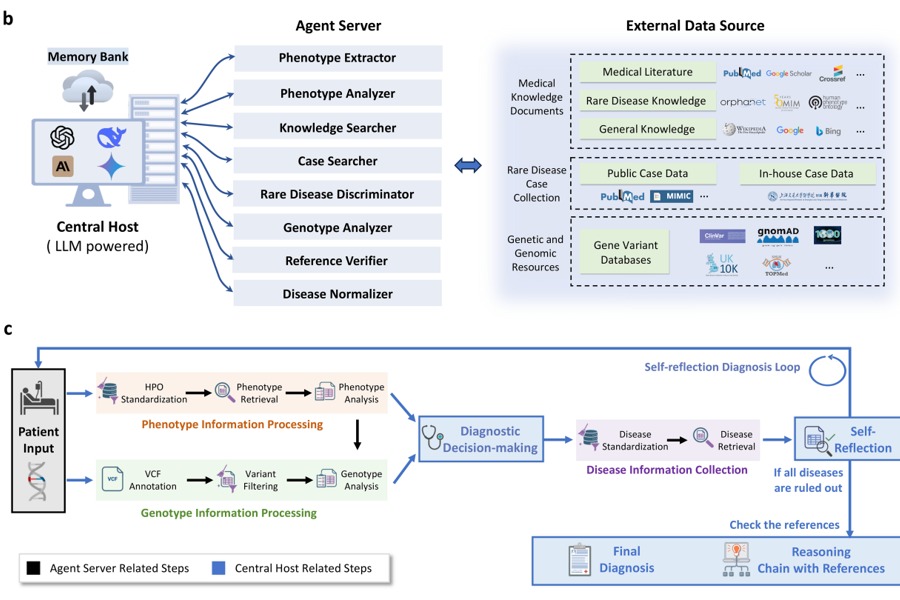
    DeepRare distinguishes itself through its unique architecture that integrates extensive medical literature databases with real-time clinical information. Unlike traditional AI that depends on rapid pattern recognition, this system emulates the methodical ‘slow thinking’ approach characteristic of human medical experts. The technology engages in proactive information gathering by asking clarifying questions to address knowledge gaps, then refines diagnostic hypotheses through continuous cycles of verification and self-assessment to eliminate potential logical inconsistencies.

    A critical feature of DeepRare is its transparent decision-making process. Every diagnostic conclusion generated by the system includes a comprehensive evidence trail, enabling physicians to understand not just the final diagnosis but the complete reasoning pathway that led to that determination.

    In performance evaluations using only clinical phenotype information without genetic data, DeepRare demonstrated remarkable diagnostic accuracy of 57.18%—representing a substantial 23.79 percentage point improvement over previous international models. This capability positions the system as an invaluable tool for initial screening in primary healthcare environments where specialized diagnostic resources may be limited.

    The system’s performance reaches even greater heights when augmented with genetic sequencing data. In complex clinical scenarios utilizing multimodal information, DeepRare achieves comprehensive diagnostic accuracy exceeding 70.6%, dramatically outperforming the widely adopted international benchmark tool Exomiser, which records 53.2% accuracy under comparable conditions.

  • Two giant pandas debut at Urumqi Water Park Zoo

    Two giant pandas debut at Urumqi Water Park Zoo

    URUMQI – In a landmark event for wildlife conservation and public education, two giant pandas have officially made their public debut at the Urumqi Water Park Zoo in Northwest China’s Xinjiang Uygur autonomous region. The pandas, named Bao Yuan and De Rui, arrived in the city on February 5 and have now completed a crucial two-week acclimatization period, allowing them to settle into their new habitat.

    The zoo’s newly opened Giant Panda Pavilion commenced its trial operation on Thursday, introducing a unique viewing system to ensure the animals’ welfare. To facilitate a smooth transition and minimize stress, each visitor is allotted a five-minute viewing window. The pavilion will be open daily from 11 am to 7 pm. This carefully managed approach is designed to protect the pandas’ natural behaviors while accommodating public interest, enabling a larger number of guests to witness the celebrated creatures.

    The arrival of the pandas marks a significant cultural and ecological milestone for Xinjiang, enhancing the region’s biodiversity conservation efforts and providing a unique educational resource for residents and tourists. The event underscores China’s ongoing commitment to the protection and preservation of its national treasure, the giant panda.

  • Why emotional connection has become the ultimate luxury

    Why emotional connection has become the ultimate luxury

    In an era defined by digital saturation and transactional interactions, a profound shift is redefining the very essence of luxury. Moving beyond traditional markers of wealth and status, contemporary luxury now manifests in the quality of human connection, intentional presence, and emotional depth. This transformation represents a fundamental evolution from material possession to experiential richness.

    The hyper-connected nature of modern life has created an unexpected scarcity: genuine emotional engagement. As screens mediate relationships and efficiency dominates social exchanges, the capacity for unhurried, focused attention has become increasingly rare. This scarcity positions emotional connection as an exquisite form of luxury that transcends conventional economic measures.

    Travel exemplifies this paradigm shift. Aircraft cabins, once merely functional transit spaces, have evolved into environments cultivating human experience. The luxury of presence enables travelers to engage more authentically with companions, colleagues, and themselves. This intentional focus amplifies the value of every moment, transforming ordinary interactions into extraordinary experiences.

    True modern luxury manifests not through grand gestures but through carefully designed time and quality interactions. It emerges in conversations without agenda, shared adventures requiring collaboration, and the quiet comfort of unspoken presence. These moments demand deliberate boundaries against digital distractions and the courage to prioritize depth over efficiency.

    This evolution challenges traditional success metrics that emphasize output, speed, and scale. Instead, it values patience, curiosity, and emotional resonance as sophisticated indicators of refinement. The luxury of emotional depth represents a more evolved understanding of value—one where the ability to invest in meaningful moments becomes the ultimate currency.

    For leaders, creators, and travelers alike, emotional connection functions as essential nourishment for creativity, insight, and fulfillment. Just as restorative sleep revitalizes the body, intentional emotional engagement sustains the heart and mind. Both require conscious design—from physical environments that encourage presence to conversations that minimize distraction.

    Ultimately, the most valuable experiences cannot be purchased or scheduled. They must be cultivated through authentic presence, shared journeys, and conversations that unfold organically. As luxury continues evolving in the 21st century, its core principles remain constant: agency, intentionality, and the freedom to choose experiences that genuinely enrich human existence.

  • German leader to make his 1st visit to China next week as country seeks ‘right balance’ in ties

    German leader to make his 1st visit to China next week as country seeks ‘right balance’ in ties

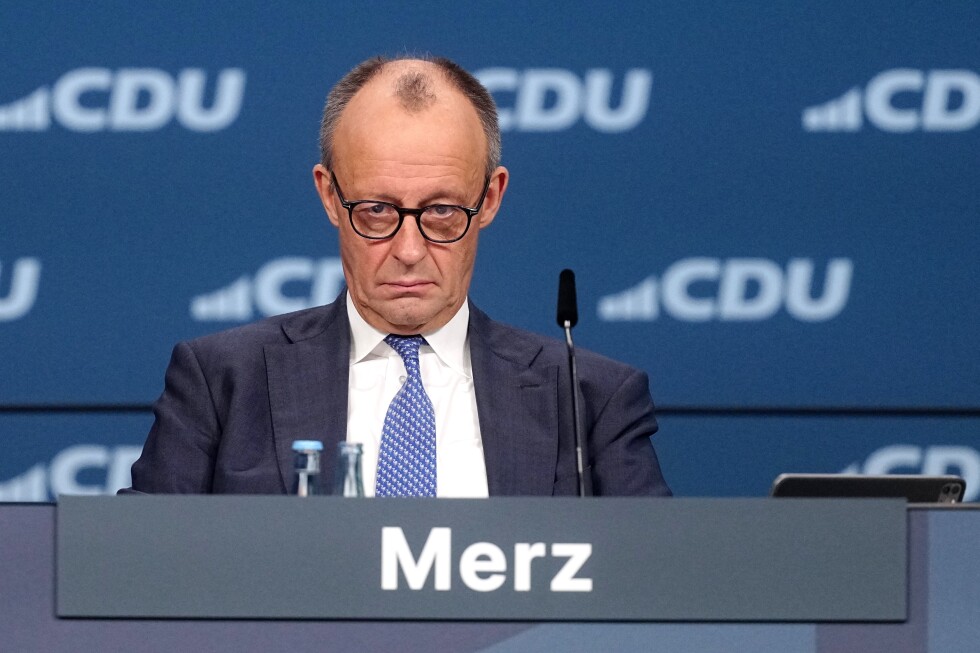
    BERLIN — In a significant diplomatic move, German Chancellor Friedrich Merz is scheduled to undertake his inaugural visit to China since assuming leadership of Europe’s largest economy. The high-stakes visit, set for next week, comes as Germany navigates an increasingly complex international landscape dominated by assertive global powers.

    Government spokesperson Sebastian Hille confirmed on Friday that Chancellor Merz will engage in high-level meetings with Chinese Premier Li Qiang and Chinese leader Xi Jinping in Beijing on Wednesday, followed by a visit to Hangzhou in southeastern China. The diplomatic mission carries the thematic focus of ‘competition,’ with officials emphasizing the critical need to strike an appropriate balance in cooperation with the Asian superpower.

    ‘We seek cooperation where it is necessary and aligns with our mutual interests,’ Hille stated during a press briefing in Berlin, outlining Germany’s nuanced approach to Sino-German relations.

    This diplomatic engagement occurs against the backdrop of Germany’s delicate balancing act in recent years—maintaining robust ties with China while expressing concerns over Beijing’s growing assertiveness and its stance regarding Russia’s invasion of Ukraine. Simultaneously, Berlin has pursued strategic diversification of its commercial partnerships and supply chains to avoid excessive reliance on Chinese trade.

    Recent economic data from Germany’s Federal Statistical Office reveals China reclaimed its position as Germany’s primary trading partner in the previous year, with bilateral trade reaching 251.8 billion euros ($297 billion). This development marks a significant shift, as the United States had briefly displaced China from this position in 2024. Trade with China demonstrated growth during this period, while commercial exchanges with the U.S. declined to 240.5 billion euros.

    Addressing his Christian Democratic Union party convention in Stuttgart, Chancellor Merz emphasized the necessity of global business connections, explicitly including China. ‘China remains a crucial trading partner for Germany, which is why I will travel to China next week accompanied by a substantial business delegation,’ he stated. Neither the Chancellor nor his spokesperson disclosed specific delegation members.

    However, Merz maintained a realistic perspective, cautioning against illusions regarding China’s geopolitical ambitions. He noted that China ‘asserts the claim to define a new multilateral order according to its own rules,’ signaling fundamental shifts in the international landscape.

    The Chancellor articulated that the established rules-based order has fundamentally transformed, with ‘a new world order, an order of great powers, taking shape at accelerated pace.’ He stressed Europe’s urgent need to enhance its economic and military capabilities while aggressively pursuing trade agreements with diverse global partners.

    This diplomatic development occurs alongside preparations for U.S. President Donald Trump’s anticipated visit to China in April, highlighting the intricate interplay of major power diplomacy in contemporary global affairs.

  • Cute meets technology in fashion’s latest obsession

    Cute meets technology in fashion’s latest obsession

    The fashion landscape is undergoing a profound transformation as artificial intelligence merges with emotional design to create irresistible consumer products. The emergence of interactive robotic accessories like Mirumi demonstrates how technology is reshaping purchasing decisions through sophisticated algorithmic targeting and psychological engagement strategies.

    This technological revolution began capturing consumer attention through precisely targeted social media advertisements that identified potential buyers based on their digital behavior patterns. The Mirumi robotic bag charm—available in pastel pink, cream, and grey—represents a new category of fashion-tech hybrids that combine tactile appeal with interactive artificial intelligence. Unlike traditional accessories, these devices employ sophisticated algorithms to mimic lifelike behaviors, including responsive head movements and simulated emotional expressions designed to trigger nurturing instincts.

    The commercial implications are substantial. Industry analysis from McKinsey projects that AI-mediated commerce could influence between $3 to $5 trillion in global consumer spending by 2030. This shift extends beyond obvious technological displays like LED-enhanced clothing to more subtle algorithmic interventions that determine which fashion styles consumers encounter during online searches.

    What makes these products particularly compelling is their ability to forge emotional connections. The Mirumi’s design intentionally mimics infant-like characteristics, leveraging psychological principles that trigger caregiving responses. This approach has proven remarkably effective, with similar emotional design strategies having generated approximately $20 billion in value for previous viral products like Labubu.

    The rise of fashion technology coincides with growing discussions about AI’s broader societal impact, including recent warnings from AI researchers about potential risks. Yet in the consumer space, the technology is increasingly integrated into daily life through agentic commerce systems that mediate between consumers and products with growing sophistication.

    For those preferring technology-free alternatives, brands like Veganologie offer sustainable options featuring endangered species designs crafted from bamboo fiber leather. However, the dominant trend clearly points toward increasingly interactive fashion-tech hybrids that blend physical products with digital intelligence, creating new categories at the intersection of technology, fashion, and emotional design.

  • How to stay calm when cryptocurrency markets turn brutal

    How to stay calm when cryptocurrency markets turn brutal

    As cryptocurrency markets experience extreme turbulence with even traditional safe-havens like gold exhibiting crypto-like volatility, investors face unprecedented psychological challenges. The current environment, characterized by doomsday predictions and extreme price swings, tests even the most seasoned market participants.

    Financial expert Ann Marie McQueen outlines a comprehensive nine-step approach to maintaining equilibrium during market chaos. The strategy emphasizes that during severe market downturns, the most sophisticated action often involves intentional inaction—avoiding panic-driven decisions that typically undermine long-term investment objectives.

    The methodology begins with physiological regulation through physical activity like walking, yoga, or weightlifting to mitigate the body’s stress response. This is followed by careful curation of information sources to avoid the polarizing narratives dominating social media platforms, where bot accounts and extreme viewpoints create emotional whiplash.

    Investors are advised to reconnect with their original investment thesis, remembering Bitcoin’s fundamental value propositions: decentralization, scarcity, and immutability. The strategy incorporates tactical dollar-cost averaging during downturns, exemplified by how $100 recently acquired 68 XRP compared to just 50 weeks earlier.

    The approach extends beyond financial tactics to include environmental cleansing—removing toxic community influences—and dedicated financial education through structured programs like the 12-week ‘Money Habits’ course. The creator emphasizes constructive channeling of energy into meaningful projects and finding supportive communities that foster grounded discussions rather than fear-mongering.

    A profound perspective shift comes from incorporating the Islamic concept of ‘rizq’—the belief that one’s sustenance, including wealth, health, and opportunities, is predetermined. This philosophical framework helps investors focus on controllable factors while releasing anxiety about market movements beyond their influence.

  • Iran warns US bases, assets ‘legitimate targets’ if attacked

    Iran warns US bases, assets ‘legitimate targets’ if attacked

    In a significant escalation of diplomatic tensions, Iran has formally declared United States military installations and assets as “legitimate targets” should Washington initiate military action against the Islamic Republic. The warning was delivered through an official letter from Amir Saeid Iravani, Iran’s ambassador to the United Nations, to Secretary-General Antonio Guterres and the Security Council president.

    The communication directly referenced President Donald Trump’s recent social media post suggesting potential use of UK military bases, including facilities in the Indian Ocean, for operations against Iran. Ambassador Iravani characterized these statements as “belligerent” and indicative of “a real risk of military aggression” that would have catastrophic regional consequences and pose grave threats to international peace.

    This development occurs amid substantial US military deployments to the Middle East, including warships and fighter aircraft, ostensibly to prevent Iranian nuclear weapons development—a ambition Tehran consistently denies pursuing. The Iranian delegation simultaneously affirmed its commitment to diplomatic solutions and addressing concerns regarding its nuclear program on a reciprocal basis.

    President Trump has intensified rhetoric against Iran following recent internal crackdowns on protesters and continued nuclear program concerns, issuing an ultimatum giving Tehran approximately 15 days to reach an agreement. This warning follows indirect talks in Geneva between US envoys, including presidential son-in-law Jared Kushner, and Iranian diplomatic representatives, which reportedly showed some progress despite previous negotiation failures following Israeli strikes on Iranian facilities last June.

  • Audi S6 e-tron Review: Where quiet luxury meets instant torque

    Audi S6 e-tron Review: Where quiet luxury meets instant torque

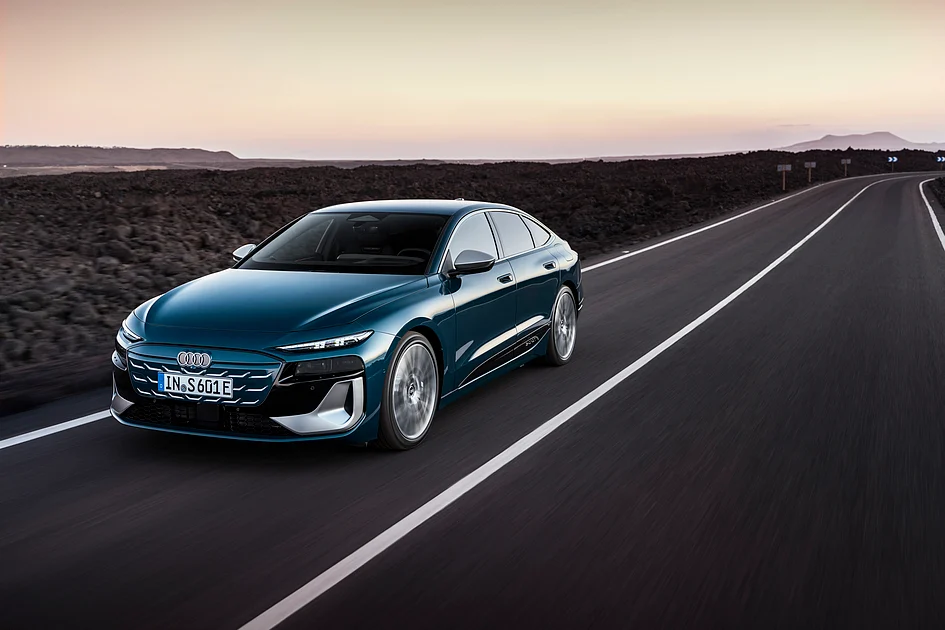
    Audi has transitioned from tentative electrification experiments to full-scale commitment with its 2026 S6 Sportback e-tron, positioning this performance-oriented four-door coupé as the vanguard of its mature electric lineup. Drawing inspiration from the iconic A5 design philosophy rather than traditional S6 models, the vehicle combines aerodynamic Sportback styling with next-generation digital luxury while delivering exceptional acceleration capabilities.

    The exterior showcases a highly aerodynamic coupé-like silhouette featuring integrated door handles and a hatchback rear end. The front fascia replaces conventional grilles with a closed panel adorned with hockey-stick accents, flanked by silver-accented air intakes. Chinese design influences manifest through a continuous rear light bar with customizable graphics and subtle diffuser elements. The vehicle rides on distinctive 10-spoke Y-design alloy wheels with staggered tire sizing (275/35 R21 rear, 245/40 R21 front).

    Inside, the cabin presents a mixed experience. While retaining Audi’s characteristic dark dashboard aesthetic, the new jagged-edge styling departs from the brand’s traditional geometric simplicity. Premium piano black and metal trims contrast with unexpectedly cheap plastic components. The technological heart comprises an impressive curved glass housing for the Audi Virtual Cockpit Plus (11.9-inch) and MMI display (14.5-inch), though the graphics appear surprisingly simplistic. User interface frustrations emerge through a slightly oversized steering wheel with confusing touch controls and unresponsive touch-based door controls. The digital camera-based side mirrors prioritize form over function, while exceptionally comfortable perforated and quilted seats with extendable thigh support provide compensation. Rear legroom remains adequate despite elevated flooring from underfloor battery placement.

    Performance specifications impress with 370 kW of power surging to 405 kW using Launch Control, enabling breathtaking 0–100 km/h acceleration in 3.9 seconds. The rear-biased all-wheel-drive system with variable torque distribution ensures exceptional traction, though steering feedback proves disappointingly vague for an S-badged model. Braking components feature sporty red calipers but omit expected drilled discs. The standard air suspension delivers superlative ride comfort, creating an exceptionally quiet and smooth driving experience. Range claims of 675 km translate to approximately 450 km in real-world conditions, mitigated by rapid 10-80% charging capability in just 21 minutes. Practical charging cable storage beneath the trunk floor contrasts with frustratingly slow-charging port operation.

    Functionality presents both strengths and weaknesses. Climate control operates through touchscreen interfaces rather than physical controls, while rear passengers benefit from dual-zone ventilation through B-pillar and console vents. The minimalist infotainment system offers user-friendly menus with acceptable customization despite ineffective voice control. Bluetooth connectivity performs seamlessly, while a poorly accessible wireless charging pad and two USB-C ports occupy the center console. Audio delivery through a 16-speaker Bang & Olufsen system achieves good quality without reaching excellence. Practical advantages include a generous 502-liter trunk (expandable to 1,330 liters), supplemented by a 27-liter frunk suitable for small items. Additional conveniences encompass deep storage cubbies, ISOFIX child-seat mounts, effective 360-degree camera systems, and adaptive cruise control.

    For Dubai consumers seeking electric grand touring capabilities, the S6 e-tron delivers quiet luxury with instantaneous torque delivery, though traditional Audi enthusiasts may find steering feedback and interior material quality falling short of expectations for the prestigious S designation.

  • How extreme cold is affecting Americans’ lives, according to a new AP-NORC poll

    How extreme cold is affecting Americans’ lives, according to a new AP-NORC poll

    A profound cold snap has seized North America, with millions experiencing what many describe as the most severe winter conditions in decades. The Arctic blast, striking early in 2026, has triggered widespread disruptions across daily life and infrastructure.

    Chris Ferro, a Brooklyn-based property owner, reported unprecedented freezing in his Albany residences. “Pipes that never froze on me for 15 years froze,” Ferro noted, describing how subzero temperatures halted renovation projects. While grateful for avoiding burst pipes, he contrasted this deep freeze with the milder winters of recent years.

    New data from The Associated Press-NORC Center for Public Affairs Research reveals 60% of U.S. adults have encountered severe cold or winter storms within the past five years—a significant increase from the 50% recorded in February 2025. This surge follows a massive winter storm that crippled the East Coast and caused southern power outages.

    The perception of intensifying cold occurs against a backdrop of global warming. Scientific consensus maintains that human-induced climate change has made the first quarter of the 21st century historically warm, with abnormally cold winters becoming increasingly rare in North America. This rarity makes prolonged cold spells feel more intense and unfamiliar, particularly to younger generations.

    The practical impacts are substantial: 70% of Americans faced elevated utility bills due to winter conditions, while 40% experienced work or school cancellations. Approximately one-third endured power outages, and 30% suffered travel disruptions.

    Annie Braswell of Greenville, North Carolina, saw her utility bills double during what she described as the coldest period in forty years. This starkly contrasted with the extreme heat she endured just months earlier, with temperatures reaching 100°F (38°C).

    The political dimension emerges through rising electricity prices, which nearly 40% of Americans cite as a major stressor. Climate activist Bill McKibben predicts significant political repercussions from increasing energy costs.

    Regional variations show Midwesterners (60%) most affected by cancellations, followed by Southerners (50%) and Northeasterners (40%), compared to just 15% of Westerners.

    The climate change connection remains contentious among Americans. While two-thirds of those experiencing severe weather attribute it to climate change, a stark partisan divide exists: 80% of affected Democrats blame climate change versus only 40% of Republicans.

    Scientists explain this apparent paradox: extreme cold outbreaks increasingly result from polar vortex disruptions caused by rapid Arctic warming and diminishing sea ice. As the Arctic warms, the swirling low-pressure system that typically contains cold air stretches southward more frequently.

    Overall, 80% of U.S. adults have experienced some form of severe weather in the past five years, with extreme heat and cold being the most commonly reported events.