作者: admin

  • Pegula extends dominance over Anisimova, reaches Dubai final

    Pegula extends dominance over Anisimova, reaches Dubai final

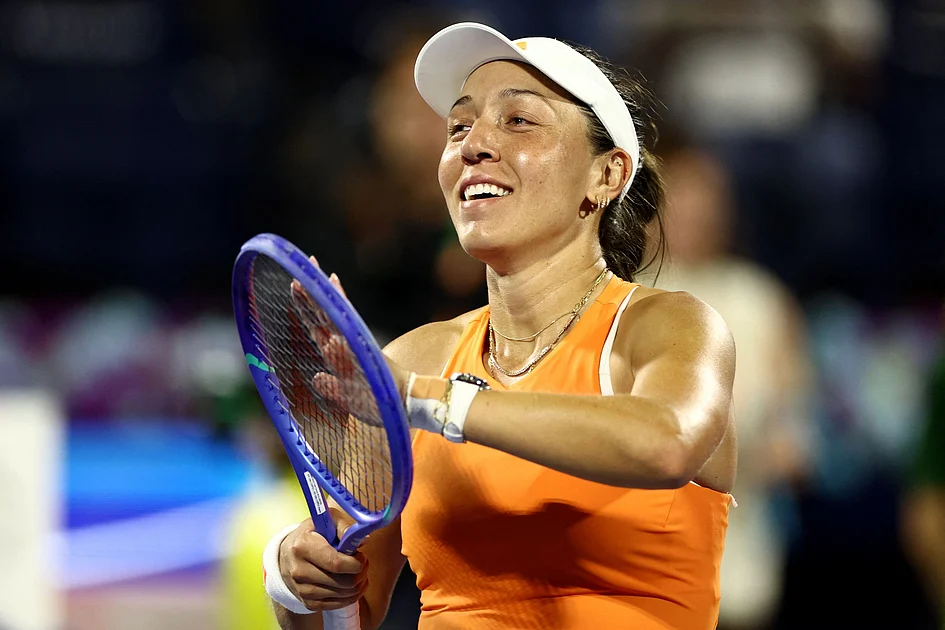
    American tennis star Jessica Pegula demonstrated exceptional resilience on Friday, overcoming a disastrous start to defeat compatriot Amanda Anisimova 1-6, 6-4, 6-3 in the Dubai Duty Free Tennis Championships semifinals. The world number five showcased her championship mentality by reversing momentum after being thoroughly outplayed in the opening set.

    The victory extends Pegula’s perfect record against Anisimova to 5-0 and marks her second consecutive win over the 24-year-old following their Australian Open quarterfinal encounter last month. This impressive performance continues Pegula’s remarkable consistency on tour, representing her second WTA final appearance since August 2025, with five additional tournaments during this period resulting in semifinal finishes, including both the US Open and Australian Open.

    Pegula attributed her sustained excellence to the intensive training regimen implemented by her coaching team since 2025. This dedication was evident as she weathered Anisimova’s powerful game, which produced seven aces throughout the match. After dropping the first set and falling behind 3-1 in the second, Pegula mounted her comeback with two critical breaks to force a deciding set.

    The match’s turning point came in the fourth game of the third set when Pegula secured another break against her younger opponent, ultimately maintaining her composure to close out the victory. Pegula now advances to face the winner of the other semifinal between two-time Grand Slam champion Coco Gauff of the United States and two-time Dubai titleholder Elina Svitolina of Ukraine.

    In doubles action, the pairing of Russia’s Vera Zvonareva and Germany’s Laura Siegemund earned their place in the final with a 6-3, 7-6(6) victory over Romanian duo Jaqueline Cristian and Elena-Gabriela Ruse. They will compete for the title against Canadian Gabriela Dabrowski and Brazilian Luisa Stefani, who overcame Aleksandra Krunić and Anna Danilina 4-6, 6-2, 10-6 in their semifinal encounter.

  • Bad Bunny positioned to consolidate his popularity in Brazil with first-ever performances

    Bad Bunny positioned to consolidate his popularity in Brazil with first-ever performances

    SAO PAULO — Global music phenomenon Bad Bunny has achieved a significant breakthrough in one of the world’s most challenging markets for international artists, marking a cultural shift during his inaugural Brazilian performances this weekend. Despite his worldwide streaming dominance, the Puerto Rican superstar had previously struggled to penetrate Brazil’s music scene, where domestic artists command an impressive 75% of streaming consumption according to Luminate’s 2025 midyear report.

    The turning point emerged with his Grammy-winning album “Debí Tirar Más Fotos,” but the catalyst proved to be his historic Super Bowl halftime performance. Subsequent data reveals a staggering 426% surge in Bad Bunny’s Spotify streams in Brazil during the post-Super Bowl week, with his track “Yo Perreo Sola” experiencing an extraordinary 2,536% increase.

    Ethnomusicologist Felipe Maia, currently pursuing doctoral research on popular music at Paris Nanterre University, observes: “This represents the optimal moment to conquer a market like Brazil, occurring precisely when he has achieved near-global domination.”

    The demand manifested visibly as both scheduled shows at Sao Paulo’s Allianz Parque stadium sold out immediately, necessitating additional dates. By Friday afternoon, extensive queues had formed featuring not only Brazilian devotees but enthusiasts from across Latin America including El Salvador, Colombia, and Venezuela. Many attendees sported traditional Puerto Rican jíbaro straw hats, symbolizing their connection to the artist’s cultural roots.

    Ticket economics underscored the frenzy: while official prices ranged from $50 to $210, resellers demanded over $830 for last-minute entries—exceeding 2.5 times Brazil’s monthly minimum wage.

    Flávia Durante, a Sao Paulo-based Latin music specialist DJ, notes a transformative shift in perception: “Some Brazilians historically associated Spanish-language music with telenovela clichés, but Bad Bunny has shattered that bubble. Nowadays, everyone knows the lyrics and engages passionately, even requesting his music at rock or 80s pop events.”

    The phenomenon extends beyond commercial success into cultural identity. Colombian-Brazilian writer Nicole Froio, who sported Bad Bunny-themed attire during Rio’s Carnival celebrations for the third consecutive year, identifies the artist as representing “Latino resistance.” She emphasizes: “While other Latin stars recorded full songs in other languages, Bad Bunny maintains artistic authenticity through Spanish—inspiring me to embrace my identity unapologetically.”

    This cultural resonance finds reinforcement in Bad Bunny’s Super Bowl acknowledgment of the Americas’ geographic scope, challenging the United States’ linguistic appropriation of “America.” For longtime fan Diogo da Luz, 22, this inclusive approach “reinforces that we belong to one united people.”

  • Killing of nationalist student leaves French far left in deep trouble as elections loom

    Killing of nationalist student leaves French far left in deep trouble as elections loom

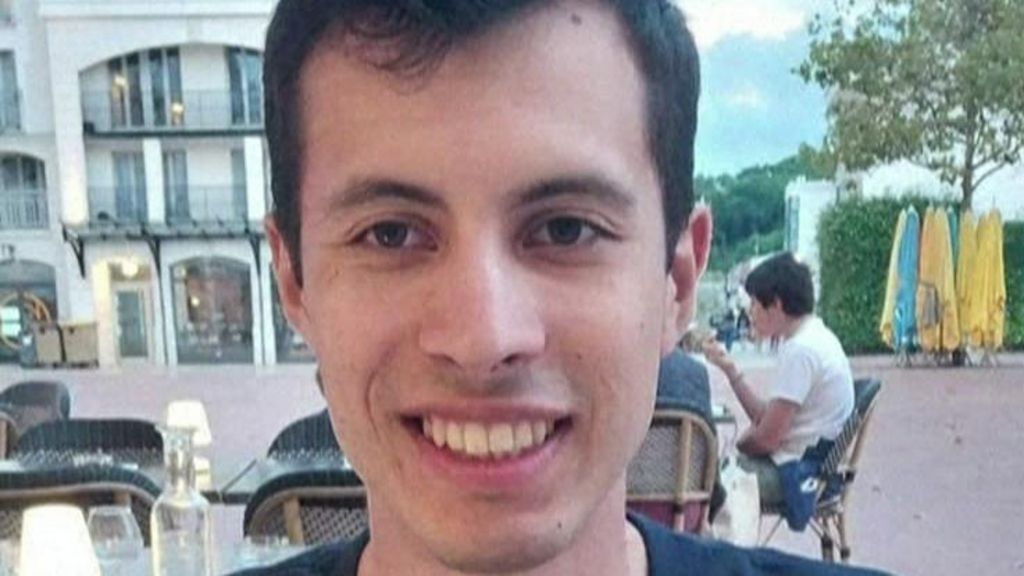
    A fatal incident in Lyon has triggered a seismic shift in France’s political landscape, potentially upending decades of established norms. The killing of nationalist student Quentin Deranque on February 12th by suspected far-left militants has unleashed a political storm that threatens to redefine the boundaries of acceptable political discourse.

    Mobile footage captured the brutal attack near Sciences Po university, showing masked assailants repeatedly kicking and punching Deranque as he lay defenseless on the ground. The victim, who had been providing security for a small far-right feminist protest, succumbed to severe head injuries.

    The seven suspects charged in connection with the killing maintain ties to La Jeune Garde (The Young Guard), a recently banned organization that previously provided security for radical left party La France Insoumise (LFI). Notably, Jacques-Elie Favrot, charged with complicity to murder, served as parliamentary assistant to LFI deputy Raphaël Arnault, who established the controversial group in 2018.

    This tragedy has ignited intense scrutiny of LFI and its veteran leader Jean-Luc Mélenchon, whose party controls approximately 70 seats in the National Assembly. The political ramifications extend far beyond the courtroom, potentially reversing the long-standing dynamic where the National Rally (RN) traditionally faced isolation for extremist associations.

    The incident occurs just weeks before critical local elections, with potential implications for the 2027 presidential race. For decades, mainstream parties maintained a cordon sanitaire against the far right, but the Lyon killing threatens to legitimize RN while ostracizing the radical left. This paradigm shift could dismantle the anti-RN electoral alliances that previously blocked Marine Le Pen’s party from power.

    Commentator Guillaume Tabard observed in Le Figaro that the political landscape has fundamentally transformed, with Mélenchon’s party now facing the condemnation that historically targeted the far right. The conservative Republicans, with their 50 parliamentary seats, might now consider cooperation with RN, potentially bringing the far right into the political mainstream.

    The mainstream left faces an impossible dilemma: distance themselves from LFI without strengthening the far right. Former Prime Minister Dominique de Villepin warned that exclusive focus on LFI creates ‘a corridor of respectability for the RN,’ granting the far right the appearance of normality it has long sought.

  • Seven Chinese tourists, driver dead after bus sinks into Russia’s Lake Baikal

    Seven Chinese tourists, driver dead after bus sinks into Russia’s Lake Baikal

    A devastating incident on the frozen expanse of Russia’s Lake Baikal has resulted in the feared deaths of seven Chinese tourists and their local bus driver. The catastrophe occurred when the ice beneath their vehicle fractured, causing the bus to plunge into the frigid waters of the world’s deepest lake.

    According to a statement released by Igor Kobzev, the regional governor, via his Telegram channel on Friday, the accident prompted an immediate emergency response. Miraculously, one tourist managed to escape the submerged bus. Search and rescue operations are actively continuing for the remaining victims in the harsh Siberian conditions.

    The Irkutsk regional prosecutor’s office has initiated a criminal investigation to determine the precise circumstances that led to the breach of the ice road, a route commonly traversed by tourist vehicles during the winter months. Located north of Mongolia, Lake Baikal is a UNESCO World Heritage site and an immensely popular destination, particularly for adventure seekers.

    This tragedy casts a somber shadow over the rapidly growing tourism ties between China and Russia. Tourist traffic from China to Russia has seen a significant surge in recent years, a trend bolstered by deepening political alignment and a “no limits” strategic partnership formalized last year. This cooperation was further streamlined by the introduction of a mutual visa-free travel regime, facilitating easier movement between the two nations.

  • Israeli settlers kill another teenaged US citizen in occupied West Bank

    Israeli settlers kill another teenaged US citizen in occupied West Bank

    A 19-year-old Palestinian-American citizen, Nasrallah Abu Siyam, was fatally shot by Israeli settlers during an attack on the village of Mukhmas, located east of Ramallah in the occupied West Bank. The incident occurred on Wednesday when Abu Siyam and fellow villagers intervened to protect a local farmer under assault by a group of settlers, according to an eyewitness account provided to the Associated Press.

    Raed Abu Ali, a resident of Mukhmas, reported that Israeli military forces arrived at the scene and deployed tear gas, sound grenades, and live ammunition to disperse the crowd. Social media footage circulating online appears to capture the moment Abu Siyam was shot and his body being removed from the area.

    Middle East Eye contacted the US State Department for comment but had not received a response by publication time. This killing marks the latest in a series of violent incidents targeting Palestinian communities in the West Bank, which have intensified significantly since the October 2023 Hamas-led attacks on southern Israel and Israel’s subsequent military operations in Gaza.

    Abu Siyam becomes at least the sixth US citizen killed by Israeli settlers or security forces in 2024 alone, joining Tawfic Abdel Jabbar, Mohammad Khdour, Ayşenur Ezgi, Amer Rabee, and Sayfollah Musallet. Accountability for these deaths remains largely absent despite growing international concern.

    The United Nations human rights agency released a report on Thursday suggesting that the systematic attacks by Israeli settlers and soldiers in the West Bank may constitute ethnic cleansing. The document cites systematic unlawful use of force by Israeli security forces, widespread arbitrary detention and torture of Palestinians, and extensive unlawful demolition of Palestinian homes as evidence of systematic discrimination and oppression against the Palestinian population.

  • In the army now: Pictures that show how ordinary Ukrainians have been shaped by war

    In the army now: Pictures that show how ordinary Ukrainians have been shaped by war

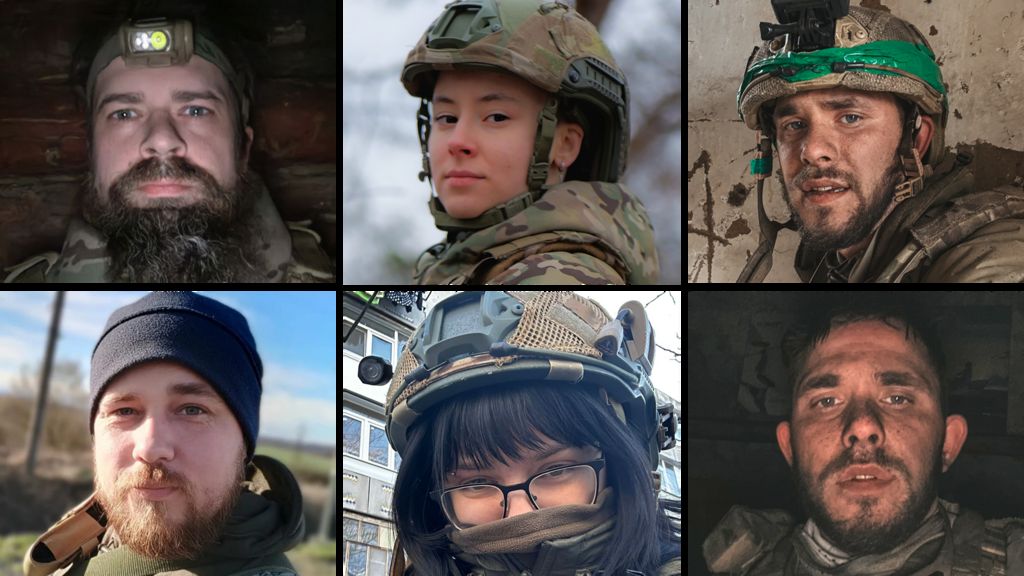
    When Russia launched its full-scale invasion on February 24, 2022, ordinary Ukrainian citizens underwent an extraordinary transformation—becoming soldiers virtually overnight. Four years into the conflict, the BBC has documented the profound personal journeys of nine such individuals, whose lives have been irrevocably altered by war.

    Olena, once a nightclub administrator in Prague, abandoned her cosmopolitan existence to become a military pilot. She reflects on her pre-war self as “more naive” and notes how her priorities have shifted from material pursuits to the fundamental preservation of her comrades’ lives. “My place is here as long as the enemy is in my house,” she states with resolve.

    Oleh, a publishing graduate and former NGO worker, described his initial reaction as one of fear and confusion. Despite having no military background, he enlisted within a month, trading role-playing board games for actual combat. The war shattered his belief in positive thinking techniques, revealing that only direct action could counter armed aggression.

    Anastasia’s path led from being a barista to operating First Person View drones—a role where she constantly battles gender discrimination. “You constantly have to prove you are worthy,” she explains. The conflict has clarified her values, teaching her to appreciate simple happiness: time with loved ones, good food, and the security of waking up tomorrow.

    Roman, a top bio-engineer specializing in facial reconstruction, might have been working with leading surgeons in Copenhagen. Instead, he applies his medical expertise on the front lines while operating drones. He lives strictly in the present, acknowledging that reconstruction work will await him long after hostilities cease.

    Viktor, who had previously served four years before moving to Poland, returned immediately after the invasion began. He barely recognizes his pre-war self, describing the person in earlier photos as “a little boy” unaware of what awaited him. Most of his comrades have perished in the conflict.

    The most harrowing accounts come from soldiers who endured captivity. Serhii, captured during the siege of Azovstal, spent over two years as a prisoner of war—an experience he describes as feeling “doomed” without any certainty about the future. Kyrylo, held for several weeks in 2022, witnessed comrades being abused while powerless to intervene. Both struggle with reintegration, with Kyrylo noting the painful transition from being “someone” on the battlefield to feeling like “nobody” in civilian life.

    These personal narratives reveal the war’s deep psychological toll and the complete transformation of identity experienced by those who answered their nation’s call. From redefined values to enduring trauma, these soldiers embody both the resilience and sacrifice of Ukraine’s civilian army.

  • 18 dead in Egypt after minibus carrying fish-farm workers collides with truck

    18 dead in Egypt after minibus carrying fish-farm workers collides with truck

    A devastating traffic collision in Egypt’s Dakahlia governorate has resulted in 18 fatalities after a minibus transporting fish-farm workers collided with a heavy truck on Thursday. The accident occurred along the June 30 Axis, a major northern transportation corridor, as workers were traveling from their homes near Port Said to their workplace.

    Local media outlet Al-Shorouk reported that preliminary investigations point to excessive speed combined with poor weather conditions that severely reduced visibility as primary factors behind the tragedy. While authorities have yet to release an official death toll, multiple sources have confirmed the casualty count.

    Egyptian Prime Minister Mostafa Madbouly has extended formal condolences to the families of victims and directed that financial compensation be provided to affected families. Dakahlia Governor Tarek Marzouk publicly mourned the deceased, referring to them as ‘martyrs’ in an official statement released through his office’s Facebook platform.

    This incident highlights Egypt’s ongoing struggle with road safety, where traffic accidents remain alarmingly frequent due to poorly maintained infrastructure and widespread violation of traffic regulations. Government statistics from 2024 recorded over 5,200 road fatalities nationwide, underscoring the severity of the problem.

    The Interior Ministry’s recent report of 111,583 traffic violations occurring within a single 24-hour period further illustrates the scale of traffic law non-compliance throughout the country. This tragic event represents one of the deadliest road accidents in Egypt thus far in 2026, raising renewed concerns about transportation safety measures and enforcement mechanisms.

  • Explained: Why a UN report found RSF committed genocide in Sudan’s el-Fasher

    Explained: Why a UN report found RSF committed genocide in Sudan’s el-Fasher

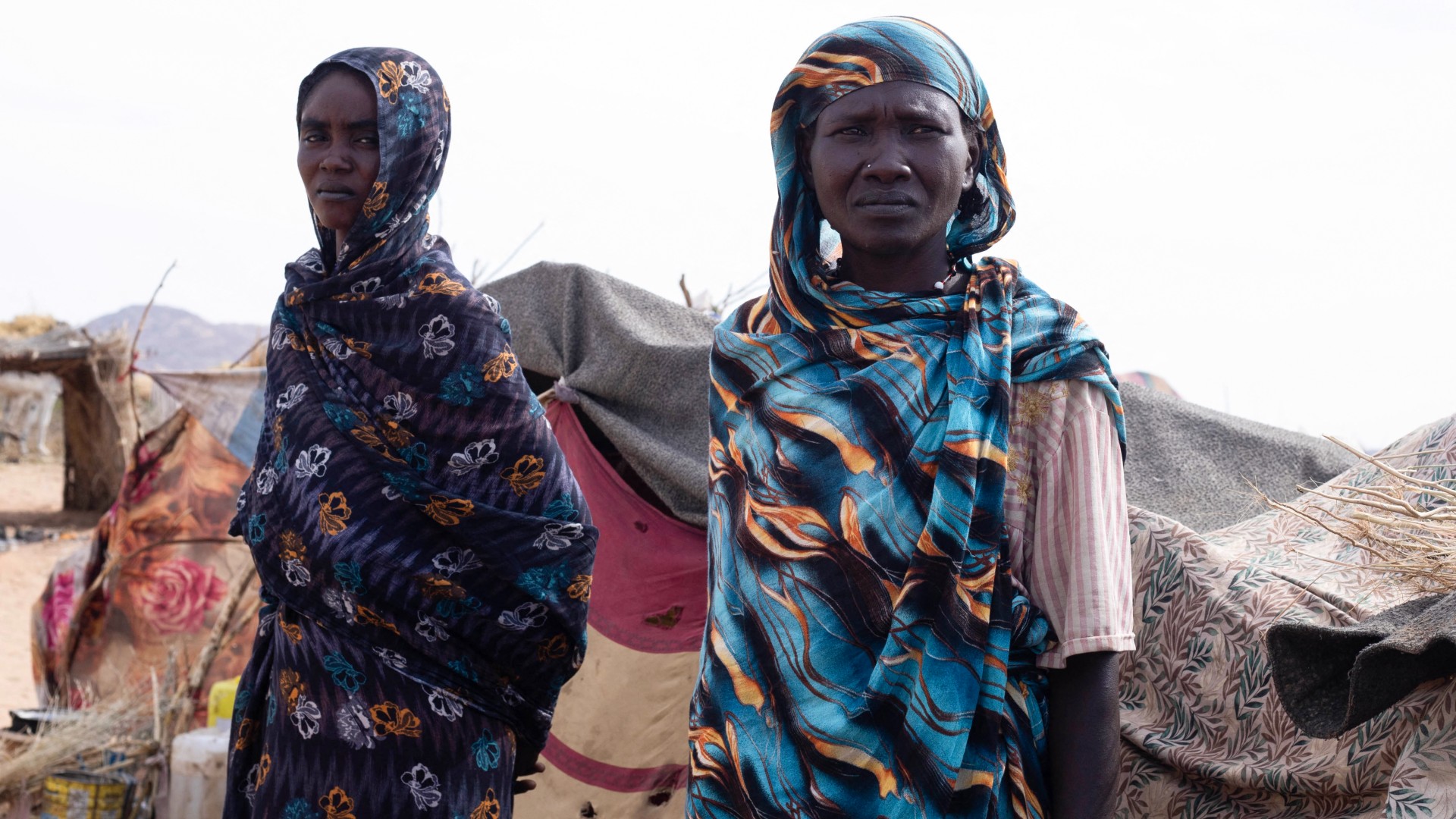
    A comprehensive United Nations investigation has concluded that Sudan’s paramilitary Rapid Support Forces (RSF) committed systematic atrocities during their capture of el-Fasher in October that demonstrate clear indicators of genocide. The report documents a pattern of large-scale crimes targeting specific ethnic groups in North Darfur’s capital.

    The UN mission established that the RSF’s offensive displayed three fundamental elements of genocide under international law: mass killings of protected groups, intentional infliction of severe physical and psychological harm, and deliberate creation of conditions calculated to bring about physical destruction. The investigation specifically identified the Fur, Masalit and Zaghawa communities as primary targets, noting these groups received protected status under the Rome Statute during previous ICC proceedings against former president Omar al-Bashir.

    Evidence reveals the RSF implemented a coordinated strategy of extermination through multiple mechanisms. The paramilitary forces besieged el-Fasher for eighteen months, systematically cutting off food, water, medical supplies and humanitarian assistance while conducting relentless attacks on civilian infrastructure. Drones and heavy weapons targeted communal kitchens, medical facilities and places of worship, including a dawn prayer attack on Al-Safiya Mosque that killed approximately 70 civilians, including 11 children.

    The report details how RSF fighters employed explicit genocidal language, with survivors recounting statements such as “We want to eliminate anything black from Darfur” and “We will carry out extermination against you, an extermination like what we did to Masalit.” The forces constructed earthen berms and trenches to trap civilians without adequate sustenance, leading to widespread starvation where residents resorted to eating animal fodder and tree leaves.

    During the actual capture of the city between October 24-26, the RSF engaged in indiscriminate killings, including executions at checkpoints where men were separated from women and children. Fighters recorded themselves executing civilians while chanting racist slogans and using ethnic slurs. The notorious commander known as Abu Lulu personally conducted executions, with video evidence showing him shooting a pregnant woman seven times in the abdomen after inquiring about her pregnancy term.

    The investigation further documented systematic sexual violence targeting women and girls aged 7-70 from non-Arab communities, particularly the Zaghawa. Victims reported gang-rapes, sexual slavery, and brutal physical assaults, often conducted in front of family members. The mission confirmed cases of women being abducted and subjected to repeated rape over multiple days, with many remaining missing.

    The UN has called for immediate international intervention to halt the violence and bring perpetrators to justice, emphasizing that the documented crimes represent some of the most severe violations of international law witnessed in recent conflicts.

  • Trump brings in new 10% tariff as Supreme Court rejects his global import taxes

    Trump brings in new 10% tariff as Supreme Court rejects his global import taxes

    In a dramatic escalation of tensions between the executive and judicial branches, President Donald Trump has announced a new 10% universal tariff immediately following a landmark Supreme Court ruling that struck down his previous global trade measures. The 6-3 decision, which found the president had exceeded his authority, represents one of the most significant judicial checks on presidential power in recent history.

    The court’s majority opinion, authored by Chief Justice John Roberts, determined that the International Emergency Economic Powers Act of 1977—cited by the administration as legal justification—contained no explicit congressional delegation of tariff-setting authority. ‘When Congress has delegated its tariff powers, it has done so in explicit terms and subject to strict limits,’ Roberts wrote, joined by the court’s three liberal justices and two Trump-appointed conservatives, Amy Coney Barrett and Neil Gorsuch.

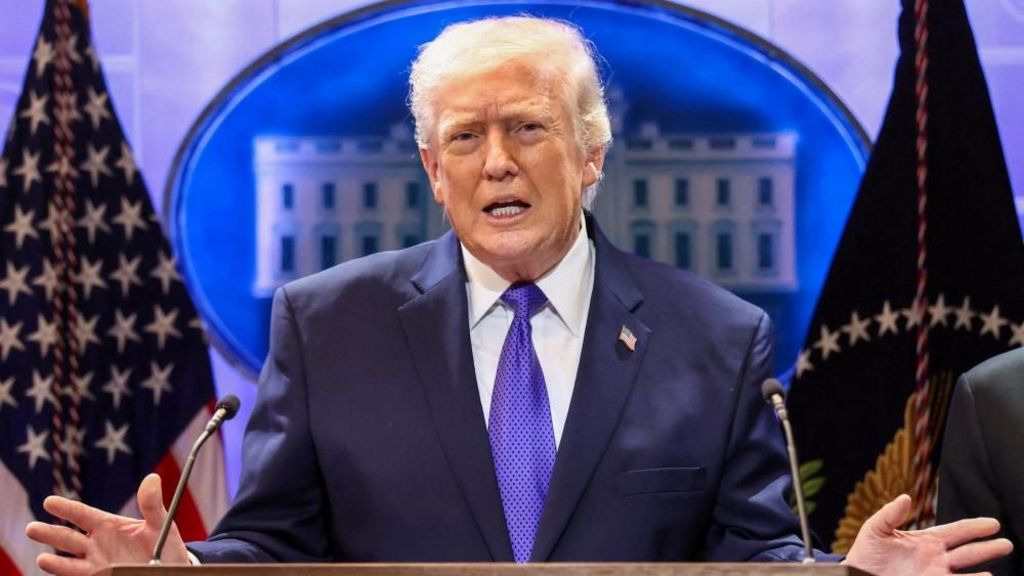
    Speaking from the White House briefing room, Trump delivered an extraordinary rebuke of the judicial branch, characterizing the decision as ‘terrible’ and labeling dissenting Republican-appointed justices as ‘fools and lap dogs’ who demonstrated ‘unpatriotic and disloyal’ behavior. The president vowed to continue his trade policy through alternative legal mechanisms, including Section 122—a rarely invoked statute allowing temporary tariffs of up to 15% for 150 days without congressional approval.

    The ruling triggered immediate market reactions, with the S&P 500 gaining 0.7% as business leaders expressed relief. Beth Benike, owner of Minnesota-based Busy Baby products, described feeling ‘like a thousand-pound weight has been lifted off my chest,’ while Terry Precision Cycling CEO Nik Holm called the decision a ‘relief’ despite anticipating lengthy supply chain recovery.

    Legal experts warned that the path to tariff refunds—estimated at $130 billion already collected under the invalidated program—remains fraught with complexity. Diane Swonk, chief economist at KPMG US, cautioned that litigation costs could prevent smaller firms from recouping funds, while trade analyst Geoffrey Gertz noted the situation had ‘only gotten more complicated and more messy.’

    The administration indicated that even nations with existing trade agreements, including the UK, EU, and India, would now face the new universal levy, though officials expect these countries to maintain previously negotiated concessions. European Commission spokespersons stated they were ‘analyzing the ruling carefully’ amid concerns about renewed trade uncertainty.

    This constitutional clash sets the stage for prolonged legal battles and potentially far-reaching implications for presidential authority in international trade matters.

  • Israel army says on ‘defensive alert’ regarding Iran but no change to public guidelines

    Israel army says on ‘defensive alert’ regarding Iran but no change to public guidelines

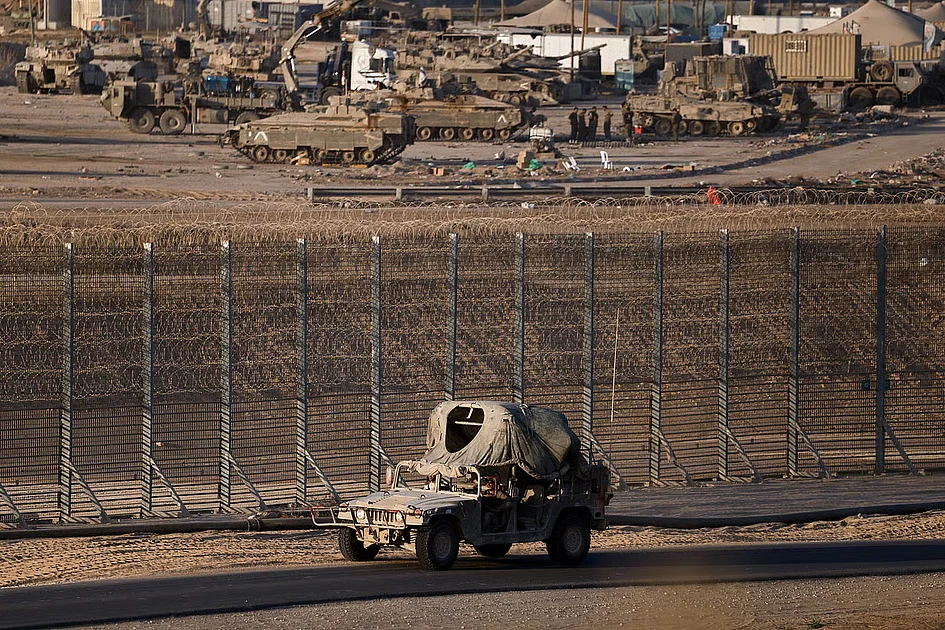
    The Israeli Defense Forces have elevated their defensive readiness while carefully monitoring escalating tensions between the United States and Iran, according to a Friday statement from military officials. Army spokesperson Brigadier General Effie Defrin confirmed in a video address that while the military remains on heightened alert, there has been no modification to public safety guidelines despite the volatile regional situation.

    “We are maintaining vigilant surveillance of regional developments and remain acutely aware of the ongoing public discourse regarding Iran,” stated Defrin. “The Israeli military is currently operating under defensive alert status, with our operational capabilities fully prepared to respond to any shifts in the security landscape.”

    The spokesperson employed vivid military terminology to illustrate the current state of readiness, noting that “our visual monitoring extends across all sectors, and our operational readiness has been intensified more than ever before to address any alterations in the tactical environment.” This declaration comes amid increasing rhetorical exchanges between American and Iranian officials, creating a tense atmosphere throughout the Middle East.

    Despite the heightened military alertness, Israeli authorities have deliberately avoided implementing changes to civilian protocols, indicating a calibrated approach that balances security preparedness with public normalcy. The military’s statement appears designed to reassure both domestic and international observers that while defensive measures are being prioritized, there is no immediate cause for public alarm.