作者: admin

  • Arsenal’s Eze sinks Spurs again, Liverpool late show floors Forest

    Arsenal’s Eze sinks Spurs again, Liverpool late show floors Forest

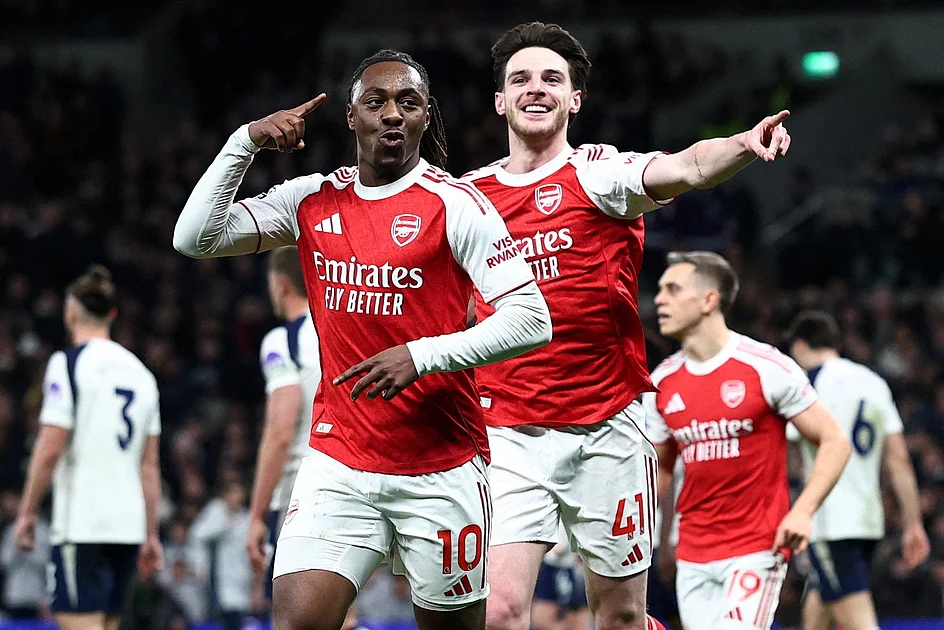
    In a pivotal weekend for the Premier League title race, Arsenal reasserted their dominance with a commanding 4-1 victory over North London rivals Tottenham Hotspur. The Gunners’ triumph, fueled by a brilliant double from Eberechi Eze, restored their five-point advantage at the summit while deepening Tottenham’s relegation concerns.

    Eze, who nearly joined Spurs before his August transfer from Crystal Palace, broke his goal drought in spectacular fashion. The England international opened the scoring with a clinical finish just after the half-hour mark, though Tottenham’s Randal Kolo Muani provided an immediate response. The match turned decisively in Arsenal’s favor when Viktor Gyokeres netted his most significant goal since joining the club early in the second half. Eze sealed the victory with his second goal before Gyokeres completed the scoring in stoppage time.

    Meanwhile, Liverpool secured a dramatic late victory at Nottingham Forest through Alexis Mac Allister’s 97th-minute winner. The Argentine midfielder pounced on a rebound after Virgil van Dijk’s header was saved, breaking Forest’s resistance in the dying moments. The victory came despite Liverpool’s admitted poor performance, with Mac Allister stating post-match that ‘nothing was good’ about much of their display.

    The results have significant implications across the table: Arsenal maintain pressure on pursuing Manchester City, who hold a game in hand; Liverpool climb level with Chelsea and Manchester United in the European qualification race; while Tottenham remain just four points above the relegation zone under interim manager Igor Tudor.

    In other matches, Fulham climbed into the top half with a 3-1 victory at Sunderland, while Crystal Palace secured just their second win in sixteen games through Evann Guessand’s 90th-minute winner against Wolves.

  • How a UN expert proved the RSF committed genocide in Sudan’s el-Fasher

    How a UN expert proved the RSF committed genocide in Sudan’s el-Fasher

    A United Nations investigation has determined that atrocities committed by Sudan’s Rapid Support Forces (RSF) in the North Darfur capital of el-Fasher bear the hallmarks of genocide, according to findings presented by the UN Fact-Finding Mission for Sudan (FFMS). The landmark conclusion represents the most serious classification of international crimes and marks the first time the UN mission has reached such a determination regarding the conflict.

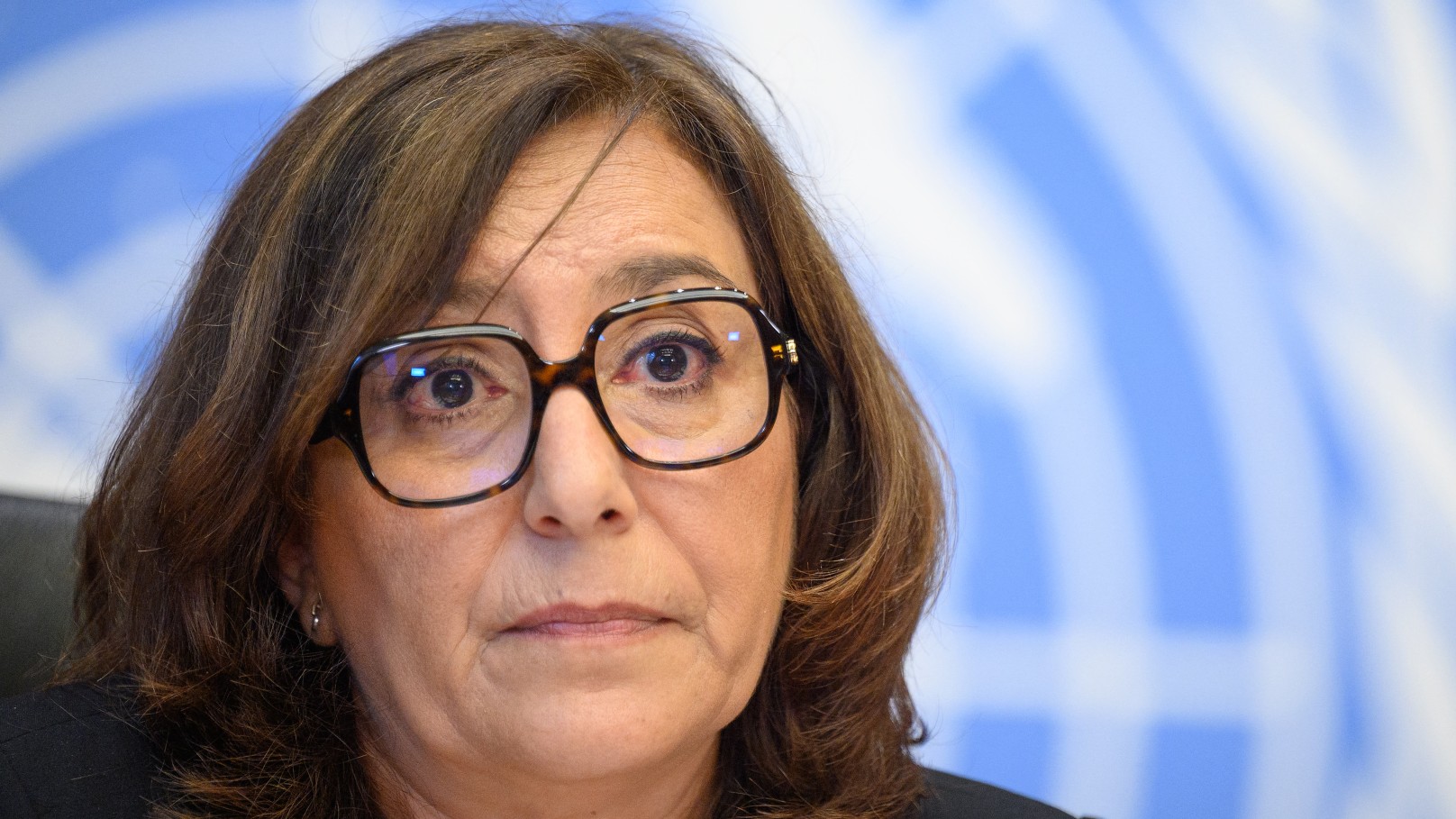
    Mona Rishmawi, a member of the FFMS and expert on the Darfur conflict, characterized the findings as “serious and urgent” in an interview with Middle East Eye, stating they should compel immediate international action to halt weapons flows to the paramilitary force. The report, scheduled for presentation to the UN Human Rights Council this week, documents systematic atrocities committed during the RSF’s October takeover of el-Fasher following a 500-day siege.

    The investigation established that the RSF committed three prohibited genocidal acts against protected ethnic groups: mass killings, systematic rape and sexual violence, and the deliberate creation of conditions calculated to bring about physical destruction. Most victims belonged to the Zaghawa and Fur communities, previously recognized as protected groups by the International Criminal Court.

    Evidence gathered from survivors indicates civilians were subjected to execution, rape, ransom detention, and even blood extraction in makeshift detention centers. The mission documented mass killings at six specific locations including el-Fasher University, the Saudi Hospital, and major exit routes where RSF forces constructed earthen berms to trap fleeing civilians.

    Rishmawi emphasized that the genocidal intent could be inferred from the totality of RSF conduct, including their use of dehumanizing language such as promises to “purify your race” and the coordinated pattern of targeting specific ethnic groups. The 18-month siege deliberately denied civilians access to food, medicine, and clean water, with water sources reportedly bombed to exacerbate suffering.

    The report identifies several RSF commanders present during the atrocities and notes that leadership figures including Mohamed Hamdan Dagalo (Hemedti) publicly praised the “liberation” of el-Fasher. Despite this, both the RSF and Sudanese Armed Forces refused to cooperate with the UN investigation, denying access to controlled territories and ignoring repeated requests for information.

    The mission has shared confidential evidence files with the International Criminal Court, which has jurisdiction over Darfur under a 2005 Security Council referral. However, Rishmawi noted that the ICC’s capacity has been weakened by recent US sanctions, complicating pursuit of accountability.

    The report serves as a warning to states providing political or material support to combatants, noting that the RSF appears to have benefited from logistical military support in violation of the Darfur arms embargo in place since 2005. While not naming specific nations, the mission indicated it is engaging with various states regarding their involvement and will report on third-state responsibility in the future.

    The investigation faced significant challenges due to severe financial and staffing constraints within the UN system, operating with less than half the necessary personnel. Evidence was primarily gathered from survivors in neighboring Chad and South Sudan after being denied access to el-Fasher itself.

    Rishmawi called for serious discussions regarding an international protection force, noting that many Darfur residents felt safer under the previous African Union-UN hybrid peacekeeping mission (Unamid) that operated from 2007-2020. With minimal international presence and media coverage currently in Sudan, civilians remain vulnerable to ongoing violence with limited global attention.
  • AFL 2026: Gold Coast Suns’ recruit impresses teammates with hunger to succeed

    AFL 2026: Gold Coast Suns’ recruit impresses teammates with hunger to succeed

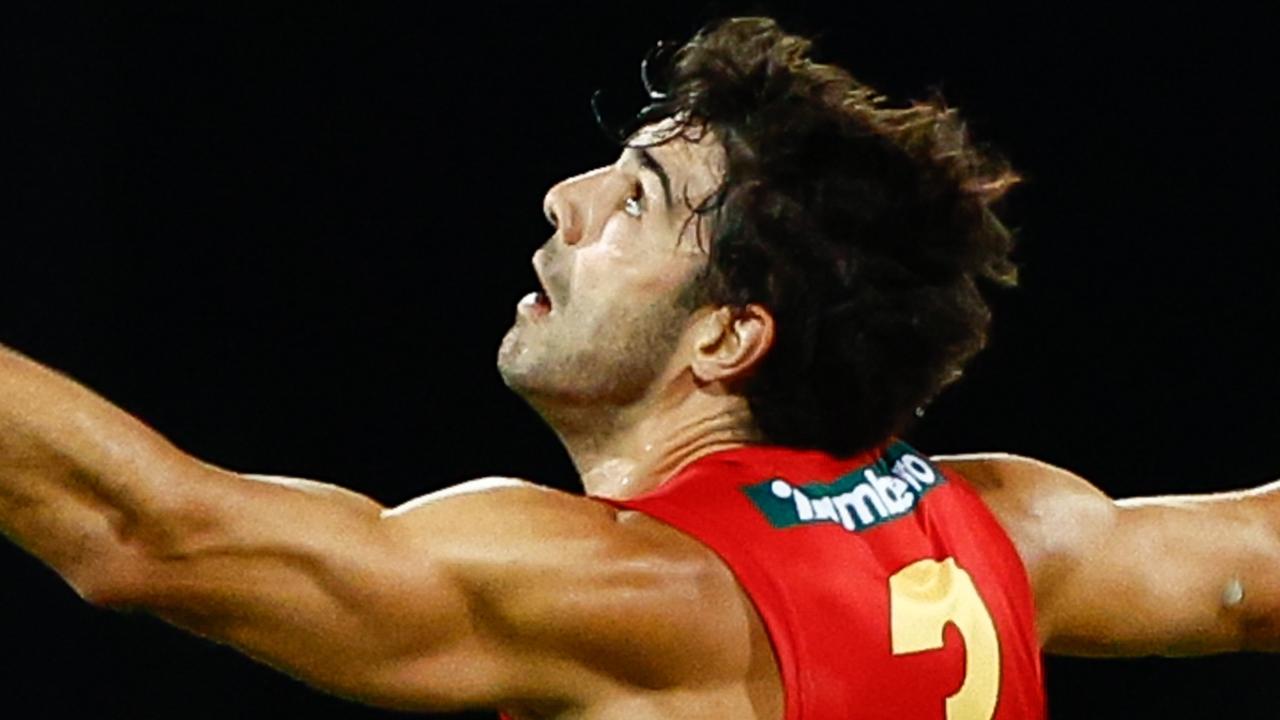
    Gold Coast Suns captain Noah Anderson has revealed how star recruit Christian Petracca’s insatiable hunger for improvement has made a profound impact on the AFL club, with the decorated midfielder demonstrating the enthusiasm of a first-year rookie despite his elite credentials.

    Petracca, one of Australian rules football’s most accomplished midfielders, joined the Suns during last season’s trade period following his departure from Melbourne Demons. Anderson expressed astonishment at how the veteran player has completely shed any sense of entitlement, instead approaching his new environment with remarkable humility and curiosity.

    “He’s been at the pinnacle of our sport for nearly a decade, yet he brings this dynamic energy that’s transformed our midfield composition,” Anderson stated. “What’s most striking is his complete absence of ego—he’s consistently asking questions, seeking improvement, and demonstrating eagerness to learn as if he were a debutant.”

    The captain admitted Petracca’s approach had served as a powerful reminder of his exceptional qualities: “His demeanor made me momentarily forget just how accomplished he truly is. That combination of elite talent and relentless drive to enhance his game has created an immediate positive influence throughout our squad.”

    Petracca’s arrival proves particularly timely given the temporary absence of Brownlow Medal winner Matt Rowell, who is recovering from finger surgery. Anderson highlighted how Petracca’s physical presence and versatility would provide crucial support: “He offers multiple assets—ball-winning capability, substantial physicality in contests, and scoring threat when advancing forward. His presence allows for better distribution of the demanding midfield workload while creating additional opportunities throughout our offensive schemes.”

  • Three talking points from the Premier League

    Three talking points from the Premier League

    In a commanding display of football prowess, Arsenal delivered a stunning 4-1 victory over arch-rivals Tottenham Hotspur in the North London derby, reestablishing their five-point advantage at the Premier League summit. This decisive performance comes as a direct response to Manchester City’s persistent pressure in the title race, following City’s 2-1 triumph against Newcastle United just one day prior.

    The Gunners’ offensive masterclass was spearheaded by two strategic summer acquisitions who proved instrumental in dismantling Spurs’ defense. Eberechi Eze, who nearly joined Tottenham before Arsenal’s eleventh-hour intervention, demonstrated his worth with a brilliant brace, adding to his hat-trick from November’s identical 4-1 derby victory. Meanwhile, Swedish striker Viktor Gyokeres silenced critics with his most complete performance since arriving from Sporting Lisbon, delivering precisely when the club needed him most according to manager Mikel Arteta.

    While Arsenal celebrated their derby dominance, Manchester City maintained their title ambitions through the emergence of homegrown talent Nico O’Reilly. The 20-year-old midfielder, recently pushed forward from his makeshift left-back position, netted both goals in City’s crucial victory against Newcastle. Manager Pep Guardiola praised O’Reilly’s physicality and completeness, with the young star now making a compelling case for World Cup selection after earning international recognition from England boss Thomas Tuchel earlier this season.

    Elsewhere in Premier League drama, Chelsea’s defensive frailties resurfaced in dramatic fashion as they surrendered a 93rd-minute equalizer to second-bottom Burnley. Manager Liam Rosenior expressed fury at his squad’s inability to protect leads, noting they had ‘set fire to four points’ in consecutive home games. Despite currently occupying fourth position, Chelsea face a challenging fixture schedule that will test their Champions League qualification credentials against top-tier opposition in coming weeks.

  • A Hong Kong court uphold the convictions of about a dozen activists in national security case

    A Hong Kong court uphold the convictions of about a dozen activists in national security case

    Hong Kong’s Court of Appeal has delivered a definitive ruling in the city’s most significant national security case, rejecting all appeals from pro-democracy activists convicted for their involvement in an unofficial primary election. The decision solidifies the legal consequences for 47 activists charged in 2021 with conspiracy to commit subversion under Beijing’s national security legislation.

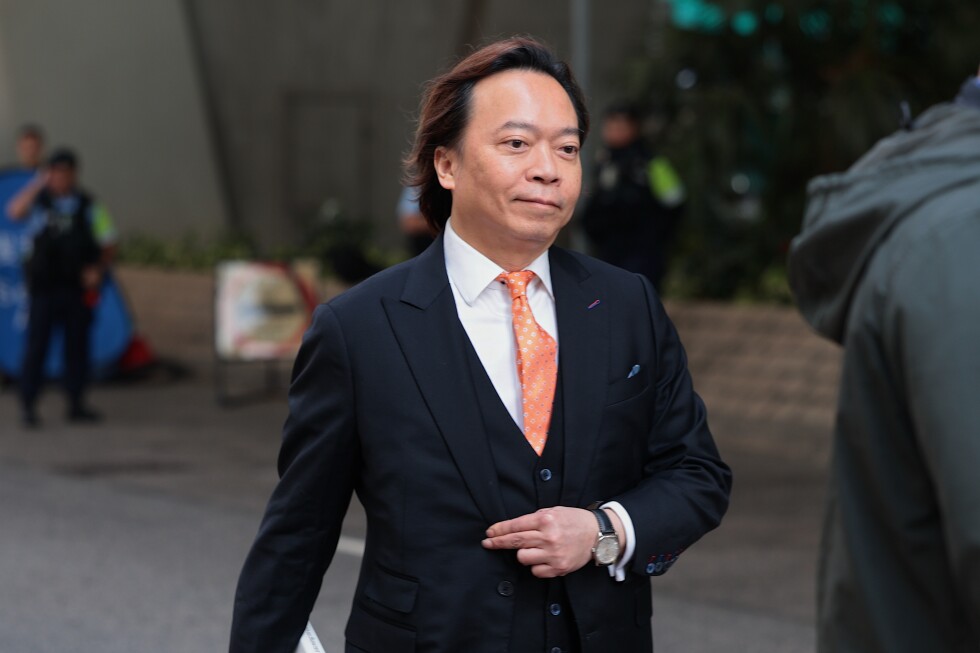
    In a sweeping judgment Monday, the court dismissed appeals from eleven activists challenging their convictions, including former legislators Leung Kwok-hung, Lam Cheuk-ting, Raymond Chan, and Helena Wong. All sentence appeals were similarly rejected, maintaining prison terms ranging from four to ten years imposed earlier this year. The mass prosecution has effectively dismantled Hong Kong’s once-vibrant pro-democracy movement that peaked during the 2019 anti-government protests.

    The case stemmed from an unofficial primary election organized by democracy advocates seeking to coordinate candidates for the 2020 legislative elections. Prosecutors successfully argued that the activists’ strategy to secure a legislative majority—aimed at pressuring for police accountability reforms and democratic leadership elections—constituted an attempt to paralyze government operations and force resignations.

    Judges in their 2024 verdict determined that the activists’ plans would have undermined governmental authority and precipitated constitutional crisis. While foreign governments and human rights organizations have condemned the sentences as politically motivated, both Beijing and Hong Kong authorities maintain that the national security law was essential for preserving stability.

    Among the original defendants, Lawrence Lau, a pro-democracy former district councilor, saw his acquittal upheld despite prosecution appeals. Nearly twenty activists from the case have been released over the past year after completing their sentences, including former district councilors Jimmy Sham and Lester Shum.

    The courtroom proceedings revealed emotional scenes as incarcerated activists waved to family members and supporters, some of whom had waited outside the courthouse since Saturday to secure seating. Retiree Margaret Chan, who attended to show support for those she considers innocent, expressed relief that some activists had already served their terms, noting ‘They have survived it.’

  • Ethiopia’s Tigray region is caught between past conflict and fears of another

    Ethiopia’s Tigray region is caught between past conflict and fears of another

    The fragile peace in Ethiopia’s northern Tigray region shows alarming signs of unraveling as residents brace for potential renewed hostilities. In Mekele, the regional capital, a palpable tension hangs over daily life despite the absence of active combat. Local tour guide Gebreegziabher Berehe, 37, exemplifies the growing desperation as his livelihood evaporates amid escalating geopolitical tensions. “My colleagues and I now face serious economic and moral crises, even before hearing the sound of any gun,” Berehe lamented, reflecting the psychological toll on civilians who survived the previous devastating conflict.

    The November 2022 peace agreement that ended two years of brutal warfare appears increasingly fragile. Tigrayan authorities accuse Ethiopian federal forces of violating the truce with recent drone strikes, while Addis Ababa alleges neighboring Eritrea is mobilizing and financing armed groups within Tigray. This complex web of accusations has created a dangerous standoff with potentially catastrophic humanitarian consequences.

    Complicating matters further, Prime Minister Abiy Ahmed’s renewed push for Red Sea access through Eritrean territory has drawn sharp condemnation from Asmara. Eritrean government spokesperson Yemane Gebremeskel dismissed Abiy’s ambitions as “delusional malaise,” prompting Eritrea to unexpectedly warm relations with its former Tigrayan enemies. This shifting alliance landscape has raised alarms in Addis Ababa, prompting call-ups of reserve forces.

    The humanitarian situation continues deteriorating with farmers reporting critical shortages of fuel, fertilizer, and transportation. Johannes Tesfay, a chili farmer north of Mekele, summarized the prevailing anxiety: “What can we do? All we can do is pray. We need global community help for reconciliation.”

    International bodies including the United Nations, European Union, and United Kingdom have issued urgent calls for restraint. The volatility has already disrupted air travel, with Ethiopian Airlines temporarily suspending flights to Tigray following clashes in disputed border areas. With memories of communication blackouts and travel restrictions fresh in their minds, many residents are actively seeking escape routes before potential renewed conflict traps them indefinitely.

  • Who was El Mencho, Mexico’s most wanted man?

    Who was El Mencho, Mexico’s most wanted man?

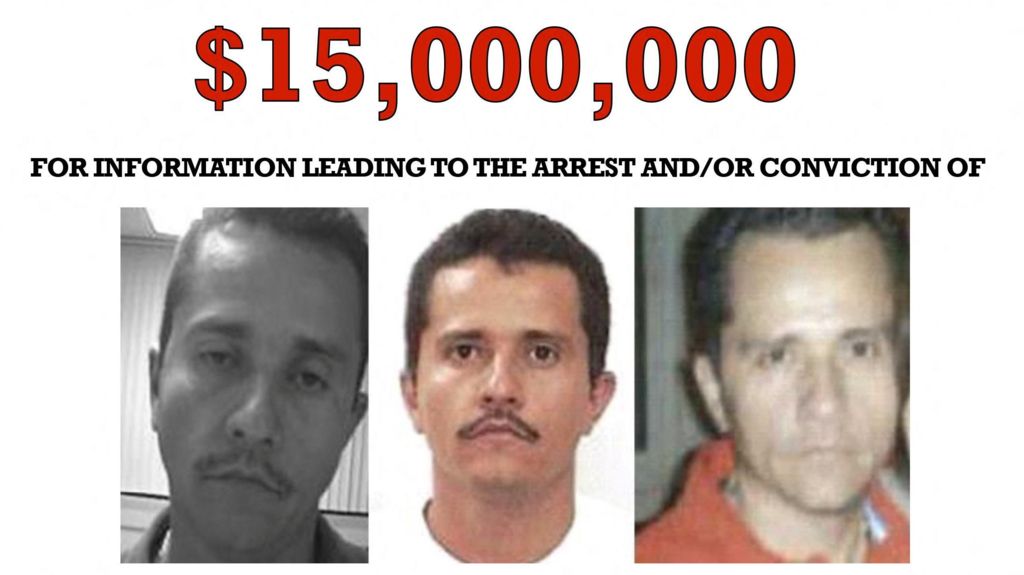
    The elimination of Nemesio Oseguera Cervantes, infamously known as ‘El Mencho,’ marks a pivotal moment in Mexico’s ongoing battle against organized crime. As the mastermind behind the Jalisco New Generation Cartel (CJNG), his death represents both a significant tactical victory for authorities and a potential catalyst for escalated violence across the nation.

    US intelligence agencies played a crucial role in the operation that brought down Mexico’s most feared cartel leader, demonstrating unprecedented cross-border cooperation between Mexican and American authorities. This joint effort underscores the international dimension of combating drug trafficking organizations that operate across national boundaries.

    In the immediate aftermath of El Mencho’s death, his organization has launched a coordinated campaign of violence and intimidation. From Guerrero on the Pacific coast to Tamaulipas in the northeast, cartel members have erected roadblocks and unleashed violence in at least eight Mexican states. The western state of Jalisco, the cartel’s home territory, has witnessed particularly severe unrest with masked gunmen setting fire to businesses in Guadalajara—a designated host city for the upcoming FIFA World Cup.

    Tourist destinations like Puerto Vallarta have been paralyzed as both visitors and residents shelter indoors awaiting the passing of this violent outburst. This widespread display serves dual purposes: demonstrating loyalty to the fallen leader and expressing fury toward government forces responsible for his elimination.

    The strategic vacuum left by El Mencho’s death raises critical questions about the future balance of power within Mexico’s criminal landscape. Historical patterns suggest that despite the removal of such influential figures, criminal organizations typically maintain continuity through well-established succession structures. The CJNG likely has several high-ranking lieutenants prepared to assume leadership, though replicating El Mencho’s unique combination of strategic vision and brutal effectiveness may prove challenging.

    El Mencho’s criminal career followed a trajectory common to many cartel leaders. Beginning with marijuana cultivation in his native Michoacán, he advanced through the criminal ranks during his time as an undocumented immigrant in California. Multiple arrests and eventual deportation shaped his development into a calculating and ruthless operator who ultimately built Mexico’s predominant criminal enterprise from the remnants of the fractured Milenio Cartel.

    His rise coincided with the decline of the Sinaloa Cartel following the extradition of Joaquín ‘El Chapo’ Guzmán. The CJNG strategically expanded its operations during this power transition, particularly capitalizing on the lucrative fentanyl trade that has become a primary concern for American authorities.

    The Sheinbaum administration now faces the complex challenge of managing both the security fallout from cartel violence and the diplomatic implications of deepened cooperation with the United States. This operation may temporarily alleviate pressure from Washington regarding cross-border fentanyl trafficking while potentially forestalling calls for unilateral American military action on Mexican soil—a proposition that has gained traction among some Republican policymakers.

    As Mexico processes the death of its most wanted criminal, the nation watches nervously to determine whether this represents a turning point in the drug war or merely another chapter in the cyclical violence that has long plagued the country.

  • US futures fall while Asian markets are mostly higher after the Supreme Court nixes Trump’s tariffs

    US futures fall while Asian markets are mostly higher after the Supreme Court nixes Trump’s tariffs

    Financial markets across Asia and the United States exhibited divergent reactions Monday following a landmark Supreme Court decision that struck down the majority of former President Donald Trump’s sweeping tariff policies. The ruling, which dismantled a key component of Trump’s trade architecture, triggered a complex recalibration of market positions globally.

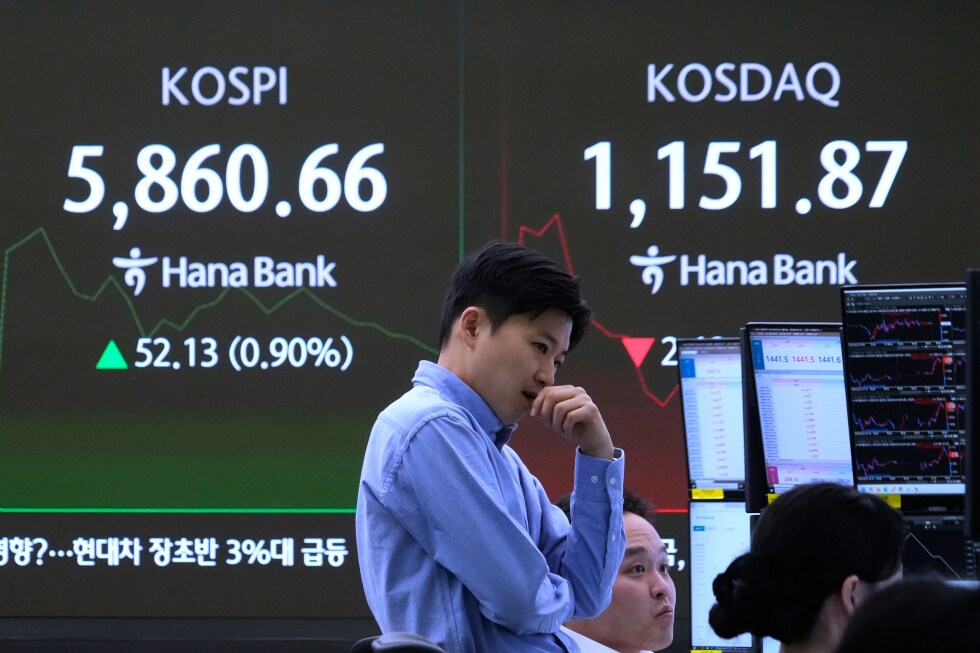
    Asian markets largely celebrated the judicial intervention, with Hong Kong’s Hang Seng Index leading regional gains by surging 2.2% to 27,003.47. South Korea’s Kospi advanced 1.1% to 5,873.07 while Taiwan’s Taiex jumped 1.4%. Conversely, China’s Shanghai Composite bucked the regional trend by declining 1.3% to 4,082.07, and Australia’s S&P/ASX 200 shed 0.4% to 9,041.00. Tokyo markets remained closed for a national holiday.

    The contrasting performances illustrated what Rabobank strategist Benjamin Picton described as “the winners-and-losers effect of shifts in tariff policy,” noting that the decision “delivered a boost to countries who previously had a comparatively bad deal.”

    U.S. futures signaled caution ahead of the Wall Street opening, with S&P 500 futures dropping 0.7%, Dow Jones Industrial Average futures falling 0.6%, and Nasdaq composite futures declining 0.8%. This contrasted with Friday’s relatively calm reaction on Wall Street itself, where the S&P 500 had actually risen 0.7% to 6,909.51 following the ruling.

    Despite the court’s decision, trade policy uncertainty persists as Trump announced alternative measures to maintain import taxes, including a potential 15% global tariff through executive action. “We have tariffs, we just have them in a different way,” Trump told reporters, indicating he would pursue tariffs through other legal avenues requiring Commerce Department investigations.

    Individual stocks reflected the ongoing market adjustments, with Akamai Technologies plummeting 14.1% despite strong earnings, as its profit forecast disappointed investors. The company plans increased spending on equipment investments, potentially reflecting broader economic impacts from AI-driven memory shortages.

    Meanwhile, economic indicators continued to present a complex picture with reports showing slowing U.S. economic growth alongside accelerating inflation. Traders maintained expectations of at least two Federal Reserve rate cuts this year, though Fed officials emphasized the need for further inflation reduction before supporting additional rate reductions.

    In commodity markets, U.S. benchmark crude declined 53 cents to $65.95 per barrel while Brent crude dropped 51 cents to $70.79. Precious metals rallied sharply with gold rising 1.9% and silver surging 5.5%, as currency markets saw the U.S. dollar soften against the yen and euro.

  • South Korea protests ‘Victory’ banner hung from Russian embassy

    South Korea protests ‘Victory’ banner hung from Russian embassy

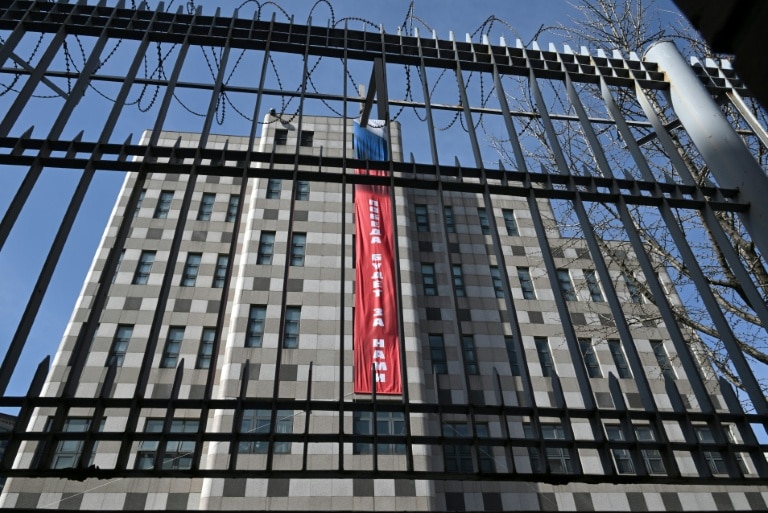
    South Korea has issued a formal diplomatic protest against Russia following the display of a contentious banner on the exterior wall of the Russian Embassy in Seoul. The banner, featuring the phrase \”Victory will be ours\” in Russian colors, appeared over the weekend coinciding with the four-year anniversary of Russia’s invasion of Ukraine.\n\nThe South Korean Foreign Ministry characterized the display as inappropriate given Seoul’s consistent position that \”Russia’s invasion of Ukraine is an illegal act.\” Officials confirmed they had communicated their objections to Russian representatives regarding both the banner and recent public statements made by Russian Ambassador Georgy Zinoviev.\n\nThe diplomatic friction intensifies amid reports that North Korea has dispatched thousands of troops to support Russian forces in Ukraine. South Korean intelligence estimates approximately 2,000 North Korean soldiers have been killed in combat operations. Ambassador Zinoviev had previously praised North Korean contributions to Russian military efforts in the Kursk region, comments that drew sharp criticism from Seoul.\n\nSouth Korea considers the growing military cooperation between Moscow and Pyongyang a \”serious threat to our national security,\\” particularly given the technically unresolved state of war between the Koreas since the 1950-53 conflict ended with an armistice rather than a permanent peace treaty. Analysts suggest North Korea receives financial assistance, military technology, and essential supplies in exchange for its troop deployments.\n\nNeither the Russian nor Ukrainian embassies in Seoul provided immediate commentary on the developing situation as diplomatic tensions continue to escalate.

  • What’s behind Israel’s ‘special relationship’ with India?

    What’s behind Israel’s ‘special relationship’ with India?

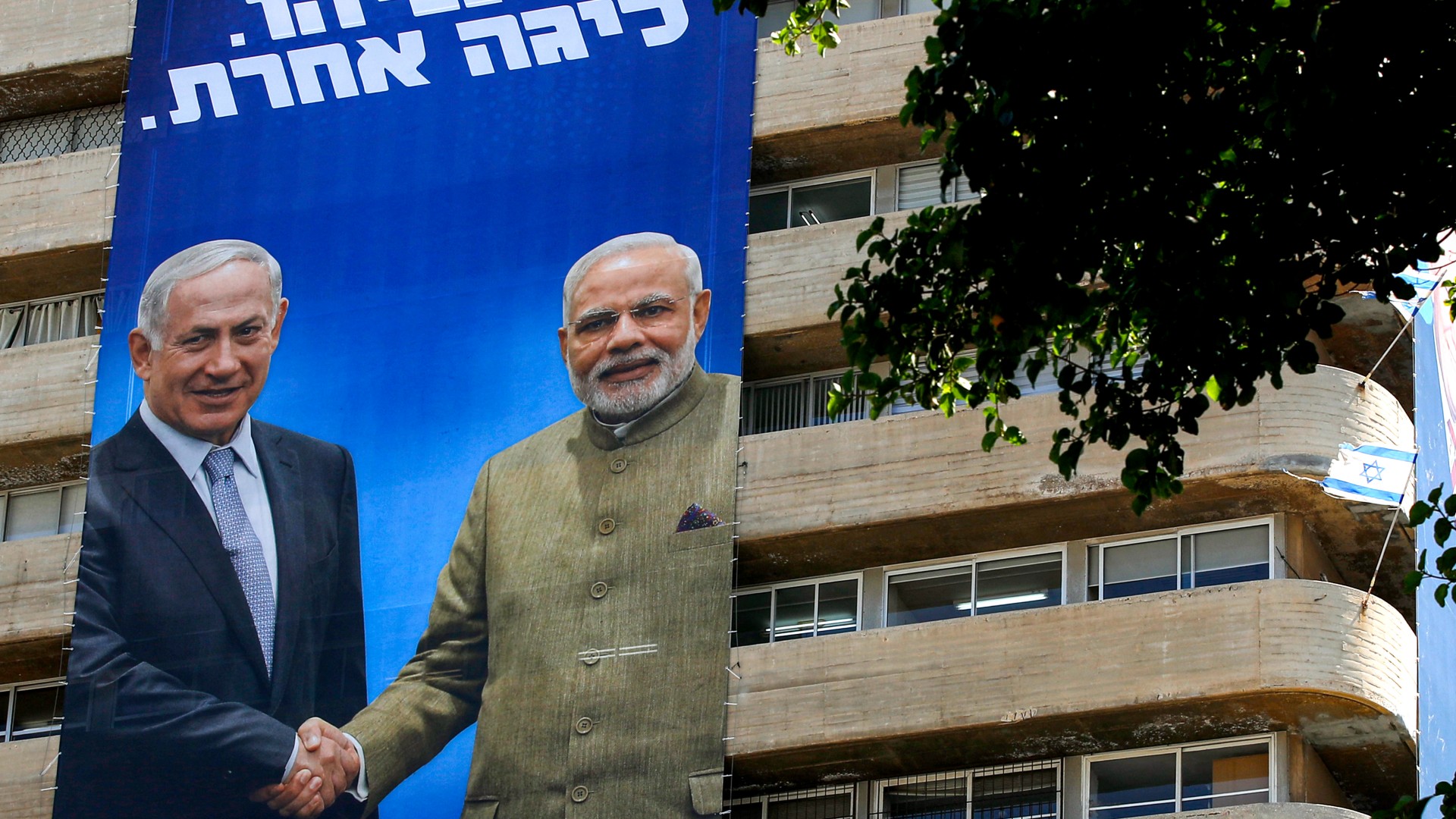
    Indian Prime Minister Narendra Modi’s upcoming two-day visit to Israel marks a significant moment in the deepening strategic partnership between the two nations. The visit, described by Israeli Prime Minister Benjamin Netanyahu as highlighting a “special relationship,” comes at a critical juncture in Middle Eastern geopolitics, with escalating tensions with Iran and ongoing conflict in Gaza.

    The relationship between India and Israel has evolved substantially since Netanyahu’s landmark 2017 visit to India, which established the countries as strategic partners in water and agriculture. Modi’s current visit represents a continuation of this growing alliance, particularly in defense and technology sectors.

    Over the past decade, India has emerged as the largest purchaser of Israeli weapons systems, with defense purchases increasing by 175% between 2015-2019. The partnership extends beyond mere transactions to include co-production agreements and technology transfer, supporting Modi’s “Make in India” initiative for military modernization and indigenous manufacturing.

    The timing of the visit is strategically significant for both leaders. Netanyahu faces elections in nine months and benefits from demonstrating strong international alliances, while Modi reinforces his global stature and strategic outreach to the Global South. The visit includes addressing the Israeli Knesset—an honor reserved for special guests—and meetings focused on technology innovation in Jerusalem.

    Notably absent from the itinerary are visits to occupied Palestinian territories, reflecting India’s policy under Modi to “de-hyphenate” Israel and Palestine relations, despite India’s official commitment to a two-state solution.

    The countries recently signed a Bilateral Investment Agreement aimed at protecting mutual investments and advancing broader economic integration. Discussions during the visit are expected to focus on expanding cooperation in intelligence, weapons development, anti-ballistic missile systems, and emerging technologies including artificial intelligence and quantum computing.

    Netanyahu has articulated a vision of forming a “hexagon” of alliances involving India, Arab nations, African countries, Mediterranean states, and Asian partners, seen as an effort to create a pro-Western, anti-Iran economic and strategic bloc building on the India-Middle East-Europe Economic Corridor.

    While the visit has been celebrated in mainstream Indian media, it has also prompted concerns and protests from Palestinian advocates within India, met with government crackdowns. The opposition Indian National Congress has criticized the lack of transparency surrounding the visit rather than the substance of the relationship itself.