作者: admin

  • China issues standards for TCM services at primary level

    China issues standards for TCM services at primary level

    Chinese health authorities have unveiled comprehensive new guidelines mandating the standardization and expansion of Traditional Chinese Medicine (TCM) services at grassroots healthcare institutions nationwide. The National Administration of Traditional Chinese Medicine, in collaboration with the National Health Commission and National Disease Control and Prevention Administration, jointly issued the framework on Tuesday to enhance primary healthcare delivery through systematic TCM integration.

    The groundbreaking standards require township health centers and community clinics to provide minimum service packages including at least six categories encompassing ten distinct TCM treatment modalities. These specifically include acupuncture, moxibustion therapy, cupping, and therapeutic massage among other techniques. Facilities must maintain pharmaceutical inventories of no fewer than 80 varieties of Chinese patent medicines and a minimum of 300 types of decoction pieces to ensure comprehensive treatment capabilities.

    The guidelines emphasize the strategic application of TCM methodologies in chronic disease management, particularly for conditions including hypertension, diabetes mellitus, and chronic obstructive pulmonary disease. The framework advocates for integrated service models combining preventive care, therapeutic intervention, and rehabilitation services through TCM approaches.

    Notably, the standards establish workforce requirements stipulating that TCM practitioners must constitute at least 20% of medical staff at primary healthcare institutions. This structural reinforcement aims to bolster the high-quality development of TCM services at community level, representing a significant advancement in China’s healthcare system modernization while preserving traditional medical practices.

  • Military plane crash in Colombia leaves 66 dead

    Military plane crash in Colombia leaves 66 dead

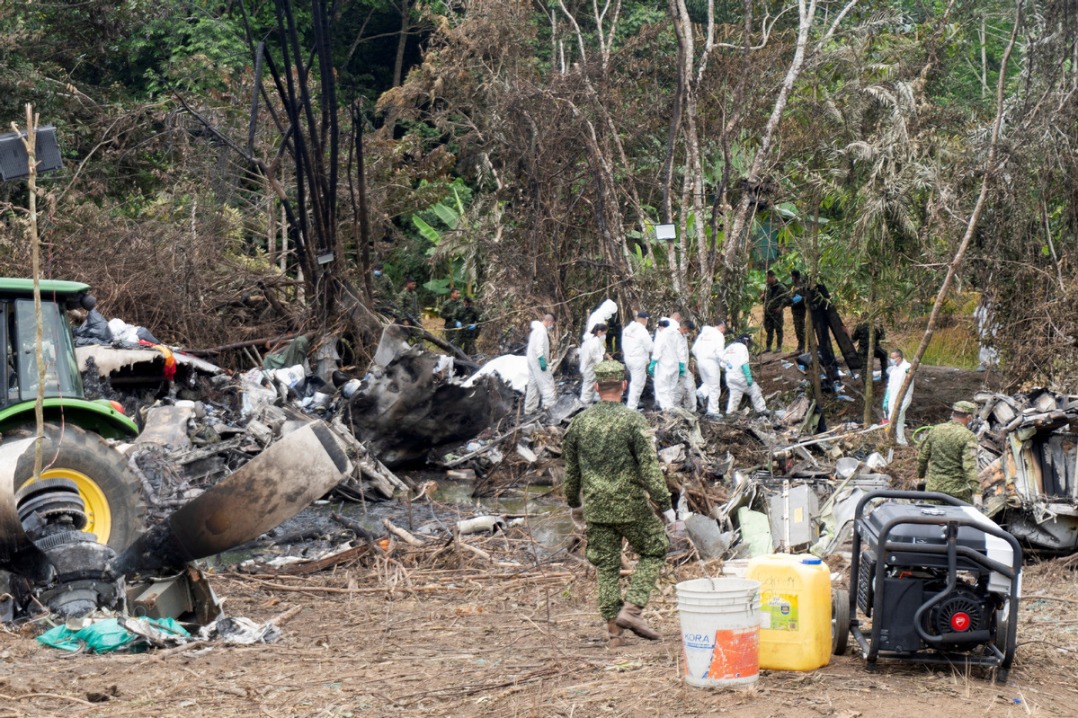
    A devastating aviation tragedy struck Colombia on Monday when a Hercules C-130 military transport aircraft crashed shortly after departure from Puerto Leguizamo, resulting in at least 66 fatalities among the 128 personnel aboard. The catastrophic incident represents one of the most severe military aviation disasters in recent Colombian history.

    General Hugo Alejandro Lopez Barreto, head of Colombia’s armed forces, confirmed the grim casualty figures while indicating that four military personnel remain unaccounted for. The aircraft was carrying 115 army personnel, 11 crew members, and 2 national police officers when it went down near the Amazonian border region with Ecuador and Peru.

    Authorities have preliminarily ruled out hostile action by illegal armed groups, suggesting the crash likely resulted from mechanical failure or other accident-related factors. Defense Minister Pedro Sanchez stated via social media platform X that the aircraft was conducting routine troop transport operations within Putumayo province when the disaster occurred.

    Emergency response teams mobilized immediately following the crash, with local residents joining military personnel in rescue efforts. Deputy Mayor Carlos Claros described how community members rushed to assist victims amid the wreckage. The two modest medical clinics in Puerto Leguizamo provided initial treatment to survivors before arranging aerial medical evacuations to better-equipped urban facilities.

    Visual documentation from Colombian media outlets depicted thick black smoke billowing from the crash site in remote grassland areas, with military vehicles racing toward the scene. The investigation into determining the precise cause of the tragedy remains ongoing, with aviation experts expected to examine flight data recorders and wreckage evidence.

  • Kenya floods kill 88, displace thousands

    Kenya floods kill 88, displace thousands

    Nairobi, Kenya – Torrential downpours sweeping across Kenya have triggered catastrophic flash floods that have left at least 88 people dead, displaced tens of thousands of residents, and destroyed critical infrastructure across more than a fifth of the country’s counties, the Kenyan Ministry of Interior announced Tuesday.

    The disaster has impacted 21 counties, with official data recording 34,150 people forced to flee their submerged homes and three people still unaccounted for. Widespread damage has wiped out residential properties, washed out road networks, and disabled other key public services that communities rely on. Kenya’s capital Nairobi has suffered the worst of the catastrophe, accounting for 37 of the confirmed fatalities, followed by the country’s eastern region which has recorded 21 deaths.

    As swollen rivers burst their banks across flood-stricken areas, dramatic footage and on-the-ground reports show residents wading through chest-deep murky floodwaters carrying whatever salvageable belongings they can grab, while hundreds of others are ferried to safety via overcrowded rescue boats. Over the weekend, two additional lives were lost in the Rift Valley region when heavy rain saturated hillsides and triggered lethal landslides that buried multiple homes.

    Transport links across the country have been severely disrupted, with multiple bridges fully submerged and major arteries blocked by floodwater and accumulated silt. A key stretch of the Mai Mahiu-Suswa-Narok road has been rendered impassable by debris and flood runoff, cutting off both passenger travel and the movement of commercial goods between regions.

    Humanitarian officials are sounding the alarm over rapidly deteriorating living conditions for displaced populations. In Homa Bay County alone, at least 11 villages have been overwhelmed by flooding, leaving 591 households sheltering in overcrowded temporary displacement camps. Verolyn Danga, a community health worker based at the Kobala Community Health Unit in Homa Bay, confirmed that while hundreds of residents have been evacuated to higher ground by boat, access to basic emergency health care remains severely limited for affected communities.

    The Kenya Meteorological Department has warned that the crisis is far from over, forecasting that continued heavy rainfall will persist throughout the ongoing long rains season, bringing elevated risks of additional flash floods and other storm-related hazards across vulnerable areas. Climate analysts linking the growing frequency and intensity of extreme weather events across East Africa to human-caused climate change have echoed official warnings, urging residents in high-risk zones to exercise extreme caution as emergency response operations continue.

    In response to the disaster, the Kenyan government has activated a whole-of-government contingency plan coordinated across multiple agencies. The national Ministry of Health has deployed mobile disease surveillance teams to all affected counties, issuing public health advisories aimed at preventing flood-related injuries and outbreaks of waterborne diseases common in post-flood scenarios.

  • China steps up efforts to strengthen rural water supply

    China steps up efforts to strengthen rural water supply

    The Chinese government has unveiled a comprehensive national strategy to enhance the operational sustainability and maintenance protocols of rural water supply networks. This initiative, jointly promulgated by the Ministry of Water Resources alongside five additional governmental bodies, establishes a systematic framework designed to standardize management practices across the entire water supply continuum—from source extraction to end-user faucets.

    Key operational priorities outlined in the directive include guaranteeing adequate water volume, maintaining stringent quality standards, and fortifying emergency response capabilities for water provision. Particular emphasis is placed on addressing infrastructure vulnerabilities in underdeveloped regions and strengthening system reliability where service gaps persist.

    The policy further advocates for measured implementation of pricing mechanism reforms while simultaneously ensuring the protection of public welfare and household affordability. A significant component involves diversifying funding mechanisms for operation and maintenance through public-private partnerships, encouraging private capital investment via integrated construction-management models while maintaining governmental oversight.

    This development builds upon substantial progress in rural water accessibility, with national tap water coverage reaching 96% by the conclusion of 2025, reflecting China’s ongoing commitment to urban-rural infrastructure parity.

  • Negative ions found on moon solve old mystery

    Negative ions found on moon solve old mystery

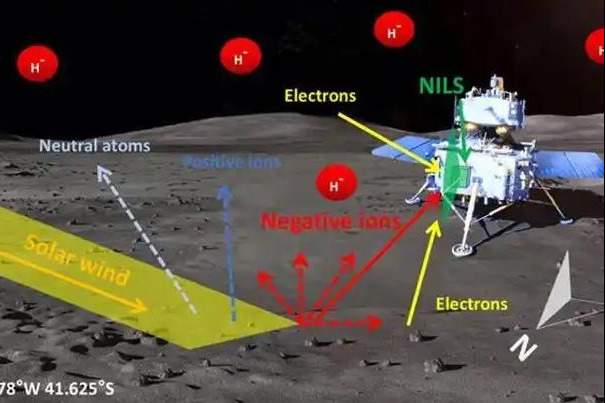
    A groundbreaking discovery by a Chinese-led international research team has unraveled a long-standing cosmic mystery through the first direct detection of negative hydrogen ions on the lunar surface. The findings, captured by specialized instrumentation aboard China’s Chang’e 6 lunar lander, reveal how solar wind interactions generate these elusive particles on airless celestial bodies.

    The research team employed the Negative Ions at the Lunar Surface (NILS) detector, a pioneering instrument co-developed by the Swedish Institute of Space Physics and the Chinese Academy of Sciences. During its operational window, the instrument recorded six distinct energy signatures of negative hydrogen ions over a 48-hour period, marking the first direct measurement of such particles on another planetary body.

    Negative ions—atoms or molecules that have gained extra electrons—represent a crucial component of universal plasma but have remained notoriously difficult to study due to their fragility. Solar radiation typically strips away their additional electrons almost immediately, making remote detection virtually impossible.

    The investigation confirmed these ions form through a scattering process where solar wind particles collide with lunar regolith and rebound, capturing electrons from the soil in the process. By cross-referencing data with the European Space Agency’s Artemis satellites, researchers established a direct correlation between solar wind intensity and negative ion production rates.

    Simulations revealed dramatically different behaviors between the moon’s illuminated and dark sides. On the sunlit surface, ions survive mere moments within an extremely thin surface layer, while on the night side, they persist significantly longer, being carried by electromagnetic fields to form a massive tail extending thousands of kilometers behind the moon.

    This discovery provides critical insights into space weathering—the gradual physical and chemical alteration of celestial surfaces by the space environment. The researchers suggest these ions may contribute to lunar water formation and help maintain the moon’s tenuous exosphere, with ion density surging over 1,000% during periods of intense solar activity.

    The findings establish a new framework for studying similar phenomena on other airless solar system bodies, including asteroids and planetary moons, advancing our understanding of universal plasma behavior and celestial evolution.

  • Trump’s approval rating hits new low amid surging fuel prices, Iran war disapproval: poll

    Trump’s approval rating hits new low amid surging fuel prices, Iran war disapproval: poll

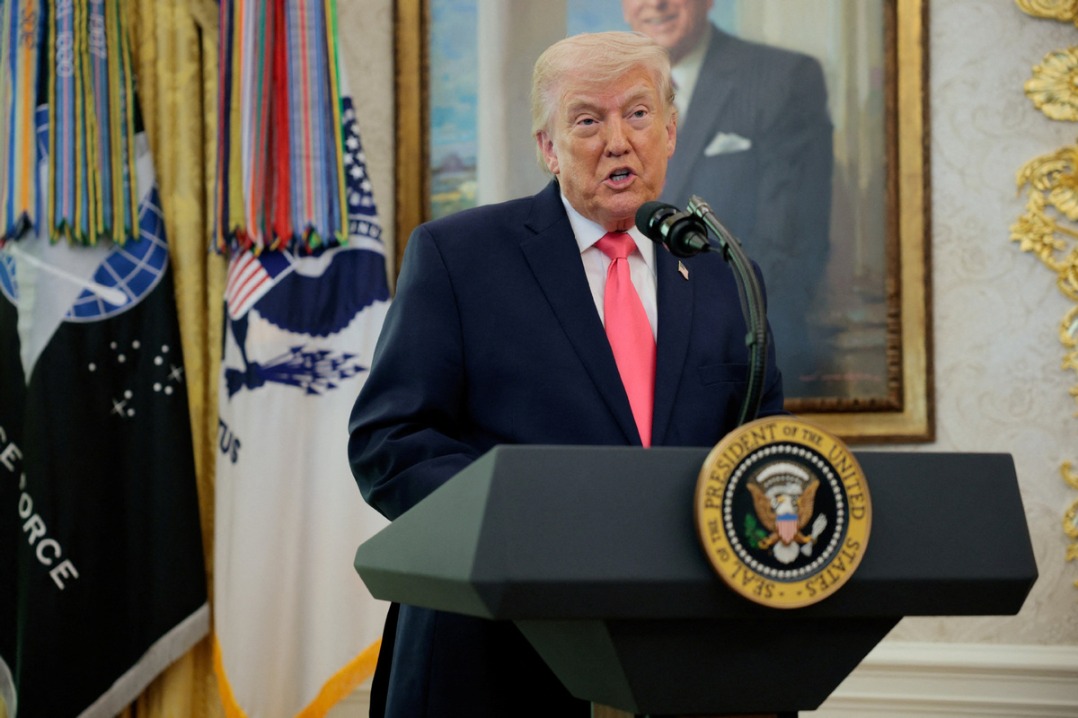
    President Donald Trump’s public approval has collapsed to unprecedented depths during his second term, reaching its lowest recorded level according to the latest Reuters/Ipsos survey released Tuesday. The comprehensive poll, conducted over four days through Monday, reveals only 36% of American citizens now endorse Trump’s presidential performance—a significant four-point drop from the previous week’s reading.

    The dramatic decline appears directly linked to two critical factors: skyrocketing fuel prices that are straining household budgets nationwide, and mounting public opposition to the ongoing military engagement with Iran that Trump initiated three weeks ago. The conflict has triggered unusual dissent from within the President’s own political orbit, including prominent MAGA movement figures who previously supported his agenda.

    Economic concerns appear central to the approval crash. A mere 25% of respondents expressed satisfaction with Trump’s handling of living costs—particularly striking given his campaign emphasis on economic issues during the 2024 election victory. The survey further indicates only 29% approve of his overall economic stewardship, representing the lowest economic rating of either Trump administration and falling below even the poorest ratings recorded by his predecessor President Joe Biden.

    The Iran conflict has generated remarkable internal pushback, with influential conservative voices including former strategist Steve Bannon, commentator Tucker Carlson, and media personality Megyn Kelly publicly breaking with the administration over military operations. This unusual dissent from key allies suggests deepening political vulnerability as business leaders and political figures increasingly call for conflict resolution.

    The convergence of economic pressure and foreign policy discontent has created the most challenging period of Trump’s second term, testing the resilience of his political base while providing ammunition to critics who question both his economic and military leadership.

  • MAFS expert John Aiken reveals heartbreaking final conversation he had with co-star Mel Schilling

    MAFS expert John Aiken reveals heartbreaking final conversation he had with co-star Mel Schilling

    In a deeply emotional revelation, Married At First Sight relationship expert John Aiken has disclosed the poignant final exchange he shared with his colleague Mel Schilling shortly before her tragic death from colon cancer. The television personality passed away on Tuesday at age 54, leaving behind her husband Gareth and their 11-year-old daughter Maddie.

    A Current Affair dedicated a special tribute segment to Schilling on Wednesday, highlighting her most vibrant moments from the reality television series. Aiken remembered his co-host as someone who “lit up the room” with her larger-than-life personality, beautiful smile, and glamorous presence, noting that she maintained her signature energy and compassion throughout her cancer journey.

    Schilling’s husband Gareth shared an intimate account of her final moments on Instagram, revealing that despite being weakened by cancer, she mustered her remaining strength to whisper a meaningful message for their daughter—a moment he described as something that would “sustain me for the rest of my life.” He celebrated his wife as an incredible mother, role model, and soulmate who never complained during two years of chemotherapy and continued filming while battling the disease.

    Aiken visited Schilling last week for what would become their final meeting, where he looked her in the eye and expressed his love and admiration, telling her she had “made a difference” and touched countless lives worldwide. The colleagues shared Irish whisky and memories during this emotional farewell.

    Schilling first received her colon cancer diagnosis in 2023 and initially achieved remission after tumor removal surgery. However, she disclosed in February 2024 that the cancer had metastasized to her lungs, and two weeks before her passing, revealed it had spread to her brain. Throughout her health struggles, she maintained her professional commitments and largely kept her personal challenges private.

    The entertainment industry has responded with an outpouring of tributes, with former MAFS participants Jules Robinson and Cam Merchant remembering how Schilling “loved love” and adored helping people. Journalist Shelly Horton, a close friend of Schilling, highlighted the deep bond between Mel and her husband Gareth, noting her international popularity across both Australian and UK versions of the show.

  • DeepZang, first AI model in Tibetan language, unveiled

    DeepZang, first AI model in Tibetan language, unveiled

    In a landmark development for both artificial intelligence and linguistic preservation, China has introduced DeepZang—the world’s inaugural large language model specifically engineered for the Tibetan language. The groundbreaking platform, unveiled in Lhasa by local technology firm Choknor, represents a significant stride in bridging digital divides and enhancing public service accessibility for Tibetan speakers.

    DeepZang facilitates multilingual interactions in Tibetan, Mandarin Chinese, and English, integrating advanced functionalities such as AI-driven dialogue, real-time translation, and speech-to-text conversion. Its certification by the World Record Certification Agency as the ‘World’s First Tibetan Large Language Model’ underscores its pioneering status in global AI research.

    According to Tenzin Norbu, founder of Choknor, the model culminates over four years of intensive development. It leverages an extensive dataset comprising nearly 70 million standardized parallel corpora and over 30,500 hours of voice recordings encompassing Tibet’s three primary dialects: Utsang, Kham, and Amdo. This repository now stands as China’s most comprehensive and meticulously annotated Tibetan speech database.

    Beyond its technical achievements, DeepZang is poised for practical implementation across multiple sectors. Several institutions, including China Mobile and PICC Property and Casualty Co’s regional branches, have entered collaborative agreements to deploy the technology in government services, education, healthcare, and financial operations.

    Li Yalong, Deputy General Manager at PICC Xizang, emphasized the model’s potential to overcome linguistic barriers in servicing rural communities: ‘It will enable the development of intelligent Tibetan-language customer support and policy interpretation tools, particularly in agricultural insurance.’

    Academic users have reported efficiency gains in research workflows. Sonam Yontan, a doctoral candidate at Xizang University, noted: ‘The translation and search functionalities significantly accelerate material processing and source retrieval, marking an unprecedented advancement for Tibetan in AI.’

    However, initial feedback indicates areas for refinement. Tibetan language instructor Nie Chang observed that while DeepZang’s linguistic capabilities are robust, its response latency exceeds that of mainstream models like ChatGPT. Some users also reported encountering paywalls after limited queries, potentially impacting accessibility.

    In educational contexts, the model currently functions more as a search engine than a tailored pedagogical tool, with grammar explanations sometimes lacking clarity for non-native learners. Online discourse reflects mixed reactions, praising cultural preservation efforts while noting challenges in translation accuracy, complex query handling, and pricing structures.

    Choknor acknowledges the model’s evolving status and commits to continuous improvement through data expansion and user feedback. The current mobile application represents merely one manifestation of the underlying technology, with potential future applications spanning wearable devices, sector-specific solutions in healthcare and education, and possibly extending to other minority languages like Mongolian and Uygur.

  • Zero-carbon zone in Hainan shows China’s green practices

    Zero-carbon zone in Hainan shows China’s green practices

    The Boao Zero-Carbon Demonstration Zone in China’s Hainan province has emerged as a global benchmark for sustainable urban development, achieving a remarkable 99.9% reduction in energy-related carbon emissions since its inception. Originally designated as a “near-zero” carbon zone, the project attained full “zero-carbon” status in March 2025 and has since maintained normalized operations at this exceptional environmental standard.

    According to official measurements, carbon dioxide emissions from buildings and municipal infrastructure within the zone plummeted from 11,350.1 tonnes in 2019 to approximately 14.6 tonnes in 2025. This transformative achievement represents one of the most dramatic carbon reduction successes recorded worldwide.

    The zone’s energy ecosystem now operates on a surplus model, generating 29 million kWh of clean electricity annually through extensive photovoltaic installations. This output substantially exceeds the zone’s internal consumption needs of 19.4 million kWh, allowing 9.6 million kWh of surplus green energy to be fed back into the regional power grid.

    Visual documentation from March 2026 reveals comprehensive solar panel deployments across key facilities, including the Boao Forum for Asia International Conference Center and adjacent hotel properties. These installations form the technological backbone of the zone’s renewable energy infrastructure.

    The project’s success provides a scalable model for regional decarbonization efforts and demonstrates China’s growing leadership in practical climate solutions. As international attention focuses on effective carbon reduction strategies, the Boao zone offers tangible evidence that ambitious environmental targets can be achieved through integrated planning and renewable technology implementation.

  • Belarusian President Lukashenko arrives in North Korea for talks with Kim Jong Un

    Belarusian President Lukashenko arrives in North Korea for talks with Kim Jong Un

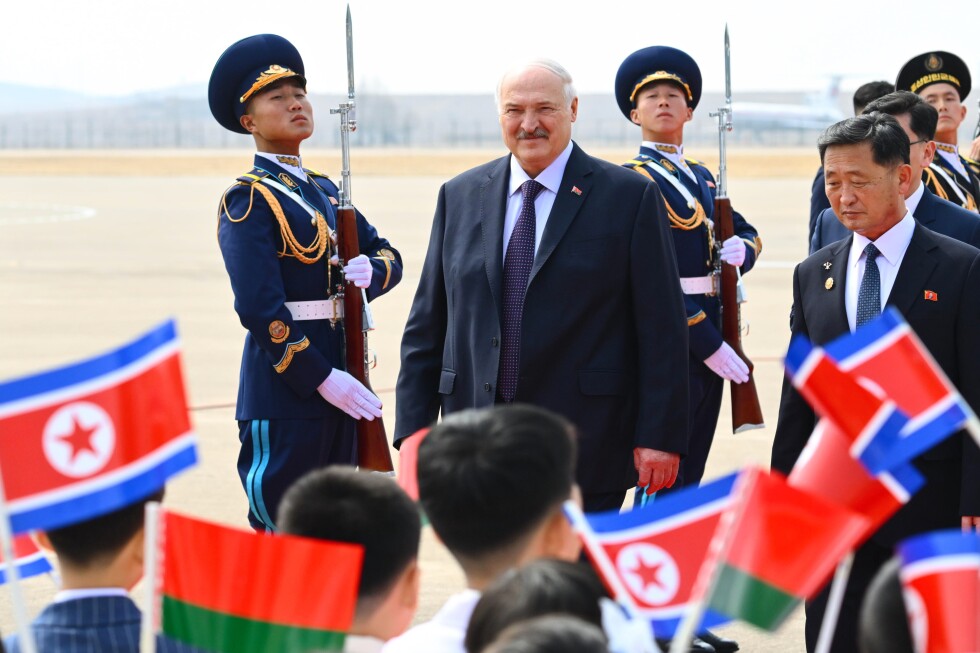
    Belarusian leader Alexander Lukashenko commenced an official state visit to North Korea on Wednesday, marking a significant diplomatic engagement between two nations increasingly aligned against Western powers. The long-serving president was formally received at Pyongyang’s Sunan International Airport by senior North Korean official Kim Tok Hun, recently appointed vice premier, according to reports from Belarusian state media.

    The meeting between Lukashenko and North Korean Supreme Leader Kim Jong Un represents the latest development in strengthening bilateral relations between Minsk and Pyongyang. This diplomatic engagement follows their previous encounter in September 2025 during multilateral meetings in Beijing, where Kim extended the invitation for Lukashenko to visit North Korea.

    Both nations have positioned themselves as strategic partners to Russia amid ongoing geopolitical tensions. Lukashenko has permitted Belarusian territory to serve as a staging ground for Russian military operations in Ukraine and authorized the deployment of Russian tactical nuclear weapons within his country. Similarly, North Korea has provided substantial military support to Moscow’s campaign in Ukraine while pursuing an increasingly assertive foreign policy against American influence.

    During preparatory discussions earlier this week, Kim Jong Un delivered vehement criticism of United States foreign policy, accusing Washington of ‘state terrorism and aggression’ in global affairs. The North Korean leader emphasized the need for strengthened alliances among nations opposing American hegemony.

    The current visit is expected to culminate in the signing of a comprehensive friendship and cooperation treaty, building upon previous diplomatic exchanges including Belarusian Foreign Minister Maxim Ryzhenkov’s 2024 visit to North Korea. This agreement would formalize the growing partnership between two nations that have found common cause in their opposition to Western geopolitical dominance.