作者: admin

  • ‘Rip the Band-Aid off’: Reuben Garrick opens up on Roosters deal and shuts down major DCE theory

    ‘Rip the Band-Aid off’: Reuben Garrick opens up on Roosters deal and shuts down major DCE theory

    In a candid revelation, Manly Sea Eagles standout Reuben Garrick has addressed the emotional complexities surrounding his decision to depart the club at the season’s end for a three-year contract with the Sydney Roosters commencing in 2027. The prolific winger, a mere 11 tries shy of becoming just the fifth player to score 100 tries for Manly, explicitly refuted widespread speculation that veteran teammate Daly Cherry-Evans was a pivotal factor in his move.

    Garrick clarified the timeline of communications, stating his discussions with Cherry-Evans occurred only during the final stages of negotiations. He emphasized that personal relationships would not dictate a decision of such magnitude concerning his family’s future and professional trajectory. ‘I’m not going to be making a decision for my family’s future and my own based off a mate who I’m going to have outside of footy anyway,’ Garrick asserted, acknowledging the uncertainty of even sharing the field with Cherry-Evans next year given the halfback’s contract situation.

    The emotional weight of leaving his long-time club was palpable in Garrick’s reflections. Having made his NRL debut with Manly in 2019 and spending his entire professional career there, he expressed a heartfelt desire to have remained a one-club player. However, after protracted negotiations failed to yield a mutually agreeable arrangement with the Sea Eagles’ management, he viewed the transition as an inevitable and potentially positive change.

    Despite the advanced announcement, Garrick declared an unwavering ‘110 per cent’ commitment to the Sea Eagles for the upcoming season. He characterized the early decision as a strategic move to ‘rip the Band-Aid off,’ preventing a season-long distraction and allowing the team to focus entirely on their campaign. He acknowledged the inherent awkwardness of the NRL’s contracting system but affirmed his dedication to contributing his best to Manly before embarking on his new chapter in the eastern suburbs.

  • Oil shock after Middle East tensions could force Reserve Bank to pause interest rates

    Oil shock after Middle East tensions could force Reserve Bank to pause interest rates

    Escalating geopolitical conflicts in the Middle East are creating a complex dilemma for Australia’s Reserve Bank, potentially forcing monetary policymakers to maintain current interest rates even as rising oil prices threaten to push inflation higher. The recent spike in crude prices to four-year highs has introduced unprecedented uncertainty into global energy markets, directly impacting Australia’s economic outlook.

    Financial experts reveal that while elevated oil prices typically drive inflationary pressures, they simultaneously function as an indirect tax on consumer spending that can precipitate economic slowdowns. This dual-effect phenomenon presents central bankers with contradictory signals when determining appropriate monetary policy responses.

    BetaShares Chief Economist David Bassanese emphasized that current Middle Eastern instability would likely prompt the RBA to adopt a wait-and-see approach. “The central bank would assess the macroeconomic effects, which present a mixed picture—inflation increases while economic activity decreases,” Bassanese explained. “This heightened uncertainty typically encourages policymakers to remain on the sidelines, increasing inertia in their decision-making process regardless of previous stances.”

    The RBA’s current official cash rate stands at 3.85% following a series of rate adjustments throughout 2025 and 2026. Earlier this year, economists had predicted further rate hikes, though consensus on timing remained divided, with some anticipating increases as early as May.

    AMP Chief Economist Shane Oliver provided historical context, noting that oil price surges have frequently preceded global economic downturns, including the mid-1970s recession, early 1980s contraction, and even the Global Financial Crisis. “While not necessarily the primary driver of these recessions,” Oliver observed, “energy price increases effectively function as a consumption tax that reduces disposable income and dampens economic activity.”

    Current oil markets have witnessed dramatic fluctuations, beginning 2026 at $56 per barrel before soaring to $75 following recent Middle Eastern conflicts—a 13% single-day surge. Oliver calculated that each $1 per barrel increase translates to approximately one cent per liter at Australian fuel pumps, meaning a return to $100+ oil prices could cost motorists an additional 40 cents per liter within days.

    Beyond direct impacts on transportation costs, sustained oil price increases would affect multiple sectors including aviation and logistics, creating broader inflationary effects throughout the economy. Although fuel directly accounts for approximately 3% of Australia’s inflation measurement, prolonged price elevations would generate significant indirect impacts that could reshape the RBA’s monetary policy trajectory in coming months.

  • CBS in turmoil as US media feels pressure under Trump

    CBS in turmoil as US media feels pressure under Trump

    A significant crisis is unfolding at CBS News as the renowned broadcast network experiences substantial internal upheaval following its acquisition by Paramount Skydance in mid-2025. The organization, once celebrated for its journalistic excellence under legendary figures like Walter Cronkite and Edward R. Murrow, now faces serious allegations of editorial interference that many insiders attribute to the influence of President Donald Trump’s administration.

    The situation escalated when CBS’s new leadership, headed by Trump ally David Ellison, appointed Bari Weiss—a known critic of progressive politics—as Editor in Chief. Weiss’s controversial decisions included abruptly pulling a scheduled report on the Trump administration’s immigration policies hours before broadcast, which later aired with substantial revisions. This move prompted widespread concern among journalists and triggered a wave of resignations, including top producers from the flagship ’60 Minutes’ program.

    Further controversy emerged when the network blocked Stephen Colbert from airing his interview with Texas Democrat James Talarico, who is challenging Republican Senator John Cornyn. The conflict reflects broader patterns of corporate media behavior, as noted by FCC commissioner Anna M. Gomez, who described these developments as ‘troubling examples of corporate capitulation’ to administrative pressure campaigns.

    Academic experts analyzing the situation suggest strategic motivations behind these changes. Victor Pickard, Professor of Media Policy at the University of Pennsylvania, indicated that CBS’s new approach primarily aims to ‘appease or curry favor with the Trump administration’ ahead of potential acquisitions, including the upcoming purchase of Warner Bros Discovery.

    The $16 million settlement Paramount paid regarding Trump’s complaints about CBS’s election coverage—described by Colbert as ‘a big fat bribe’—adds to concerns about financial influences on editorial independence. With CNN now facing similar ownership changes under Skydance, media analysts warn of reduced editorial diversity and increased alignment with administration-preferred narratives across major news networks.

    Christopher Terry, Professor at the University of Minnesota, emphasized the broader implications: ‘The real danger is the deals that follow because of this deal,’ suggesting this acquisition could inspire copycat megamergers that fundamentally reshape the American media landscape.

  • ‘Activist’: Angus Taylor snaps at journalist in Trump-like spray over ISIS brides

    ‘Activist’: Angus Taylor snaps at journalist in Trump-like spray over ISIS brides

    Australian Opposition Leader Angus Taylor engaged in a heated exchange with a journalist during a press conference addressing the controversial issue of repatriating citizens with ISIS connections. The confrontation occurred Monday following Taylor’s meeting with Nationals MP Michael McCormack and representatives of the persecuted Yazidi community.

    The political firestorm centers on the Coalition’s proposed legislation to criminalize assistance for 34 women and children seeking return to Australia after years in Syrian detention camps. These individuals are connected to ISIS fighters who traveled to support the terrorist organization in the Middle East.

    Taylor repeatedly characterized the group as ‘ISIS sympathizers’ during the briefing, emphasizing that one woman already faces temporary return restrictions. When pressed on whether this designation extended to children involved, the Opposition Leader maintained his position without qualification.

    The tension escalated when Saturday Paper journalist Jason Koutsoukis questioned why Syria should bear responsibility for Australian citizens. Taylor interrupted, referencing ISIS atrocities including mass genocide and murders of innocent people before challenging the reporter’s professional capacity: ‘Either you’re an activist or a journalist—you need to make up your mind which one you are.’

    The Coalition has consistently accused the federal government of facilitating the group’s return, allegations vigorously denied by Home Affairs Minister Tony Burke and Prime Minister Anthony Albanese. The controversy deepened with revelations that Burke associate Dr. Jamal Rifi is currently in Syria assisting the cohort, though Burke confirmed during Monday’s Question Time that their last communication occurred ‘many, many months’ ago.

    The parliamentary debate coincides with Save the Children’s expressed disappointment regarding Australia’s refusal to assist citizens in distress overseas, highlighting the complex humanitarian and security dimensions of this politically charged issue.

  • Israel hits Lebanon after Hezbollah fire, expanding Iran war

    Israel hits Lebanon after Hezbollah fire, expanding Iran war

    Israeli military forces initiated a significant escalation in hostilities with Hezbollah on Monday, launching targeted strikes across Lebanon, including the capital city of Beirut. This offensive action came in direct response to rocket and drone attacks launched by the Iranian-backed militant group against Israeli territory earlier that day.

    The Israeli Defense Forces confirmed they had ‘begun striking targets of the Hezbollah terrorist organization across Lebanon,’ with an AFP journalist documenting multiple powerful explosions resonating through Beirut. Military officials specified that their operations ‘precisely struck’ senior Hezbollah members both in the Beirut metropolitan area and in southern Lebanon, marking the most substantial military engagement since the November 2024 ceasefire agreement.

    Hezbollah, the Shiite Muslim political and military organization, claimed responsibility for the initial rocket barrage, characterizing it as retaliatory measure for the killing of Iranian Supreme Leader Ayatollah Ali Khamenei during coordinated US-Israeli strikes on Tehran over the weekend. The group’s leadership had previously established any attack against Khamenei as an unequivocal ‘red line’ that would necessitate military response.

    The escalation has triggered widespread evacuations throughout southern Lebanon and Beirut’s suburbs, with Israel issuing formal warnings to residents in approximately 50 towns and villages within Hezbollah strongholds. Army spokeswoman Ella Waweya urged civilians to ‘evacuate your homes immediately and move at least 1,000 metres away from your village to open areas’ for their safety.

    Lebanese Prime Minister Nawaf Salam condemned Hezbollah’s rocket fire as ‘irresponsible,’ asserting that such actions ‘endanger Lebanon’s security and safety, and gives Israel pretexts to continue its attacks.’ His government, which has historically advocated for Hezbollah’s disarmament, announced plans to convene an emergency meeting to address the crisis and implement protective measures for Lebanese citizens.

    The National News Agency of Lebanon reported substantial population displacement from conflict zones, with local media footage showing congested roadways as residents fled targeted areas. This development represents a dangerous expansion of regional tensions that originated with the October 2023 Hamas attack on Israel and subsequent military operations in Gaza.

  • Hopes and fears as US Iranians take to streets after toppling of supreme leader

    Hopes and fears as US Iranians take to streets after toppling of supreme leader

    The Iranian-American community across the United States has responded with complex and divided emotions following the joint U.S.-Israel military operation that resulted in the death of Iranian Supreme Leader Ayatollah Ali Khamenei over the weekend.

    In Los Angeles, home to the largest concentration of Iranian immigrants in America, police closed streets outside federal buildings to accommodate celebratory demonstrations. The city witnessed emotional scenes as thousands waved flags and danced in celebration. A plane circled overhead displaying a banner reading “THANK U TRUMP,” capturing the sentiment of many exiles who have long opposed the Tehran regime.

    Fatemeh Shams, an Iranian-American in Philadelphia since 2009, expressed the conflicted feelings shared by many: “We all have very mixed feelings about what’s happening. On the one hand, we are extremely happy that our killers… they no longer breathe. The fact that Khamenei was killed in less than a moment, after 38 years of corruption and crime, it kind of feels that we didn’t have any control over the justice we had been fighting for.”

    Hoda Zeaighamnia celebrated with her three children, one of whom was just days old when the family fled Iran. Her daughter Donya Cheshmaghil stated: “My family was forced to flee because we’re not Muslim and they’re very oppressive against anyone that’s not Muslim. We’re hoping this leads to regime change. We’re very grateful for the US for finally intervening.”

    However, not all responses were celebratory. Anti-war protests emerged in several cities, including Los Angeles where actress and activist Jane Fonda, 88, addressed hundreds of demonstrators. “You may wage this war in our name, but not with our consent,” she declared.

    The division was also evident among U.S. Congress members with Iranian heritage. Republican Congresswoman Stephanie Bice called for Iranians to “stand up and take back their nation,” while Democratic Representative Yassamin Ansari expressed concerns about potential U.S. involvement in “another endless war in the Middle East.”

    Despite uncertainties about the future, many Iranian-Americans chose to focus on the immediate outcome—the removal of a leader whose regime has been responsible for thousands of deaths during recent protests. As one celebrator in LA expressed: “This is a great day. Our country has been wanting this for a while. It’s beautiful. It really is.”

  • Watch: Iranian Americans celebrate on the streets of Los Angeles

    Watch: Iranian Americans celebrate on the streets of Los Angeles

    The streets of Los Angeles witnessed vibrant celebrations as members of the Iranian American community gathered publicly for the second consecutive day following the outbreak of regional hostilities. Demonstrating a complex geopolitical stance, expatriates and their descendants expressed support for Israel’s defensive measures through spontaneous street gatherings characterized by dancing, singing, and waving Israeli flags.

    This public display in one of America’s largest Iranian diaspora communities reflects deep-seated opposition to the Tehran regime rather than endorsement of conflict itself. The celebrations, concentrated in West Los Angeles neighborhoods traditionally associated with Persian Jewish populations, represent a political statement against Iran’s current leadership and its proxy networks.

    Community leaders emphasized that the demonstrations symbolize solidarity with democratic values and opposition to authoritarian regimes, highlighting the nuanced perspectives within immigrant communities regarding their nations of origin. The gatherings occurred peacefully without reported incidents, though they present striking visual contrasts to protests occurring simultaneously in other global cities.

    These events underscore how international conflicts frequently trigger transnational responses within diaspora communities, where geopolitical tensions become locally performed through public expression. The demonstrations also reveal the multifaceted nature of immigrant identity politics, where homeland conflicts become reinterpreted through the lens of American civic values and experiences.

  • US troop deaths ignite anger over ‘war for Israel’

    US troop deaths ignite anger over ‘war for Israel’

    The Pentagon confirmed on Sunday that three American service members lost their lives and five sustained serious injuries during joint military operations with Israel against Iranian targets. This development marks the first US combat fatalities since the initiation of this conflict. According to US Central Command, several additional personnel received minor shrapnel wounds and concussions, with many already returning to active duty while major combat operations persist.

    The incident, reported by NBC News to have occurred in Kuwait based on US official sources, has ignited substantial political backlash within the United States. Critics from across the political spectrum have intensified their condemnation of Washington’s decision to engage in a conflict that many argue primarily serves Israeli strategic interests rather than American national security objectives.

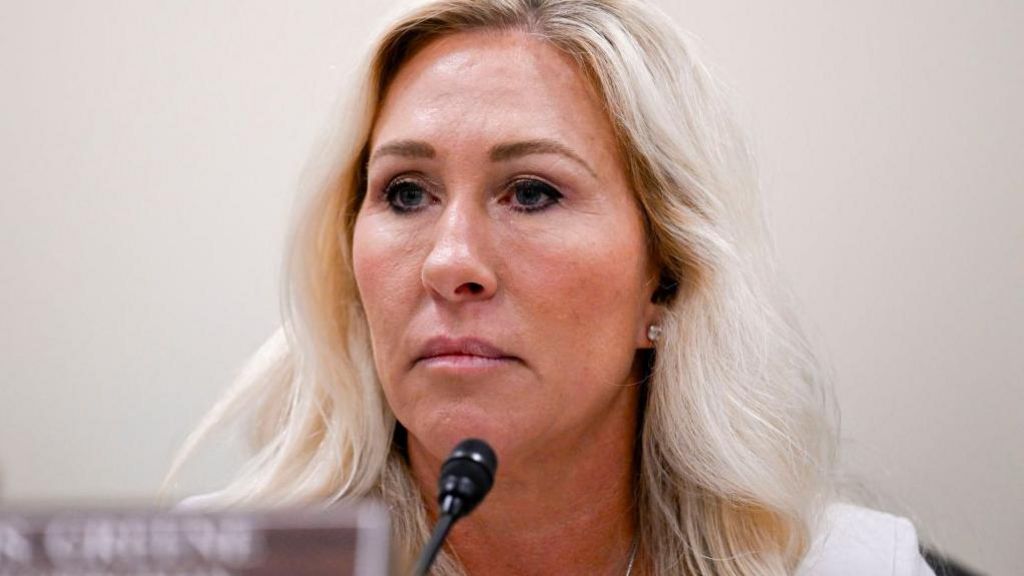
    Prominent Republican figures including former congresswoman Marjorie Taylor Greene offered condolences to bereaved families while simultaneously denouncing the military intervention as “absolutely unnecessary and unacceptable.” Greene emphasized that she and other Trump allies had campaigned explicitly against foreign wars and regime change operations.

    Democratic Senator Chris Van Hollen similarly criticized the escalation, noting that fallen soldiers “should still be with us” and characterizing the conflict as “Trump’s war of choice” despite campaign promises to avoid such entanglements.

    The criticism extends beyond traditional political channels, with influential voices from Trump’s own MAGA movement expressing vehement opposition. Longtime Trump ally Tucker Carlson described the joint US-Israeli operation as “absolutely disgusting and evil” during an ABC News interview, predicting substantial realignment within Trump’s political base due to this decision.

    Pro-Trump commentator Tim Pool joined the criticism, labeling the military action a betrayal of core campaign promises, while influential MAGA commentators Keith and Kevin Hodge explicitly rejected the intervention’s rationale, stating that freeing Iranian people was not their motivation for supporting Trump.

    The fatalities have intensified fundamental debates about whether American forces are effectively advancing national interests or primarily supporting Israeli strategic objectives in the region, raising questions about the future direction of US foreign policy in the Middle East.

  • Deadly strikes hit Israel as Iran promises to avenge Khamenei’s killing

    Deadly strikes hit Israel as Iran promises to avenge Khamenei’s killing

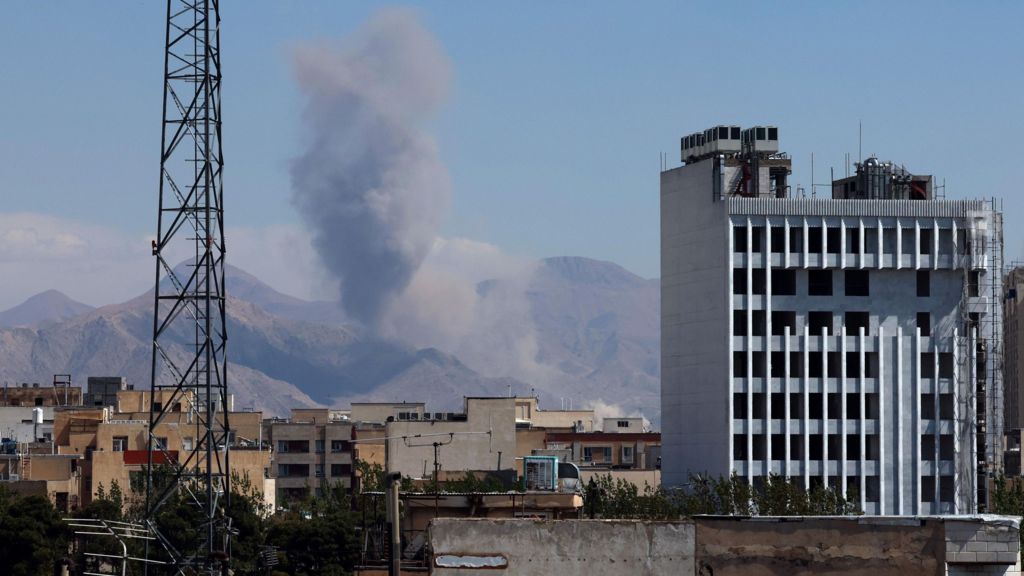
    The Middle East plunged deeper into a widespread military confrontation as Iran, reeling from the assassination of its Supreme Leader Ali Khamenei, announced an interim governing council and vowed severe retaliation against the United States and Israel. For a second consecutive day, the region endured a relentless exchange of missile and drone attacks, marking a significant escalation in hostilities.

    Iranian authorities confirmed the deaths of several high-ranking officials, including Islamic Revolutionary Guard Corps (IRGC) Commander Mohammad Pakpour, Defence Council Secretary Ali Shamkhani, and Defence Minister Aziz Nasirzadeh, attributing their killings to coordinated strikes by Israel and the U.S. Former U.S. President Donald Trump claimed that 48 Iranian leaders had been eliminated since operations commenced on Saturday.

    Despite these significant losses, Tehran continued its offensive operations. An Iranian missile struck a bomb shelter in the densely populated ultra-Orthodox town of Beit Shemesh, Israel, resulting in at least nine fatalities and raising the Israeli death toll to twelve since the conflict began. Simultaneously, Iranian forces launched attacks across the Gulf, targeting capitals including Riyadh, Abu Dhabi, Dubai, Manama, Doha, and Kuwait City, as well as Oman—a nation previously engaged in mediation efforts. Civilian casualties were reported, with three killed in the UAE and one in Kuwait.

    The U.S. military reported three personnel killed and five seriously wounded during ‘Operation Epic Fury.’ In a strategic move with global economic implications, Iran closed the Strait of Hormuz, a critical chokepoint for 20% of the world’s oil supply. Attacks on two vessels in the strait, including an oil tanker reported to be sinking, threatened to trigger a surge in crude prices. The U.S. claimed to have sunk an Iranian warship in the Gulf of Oman, while the IRGC asserted an attack on the USS Abraham Lincoln, a claim promptly denied by the Pentagon.

    In response to the leadership vacuum, Iranian President Masoud Pezeshkian appeared on state television alongside Judiciary Chief Gholam-Hossein Mohseni-Ejei and senior religious scholar Ayatollah Alireza Arafi, forming a three-man interim council. President Pezeshkian declared a ‘legitimate duty and right to avenge’ Khamenei’s killing, which he labeled a ‘historic crime.’

    The political atmosphere within Iran was deeply fractured. Organized pro-government rallies demanding ‘severe revenge’ dominated the streets of Tehran, Isfahan, and Qom. Conversely, celebrations erupted in some areas, such as the conservative holy city of Mashhad, where residents distributed sweets and openly flouted hijab laws, highlighting the nation’s internal divisions. The Iranian Red Crescent reported a preliminary toll of at least 201 killed and 747 wounded in airstrikes, with a devastating strike on a girls’ primary school in Minab claiming 153 lives, most of them children aged seven to twelve.

    Israeli Prime Minister Benjamin Netanyahu declared that the campaign would intensify, with 100,000 reservists called up and strikes continuing ‘at the heart of Tehran.’ He warned the situation would ‘only escalate in the days ahead,’ signaling no near-term de-escalation despite unverified claims from Trump about potential negotiations and a reported refusal from Tehran for a ceasefire.

  • Recognition, not competition, for Oscar-nominated foreign filmmakers

    Recognition, not competition, for Oscar-nominated foreign filmmakers

    The landscape of the Academy Awards is undergoing a profound transformation as foreign-language cinema moves from the periphery to the center stage of Hollywood’s most prestigious night. This year’s nominations underscore a significant shift, with two non-English films—Brazil’s ‘The Secret Agent’ and Norway’s ‘Sentimental Value’—competing for Best Picture, a category traditionally dominated by American productions.

    Joachim Trier’s Nordic family drama ‘Sentimental Value’ leads this charge with an extraordinary nine nominations, including Best Director and Best International Feature. For Trier, the recognition itself represents victory beyond competition. ‘It’s not about competition. It’s more about recognition. And I like that,’ the Danish-Norwegian director remarked. He attributes this inclusivity to the evolving diversity within the Academy’s voting body, noting that films succeed globally when they articulate universal personal emotions through intimate storytelling.

    This sentiment resonates across the international nominees. Franco-Spanish director Oliver Laxe, nominated for ‘Sirat,’ views the recognition as a collective triumph that validates artistic authenticity over conventional formulas. ‘I think nobody loses here. We all win,’ Laxe stated, emphasizing that audiences increasingly seek genuine individual sensitivity in cinema.

    From South America, Brazilian director Kleber Mendonca Filho expressed astonishment at the worldwide impact of his political thriller ‘The Secret Agent,’ which examines military dictatorship-era persecution. His wife and producer, Emilie Lesclaux, observed that the Oscars have evolved from an insular American ceremony to truly global recognition where powerful international films receive equal consideration.

    The political dimension of international cinema remains potent. Iranian director Jafar Panahi’s secretly filmed ‘It Was Just an Accident,’ representing France, uses its platform to highlight ongoing oppression in Iran, while Tunisian director Kaouther Ben Hania’s Gaza-set docudrama ‘The Voice of Hind Rajab’ transforms a Palestinian child’s tragedy into a global call for witness responsibility. Both demonstrate how international films are expanding the Oscars’ cultural and political conversations, creating what nominees describe as a ‘new normal’ in global cinema recognition.