作者: admin

  • ‘Better Call Ivan’: Ivan Cleary’s advice to the judiciary as Panthers coach shuts down revenge theory

    ‘Better Call Ivan’: Ivan Cleary’s advice to the judiciary as Panthers coach shuts down revenge theory

    Penrith Panthers coach Ivan Cleary has emphatically declared his retirement from legal advocacy duties following a successful judiciary appearance that overturned his son Nathan’s suspension. The four-time premiership-winning mentor temporarily swapped his coaching attire for formal wear last week, delivering a compelling defense that reduced a potential three-match ban to a mere fine.

    The contentious case centered on a tackle during a trial match that the match review committee had initially graded as warranting suspension. Cleary presented visual evidence demonstrating the absence of direct head contact, securing his halfback’s availability for the season opener against Brisbane.

    Expressing frustration with the judicial process, Cleary criticized the system’s inherent flaws, particularly the risk-reward calculation that forces clubs to weigh challenging incorrect decisions against potential extended bans. ‘It was quite a big thing – either no weeks or three weeks for something that was pretty clearly a grade one,’ Cleary remarked, highlighting the disproportionate consequences clubs face.

    The veteran coach specifically questioned the match review committee’s assessment capabilities, suggesting technological upgrades might be necessary for proper incident evaluation. He advocated for greater understanding toward players’ timing in trial matches and expressed satisfaction with the hearing’s eventual outcome despite his reservations about the process.

    With Nathan Cleary now available for selection, the Panthers turn their attention to Friday’s season opener against the Broncos – a rematch of last year’s grand final that ended Penrith’s premiership streak. Cleary dismissed revenge narratives, instead expressing confidence in his squad’s competitive readiness for the 2026 campaign.

    ‘I feel like we’re going to be really competitive,’ Cleary stated, acknowledging the uncertainty of early season form while maintaining optimism about his team’s championship credentials.

  • Infantino says players who cover mouths when speaking could be sent off

    Infantino says players who cover mouths when speaking could be sent off

    FIFA President Gianni Infantino has proposed a significant shift in football’s disciplinary approach, suggesting that players who cover their mouths during on-field conversations could face immediate red cards. This radical proposal emerges amid ongoing investigations into racial abuse allegations involving Benfica’s Gianluca Prestianni and Real Madrid’s Vinícius Júnior.

    The controversial incident occurred during a recent Champions League match where Prestianni was accused of racially abusing the Brazilian forward while concealing his mouth with his shirt. This case has prompted football’s governing bodies to reconsider how such concealed interactions are handled in professional play.

    Infantino articulated his position clearly at Saturday’s International Football Association Board (IFAB) meeting, stating: ‘When a player obscures his mouth and makes remarks with racist consequences, the obvious outcome must be immediate dismissal. The very act of concealment creates a presumption of wrongdoing—why would one hide their words if they had nothing to conceal?’

    The FIFA president’s comments signal a potential paradigm shift in how football authorities address on-pitch communications. Infantino emphasized that mouth-covering actions fundamentally undermine the spirit of transparency in football, suggesting that such behavior inherently indicates the speaker has something inappropriate to hide.

    Looking ahead to next month’s FIFA Congress in Vancouver, Infantino revealed that governing bodies may implement specific measures to prevent mouth-covering at this year’s World Cup tournaments. Additionally, he proposed a novel approach to disciplinary measures, suggesting that players who publicly apologize for racist behavior might receive reduced sanctions compared to those who do not.

    While Prestianni maintains his innocence regarding the racial abuse allegations, he has been provisionally suspended from Champions League play pending UEFA’s investigation outcome. If found guilty, the Argentine player could face a substantial 10-match ban, highlighting the serious consequences players face for discriminatory behavior on the pitch.

  • As China’s economy slows, some young people are snapping up cheap apartments to ‘retire’ early

    As China’s economy slows, some young people are snapping up cheap apartments to ‘retire’ early

    Across China, a profound demographic shift is underway as young professionals abandon high-pressure careers in megacities for affordable tranquility in smaller communities. This movement represents a dramatic reversal of China’s traditional urbanization pattern, where previous generations flocked to booming metropolitan centers seeking economic advancement.

    The partially abandoned ‘Life in Venice’ development in Jiangsu province exemplifies this trend. Originally conceived as a luxury weekend resort for wealthy Shanghai residents, this massive replica of the Italian city now stands largely empty after China’s property market collapse bankrupted developer Evergrande in 2024. With less than 20% occupancy, the development has become an unlikely haven for young urban refugees like Sasa Chen, a former finance professional who left her 700,000 RMB ($98,480) Shanghai job at age 28.

    Chen now pays just 1,200 RMB ($168) monthly for her apartment, enabling her to retire early through careful savings and investment returns. ‘I have all the time in the world, the freedom of doing whatever I want,’ Chen explains. ‘I never believed that work is the meaning of life.’

    This phenomenon reflects broader economic pressures facing Chinese youth. The economy grew just 5% in 2025—respectable globally but significantly below China’s historical double-digit growth. Youth unemployment reached 16.5% in December, driving many to reject the grueling ‘996’ work culture (9 a.m.-9 p.m., six days weekly) that dominates Chinese tech and finance sectors.

    Instead, young Chinese are embracing the ‘lying flat’ movement—shunning competitive careers for ‘low-desire living’—or pursuing FIRE (Financial Independence, Retire Early) principles more aggressively than Western counterparts due to China’s extremely low regional living costs.

    Migration patterns confirm this trend: Beijing lost approximately 1.6 million residents in their twenties and early thirties between 2019-2024. Some are flocking to extremely affordable regions like Hegang, a northeastern mining city where apartments now sell for as little as $3,000—less than many cars.

    Professor Chen Zhiwu of Hong Kong University observes: ‘Young people are facing reality and thinking hard about their futures.’ As economic opportunities diminish in traditional urban centers, China’s youth are fundamentally redefining success, prioritizing personal freedom and well-being over conventional career advancement.

  • 17 killed at pro-Iran protests across Pakistan

    17 killed at pro-Iran protests across Pakistan

    Pakistan witnessed violent nationwide demonstrations on Sunday as protests erupted over the killing of Iran’s Supreme Leader Ayatollah Ali Khamenei in US-Israel strikes, resulting in at least 17 fatalities and numerous injuries across multiple cities.

    In Karachi, hundreds of pro-Iranian protesters attempted to storm the US consulate, leading to intense clashes with security forces. Medical authorities confirmed at least 10 deaths and over 70 injuries in the city, with hospital records indicating many victims suffered fatal gunshot wounds. AFP journalists witnessed demonstrators scaling the consulate’s main gate, smashing windows before police dispersed crowds with tear gas.

    The northern city of Gilgit experienced similarly deadly confrontations, where rescue official Zaheer Shah reported at least seven fatalities and multiple injuries during protests. In the capital Islamabad, thousands gathered bearing images of the deceased Iranian leader, prompting security forces to deploy tear gas and audible gunfire to control crowds near US diplomatic compounds.

    Prime Minister Shehbaz Sharif condemned Khamenei’s killing as a ‘violation of international law,’ stating on social media platform X that ‘Heads of State/Government should not be targeted.’ While expressing solidarity with Iran, Sharif’s statements notably characterized the offensive as an Israeli operation, omitting significant US involvement.

    The protests revealed deep anti-American sentiment among demonstrators. ‘We don’t need anything in Pakistan that is linked with the US,’ protester Sabir Hussain told AFP. Another participant, Zahra Mumtaz, accused Pakistani leadership of being ‘stooges of the Americans’ while demanding the right to grieve openly.

    The violence extended to international organizations as protesters in Skardu stormed and set fire to a United Nations office, with nearby vehicles completely burned according to AFP correspondents. The US and British embassies subsequently issued security alerts urging citizens to exercise extreme caution throughout Pakistan.

  • Maersk suspends vessel transit through Strait of Hormuz

    Maersk suspends vessel transit through Strait of Hormuz

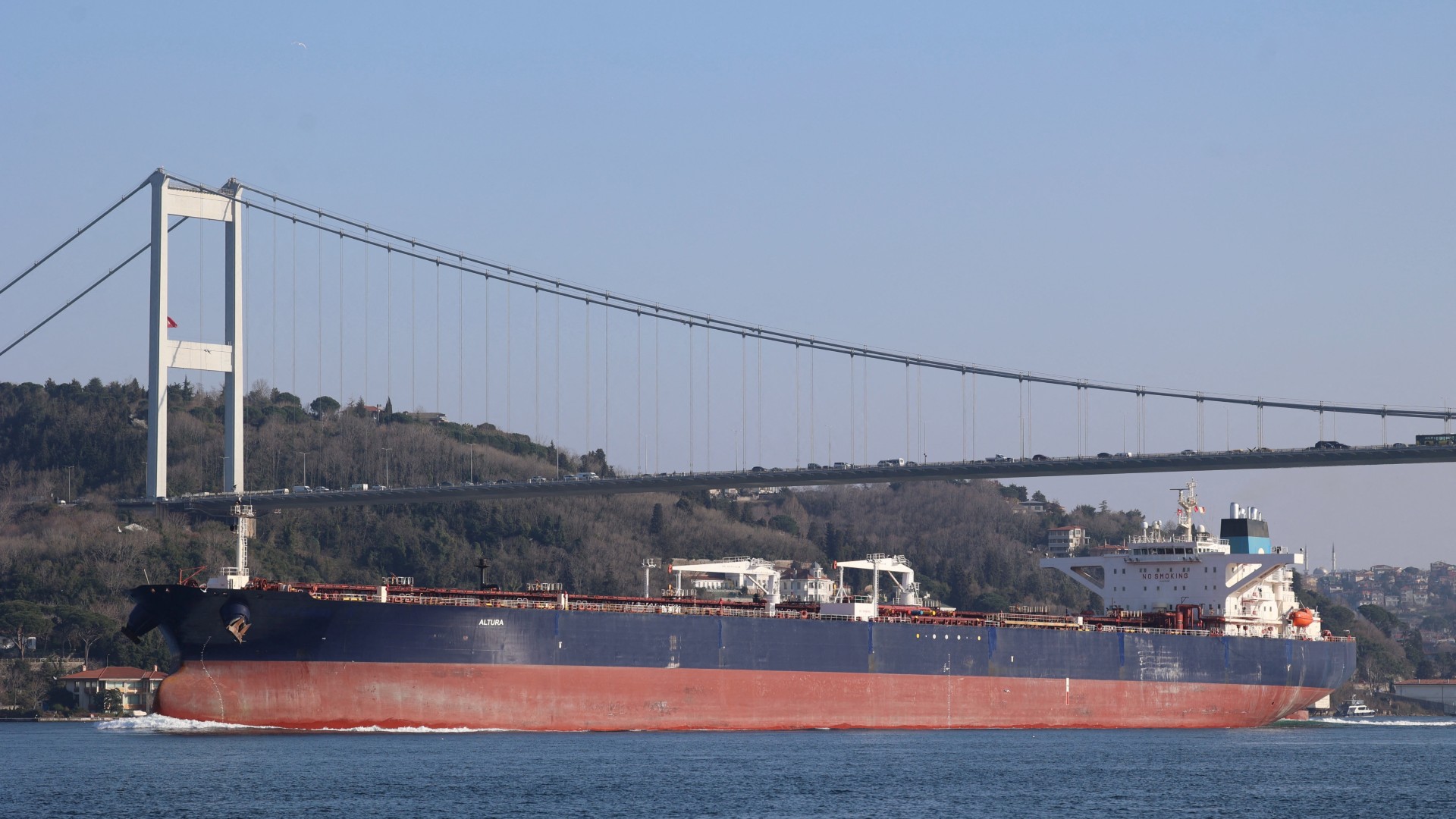
    In a significant escalation of maritime security concerns, global shipping giant Maersk has suspended all vessel transits through the strategically vital Strait of Hormuz and the Bab el-Mandeb Strait leading to the Suez Canal. The Danish container shipping company announced the precautionary measure Sunday following declarations from Iran’s Revolutionary Guards that the strait was closed and multiple security incidents reported in the region.

    The decision comes as part of a broader industry response to heightened risks, with Maersk stating that ‘the safety of our crews, vessels and customers’ cargo remains our key priority.’ The company has implemented rerouting strategies that will send vessels around the Cape of Good Hope at Africa’s southern tip, adding substantial distance and time to traditional shipping routes between Europe and Asia.

    Simultaneously, Maersk has temporarily closed its regional offices in the United Arab Emirates, Qatar, and Oman as a security precaution. The shipping conglomerate joins other major industry players including MSC, Hapag-Lloyd, and CMA CGM in implementing similar safety measures across the affected waterways.

    The security situation intensified Sunday with reports from Omani state media indicating an oil tanker off its coast had been targeted, resulting in injuries to four crew members. Separately, the United Kingdom Maritime Trade Operations Centre documented another vessel near the UAE coast reporting impact ‘by an unknown projectile causing a fire.’

    International Maritime Organization Secretary-General Arsenio Dominguez issued a statement urging ‘maximum caution’ among shipping companies and recommending vessels avoid the affected region ‘until conditions improve.’ The collective industry response underscores the critical nature of these waterways, with the Strait of Hormuz alone facilitating nearly a quarter of global seaborne oil shipments alongside substantial commercial cargo volumes.

  • Capital city property prices defy RBA as median value soars

    Capital city property prices defy RBA as median value soars

    Australia’s capital city housing market has achieved an unprecedented milestone, with the median house price exceeding $1 million for the first time in February. This remarkable surge occurred despite the Reserve Bank of Australia’s recent decision to implement a 25 basis point interest rate increase, bringing the official cash rate to 3.85%.

    According to the latest PropTrack data analysis, capital city house prices experienced a 0.5% monthly increase, pushing the national median to a record $1,004,000. The market demonstrated broad-based strength with every capital city registering price growth during February.

    Hobart emerged as the standout performer with a robust 1% monthly increase, reaching a median price of $718,000. Brisbane and Adelaide followed closely, both recording 0.7% gains. Brisbane’s annual performance has been particularly impressive, with prices surging $153,500 over the past year to establish a new median of $1,046,000. Adelaide similarly appreciated by $118,600 to reach $929,000.

    Major markets Sydney and Melbourne maintained steady growth with increases of 0.5% and 0.3% respectively. Sydney’s median house price now stands at $1,255,000. Regional markets outperformed capital cities with a 0.6% monthly increase and a striking 10.5% annual growth rate, continuing a five-year trend of regional outperformance.

    REA Group senior economist Eleanor Creagh noted that the national increase represents the fastest annual pace of growth since June 2022. She highlighted Hobart’s reacceleration, attributing it to significantly reduced market inventory, with total stock down approximately 30% over the past year.

    The market dynamics show an interesting shift, with capital city unit growth outperforming houses both quarterly and annually across most markets, indicating buyer preference for more affordable options amid rising interest rates.

  • US futures and Asian shares open lower, oil prices soar as US and Israeli attack Iran

    US futures and Asian shares open lower, oil prices soar as US and Israeli attack Iran

    Financial markets worldwide experienced significant turbulence early Monday following military actions by the United States and Israel against Iranian targets. The geopolitical escalation triggered immediate reactions across global asset classes, with risk-off sentiment dominating trading patterns.

    Asian equity markets opened substantially lower, with Japan’s Nikkei 225 index plummeting 2.4% to 57,430.18 and Australia’s S&P/ASX 200 declining 0.4% to 9,159.60. U.S. stock futures pointed to sharp opening losses, with S&P 500 futures down 1.1%, Dow Jones Industrial Average futures falling 1.2%, and Nasdaq composite futures slipping 1.1%.

    The energy sector witnessed dramatic movements as Brent crude oil surged 7.5% to $78.33 per barrel while U.S. benchmark crude skyrocketed 6.8% to $71.58. The price surge reflects mounting concerns about potential disruptions to Middle Eastern energy exports, particularly through the critical Strait of Hormuz waterway where recent attacks have already constrained shipping activities.

    Safe-haven assets experienced substantial inflows, with gold climbing 2.3% to $5,380.60 and silver advancing 2.1% as investors sought protection from market volatility. Treasury yields declined as capital moved toward government debt instruments.

    Market analysts emphasized the strategic significance of the affected region, with Stephen Innes of SPI Asset Management noting, ‘Roughly one-fifth of global oil and LNG flows squeeze through the Strait of Hormuz. This is not an obscure canal. It is the aorta of the global energy system.’

    The inflationary implications of sustained energy price increases present additional complications for monetary policy. Friday’s wholesale inflation data showing a 2.9% year-over-year increase—substantially exceeding economists’ 1.6% expectation—had already created uncertainty about the Federal Reserve’s timing for interest rate reductions. Higher energy prices could further delay anticipated rate cuts, maintaining pressure on both equity valuations and economic growth prospects.

    Iran’s daily export volume of approximately 1.6 million barrels, primarily destined for China, represents another potential supply disruption factor that could sustain elevated energy prices if military actions persist.

  • Lindsey Heaps and Jaedyn Shaw score as USWNT blanks Argentina 2-0 in SheBelieves Cup

    Lindsey Heaps and Jaedyn Shaw score as USWNT blanks Argentina 2-0 in SheBelieves Cup

    The United States Women’s National Soccer Team continued its formidable form with a decisive 2-0 triumph against Argentina in the SheBelieves Cup on Sunday, held in Nashville, Tennessee. This victory marks the team’s sixth consecutive clean sheet, underscoring a period of defensive excellence and offensive firepower.

    Lindsey Heaps emerged as a pivotal force, contributing both a goal and an assist. The opening score materialized in the 19th minute following a skillful play from Emma Sears, who maneuvered the ball from the left corner into the penalty area before delivering a pass to an unmarked Heaps. The veteran forward expertly finished with her left foot, notching her 39th international goal—the highest tally among the current squad.

    The American offensive pressure persisted, culminating in a second goal from Jaedyn Shaw. Positioned at the top left corner of the box, Shaw unleashed a precisely curved right-footed shot that found the net’s left post, securing her 10th goal for the national team.

    The match was not without its physical challenges. Following Shaw’s goal, defender Lilly Reale sustained a right leg injury, necessitating her substitution by Emily Fox. The game’s intensity was further highlighted during stoppage time when Argentina’s Milagros Martín received a yellow card for a push on U.S. forward Trinity Rodman.

    Statistically, the U.S. asserted overwhelming control, commanding 67.7% of possession and registering three shots on target. In contrast, the Argentine squad managed only a single shot on goal against U.S. keeper Claudia Dickey. This performance extends the team’s impressive run, having outscored opponents 27-1 over its last seven fixtures since a narrow October defeat to Portugal.

    The SheBelieves Cup, a round-robin tournament featuring the U.S., Argentina, Canada, and Colombia, now progresses to Columbus, Ohio. The next marquee matchup will see the United States face Canada, who earlier defeated Colombia 4-1, on Wednesday.

  • Explained: Who will lead Iran now and what happens next?

    Explained: Who will lead Iran now and what happens next?

    Iran confronts an unprecedented leadership vacuum following the death of Supreme Leader Ali Khamenei, who held power for nearly four decades. His passing triggers constitutional protocols that place temporary authority with a three-member council consisting of President Masoud Pezeshkian, Judiciary Chief Gholam-Hossein Mohseni-Ejei, and Ayatollah Alireza Arafi from the Guardian Council.

    The succession process reveals the complex architecture of Iran’s political system, centered on the concept of Marja al-Taqlid (source of emulation) in Shia Islam. The Assembly of Experts, comprising 88 high-ranking Shia scholars, holds constitutional responsibility for selecting the new leader. However, this body operates within a carefully constructed vetting system that ensures only Khamenei-loyal candidates participate in the selection process.

    Multiple structural challenges complicate the transition. The Guardian Council, with half its members directly appointed by the late leader, serves as the primary filter for Assembly candidates. Additional vetting comes from the Ministry of Intelligence and the IRGC’s intelligence branch, creating what analysts describe as an impenetrable loyalty screen.

    The practical difficulties of convening the Assembly during heightened regional tensions present further complications. Recent targeted strikes against Iranian officials have raised questions about the safety of gathering members physically, potentially delaying the selection process.

    Several names have emerged as potential successors, including Ayatollah Arafi (already serving on the interim council), former judiciary head Ayatollah Sadeq Larijani, former president Hassan Rouhani, and Khamenei’s son Mojtaba. Beyond formal qualifications requiring religious expertise, political vision, and administrative capability, the successful candidate must maintain functional relationships with the powerful Revolutionary Guards and navigate competing fundamentalist and conservative factions.

    The 1989 selection of Khamenei himself, despite his then-questionable religious credentials, suggests that political considerations may ultimately outweigh strict doctrinal requirements in determining Iran’s next supreme leader.

  • Penny Wong lashed as Coalition, Greens vote to suspend Senate for Iran vote

    Penny Wong lashed as Coalition, Greens vote to suspend Senate for Iran vote

    Australia’s parliamentary proceedings descended into political turmoil as lawmakers clashed over a controversial motion concerning recent US-Israeli military actions against Iran. The Coalition and Greens parties forced an unexpected suspension of standing orders, temporarily halting government business to introduce a contentious resolution.

    Coalition Senator Michaelia Cash introduced the motion expressing support for US strikes against Iran and welcoming the death of Iranian leader Ayatollah Ali Khamenei, whom she characterized as ‘the most evil person in history.’ The resolution further sought to affirm Australia’s opposition to Iran’s alleged nuclear weapons program and condemn attacks on US allies in the Gulf region.

    Foreign Affairs Minister Penny Wong opposed the procedural motion while supporting the substantive motion with amendments. Wong emphasized prioritizing the safety of approximately 115,000 Australians in the region and criticized the opposition for their previous inaction on Iranian sanctions during their tenure.

    The debate grew increasingly acrimonious as senators exchanged heated remarks across party lines. One Nation Leader Pauline Hanson endorsed the motion, claiming Iranians were ‘dancing in the streets’ following the Ayatollah’s death. Tensions escalated when independent Senator Lidia Thorpe accused Hanson of using derogatory language, resulting in a personal confrontation.

    Greens senators criticized both major parties for supporting what they termed an ‘illegal war,’ with Senator David Shoebridge accusing Labor and Liberals of forming ‘the three war parties.’ The discussion also touched on concerns about regional stability, international law violations, and potential repercussions from other global powers.

    The parliamentary interruption delayed scheduled debates on Indigenous affairs, specifically the Closing the Gap initiative, highlighting the competing priorities facing Australian lawmakers amid international crises.