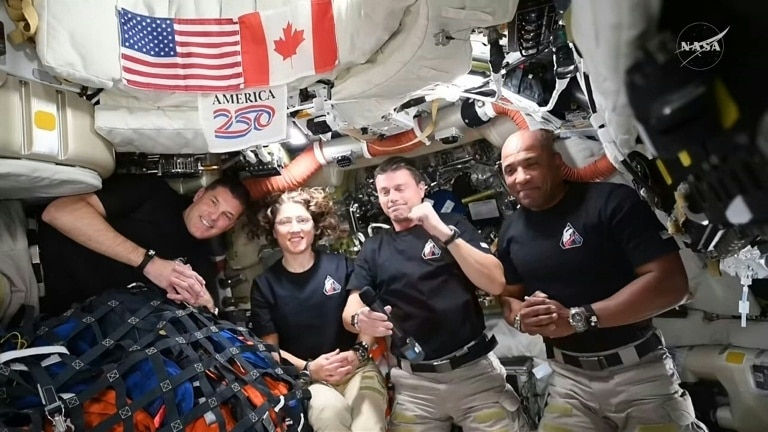
Almost six decades after the Apollo 8 mission gave the world its iconic Earthrise photograph, humanity has a new, breathtaking celestial keepsake from its latest journey around the Moon: the Artemis II four-person crew has captured the first-ever Earthset image taken from lunar space, a milestone that caps a historic mission that has already rewritten space exploration records.
作者: admin
-

Xi urges building China’s strength in education, sci-tech, talent
BEIJING, April 7, 2026 – Xi Jinping, President of the People’s Republic of China, General Secretary of the Communist Party of China Central Committee, and Chairman of the Central Military Commission, has issued a key directive calling for aligned efforts around China’s core strategic priorities, and urging dedicated contributions to advancing the country’s standing as a global leader in education, science and technology, and talent development.
The statement was delivered in a formal reply letter addressed to faculty members and students from four Chinese higher education institutions, underscoring the central government’s prioritization of these three interconnected sectors as foundational pillars for long-term national development.
The call comes amid China’s ongoing push to strengthen its indigenous innovation capacity, upgrade its education system to meet 21st-century economic and social challenges, and nurture a high-skilled domestic workforce that can drive sustainable growth across key industrial and technological sectors. By tying education, scientific advancement, and talent cultivation to the country’s major strategic needs, the directive signals a continued focus on building comprehensive national strength through knowledge-based development.
-

Ukrainian forces operating in Libya have attacked a Russian tanker, officials say
Two anonymous Libyan officials have made explosive new claims that Ukrainian military forces are operating covertly across western Libya under a Western-endorsed agreement, launching the March drone attack that severely damaged a Russian-sanctioned liquefied natural gas (LNG) tanker off the North African coast. The officials detailed the scope of the alleged deployment, laying out a new layer of proxy conflict between Russia and the West in the already fractured nation of Libya.
The vessel in question, the Russian-flagged *Arctic Metagaz*, was carrying 61,000 tons of LNG when it was struck by what Russia has confirmed was a Ukrainian sea drone attack in early March. The incident occurred roughly 240 kilometers off the Libyan coastal city of Sirte, near Maltese territorial waters. Initially, the Libyan Maritime Authority incorrectly reported the tanker had sunk after it suffered “sudden explosions and a massive fire,” but the damaged vessel remained afloat and drifted toward the Libyan coast. All 30 crew members were successfully rescued and transferred to a separate ship bound for the eastern Libyan city of Benghazi.
The *Arctic Metagaz* is part of Russia’s widely documented “shadow fleet” of vessels that transport Russian oil and gas in violation of international sanctions imposed over Moscow’s full-scale invasion of Ukraine, now in its fourth year. Just recently, the U.S. issued a temporary waiver on some sanctions to mitigate energy supply disruptions amid escalating conflict with Iran. For Kyiv, targeting these shadow fleet vessels is a deliberate strategy to cut off the oil export revenue that funds Russia’s war effort.
According to the two Libyan officials, who spoke on condition of anonymity to discuss sensitive, classified arrangements, most of the Ukrainian personnel deployed in Libya are specialized drone experts. They are primarily based at a military air base in the coastal city of Misrata, with additional operations out of facilities in the capital Tripoli and the coastal town of Zawiya. One official confirmed the March 3 drone strike on the tanker was directly launched from a Ukrainian-controlled military site in Tripoli.
In the weeks following the attack, conservation group World Wide Fund for Nature confirmed the damaged tanker remained adrift, pushed by winds and currents closer to Libya’s shore. Libyan authorities attempted to tow the vessel to a secure safe zone off the country’s western coast, but harsh weather and strong winds derailed those efforts, leaving the *Arctic Metagaz* drifting uncontrollably, creating a growing risk of a major Mediterranean oil spill.
As of Tuesday, neither Russian nor Ukrainian government officials had issued an immediate response to the new claims. The Tripoli-based Dbeibah government also had not responded to requests for comment on the alleged deployment.
Since the start of Russia’s 2022 invasion, Ukraine has become a global hub for rapid military innovation, particularly in uncrewed drone technology. Kyiv’s Sea Baby naval drones have carried out repeated successful strikes against Russian military and commercial vessels in the Black Sea, disrupting Russia’s naval operations and energy shipping lanes. As Russia has adapted its defenses to block Black Sea attacks, forcing Kyiv to scale back operations in that region, Ukrainian military planners have begun pursuing more ambitious, long-range strikes from alternative locations, according to defense analysts.
The Libyan officials say the gradual deployment of Ukrainian forces to western Libya over recent months was arranged under a covert bilateral deal between Kyiv and the embattled Tripoli-based government of Prime Minister Abdul-Hamid Dbeibah. The agreement, they claim, has received formal backing from Western powers, including the United States. U.S. Africa affairs adviser Massad Boulos recently tabled a conflict resolution proposal for Libya that would retain Dbeibah as prime minister while appointing Saddam Hifter—son of powerful eastern military commander Khalifa Hifter—as head of the presidential council. Khalifa Hifter leads the Russia-backed self-styled Libyan National Army, which controls eastern and southern Libya, including the country’s largest oil fields.
Libya has remained deeply divided for more than a decade, split between the United Nations-backed Dbeibah administration in Tripoli and the rival, Russia-aligned administration in the east backed by Hifter’s forces. Dbeibah’s original government mandate expired in December 2021 after the country failed to hold long-promised first presidential elections, and he has resisted all attempts to replace him, warning a leadership transition could ignite full-scale civil war.
Jalel Harchaoui, a leading Libya expert at the Royal United Services Institute, said the reported presence of Ukrainian forces in western Libya aligns with longstanding NATO efforts to prevent Russia from expanding its influence in the strategically located North African nation. “It is entirely plausible that, with the knowledge and blessing of NATO powers — chiefly the United States but also the United Kingdom and Turkey — several small groups of Ukrainian operatives now maintain a presence in the greater Tripoli area,” Harchaoui noted.
Libya has been mired in ongoing political instability and conflict since a 2011 NATO-backed uprising ousted and killed longtime dictator Moammar Gadhafi. For years, the resource-rich nation has served as a key battleground for the geopolitical rivalry between Russia and the West. With borders connecting it to six North and Central African nations, and its position as a major transit route for migrants seeking to reach Europe, Libya’s stability has long been a core security concern for Western governments. This new reported deployment marks a sharp escalation of the Russia-Ukraine war’s spillover into a region already fractured by great power competition.
-

Ben Gvir raids Al-Aqsa as Israel plans to reopen mosque to settler incursions
On a tense Monday in occupied East Jerusalem, Israeli far-right National Security Minister Itamar Ben Gvir launched a controversial incursion into the Al-Aqsa Mosque compound, entering through the Moroccan Gate under a heavy escort of armed Israeli police. The incursion took place against the backdrop of an unprecedented, month-long closure that has barred nearly all Muslim worshippers from accessing one of Islam’s most sacred holy sites, a move that has already stoked deep anger across the Muslim world.
Israeli authorities have justified the ongoing closure by citing security concerns tied to the ongoing war with Iran, but Palestinian officials and advocacy groups have openly questioned the credibility of these claims. They point to the fact that Israeli officials have allowed large-scale public gatherings for Jewish holiday celebrations in other parts of the country, raising accusations that the security pretext is being used to advance a long-held far-right agenda to reshape control of Al-Aqsa.
In parallel to Ben Gvir’s incursion, Israeli police — operating under Ben Gvir’s oversight — have drafted a new access plan that would resume daily incursions by ultra-nationalist Jewish settlers into the mosque compound once it reopens. The proposal, which still requires approval from Israel’s High Court, would cap entry at 150 people at a time, a limit that applies equally to both Muslim worshippers and Jewish visitors. The plan marks a break from the pre-war status quo arrangement, which has for decades recognized the Jerusalem Islamic Waqf as the sole exclusive administrative authority over Al-Aqsa, including full control over entry and site management.
Critics of the plan warn that the 150-person cap is not an even-handed restriction: with the compound’s capacity to hold hundreds of thousands of worshippers for weekly Friday prayers and thousands for daily prayers, the limit effectively shuts out the vast majority of Muslim worshippers while normalizing and expanding daily settler incursions. Before the war, these incursions — which already violated the long-standing status quo — took place twice daily on non-weekends, with settlers entering in groups of fewer than 100 people under constant police protection. The new plan would raise the maximum group size to 150, a change that has been openly celebrated by ultra-nationalist Israeli activists who advocate for Israeli control over Al-Aqsa. Arnon Segal, a prominent leader in Temple Mount activist groups that organize these incursions, called the new cap a “historic development” and a long-awaited “dream” in a post on social media platform X.
The incursion and the new access plan have drawn widespread condemnation from Palestinian, regional, and international actors. The Palestinian Ministry of Religious Affairs called Ben Gvir’s incursion, carried out while the site remains closed to Muslim worshippers, an extremely dangerous step that undermines the inherent religious sanctity of Al-Aqsa. The Al-Quds International Institution, in a hard-hitting official statement released Monday, argued that the plan “deepens the division of Al-Aqsa Mosque” between Muslim and Jewish communities, saying it leverages the ongoing war to quietly transform the site into a shared Jewish-Islamic holy site as a stepping stone to the full Judaization of the compound. The institution also noted that the arrangement would place Ben Gvir in de facto control of all of the mosque’s affairs, fully sidelining the Jerusalem Islamic Waqf, the internationally recognized governing body for the site. It called the move a deliberate insult to Arab and Muslim leaders who have so far only issued verbal statements against Israeli actions, reducing them to passive onlookers while a sacred site is reshaped against their will.
In practical terms, the Al-Quds International Institution explained, the 150-person cap means that even when the site formally reopens, it will remain effectively closed to the vast majority of Muslim worshippers: 150 people would not even fill the first row of the Qibli Mosque, the largest indoor prayer hall in the 144,000-square-meter Al-Aqsa compound. The institution warned that the plan would have “serious consequences” and issued an urgent call for action from Palestinians and all Muslim-majority nations, specifically calling on Jordan — the internationally recognized custodian of Jerusalem’s holy sites — and the Jerusalem Waqf to take concrete steps to push back against attempts to eliminate their long-standing role governing Al-Aqsa. “If implemented, Al-Aqsa Mosque will effectively be closed to Muslims and open to settler incursions. This is a humiliating act of aggression and an unacceptable reality that must be confronted by all possible means,” the statement read.
Hamas also issued a condemnation, saying Ben Gvir’s incursion “reflects a deepening of the occupation’s arrogance and its deliberate targeting of the mosque’s sanctity.” Jordan and Qatar have also added their voices to the criticism of the move. Ben Gvir, for his part, has defended the plan, arguing that it is a matter of fairness: he noted that anti-war protests of up to 600 people have been allowed in Israel, so he is “obliged to ensure justice and prevent discrimination” against those seeking access to the Western Wall and Al-Aqsa compound, which he refers to by the Israeli name Temple Mount. He called on the High Court to approve the plan to allow small-group access to both sites.
-

Inside a huge compound on Thailand-Cambodia border where 10,000 workers scammed people globally
In the border town of O’Smach straddling Thailand and Cambodia, a recently seized illicit operation laid bare the staggering, industrial-scale expansion of transnational cyber scam networks that have exploded across Southeast Asia in the years since the COVID-19 pandemic.
For a journalist who has tracked the rise of these criminal compounds for years from a base in the region, and visited multiple scam centers before, the size of the O’Smach Resort complex—seized by Thailand’s military during a December border conflict with Cambodia—still defied prior expectations. Covering roughly 197 acres, an area equal to 150 full-sized American football fields, it dwarfed every other scam facility the reporter had previously observed.
Thailand’s military organized a guided media tour of the seized compound this week, revealing the full scope of the well-established criminal operation that once operated from the site. Thai officials stated they seized the territory after Cambodian actors used the complex as a base for cross-border attacks during the December dispute.
The compound, bearing the innocuous name O’Smach Resort, is linked to Cambodian politician Ly Yong Phat, who is already sanctioned by the United States for documented human rights abuses tied to the same site. While it remains unconfirmed whether ongoing expansion work at the complex is also tied to Ly, visible signs of new construction are scattered across the self-contained facility: stacks of unused bricks and idle construction cranes dot the landscape, indicating the criminal network was actively growing its operations before the seizure.
Inside the complex, the infrastructure is built explicitly to support large-scale coordinated fraud. In total, the site holds 157 separate structures. Twenty-nine of these are dedicated office buildings for scam operating companies, while the rest include mass worker dormitories, luxury staff apartments, and even three-story private villas for senior criminal leaders. Thai military estimates suggest at least 10,000 people resided and worked within the compound at the height of its operation. To accommodate the majority Chinese workforce that ran the scams, the compound even hosts a range of regional Chinese dining options, from spicy Hunan dishes and southern Chinese Shaxian delicacies to Sichuan-style hot and sour rice noodles.
During the tour, reporters were led to a four-story office building where scammers specifically targeted American victims. The office was left largely intact after the seizure: half-eaten snacks remained on desks, and every workstation held detailed scam scripts and notes written in Chinese. American SIM cards were scattered across surfaces, confirming the operation’s direct targeting of United States consumers.
One of the recovered scripts illustrates the sophisticated, long-con tactics scammers use to manipulate victims. The 24-page document builds out an elaborate backstory for a fake female persona named Mila, who is framed as a successful trader with huge earnings from gold options trading. The script goes far beyond basic financial fraud framing: it adds deeply personal details, including the death of Mila’s husband from leukemia when their daughter was an infant, childhood bullying, and a move to South Africa to live with her uncle as a teenager. These manufactured emotional details are designed to build trust with targets over weeks or months before scammers move to steal their money.
The revelation of this massive single compound lines up with broader estimates from global authorities. The U.N. Office of the High Commissioner for Human Rights currently estimates that roughly 300,000 people are trapped in the scam industry across Southeast Asia, many of them coerced into committing fraud against victims worldwide. Newly released FBI data this week underscores the staggering human cost for one major target market: U.S. consumers lost nearly $21 billion to all types of scams in 2023 alone.
While both Thailand and Cambodia have made public pledges to crack down on cross-border cyber scam operations, senior Thai officials emphasized that the problem is fundamentally global in scope, and cannot be solved by two neighboring countries acting alone. “Every country of the world has to join together to solve this problem. We cannot do it alone with Cambodia and Thailand,” stated Air Chief Marshal Prapas Sornchaidee, one of the senior military officials leading the media tour.
Recent regional developments signal growing momentum to address the crisis: Cambodia has recently advanced new legislation that would impose penalties as severe as life imprisonment for operators of illicit scam centers, and multiple countries have already extradited high-profile scam suspects back to their home jurisdictions to face charges. Still, the discovery of a 10,000-person fully operational scam compound near the Thai-Cambodian border makes clear that transnational criminal networks have already built a far larger infrastructure than many global leaders had previously acknowledged.
-

3,413 meters: China sets new record in global hot water ice drilling
In a landmark milestone for polar scientific research, China has set a new world record for hot water ice drilling, reaching a depth of 3,413 meters during its first experimental deep drilling mission in Antarctica, China’s Ministry of Natural Resources announced on Tuesday. The achievement shatters the previous international benchmark of 2,540 meters, opening new doors for unexplored polar research.
The successful mission was completed on February 5 by China’s 42nd Antarctic Expedition Team, which carried out the test at the Qilin Subglacial Lake, a massive buried Antarctic body of water first named by Chinese researchers in 2022. Located in Princess Elizabeth Land, within the inland ice sheet of East Antarctica, the subglacial lake sits roughly 120 kilometers from China’s Taishan Antarctic research station, making it an accessible yet geologically significant site for deep drilling operations.
With this breakthrough, China now has the proven technical capacity to conduct drilling research across more than 90 percent of the Antarctic ice sheet and the entirety of the Arctic ice sheet, according to official project updates. Hot water ice drilling is widely recognized as a cutting-edge frontier of global Earth science, with core research goals that include unlocking clues about Earth’s ancient environmental shifts, improving the accuracy of future climate change projections, exploring the limits of life in extreme hidden ecosystems, and expanding humanity’s fundamental understanding of polar geoscience.
Compared to traditional mechanical ice drilling methods, hot water drilling technology offers major advantages. It penetrates ice far faster while causing minimal disruption to the ice column and subglacial environment, supports clean, large-diameter drilling operations, and can efficiently reach critical geological interfaces including subglacial lakes, ice shelf bases, and subglacial bedrock. For these reasons, it has become the gold standard for international research into the deep, hidden environments of polar ice sheets.
The 2026 experimental mission was designed primarily to validate the performance of China’s domestically developed deep ice sheet hot water drilling system under extreme Antarctic conditions. By drilling through the full thickness of the ice cover over Qilin Subglacial Lake, the project created a contamination-free access route and lays critical technical groundwork for upcoming research, including future in-situ observations of the subglacial ecosystem and collection of water and lakebed sediment samples.
Targeting an ice sheet over 3,000 meters thick, the mission integrated multiple custom-built pieces of equipment engineered specifically to withstand polar conditions, while solving longstanding key technical challenges: reliable low-temperature operation of machinery, strict prevention of external contamination of the pristine subglacial environment, and precise management of deep hoses and winches at extreme depth.
Officials noted that the successful drilling demonstrated the new system’s efficient, stable, and environmentally sustainable operation. The milestone fills a longstanding gap in China’s polar research capabilities and aligns with the country’s stated commitment to ‘green exploration’ and environmentally responsible polar science practices.
-

Foresight Science and Technology Award honors scientists
SHANGHAI — Against the backdrop of Shanghai Jiao Tong University’s 130th founding anniversary, the institution has hosted the fourth iteration of its prestigious Foresight Science and Technology Award ceremony on Monday, bringing together leading scientific minds, industry partners, and community stakeholders to celebrate groundbreaking research and honor the legacy of scientific inquiry.
First established in 2022, the award was created to fill a unique niche: it recognizes outstanding work by Shanghai Jiao Tong University affiliates based across the globe, with eligible contributions spanning three core domains: fundamental basic research, translational applied research, and cutting-edge exploration at the frontiers of scientific knowledge. The program’s core mission extends far beyond simply recognizing existing achievement; organizers designed it to celebrate the enduring spirit of scientists, foster cross-institutional and cross-border academic exchange, and ignite new waves of technological innovation among early-career researchers.
This year’s ceremony featured a distinctive celebratory addition: a star-studded red carpet opening that welcomed a diverse cross-section of attendees. Leading the procession were senior academicians from both the Chinese Academy of Sciences and the Chinese Academy of Engineering, joined by senior representatives from top domestic research institutions and industry partners. Also in attendance were prominent alumni who have gone on to become leading business leaders, as well as representatives from the university’s network of partner primary and secondary schools, reflecting the institution’s commitment to nurturing scientific interest from the earliest stages of education.
As Shanghai Jiao Tong University marks its 130 years of advancing scientific education and research, the award ceremony stands as a testament to the institution’s ongoing mission to push the boundaries of human knowledge and support the next generation of scientific pioneers.
-
Has Artemis II shown we can land on the Moon again?
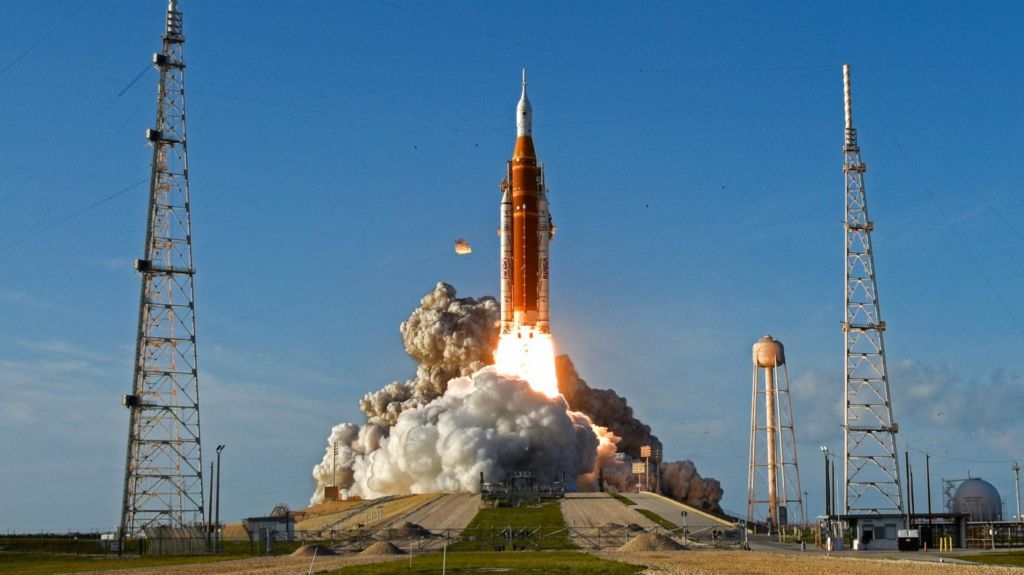
Six days after NASA’s Artemis II mission lifted off from the Kennedy Space Center on April 1, 2026, every key systems test has delivered results far better than even the agency’s most optimistic engineers predicted. This mission marks the first time a crewed Orion capsule has operated in deep space, a real-world trial no ground-based simulator could ever replicate — and its performance so far has already reshaped expectations for the future of U.S. lunar exploration.
Preceding the April launch were two scrapped attempts in February and March, caused by unrelated technical glitches that followed the 2022 uncrewed Artemis I mission. Following those setbacks, NASA Administrator Jared Isaacman issued a blunt assessment of the agency’s previous approach: launching a single complex Space Launch System (SLS) rocket once every three years, treating each vehicle like a one-of-a-kind masterpiece rather than part of an operational program, was no path to sustainable success. His comments reframed the entire Artemis program around a new goal: consistent, frequent launch cadence rather than sporadic, high-stakes single missions.
Against that new standard, Artemis II’s first week has been a resounding success. The SLS, NASA’s most powerful rocket ever built, generated 8.8 million pounds of thrust at liftoff, and every phase of its ascent — from maximum dynamic pressure to main engine cut-off and booster separation — proceeded exactly as planned. Mission controllers described every stage as “nominal,” and two of three planned trajectory corrections en route to the Moon were scrapped entirely: the capsule’s initial flight path was already so precise that no adjustments were needed. “Credit to them – they got it right the first time,” noted Simeon Barber, a space scientist at the Open University.
Approximately 36 hours after launch, the mission passed its most critical early test: a five-minute, 55-second translunar injection burn from Orion’s main engine that set the capsule on a looping path toward the Moon with no further major maneuvers required. Artemis program director Dr. Lori Glaze called the burn “flawless.”
The core objective of Artemis II has always been to test how Orion performs with a human crew of four — commander Reid Wiseman, pilot Victor Glover, mission specialists Christina Koch and Jeremy Hansen — aboard. Unlike simulated tests, a crewed mission reveals how systems adapt to the small, unpredictable needs of human spaceflight: the need for air conditioning, carbon dioxide removal, working restroom facilities, and in-flight water access. The mission has encountered only minor issues: a temporary toilet malfunction, a water dispenser problem that required the crew to collect water in bags as a precaution, and a small redundancy loss in a helium system that was resolved quietly shortly after it was detected.
“ This is all about putting humans in the loop — these pesky humans that press buttons and breathe carbon dioxide and want air conditioning and want to use the toilet. It was all about how the system works with those guys on board,” Barber explained. Engineers have run repeated tests on Orion’s life support and maneuvering systems, even intentionally disabling some thrusters to test the capsule’s response, and all data so far confirms the vehicle is safe enough for future lunar surface missions. Barber summarized, “Orion itself seems to have worked pretty well, actually — certainly all the propulsion stuff, which is the real critical stuff.”
Alongside systems testing, the crew has collected new observational data of the lunar surface and captured breathtaking images from deep space. They documented roughly 35 geological features in real time, tracked color variations that hint at mineral composition, and photographed a deep-space solar eclipse that pilot Victor Glover described as “unreal.” One particularly historic observation captured the 600-mile Orientale basin on the Moon’s far side, the first time humans have viewed the full feature in person. Still, as Oxford University professor Chris Lintott points out, the scientific value of these observations is limited: robotic missions including India’s 2023 Chandrayaan-3 and China’s 2024 Chang’e-6 have already mapped the lunar terrain in far greater detail. For Artemis II, the greatest impact has not come from science, but from inspiration and human connection.
The mission’s most memorable moment came when the crew broke the 56-year distance record for human spaceflight set by the damaged Apollo 13 mission. In an unscripted, emotional transmission to Mission Control, Jeremy Hansen announced the crew was naming a bright lunar crater “Carroll,” in honor of Reid Wiseman’s late wife, mother of their two daughters. After Hansen’s announcement, the crew held 45 seconds of silence before embracing, as Wiseman’s daughters watched from Houston. This moment, experts note, is what will cement Artemis II in public memory much like the Apollo program. Space programs that cannot evoke genuine human emotion do not endure; Apollo is remembered not just for its engineering breakthroughs, but for what it revealed about human courage and curiosity. Artemis II, in that quiet moment, claimed the same legacy.
The mission is not yet complete. Orion is currently on its return trajectory to Earth, scheduled to splash down in the Pacific Ocean near San Diego on April 11. The final, unrivaled test still ahead is atmospheric re-entry: the capsule will hit Earth’s atmosphere at roughly 25,000 miles per hour, a speed and heat load no simulator can replicate. Re-entry became a major point of concern after Artemis I, when unexpected heat shield damage triggered an investigation that delayed the Artemis II mission by more than a year. The outcome of this test will do more to define the mission’s legacy than any image of the lunar surface.
If re-entry proceeds as planned, the early success of Artemis II will send a clear encouraging signal: the SLS rocket works, the Orion capsule works, and the crew can operate systems competently even under the unique pressures of deep space. NASA has also now articulated a clear plan to move toward more frequent launches, breaking from the decades-old pattern of multi-year gaps between missions.
The goal of a crewed lunar landing by 2028, set by the agency and the White House, still remains a challenging stretch. Barber estimates a landing is more likely three to four years away from now, a timeline most experts agree is realistic. But the flawless performance from launch through lunar flyby has shifted the odds of success firmly in the right direction. The question of whether Orion can safely carry humans to the Moon is close to being answered; what remains to be seen is whether the lunar lander development program, the required launch cadence, and long-term political will can keep pace. For now, at least, the core spacecraft has already exceeded all expectations.
At a time of global unrest and widespread uncertainty, much like the 1960s Apollo era, Artemis II has delivered a moment of shared global inspiration. The iconic images of Earth hanging below the lunar horizon, and the quiet emotion of the crater naming ceremony, have reminded audiences worldwide that human exploration can unify people across borders. This is only a test flight, the first step toward a sustained program of lunar exploration that will include multiple landings in the coming years — but it is already a step that has rekindled global optimism for human spaceflight.
-

Bahamas police search for US woman who reportedly fell off boat
A massive cross-agency search operation is ongoing in the Abaco Islands of the Bahamas after an American tourist disappeared overboard from a small recreational dinghy over the weekend, local law enforcement confirmed.
The missing person has been identified as Lynette Hooker, a resident of Michigan, who was on a holiday in the Caribbean island nation alongside her husband, also a United States citizen. According to official statements from the Royal Bahamas Police Force, the incident unfolded around 7:30 p.m. local time Saturday, when the couple set out from Hope Town bound for Elbow Cay aboard an 8-foot hard-bottom dinghy. Hooker’s husband told first responders that his wife fell from the bouncing vessel when it hit uneven water, and was quickly pulled out to open sea by strong local currents. Critically, the woman took the dinghy’s engine keys with her when she fell overboard, leaving her husband stranded without power to navigate or pursue.
Without functioning propulsion, the husband was forced to paddle the unpowered small boat to shore, a journey that took more than eight hours. He only reached the Marsh Harbour Boat Yard around 4 a.m. local time Sunday, where he immediately alerted on-site staff, who in turn contacted Bahamian law enforcement to launch the search. Hope Town Volunteer Fire and Rescue Chief Troy Pritchard confirmed to CBS News, the BBC’s U.S. news partner, that the woman was ejected violently from the small craft, a common hazard in choppy coastal waters around the island chain.
In an official social media statement, the Royal Bahamas Police Force announced it had launched a full investigation into the disappearance, and that multiple partner agencies had joined the search effort. Alongside Bahamian national police and the Royal Bahamas Defence Force, U.S. diplomatic and law enforcement counterparts as well as local volunteer rescue groups are contributing assets and personnel to the operation, police confirmed.
The incident comes nearly 13 months after the U.S. State Department issued a public travel advisory explicitly warning U.S. travelers of deadly boating risks across the Bahamas. The March 2025 advisory noted that the island nation does not tightly regulate recreational boating activity, a gap in oversight that has already led to multiple preventable injuries and fatalities for visitors in recent years.
-

NASA releases picture of ‘Earthset’ shot by Artemis crew
Fifty-seven years after one of the most influential space photographs in human history changed how humanity sees its home planet, NASA has released a new historic image captured by the Artemis II crew: a striking view of ‘Earthset’ as our world dips beyond the bleak gray lunar horizon.
The image was taken from the Orion capsule, which is carrying four astronauts on the first crewed lunar flyby mission in more than 50 years, marking a major milestone for NASA’s long-term Artemis program. The frame mirrors the 1968 ‘Earthrise’ shot that forever shifted public perspective on our planet, captured by Apollo 8 astronaut Bill Anders during humanity’s first crewed mission to orbit the Moon.
Both NASA and the White House shared the new ‘Earthset’ image on the social platform X, alongside a brief caption from the White House that framed the moment as a historic first: “Humanity, from the other side. First photo from the far side of the Moon. Captured from Orion as Earth dips beyond the lunar horizon.”
The Artemis II crew, made up of NASA astronauts Reid Wiseman, Christina Koch, and Victor Glover, plus Canadian Space Agency astronaut Jeremy Hansen, is currently completing a 10-day looping mission around the Moon that lays critical groundwork for the program’s target: the first crewed lunar landing in more than 50 years, currently scheduled for 2028. Over the course of the mission, the astronauts have shared detailed, vivid observations of the lunar surface’s rugged features, and have already witnessed other rare astronomical events. Alongside the ‘Earthset’ image, the White House also released a NASA-captured photo of a deep space solar eclipse, where the Moon passed directly between the Orion capsule and the Sun — a sight the administration noted “few in human history have ever witnessed.”
The original 1968 ‘Earthrise’ image remains a cultural touchstone for space exploration. During Apollo 8’s 10 orbits of the Moon (which, like Artemis II, did not include a surface landing), Anders snapped the iconic frame that showed Earth’s vivid blue oceans and continents glowing brightly against the endless black of deep space, framed by the desolate gray foreground of the lunar horizon. The shot has consistently ranked among the most influential photographs ever taken, and was included in Life magazine’s 2003 landmark collection *100 Photographs That Changed the World*. The new ‘Earthset’ image carries on that legacy, offering a fresh perspective of our home planet from the lunar neighborhood as NASA works to establish a long-term human presence on the Moon.