作者: admin

  • Fertility giant Monash IVF agrees to settle with families after shocking embryo bungle

    Fertility giant Monash IVF agrees to settle with families after shocking embryo bungle

    Australian fertility provider Monash IVF has reached comprehensive settlements with families affected by significant embryo transfer errors at its clinics in Melbourne and Brisbane, marking a pivotal resolution to medical mishaps that shook the nation’s reproductive health sector.

    The incidents, which occurred in 2023 and 2025, involved critical procedural failures where embryos were mistakenly implanted into incorrect patients. At the Clayton facility in Melbourne, clinicians erroneously transferred a patient’s own embryo to the same individual rather than their intended partner. This followed an even more severe case at the Brisbane clinic where staff implanted an embryo from unrelated donors, resulting in a woman delivering another couple’s biological child.

    Company representatives confirmed that substantial claims stemming from these events have either been finalized or are in advanced settlement stages. A Monash IVF spokesperson expressed profound regret, stating: “We deeply regret the events from 2025 and have implemented rigorous enhancements to our safety protocols and oversight mechanisms across all clinical sites.”

    The fertility provider has collaborated extensively with regulatory authorities to elevate operational standards beyond mandatory requirements. Organizational reforms included an independent comprehensive review of procedures and the subsequent resignation of CEO Michael Knapp following the controversies.

    Financial implications for the company appear mitigated through insurance coverage, with investors notified that both claims fall within policy parameters. The organization’s half-yearly report to the Australian Stock Exchange confirmed that insurers have acknowledged liability coverage under relevant policies, with directors anticipating no material financial exposure.

    Monash IVF has instituted sweeping operational changes aimed at preventing recurrence, emphasizing strengthened safety culture and enhanced embryo handling protocols to restore patient confidence in their fertility treatment services.

  • Legal fight expected following Kyle and Jackie O $200m implosion

    Legal fight expected following Kyle and Jackie O $200m implosion

    The spectacular collapse of Australian radio’s most lucrative partnership is poised to ignite complex legal warfare following the unprecedented suspension of shock jock Kyle Sandilands. The dramatic implosion of the decade-long $200 million contract between Sandilands and co-host Jackie ‘O’ Henderson has thrown their flagship program into chaos and their network into damage control.

    ARN Media, the ASX-listed network owner, executed a 14-day suspension of Sandilands for what it termed ‘an act of serious misconduct’ during a February broadcast that reduced Henderson to tears. The incident, wherein Sandilands publicly criticized his co-host’s professional performance, has effectively halted production of the nationally syndicated program.

    According to prominent media law expert Michael Bradley, the contractual fallout presents exceptionally complex legal terrain. ‘One would anticipate this escalating into litigation rapidly given the enormous financial stakes and problematic history of tolerated on-air behavior,’ Bradley noted. The central legal question revolves around what conduct ARN can legitimately deem unacceptable after years of broadcasting controversial content.

    Bradley emphasized the unique nature of the situation: ‘Other than murdering his co-host on air, what could he possibly do that they would then say ‘that’s too far’? This paradox fundamentally undermines the network’s position regarding enforceable behavioral standards.’

    The $200 million decade-long agreement, signed in 2021 and extending to 2034, represents one of Australian media’s most significant talent investments. ARN has formally notified markets that Henderson ‘cannot continue to work with Mr. Sandilands’ while offering her an alternative programming opportunity. Should Sandilands fail to remedy the contractual breach, ARN has threatened termination of its agreement with his production company, Quasar Media.

    The situation encompasses multiple legal dimensions including individual contract disputes, workplace relations considerations, and broadcast decency standards. With both careers and hundreds of millions in revenue at stake, industry observers anticipate protracted legal proceedings that could redefine talent-network relationships in Australian media.

  • Septic tank searched, mine shafts to be explored as police ramp up outback search for missing SA woman Trisha Graf

    Septic tank searched, mine shafts to be explored as police ramp up outback search for missing SA woman Trisha Graf

    Authorities in South Australia have escalated their investigation into the mysterious disappearance of Trisha Graf, who vanished from the remote mining town of Andamooka in December 2025. The search operation has now entered a critical phase with investigators examining potentially hazardous locations in the harsh outback terrain.

    New developments reveal that police recently conducted a thorough examination of a septic tank at a property near Graf’s last known location on February 23. Despite meticulous efforts, the search yielded no evidence related to her disappearance. The investigation had been temporarily halted due to severe weather conditions but has now resumed with renewed determination.

    The timeline of events indicates Graf was last seen during the early hours of December 12 after visiting the Roxy Downs hotel. Surveillance records show her departing the establishment at approximately 12:19 AM in her white 2012 Ford Territory (registration S254BCX). Shortly afterward, she reportedly collided with a kangaroo near Andamooka Township but continued her journey to visit a friend.

    Her final confirmed sighting occurred around 2:00 AM on Dunstan Drive. Friends discovered her vehicle approximately ten hours later, positioned on a dirt mound near Blue Dam, east of Andamooka. The abandoned car showed no immediate signs of what might have transpired after she was last seen.

    Law enforcement officials are now preparing to search numerous mine shafts located east of Andamooka, considering the area’s mining history and potentially dangerous abandoned sites. The community remains on high alert as authorities urge anyone with information to contact Crime Stoppers at 1800 333 000.

  • Global order is ‘breaking down’, Carney tells Australian parliament

    Global order is ‘breaking down’, Carney tells Australian parliament

    In a historic address to Australia’s Parliament in Canberra—the first by a Canadian leader in nearly two decades—Prime Minister Mark Carney emphasized the urgent need for middle powers to collaborate as “strategic cousins” in response to the collapse of the post-war global order. Speaking before lawmakers, Carney warned that consecutive international crises have eroded existing frameworks, creating a vacuum where either middle nations collectively shape new rules or risk having outcomes dictated by hegemons.

    The two leaders, Carney and Australian Prime Minister Anthony Albanese, announced a series of agreements aimed at deepening cooperation in defense, artificial intelligence, and critical minerals. Australia formally joined the G7 Critical Minerals Alliance, which Carney hailed as the world’s largest coalition of trusted democratic mineral reserves. Together, the two nations supply one-third of global uranium and lithium and over 40% of iron ore.

    Albanese underscored the shared values and convictions binding the countries, stating, “Australia and Canada must seek and create new ways to stand with—and for—each other.”

    On Middle Eastern tensions, both leaders expressed support for recent strikes on Iran while calling for regional de-escalation. They insisted, however, that any ceasefire must be contingent on Iran no longer possessing nuclear weapon capabilities. Albanese cited Iran’s influence as a factor in antisemitic attacks in Australia last year.

    Carney’s visit follows a four-day diplomatic trip to India, where he signed multibillion-dollar agreements, marking a thaw in relations previously strained by allegations linking India to an assassination on Canadian soil. The tour will conclude with meetings in Japan with Prime Minister Sanae Takaichi.

  • Canada and Australia leaders urge war de-escalation, but agree Iran can’t get nuclear weapons

    Canada and Australia leaders urge war de-escalation, but agree Iran can’t get nuclear weapons

    CANBERRA, Australia – In a significant bilateral meeting held in Australia’s capital, Canadian Prime Minister Mark Carney and Australian Prime Minister Anthony Albanese presented a unified front on the escalating Iranian conflict, advocating for immediate de-escalation while maintaining an unequivocal stance against Iranian nuclear proliferation.

    The high-level discussions occurred amidst heightened global tensions following recent military developments, including the sinking of an Iranian warship by a U.S. submarine in the Indian Ocean and NATO’s interception of an Iranian ballistic missile near Turkish airspace.

    Prime Minister Carney emphasized the necessity of broadening diplomatic efforts beyond direct combatants. “We seek a comprehensive de-escalation involving a wider coalition of nations,” Carney stated during a joint press conference. “However, this cannot be achieved without permanently eliminating Iran’s capacity to develop nuclear weapons and export terrorism. These outcomes must be fundamental to any resolution.”

    Carney specifically highlighted the potential role of the six-nation Gulf Cooperation Council, praising their “remarkable restraint” amid regional instability and suggesting their inclusion in peace-building initiatives.

    Prime Minister Albanese echoed these sentiments, condemning Iran’s expanding military operations. “The international community demands immediate de-escalation and cessation of Iran’s cross-border attacks,” Albanese asserted. “We’ve witnessed unacceptable aggression toward Gulf states not involved in hostilities, including targeting of civilian and tourist areas. The permanent prevention of Iranian nuclear weapons capability remains paramount.”

    When questioned about potential Canadian military involvement, Carney declined to categorically exclude such possibilities, noting the conflict’s potential for rapid expansion. “This addresses a fundamental hypothetical in a rapidly evolving situation,” he responded. “While we cannot absolutely rule out participation, any engagement would align with our strategic alliances and national interests.”

    The Canberra meeting formed part of Carney’s three-nation trade-focused tour, commencing in India and proceeding to Japan following his address to the Australian Parliament.

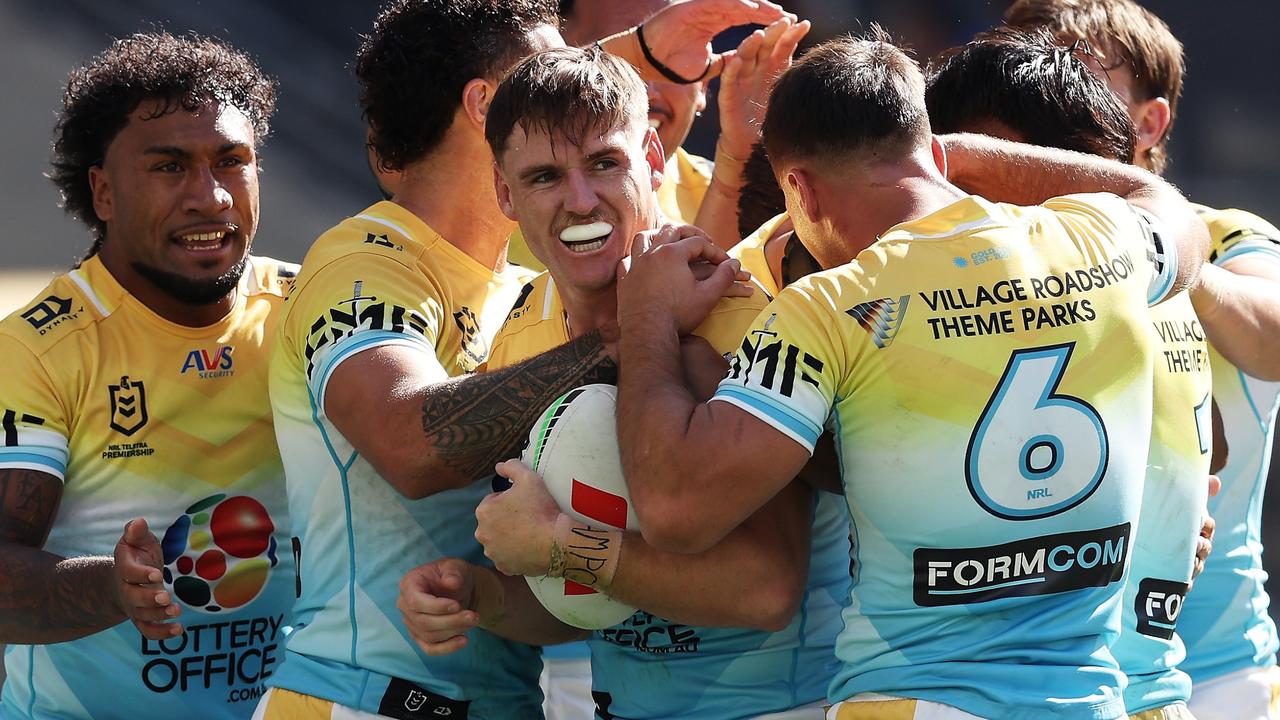
  • ‘That’s why he’s here’: Daly Cherry-Evans only has to look at Cooper Cronk for inspiration as he chases premiership glory at the Roosters

    ‘That’s why he’s here’: Daly Cherry-Evans only has to look at Cooper Cronk for inspiration as he chases premiership glory at the Roosters

    The Sydney Roosters are embarking on a bold experiment, hoping history will repeat itself as veteran playmaker Daly Cherry-Evans prepares for his club debut against the NZ Warriors this Friday. The high-stakes move draws direct parallels to the club’s successful acquisition of Cooper Cronk, a Queensland legend who delivered back-to-back premierships during his tenure.

    This strategic signing places Cherry-Evans, 37, in an unfamiliar five-eighth role alongside young halfback Sam Walker, creating one of the most anticipated new partnerships of the NRL season. While trial matches showed promising offensive coordination between the veterans, head coach Trent Robinson emphasizes that true validation will only come under regular season pressure.

    “That has to be seen,” Robinson stated regarding the duo’s on-field chemistry. “We’re really happy with the work that we’ve done in the pre-season with those guys and the combination that they have, but it does start with an off-field connection.”

    The veteran’s transition follows his surprising departure from Manly after 352 games as their primary playmaker. Despite changing jersey numbers, Cherry-Evans remains a potent offensive threat after setting up 24 tries last season. “I’ve been playing for a long time, so there’s a lot of my game that’s going to be very similar when it comes to the way a halfback plays,” Cherry-Evans commented. “Yeah, I’m wearing number six, but there’s a lot of things that I need to do for this team when it comes to leading the team around.”

    Meanwhile, the Roosters face additional considerations with centre Robert Toia likely sidelined due to injury and representative forward Angus Crichton committed to the club before his planned code switch to rugby in 2027.

  • Canada PM Carney says can’t rule out military participation in Iran war

    Canada PM Carney says can’t rule out military participation in Iran war

    During an official visit to Canberra, Canadian Prime Minister Mark Carney addressed escalating tensions in the Middle East, acknowledging that Canadian military involvement, while not currently planned, could not be entirely ruled out under specific circumstances. The comments came alongside Australian Prime Minister Anthony Albanese, with their bilateral discussions largely dominated by the fallout from a recent massive US-Israeli strike that killed Iranian Supreme Leader Ayatollah Ali Khamenei.

    Prime Minister Carney characterized questions about direct engagement as ‘hypothetical’ but firmly stated, ‘We will stand by our allies,’ and emphasized that Canada ‘will always defend Canadians.’ This stance exists alongside his previous criticism that the strikes on Iran were ‘inconsistent with international law.’ He expressed regret over the situation, describing it as a manifestation of a failing international order, even as he reaffirmed support for non-proliferation efforts to prevent a nuclear-armed Iran.

    The core of Carney’s visit, however, focused on a strategic pivot away from traditional alliances. His tour of the Asia-Pacific is explicitly designed to reduce Canadian reliance on the United States, hedging against what he termed a ‘fading US-led global order.’ In a major address to Australia’s parliament, Carney issued a rallying cry for ‘middle powers’ like Canada and Australia to collaboratively shape emerging global rules rather than submit to the compulsion of great powers or ‘hyperscalers.’

    To this end, he announced deepened cooperation with Australia, branding the two nations as ‘strategic collaborators.’ This partnership will involve pooling their vast rare earth mineral resources and enhancing collaboration in defense and artificial intelligence. Carney argued that such middle-power alliances, built on shared values and a reputation for matching words with actions, hold unique ‘convening power’ in a increasingly hegemonic world. This posture stands in sharp contrast to his frequently adversarial relationship with US President Donald Trump, who has previously threatened annexation and imposed severe tariffs on Canada.

  • War with Iran chokes flows of oil and natural gas, highlighting energy security risks for Asia

    War with Iran chokes flows of oil and natural gas, highlighting energy security risks for Asia

    BANGKOK (AP) — Escalating military conflict around the Persian Gulf has triggered severe disruptions to global energy markets, with oil and natural gas shipments through the critical Strait of Hormuz facing unprecedented challenges. The strategic waterway, which facilitates approximately one-fifth of global crude oil and liquefied natural gas (LNG) trade, has become a flashpoint in regional tensions, sending energy prices soaring worldwide.

    Asia emerges as the most vulnerable region due to its heavy dependence on imported energy resources. According to energy consultancy Kpler, approximately 13 million barrels of oil transited through the corridor daily in 2025, representing about one-third of all seaborne crude. The U.S. Energy Information Administration reports that over 80% of LNG shipments through the strait in 2024 were destined for Asian markets.

    Since hostilities began, Brent crude prices have surged by 15% to approximately $84 per barrel, reaching their highest level since July 2024. U.S. President Donald Trump announced potential naval protection and risk insurance for shippers, but the ripple effects extend far beyond the immediate region. Wealthier nations are outbidding developing economies for scarce energy cargoes, recreating patterns observed during previous energy shocks.

    Zulfikar Yurnaidi of the ASEAN Centre for Energy warned that “the crisis, with the closure of the Hormuz Strait as the latest development, would not only raise oil and gas prices but also grind global economic activity to a halt.”

    China and India face particularly significant challenges as the world’s largest and third-largest crude oil importers, respectively. While China maintains substantial strategic petroleum reserves and alternative supply routes—including discounted Iranian, Russian, and Venezuelan oil through independent refiners—the price volatility remains a concern. India’s situation appears more precarious with less than one month of crude reserves, creating potential for rapid deterioration if conflicts persist.

    East Asian economies demonstrate varying levels of vulnerability. Japan imports approximately 95% of its crude from the Middle East, while South Korea sources around 70% of its crude oil and 20% of its LNG from the region. Taiwan, despite diversification efforts, remains heavily dependent on Qatari LNG. All three economies maintain energy stockpiles but face challenges in energy-intensive industries.

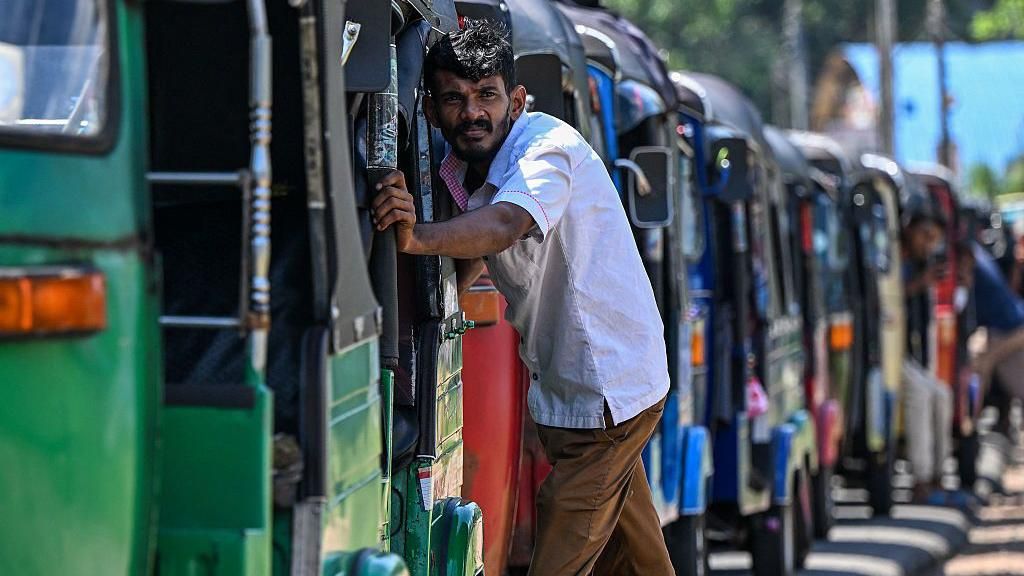
    Southeast Asian nations are implementing emergency measures as developing economies risk being outbid in tightening markets. Singapore has warned of higher energy bills, Manila has restricted non-essential fuel use, and Thailand has suspended petroleum exports while boosting domestic production. The region’s reliance on spot-market LNG creates additional exposure to price volatility and geopolitical instability.

    Energy analysts emphasize that current reserves provide only temporary relief, with many nations regretting insufficient investment in renewable energy diversification that could have served as a natural hedge against such disruptions.

  • Fight over Trump’s Iran war powers comes after a long stretch of Congress yielding to presidents

    Fight over Trump’s Iran war powers comes after a long stretch of Congress yielding to presidents

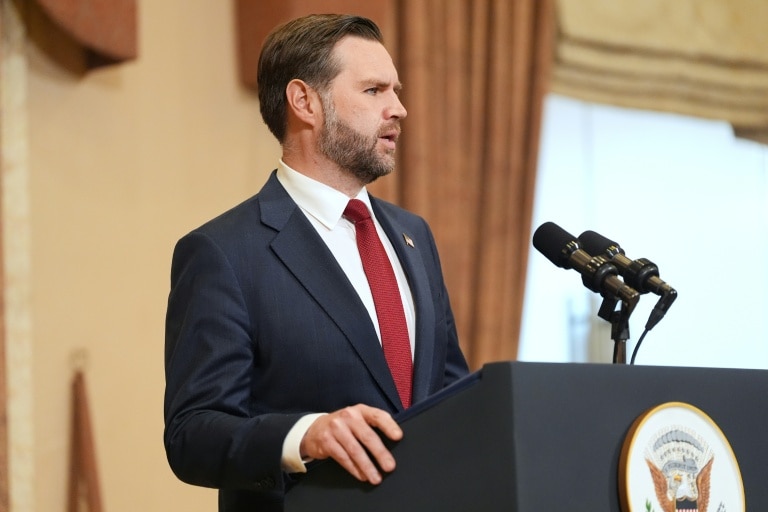
    The ongoing tension between presidential authority and congressional oversight over military operations has reached a critical juncture during Donald Trump’s second term. The Republican-controlled House prepares for a pivotal vote Thursday following the Senate’s rejection of Democratic-led measures to curtail presidential war powers in the ongoing U.S.-Israeli campaign against Iran.

    President Trump has consistently asserted broad, arguably unlimited authority over military deployments, approving naval strikes near Venezuela, establishing a maritime blockade, and authorizing operations to depose Venezuelan leader Nicolás Maduro—actions that many legal scholars consider acts of war under international law. These maneuvers follow earlier considerations of military action in Greenland and Latin America before escalating into comprehensive bombing operations in Iran.

    While the Constitution designates the president as commander-in-chief of armed forces, it simultaneously grants significant war powers to Congress. Trump’s refusal to accept limitations on his military options demonstrates, according to constitutional experts, a fundamental shift in the balance of power away from the framers’ original vision of civilian-controlled military authority.

    Military historian Peter Mansoor, an Ohio State University professor and retired Army colonel, emphasizes that ‘the Constitution gives war powers to two different branches of government.’ He notes with concern that ‘the pendulum has swung towards the executive,’ contrary to the framers’ intention that Congress should remain the most powerful branch.

    The historical context reveals a persistent erosion of congressional war authority. Despite Article I granting Congress the power to declare war, no formal declaration has occurred since World War II, even as American troops engaged in major conflicts in Korea, Vietnam, Iraq, and Afghanistan. The Trump administration’s recognition of military actions against Venezuela through Medal of Honor awards—typically reserved for combat against foreign enemies—further blurs legal distinctions between authorized conflicts and presidential military initiatives.

    The 1973 War Powers Resolution, designed to reassert congressional oversight, has proven largely ineffective in practice. Recent failed attempts to limit presidential authority through legislative measures demonstrate the ongoing struggle between executive action and legislative constraint—a tension that has characterized military operations from Truman’s Korean ‘police action’ to Biden’s withdrawal from Afghanistan, the nation’s longest undeclared war.

  • Bayern and Kane gambling with house money as Gladbach come to town

    Bayern and Kane gambling with house money as Gladbach come to town

    As Bayern Munich continues its dominant march toward another Bundesliga championship, all eyes are fixed on English striker Harry Kane’s remarkable campaign to shatter Robert Lewandowski’s single-season scoring record. With 30 goals already registered in just 24 league appearances, Kane finds himself merely 11 strikes away from eclipsing the legendary Pole’s benchmark established during the 2020-21 season.

    The record-chasing narrative intensifies as Bayern prepares to host struggling Borussia Mönchengladbach at Munich’s Allianz Arena on Friday. Despite their commanding 11-point advantage with only 10 matches remaining, the Bavarian giants show no indications of reducing their offensive intensity. The team itself approaches another historic milestone, requiring just 14 more goals to break the Bundesliga’s single-season scoring record of 101 goals set back in 1971-72.

    Kane maintains a characteristically methodical approach toward his record pursuit, revealing to German publication Bild: “I break the season into distinct phases with specific targets rather than focusing solely on Lewandowski’s achievement. The probability appears reasonably balanced at present, though maintaining this performance level presents a significant challenge.”

    Meanwhile, Stuttgart’s revelation Deniz Undav emerges as an intriguing subplot to Kane’s headline-grabbing campaign. The German international has netted 14 times in 20 matches, achieving a career-best scoring rate of every 106 minutes. Remarkably, Undav’s open-play contribution nearly matches Kane’s, with just two fewer non-penalty goals than the English captain despite Kane’s 14 successful spot-kicks.

    The 29-year-old forward expressed frustration regarding perceptions of his playing role, stating: “Despite possessing the league’s most efficient scoring record, people persistently categorize me as a false nine rather than recognizing my capabilities as a classical striker. I’ve consistently demonstrated proficiency both in finishing and chance creation throughout my career.”

    Historical context adds intrigue to Friday’s encounter, with Gladbach having lost only six of 19 meetings against Bayern between 2014-2023, including a memorable 5-0 German Cup victory representing Bayern’s heaviest defeat since the 1970s. However, the Bavarians have since reestablished dominance with five consecutive victories against their rivals.

    With Champions League and German Cup commitments looming, manager Vincent Kompany faces strategic decisions regarding Kane’s utilization, though legendary striker Jürgen Klinsmann asserted: “Vincent would never obstruct Harry’s record pursuit. Benching him to prevent making history remains inconceivable.”