作者: admin

  • Henan intensifies efforts for higher-level opening-up

    Henan intensifies efforts for higher-level opening-up

    Central China’s Henan province is executing an ambitious strategy to transform into a high-capacity inland hub for global commerce, leveraging enhanced trade corridors and digital infrastructure to connect domestic and international markets. Under the leadership of Provincial Party Committee Secretary Liu Ning, the region is prioritizing integration with China’s national unified market as the cornerstone of its economic development framework.

    The comprehensive approach centers on establishing Henan as a critical circulation nexus, facilitating the efficient movement of international products to Chinese consumers while simultaneously propelling locally manufactured goods onto the world stage. Cross-border e-commerce serves as the primary engine of this transformation, supported by an extensive network of specialized ports, bonded zones, and pilot e-commerce centers designed to streamline customs procedures and accelerate trade flows.

    This strategic focus has yielded substantial economic returns, with provincial foreign trade reaching 935.67 billion yuan ($135.72 billion) in the previous year—representing a robust 14.1 percent growth compared to 2024. Henan has achieved national leadership in exporting diverse products including commercial buses, mobile devices, and hair products, with provincial capital Zhengzhou emerging as a dominant import-export center.

    The province’s logistics capabilities demonstrate remarkable efficiency, particularly in perishable goods transportation. Cold-chain imports through Henan more than doubled year-over-year, with Malaysian durians clearing customs within half a day and reaching consumers nationwide within 36 hours. Norwegian chilled salmon now reaches markets within 24 hours of arrival, enabled by Henan’s innovative “pre-clearance + dedicated cargo flights + cross-border e-commerce” model that processes nearly 1,000 metric tons of outgoing cargo daily.

    Henan’s global commercial integration extends beyond logistics to corporate expansion. Beverage chain Mixue Ice Cream and Tea has established comprehensive overseas warehousing systems and operates over 4,800 international stores. Yutong Bus maintains its position as the global leader in large and medium-sized bus sales for the fifteenth consecutive year, while Xuchang City distributes approximately 40,000 hair product sets worldwide each day.

    Transport infrastructure metrics further underscore the province’s growing connectivity: Zhengzhou airport handled 1.033 million tons of cargo in 2025, representing a 25.2 percent annual increase and ranking fifth nationally for international cargo volume. The China-Europe and China-Central Asia freight train services from Zhengzhou have completed more than 17,000 journeys, establishing direct connections to 26 overseas stations and nine border ports.

    Looking forward, Henan plans deeper integration during the second golden decade of China’s Belt and Road Initiative, enhancing Eurasian connectivity through expanded freight rail services, digital trade infrastructure development, and improved rail-sea intermodal transportation. The province will continue refining its business environment through institutional reforms, standardized procurement practices, and enhanced regulatory efficiency while reducing operational costs for land, energy, labor, and financing.

    Foreign investors can anticipate streamlined administrative services and improved support systems covering entry procedures, residence permits, healthcare access, and payment processing. “Henan offers tremendous market potential, superior transportation networks, comprehensive industrial systems, and abundant human resources,” Liu affirmed. “Investment here presents exceptional opportunities and a promising future.”

  • The US is unlikely to curtail China’s critical minerals dominance

    The US is unlikely to curtail China’s critical minerals dominance

    The United States recently convened an international summit focused on critical minerals, aiming to counter China’s overwhelming dominance in global supply chains for smartphones, weapons systems, lithium-ion batteries, and electric vehicles. The gathering brought together representatives from key nations including Argentina, Australia, Bolivia, Canada, Chile, Democratic Republic of Congo, India, Japan, South Korea, and the United Kingdom, alongside the European Union.

    This initiative represents a significant shift in international trade dynamics that Canadian Prime Minister Mark Carney characterized as a fundamental ‘rupture’ to the rules-based global order. Despite ambitious American efforts to diminish China’s control over critical mineral production, the reality presents formidable challenges due to deeply entrenched Chinese investments and established production networks.

    According to International Energy Agency data, China currently commands more than 80% of global battery production, with this figure rising to 90% for grid-scale batteries essential for storing renewable energy from wind and solar sources. Global battery sales have expanded sixfold since 2020, while manufacturing of grid-scale battery systems has grown twentyfold during the same period, largely driven by China’s cost-effective manufacturing model.

    The US has intensified efforts to reduce Chinese influence in South America, which contains over 50% of the world’s known lithium deposits. Recent moves include the US government acquiring a 5% stake in Canada-based Lithium Americas in 2025, followed by another 10% acquisition in USA Rare Earth in February. The White House has also leveraged tariff threats and a $20 billion bailout package to negotiate new trade terms with Argentina, while the Inter-American Development Bank committed $140 million to enhance critical mineral production capacity across Latin America.

    However, disengaging China from established production networks raises substantial questions about the strategic wisdom of disrupting a system that produces 80-90% of the world’s lithium-ion batteries. While the US pursues an ‘America first’ policy of onshoring production, China has strategically employed joint ventures and public-private partnerships to secure mineral access while offshoring the more environmentally challenging aspects of production.

    Chinese company Ganfeng Lithium has maintained operations in Argentina for approximately a decade and continues expanding through joint ventures with Canadian firm Lithium Americas in the Pozuelos, Pastos Grandes, and Cauchari-Olaroz salt flats. The majority of Ganfeng’s production supplies battery and EV manufacturing hubs in China and Southeast Asia.

    The political landscape across South America introduces additional complexity. Recent electoral victories by right-wing leaders in Argentina, Bolivia, and Chile potentially favor US interests, particularly in Argentina where President Javier Milei has cultivated strong ties with the Trump administration. However, Chile’s situation remains less certain due to the state’s dominant role in copper markets, domestic debates about lithium nationalization, and enduring Chinese diplomatic influence.

    Major questions persist regarding American companies’ capacity and willingness to assume China’s role in global lithium-ion battery production. US-based Albemarle Corporation, while one of the world’s largest lithium companies, remains publicly traded with diverse international investors. Beyond South America, global lithium production continues to be dominated by American, Chinese, and Australian firms, nearly all maintaining joint ventures with Chinese companies like Tianqi and Ganfeng.

    The North American economy lacks both the capacity and wage competitiveness to replace China’s position in producing and processing critical minerals for batteries, energy storage systems, and electric vehicles. Developing a supply chain capable of outperforming China’s established network appears improbable given current economic and geopolitical realities.

  • Advisers urged to ensure 5-year plan’s good start

    Advisers urged to ensure 5-year plan’s good start

    Beijing witnessed the commencement of the fourth session of the 14th National Committee of the Chinese People’s Political Consultative Conference (CPPCC) on Wednesday, marking the beginning of China’s pivotal annual political gatherings. The event, held at the Great Hall of the People, brought together approximately 2,100 advisory members from diverse sectors across the nation.

    President Xi Jinping, serving concurrently as General Secretary of the Communist Party of China Central Committee and Chairman of the Central Military Commission, attended the opening ceremony alongside other senior leadership figures. The assembly focused primarily on strategizing for the successful implementation of China’s 15th Five-Year Plan (2026-2030), which represents a crucial phase in the nation’s modernization journey.

    CPPCC National Committee Chairman Wang Huning presented the standing committee’s work report, highlighting China’s remarkable achievements in concluding the 14th Five-Year Plan period despite complex global and domestic challenges. The report documented substantial progress across economic, technological, and defense sectors, with advisory members contributing significantly through 98 consultative activities and 5,992 formal proposals—of which 99.9% received governmental responses.

    The political advisory body announced plans to implement a specialized democratic supervision framework specifically designed to monitor the execution of the forthcoming five-year plan. Additionally, the CPPCC will organize commemorative events honoring the 160th anniversary of Sun Yat-sen’s birth while enhancing international exchanges to better articulate China’s democratic narrative.

    Prominent committee members provided insights regarding China’s development trajectory. Jiang Ying, Chairwoman of Deloitte China, emphasized China’s commitment to high-level opening-up policies that create new opportunities for global enterprises, particularly in digital economy and green transformation sectors. She highlighted cross-border data flow management as a critical area requiring regulatory refinement.

    Geely Holding Group Chairman Li Shufu identified electric vehicles, lithium batteries, and photovoltaics as transformative industries driving social progress, noting the automotive sector’s evolution from intense competition toward technology-driven sustainable growth. Meanwhile, Hong Kong representative Clarence Ling Chun-kit stressed the importance of strengthening cross-Strait youth exchanges and scientific collaboration in artificial intelligence during the upcoming planning period.

  • The silent struggle of an anti-war woman in Russia

    The silent struggle of an anti-war woman in Russia

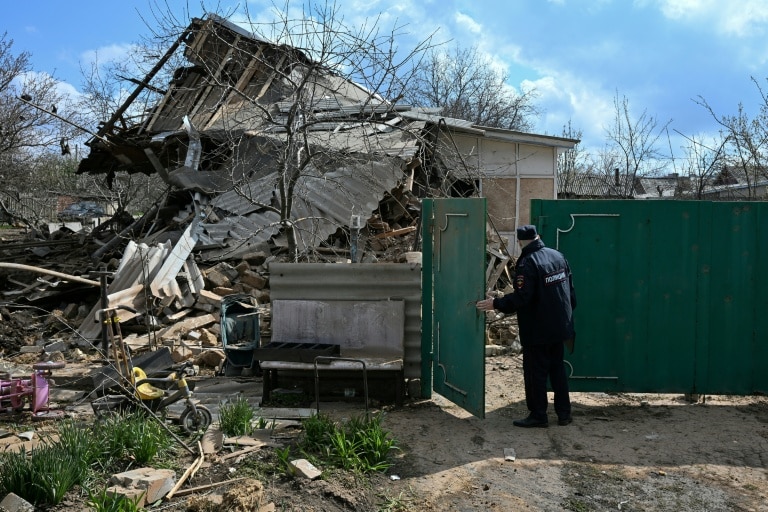
    In the immediate aftermath of Russia’s full-scale invasion of Ukraine on February 24, 2022, a wave of public dissent briefly surfaced. Varvara, a 32-year-old Moscow resident, was among those who initially took to the streets, propelled by feelings of profound despair and anger. Her participation in a central Moscow anti-war rally marked a moment of open defiance. However, four years into a conflict met with an unrelenting state crackdown, her activism has been silenced, replaced by a singular focus on survival within a nation rigidly mobilized for war.

    The landscape of dissent in Russia has been fundamentally reshaped, with repression escalating to levels not witnessed since the Soviet era. Public criticism of the Kremlin or its military campaign is now virtually extinct, punished by imprisonment or heavy fines. The systematic eradication of opposition has left major figures incarcerated, exiled, or dead, while anti-war groups abroad are paralyzed by internal strife. This environment has forced countless potential activists into a state of resigned acquiescence.

    Varvara’s personal journey mirrors this national silencing. After joining an early protest—an act she undertook with the foreboding expectation of arrest—she managed to evade the brutal police clampdown. Yet, consequences followed. Signing an online anti-war petition led to her swift dismissal from a public institution. Faced with the exodus of friends who chose emigration after brief detentions, Varvara grappled with a critical decision. Ultimately, the uncertainties of life as an emigrant outweighed the perceived immediate physical threats of staying, as no authorities were knocking on her door.

    Rebuilding her life, she found employment at a charity organization and arrived at a new philosophy: to ‘do something good here’ in Russia. This commitment was further cemented by meeting her future husband in the summer of 2022. Her calculus for resistance shifted entirely; the only circumstance that would now compel her to leave would be the imminent arrest of either herself or her partner. Her priorities are now anchored in her new family, which includes her husband’s two children from a previous marriage—a responsibility she describes as a form of ‘escapism’ that reinforces her silence.

    Despite her outward conformity, the war remains an inescapable shadow over her existence. It took two years for her to experience a moment of simple happiness without an accompanying sense of guilt. Professionally, she navigates a moral labyrinth, constantly vetting potential partners and donors for connections to the military campaign. This ‘constant inner struggle’ is matched by a personal conflict with her father, a member of the Russian security services who fought in Ukraine and offers her financial support—assistance she finds morally impossible to accept, despite her love for him. For Varvara and many like her, survival now means living in a state of perpetual, silent internal conflict.

  • War in the Middle East: latest developments

    War in the Middle East: latest developments

    The Middle East conflict has entered a dangerous new phase with direct Israeli military strikes on the Iranian capital. Israel’s military confirmed Thursday it had “initiated large-scale strikes against Iranian terror infrastructure across Tehran,” marking a significant escalation in the ongoing regional warfare. Iranian media reported multiple explosions throughout the city, prompting activation of Iranian defense systems.

    In simultaneous developments, Iran conducted missile strikes targeting Kurdish forces in Iraqi Kurdistan, resulting in casualties among exiled Iranian Kurdish groups. The cross-border attacks followed warnings from Iranian officials about pursuing opposition groups operating beyond Iran’s borders.

    Lebanese media reported the targeted killing of senior Hamas official Wassim Atallah al-Ali and his wife in a drone strike on a Palestinian refugee camp near Tripoli. This represents the first confirmed assassination of a Hamas member since the recent escalation of US-Israeli operations against Iran.

    Diplomatic tensions intensified as Iranian Foreign Minister Abas Araghchi warned the United States would “bitterly regret” sinking an Iranian naval vessel off Sri Lanka, characterizing the action as an atrocity that established dangerous precedents in international waters.

    Australia joined the military mobilization, with Prime Minister Anthony Albanese confirming deployment of “military assets” to the region as contingency measures, reportedly including aircraft according to local media.

    Further escalating matters, Iran launched additional missile barrages toward Israel, triggering alerts across multiple regions including Tel Aviv and Jerusalem. While explosions were reported, Israeli emergency services confirmed no casualties from the latest missile attacks.

    The conflict expanded geographically with an airstrike hitting Hezbollah’s stronghold in southern Beirut following Israeli warnings to residents. Separate Israeli strikes along Beirut’s airport highway killed three people according to Lebanon’s health ministry.

    Maritime security concerns grew as UKMTO reported a “large explosion” striking a tanker off Kuwait’s coast, causing an oil spill and involving a suspicious small craft. Meanwhile, Omani forces rescued 24 crew members from a container ship struck by missiles in the strategically critical Strait of Hormuz, where Iranian forces claimed “complete control.”

    Diplomatic efforts saw China announcing special envoy deployment to mediate the crisis, leveraging Beijing’s close partnership with Tehran. Conversely, Qatar expressed anger toward Iran, with its prime minister accusing Tehran of attempting to drag neighboring states into the conflict.

    NATO air defense systems intercepted a ballistic missile launched from Iran that veered toward Turkish airspace, prompting Turkey to summon Iran’s ambassador. A Turkish official suggested the missile had been aimed at a base in Greek Cyprus before going off course.

    The US Senate rejected a bipartisan resolution to curb presidential authority to continue military strikes against Iran, while Spain denied White House claims about cooperation regarding US base usage, maintaining its opposition to involvement in the conflict.

    Canada’s Prime Minister Mark Carney declined to rule out participation in the escalating conflict, affirming that Canada would “stand by our allies” as the situation develops.

  • NSW government signals major change to driving laws for medicinal cannabis users

    NSW government signals major change to driving laws for medicinal cannabis users

    The New South Wales government has initiated a comprehensive review of its roadside drug testing regulations, potentially transforming driving rights for over one million medicinal cannabis patients. This groundbreaking reconsideration addresses what advocates describe as outdated legislation that unfairly penalizes prescription holders despite their driving competence.

    Current NSW laws prohibit driving with any detectable level of THC (tetrahydrocannabinol), cannabis’s psychoactive component, regardless of medical authorization. This zero-tolerance approach persists despite THC’s extended detection window, which can span from several days to months after consumption.

    The movement for reform gained significant momentum following the 2024 NSW drug summit, which produced 56 recommendations including a specific defense for medically prescribed cannabis users. Although the government initially declined this recommendation in October 2025, political pressure has continued to build.

    Independent Sydney MP Alex Greenwich personally championed the cause in parliament last November, sharing his own therapeutic use of prescribed cannabis for insomnia, pain relief, and anxiety while maintaining full functionality. His legislative proposal seeks to establish legal protections for drivers using medically authorized cannabis.

    Support extends across party lines, with Legalise Cannabis Party MP Jeremy Buckingham emphasizing the distinction between personal vehicle operators and commercial drivers operating heavy machinery. The proposed reforms would specifically exempt personal vehicle drivers from penalties if they can demonstrate medical authorization.

    Despite mounting support, opposition remains vocal. NRMA spokesman Peter Khoury expressed concerns about transforming medical considerations into road safety exemptions, highlighting worries about impaired driving risks.

    Premier Chris Minns has indicated the government will develop its own legislative framework rather than supporting existing proposals, though no specific timeline or detailed framework has been announced. This development represents a potential paradigm shift in how jurisdictions balance medical treatment needs with road safety concerns.

  • Iran hits Kurdish groups in Iraq as conflict widens

    Iran hits Kurdish groups in Iraq as conflict widens

    The Middle East conflict escalated dramatically on Thursday as Iran launched targeted strikes against Kurdish opposition groups in northern Iraq, while fresh explosions rocked Tehran amid expanding regional hostilities. The retaliatory actions mark a significant broadening of the war initiated by US-Israeli strikes that killed Iran’s supreme leader last Saturday.

    Iran’s Revolutionary Guards confirmed operations against what they described as ‘anti-revolutionary’ Kurdish factions based in Iraq, following explicit warnings from Iranian security officials. Ali Larijani, secretary of Iran’s Supreme National Security Council, issued a stern caution: ‘Separatist groups should not misinterpret current circumstances as opportunity for action. We will not tolerate any provocations.’

    The conflict has triggered substantial regional destabilization, with Iran simultaneously targeting US military installations across Gulf neighbors and Israel conducting operations in Lebanon. The strategic Strait of Hormuz, critical for global oil transit, has seen dramatic reduction in tanker traffic with reports indicating 90% decrease in operations according to market intelligence firm Kpler.

    Economic repercussions intensified as IMF chief Kristalina Georgieva warned the conflict would ‘test global economic resilience yet again.’ Energy markets experienced significant disruptions with tanker incidents near Kuwait and China implementing fuel export restrictions. South Korea activated a $68 billion market stabilization fund in response to growing energy shortages.

    Civilian casualties mounted across multiple fronts. Lebanese officials reported deaths in Palestinian refugee camps and drone strikes, while Iran’s IRNA news agency claimed over 1,045 military and civilian fatalities since conflict initiation—a figure that remains unverified independently. International diplomatic efforts intensified with China announcing special envoy deployment for mediation, though specific details remained undisclosed.

    The United States maintained its military engagement as the Senate rejected legislation aimed at constraining presidential authority to continue strikes, ensuring ongoing operational flexibility for US forces in the region.

  • Tech shares and miners lead ASX rebound after strong Wall Street rally

    Tech shares and miners lead ASX rebound after strong Wall Street rally

    Australia’s financial markets staged a robust recovery on Wednesday, reversing a significant $63 billion downturn as new economic data altered monetary policy expectations. The benchmark ASX 200 index climbed 39.10 points (0.44%) to settle at 8,940.30, while the broader All Ordinaries index advanced 47.80 points (0.52%) to reach 9,164.90.

    The resurgence was primarily fueled by unexpectedly modest household spending figures from the Australian Bureau of Statistics, which showed a mere 0.3% increase—substantially below market projections. This development significantly reduced pressure on the Reserve Bank of Australia to implement consecutive interest rate hikes, creating a more favorable environment for equity investments.

    Technology equities spearheaded the market recovery with remarkable sector growth of 4.65%. Leading this charge were WiseTech Global, surging 7.14% to $47.57, Xero climbing 4.26% to $83.89, and Technology One advancing 4.41% to $26.30. Healthcare stocks also contributed substantially to the rally, with industry giant CSL jumping 2.54% to $146.49 following its announcement of a major vaccine supply agreement with Canada for pandemic preparedness.

    The financial sector exhibited mixed performance with three of the four major banks recording gains. National Australia Bank led the group with a 1.39% increase to $47.33, while Commonwealth Bank edged up 0.44% to $172.66, and Westpac rose 0.58% to $41.37. ANZ bucked the trend, declining 0.45% to $37.77.

    Commodity markets provided additional support as Singapore iron ore futures surged to a four-week peak of $US101.20, driven by China’s renewed commitment to addressing steel production overcapacity. This development propelled Rio Tinto shares upward by 1.16% to $164.58 and Fortescue Metals by 2.05% to $19.39. BHP experienced a 0.95% decline to $55.15 as the mining conglomerate traded ex-dividend.

    The domestic recovery mirrored positive momentum on Wall Street, where stronger-than-anticipated ISM Services PMI data demonstrated continued resilience in the U.S. economy. Market analysts noted that declining price subindex components helped alleviate concerns about persistent inflationary pressures.

    AMP economist My Bui commented on the spending data: ‘We anticipate further moderation in spending growth in coming months. Momentum had already begun slowing prior to February’s RBA rate hike, likely driven by weakening consumer sentiment, while rising inflation continues to erode real purchasing power.’

    Overall, eight of the eleven market sectors finished higher, indicating broad-based recovery across the Australian equity landscape.

  • Credit card loyalty costing Australians $1.6bn a year in interest, new figures reveal

    Credit card loyalty costing Australians $1.6bn a year in interest, new figures reveal

    New financial research has uncovered a massive economic drain affecting millions of Australian households, revealing that persistent credit card loyalty is costing consumers approximately $1.6 billion annually in unnecessary interest payments. The comprehensive study conducted by financial comparison platform Canstar surveyed over 2,000 credit cardholders nationwide, uncovering that nearly one-third (31%) have never conducted a formal review of their current credit card arrangements.

    The analysis presents startling figures: Australians collectively paid more than $3.4 billion in credit card interest during the previous year, carrying an average interest rate of 18% on outstanding balances totaling $19.6 billion. Financial experts emphasize that simply transitioning to lower-rate cards offering 10% interest or less could effectively halve this enormous interest burden, creating substantial savings for consumers.

    Sally Tindall, Director of Data Insights at Canstar, characterized these findings as a significant financial oversight by Australian consumers. ‘Our research indicates that one in three cardholders have never reviewed their credit card arrangements. In a marketplace where rates vary dramatically from 8.99% to 28.49%, this approach is essentially equivalent to handing your bank your wallet and hoping for favorable outcomes,’ Tindall explained.

    The personal finance implications are equally striking. For individual consumers carrying an average debt of $4,000, switching from the average rate to a more competitive 10% option could yield annual interest savings approaching $350—funds that could substantially reduce principal debt balances.

    Beyond interest rates, the research highlights how annual fees continue to erode consumer finances regardless of outstanding balances. With some premium cards charging up to $1,200 annually, Tindall notes that eleven providers currently offer credit cards with zero ongoing fees, including three that maintain rewards programs alongside fee-free structures.

    Financial advisors now recommend that consumers conduct comprehensive credit card health checks every twelve months, carefully evaluating interest rates, fee structures, and rewards program valuations to ensure their current banking arrangements remain financially advantageous.

  • Australia opens the World Baseball Classic in Tokyo with a 3-0 victory over Taiwan

    Australia opens the World Baseball Classic in Tokyo with a 3-0 victory over Taiwan

    In a pitching-dominated opening match of the World Baseball Classic, Australia claimed a decisive 3-0 victory against Taiwan at Tokyo Dome on Thursday. The game’s outcome was determined by two crucial home runs that broke through the defensive stalemate.

    Robbie Perkins ignited Australia’s offense with a two-run homer in the fifth inning, providing the initial breakthrough. Travis Bazzana, the top selection in the 2024 MLB amateur draft and Cleveland Guardians prospect, sealed the victory with a solo shot in the seventh inning. Bazzana described the experience as particularly meaningful, noting: ‘Growing up, two of my biggest dreams were playing in the WBC and competing at Tokyo Dome. This moment feels truly special.’

    Australian pitchers delivered an exceptional collective performance. Starter Alex Wells established dominance with three hitless innings, followed by Jack O’Loughlin’s three-inning effort allowing just two hits. Jon Kennedy closed the game with a save, while Taiwan’s Po-Yu Chen absorbed the loss.

    Despite opportunities in the sixth and ninth innings, Taiwan struggled offensively, managing only three hits total. The team suffered an additional setback when Chieh-hsien Chen exited after being hit by a pitch on his right hand.

    The victory continues Australia’s positive trend in the tournament, having also won their opening match in 2023 before eventually reaching the quarterfinals. The top two teams from Group C will advance to the quarterfinals in the United States.