
On the banks of Angola’s Kwanza River stands a 430-year-old white-washed church that holds a deeply layered, painful history: built by Portuguese colonizers as part of a 16th-century fortress complex, the Church of Our Lady of Muxima long served as a critical node in the trans-Atlantic slave trade. Today, as Pope Leo XIV prepares to visit the site during his first papal tour of Africa, the stop has emerged as a symbolic moment of reckoning, reconciliation, and reimagining for the global Catholic Church.
作者: admin
-

Palestine Football Association president denied entry to Canada for Fifa event: Report
In a development first reported by The Guardian on Friday, three top representatives of the Palestine Football Association (PFA) — including its president Jibril Rajoub — have been blocked from entering Canada, where global football’s governing body FIFA will hold its annual congressional meeting in Vancouver on April 30. This visa rejection comes at a fraught moment for international football, as Canada is set to co-host the 2026 men’s FIFA World Cup alongside the United States and Mexico, and the PFA is already locked in a high-stakes dispute with FIFA over Israeli football activity in occupied Palestinian territory.
Rajoub had been expected to use his speaking slot at the Vancouver congress to publicly raise the issue of Israeli matches being held in the West Bank, a territory universally recognized by the United Nations as illegally occupied by Israel. The PFA has formally called on FIFA to step in immediately to resolve the visa issue and allow its delegation to participate in the gathering, where their presence was already set to put the long-running territorial conflict at the center of global football’s agenda.
When contacted for comment, Immigration, Refugees and Citizenship Canada declined to share specific details about the visa applications, citing privacy rules for individual cases. The department only confirmed that all entry applications are assessed individually based on documentation submitted by each applicant.
This latest clash follows months of escalating tension between Palestinian advocates and global football leadership. Earlier this year, the PFA filed a formal complaint over the Israeli matches in the West Bank. After completing a review of the complaint last month, FIFA released a statement arguing that the final legal status of the West Bank remains an unsettled, complex issue under international law, and as a result, the organization would take no disciplinary or regulatory action against the Israel Football Association. That inaction prompted a unprecedented legal challenge: in February, a coalition of six pro-Palestinian human rights and sports justice groups — including Irish Sport for Palestine, Scottish Sport for Palestine, Just Peace Advocates, Euro-Med Human Rights Monitor, and Sport Scholars for Justice in Palestine — submitted a 120-page complaint to the International Criminal Court prosecutor, The New York Times confirmed. The complaint names FIFA president Gianni Infantino and UEFA (European football’s governing body) president Aleksander Ceferin, accusing both of aiding and abetting war crimes by allowing Israeli clubs to host official league matches on seized Palestinian land.
Beyond the immediate dispute over Palestinian participation in the FIFA Congress, the visa denials also unfold against a backdrop of growing concern over immigration and entry policies for the 2026 World Cup, particularly in the United States. Co-host the U.S. has already faced public backlash over flagging ticket sales driven by exorbitant pricing, as well as widespread fears that foreign visitors and immigrant residents will be targeted by U.S. federal immigration authorities during the tournament.
While there is no publicly confirmed link between U.S. and Canadian immigration decisions on these applications, the two neighboring countries’ border agencies have a long history of sharing intelligence and screening data. Over the 15 months since the Trump administration took office, the U.S. has implemented sweeping new entry restrictions for international visitors, including mandatory social media vetting that requires applicants to share years of personal online activity. Multiple cases have already been documented of visitors being denied entry after border agents found social media content critical of U.S. government policies. Others have been detained for weeks in overcrowded, unsanitary facilities run by U.S. Immigration and Customs Enforcement (ICE) — privately operated detention centers that generate profit for their operators based on the number of detainees held — before being allowed to return to their home countries.
Last December, Andrew Giuliani, who leads the White House 2026 FIFA World Cup Task Force, publicly confirmed that the Trump administration could not guarantee that non-U.S. citizens would be safe from ICE raids at World Cup stadiums. That comment came just months after a high-profile incident in July, when ICE agents arrested a father of two at a FIFA Club World Cup match in New Jersey. Human Rights Watch issued a public statement at the time calling for urgent reform of U.S. entry policies, warning that the current regime creates unnecessary risk for visitors and directly undermines FIFA’s stated core values of human rights, inclusion, and open global participation. Giulani later defended the arrest, claiming the man had violated event rules by flying a drone to take a family photo at the match.
-
What is the Fisa law Trump wants extended and why are lawmakers resisting?
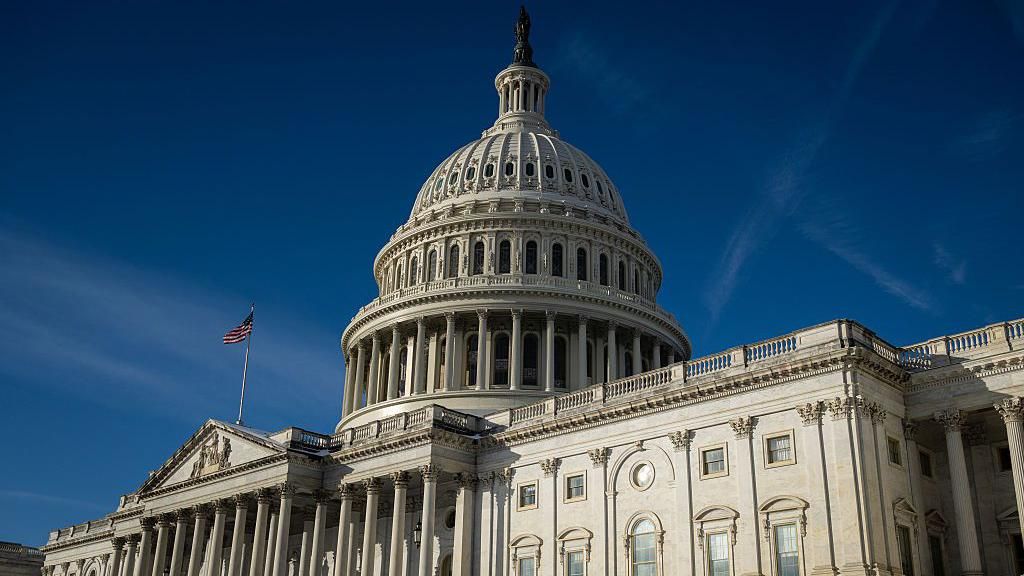
After weeks of stalled negotiations over a long-term renewal of the U.S. government’s top foreign surveillance authority, Congress has approved a last-minute 10-day extension of the Foreign Intelligence Surveillance Act (FISA) to avert an imminent expiration, leaving core debates over surveillance policy and civil liberties unresolved. Enacted in 1978, FISA laid the foundational framework for regulating foreign intelligence gathering activities conducted by U.S. agencies, requiring oversight from a dedicated judicial body and compelling cooperation from domestic telecommunications providers. The law operated largely without public controversy for decades, but its addition of Section 702 in 2008 transformed it into a flashpoint for bipartisan criticism over the expansion of domestic warrantless data collection. Section 702 grants the National Security Agency (NSA) explicit authority to collect electronic communications of non-American citizens located outside the United States, but critics have long highlighted that the provision also allows agencies to incidentally sweep up vast volumes of personal data belonging to U.S. citizens who communicate with targeted foreign individuals. The American Civil Liberties Union (ACLU) has emerged as a leading critic of the policy, arguing that Section 702 enables mass, unwarranted surveillance of all forms of digital communication, and that improperly collected data is often used to prosecute individuals for crimes entirely unrelated to national security. Supporters of the provision, including senior national security and law enforcement officials, defend it as an irreplaceable tool for counterterrorism, counterespionage, and transnational crime enforcement. They contend that requiring case-by-case warrants for every data query would slow critical investigations, hinder efforts to identify potential threats and victims, and drastically reduce operational efficiency. Recent attempts to pass a five-year reauthorization of the existing law failed in the House of Representatives, split over demands from cross-party reform lawmakers to close the so-called “backdoor search” loophole that allows agencies to query already-collected U.S. person data without a warrant. With the original law set to expire on Monday, both the House and Senate voted unanimously on Friday to extend the statute through April 30, buying additional time for negotiations between lawmakers and the Trump White House. The Trump administration has taken a contradictory position on FISA reform: President Trump has repeatedly claimed he was the victim of unlawful FISA abuse during his 2016 and 2020 presidential campaigns, but in recent days he has reversed his earlier skepticism and pressed congressional Republicans to support an 18-month, reform-free extension of the law. Trump argued that Section 702 is critical to U.S. military operations, particularly following recent American actions in Venezuela and Iran, and posted on social media that he would willingly sacrifice his own civil liberties to support the policy. Bipartisan opposition to the administration’s demand remains solid, however, with lawmakers from both major parties rejecting a clean extension on the grounds that it would codify indefinite warrantless surveillance of U.S. citizens. Senate Majority Leader John Thune has acknowledged that reform is on the table during ongoing negotiations, but has declined to offer concrete guarantees that changes to the surveillance provisions will be included in the eventual long-term extension bill.
-
White House and Anthropic set aside court fight to meet amid fears over Mythos model
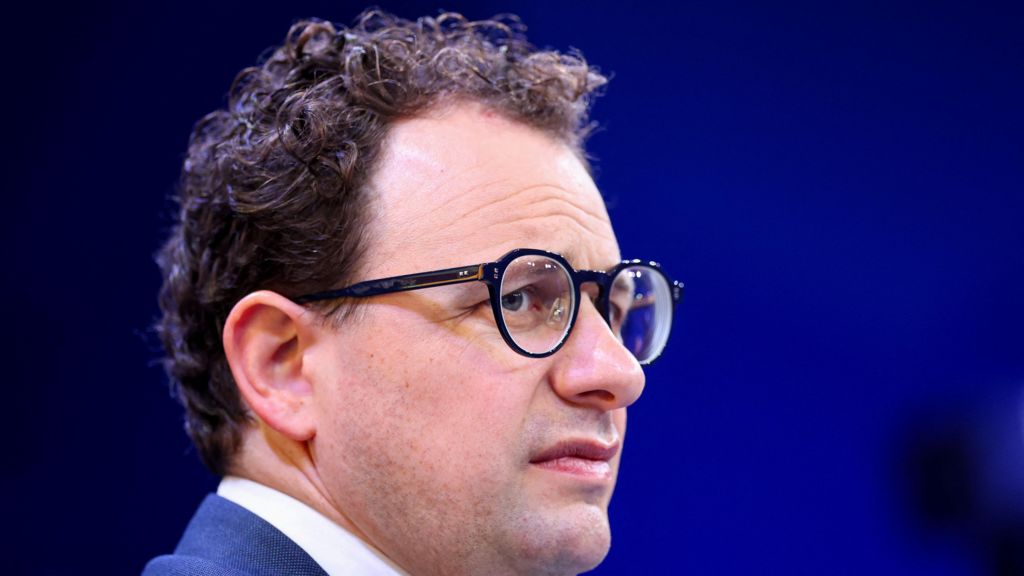
A surprising shift in relations between the Trump White House and leading artificial intelligence developer Anthropic has unfolded, with senior administration officials holding a “productive and constructive” meeting with Anthropic CEO Dario Amodei — even as the AI firm continues its legal battle against the U.S. Department of Defense.
The high-stakes sit-down, which took place on Friday, brought Amodei face-to-face with Treasury Secretary Scott Bessent and White House Chief of Staff Susie Wiles, according to reporting from Axios. The gathering comes just one week after Anthropic launched the public preview of its latest cutting-edge AI system, Claude Mythos, a tool the company says exceeds human performance in a range of specialized hacking and cybersecurity tasks. To date, access to Claude Mythos has been restricted to only a small group of vetted organizations, but independent cybersecurity researchers have already confirmed the system’s unusual capabilities, describing it as “strikingly capable at computer security tasks.” Per Anthropic’s own documentation, Claude Mythos can independently detect hidden vulnerabilities in decades-old legacy code and autonomously develop working methods to exploit those flaws.
This new overture from the White House marks a dramatic reversal from just two months ago, when the Trump administration publicly derided Anthropic as a “radical left, woke company.” Just months earlier in March, the Department of Defense labeled Anthropic a “national supply chain risk,” marking the first time a major U.S. technology company had received this public designation, which bars the firm from new federal government contracts. In response, Anthropic launched a lawsuit against the Defense Department and multiple other federal agencies, challenging the designation in court.
Anthropic has been a key provider of AI tools for high-level U.S. government and military work since 2024, and the company argues the supply chain risk label is nothing more than retaliation from Defense Secretary Pete Hegseth. According to Anthropic’s legal filing, Hegseth retaliated after Amodei rejected the Pentagon’s demand for unfettered access to the company’s full AI model stack, over Amodei’s deep concerns that the technology could be misused for mass domestic surveillance and the development of fully autonomous lethal weapons. While a California federal court ruled largely in Anthropic’s favor in early proceedings, a federal appeals court recently rejected the firm’s request for an emergency temporary stay to block the supply chain risk designation. Even so, Anthropic’s tools remain in active use across all federal agencies that had already deployed the technology prior to the designation.
Prior to Friday’s meeting, the White House had not issued any positive public remarks about Anthropic, with President Donald Trump himself taking to social media earlier this year to call for an outright ban on the company’s technology across the federal government. In that post, Trump claimed Anthropic was led by “left wing nut jobs” attempting to “strong arm” the U.S. defense establishment, writing, “We don’t need it, we don’t want it, and will not do business with them again!” When reporters questioned Trump about Amodei’s White House visit during a public appearance in Phoenix, Arizona on Friday, the president told reporters he had “no idea” the meeting was taking place.
In an official statement after the meeting, the White House confirmed the two sides discussed pathways for potential collaboration, as well as shared frameworks and safety protocols to manage risks associated with scaling advanced AI systems like Claude Mythos. “We discussed opportunities for collaboration, as well as shared approaches and protocols to address the challenges associated with scaling this technology,” the White House said, adding that the meeting “explored the balance between advancing innovation and ensuring safety.” Industry analysts say the meeting makes clear that despite the Trump administration’s public hostility toward Anthropic, the company’s advanced AI capabilities — particularly in the cybersecurity space — have become too strategically critical for the U.S. government to cut ties entirely. A representative for Anthropic declined to provide any additional comment on the details of Friday’s meeting when contacted by reporters.
-

Vietnam leader’s visit helps cement traditional ties
Vietnam’s top leader To Lam, who holds dual roles as General Secretary of the Communist Party of Vietnam Central Committee and President of Vietnam, concluded his four-day state visit to China on April 17, 2026, with analysts broadly agreeing the journey will deepen the centuries-old traditional friendship and expand strategic alignment between the two neighboring socialist nations. The joint statement issued jointly by both sides at the end of the visit characterized the trip as a “complete success”, stressing that healthy, sustained development of bilateral China-Vietnam relations carries far-reaching strategic, holistic and historic significance for both peoples and the broader region.
The visit’s itinerary began after To Lam’s arrival in Beijing on April 14, where he first traveled via high-speed rail to tour the Xiong’an New Area in Hebei province, an landmark national-level development project designed to serve as a model for future sustainable urban development in China. The following day, after holding productive talks with President Xi Jinping — also General Secretary of the Communist Party of China Central Committee — and other senior Chinese leaders in Beijing, To Lam embarked on a 2,400-kilometer high-speed rail journey south to Nanning, the capital of Guangxi Zhuang Autonomous Region, which sits on China’s border with northern Vietnam.
Over the 10-hour trip, To Lam gained firsthand insight into the scale of China’s territory, the sophistication of its modern infrastructure network, and the rapid momentum driving its national modernization push. During the journey, he toured the high-speed train’s driver cabin to observe operational procedures up close, a reflection of his well-documented interest in China’s high-speed rail development, per a report from China’s official Xinhua News Agency. To Lam remarked that China’s achievements in the rail sector are deeply impressive, noting that only a small handful of countries worldwide can safely operate rail lines at altitudes exceeding 4,000 meters, a feat China has already accomplished.
Since launching its first high-speed rail services in 2008, China has constructed the world’s largest high-speed rail network, accounting for more than 70 percent of all high-speed rail track in operation globally. Official national planning documents project that the country’s total high-speed rail mileage will reach 70,000 kilometers by 2035.
Ge Hongliang, Vice-Dean of the College of ASEAN Studies at Guangxi Minzu University, told the Global Times that To Lam’s focus on experiencing China’s high-speed rail aligns directly with his stated priority of advancing connectivity and infrastructure cooperation as a core pillar of pragmatic collaboration between Hanoi and Beijing. Ge noted that these interactions can provide valuable references for three key initiatives: Vietnam’s own domestic infrastructure expansion, the development of cross-border rail links between the two countries, and long-term planning for the transregional Pan-Asia Railway network. Notably, Vietnam just broke ground earlier this month on its first domestically developed high-speed railway, a 120-kilometer line connecting Hanoi, Bac Ninh province, Hai Phong city and Quang Ninh province with a maximum design speed of 350 kilometers per hour, according to Vietnamese news outlet VnExpress.
During his time in Nanning, To Lam also visited the China-ASEAN Countries Artificial Intelligence Application Cooperation Center, where he tested a pair of AI-powered translation glasses and learned about the latest advances in China’s AI development for cross-cultural and cross-border applications. He later joined a youth exchange gathering at Guangxi University, where more than 800 young representatives from both China and Vietnam gathered to build personal connections and strengthen people-to-people ties. Addressing a broader gathering of roughly 500 Chinese and Vietnamese participants from all sectors of society, To Lam called on both nations to convert the longstanding strength of their traditional friendship into tangible, productive cooperative outcomes, and push bilateral collaboration into deeper, more practical areas of mutual benefit.
To Lam emphasized that the enduring strength of the China-Vietnam “comrades-plus-brothers” relationship stems from the shared work of past generations of leaders from both sides, is deeply rooted in the centuries-old cultural and social ties linking the two peoples, is sustained by consistent strategic guidance from the leadership of both ruling parties and national governments, and is demonstrated by the growing number of positive outcomes from deep, pragmatic collaboration across sectors.
In the joint statement, the two sides formalized agreements to accelerate the alignment of their national development strategies and speed up the connectivity of cross-border infrastructure including railways, highways and port facilities, identifying railway cooperation as a new core focus of bilateral strategic cooperation. The two nations also reaffirmed their shared commitment to upholding free and open trade and investment, and pledged to work together to build more secure, stable regional industrial and supply chains. To advance this goal, the statement announced that a dedicated bilateral working group on industrial and supply chain cooperation will be established to facilitate expanded collaboration in this critical area.
-

Three sentenced for ‘man in bear suit’ insurance scam
An audacious insurance fraud plot that relied on a fake bear attack to scam insurers out of more than $140,000 has ended with three Southern California men facing criminal conviction and sentencing. Over a year ago in January 2024, three individuals filed nearly identical expensive damage claims with their insurance providers, all centered on a seemingly bizarre incident at the popular mountain destination Lake Arrowhead.
To back up their claims, the men submitted viral-ready footage that purported to show a wild bear breaking into and damaging a 2010 Rolls-Royce Ghost. Within the same 24-hour period at the exact same location, two additional claims were filed for separate damage to high-end Mercedes-Benz luxury vehicles, each tied to alleged bear-related destruction.
When the claims crossed regulators’ desks, the unusual story prompted a review from wildlife experts at the California Department of Fish and Wildlife. Upon close analysis of the submitted video, biologists quickly spotted inconsistencies that ruled out a real wild animal: the “bear” moving through the vehicles had distinctly human proportions and movement patterns, revealing the creature captured on camera was actually an individual inside a full bear costume.
Following this expert determination, the California Department of Insurance launched a formal investigation branded “Operation Bear Claw”. During execution of a court-issued search warrant at the suspects’ residence, investigators uncovered the full bear costume that had been used to stage the fake attacks, confirming the fraud. In total, the three scammers had wrongfully collected $141,839, equivalent to roughly £105,000, in illegitimate insurance payouts.
The three defendants — Alfiya Zuckerman, 39, Ruben Tamrazian, 26, and Vahe Muradkhanyan, 32 — all entered no contest pleas to felony insurance fraud charges. During a sentencing hearing held Thursday, a judge handed down a unified punishment: 180 days of jail time followed by two years of supervised probation for each man.
California Insurance Commissioner Ricardo Lara released a statement following the sentencing, emphasizing the outcome of the unusual case. “What may have looked unbelievable turned out to be exactly that — and now those responsible are being held accountable,” Lara said, highlighting the department’s work to root out insurance fraud that drives up costs for all consumers.
-

Masked group storm Eaton Mall during terrifying machete attack that injured teen
Chilling security and witness footage has surfaced showing a large group of masked, machete-armed attackers descending on a popular public mall in Melbourne, Australia, during Friday evening peak hours, leaving one teenager hospitalized and the local community shaken.
According to official updates from Victoria Police, the violence unfolded at approximately 7:45 p.m. local time at Eaton Mall, a busy retail and gathering hub in Melbourne’s southeastern suburbs. Around a dozen young people were sitting outdoors in the mall’s public dining area when the group of suspects — all clad in balaclavas and all-black clothing to conceal their identities — marched into the open space.
A police spokesperson confirmed that at least two of the intruders pulled out large machetes and launched an assault on the assembled group. An 18-year-old man from Malvern East suffered cut and stab wounds that, while serious, have been classified as non-life-threatening. He was rushed to a nearby hospital for emergency treatment by responding emergency medical teams. A second victim, a 16-year-old boy, was also caught up in the attack but escaped without physical injury.
Immediately after the assault, the entire group of masked offenders fled the scene on foot. As of the latest police update, no suspects have been taken into custody, and the investigation remains active and ongoing.
Investigators have determined that the attack was not a random act of violence against the general public, but a targeted confrontation. Police confirmed that the two groups involved in the incident were already known to one another, ruling out concerns of an indiscriminate attack on mall patrons.
“Detectives continue to investigate the full circumstances surrounding the incident,” the police spokesperson said in a statement to media. Law enforcement has issued a public call for information, urging any members of the public who were in Eaton Mall at the time of the attack, or who captured any additional video or photo footage of the incident or the suspects, to contact Crime Stoppers anonymously to aid the investigation.
The attack, which took place in a crowded public space on a Friday night, has sparked renewed discussion around public safety in Melbourne’s suburban retail hubs, with local residents expressing alarm over the brazen nature of the assault.
-

UK: Footage used in Palestine Action trial contains ‘perceived gaps’, court hears
A high-profile trial of six Palestine Action activists charged over a 2024 break-in at an Israeli-owned arms factory outside Bristol has opened with dramatic revelations about serious flaws in the prosecution’s key CCTV evidence, Woolwich Crown Court has heard. The six defendants — Charlotte Head, 29, Jordan Devlin, 31, Fatema Rajwani, 21, Zoe Rogers, 22, Samuel Corner, 23, and Leona Kamio, 30 — all face counts of criminal damage linked to the August 2024 incursion at the facility operated by Elbit Systems, one of Israel’s largest defense manufacturing firms. An additional charge of grievous bodily harm with intent has been leveled against Corner, who is accused of striking a police officer with a sledgehammer during the incident. Giving evidence on the first day of testimony, PC Sarah Grant, a specialist police officer trained in retrieving CCTV evidence from crime scenes, told jurors that the Elbit factory’s closed-circuit television system was functionally unsuitable for evidentiary use. Multiple cameras on the site operated at just 17 frames per second, a far lower rate than standard systems designed to capture clear, continuous footage of activity, Grant explained. During cross-examination, lead defense barrister Rajiv Menon KC drew jurors’ attention to what have been widely described as “perceived gaps” in the footage that the prosecution has entered into the court record. The case has already revealed a chaotic chain of custody for the video evidence: Elbit Systems first provided police with recordings from nine of the site’s 53 total cameras on a USB drive, but the files were incompatible with police computer systems, forcing Grant to travel to the factory site personally to recover the footage directly. Grant told the court that when she arrived at Elbit’s on-site security control room, she was first shown only footage from the original nine cameras, before requesting access to the full suite of 53 cameras displayed across the facility’s video monitoring wall. She attempted to download recordings from all 53 devices, but told the court that the operation would have required a full 24 days to complete, making the task unfeasible. Instead, she elected to download the original nine camera feeds, plus an additional three that were flagged as potentially relevant to the incident. Grant told the court that in her 11-year career working to recover CCTV evidence, she had never encountered a system as difficult to access and download from as Elbit’s. When questioned by the prosecution, Grant maintained that she had secured all relevant footage connected to the break-in. But Menon pushed back on that claim, highlighting that two cameras positioned directly on the factory floor have no surviving footage in the prosecution’s evidence set. When asked whether she had requested Elbit security staff to explain why footage from these two cameras was missing, Grant confirmed she had not asked for any explanation. Menon suggested that Elbit staff may never have shown her the footage from the two cameras at all, a claim Grant rejected, telling the court “I saw all the cameras. I had control and they showed me what I asked them to show.” In a pre-trial email Grant sent to a senior Elbit security manager, who is identified only as Witness A to protect their identity, she explicitly raised concerns about the system’s poor functionality, warning that “there is a huge opportunity for the defence to use the jumps and gaps in the footage to their advantage” — a warning that has been borne out in the defense’s cross-examination strategy. When questioned about the email, Grant reaffirmed that her core point remained that the system was “not fit for purpose.” On the second day of testimony, the court heard harrowing first-hand evidence from PC Kate Evans, the officer Corner is accused of striking with a sledgehammer. Evans told jurors that at the time of the alleged attack, she was on her hands and knees on the ground, facing away from Corner, while adjusting the handcuffs on co-defendant Zoe Rogers. She said she felt the blow from the sledgehammer spread across her entire body, and recalled immediately fearing the worst. “I didn’t know if I could move, or whether I would be paralysed,” Evans told the court. Fellow officer PC Peter Adams backed up Evans’ account, telling jurors that Corner struck the blow with “a considerable amount of force.” Evans did not return to active duty until three months after the incident, and told the court she continues to experience daily chronic pain that limits her to restricted duties at work. Prosecutor Deanna Heer KC drew the court’s attention to a comment Corner made immediately after his arrest, when he told officers: “I was protecting her.” Evans told the court she believes the comment referred to one of Corner’s female co-defendants, though he did not specify which. The court also heard context for the chaos of the incident: at the time of the alleged attack on Evans, Kamio was screaming after being tackled by Adams, who had deployed a taser against her just moments before. Defending Corner, barrister Tom Wainwright highlighted that Adams himself recalled hearing a “horrible scream” in video testimony he gave to police the day after the incident. Wainwright also brought up evidence that another officer, PC Aaron Buxton, had sprayed Corner with PAVA spray, an incapacitating chemical agent, moments before the alleged attack. Wainwright noted that the spray causes acute pain, confusion and disorientation that can persist for an extended period of time, raising questions about Corner’s state of mind and capacity to form intent. The trial of the six activists is ongoing, with further testimony expected in the coming days. Palestine Action, the activist group the defendants are affiliated with, has a long history of direct action protests targeting facilities tied to Israeli arms manufacturers, arguing that such companies profit from human rights abuses against Palestinian civilians in the occupied Palestinian territories.
-
Zimbabwe’s iconic stone birds were taken by colonialists. Finally, they’re all back home
For more than a century, a gap has sat in Zimbabwe’s national heritage: one of eight iconic ancient soapstone bird sculptures, looted by colonial invaders and scattered across the globe, remained outside the country’s borders. That changed this week, when the final missing Zimbabwe Bird touched down on home soil 137 years after it was ripped from its original place at the Great Zimbabwe ruins, in a landmark repatriation organized by neighboring South Africa.
Known globally as the Zimbabwe Bird, this stately eagle carving has been embedded in the country’s national identity for generations, featured prominently on Zimbabwe’s flag, banknotes, and official coat of arms. But few symbols carry as layered a history as this carving, one that traces a long arc of colonial theft, decades of diplomatic negotiation, and a growing global movement to return looted African cultural heritage.
The eight original bird sculptures were carved between the 11th and 15th centuries for Great Zimbabwe, a sprawling medieval stone city that gave the modern nation its name — Zimbabwe translates to “house of stone” in local languages, and the country remains celebrated worldwide for its contemporary stone carving tradition. The birds, ranging from 25 centimeters to 50 centimeters in height (and reaching more than a meter when mounted on their original columns), were placed on walls and stone monoliths to watch over the city.
Scholars have not reached a consensus on which ethnic group originally created the carvings, though many believe they are the work of ancestors of the Shona people, who make up Zimbabwe’s current majority population. The birds carry deep cultural and spiritual meaning: most experts agree they depict either the bateleur eagle (called *chapungu* in Shona, a sacred species to both Shona and Venda communities) or the African fish eagle. Plan Shenjere-Nyabezi, an archaeology professor at the University of Zimbabwe, calls the Zimbabwe Birds “the most significant archaeological treasures ever discovered in the country, powerful and cherished symbols of our national heritage.”
The theft of the final bird began in 1889, when European hunter Willi Posselt stumbled on the Great Zimbabwe ruins amid a wave of pre-colonial exploration. According to Posselt’s own writing, local people armed with spears and guns initially protested his removal of what he called the “best specimen” of the birds, but he ripped the carving from its column after exchanging blankets and other goods for access. He ultimately sold the sculpture to Cecil Rhodes, the infamous British imperialist who led the colonization of what is now Zimbabwe and Zambia. Rhodes displayed the bird as decorative art at his lavish Cape Town estate, where it remained for more than a century after his death in 1902.
Over the decades, the other missing birds slowly made their way home. After Zimbabwe gained independence in 1980, the new government launched a formal campaign to recover all eight carvings, with only two remaining within the country’s borders at the time. In a striking 1981 trade, South Africa’s apartheid government returned four birds it held in a national museum in exchange for a collection of 1,000 insect specimens from Zimbabwe’s Natural History Museum. Germany followed suit in 2003, repatriating a soapstone pedestal fragment that had been held in Berlin’s Ethnological Museum since 1907.
But the final bird held by South Africa was blocked for decades by a century-old legal barrier. When Rhodes died, his 1902 will vested his estate and all its contents to the South African government, and the 1910 Rhodes Will Act banned the sale or transfer of any of his possessions. Every request for repatriation from Zimbabwe was rejected on the basis of this law, according to South African Minister of Culture Gayton McKenzie.
This week, South Africa overcame that legal obstacle to complete the handover, alongside the repatriation of eight sets of Zimbabwean human remains exhumed by colonial researchers and held in a South African museum. McKenzie called the removal of the remains a product of “misguided colonial pseudoscience,” noting “these are not abstractions, but people… removed from their graves, their communities, and their homeland under the logic that their bodies were data.”
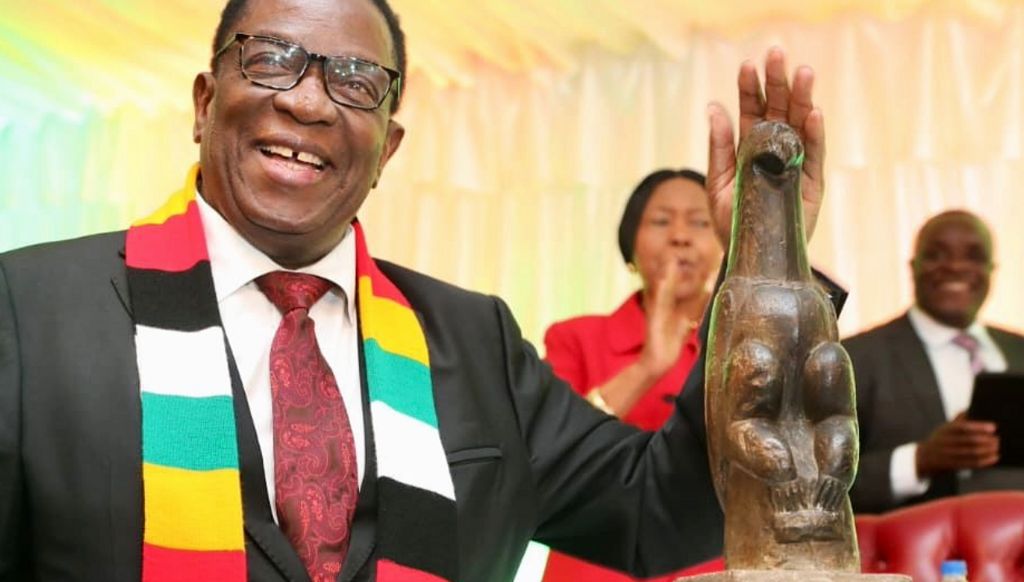
To get around the 1910 Act, South Africa initially arranged a two-year loan of the sculpture to Zimbabwe, but McKenzie has confirmed that the South African government is currently reviewing the century-old law to formalize permanent repatriation, and insists the bird will never be returned to South Africa. The handover was welcomed by Zimbabwean President Emmerson Mnangagwa, who called the moment “the return of a national icon.”
The repatriation marks a rare milestone in the global movement for the return of looted African artefacts: while most repatriations to date have come from European colonial powers including France, the Netherlands, Germany, and the United Kingdom, this transfer sees an African nation returning stolen heritage to another African country. Zimbabwe continues to push for the repatriation of other cultural items, including the skulls of 19th-century anti-colonial heroes believed to be held in the UK.
For Zimbabwean leaders and scholars, the return of the final bird is more than a cultural victory — it is a spiritual homecoming. The carving will be placed on permanent display at an on-site museum at the Great Zimbabwe UNESCO World Heritage Site, where it will join the seven other recovered birds for preservation. “The bird is Zimbabwe’s heritage… one should not have to travel to other countries to enjoy their own heritage,” said Shenjere-Nyabezi.
Edward Matenga, one of Zimbabwe’s leading scholars of the Zimbabwe Bird sculptures, described the handover as a “win-win” for both nations, calling it a cathartic step for South Africa to confront its colonial legacy. The arrival of the bird also came just days ahead of Zimbabwe’s independence anniversary, with Mnangagwa noting the timely homecoming: “Let the people of Zimbabwe come and witness. Let the children of this great nation see with their own eyes the symbol of their identity and let the world know Zimbabwe is a nation that respects its past.”
-

Orbán’s era was over in a flash and Hungary’s next PM is a man in a hurry
Hungary’s political landscape has undergone its most seismic shift in nearly two decades, after newcomer Péter Magyar and his Tisza Party secured a dramatic landslide victory in last Sunday’s national election, ending Viktor Orbán’s 16 years of uninterrupted governance. With final vote counts set to be formalized this Saturday – including recounts for closely contested constituencies and the tabulation of overseas ballots – preliminary results give Tisza 52% of the popular vote, translating to roughly 140 seats in the 199-seat National Assembly, enough for a commanding two-thirds supermajority. Orbán’s long-ruling Fidesz party has plummeted from its previous 135 seats to just an estimated 55, a collapse that has sent shockwaves through the party that once dominated every level of Hungarian politics.
Within days of the victory, Magyar moved quickly to lock in a timeline for power transition. He secured a commitment from Hungarian President Tamás Sulyok to bring forward the convening of the new parliament to the week starting May 4, when the body will vote to install the new Tisza-led government. In a marked break from the past two years, when state broadcasters largely sidelined or attacked Magyar, he gave fiery interviews to public television and radio, and has pledged to introduce legislation to suspend the outlets’ current programming until independent, impartial editors can be appointed to replace the outgoing leadership aligned with Fidesz.
Buoyed by his supermajority, Magyar has also announced plans to retroactively cap the number of consecutive terms a sitting prime minister can serve at two. With Orbán already having held the post for five terms, the reform would permanently block the former leader from returning to the country’s highest office, effectively closing the book on his decades-long political dominance.
It was not until late Thursday, four days after the election defeat, that Orbán finally broke his public silence in an interview with his party’s Patrióta YouTube channel. Acknowledging the historic shift, the ousted prime minister called the result “the end of an era”, saying he would accept the outcome with dignity. He opened up about feeling “pain and emptiness” from the loss, and took full personal responsibility for the defeat, though he offered little in-depth analysis of the campaign’s missteps beyond highlighting the years-long delay of the Russian-designed Paks 2 nuclear power plant, which is now six years behind its original completion schedule.
Orbán met this week with the Hungarian president, but slipped into the building through a side entrance to avoid questions from the press. Fidesz has scheduled a top leadership meeting for April 28, ahead of a full party congress in June, where the party will chart its future as an opposition bloc. Orbán indicated that he would be willing to stay on as party leader if re-elected by members, but admitted the party requires “complete renewal”. Of Fidesz’s 55 incoming parliamentary seats, only 12 are won by individual constituency candidates, with the rest coming from party lists. Orbán argued that many of the list-based deputies need to be replaced, as they have no experience working in opposition, a rare admission of weakness for a party where public dissent has long been uncommon.
Within Fidesz, there is no clear successor to Orbán, and no current figure matches his unique political skill and charisma for unifying competing factions within the party. Senior party insiders told the BBC that Fidesz faced an impossible structural challenge after 16 years in power: it could not credibly position itself as a force for change, even as voters grew hungry for turnover. Campaign advisers from the U.S. and UK had already criticized Fidesz’s core slogan, “the safe choice”, for alienating the large bloc of young Hungarian voters hungry for change. To counter this perception, Orbán leaned heavily on two younger senior cabinet members – 47-year-old Foreign Minister Péter Szijjártó and 51-year-old Transport Minister János Lázár – to headline campaign rallies, but the strategy backfired: their energy only highlighted how aged and worn Orbán, who turns 63 next month, appeared after 38 years of frontline politics. The result is a mood of fear and internal recrimination sweeping through the defeated party.
In Budapest, widespread anger at the outgoing government has already boiled over into public view, with nearly every Fidesz campaign poster defaced across the city center. Most have the word “Vége” – Hungarian for “the end” – spray-painted across Orbán’s face, while others have been torn down or covered in expletives. The sudden collapse of Fidesz’s public popularity, even among some former supporters, has been one of the most striking aspects of the election result.
For Magyar and his incoming administration, the top immediate priorities are stopping capital flight by oligarchs closely aligned with Fidesz – many of whom are rumored to be moving assets to popular destinations like Dubai – and preventing the destruction of corruption evidence in government ministries. While some outgoing officials have been shredding documents in government offices, two Tisza insiders told the BBC that multiple current civil servants have already reached out to the incoming team, offering digital copies of incriminating records on USB drives in exchange for job security or immunity from future prosecution. Tisza also alleges that in the final week before the vote, as polls consistently predicted a large Tisza majority, Fidesz rushed through dozens of no-bid contracts for IT, infrastructure, and research projects to hand-picked allied companies, locking in public spending commitments that will carry over to the new government.
The tough rhetoric coming from Tisza leadership is both a reflection of popular anger and a calculated political move, after two years of sustained demonization of Magyar and his party by the Fidesz-controlled Central European Press and Media Foundation (Kesma), which controls 476 media titles including roughly 50 major news outlets. Beyond media reform, Magyar has already reaffirmed key campaign pledges: establishing a dedicated office to recover state assets stolen under the previous government, and bringing Hungary into the Luxembourg-based European Public Prosecutor’s Office (EPPO), a move designed to signal to the European Union that the new government is serious about tackling corruption.
Magyar has already held talks with Zsolt Hernádi, CEO of Hungarian energy giant MOL, which operates critical refineries serving both Hungary and Slovakia. On energy policy, the incoming prime minister agrees with Orbán on one urgent priority: the reopening of the Druzhba oil pipeline from Russia, which has been closed since late January. Ukrainian President Volodymyr Zelensky indicated this week that flows could resume by the end of the month, though Magyar has stressed his commitment to diversifying Hungary’s energy supplies, particularly by expanding capacity on an alternative pipeline from Croatia’s Krk Island.
Exit polling estimates show nearly three-quarters of voters aged 18 to 29 backed Tisza, a generational rejection of Orbán’s long rule. Réka Szemerkényi, a former Hungarian ambassador to the U.S. under Orbán who is now based at Budapest’s Equilibrium Institute, told the BBC that young voters sent a clear policy message with their votes. “The chants were ‘Ria, Ria Hungaria’ – meaning we love our country – then ‘Europa’, and the third I heard repeatedly was ‘Russians go home’. These three together are like a foreign policy agenda,” she explained.
International reaction has been swift, with a high-level delegation from European Commission President Ursula von der Leyen’s office arriving in Budapest on Friday for informal talks with Tisza’s leadership. The new Hungarian government stands to unlock €17 billion (£15 billion) in frozen EU funds that were withheld from the Orbán government over concerns about rule of law and corruption, but will need to meet 27 strict benchmarks on judicial independence, anti-corruption enforcement, and media freedom to access the money. With Hungary’s economy already mired in a deep recession, Magyar and his team have made clear they know they need to deliver results quickly to meet the high expectations of voters who swept them into power.