作者: admin

  • UK’s Shabana Mahmood approves police request to ban pro-Palestine march

    UK’s Shabana Mahmood approves police request to ban pro-Palestine march

    The United Kingdom’s Home Secretary, Shabana Mahmood, has officially sanctioned a Metropolitan Police request to prohibit this year’s Al-Quds Day demonstration in London. The decision, announced via social media platform X on Wednesday, stems from mounting concerns regarding potential public disorder amidst heightened Middle Eastern tensions.

    The Al-Quds Day observance, originating in post-revolution Iran in 1979, traditionally serves as an international day of solidarity with Palestine. This year’s scheduled event coincides with escalating military engagements between the US-Israeli alliance and Iran, triggering both pro-war and anti-war demonstrations across Western capitals.

    In her official justification, Minister Mahmood stated: ‘I am satisfied this prohibition is necessary to prevent serious public disorder, considering the protest scale and multiple planned counter-protests within the context of the ongoing Middle East conflict.’ The Home Secretary clarified that stationary demonstrations would remain subject to stringent police conditions, adding: ‘I expect to see the full force of the law applied to anyone spreading hatred and division instead of exercising their right to peaceful protest.’

    The Islamic Human Rights Commission (IHRC), primary organizer of UK Al-Quds events, vehemently condemned the policing decision. The organization accused the Metropolitan Police of abandoning their ‘sworn principle of policing without fear or favour’ while allegedly capitulating to ‘Zionist lobby pressure.’ The IHRC confirmed seeking legal counsel while proceeding with a sanctioned static protest on March 15th.

    This year’s demonstration coincides with recent military actions against Iran, including the assassination of Supreme Leader Ayatollah Ali Khamenei and a school bombing in Minab that claimed approximately 180 lives, predominantly children. Cabinet colleague Courts Minister Sarah Sackman declined to characterize the attack as a war crime, describing it instead as the ‘realities of war’ during a Sky News interview.

  • Koala named ‘Koko’ symbolizes China-Australia university friendship

    Koala named ‘Koko’ symbolizes China-Australia university friendship

    In a distinctive display of international academic camaraderie, Griffith University of Australia has formally presented an adopted koala named ‘Koko’ to the University of Chinese Academy of Sciences (UCAS). This symbolic gesture, far exceeding conventional academic exchanges, embodies fifteen years of collaborative partnership between the two institutions.

    The naming of the marsupial represents a thoughtful linguistic and cultural fusion. ‘Koko’ is derived creatively from the English word ‘Koala’ and the Chinese phonetic expression for ‘science’ (Kēxué). This nomenclature was deliberately chosen to reflect the shared scientific ethos and a mutual dedication to pioneering research and innovation that characterizes both universities.

    Official records indicate that the symbolic gift was conferred during a significant diplomatic visit by Griffith University’s Vice Chancellor and President, Carolyn Evans, to UCAS in 2024. The event served to commemorate a decade and a half of sustained bilateral cooperation in education and research.

    While Koko will continue to reside in its natural habitat at the Currumbin Wildlife Sanctuary in Australia, the adoption is formally recognized and managed by Griffith University on behalf of its Chinese partner. This arrangement not only underscores a profound commitment to transnational wildlife conservation efforts but also stands as an enduring testament to the strengthening ties and lasting friendship between the academic communities of China and Australia.

  • Iran says will hit economic targets in the region

    Iran says will hit economic targets in the region

    Iran’s military command has issued a stark warning to American and Israeli financial institutions following overnight attacks on a major Tehran bank. The Islamic Revolutionary Guard Corps (IRGC) declared imminent missile strikes that would represent the most intense bombardment since the conflict’s inception on February 27.

    Military spokesperson for the Khatam al-Anbiya central operational command stated: ‘The American and Zionist terrorist forces, having failed in their military objectives, targeted one of our national banks. Regional populations must maintain at least one kilometer distance from banking facilities.’

    The semi-official Mehr news agency reported strikes on an administrative building connected to Bank Sepah, one of Iran’s largest financial institutions, resulting in unspecified casualties among staff members.

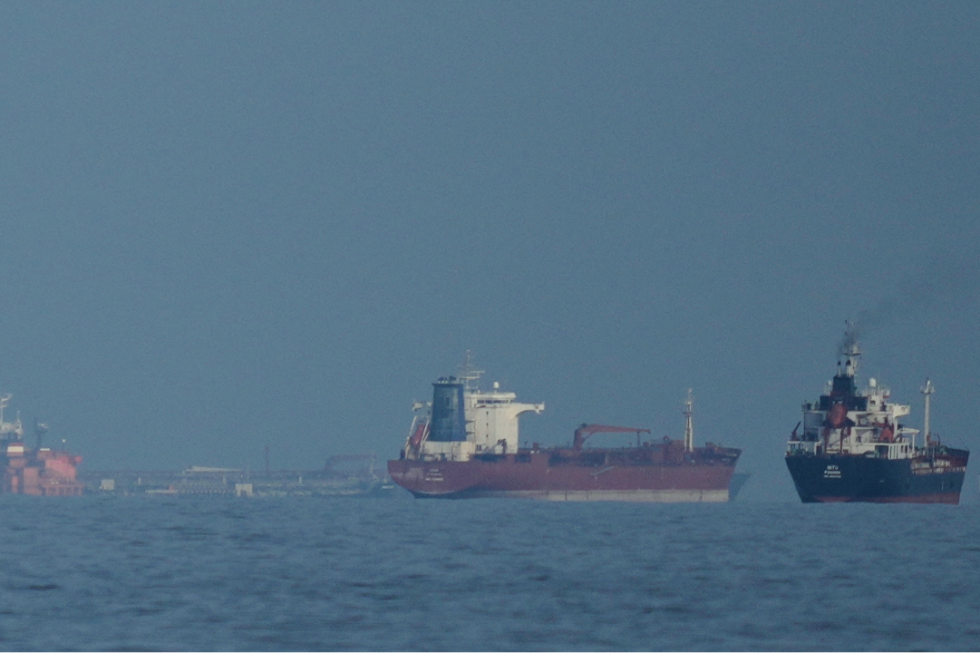
    Regional escalation continued with significant incidents across multiple fronts. Israeli emergency services reported 29 citizens wounded in stampedes during Iranian strikes, while Dubai authorities confirmed four injuries from intercepted drones near the international airport. Maritime security agencies documented an attack on a commercial vessel northwest of Dubai, though crew members remained unharmed.

    Air defense systems across the region saw intense activity with Kuwait intercepting eight drones, Saudi Arabia neutralizing two drones approaching the Shaybah oil field, and Qatar successfully blocking a missile attack. Iraq witnessed a direct drone strike on a major American diplomatic facility near Baghdad airport, with five additional drones intercepted before reaching their target.

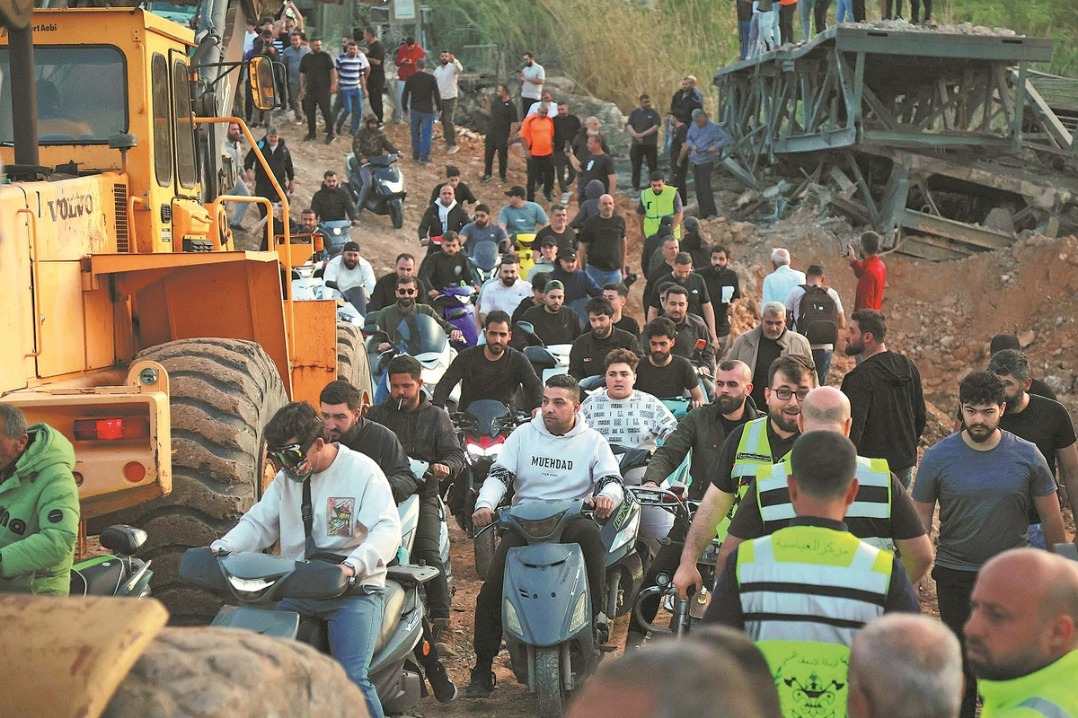
    Al Jazeera reported devastating strikes on historical sites in Isfahan, described by local authorities as a ‘bloody night’ of cultural destruction. Meanwhile, Lebanese health officials reported 570 fatalities since the conflict expanded into their territory on March 2, including 86 children and 14 healthcare workers.

  • Yangzhou: Where lanterns glow and spring blooms

    Yangzhou: Where lanterns glow and spring blooms

    Yangzhou, Jiangsu Province – Last week witnessed China Daily’s foreign specialist Samar Kerkeni embarking on an immersive two-day cultural odyssey through the historic city of Yangzhou. The journey offered a profound exploration of traditional Chinese heritage against the backdrop of seasonal transformation.

    The inaugural day coincided with Lantern Festival celebrations at Songjiacheng Sports and Leisure Park, where Kerkeni engaged directly with multiple intangible cultural heritage practices. She participated in hands-on workshops demonstrating Yangzhou’s renowned lantern craftsmanship, an artistic tradition dating back centuries that combines intricate paper-cutting techniques with sophisticated lighting designs. The experience provided unique insights into how traditional festivals serve as living repositories of cultural knowledge.

    On the subsequent day, the exploration continued through Slender West Lake’s classical gardens, where early spring blossoms created a breathtaking natural panorama. Kerkeni documented the harmonious integration of horticultural artistry with landscape architecture, characteristic of Yangzhou’s UNESCO-recognized garden design philosophy. The sensory experience highlighted how Chinese cities maintain ecological consciousness alongside urban development.

    This ethnographic account reveals Yangzhou’s dual identity as both cultural conservator and natural sanctuary, demonstrating how regional Chinese cities preserve ancient traditions while remaining dynamically engaged with contemporary society. The documentation provides international audiences with accessible pathways to understanding China’s diverse regional cultural landscapes beyond metropolitan centers.

  • Q&A: Shakira says she feels like she’s just getting started. A Rock Hall nomination begs to differ

    Q&A: Shakira says she feels like she’s just getting started. A Rock Hall nomination begs to differ

    In an extraordinary career resurgence, Colombian superstar Shakira is redefining artistic longevity while balancing motherhood and monumental musical achievements. The boundary-breaking performer recently made history in Mexico City’s Zócalo square, where approximately 400,000 fans gathered for her concert—shattering the venue’s attendance record two decades after her first performance there.

    This landmark event forms part of her first global tour since 2018, which the artist describes as the realization of lifelong dreams. ‘I’m being able to make so many of my dreams, as an artist, come true on this tour,’ Shakira revealed in an exclusive interview with The Associated Press. ‘It’s everything I ever dreamt about.’

    The accolades continue with her groundbreaking nomination for the 2026 Rock & Roll Hall of Fame class—a recognition that underscores her unique fusion of Latin music with rock and pop genres. Should she be inducted, Shakira would become the first Colombian artist and first Latina born and raised in Latin America to receive this honor.

    Reflecting on her Mexico City performance, the emotional artist shared: ‘That was just absolutely incredible. One of those experiences that are unforgettable. The love and friendship story that I have with Mexico is just uncanny.’ She notably performed ‘Dónde Estás Corazón,’ her first song ever played on Mexican radio, creating a profound full-circle moment.

    The tour continues with historic upcoming performances, including a return to Egypt’s Pyramids of Giza after nearly 20 years and an anticipated concert at Rio de Janeiro’s Copacabana Beach that may attract up to two million attendees.

    Despite her three-decade career, Shakira maintains she feels ‘at the threshold of a new beginning,’ crediting her audience’s emotional support and loyalty. Her rock music roots remain fundamental to her artistic identity, with recent album ‘Las Mujeres Ya No Lloran’ continuing her tradition of incorporating rock elements.

    The Rock Hall nomination holds particular significance for Latino representation. ‘I feel very proud as a Latina,’ Shakira expressed. ‘I’m happy to feel that I’m representing a part of my community there.’

    Looking forward, the artist dreams of performing at Paris’s Eiffel Tower or Champs-Élysées, but currently feels ‘so accomplished as an artist this year.’ She concludes: ‘I really am in love with making music and performing that music, and it’s brought so much joy to my life again, after the difficulties that I’ve been through.’

  • Chile’s Kast, most right-wing president since Pinochet, takes office

    Chile’s Kast, most right-wing president since Pinochet, takes office

    Chile has inaugurated its most right-wing president since the military dictatorship of Augusto Pinochet, with José Antonio Kast assuming office Wednesday amid promises to combat escalating violent crime and implement extensive migrant deportations. The 60-year-old ultraconservative leader took his oath before Congress in Valparaíso, marking a significant political shift in a nation that has maintained center-left governance for much of its post-dictatorship era.

    Kast’s inauguration signals Chile’s alignment with a growing regional trend toward law-and-order conservatism, joining neighboring nations like Argentina and Ecuador in embracing right-wing leadership. The ceremony was attended by several prominent regional figures including Argentina’s libertarian President Javier Milei, Ecuador’s crime-fighting leader Daniel Noboa, and exiled Venezuelan opposition figure María Corina Machado.

    The new administration immediately faces complex geopolitical considerations, particularly regarding a controversial submarine fiber optic cable project linking Chile with Hong Kong—a initiative that has drawn security concerns from Washington and created tension during the transition from outgoing leftist President Gabriel Boric.

    Kast’s political platform draws notable inspiration from former U.S. President Donald Trump’s policies, particularly regarding immigration enforcement and border security. His participation in Trump’s recent Shield of the Americas summit in Florida positions Chile as another American ally in a region where Washington is reasserting influence. The president has vowed to deport hundreds of thousands of undocumented migrants, predominantly Venezuelans, and strengthen border controls in northern Chile.

    The cabinet appointments have generated controversy, with Kast selecting two lawyers who previously defended Pinochet’s regime for key justice and defense portfolios. His choice for women’s affairs minister—an evangelical anti-abortion activist—has further alarmed opposition groups and human rights organizations. Political analysts note that Kast represents a conservative ideology unprecedented since Chile’s return to democracy in 1990, with his administration likely to test the resilience of the country’s democratic institutions.

    Despite these concerns, many Chileans express optimism about Kast’s tough-on-crime agenda in a nation that has recently experienced rising rates of murder, kidnapping, and extortion—though Chile remains one of Latin America’s safest countries. The new government has promised enhanced police capabilities, military deployment to high-crime areas, and streamlined deportation procedures for undocumented immigrants.

  • Iranian president’s son says new supreme leader ‘safe and sound’

    Iranian president’s son says new supreme leader ‘safe and sound’

    Amid escalating regional tensions, the son of Iran’s President has publicly affirmed the safety and well-being of the nation’s newly appointed Supreme Leader. Yousef Pezeshkian, son of President Masoud Pezeshkian, utilized his Telegram channel on Wednesday to disseminate reassurances regarding Mojtaba Khamenei’s condition.

    The presidential son revealed that informed contacts with direct connections had provided him with definitive confirmation that the Supreme Leader remains “safe and sound.” This statement emerges against a backdrop of earlier media speculation suggesting Khamenei might have sustained injuries during recent military operations conducted jointly by United States and Israeli forces against Iranian targets.

    The timing of this disclosure carries significant political weight, coming during a period of heightened geopolitical friction in the Middle East. Mojtaba Khamenei, who previously served as a senior advisor to his father, the late Ayatollah Ali Khamenei, assumed the role of Supreme Leader following a complex transition of power. His leadership commencement coincides with increased international scrutiny toward Iran’s political stability and security apparatus.

    This development represents the first official communication regarding the Supreme Leader’s status since rumors of potential harm began circulating in international media outlets. The method of communication—through a family member of the presidency rather than through formal government channels—adds an intriguing dimension to the narrative of internal Iranian politics during this volatile period.

  • Volcanic fragments rain down as Hawaii’s Kilauea volcano erupts

    Volcanic fragments rain down as Hawaii’s Kilauea volcano erupts

    Hawaii’s Kilauea volcano, one of the world’s most active volcanic systems, has commenced a significant eruption phase, discharging substantial volumes of volcanic material into surrounding communities. The explosive event propelled a hazardous mixture of fine ash, porous pumice, and sharp volcanic glass fragments across residential areas, creating potentially dangerous conditions for inhabitants and infrastructure.

    The volcanic activity necessitated immediate emergency measures, including the closure of major transportation arteries to ensure public safety. Authorities implemented mandatory evacuation protocols for tourists and residents in vulnerable zones, prioritizing human safety above all considerations. The eruption’s intensity demonstrates the unpredictable nature of volcanic systems, particularly Kilauea’s dynamic geological behavior.

    Volcanologists continue to monitor the situation closely, analyzing seismic data and gas emissions to predict potential developments in the volcanic activity. The current eruption episode serves as a stark reminder of the powerful geological forces continuously shaping Hawaii’s landscape and the ongoing challenges of coexisting with active volcanoes.

  • South Africa summons new US ambassador over criticism as rift deepens

    South Africa summons new US ambassador over criticism as rift deepens

    JOHANNESBURG (AP) — South Africa’s Foreign Ministry has formally summoned U.S. Ambassador Leo Brent Bozell III to account for his undiplomatic remarks, signaling a severe deterioration in bilateral relations between the former allies. The diplomatic confrontation represents the most strained period in U.S.-South African relations since the end of apartheid in 1994.

    Foreign Minister Ronald Lamola confirmed Wednesday that Ambassador Bozell, appointed by the Trump administration, was called to explain his controversial statements made during a business leaders’ meeting in Pretoria. The ambassador had openly criticized South Africa’s affirmative action policies designed to address historical racial inequalities, comparing them to apartheid-era race laws. He additionally questioned South Africa’s diplomatic relationship with Iran and advocated for changes to land expropriation laws.

    “While South Africa welcomes active public diplomacy and the strengthening of bilateral ties,” Lamola stated at a press conference, “we emphasize that such engagements must remain consistent with established diplomatic etiquette and international protocols.”

    According to Foreign Ministry director-general Zane Dangor, Ambassador Bozell met with South African officials on Tuesday and subsequently “apologized and expressed regret” for his comments. The ambassador later walked back one particularly contentious statement regarding a South African court ruling on an apartheid-era chant, clarifying on social media that his personal views didn’t represent official U.S. government policy.

    The current diplomatic rift follows years of escalating tensions since President Trump’s return to office. The Trump administration has repeatedly characterized South Africa’s foreign policy as anti-American and its domestic policies as anti-white, including baseless claims about targeted violence against white farmers that even conservative Afrikaner groups have disputed.

    The administration has taken unprecedented measures against its largest African trading partner, including expelling South Africa’s ambassador to Washington last year and excluding the nation from Group of 20 meetings hosted in the U.S. this year. This confrontation highlights the profound ideological divide between the Trump administration and South Africa’s Black-led government regarding racial justice, international alliances, and judicial sovereignty.

  • Arctic sea ice among lowest on record: AFP review of US data

    Arctic sea ice among lowest on record: AFP review of US data

    The Arctic’s frozen expanse is rapidly diminishing, with current data indicating one of the smallest winter ice formations ever recorded. According to an analysis of information from the U.S. National Snow and Ice Data Center (NSIDC), the maximum sea ice coverage reached approximately 14.22 million square kilometers on March 10. This measurement positions the current ice extent among the five smallest winter peaks documented since satellite monitoring began over four decades ago, potentially surpassing last year’s record low of 14.31 million square kilometers.

    Scientific experts confirm this alarming trend. Samantha Burgess, climate strategic lead at the European Centre for Medium-Range Weather Forecasts, and Gilles Garric, polar oceanographer at France’s Mercator Ocean Toulouse, both anticipate this year’s ice minimum will rank among the most severe recorded. The Arctic region is experiencing warming at three to four times the global average rate, driving what researchers describe as an accelerating environmental crisis.

    The implications extend beyond environmental concerns to geopolitical dimensions. Elizabeth Chalecki, climate change and security expert at Canada’s Balsillie School of International Affairs, notes that melting ice is transforming the Arctic into a new Mediterranean—a contested maritime space surrounded by competing nations. Russia is already increasing its economic and military presence along the Northern Sea Route, while the United States and Canada face pressure to respond to these developments.

    Environmental consequences are equally significant. Shrinking sea ice threatens entire ecosystems, endangering species like polar bears and emperor penguins that depend on frozen habitats for breeding and feeding. While melting sea ice doesn’t directly raise ocean levels, its disappearance reduces the planet’s albedo effect—where dark ocean water absorbs more sunlight than reflective ice, accelerating global warming.

    Researchers warn that without immediate action to reduce fossil fuel emissions, the world approaches irreversible tipping points. The combination of rising greenhouse gas emissions and the potential return of the El Niño weather phenomenon later this year could push global temperatures to unprecedented levels, with the Arctic serving as the frontline of planetary climate change.