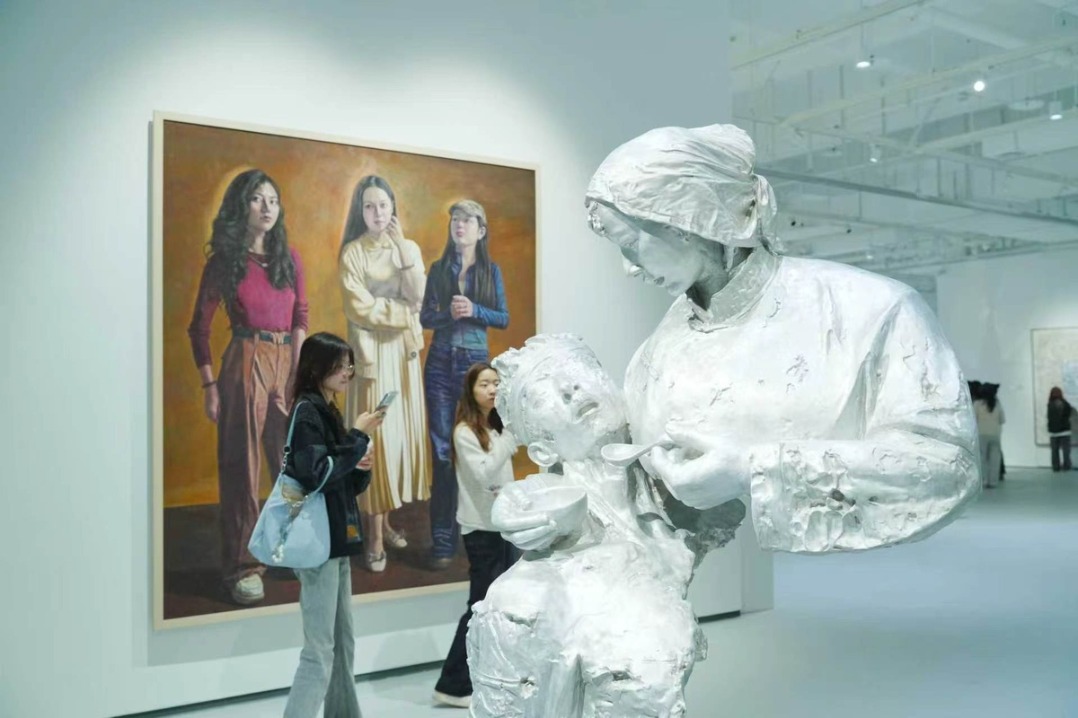
As Chongqing’s Southwest University approaches its 120th founding anniversary, the institution has unveiled a new multi-building museum complex that centers a lasting tribute to one of its most accomplished alumni: the legendary hybrid rice pioneer Yuan Longping. The inauguration of the new facility, held on April 14, marks a significant milestone in honoring the agronomist whose revolutionary work transformed global food security. Yuan, who passed away in 2021 at the age of 91, earned his agronomy degree from Southwest University’s predecessor institution before launching his groundbreaking research career. In 1964, he launched his formal inquiry into hybrid rice technology, a pursuit that would upend conventional agricultural wisdom at the time. Just nine years later, in 1973, he successfully developed the world’s first high-yield hybrid rice strain, a breakthrough that boosted rice output across Asia and beyond. The far-reaching impact of Yuan’s life’s work cannot be overstated: his persistent research and widespread推广 of hybrid rice varieties enabled China to feed nearly 20 percent of the world’s population using only 9 percent of the planet’s total arable land. The new memorial hall, housed within the university’s newly opened museum complex, preserves personal artifacts, research notes, and historical records from Yuan’s decades of work, offering students and visitors a chance to trace the scientist’s journey from early curiosity to transformative discovery. University officials noted that the tribute also aims to inspire future generations of agricultural scientists to address ongoing global challenges related to food production and sustainability.
作者: admin
-
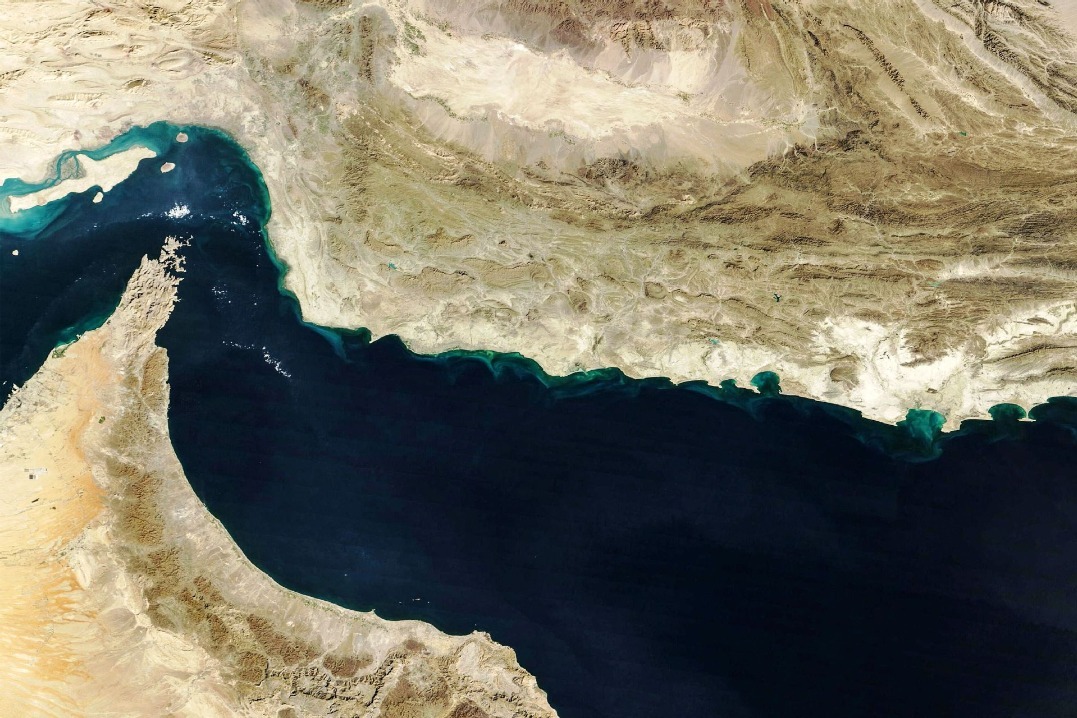
Iranian FM says passage for all commercial vessels through Strait of Hormuz ‘completely open’ during ceasefire
TEHRAN – In an official announcement shared Friday on the social media platform X, Iranian Foreign Minister Seyed Abbas Araghchi has confirmed that unimpeded passage for all commercial ships through the strategic Strait of Hormuz will remain completely open for the full duration of the ongoing ceasefire between Israel and Lebanon. The declaration aligns with the terms of the 10-day truce that recently went into effect along the Israel-Lebanon border, a deal that has already lowered tensions across the broader Middle East region. The Strait of Hormuz, one of the world’s most critical chokepoints for global energy trade, sees roughly 20 percent of the world’s total oil shipments pass through its waters on an annual basis. This announcement comes amid a long-running backdrop of heightened geopolitical friction in the region, including prior United States blockade actions in the Hormuz area and repeated American threats to impose sanctions on nations purchasing Iranian crude oil, a situation that has repeatedly disrupted global shipping markets. China has long pushed back against unilateral American sanctions targeting Iran’s energy sector, and has maintained active diplomatic communication with the U.S. ahead of the planned visit of former President Donald Trump. The Iranian foreign minister’s clarification comes as global markets closely monitor developments in the Middle East, as any disruption to Hormuz transit would have immediate ripple effects on global energy prices and international supply chains. By explicitly guaranteeing open access for all commercial vessels during the ceasefire period, Iranian authorities have signaled their commitment to upholding the terms of the regional truce and supporting the stability of global maritime trade.
-

London police investigating incident near Israeli embassy
Authorities in London have launched a counter-terrorism investigation after an unverified group issued an uncorroborated claim that it launched drone attacks carrying hazardous materials targeting the Israeli Embassy in the United Kingdom capital.
The incident unfolded on Friday, when uniformed officers in protective gear cordoned off an area near the diplomatic mission, located adjacent to Kensington Gardens. Law enforcement teams have cordoned off the entire public access to the gardens and surrounding streets as they conduct forensic examinations of a collection of discarded items recovered at the site, and have issued urgent appeals for local residents and visitors to steer clear of the restricted zone.
As of Friday, officials have released limited concrete details about the circumstances of the incident. However, law enforcement confirmed they are assessing the credibility of a video circulated widely on social media overnight. In the footage, a little-known organization calling itself Harakat Ashab al-Yamin al-Islamiya (Hayi) claims responsibility for a drone strike against the embassy. The video displays a target overlay on an exterior photograph of the Israeli Embassy, and shows unidentified individuals in hazmat suits operating unmanned aerial vehicles that the group alleges are loaded with dangerous substances.
According to open-source claims, Hayi has been linked to Iran by multiple international observers, and the group only emerged publicly following the outbreak of the U.S.-Israeli military campaign against that country. The organization has also been named as the claimant for a string of alleged attacks targeting Jewish and Israeli sites across multiple European nations. Despite these claims, independent security analysts have repeatedly raised major questions about the actual existence of the group, the veracity of its claimed attacks, and the alleged ties to the Iranian government. Experts have pointed to multiple inconsistencies in the group’s public messaging and a complete lack of verifiable evidence confirming its operations, casting major doubt on its credibility.
In an official statement issued Friday, London’s Metropolitan Police moved to reassure the public that there is currently no identified elevated risk to community safety. “While we can confirm that the embassy has not been attacked, we are carrying out urgent inquiries to determine the authenticity of the video and to identify any potential link between it and the items discarded in Kensington Gardens,” the statement read. Counter Terrorism Policing London confirmed it is leading the ongoing investigation, with forensic teams continuing to process the scene and verify the online claim as of Friday afternoon.
-
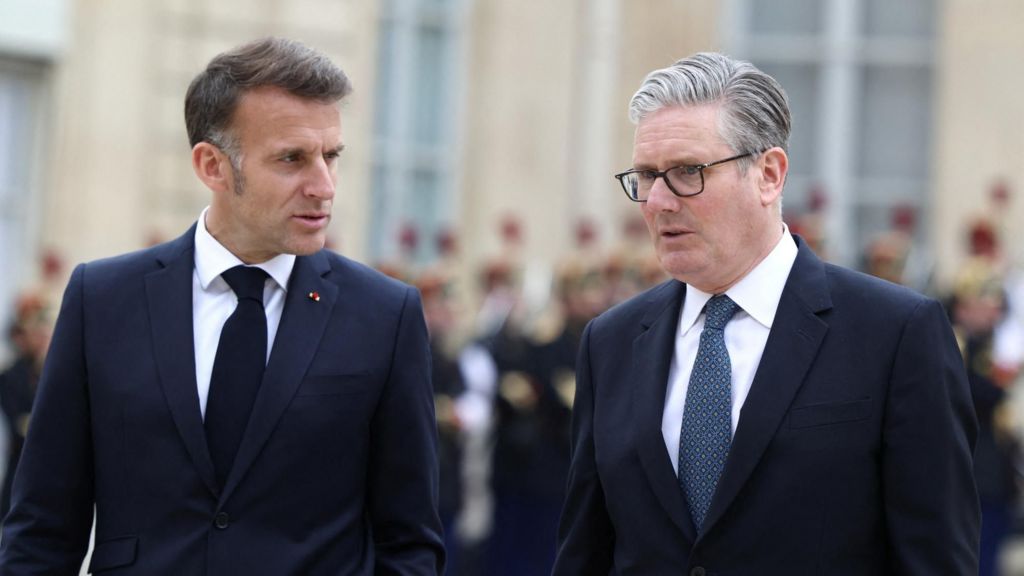
UK and France to lead defensive mission in Strait of Hormuz
Against the backdrop of escalating regional tensions and disrupted global energy flows after weeks of restricted access through one of the world’s most critical maritime chokepoints, UK Prime Minister Keir Starmer has announced a new UK- and French-led multinational mission designed to protect commercial shipping in the Strait of Hormuz, set to launch once active hostilities in the region conclude.
Speaking following a gathering of representatives from 51 nations, Starmer emphasized that the initiative would operate exclusively as a strictly peaceful and defensive deployment. The strait, which carries roughly a fifth of the world’s daily oil trade, was effectively blocked by Iran after joint strikes by the United States and Israel in late February — a disruption that sent global energy and fuel prices soaring across international markets.
In a surprising development on Friday, both Iranian Foreign Ministry and U.S. President Donald Trump confirmed the waterway was now fully open to commercial traffic. But Trump used the announcement to launch a fresh attack on NATO, dismissing the alliance as “useless when needed”. The U.S. president revealed he had received a formal offer of assistance from NATO on Friday, but took to his Truth Social platform to write that he “TOLD THEM TO STAY AWAY, UNLESS THEY JUST WANT TO LOAD UP THEIR SHIPS WITH OIL”.
Trump has repeatedly lashed out at NATO throughout the ongoing Iran conflict, with the UK drawing particular criticism from the commander-in-chief. For his part, Starmer has maintained a cautious stance throughout the crisis, repeatedly confirming the UK would not be dragged into active conflict and previously stating London would not back any blockade of Iranian shipping.
Standing alongside French President Emmanuel Macron during the announcement, Starmer added that dozens of countries have already pledged to contribute military and logistical assets to the joint mission. “This will be strictly peaceful and defensive, as a mission to reassure commercial shipping and support mine clearance,” he said. “We invite all nations with an interest in the free flow of global trade to join us. Some have already indicated their readiness to contribute.”
Full operational details of the mission will be unveiled next week following a military planning conference scheduled to take place in London, Starmer confirmed.
Tehran has given assurances that the strait will remain open to commercial shipping until the mid-point of next week, when the temporary ceasefire between the U.S. and Iran is set to expire. For his part, Trump has made clear that his own naval blockade of vessels entering and exiting Iranian ports will remain in place despite the temporary opening of the strait.
While Friday saw a surge of vessel activity across the broader Persian Gulf, maritime tracking data still shows only a handful of ships completed full transits through the strait, indicating lingering uncertainty among shipping operators about the security of the route.
Macron echoed Starmer’s remarks, noting that the weeks-long closure of the strait had inflicted “very severe consequences” on “the whole of the planet and the global economy”. “Recent events are encouraging, even if we have to remain prudent,” he added.
German Chancellor Friedrich Merz also backed the initiative, saying Germany “stands ready to play its part in ensuring freedom of navigation” through the critical waterway. Speaking after the multilateral meeting, Merz added that it would be “desirable” for the United States to join the UK-French led mission.
-
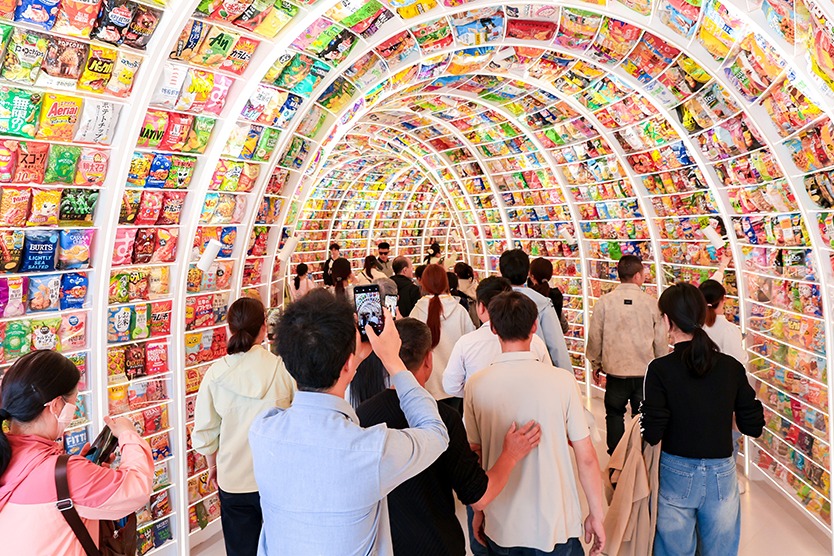
Changsha snack store earns Guinness record with 35,000 products
In a milestone blending retail innovation and experiential consumption, a one-of-a-kind massive snack retailer has officially opened its doors in the central Chinese city of Changsha, Hunan, earning an immediate spot in the Guinness World Records for its unprecedented scale and selection.
Named Snack Kingdom, the sprawling retail space clocks in at 12,000 square meters — an area roughly equivalent to 30 standard basketball courts. Stocking more than 35,000 distinct snack products from across the globe, the store sources one-third of its inventory from nearly 70 countries and regions, creating a truly global snack destination under one roof.
The selection ranges from beloved domestic Chinese specialties — such as Hunan’s iconic Pingjiang spicy strips and Chongqing’s classic Tianfu Cola — to internationally coveted treats, from Hokkaido, Japan’s premium chocolate to Russia’s famous purple-wrapped hard candies. To put the enormous selection in perspective: if a customer sampled one new product every day, it would take approximately 96 years to try every item in the store.
Luo Qiong, a Guinness World Records adjudicator who officiated the certification, confirmed the new record and noted that the shop’s achievement extends far beyond its physical size. “It is not only a leader in size; what is even more impressive is how it transforms a vast array of global products into an explorable, interactive, immersive experience,” Luo said.
Breaking away from the traditional display-focused sales model common to grocery and snack retailers, Snack Kingdom is structured like a large-scale treasure map, divided into themed zones designed to encourage exploration. Visitors can wander through dedicated areas including the kilometer-long Snack Corridor, Instant Noodle City, Beverage Town, the Global Snack Station, and even an on-site Snack Museum. Additional sections highlight oversized novelty snacks and pocket-sized mini treats, turning a routine shopping trip into a recreational activity where guests can shop, sightsee, snap photos, and enjoy leisure time with friends and family.
Yang Wei, marketing center director for Busy Ming Group, the operator behind Snack Kingdom, explained that the concept was built around reimagining snack consumption as a recreational experience rather than a purely transactional errand. “We hope to bring snacks of all kinds from around the world here for consumers,” Yang said. “We hope this will be a place that adults and children will want to visit at least once. Consuming snacks should not be a purpose-driven act, but a pleasure of browsing. We want to create a ‘snack amusement park’, a maze-like space where visitors will react with a sense of wonder as soon as they step in. As they explore and wander, they will discover surprises and experience pure, simple happiness.”
Yang added that Changsha was the ideal location for the concept, as the city has emerged as a national hub for innovative new consumption models, with a thriving culture of experiential shopping, a large population of young consumers, and abundant urban vitality and entrepreneurial energy.
Long lines of excited snack lovers formed outside the venue as early as 11 a.m. on opening day, with thousands of visitors turning out to explore the new space. Wu Yitang, a 22-year-old consumer who was among the first guests to enter, shared his enthusiasm for the unprecedented selection. “I think the selection here is amazing, and the atmosphere is really nice. There are so many people here, all sharing the same love for snacks,” Wu said. “Most of the items are the kinds I enjoys, including lots of novel flavors, some of which are imported and hard to find. For example, my favorite thing here is instant noodles. They have a huge range of foreign brands from places like Japan and South Korea. When I saw that entire wall covered with noodles, I was absolutely shocked. I’d never seen anything like it. It really took me by surprise.” For Wu, snacks are a go-to comfort for everyday leisure time, making the store a particularly exciting new destination.
To mark the opening, more than 500 new snack products made their global or regional debut at Snack Kingdom. Over 20 leading food and beverage manufacturers — including top domestic brands Yankershop Food, Master Kong, and Want-Want — hosted in-store product launches, live-streaming marketing events, and public tasting sessions for guests.
Industry analysts note that the concept aligns perfectly with shifting consumer trends in China’s fast-growing retail sector. Jolin Guan, deputy partner of global brand consultancy Prophet, pointed out that Snack Kingdom successfully blends Changsha’s widely recognized “City of Entertainment” identity with favorable local commercial real estate costs. The store’s highly photogenic layout and unique attractions make it a natural draw for social media content creators, Guan added, predicting it will spark a widespread trend of influencer visits and social media check-ins that will drive further foot traffic.
The launch of the Guinness record-breaking snack store marks the latest example of how Chinese retailers are innovating to meet growing consumer demand for unique experiential leisure activities, blending shopping with entertainment to create new destinations that resonate with young domestic consumers.
-

Intellectual property protection promoted
As a core pillar of global innovation ecosystems and technological advancement, intellectual property (IP) protection has taken on renewed strategic focus in China, with the China National Intellectual Property Administration leading ongoing efforts to strengthen the country’s IP framework.
Updated on April 17, 2026, the announcement confirms that China continues to prioritize the development and enforcement of IP protections, which form the legal and economic foundation for protecting inventors’ and creators’ work. By safeguarding the rights of original innovators, these policies create the stable conditions required for sustained technological progress across every sector of the Chinese economy, from advanced manufacturing to digital innovation and creative industries.
IP protection serves as a critical incentive for research and development: when creators and inventors can secure exclusive rights to their work, they gain the confidence to invest the time, capital, and labor required to bring new solutions to market. For China, advancing IP regulation aligns with broader national goals of shifting toward an innovation-driven economy, attracting international investment, and fostering a more dynamic domestic entrepreneurial landscape.
This ongoing push for stronger IP protection also signals China’s commitment to meeting international standards for intellectual property governance, supporting smoother cross-border collaboration and global trade in knowledge-based goods and services. The move comes as global competition in technological innovation intensifies, making robust IP frameworks more important than ever for countries seeking to position themselves as global leaders in research and creative output.
-
China-Greece partnership celebrated at Chongqing forum
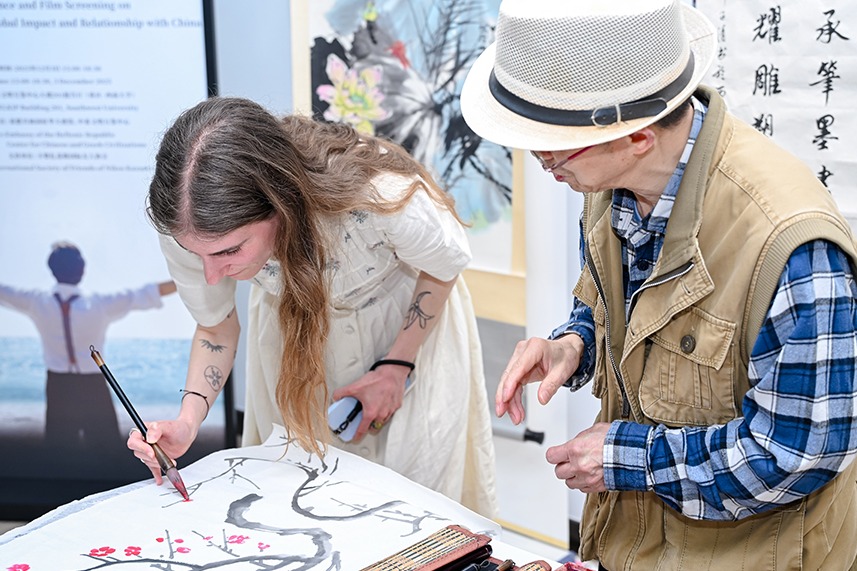
Two decades after China and Greece elevated their bilateral ties to a comprehensive strategic partnership, stakeholders from both nations gathered in southwest China’s Chongqing to celebrate this milestone at the third International Forum on Mutual Learning among Civilizations. The three-day event kicked off on April 16 at Southwest University, hosted by the Center for Chinese and Greek Civilizations, a joint cultural initiative widely referred to as Chinese KELKIP.
In a pre-recorded video address opening the forum, Shahbaz Khan, director and representative of the UNESCO Regional Office for East Asia, praised the center’s longstanding work to advance cross-cultural dialogue, academic exchange, and deeper mutual understanding between the two ancient civilizations. “By bringing together two rich intellectual traditions, the center has created a meaningful platform for reflection and cooperation,” Khan noted, highlighting the global value of people-to-people connectivity between diverse cultural backgrounds.
One of the forum’s most significant announcements was the official launch of the China-Greece University Alliance for Mutual Learning Among Civilizations, a new collaborative network that unites higher education institutions from both countries to expand bilateral educational exchange opportunities. The initiative builds on existing academic ties and creates a structured framework for joint research, student exchange, and knowledge sharing.
The event also marked the public release of two new book series designed to deepen cross-cultural and cross-sector learning between China and Greece. The first collection is the first comprehensive compilation of Greek legal scholarship published in China, filling a longstanding gap in Chinese academic resources on European legal systems. The second series explores the history of medical knowledge exchange along the ancient Silk Road, tracing thousands of years of health-related cooperation between Eurasian civilizations.
Cui Yanqiang, director of Chinese KELKIP, explained that the Greek law series was developed through years of joint work by legal experts and professors from both China and Greece. The Silk Road medical exchange series, meanwhile, was produced in partnership with researchers from Sichuan University. The forum ran from April 14 to 16, with a supplementary event already scheduled: a public salon to celebrate World Greek Language Day will open to attendees this coming Saturday.
This gathering builds on a growing framework of bilateral cultural collaboration between the two nations: Greece established its own parallel KELKIP center in Athens back in 2020, creating a two-way hub for cultural exchange on both sides. As leaders from both sides emphasized during the forum, the 20-year comprehensive strategic partnership has been rooted in mutual respect, and expanding cultural and educational collaboration will remain a core pillar of deepening bilateral ties for years to come.
-
The Palestinian woman on the cover of L’Espresso: Settlers were ready to kill us
In October 2025, a routine land defense action during olive harvest season in the occupied West Bank turned into a viral international incident that has reignited global scrutiny of escalating Israeli settler violence against Palestinian communities. The incident, captured in a candid photograph and full video footage, has pitted an Italian news magazine against the Israeli government, while giving a human face to a years-long crisis of displacement and intimidation in the region.
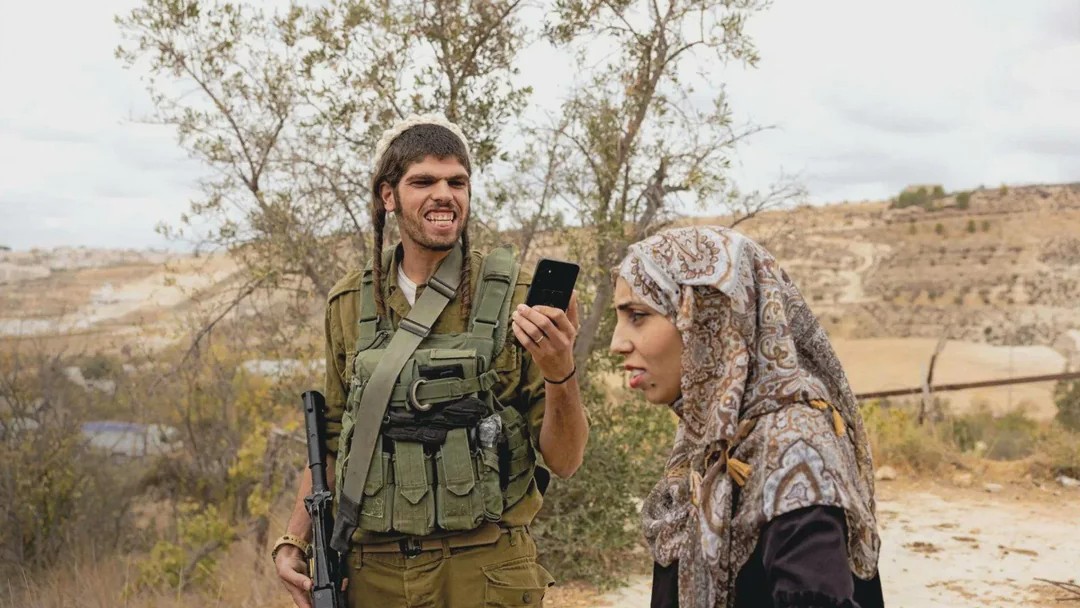
The central figure in the controversy is 35-year-old Meead Abu al-Rub, a Palestinian lawyer working with the Colonization and Wall Resistance Commission. On 12 October, Abu al-Rub joined a group of fellow activists and local farmers in the Suba area of Idhna, a region southwest of Hebron, to peacefully oppose the proposed confiscation of Palestinian agricultural land and support local landowners during the critical annual olive harvest. What began as a calm gathering of olive picking, traditional dabke dancing, and folk singing quickly escalated when more than 20 armed settlers, escorted and protected by over 30 Israeli soldiers, arrived at the site.
In an exclusive interview with Middle East Eye, Abu al-Rub recounted the chaotic confrontation that unfolded. “Some of the settlers were wearing military uniforms and carrying weapons,” she said. “They threatened us, insulted us, and filmed us. The settler who was filming me with his phone was threatening to arrest us all, even though we had not done anything wrong and they were the ones who attacked us.” The settlers, backed by Israeli military forces that fired tear gas at the gathering, threatened to detain participants and transfer them to Al-Moskobiya, an infamous Israeli detention facility. Abu al-Rub recalled that organizers made the difficult decision to withdraw, a choice she says likely saved lives. “If we hadn’t cancelled the event and withdrawn, the settlers wouldn’t have hesitated to shoot us directly,” she explained. “They had their weapons ready, and there was no one to protect us.”
The photograph of the confrontation, captured by award-winning Italian photographer Pietro Masturzo, was selected as the cover image for an issue of major Italian current affairs magazine L’Espresso, headlined “L’Abuso” (The Abuse). The cover text accompanying the image drew a direct connection between the harassment in the West Bank and broader regional Israeli military actions: “The occupation of the West Bank was carried out with the help of soldiers collaborating with settlers. Gaza was destroyed. Expansion in Lebanon was carried out. The borders in Syria were violated. Iran was attacked. Ethnic cleansing and massacres were committed. This is how the Zionist right wing is shaping Greater Israel.”
The image quickly spread across global social media platforms, prompting an immediate sharp rebuke from Israeli officials. Jonathan Peled, Israel’s ambassador to Rome, condemned the cover, claiming it “distorts the complex reality” of the region and perpetuates harmful stereotypes and hatred against Jewish people. Israeli officials further accused the magazine of publishing a doctored, artificially generated image designed to defame the country.
Masturzo moved quickly to debunk these claims, releasing the full unedited video footage of the entire incident to coincide with the magazine’s publication. In an Instagram post addressing the growing controversy, the photographer confirmed: “Many are asking if this image was created using artificial intelligence, while others are pointing to posts claiming so. Well, no, the image in question is not a product of artificial intelligence.” L’Espresso also stood by its reporting, publishing the full clip to confirm the authenticity of the cover photograph.
For Abu al-Rub, the sudden global attention has come with heavy personal cost. As a mother of four children, ranging in age from 18 months to seven years, she now lives in quiet fear of reprisal from settlers and Israeli security forces, a reality shared by thousands of Palestinian land defenders across the West Bank, where Palestinian communities receive little to no protection from aggressive settlers, who operate with open backing from the Israeli military.
“I wasn’t afraid of them during the event, but now, after the photo’s widespread circulation, fear has crept into my heart,” Abu al-Rub said. “I’m a mother of four children… They’re making me afraid of the photo’s massive spread and the possibility of being forcibly separated from them.”
Despite this anxiety, Abu al-Rub says she has found renewed motivation in the support of her family and the international attention that has brought the crisis of settler violence to a global audience. Her own children have told her they are proud of her work, and their friends have expressed admiration for her courage standing up for Palestinian land rights. “My father instilled in me a love for my land, and I’m happy that I’ve passed this on to my children, who share the same love and sense of belonging,” she said. “When I go out to events, they ask to come with me and say, ‘We’re Palestinians too, just like you.’ This proves that our cause isn’t forgotten by the young, as Israel hopes, but is far too deeply rooted to be forgotten.”
The viral incident comes amid a documented sharp escalation in settler violence across the occupied West Bank and East Jerusalem in 2026. Data published by the United Nations Office for the Coordination of Humanitarian Affairs (OCHA) confirms that more than 580 settler attacks resulting in Palestinian casualties, property damage, or both have been recorded across 190 Palestinian communities since the start of the year. Between 31 March and 6 April alone, OCHA documented at least 47 separate attacks targeting 36 distinct communities.
Displacement from settler aggression and Israeli access restrictions has also accelerated dramatically this year. As of 6 April, more than 1,800 Palestinians have been newly displaced from their land in 2026 – a total that already exceeds the full-year displacement figure recorded for 2025. Abu al-Rub noted that thousands of Palestinian farmers are already blocked from accessing their own agricultural land during key harvest seasons, a deliberate pattern of displacement designed to clear land for expanding Israeli settlements.
The Palestinian ambassador to Italy has contacted Abu al-Rub to confirm the scale of global reaction to the photograph and video, noting that the incident has laid bare the daily reality of life under occupation for millions of Palestinians for an international audience that has increasingly turned its attention to the humanitarian crisis in the region.
-

Officer on horseback chases suspect through New York streets
In an unusual incident that unfolded on the busy streets of New York City, a mounted police officer led a dramatic chase through urban thoroughfares to apprehend a suspect accused of purse snatching. The pursuit, which drew attention from onlookers, unfolded as the officer on horseback navigated crowded city blocks to track down the individual implicated in the theft. Following the successful capture, the suspect has been formally lodged with two legal accusations: one count of larceny in connection with the stolen purse, and a second charge for providing false identifying information to responding law enforcement officials. The incident highlights the unique role mounted police units play in urban policing, where their elevated vantage point and maneuverability in crowded areas can help quickly resolve crimes in progress. Local law enforcement has confirmed that the suspect is now in custody, and the case is moving through the city’s legal system, with a preliminary hearing scheduled in the coming weeks.
-

The murder allegations against decorated Australian soldier Ben Roberts-Smith
On a Friday in early 2026, Ben Roberts-Smith, Australia’s most decorated living ex-soldier, made his first court appearance via video link from a remote location to a small Sydney courtroom, standing silent as he faced unprecedented war crimes charges that have rocked Australia’s military establishment.
Weeks prior to the bail hearing, prosecutors had formally laid five counts of murder against the 47-year-old, all stemming from alleged atrocities he committed while serving as a Special Air Service (SAS) corporal deployed to Afghanistan on Australian national operations. Newly unsealed court documents, obtained and verified by the BBC, lay out graphic, detailed accusations of systematic war misconduct that have never before been tested in an Australian criminal courtroom.
According to the documents, the allegations span three separate operational missions between 2009 and 2012. The first incident unfolded in April 2009, when Roberts-Smith’s SAS team was called in to clear the Taliban-held Whiskey 108 compound near Tarin Kowt following an airstrike. Inside a hidden tunnel, troops pulled out two detainees, identified as father and son Mohammad Essa and Ahmadullah, both of whom were immediately restrained and cuffed. Prosecutors allege Roberts-Smith carried Ahmadullah, a disabled man who used a prosthetic leg, outside the compound’s perimeter, threw him to the ground, and fired multiple rounds from a belt-fed machine gun to kill him — an act witnessed by several Australian Defence Force (ADF) personnel posted on outer cordon duty. Returning inside the compound, the documents claim Roberts-Smith ordered an inexperienced rookie soldier, anonymized as Person Four, to execute Mohammad Essa in an initiation practice known within the unit as “blooding.” After the rookie followed the order, both Roberts-Smith and the patrol leader documented the event as a successful initiation.
The second alleged killing took place in September 2012, two weeks after an Afghan soldier turned on his Australian partners, killing three and wounding two. Roberts-Smith, who had received Australia’s highest military honor, the Victoria Cross, just one year prior, led a search team to Darwan village that captured three detainees, including a man named Ali Jan. Court documents allege Roberts-Smith physically assaulted the handcuffed detainees during questioning before escorting Ali Jan to the edge of a 10-meter cliff. Even with Ali Jan cuffed and restrained by another soldier, Roberts-Smith kicked him off the cliff, causing severe injuries including broken teeth. The prosecution claims that after climbing down to the injured detainee, an unnamed soldier acting on Roberts-Smith’s direction shot Ali Jan dead. To cover up the unlawful killing, the team planted a captured handheld radio on Ali Jan’s body to falsely frame him as an armed insurgent. During an earlier civil defamation trial, Roberts-Smith denied the entire event, claiming no detainees were captured that day and no such cliff existed at the search site.
The final two murder charges stem from an October 2012 mission in Syachow village, where Roberts-Smith served as patrol commander. Official mission reports claimed four insurgents were killed in active combat: two inside a compound, and two more in an adjacent cornfield after they refused to surrender. Prosecutors say this narrative is a deliberate cover-up. A junior soldier, Person 66, testified that the two men in the cornfield were already detained and unarmed when Roberts-Smith ordered their execution. According to the court documents, a senior soldier shot the first detainee, before Roberts-Smith ordered the first-tour Person 66 to kill the second. After the shooting, Roberts-Smith threw a grenade into the cornfield to create false evidence that the men had been killed during a legitimate engagement. Forensic analysis of post-mission photos found ligature marks consistent with handcuff restraint on both men’s bodies.
Roberts-Smith’s military career began in 1996, when he joined the ADF at 18. He completed two tours of duty in East Timor before passing selection for the elite SAS in 2003, building a reputation as one of Australia’s most decorated serving soldiers by the height of his Afghanistan deployment. He stepped back from active service at the end of 2012 and formally retired from the ADF in 2015, six years before allegations of war crimes would lead to a high-profile legal battle.
In 2016, senior Australian military leadership launched an official inquiry into widespread rumors of war crimes committed by Australian special forces in Afghanistan, with media reports soon naming Roberts-Smith as a primary suspect. In 2018, he launched a landmark defamation suit against media outlets that published the allegations, but he ultimately lost the civil case. Transcripts of his sworn testimony from that trial have been entered into the current criminal case, where Roberts-Smith repeatedly denied violating the Geneva Conventions, claimed he knew killing restrained detainees was never permissible, and denied ever planting “throwdown” items to justify unlawful killings. Court documents note that Roberts-Smith has exercised his right not to amend or add to his previous sworn testimony for the criminal case.
Prosecutors have outlined consistent patterns across all five alleged murders: every victim was cuffed, detained, and questioned before being killed, all killings occurred when ADF forces had full control of the area with no active enemy combat ongoing, and every incident has at least one direct eyewitness testimony. Three of the witnesses are former soldiers who have testified they themselves participated in executing detainees under Roberts-Smith’s orders when he was their commanding officer.
To date, Roberts-Smith has not formally responded to the detailed allegations contained in the unsealed documents, and he has not yet entered a plea. At Friday’s bail hearing, Justice Greg Grogin granted the former soldier strict conditional bail, noting that the trial would not proceed for years, rather than weeks or months, due to the complexity of the unprecedented case. Australia has never held a war crimes trial in its history, and Roberts-Smith’s defense team has already noted the case falls into “uncharted legal territory” for the Australian judicial system. Roberts-Smith continues to vehemently deny all charges against him.