作者: admin

  • Health workers at the epicenter of Congo’s Ebola outbreak labor with little pay or rest

    Health workers at the epicenter of Congo’s Ebola outbreak labor with little pay or rest

    In the gold-mining town of Mongbwalu, located in the eastern Democratic Republic of the Congo’s Ituri province, a devastating Ebola outbreak of the rare Bundibugyo strain has spread unchecked for weeks, overwhelming local healthcare workers who already face systemic challenges that threaten both their work and their lives. At the heart of the response is Mongbwalu General Referral Hospital, where medical director Dr. Richard Lokudu has spent every working hour treating a steady stream of infected patients — even responding to suspected case alerts in the dead of night — yet he has received almost no compensation for his frontline work.

    This outbreak, which health authorities trace back to Mongbwalu’s bustling mining sector, caught regional officials completely off guard after spreading silently through communities for more than a month before detection. Today, it has become one of the deadliest Ebola events the country has faced in recent years, with Congolese health officials confirming 452 total cases and 82 deaths as of reporting. A single day this week saw 71 new infections, a marker that officials say confirms widespread active transmission across local communities.

    Mongbwalu’s unique economic and living conditions have created the perfect environment for Ebola, which spreads through close contact with infected bodily fluids including blood, sweat, feces, and vomit, to multiply rapidly. Thousands of migrant gold miners flock to the town to work in dangerous, cramped pit and cave mines, then reside in overcrowded informal camps with limited access to clean water, sanitation, or basic health guidance. Compounding this risk is widespread community skepticism about the virus, with many residents distrusting medical authorities and avoiding care — a trend that has already cost the lives of multiple frontline health and response workers who were exposed while trying to contain the spread.

    For the workers on the ground, the daily struggle extends far beyond the risk of infection. Many have gone months without pay or promised hazard allowances, even as they sacrifice all personal time to respond to the crisis. “During the first week, we did not even have time to go home and eat. The second week was the same. We only eat once a day, what amounts to breakfast in the evening,” explained Alice Bamuhinga, a nurse at the Mongbwalu hospital. Dr. Lokudu echoes the frustration of his colleagues, noting that frontline teams deserve fair compensation and regular pay for the risks they take. “It is one thing to be far away and hear statistics being reported, but what is happening on the ground is enormous. People are sacrificing their rest and comfort for this cause. There should be recognition that they deserve compensation,” he said. To date, the Congolese government has not responded to requests for comment on the delayed payments.

    The outbreak is also being fought with almost no dedicated resources, years of underinvestment in the country’s public health system have left regional facilities ill-equipped to handle a large-scale infectious disease event. Unlike more common Ebola strains, the Bundibugyo variant has no approved vaccines or targeted treatments, leaving clinicians only able to manage patients’ symptoms as they wait for outcomes. When the outbreak was first officially confirmed by the Congolese Ministry of Health on May 15, local hospitals had no ability to test for the specific strain — a gap that allowed the virus to gain a critical foothold, according to World Health Organization Director-General Tedros Adhanom Ghebreyesus. International aid groups have scrambled to deploy support to the region, but critical supplies including personal protective equipment, masks, gloves, boots, and symptom-managing medications were in acute short supply in the critical early weeks of the response.

    “There has been an erosion of the health system. There has not been investment in the health system, and this has been going on for years,” said Heather Kerr, country director for the International Rescue Committee in Congo.

    Even as the outbreak worsens, frontline workers continue to navigate barriers that extend beyond resource gaps. Ongoing conflict between the Congolese government, the Rwanda-backed M23 rebel group, and Islamist militant factions has restricted movement into affected communities, leaving many response teams unable to reach remote areas to investigate new case alerts. “Despite the alerts we receive and the teams we have on site, we lack the means to travel into the field. As a result, there are alerts we are unable to investigate,” Dr. Lokudu explained.

    For many local residents, the outbreak has already brought irreversible loss. Asero Jeanne, a 52-year-old Mongbwalu resident, lost two of her five children to Ebola within two weeks after community misinformation led her family to avoid hospital care at first. Neighbors told the family anyone who sought treatment at the hospital would die immediately, and the family initially mistook her daughter’s symptoms for malaria. After three weeks of shifting between home care and delayed hospital treatment, her daughter died, followed days later by her son. Jeanne ultimately contracted the virus herself but survived, one of at least five confirmed recoveries reported by the Congolese government. “I saw about 20 people die. I watched them being taken to the morgue, yet God is allowing me to leave here alive. I thank the doctors,” she said.

    In response to the growing crisis, Tedros announced a $518 million international response plan Friday to contain the outbreak, noting that “containing Ebola depends on political commitment, sustained financing, and the trust and engagement of communities.” For frontline workers like Dr. Lokudu, however, the immediate need remains clear: fair pay, adequate resources, and the support required to stop an outbreak that is currently spreading faster than their existing capacity to treat it.

  • Steve Rosenberg: Lasting image of Russia’s economic forum is plume of smoke over St Petersburg

    Steve Rosenberg: Lasting image of Russia’s economic forum is plume of smoke over St Petersburg

    The 2026 St. Petersburg International Economic Forum (SPIEF), Russia’s flagship annual economic and diplomatic event, opened and closed this week against a backdrop of unexpected conflict and high-stakes diplomatic drama that overshadowed the carefully curated image of economic resilience the Kremlin sought to project.

    On Wednesday, the opening day of the forum, a massive plume of thick black smoke rose high above the St. Petersburg skyline, visible to every delegate arriving at the city’s waterfront expo center. The smoke came from a Ukrainian drone strike that hit unspecified infrastructure in the area, local officials confirmed, marking a dramatic incursion deep into Russian territory that coincided with the forum’s high-profile sessions. A second drone attack hit the region on the forum’s closing day, amplifying the sense of ongoing vulnerability.

    Even amid the chaos of the strikes, the forum played host to the kind of surreal, symbolic moments that underscored the disconnect between the curated narrative inside the conference halls and reality outside. Walking the exhibition floor, attendees encountered a performer dressed as Koshchei the Deathless, the immortal villain from Russian folklore, performing street magic for passersby — pulling coins from thin air, reassembling broken glasses, and generating puffs of smoke from his fingertips. “Russians are unpredictable people,” the performer told onlookers. “We do things no one expects.”

    The most shocking unexpected development of the week came not from a street magician, however, but from Kyiv. Shortly after the first drone strike, Ukrainian President Volodymyr Zelensky published an open letter to Russian President Vladimir Putin that included a taunting critique of Russia’s battlefield setbacks and Putin’s age, before extending an offer to meet for face-to-face peace negotiations in a neutral third country.

    Putin’s response was anything but unpredictable. The Kremlin leader, who has repeatedly rejected direct talks with Zelensky since the full-scale invasion began, dismissed the offer out of hand, criticizing the letter’s tone as “rude.” “It’s not the author of the letter I need to respond to,” Putin said during his plenary address at SPIEF. “It’s our soldiers on the frontline… I say to them: keep at it, brothers!” The comment made clear that Putin has no intention of ending the war on any terms other than Russia’s full compliance with his original demands.

    In his address to assembled delegates, Putin stuck to a familiar script, projecting unwavering confidence and projecting strength. “There are wars and sanctions. But the economy is developing,” he claimed. “Everything is stable.” Inside the conference hall, surrounded by supportive business owners, allied foreign dignitaries, and government officials, the performance held together. Outside the bubble of the forum, however, a different picture emerges.

    Russia has now been at war for five years, sustaining massive battlefield casualties that have strained both the country’s military and its domestic population. Ukrainian long-range drones now regularly strike targets hundreds of kilometers inside Russia’s borders, including major cities far from the front lines. When the outlet asked senior Russian officials about the war and its trajectory, nearly all fell back on pre-approved Kremlin talking points. When asked whether the five-year-long conflict would end soon, Alexander Zhukov, deputy speaker of Russia’s lower parliament the Duma, simply replied: “I can only respond in the words of our president. He said this situation must be resolved soon.”

    Economically, the country is far from the stable, growing powerhouse Putin described. While outright collapse has not materialized, as many Western analysts initially predicted, ongoing sanctions and war spending have created significant strain across most sectors. Growth has stalled, and many independent Russian economists warn of broad stagnation and even decline in key industries. The war continues to suck up massive amounts of both human capital and federal budget resources. During a recent reporting trip to Russia’s Lipetsk region, small business owners described ongoing struggles to stay operational amid restricted access to global markets and supply chain disruptions.

    Even some pro-business Russian figures acknowledged the headwinds. “Interest rates are a bit too high,” Kirill Dmitriev, Putin’s special envoy for foreign investment, admitted in an interview on the SPIEF sidelines. “We believe rates should be lower to attract more investments.” Still, Dmitriev pushed back on critics, arguing that “Russia’s economy has proved resilient over the last five years: something that many Western analysts believed was impossible.” A small number of domestic businesses have even found new openings amid the shifts: as international travel has become difficult and unwelcoming for most Russians, domestic tourism has grown, prompting new investment in domestic resort and tourist infrastructure.

    Unlike the stage magician performing at the forum, the Kremlin cannot conjure new revenue out of thin air to close growing budget gaps created by war spending. It did, however, manage to attract a high-profile American guest that it leveraged for PR. Rodney Mims Cook Jr, chair of the U.S. Commission of Fine Arts who is overseeing the controversial renovation of the White House State Ballroom, brought a personal greeting from former U.S. President Donald Trump to Putin. Russian state media trumpeted his visit as the first official U.S. delegation to attend SPIEF in a decade. But the U.S. State Department quickly distanced itself from the visit: U.S. Secretary of State Marco Rubio said he was unaware of any official U.S. delegation attending the event, and noted the attendees were not high-ranking government officials.

    Wandering the forum’s exhibition halls, one of the most striking installations was a giant “nevalyashka” — the traditional Russian roly-poly tumbler doll that wobbles when pushed but never falls over. The installation perfectly summed up the narrative Russian authorities want to project to the world: that despite five years of war and sweeping international sanctions, Russia remains standing, cannot be knocked off balance, and will outlast its opponents. It is a deliberately defiant image. But for foreign investors looking for stable, long-term opportunities to put capital to work, the constant wobbling that comes from ongoing conflict and geopolitical isolation is unlikely to make for an appealing sales pitch.

  • Afghanistan strikes with 3 quick wickets, but India stays on top at 475-6 on Day 2

    Afghanistan strikes with 3 quick wickets, but India stays on top at 475-6 on Day 2

    The one-off Test cricket match between India and Afghanistan entered its second day at New Chandigarh’s Maharaja Yadavindra Singh International Cricket Stadium on Sunday, with India maintaining a dominant position despite a late morning surge from the Afghan bowling attack that claimed three Indian wickets in the opening session.

    When the first session came to a close, India’s first innings total stood at 475 for six wickets, having extended their Day 1 score of 368 for three by 107 runs through the first morning of play. Afghan pace bowler Mohammad Saleem emerged as the standout performer for his side, picking up two additional key wickets to finish the session with an impressive four wickets for 109 runs.

    On the opening day of the match, Indian captain Shubman Gill had combined with Lokesh Rahul – who notched up an unbeaten century – to post a solid partnership, with Gill also reaching a hundred himself ahead of the close of play. When play resumed on Sunday, Gill added 23 more runs to his overnight total before he edged a delivery behind to the wicketkeeper off Saleem’s bowling. The Indian skipper departed for a match-defining 126, an innings decorated with 15 boundaries and one six.

    Gill’s wicket came after he shared a game-changing 169-run fourth wicket stand with wicketkeeper-batter Rishabh Pant that cemented India’s control of the contest. Pant went on to put on 36 quick runs with lower-order batter Dhruv Jurel, but the pair fell in the space of just six deliveries shortly before the lunch break. Saleem removed Jurel for 19 with a pinpoint delivery to claim his fourth wicket of the innings, while Pant was caught at the long boundary off skipper Hashmatullah Shahidi’s bowling for just eight.

    At the first session break, all-rounder Washington Sundar remained unbeaten on 14, with debutant spinner Manav Suthar yet to get going on nine not out. This fixture marks only the second time India and Afghanistan have faced off in Test match cricket. The pair first met in Bengaluru for Afghanistan’s historic maiden Test appearance, where the Indian side claimed a dominant victory by an innings and 262 runs. India had gotten off to a strong start from the get-go in this match, winning the pre-game coin toss and electing to bat first on a good batting pitch, finishing their first day of play well placed at 368 for three wickets.

  • Are Portugal better without Ronaldo – and is he undroppable?

    Are Portugal better without Ronaldo – and is he undroppable?

    It has been nearly 21 years since Cristiano Ronaldo first stepped onto the pitch as a senior Portugal national team player, a moment that took place in a forgettable-looking friendly against a newly UEFA-affiliated Kazakhstan in the northern Portuguese city of Chaves. The 1-0 narrow win was hosted in front of a sold-out crowd of just 8,000 spectators, on a pitch so poorly maintained that groundskeepers had to paint the grass to improve its visible condition. Few could have predicted that the young Madeira native would go on to build a legacy that would redefine Portuguese football, and make history by qualifying for a sixth FIFA World Cup in 2026 – joining only Lionel Messi of Argentina and Guillermo Ochoa of Mexico in this exclusive club of six-time World Cup participants.

    Today, at 41 years old, Ronaldo holds the record for the most international goals in men’s football history, with 143 strikes to his name. Beyond the statistics, he has reshaped the national team’s mentality and expanded the global profile of the small European nation. As former Sporting CP and Portugal national team coach Joao Aroso told BBC Sport: ‘We are a small country that rarely has global impact outside football. Cristiano allows our small country to be known worldwide for something great – because of all the positive things he stands for.’

    For decades, questioning Ronaldo’s place in the Selecao was widely seen as taboo in Portugal. But since the 2022 Qatar World Cup, public and internal debate over his role has intensified, splitting opinion across the football community in the country. Critics, including 1966 World Cup third-place finisher Antonio Simoes, argue that Ronaldo’s priority has shifted to being the center of attention rather than prioritizing team success, a contrast to legendary Portuguese striker Eusebio.

    Portugal’s head coach Roberto Martinez has repeatedly pushed back on this discourse, dismissing it as inconsequential ‘lift talk’. In all recent press conferences addressing the five-time Ballon d’Or winner, Martinez has highlighted a single key stat: Ronaldo has notched 25 goals in his last 31 appearances for the national side. ‘We are talking about the greatest player of all time. He is here because he is still performing at a very high level, not because of what he achieved in the past,’ Martinez explained.

    Having already scored at each of his five previous World Cup appearances, Ronaldo will get one final chance to prove his critics wrong on the game’s biggest stage. The Al-Nassr forward has eight World Cup goals to his name, just one shy of Eusebio’s all-time Portuguese record, but his ultimate goal remains clear: leading Portugal to their first ever World Cup trophy. Ronaldo himself has already confirmed that the 2026 tournament will be his last World Cup, regardless of the outcome.

    Even as age has slowed his raw physical pace, supporters and former teammates insist his impact stretches far beyond goals. ‘Cristiano understands the big moments better than almost anyone in football,’ former Portugal international Abel Xavier told BBC World Service. ‘That experience can be decisive in a World Cup. His presence is very important. People focus on the physical side, but there is also the technical side and especially the mental side. The younger players look up to him and he always gives something to the team.’

    Ricardo, the former Portugal goalkeeper who was on the pitch for Ronaldo’s 2003 senior debut and now serves on the national team’s coaching staff, echoed that sentiment. ‘The speed may no longer be quite the same. Instead of running at 200km/h, he is running at 195km/h now. It is still incredibly high,’ he said. ‘As long as the physical, technical and mental qualities are still there, he remains a devastating force. With him, danger is never far away.’

    Under Martinez, who took over the Portugal job in 2023 after stepping down from his role with Belgium, Ronaldo has featured in 31 of the manager’s 39 games in charge to date, with most of his absences coming from injury or suspension. Critics have pointed to two of Portugal’s biggest recent victories that came without Ronaldo in the squad: a 9-0 thrashing of Luxembourg in Faro in September 2023, and a 9-1 blowout of Armenia in Porto that November. Those results reignited long-running debates over whether the team performs better without their iconic captain.

    Portuguese football pundit Sofia Oliveira, who works with CNN Portugal, DAZN Portugal and TSF radio, argues that Ronaldo no longer has the elite form to start for a title-contending side, and notes that the national team has not prepared for a tournament without him in the starting lineup. ‘But it is easy to arrive at this tournament and say Ronaldo should not be starting, which I agree with. The problem is that the national team has not been preparing for it,’ she explained.

    Managing a figure of Ronaldo’s cultural and sporting stature has always been fraught with risk. Former Portugal manager Fernando Santos learned this lesson after benching Ronaldo during the 2022 Qatar World Cup. The decision sparked a fierce public backlash from Ronaldo’s family members on social media, and Santos stepped down from his role shortly after the tournament.

    When asked earlier this year if he feared the same fate if he benched Ronaldo in 2026, Martinez downplayed the concern. The star’s outsized influence in Portugal has led to ongoing questions about his influence off the pitch, too: when the Portuguese Football Federation (FPF) announced a February 2024 partnership with AVA CR7, a physical recovery company owned by Ronaldo, the move immediately drew criticism over potential conflicts of interest. The FPF has pushed back against these claims, releasing a statement to BBC Sport noting that the partnership complies with all internal and regulatory rules, that Ronaldo himself was never involved in the negotiations, and that all discussions were held exclusively with AVA’s management team.

    As Ronaldo nears the end of his decorated professional career, growing attention has turned to whether the FPF and Portuguese football are prepared for a future without their biggest star. The federation has stated that it is ready for the transition, after closing 13 consecutive financial years in profit and approving a 2026-2027 budget that projects a record €161 million in revenue. FPF president Pedro Proenca noted that Ronaldo’s legacy will forever be tied to Portugal, and confirmed that the federation’s financial stability is secure regardless of the star’s eventual retirement.

    ‘Cristiano will always be intrinsically linked not to the federation, but to Portugal as a country,’ Proenca said. ‘The FPF has always prepared for its present and its future. Of course, we know the importance Cristiano has. The two brands overlap – Cristiano Ronaldo and the FPF – I have to be honest and sincere about that. What I can guarantee is that the federation’s operating revenues are secure for the continuity of a cycle that will happen naturally and normally, which is Cristiano’s departure.’

    More than two decades after that unassuming night in Chaves that launched his international journey, Ronaldo remains the undeniable center of Portuguese football, and all eyes will turn to him as he kicks off what he says will be his final World Cup campaign.

  • Armenians go to the polls under Russian pressure aimed at preventing a drift toward West

    Armenians go to the polls under Russian pressure aimed at preventing a drift toward West

    YEREVAN, Armenia — As Armenians head to the polls for a critical parliamentary election Sunday, the small South Caucasus nation finds itself at a defining geopolitical turning point, with the incumbent government pushing to reorient its foreign policy away from historical reliance on Moscow toward deeper engagement with Western powers – a shift that has drawn escalating retaliation from the Kremlin.

    Prime Minister Nikol Pashinyan, who rose to power in 2018 on a wave of popular street protests, and his ruling Civil Contract party are seeking a solid parliamentary mandate to cement their new geopolitical course. They face a fragmented opposition largely dominated by factions that openly advocate for closer alignment with Russia.

    In the weeks leading up to the vote, Russian authorities have imposed a sweeping set of trade restrictions on Armenian exports, covering everything from cut flowers, select cognac and wine varieties to fresh produce like eggplants and potatoes, dried fruit, and fish. Moscow claims the bans stem from violations of agricultural import standards, but the European Union has decried the measures as blatant political coercion. Beyond economic pressure, top Russian officials including President Vladimir Putin have issued thinly veiled warnings that echo the path that led to open conflict in Ukraine, drawing a direct parallel between Armenia’s Western overtures and Ukraine’s pre-2022 EU integration efforts.

    “If the Armenian people see benefits in joining the European Union then we will certainly have nothing to say against it,” Putin told reporters following Russia’s May 9 Victory Day parade. He quickly added a sharp caveat, however: “We are currently living through everything that is happening in respect of Ukraine. And how did it start? It started with Ukraine’s joining or attempting to join the EU.” Putin has also stressed that Armenia cannot simultaneously remain a member of the Russian-led Eurasian Economic Union (EEU) and integrate with the EU’s customs union, calling the dual alignment “simply impossible by definition.” Moscow also retains major control over Armenia’s energy and infrastructure networks, and has regularly leveraged its supply of subsidized natural gas as a reminder of Armenia’s existing economic dependence.

    In pre-election developments, Armenian law enforcement issued six arrest warrants for members of the pro-Russian opposition Strong Armenia party on the eve of the vote, alleging the group engaged in widespread vote-buying. The country’s Central Election Commission had previously rejected calls from another opposition faction, the Republic party, to bar Strong Armenia from running over corruption allegations, clearing the way for the party to participate. Strong Armenia is led by Armenian-Russian billionaire Samvel Karapetyan, who is currently under house arrest facing trial on charges of advocating for the overthrow of the Pashinyan government – charges Karapetyan dismisses as a politically motivated smear. He has overseen the party’s campaign from detention, with support from his nephew Narek Karapetyan. The faction frames Pashinyan’s course as a reckless push toward conflict with Russia and prioritizes expanding economic and political ties with Moscow.

    Other key pro-Russian opposition contenders include former Armenian President Robert Kocharyan, leader of the Hayastan opposition bloc, who has accused Pashinyan of severely damaging Armenia’s long-standing relationship with Russia. Another major faction is the Prosperous Armenia Party, headed by pro-Russian business leader Gagic Tsarukyan. All major opposition groups have also blasted Pashinyan’s ongoing efforts to normalize relations with neighboring Azerbaijan, a process brokered in part by the West. The two countries have been locked in a decades-long dispute over the Karabakh region, which was held by ethnic Armenian forces backed by Armenia for nearly 30 years before Azerbaijan reclaimed full control of the entire territory in a 2023 military offensive. In August last year, Pashinyan and Azerbaijani President Ilham Aliyev initialed a framework for a peace deal at the White House, with U.S. President Donald Trump in attendance.

    “I want this government to change because the condition of our country is getting worse,” Sahakyan Elina, a Prosperous Armenia supporter, told the Associated Press at an opposition rally Thursday. “I don’t want to live with my enemies in unity.”

    Pashinyan has publicly framed his foreign policy as a balanced approach that aims to maintain positive relations with Russia, alongside building stronger ties with the U.S., Europe, and regional powers including Turkey and Iran. Despite this framing, his government has been received far more favorably in Western capitals than in Moscow. Notably, Donald Trump has publicly endorsed Pashinyan’s re-election bid, taking to social media to call the Armenian prime minister “a great friend and Leader” who “is making his Country strong, wealthy, and very secure,” and urging Armenian voters to “Make (Armenia) Great Again.”

    Under Armenia’s electoral law, the 101-seat National Assembly is elected for five-year terms, with a 4% vote threshold for individual parties to gain representation, and an 8% threshold for multi-party blocs. A total of 17 individual parties and two electoral blocs are contesting Sunday’s vote. Most independent pollsters and regional analysts currently project that Pashinyan and Civil Contract will emerge from the election with a leading share of seats. “I think Armenians expect, first of all, a peaceful, independent and prosperous Armenia from this election, as we have today,” said Hripsime Grigoryan, an outgoing Civil Contract member of parliament.

  • Kosovo voters return to the polls after parties fail to agree on a new president

    Kosovo voters return to the polls after parties fail to agree on a new president

    PRISTINA, Kosovo — Kosovo’s 2 million eligible voters cast their ballots at polling stations across the small Balkan nation on Sunday, heading to the polls for the third early parliamentary election in just a year and a half. This latest electoral cycle was called to break a months-long institutional gridlock that has stalled the country’s bid for European Union and NATO accession, leaving key policy and governance initiatives on hold.

    The current crisis traces its roots back to an inconclusive February 2025 election that left Kosovo without a fully functional governing administration for most of 2025, forcing a second snap vote that December. The latest impasse emerged after the Balkan country’s major political blocs failed to reach an agreement by a March deadline to select a successor for former President Vjosa Osmani, triggering the requirement for another round of national voting.

    This extended period of political instability has hit Kosovo’s already fragile economy particularly hard. The country, one of the youngest and poorest in Europe, has already grappled with severe headwinds from the global energy crisis and soaring fuel prices in recent years. The ongoing institutional vacuum has also blocked Kosovo’s access to much-needed European Union and international development funds, deepening economic strain for ordinary citizens.

    Kosovo’s modern political history has been shaped by its 2008 declaration of independence from Serbia, a step that came nine years after the 1998-1999 Kosovo War, which concluded with a NATO bombing campaign that forced Serbian military forces to withdraw from the territory. While the United States and most EU member states recognize Kosovo’s sovereignty, Serbia continues to claim the region as its own, backed by key allies Russia and China. Both Pristina and Belgrade have been明确 told by EU officials that normalizing bilateral relations is a non-negotiable prerequisite for advancing their respective EU membership applications.

    The current governing party, Prime Minister Albin Kurti’s center-left Vetevendosje movement, has held a solid parliamentary majority since December’s early election. However, Kosovo’s constitution requires presidential candidates to win the support of at least 80 of the 120 members of the national assembly, meaning no candidate can secure the position without cross-party consensus that has remained out of reach throughout the crisis.

    Kurti and Vetevendosje now face sharp challenges from the country’s two largest opposition blocs: the Democratic Party of Kosovo and the Democratic League of Kosovo (LDK). The opposition has levied accusations that Kurti is aggressively pursuing unilateral control over all of Kosovo’s governing institutions, a charge the ruling party has rejected. Former President Osmani, who fell out with Kurti after he refused to support her bid for a second presidential term, is running for parliament in this election as part of the LDK’s opposition candidate list.

    As key political actors have traded blame for the ongoing deadlock, widespread frustration has bubbled up among Kosovo’s electorate. Voters across the country have repeatedly expressed that they want political leaders to set aside disagreements to focus on urgent priorities: boosting economic growth, raising living standards, and expanding access to jobs and public services, rather than being stuck in repeated cycles of electoral conflict.

    Political analysts broadly agree that the outcome of Sunday’s vote is unlikely to deliver a major shakeup compared to December’s election, with few signs of a dramatic shift in voter support that would break the current balance of power between ruling and opposition blocs. Ahead of voting, European Council President António Costa used an official visit to Pristina last week to deliver a clear message: Kosovo’s political leaders must end the stalemate and unify around the shared national goal of EU integration to move the country forward.

  • ‘Corrosive’: Victorian Premier Jacinta Allan calls out sexist ‘Ditch the Witch’ Melbourne campaign

    ‘Corrosive’: Victorian Premier Jacinta Allan calls out sexist ‘Ditch the Witch’ Melbourne campaign

    With less than six months remaining until Victoria’s hotly contested state election, Premier Jacinta Allan has publicly decried a misogynistic political attack targeting her, using the incident to sound the alarm over what she calls the growing corrosiveness of Australia’s political discourse. The attack, uncovered Friday evening in Melbourne’s central business district, came in the form of a mobile billboard displaying the derogatory slogan “Ditch the Witch” — a phrase with a well-documented history of sexist targeting of female Australian leaders, having first been deployed against former Prime Minister Julia Gillard during the divisive 2011 carbon tax debate. This is not the first time Allan has faced such vitriolic abuse: earlier this year, she was targeted with an even cruder misogynistic slogan printed on a fire truck at a public rally. Taking to social media to call out the latest incident, Allan made clear that while political disagreement is a natural and legitimate part of democratic governance, open sexism has no place in public debate. “People are entitled to disagree with me. That’s democracy,” the premier told reporters and followers. “But I care that this attacks women. And I care about who’s next. The political debate in this country has become corrosive over the last few years.” Allan framed the mobile billboard as part of a covert, well-funded opposition campaign, noting that rhetoric and behavior that would have been broadly condemned by all political sides decades ago is increasingly being normalized as just another campaign tactic. She specifically called out media outlets for failing to push back against this trend, arguing that many outlets treat the derogatory attacks as acceptable political theater rather than the harmful escalation they represent. “They report on this like it’s fair game, like it’s normal. But nothing about this is normal,” Allan said. “If you don’t take a stand against this creeping culture, it has a tendency of taking over. You only have to look at America to know that.” The premier stressed that she would not step aside and allow the normalization of misogynistic language targeting women in leadership, or any working woman across the state. “I cannot stand back and let Victoria become a place where this sort of language is fair game against any woman at work – or any woman in leadership,” she said. “If we don’t draw a line, the line will keep moving.” Beyond the immediate political context, Allan tied the incident to her broader vision for gender equity, explaining that she wants to build a state where young girls do not feel pressured to lower their career ambitions to avoid harassment, and young boys are taught that misogyny is never an acceptable path to success. “I want my children to grow up knowing that women deserve the same respect as men,” she said. “I want girls to know that they should never need to aim lower just to feel safer. And, I want boys to know that they don’t have to put women ‘in their place’ to make their own way in the world. Sexism hurts everyone.” Allan, who replaced long-serving, controversial former premier Daniel Andrews when she took office in 2023, is heading into the November election facing steep political headwinds. Her government has seen dropping approval ratings amid ongoing controversy over large-scale infrastructure projects and rising public concern over crime rates, while the far-right One Nation party has posted notable gains in voter support in recent months. In recent days, the Bendigo-based MP has also faced internal and public questions about the future of her leadership ahead of the poll.

  • Employment Minister Amanda Rishworth ‘seeking advice’ over Fair Work Commission stoush

    Employment Minister Amanda Rishworth ‘seeking advice’ over Fair Work Commission stoush

    A high-profile internal conflict rocking Australia’s top workplace adjudication body, the Fair Work Commission (FWC), has drawn federal government attention, with Employment Minister Amanda Rishworth declining to close the door on official intervention as she reviews new complaints surrounding a 2021 homophobic slur incident.

    The controversy dates back to 2021, when FWC Commissioner Jennifer Hunt was recorded using a homophobic slur during an official work function. Then-FWC President Ian Ross subsequently issued formal counselling to Hunt over the comment, after multiple members of staff present raised formal objections to the language. Hunt has since confirmed the incident took place in comments to *The Australian*, but has pushed back against claims the comment was intended to cause harm. She has further alleged that internal details of her counselling and the incident were intentionally leaked as part of a coordinated campaign to damage her professional reputation, tying the leak directly to a long-running personal dispute with FWC Vice-President Ingrid Asbury.

    The conflict escalated when Asbury formally lodged a complaint with Minister Rishworth, calling for Hunt to be suspended or removed from her position as commissioner. The two parties reached a procedural settlement this week, following an independent inquiry led by retired Federal Court Judge Alan Robertson. In a joint public statement released this week, Hunt accepted Robertson’s findings, which dismissed all of her complaints against Asbury and current FWC President Adam Hatcher. As part of the settlement, Hunt agreed to withdraw her formal request for the full public release of the inquiry report and to remove a related public post calling for release that she had shared on her professional LinkedIn account.

    Speaking to Sky News about the ongoing internal dispute, Rishworth acknowledged the FWC’s status as a critically important Australian institution, noting that public trust in the tribunal is non-negotiable. Rishworth referenced a previous independent inquiry she commissioned into earlier allegations related to the incident, which returned no formal actionable findings, requiring no further government action at that time. She confirmed that new allegations and formal complaints have now been brought forward, and that her office is currently seeking formal guidance from her department on how to proceed.

    When pressed on whether she would consider removing any FWC leadership or commissioner from their post over the incident, Rishworth repeatedly stated she would not pre-empt outcomes before receiving official departmental advice, stopping short of ruling out any potential intervention. Asked directly whether any senior officials would face termination over the controversy, Rishworth declined to comment, saying only that “it’s very important that I get the right advice” and that the FWC must retain public respect across the country, while refusing to be drawn into specific details of the ongoing conflict.

  • Israeli soldier kills seven-month-old Palestinian baby, then walks away

    Israeli soldier kills seven-month-old Palestinian baby, then walks away

    On the very day he turned seven months old, a Palestinian baby named Sam Fahd Abu Haikal was killed by Israeli soldiers who opened fire on his family’s vehicle in the Tel Rumeida district of Hebron, in the occupied West Bank, despite the car coming to a full stop as ordered. The fatal shooting has added new outrage to longstanding accusations of systemic impunity for Israeli violence against Palestinian civilians in the region.

    The infant was traveling in the vehicle Friday afternoon alongside his parents, 11-year-old brother, and grandmother Ferial Abu Haikal when the encounter unfolded. Speaking to reporters after the shooting, Ferial Abu Haikal recalled that the family immediately halted their car upon spotting Israeli military personnel positioned along the road. Initially, the family assumed the gunfire they heard was a series of warning shots, but the reality quickly turned devastating. One bullet tore through the baby’s face and exited the back of his skull before becoming lodged in his mother’s cheek, she said.

    The child’s mother remained unaware of her son’s death until Saturday morning, as family members concealed the news to protect her health, fearing the severe shock of the loss would worsen her injury. Sam’s father, Fahd Abu Haikal, a lecturer at Bethlehem University, shared a chilling account of the encounter with Israeli outlet Haaretz, confirming he fully complied with the soldier’s order to stop. “The soldier signalled me to stop. I brought the car to a complete halt and raised my hands on the steering wheel. Immediately afterwards, they opened fire on the vehicle,” he said.

    Fahd Abu Haikal emphasized there was no room for confusion over who was inside the vehicle. The shooting soldier stood just 10 meters from the car, it was broad daylight, and the windows had no tinting, leaving the entire family clearly visible. “You can’t say he didn’t see that it was a family,” he noted. Unlike a formal, marked checkpoint, the soldiers were simply positioned on the open street, he added, and he followed their instructions to stop without hesitation moments before the shooting began.

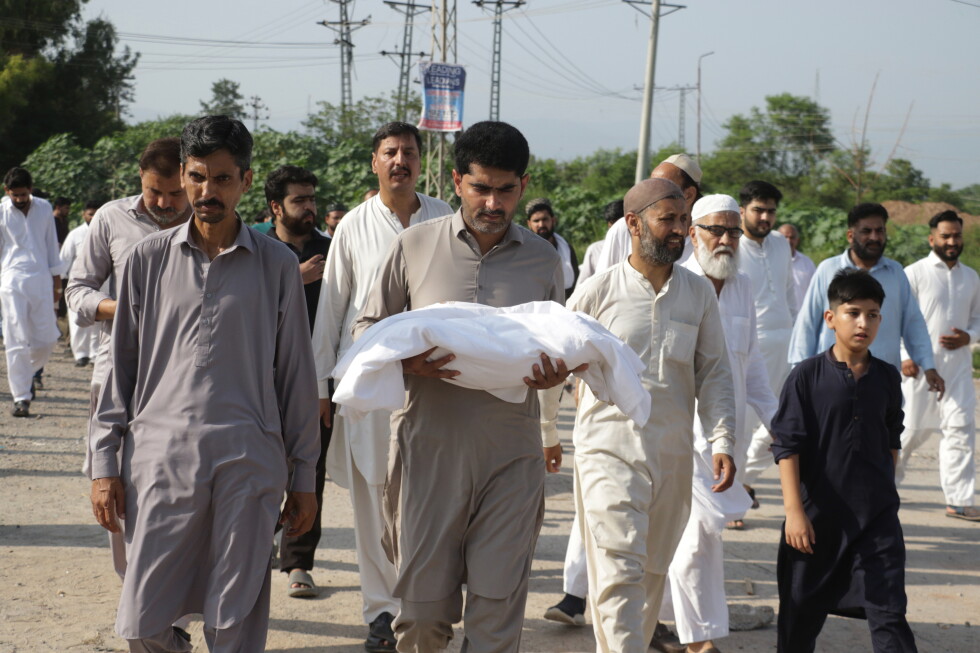
    Speaking at Sam’s funeral on Saturday, the grieving father described how the Israeli unit withdrew immediately after the shooting and left the scene without any explanation or attempt to assist. “The car was completely stationary when he shot at us, it wasn’t moving at all. A 7 months old infant killed in cold blood. He didn’t deserve this,” he said. He has demanded full accountability for the killing, stating he will not abandon his fight for justice. “I demand and expect, if there is any conscience, any law, any morality, that the soldier who fired the shots will be held accountable for his actions. This case must not be closed without an investigation and without accountability. At the very least, I do not intend to give up,” he added.

    In response to inquiries about the incident, an Israeli military spokesperson only stated that “the incident is under review.” This vague update comes amid a stark backdrop of rising violence in the West Bank: the United Nations reported last month that Israeli forces and settlers have killed more than 1,000 Palestinians in the West Bank and East Jerusalem since the start of the Gaza conflict in October 2023, at least 240 of whom are children.

    Widespread impunity for these killings is well documented by Israeli human rights groups. Yesh Din, an Israeli organization tracking military misconduct, found that between 2016 and 2024, fewer than 1 percent of 2,427 complaints of Palestinian abuse against Israeli soldiers resulted in indictments. Few service members ever face punishment for violent acts against Palestinian civilians, a pattern that has fueled ongoing anger across the occupied territories.

  • Messi sits out Argentina’s friendly against Honduras while managing muscle fatigue, hamstring strain

    Messi sits out Argentina’s friendly against Honduras while managing muscle fatigue, hamstring strain

    COLLEGE STATION, Texas — As the 2026 FIFA World Cup rapidly approaches, Argentine soccer legend Lionel Messi was forced to watch his team’s pre-tournament friendly against Honduras from the Kyle Field sideline on Saturday night, sidelined by ongoing management of muscle fatigue and a mild left hamstring strain. The 38-year-old, who will celebrate his 39th birthday just three weeks from the match, did complete warm-up routines alongside his teammates on the Texas A&M University campus before taking up a spot on the bench for the full 90 minutes. He was a spectator as his side secured a solid 2-0 win over the Central American side.

    The Argentine Football Association has noted that Messi’s recovery timeline will be adjusted based on his ongoing clinical improvement and functional progress as he works to regain full fitness ahead of the World Cup. This friendly against Honduras marked the second-to-last warm-up match for the reigning World Cup champions, who will wrap up their pre-tournament preparation with a matchup against Iceland in Auburn, Alabama this coming Tuesday. Following that final tune-up contest, the squad will return to training in Kansas City to finalize their game plans before the tournament kicks off.

    Messi’s hamstring issue first drew attention earlier this week, when he arrived late to team training sessions in Kansas City. Instead of joining full squad drills, the star forward completed individualized conditioning work separate from the rest of his teammates to avoid exacerbating the minor injury.

    This summer’s World Cup is widely expected to be Messi’s final appearance in international soccer, closing out a record-breaking career with the Argentine national team. He already holds the all-time record for the most matches played in World Cup history, with 26 appearances to his name. He is also just four goals away from breaking another iconic World Cup record: Miroslav Klose of Germany’s all-time mark of 16 World Cup goals. Argentina will open its 2026 World Cup title defense against Algeria on June 16 at Kansas City’s Arrowhead Stadium.