The 2026 FIFA World Cup, set to kick off across North America, is poised to make history as the largest and most expansive edition of men’s soccer’s flagship tournament ever staged. Marking the first major format shift since 1998, this iteration has expanded the participating field from the long-standing 32 teams to 48, spread across three co-host nations: the United States, Canada and Mexico. Over a 39-day competition window, a record 104 matches will take place across 16 purpose-selected stadiums, redefining the scale of the global sporting event.
This historic expansion has reshaped the tournament’s structure: the group stage now includes four additional groups, and a new 32-team knockout round has been added to the competition schedule. The 1998 World Cup marked the last expansion, which grew the field from 24 to 32 teams – a format that remained in place for seven consecutive tournaments. This 2026 edition is also only the second time the World Cup has been hosted by multiple countries, following the co-hosting arrangement between Japan and South Korea in 2002.
The distribution of matches across the three North American nations reflects the host countries’ varying sizes and infrastructure. The United States will host the vast majority of fixtures, with 78 matches across 11 different host cities. The U.S. campaign opens on June 12 in the Los Angeles area, where the American men’s national team will face Paraguay. All knockout fixtures from the quarterfinals onward will take place on U.S. soil, with the World Cup final scheduled to be held at MetLife Stadium in New Jersey. Both Mexico and Canada will each host 13 matches, including three knockout round fixtures apiece. Mexico’s tournament gets underway on June 11 in Mexico City, with the host nation facing South Africa in the competition’s opening match, while Canada kicks off its campaign on June 12 in Toronto against Bosnia-Herzegovina.
Beyond the tournament structure, a wealth of new historic milestones and record-breaking stats will define this 2026 edition. Overall, 1,248 players from 48 national rosters will take the pitch, drawn from 449 domestic clubs across 71 nations. Of that group, just 357 have prior World Cup experience, meaning 891 players will make their World Cup debuts this year. When sorted by club league, England’s Premier League leads all competitions with 200 of its players featuring on national rosters, followed by Germany’s Bundesliga with 109, and Ligue 1 (France) and La Liga (Spain) tied at 86 apiece. Major League Soccer (MLS) will set a new participation record, with 44 active MLS players set to compete, while 103 total rostered players have prior experience in the North American league. At the club level, England’s Manchester City tops the rankings, sending a record 19 players to the tournament, followed by Bayern Munich (18), Paris Saint-Germain and Arsenal (16 each), and Barcelona (15).
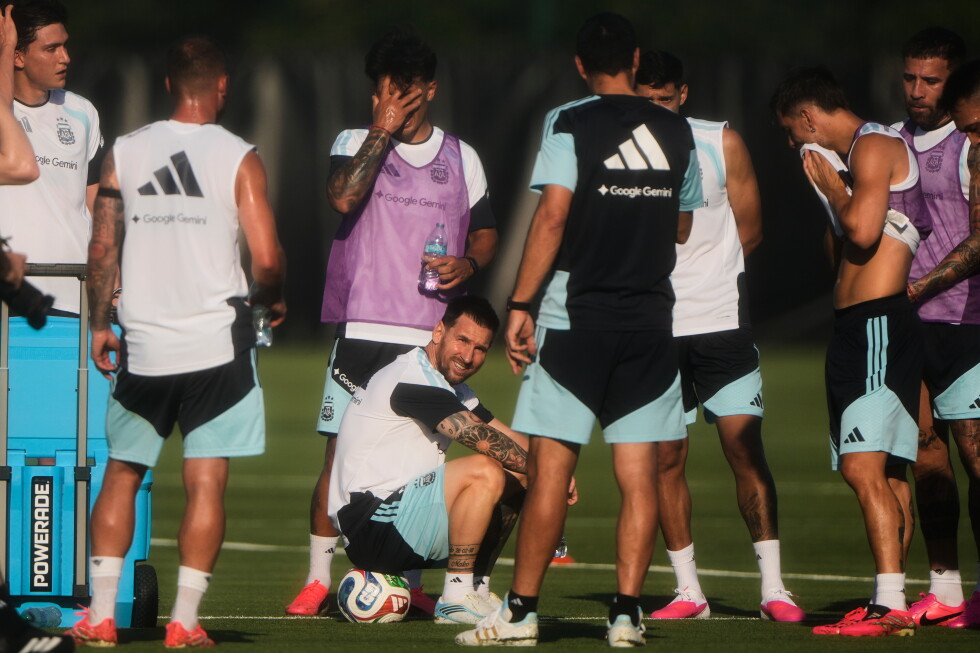
Several of the sport’s biggest global legends are set to add to their already historic World Cup legacies. Portugal’s Cristiano Ronaldo enters the tournament with 226 international caps – more than any other men’s player in history – and will join Argentina’s Lionel Messi as only the second player to compete in six different World Cups. Ronaldo already holds the unique record of scoring in five separate World Cup tournaments, with eight career goals across 22 matches. Messi holds the record for the most career World Cup appearances (26), and needs just two more caps to join the elite club of men’s players with 200 or more international appearances, a group that already includes Kuwait’s Bader Al-Mutawa. Mexico’s iconic goalkeeper Guillermo Ochoa will also be named to a sixth World Cup roster, though he did not feature in matches during the 2006 and 2010 tournaments.
The all-time World Cup goal scoring record, held by Germany’s Miroslav Klose at 16 career goals, is under threat this year. Messi enters the 2026 tournament with 13 career World Cup goals, trailing only Klose, Brazil’s Ronaldo (15) and Gerd Müller (14). France’s star forward Kylian Mbappé is also well within striking distance, having already notched 12 goals across the 2018 and 2022 tournaments.
Looking at historical team context, only eight nations in the 96-year history of the World Cup have ever lifted the trophy, and just six of those have won multiple titles. Brazil leads all countries with five championships, and the only first-time winners in the last 11 editions have been France (1998) and Spain (2010). Only two nations have ever successfully defended their World Cup title: Brazil won back-to-back trophies in 1958 and 1962, and Italy repeated as champions in 1934 and 1938. Three other defending champions have reached the final, most recently France in 2022, which fell to Argentina. Six defending champions have failed to advance out of the group stage, including three of the last four tournaments. France, which won in 2018 and reached the final in 2022, will attempt to become just the third nation in history to reach three consecutive World Cup finals, a feat only previously achieved by West Germany (1982, 1986, 1990) and Brazil (1994, 1998, 2002).
Brazil also holds another unbroken record: it is the only nation to have qualified for every World Cup since the inaugural tournament in 1930, spanning 23 editions total. The Brazilians also lead all competitors in total World Cup wins (76), total goals scored (237), and overall goal differential (+129). Germany ranks second in all three categories, with 21 appearances, 232 goals and a +102 goal differential, counting 10 tournament appearances as West Germany prior to reunification. This year, four nations will make their World Cup debuts: Cape Verde, Curaçao, Jordan and Uzbekistan. Their participation pushes the all-time total of nations that have competed in the World Cup to 84.
In terms of historical struggling, Egypt enters the 2026 tournament having played seven World Cup matches without ever recording a win, holding a 0-5-2 all-time record. The North African side will get a chance to break that drought when they face Belgium on June 15. The only nation with more winless World Cup matches is Honduras, which failed to qualify for the 2026 tournament.
For overall goal scoring, the 22 prior World Cups have combined for 2,720 goals across 964 matches. With 40 additional matches added in this expanded format, the single-tournament goal record of 172, set at the 2022 Qatar World Cup, is almost certain to be broken. However, the 1954 tournament’s record of 5.38 combined goals per game is expected to remain intact. The 2026 tournament also boasts the largest age gap between its oldest and youngest player in history, spanning more than 25 years. Scotland’s goalkeeper Craig Gordon will be 43 years and 162 days old on tournament opening day, while Mexico’s teen prospect Gilbert Mora will be just 17 years and 240 days old.