作者: admin

  • Japanese rugby officials roll back restrictions on some foreign-born players

    Japanese rugby officials roll back restrictions on some foreign-born players

    TOKYO — In a turning point that resolves a high-profile standoff over player eligibility rules, Japan Rugby League One officials announced Friday a legal settlement that reverses proposed restrictions on naturalized Japanese rugby players born outside the country.

    The controversy emerged earlier this year when league officials drafted new eligibility rules set to take effect ahead of the upcoming season kicking off in December. Under the original proposal, players holding Japanese passports who were born overseas and did not complete their childhood education in Japan would have been placed in a restricted eligibility category, limiting their ability to compete as full members of top-tier squads.

    The rule change drew immediate pushback from 24 affected players, all of whom hold Japanese citizenship but were born outside Japan. The group filed a lawsuit against the league in a Japanese court to block the policy, counting among their ranks Timothy Lafaele — a star player who represented Japan in the 2019 Rugby World Cup hosted on home soil.

    Following out-of-court negotiations, the league confirmed in an official statement Friday that it would revise the contested eligibility requirements. Per the new terms, any player who obtains Japanese citizenship on or before the end of May 2025 will be granted the same full eligibility status as players born in Japan, eliminating the proposed tiered categorization for naturalized athletes. The statement confirmed a settlement had been reached in the ongoing court case but did not release further details on the terms of the agreement.

    The debate over rugby eligibility comes amid a broader national conversation about immigration in Japan, where Prime Minister Sanae Takaichi has pushed for stricter immigration policies amid public anxiety. Many Japanese citizens have linked slow wage growth and rising living costs to an increase in foreign workers brought in to offset labor shortages driven by Japan’s decades-long population decline and shrinking working-age population.

    Globally, it is common for international and domestic sports governing bodies to adjust eligibility rules, whether to gain a competitive advantage on the pitch or to drive commercial growth for leagues. Rule changes that reshape athlete eligibility often face fierce pushback, however, particularly when critics argue the changes risk sidelining domestic, locally developed players.

    League officials had initially defended the proposed restrictions, arguing that limiting opportunities for foreign-born naturalized players would help nurture and expand the shrinking pool of Japan-born athletes emerging through domestic development pathways.

  • ‘High risk’ of lake breaching and causing second flood, warns China

    ‘High risk’ of lake breaching and causing second flood, warns China

    A new and urgent threat has emerged along the Nepal-Tibet border just days after a catastrophic glacial collapse triggered a deadly flash flood, with Chinese authorities warning that a newly formed barrier lake faces a “high risk” of bursting its natural debris dam and unleashing a second catastrophic downstream deluge. The new water body formed upstream from the site of Wednesday’s deadly flood, which glaciologists and disaster researchers confirm was sparked when a large section of a mountain glacier near Langtang Lirung peak broke free and crashed into a river below.

    As of Friday morning, state broadcaster CCTV reports that approximately 2.5 million cubic meters of water have already collected behind the debris dam that created the barrier lake – a natural water formation that occurs when landslide or glacial debris blocks a river channel. Officials added that an additional 3 million cubic meters of water is projected to flow into the lake between Thursday and the end of the weekend, pushing the structure far past its capacity and creating extreme conditions for a potential breach. The Chinese Ministry of Water Resources confirmed that the lake, located at the intersection of the Chhochen Khola and Purepu Tsangpo rivers, has already begun overflowing its dam, and the region has been battered by unseasonably heavy rainfall that is worsening the already unstable situation.

    In response to the unfolding emergency, authorities have deployed specialized engineering teams to conduct round-the-clock monitoring of water levels, geological stability, and local atmospheric conditions. However, access to the high-risk site remains severely limited. Friday morning’s CCTV report noted that the bulk of Chinese emergency response teams are currently stranded roughly seven kilometers from Gyirong Port, the critical overland border crossing between China and Nepal that was heavily damaged in Wednesday’s flood. The ongoing non-stop overflow of the barrier lake has created immediate risks of new flash floods and debris flows, forcing officials to temporarily pause all search and rescue operations for victims of the initial disaster across the border region.

    The barrier lake sits in the same high-altitude region as Langtang Lirung, the mountain where the original glacial collapse originated, and is located several kilometers upstream from the damaged Gyirong Port. In a separate warning issued in Kathmandu, Nepali authorities have also flagged growing risks of additional flooding along the Bhote Koshi and Trishuli rivers, where new debris blockages could form and trigger sudden surges. Officials have urged all residents and visitors in river basins across the region to stay clear of waterways until further official notice that the threat has passed.

    The initial flash flood on Wednesday has already left a devastating toll across the region. Hundreds of people have been confirmed dead in Nepal, with hundreds more still unaccounted for. On the Tibetan side of the border alone, more than 550 people remain missing, nearly half of whom are foreign nationals. Scientists have emphasized that the glacial collapse that triggered this disaster is consistent with growing risks of glacial outburst floods across the Himalayan region, as rising global temperatures destabilize high-altitude ice formations. Chinese state media has also released aerial footage of the newly formed barrier lake to document the ongoing emergency for the public.

  • Tanker pays record $5.3 mn to transit Panama Canal: administrator

    Tanker pays record $5.3 mn to transit Panama Canal: administrator

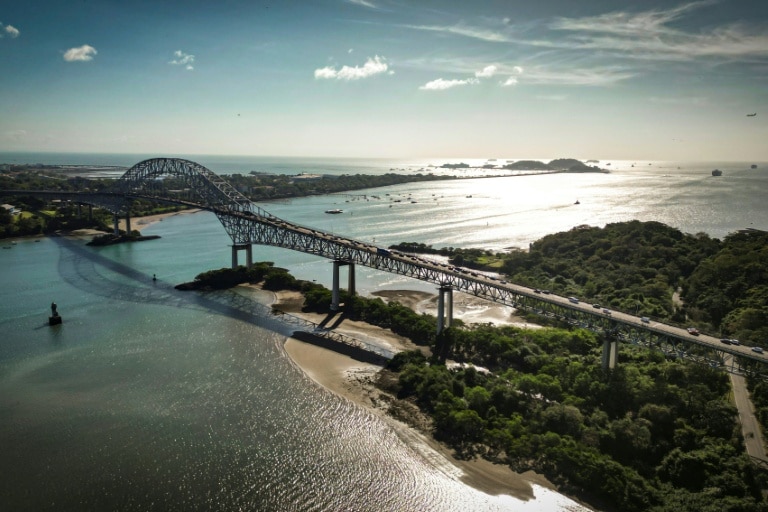
    As a crippling drought driven by the El Niño weather pattern pushes the Panama Canal to implement sweeping capacity cuts, a South Korean energy firm has made global shipping history by paying a record-breaking $5.3 million to secure priority passage for its liquefied petroleum gas (LPG) tanker, the waterway’s leadership confirmed Thursday.

    Ilya Espino de Marotta, deputy administrator of the Panama Canal Authority, shared the details of the unprecedented transaction with Agence France-Presse. The vessel in question, the G. Spirit, is owned by SK Gas, a leading energy company based in South Korea. It completed its transit through the key interoceanic shipping lane on September 1, just two days before new El Niño-related restrictions on daily transits went into effect, Bloomberg reporting confirms.

    The crisis at the Panama Canal comes amid a regional dry spell amplified by El Niño, the cyclical weather phenomenon that warms surface waters across the central and eastern equatorial Pacific, triggering disruptive shifts in global wind and rainfall patterns. This year, El Niño has also helped push global average temperatures to what is on track to be the hottest year ever recorded. On Tuesday, Panama joined a growing list of Central American nations to declare a national emergency over the climate-driven impacts of El Niño, which have sent water levels in the canal plummeting to critically low levels.

    As one of the world’s most vital maritime chokepoints, the Panama Canal accommodates roughly 5% of total global maritime trade, connecting the Atlantic and Pacific Oceans and cutting thousands of miles off travel times for cargo vessels traveling between the two basins. To conserve dwindling water supplies amid the drought, canal authorities have implemented a phased reduction in daily transit capacity: starting September 3, the maximum number of daily vessel transits dropped from 32 to 34, with a further cut to 32 daily transits scheduled for later this month.

    Most vessels reserve transit slots through the canal weeks or months in advance, with unbooked vessels currently facing an average five-day wait to pass through. For shippers in a hurry to move time-sensitive or high-value cargo, however, the canal authority runs a last-minute auction system for priority slots that would otherwise go unfilled. The average winning bid for these auction slots between October 2023 and February 2024 was just under $55,000, a fraction of the record price paid this week.

    This historic transaction marks the second time in months that a high-priced priority transit has made headlines. Back in April, a liquefied natural gas (LNG) carrier paid $4 million to skip the waiting line, as heightened energy demand spurred by the Middle East conflict created urgency for moving vital fossil fuel cargoes through the waterway. The sharply rising cost of priority transits underscores the growing pressure on global supply chains as climate-driven extreme weather disrupts key shipping infrastructure around the world.

  • In Nigeria’s troubled north, a bustling nightlife lives with a morality police and insecurity

    In Nigeria’s troubled north, a bustling nightlife lives with a morality police and insecurity

    In the heart of one of northern Nigeria’s most socially conservative regions, a surprising cultural shift is unfolding. Multicolored strobe lights cut through the dark of Sokoto’s club streets, as crowds of excited partygoers stream into venues, ready to sing along to booming Afrobeats and dance into the early morning hours. This lively nightlife scene defies every outside expectation of a state long known as the “seat of the caliphate,” a historic center of Islamic propagation across West and Central Africa, bound by strict religious moral codes, patrolled by morality police, and shaken by persistent jihadi insurgent attacks.

    As a DJ adjusted his equipment ahead of the night’s set and staff arranged premium liquor bottles across club tables, regular reveler Vincent Tabat joined the influx of guests entering one of Sokoto’s handful of popular venues. By nearly 2 a.m., when most of the city has quieted for the night, crowds still gathered outside the club, ready to join the fun. Tabat spent the night dancing to the loud bass alongside friends, refilling drinks as the party stretched on.

    Sokoto’s growing nightlife scene stands in direct tension with the region’s governing religious enforcement body: the Hisbah, an Islamic police force tasked with upholding Shariah and local public morality rules across 19 northern Nigerian states. Hisbah patrols regularly conduct raids on venues suspected of violating rules, including alcohol bans, strict dress codes, and restrictions on social gatherings, with seized alcohol often destroyed publicly. Even so, partygoers across the city refuse to give up their weekend outings.

    For frequent visitor Benjamin Danjuma, weekend trips to Sokoto’s small collection of bars and clubs are non-negotiable. For him and his friend group, the Sokoto nightlife experience matches exactly the lively party scenes found in Nigeria’s more liberal southern states. “We are living our life more than anybody’s expectation in this state,” Danjuma explained. “There is so much groove going on. We are not left behind.”

    Cultural observers note that this shift marks a major break from decades past, when nightlife and public partying were widely considered taboo across conservative northern Nigerian society. Oluwamayowa Idowu, founder of leading Lagos-based culture publication Culture Custodian, explained that amid widespread insecurity and crippling economic hardship across the region, nightlife serves a critical purpose: it offers residents a much-needed escape from daily stress and trauma. “The north has been ravaged by insecurity, but people still live there, and people still participate in life there daily,” Idowu noted.

    The coexistence of strict religious enforcement and thriving nightlife also lays bare the deep religious and social divides that shape modern Nigeria. The country’s population is almost evenly split between Christians, who primarily reside in the south, and Muslims, who make up the majority of the north’s population. Tabat and Danjuma, both non-Muslims, say they do not feel bound by Hisbah’s rules, though they acknowledge they have had confrontations with the force during raids. Non-Muslim residents across northern Nigeria have long been caught up in Hisbah’s enforcement activities, which the group frames as a necessary measure to uphold public morality.

    The legal status of Shariah enforcement in northern Nigeria has remained unresolved for decades. After Nigeria returned to democratic rule in 1999, multiple northern states moved to adopt formal Shariah legal frameworks, opening deep fault lines in the country’s system of federalism and its founding identity as a secular state. The question has never been fully resolved by Nigeria’s Supreme Court, leaving it an open legal conflict that successive federal and state governments have declined to address through formal legal channels.

    Hisbah has faced repeated accusations of excessive force and human rights abuses from activists and residents. In Sokoto, the force was first disbanded in 2017 following widespread public outcry over alleged high-handed enforcement tactics, only to be reestablished in early 2024. Since its return, the Sokoto Hisbah has announced a series of strict new statewide bans, including a prohibition on DJs at public and private events, restrictions on “inappropriate” haircuts, limits on extravagant bridal gifts, and a ban on playing music on public transport. Hisbah officers have also been repeatedly accused of subjecting alleged offenders to cruel, dehumanizing punishments including public beatings and public shaming.

    Fu’ad Lawal, executive director of Lagos-based digital historical archive Archivi.ng, argues that the formal adoption of Hisbah-led Shariah enforcement has fundamentally reshaped the meaning of Nigeria’s secular federalism. “When it (Shariah) became a law, it basically extended (beyond) criminal law and, perhaps more consequential, led to the regulation of public life,” Lawal explained.

    For their part, Hisbah leaders push back on criticism, saying the force’s only goal is to uphold “peace and stability through moral justice” and that it is not “enforcing Sharia law per se.” “Every citizen needs to fulfill his or her moral obligation,” Usman Abdullahi Jatau, commander of the Sokoto State Hisbah, told the Associated Press.

    To avoid open conflict, Sokoto’s nightlife venues have worked to maintain a delicate balance between religious social norms and the desire for public celebration. The nightclub where Tabat partied, for example, posts a clear ban on face veils and turns away any women attempting to enter wearing the garments, which are required in most public spaces across the city. This small rule helps preserve the fragile coexistence of strict religious life and after-hours entertainment.

    Analysts warn that rigid social codes can add additional strain to a society already grappling with years of violent extremist attacks and instability. But for many residents and transplants, the growing nightlife scene signals a quiet evolution of Sokoto’s cultural identity. Ibrahim Nuhu, a banker who moved to Sokoto from the more cosmopolitan Plateau state, has watched the city shift from a quiet, drab social scene to a lively weekend destination. Though he initially worried about leaving his former cosmopolitan lifestyle behind, Nuhu says he has come to love Sokoto’s growing nightlife. “People see Sokoto from outside; I see it from the inside,” he said.


  • Sydney’s southwest hit by 3.4 magnitude earthquake leaving homes shaking

    Sydney’s southwest hit by 3.4 magnitude earthquake leaving homes shaking

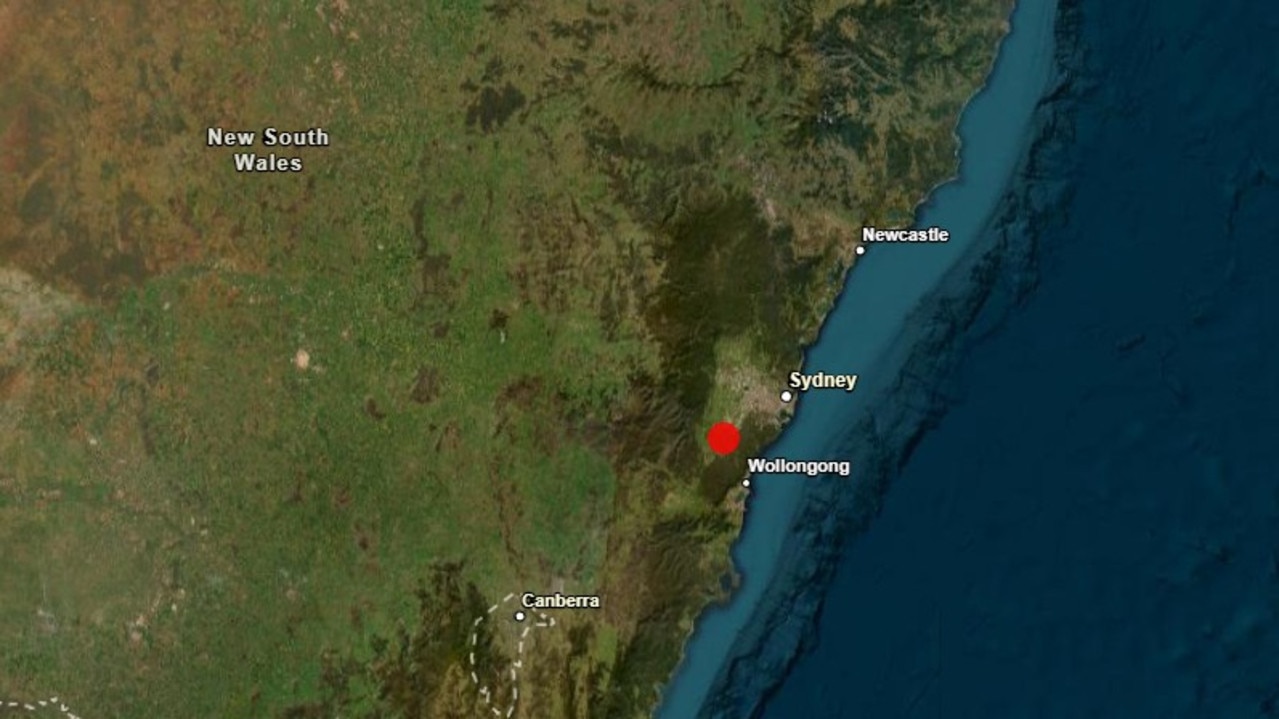
    On a Friday afternoon in mid-Australia’s New South Wales, a shallow 3.4 magnitude earthquake sent tremors through southwestern Sydney, leaving local residents startled but no structural damage reported. Geoscience Australia confirmed the tremor struck just after 1 p.m. local Australian Eastern Standard Time, with its epicenter located roughly three kilometers underground near the small communities of Douglas Park and Appin, around 50 kilometers southwest of Sydney’s central business district. By late Friday afternoon, close to 400 area residents had filed self-reported experience of the quake through the official government geoscience portal, with many describing sudden, unexpected shaking that mirrored the impact of a vehicle collision or strong gust of wind against residential structures. Security camera footage from a private residence in Menangle Park, later shared publicly by 7News, captured the exact moment the quake hit, showing visible rattling of the property’s interior fixtures. David Baker, a local resident who documents outdoor camping trips on his personal Facebook page, was relaxing in his fifth-floor Campbelltown apartment when the tremor began. “I’ve never felt anything quite like it before,” Baker recalled of the 10-second event. “It felt like the whole block of units was shaking. My wife immediately realized it was an earthquake. Thankfully, nothing in the unit was damaged, but it was definitely quite a shock.” Other locals took to social media to share their jarring experiences, with one user writing, “I thought someone crashed into my front room, everything shook.” Another added, “I felt like a big gust of wind shook my house and realized there was no wind at all.” Geoscience Australia notes that minor magnitude earthquakes are not uncommon in parts of eastern Australia, though large, destructive events are rare in the Sydney region.

  • A theater is reimagining Homer’s Odyssey through the agony of Ukraine’s war

    A theater is reimagining Homer’s Odyssey through the agony of Ukraine’s war

    Against the persistent rumble of distant conflict and the ever-present threat of Russian air strikes, Kyiv is preparing to stage a radical, deeply personal reimagining of Homer’s ancient *Odyssey* that weaves Ukraine’s ongoing wartime struggle into the 3,000-year-old epic. Titled *Odysseus, Maeotis*, the new production hits the stage of Kyiv’s Ivan Franko National Academic Drama Theater at a moment when Homer’s classic is already enjoying a global cultural spotlight, buoyed by Christopher Nolan’s big-budget IMAX blockbuster *The Odyssey* starring Matt Damon, a box office hit that has introduced the ancient tale to new international audiences.

    Unlike Hollywood’s big-screen adaptation, however, this Ukrainian production draws its raw material directly from the front lines of the ongoing war. Its cast blends professional performers with active-duty Ukrainian soldiers, with the lead role of Odysseus, the warrior king desperate to return home after a decade of conflict, played by Daniil Mireshkin, a serving member of Ukraine’s 1st Corps Azov. For Mireshkin, the fusion of ancient myth and modern Ukrainian reality creates unflinching, vital parallels to the issues defining his country today.

    “This combination of myth and modernity allows us to draw parallels and understand just how critical the question of return is: the return of military personnel to civilian life, the return of our territories and the return of ourselves to our true identity as Ukrainians,” Mireshkin explained in an interview with the Associated Press following a final rehearsal Tuesday. The play’s premiere has already been pushed back multiple times, delayed by successive waves of Russian attacks on Kyiv – a disruption that itself mirrors the endless, uncertain waiting the story explores.

    “This story helps us talk about these topics, which, as it turns out, haven’t lost any of their relevance,” Mireshkin added.

    The production strips Homer’s original text to its core narrative bones, retaining only the central arc of Odysseus’s long, punishing journey home and his wife Penelope’s equally grueling wait in Ithaca. Director Ivan Uryvskyi said the play was written entirely from scratch, reworking the epic’s timeless themes of return, exile and captivity to fit Ukraine’s current reality.

    “Of course, very little of Homer’s original text remains here, because the play was written from scratch. We simply took the core narrative arc — Odysseus’ return home,” Uryvskyi said.

    Even the play’s title carries layered modern meaning: Maeotis is the ancient Greek name for the Sea of Azov, the body of water off Ukraine’s southern coast that was once considered the edge of the known ancient world. The Sea of Azov is home to Mariupol, the devastated port city that fell to Russian forces after a devastating 2022 siege, and the production draws heavily on firsthand accounts from Azov brigade defenders who held the city. Today, around 600 Azov brigade servicemen remain held as prisoners of war in Russian captivity, out of thousands of Ukrainian captives.

    Playwright Oleksii Dorychevskyi, also a member of 1st Corps Azov, spent a year conducting interviews with former Ukrainian prisoners of war to build the play’s narrative. For Daryna Leheida, the professional actress who plays Penelope, Odysseus’s faithful wife, the ancient queen’s decades-long wait for her husband mirrors the lived experience of millions of Ukrainian women today.

    “It’s about the fate of Ukrainian women who wait, believe and hope, but who can also feel powerless, hopeless and stripped of faith,” Leheida said. Beyond the fates of individual soldiers and their families, the story extends to the land itself: “It’s about the temporarily occupied land waiting to come back home. It’s about the children and people who are waiting, what we face during this waiting and the toll that war takes on us.”

    The staging reflects the bleak uncertainty of wartime Ukraine, with a deliberately austere, unsettling design. Against a darkened set accented by glowing neon light bars, projections are cast directly onto the performers’ bodies. Homer’s iconic mythical monsters – the one-eyed Cyclops, the deadly enchanting sirens – have been replaced by modern symbols of war: buzzing drones that glide across the stage and scale models of robotic killing machines, turning ancient dangers into the threats that Ukrainians face every day.

  • World shares mostly gain after upbeat results for Nvidia and other tech giants lift US stocks

    World shares mostly gain after upbeat results for Nvidia and other tech giants lift US stocks

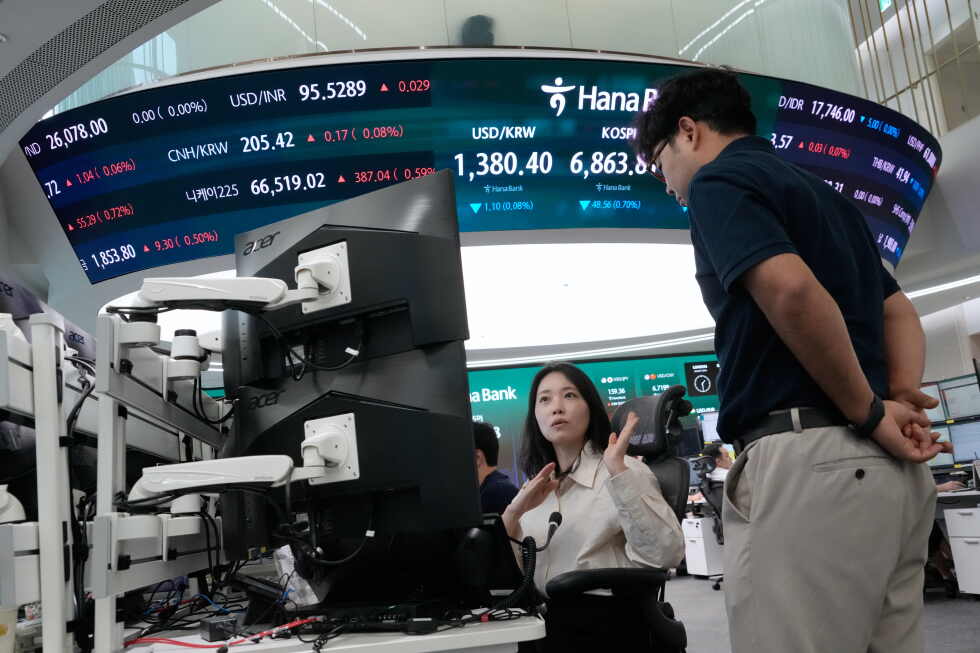
    Global equity markets mostly climbed through Friday’s early trading sessions, building on a tech-driven rally from Wall Street triggered by blowout quarterly results from AI powerhouse Nvidia. The upward momentum carried across most major European and Asian benchmarks, even as some individual markets bucked the trend and investors braced for upcoming commentary from the U.S. Federal Reserve.

    In early European trading, Germany’s benchmark DAX index gained 0.6% to close the early session at 26,523.10, while France’s CAC 40 notched a stronger 1.1% increase to 8,408.72. The UK’s FTSE 100 posted a more modest 0.2% uptick, reaching 10,815.07. Futures for U.S. indexes signaled a muted opening ahead: S&P 500 futures slipped 0.1%, while Dow Jones Industrial Average futures edged 0.2% higher.

    Across Asian markets, the picture was mixed. South Korea’s Kospi emerged as the region’s sharpest decliner, dropping 1.8% to 6,788.88. Mainland China’s Shanghai Composite also fell slightly, shedding 0.1% to 3,952.18. By contrast, Japan’s Nikkei 225 added 0.4% to hit 66,405.56, Hong Kong’s Hang Seng gained 0.2% to 25,584.79, and Australia’s S&P/ASX 200 rose 0.6% to 9,092.30. Taiwan’s Taiex index surged 0.8%, while India’s Sensex posted a 0.2% gain.

    The market uptick originated on Wall Street Thursday, when the S&P 500 climbed 0.7% to move within striking distance of its all-time high set earlier in August. The Dow added 0.2% on the day, while the Nasdaq composite jumped 1.6% — gains driven almost entirely by a surge in technology stocks fueled by AI demand.

    Nvidia, the global leader in AI-optimized semiconductors, led the charge with an 8.7% rally after the firm reported second-quarter profit and revenue that far outpaced Wall Street analyst forecasts. The company also released upcoming revenue projections that topped consensus estimates, confirming that robust demand for chips powering AI development projects shows no signs of slowing. “AI has reached its inflection point,” Nvidia CEO Jensen Huang said in commentary following the release. “It’s doing useful work. Its tokens are productive and profitable.”

    The strong results helped ease mounting investor anxiety that AI stocks had become overvalued after years of rapid gains fueled by AI hype. In recent weeks, the sector has faced growing skepticism that valuations have outpaced actual profit potential, and that demand for AI chips could cool if the AI revolution fails to deliver on outsized growth promises. Nvidia’s strong performance helped allay those fears for the moment.

    Another major tech firm, enterprise software leader Salesforce, also posted a historic gain, jumping 22.6% — its best single-day performance in six years. The company reported one of its strongest quarters in history, driven by AI-driven growth, raised its full-year revenue forecast, and announced an expanded partnership to integrate AI startup Anthropic’s Claude chatbot into its customer data management platform. The results eased prior concerns that AI-native competitors could siphon customers away from established enterprise software providers like Salesforce.

    Not all U.S. stocks joined the rally, however: a majority of S&P 500 constituents ended the trading day lower. Big box retailer Best Buy dropped 4.4%, even though the company beat analyst forecasts for both profit and revenue in its latest quarter, as persistent worries about consumer spending power amid ongoing high inflation kept investor sentiment muted. Discounters turned in a mixed performance: Dollar General gained 2.5% after beating profit estimates, as analysts predict dollar chains could gain market share from cash-strapped higher-income households seeking more affordable shopping options. By contrast, rival Dollar Tree fell 3.9% despite topping profit expectations.

    In the bond market, Treasury yields moved slightly higher after a new report on weekly unemployment benefit applications confirmed the U.S. labor market remains resilient, a key factor the Federal Reserve considers when setting monetary policy. In currency markets, the U.S. dollar edged up to 159.56 Japanese yen from 159.39 yen, while the euro slipped marginally to $1.1648 from $1.1652.

    Oil prices, a key wild card for global inflation forecasts, have see-sawed in recent sessions amid ongoing uncertainty over conflict in Iran and the resumption of unimpeded commercial shipping through the Strait of Hormuz, a critical chokepoint for global oil supplies. On Friday, international benchmark Brent crude fell 0.4% to $88.13 per barrel, a pullback after the price rose 1.8% in the prior session. U.S. benchmark West Texas Intermediate crude fell 0.6% to $83.08 per barrel.

    All eyes are now turning to a highly anticipated speech scheduled for later Friday from Federal Reserve Chairman Kevin Warsh. Despite growing market pressure for clearer guidance on future U.S. monetary policy, Warsh has signaled he will continue the Fed’s recent approach of providing limited clues to markets about the central bank’s plans for managing inflation.

  • Nylastex Tooling bosses in court over worker’s death in landmark Adelaide case

    Nylastex Tooling bosses in court over worker’s death in landmark Adelaide case

    South Australia has made legal history with its first-ever industrial manslaughter prosecution, stemming from the tragic 2024 death of a 28-year-old worker at a local manufacturing facility. The fatal incident unfolded on July 24 at Nylastex Tooling’s Edwardstown plant, where Lachlan Carslake was operating milling machinery when he was reportedly struck in the head by a loose metal object. He was rushed to a nearby hospital, where he later succumbed to his severe injuries.

    Four defendants — company owners Graham and Winifred Philips, along with two linked entities Nylastex Tooling and Nylastex Holding — are facing the most serious charges in the case: counts of industrial manslaughter and recklessly exposing an employee to lethal risk. A third individual, Nylastex Tooling manager Graham Rowe, has been charged with two lesser offenses: failing to fulfill mandatory workplace health and safety obligations, and knowingly exposing a worker to the risk of death.

    The case made its first official appearance at Adelaide Magistrates Court on Friday. During the brief preliminary hearing, all defendants stood together in the dock and were not required to enter pleas or make statements to the court. Prosecutors confirmed that all compiled evidence files had already been handed over to the defense legal teams, after which the judge adjourned the proceeding. None of the defendants addressed reporters from the media as they exited the courthouse.

    This prosecution marks a watershed moment for South Australia’s workplace safety regulations. The charges were brought by SafeWorkSA under a recent amendment to the state’s Occupational Health and Safety Act, which formally added industrial manslaughter as an indictable offense carrying stiff penalties. Convicted individuals face a maximum prison sentence of 20 years, while companies found guilty of reckless or grossly negligent conduct leading to a worker’s death can be fined up to 18 million Australian dollars. The case is scheduled to return to court for further proceedings in October.

  • ‘Find your own room’: Japan says can’t handle added Asian Games numbers

    ‘Find your own room’: Japan says can’t handle added Asian Games numbers

    Just one month out from the opening of the 2026 Asian Games in central Japan, local organizers are facing an unprecedented accommodation and budget crisis that has forced them to issue an extraordinary mandate: any extra participants added after initial planning will have to source and pay for their own lodging. The multi-sport continental event is scheduled to run from September 19 to October 4 across Nagoya city and the wider Aichi Prefecture region, bringing together thousands of athletes and officials from across Asia.

    When the host city agreement was first signed, both the local organizing committee and the Olympic Council of Asia (OCA), the governing body of the continental Games, agreed on a maximum cap of 15,000 total participants including athletes and team officials. That number was already larger than the typical delegation size for a Summer Olympic Games, putting early strain on local planning resources. But last week, the OCA updated the projected participant count to 17,000, splitting the total into 11,000 competing athletes and 6,000 accredited officials, a jump of 2,000 people that organizers say they cannot absorb.

    To cut down on infrastructure costs that have ballooned for large international multi-sport events in recent decades, Japanese organizers opted against building a purpose-built permanent athletes’ village, a common cost-saving strategy for smaller host regions. Instead, they designed a distributed accommodation model that relies on three separate sources: a chartered international cruise ship, repurposed temporary shipping container-style wooden huts, and pre-booked blocks at commercial hotels across the region, with some even booked in Tokyo for athletes competing in the city’s hosted events of swimming, diving and equestrian. Under this model, 4,000 to 5,000 athletes will be housed on the chartered Italian cruise ship Costa Serena, while 2,000 additional participants will stay in the temporary container huts, and the remaining will occupy the pre-booked hotel blocks.

    The increase in participants stems from a decision by the OCA back in March to add two new sports to the 2026 Asian Games program: teqball, a fast-growing tabletop football hybrid sport, and padel, a popular racket sport that blends elements of tennis and squash. While the additions expand the scope of the Games to include increasingly popular emerging sports, they have directly led to the unexpected growth in delegation sizes that caught local organizers off guard.

    In press comments this week, Hideaki Omura, president of the local organizing committee and governor of Aichi Prefecture, made clear that the organizing body has neither the extra manpower, available space, nor allocated budget to accommodate the 2,000 extra participants. “The host city agreement specifies a delegation of 15,000 people,” Omura said. “We have not set aside a budget for any more than that. There is simply nowhere for them to stay.”

    Local organizers confirmed this week that they have formally requested the OCA adjust and reduce the projected participant number to align with the original agreed cap. But for any delegations that still choose to send extra participants beyond the initial cap, Omura said, the requirement is clear: “If they still wish to come, they will have to make their own arrangements.”

    Nagoya Mayor Ichiro Hirosawa, acting chairman of the local organizing committee, echoed Omura’s comments in a Wednesday briefing, noting that both time constraints and limited physical capacity make accommodating the extra numbers impossible. “From a cost perspective we are operating on a tight budget and it is difficult,” Hirosawa added.

    Agence France-Presse has repeatedly reached out to the OCA for comment on the dispute, but as of Thursday, no response from the Olympic Council of Asia has been made public.

  • US, South Korea and Japan to hold trilateral drill as North Korea ramps up pressure on US

    US, South Korea and Japan to hold trilateral drill as North Korea ramps up pressure on US

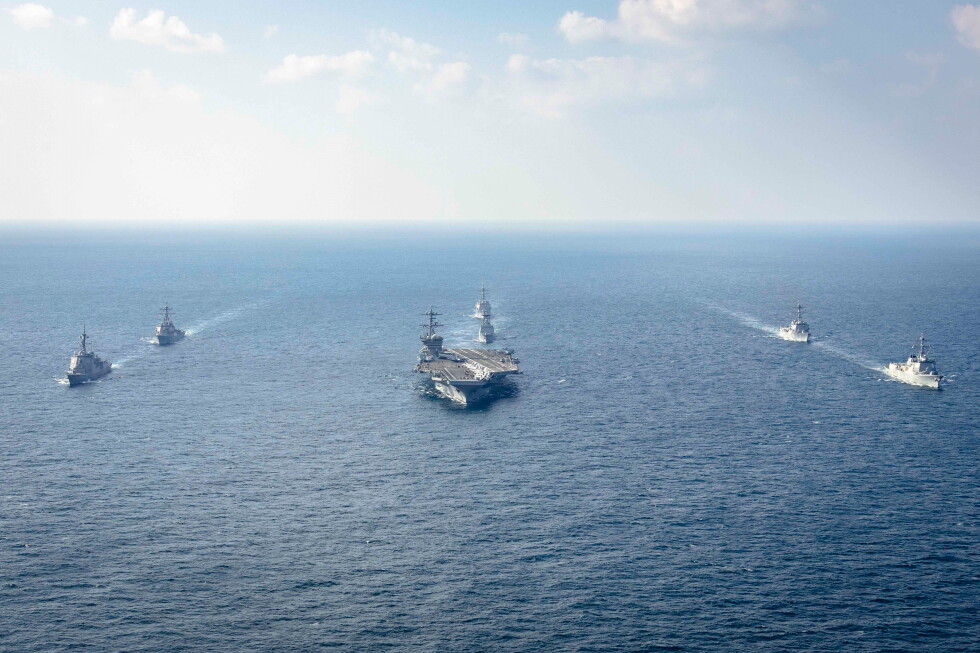
    In the wake of fresh North Korean threats of retaliation against perceived U.S. aggression, senior South Korean government officials confirmed Friday that the United States, South Korea, and Japan will move forward with a planned trilateral military exercise next month, aimed at strengthening collective defense capabilities against Pyongyang’s growing nuclear and missile threats. This development has significantly dampened hopes that diplomatic negotiations between North Korea and the United States could resume in the near term, even after former U.S. President Donald Trump took a seemingly conciliatory step by ordering a major cutback to the long-standing bilateral military exercise between Washington and Seoul.

    South Korea’s Defense Ministry announced in an official statement that the five-day “Freedom Edge” exercise will kick off September 7 in international waters off the southern Korean island of Jeju. Military officials emphasize that the drill is strictly defensive in its purpose, designed to sharpen coordinated responses to North Korean nuclear and missile provocations while upholding peace and stability across the Northeast Asian region. Launched in 2024, the Freedom Edge drill integrates simultaneous air and naval operations to upgrade allied capabilities in key strategic areas including joint ballistic missile defense, anti-submarine warfare, and cross-border surveillance coordination.

    North Korea has long condemned this trilateral exercise as a reckless, confrontational demonstration of military power. Pyongyang has further claimed that the drill also serves a hidden U.S. agenda: to encircle China and exert strategic pressure on Russia amid current global geopolitical shifts. Just one day before South Korea’s confirmation of the drill, Pyongyang issued a new vow to retaliate against what it frames as unrelenting U.S. hostile actions. On Thursday, North Korea’s Foreign Ministry reiterated that accusation, pointing to a planned U.S. sale of air-to-air missiles and associated military equipment to South Korea as a fresh example of aggression, warning that Pyongyang would deliver a “serious, immediate and powerful response” to such hostile moves across multiple domains.

    This latest escalation comes on the heels of a scaled-back bilateral exercise between the U.S. and South Korea. Last week, Washington and Seoul cut their annual Ulchi Freedom Shield exercise six days short of its scheduled conclusion, following Trump’s order to substantially reduce the scope of drills that North Korea has long decried as a rehearsal for a full-scale invasion of the country. Trump justified the cutback by citing his positive personal relationship with North Korean leader Kim Jong Un, framing the move as a goodwill gesture to open the door for renewed diplomacy.

    However, Pyongyang rejected the overture outright, arguing that simply shortening the drill does nothing to alter its “provocative, aggressive nature.” In a direct show of defiance, North Korea launched roughly 10 short-range ballistic missiles into the sea, carrying out a threat it had issued earlier to respond to the bilateral exercise.

    Since the collapse of the first round of U.S.-North Korea diplomatic talks in 2019, Kim Jong Un has systematically expanded North Korea’s nuclear arsenal, deepened the country’s strategic alignment with Russia amid its ongoing war in Ukraine, and strengthened both his military and diplomatic standing globally. Regional security experts note that Kim now holds far greater leverage in any potential negotiations, and is likely to demand major concessions from Washington: formal international recognition of North Korea as a legitimate nuclear weapons state, and full relief from crippling international economic sanctions, in exchange for only partial rolling back of Pyongyang’s nuclear program. Pyongyang has repeatedly stated it will not return to diplomatic talks until the U.S. drops its insistence on North Korean denuclearization as a precondition for negotiations.