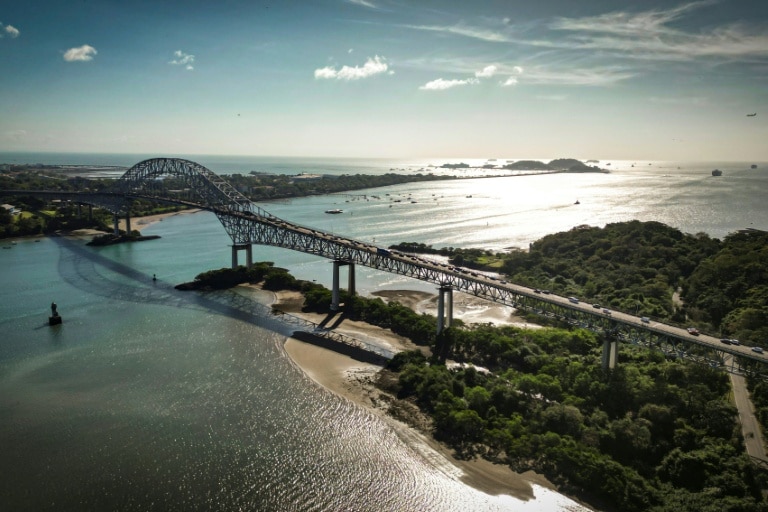
As a crippling drought driven by the El Niño weather pattern pushes the Panama Canal to implement sweeping capacity cuts, a South Korean energy firm has made global shipping history by paying a record-breaking $5.3 million to secure priority passage for its liquefied petroleum gas (LPG) tanker, the waterway’s leadership confirmed Thursday.
Ilya Espino de Marotta, deputy administrator of the Panama Canal Authority, shared the details of the unprecedented transaction with Agence France-Presse. The vessel in question, the G. Spirit, is owned by SK Gas, a leading energy company based in South Korea. It completed its transit through the key interoceanic shipping lane on September 1, just two days before new El Niño-related restrictions on daily transits went into effect, Bloomberg reporting confirms.
The crisis at the Panama Canal comes amid a regional dry spell amplified by El Niño, the cyclical weather phenomenon that warms surface waters across the central and eastern equatorial Pacific, triggering disruptive shifts in global wind and rainfall patterns. This year, El Niño has also helped push global average temperatures to what is on track to be the hottest year ever recorded. On Tuesday, Panama joined a growing list of Central American nations to declare a national emergency over the climate-driven impacts of El Niño, which have sent water levels in the canal plummeting to critically low levels.
As one of the world’s most vital maritime chokepoints, the Panama Canal accommodates roughly 5% of total global maritime trade, connecting the Atlantic and Pacific Oceans and cutting thousands of miles off travel times for cargo vessels traveling between the two basins. To conserve dwindling water supplies amid the drought, canal authorities have implemented a phased reduction in daily transit capacity: starting September 3, the maximum number of daily vessel transits dropped from 32 to 34, with a further cut to 32 daily transits scheduled for later this month.
Most vessels reserve transit slots through the canal weeks or months in advance, with unbooked vessels currently facing an average five-day wait to pass through. For shippers in a hurry to move time-sensitive or high-value cargo, however, the canal authority runs a last-minute auction system for priority slots that would otherwise go unfilled. The average winning bid for these auction slots between October 2023 and February 2024 was just under $55,000, a fraction of the record price paid this week.
This historic transaction marks the second time in months that a high-priced priority transit has made headlines. Back in April, a liquefied natural gas (LNG) carrier paid $4 million to skip the waiting line, as heightened energy demand spurred by the Middle East conflict created urgency for moving vital fossil fuel cargoes through the waterway. The sharply rising cost of priority transits underscores the growing pressure on global supply chains as climate-driven extreme weather disrupts key shipping infrastructure around the world.