作者: admin

  • Israel, Iran trade fire for first time since truce

    Israel, Iran trade fire for first time since truce

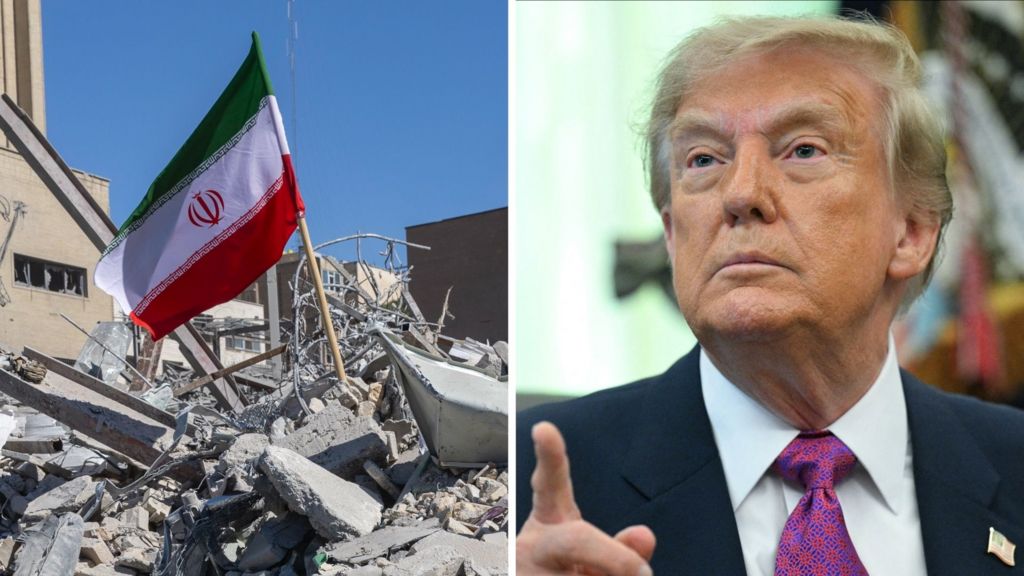
    After two months of a fragile ceasefire that held across the Middle East, fresh violence has erupted between Israel and Iran, marking the first direct exchange of attacks since the truce took hold in April and throwing long-running diplomatic efforts to end the regional war into severe jeopardy. The escalation, which has already drawn in other regional actors and sent global energy markets swinging upward, unfolded against a backdrop of mounting tensions sparked by an Israeli airstrike on Beirut’s southern Dahiyeh district, a stronghold of the Iran-backed militant group Hezbollah.

    The sequence of violence began on Sunday, when the office of Israeli Prime Minister Benjamin Netanyahu confirmed the Israeli military had targeted a militant command center in the Beirut suburb, in retaliation for a earlier missile and drone attack by Hezbollah on two Israeli army barracks along the northern border. Lebanon’s national health ministry reported the strike left two people dead and another 20 injured, triggering immediate condemnation and a vow of revenge from Iran.

    Shortly after, Iran’s Islamic Revolutionary Guard Corps launched a wave of missiles at two key Israeli air bases, Nevatim Air Base and Tel Nof Air Base, framing the strike as a justified response to what it called “Zionist regime aggression.” The Israeli military announced it had launched counter-strikes against Iranian defense installations located across multiple regions of Iran, saying it had successfully dismantled key defensive capabilities. Air raid sirens wailed across Israeli cities from Jerusalem to Netanya, with AFP correspondents in the region reporting repeated explosions as Israeli defense systems worked to intercept incoming Iranian missiles. As of Monday, no casualties have been reported on either side of the exchange.

    The conflict quickly expanded to other parts of the region: Yemen’s Iran-aligned Houthi movement announced its own missile attack on Israel — the first such strike since early April — and reimposed a total ban on Israeli shipping transiting the Red Sea, reviving the threat of widespread disruption to one of the world’s busiest and most economically critical maritime trade routes. The strike that hit an Iranian petrochemical complex in the exchange also compounded existing energy market jitters.

    Iran has directly blamed the United States for enabling the resumption of hostilities, arguing that Israel would not launch any major military action without prior American coordination. “No one believes that the Zionist regime would carry out any action without prior coordination and cooperation with the United States,” Iranian Foreign Ministry spokesman Esmaeil Baqaei told reporters in Tehran during a press conference attended by AFP. “It is perfectly natural that the diplomatic process initiated to put an end to this imposed war would be affected.” Even so, Baqaei confirmed that diplomatic consultations would continue despite the renewed fighting. Iran’s parliament speaker and chief nuclear negotiator with Washington, Mohammad Bagher Ghalibaf, went further, saying the U.S. had given a “green light” for the Beirut strike and declaring all American and Israeli assets around the world to be legitimate military targets.

    The renewed violence came as the U.S. continued efforts to push both sides toward a permanent peace deal, more than three months after the regional war erupted from joint U.S.-Israeli strikes on Iran in late February. U.S. President Donald Trump, who has repeatedly pushed for a negotiated end to the conflict, issued an urgent call for restraint from both sides. In an interview with the Financial Times, Trump pushed back against suggestions that Netanyahu set the pace of policy, saying “I call the shots. I call all the shots. He doesn’t call the shots.” Speaking to Fox News later, he urged Iran to de-escalate, saying “What I would suggest to Iran: You’ve shot your missiles, that’s enough, get back to the table and make a deal.”

    Global powers have widely called for an immediate de-escalation. European Union High Representative for Foreign Affairs Kaja Kallas urged both sides to set aside hostilities and return to negotiations. China also issued a statement calling for restraint, with foreign ministry spokesman Lin Jian noting that “resuming hostilities is not in any party’s interest.”

    For ordinary Iranians, the return of open conflict has compounded weeks of economic and personal uncertainty, already worsened by Iran’s ongoing blockade of the Strait of Hormuz — the critical global chokepoint for 20% of the world’s daily oil trade — that has driven up prices across the country. The fresh outbreak of fighting sent global crude prices surging more than 5% on Monday, as investors priced in the growing risk that the Strait of Hormuz will remain closed indefinitely. “I really have gone numb,” 32-year-old fitness trainer Elaheh from the southwestern Iranian city of Ahvaz told AFP. “Daily life? It’s a joke. Everything is horrible. We only try to survive,” she said, pointing to skyrocketing living costs.

    Even amid the fighting, limited diplomatic activity continues. Over the weekend, Pakistan’s Interior Minister Mohsin Naqvi traveled to Tehran to deliver what he described as a “special letter” to Iran’s Supreme Leader, according to Iranian state media. A Pakistani official confirmed Naqvi has since returned to Islamabad, and Iran says diplomatic consultations mediated by Pakistan are continuing even as open hostilities resume with Israel.

  • Eriksen ‘doing well’ and expected to leave the hospital after on-field collapse, Denmark team says

    Eriksen ‘doing well’ and expected to leave the hospital after on-field collapse, Denmark team says

    ODENSE, Denmark — Less than 24 hours after experiencing a second on-field collapse during an international friendly against Ukraine, Danish star midfielder Christian Eriksen is recovering well and on track to be released from hospital imminently, according to the Danish men’s national football team’s chief physician.

    The 34-year-old veteran collapsed to the turf in the 65th minute of Sunday’s match hosted in Odense, after grabbing his chest with both hands while not in possession of the ball. Contrary to initial concerns sparked by his 2021 life-threatening incident, Eriksen was able to leave the pitch unassisted following on-site evaluation from medical teams, the Danish Football Association confirmed after the final whistle. He was transferred to Odense University Hospital for further observation and diagnostic testing.

    In an official health update shared Monday morning, Denmark team physician Morten Boesen shared encouraging news about Eriksen’s condition. “I spoke with Christian this morning, and he is doing well,” Boesen said in the statement. “He is with his family and is in good spirits. The expectation is that he will be discharged soon and can return home.” Boesen added that the football association is prioritizing support for all players and staff connected to the incident, maintaining regular check-ins with the group.

    This collapse marks the second time Eriksen has been taken to hospital after falling unconscious during a match, three and a half years after his widely publicized cardiac arrest during Denmark’s opening group stage match at UEFA Euro 2020. Following that 2021 incident, Eriksen received an implantable cardioverter defibrillator to regulate his heart rhythm. In a remarkable comeback, he returned to top-flight professional football less than a year after the near-fatal event.

    Currently, Eriksen plies his trade with German Bundesliga side VfL Wolfsburg, where he is under contract through the 2026-27 season. Denmark failed to secure qualification for the upcoming 2026 FIFA World Cup, ending the nation’s campaign early ahead of this summer’s tournament in North America.

  • At least 19 dead after major earthquake strikes southern Philippines

    At least 19 dead after major earthquake strikes southern Philippines

    A powerful magnitude 7.8 earthquake that hit off the coast of Mindanao island in the southern Philippines has left at least 19 people dead and more than 130 injured, according to initial local official reports. The deadly seismic event struck at 7:37 a.m. local time on Monday, equal to 23:37 GMT on Sunday, sending shockwaves across the region and prompting emergency tsunami warnings across four nations: the Philippines, Indonesia, Japan, and Australia. Most of these alerts were lifted within hours of the initial quake.

    Visual documentation circulating on social media and shared by local outlets captured the devastating force of the quake, showing multiple structures reduced to rubble. One widely circulated clip shows a local Jollibee fast-food outlet in a southern Philippine city completely crumbled, a striking image that has underscored the quake’s destructive power. Initial casualty counts, compiled by local authorities, list injuries across three hard-hit provinces — South Cotabato, Sultan Kudarat, and Sarangani — as well as General Santos city, the major urban center closest to the quake’s epicenter. These preliminary numbers are still undergoing formal verification by the National Disaster Risk Reduction and Management Council (NDRRMC), the national body that formalizes disaster casualty statistics by aggregating data from police, local governments, and relief organizations, a process that typically takes roughly 24 hours to complete.

    In the immediate aftermath of the disaster, Philippine President Ferdinand Marcos Jr. issued a public statement confirming that national government agencies were coordinating a unified disaster response. “The national government is moving and we will not leave Mindanao behind,” Marcos assured the public. The quake coincided with the first day of the new Philippine school year, prompting Marcos to order an immediate suspension of classes across all affected regions. Footage from a primary school in Davao Occidental province captured the terrifying experience of students during the quake: dozens of children can be seen crouching on open ground as the earth shook beneath them, while a corrugated metal shelter collapsed behind the group. The school later confirmed that no students or staff were injured in the incident.

    As of Tuesday morning, more than 130 aftershocks have been recorded across the region, with magnitudes ranging from a minor 1.3 up to a significant 6.7. In Sarangani, the coastal province closest to the epicenter, the initial quake knocked out power grids and mobile communication networks for several hours, though services have since been restored for most residents.

    General Santos, the largest city near the quake’s origin, holds two major claims to fame: it is widely known as the tuna capital of the Philippines, and it is also the hometown of legendary world boxing champion turned politician Manny Pacquiao.

    The Philippines lies along the Pacific Ring of Fire, a geologically active region where seismic activity is extremely common. While most seismic events in the country are minor and cause little to no damage, large deadly quakes are a recurring hazard. In September 2023, a magnitude 6.9 quake struck the central Visayas region, killing more than 70 people.

    Immediately after the Monday quake, Japanese authorities issued an urgent warning for potential one-meter tsunami waves along the country’s coasts. By later Monday, only minor waves had been recorded: a small surge of a few centimeters hit southern Okinawa prefecture, and a 20-centimeter wave was measured in the distant Ogasawara Islands. Minor tsunami surges, ranging from a few centimeters to 1.4 meters, were also recorded along coastlines of Indonesia, Palau, and the Philippines.

  • Manav Suthar picks up 6-33 on debut as India enforces follow-on against Afghanistan

    Manav Suthar picks up 6-33 on debut as India enforces follow-on against Afghanistan

    On Monday, a historic debut performance from young Indian spinner Manav Suthar stole the spotlight in the one-off Test match between India and Afghanistan held in New Chandigarh, as the 22-year-old turned in a sensational 6 wickets for just 33 runs to bundle the Afghan side out for a total of 152 runs in their first innings.

    Suthar’s spell not only announced his arrival on the international Test stage but also carved his name into Indian cricket’s record books. His figures mark the second-best bowling performance by an Indian on Test debut, falling only behind Narendra Hirwani’s iconic 8 wickets for 61 runs against the West Indies back in 1988. He also became just the second Indian slow bowler to claim a five-wicket haul in his maiden Test innings, a feat last achieved by Amit Mishra, who took 5 for 71 against Australia in 2008.

    The day’s play built on India’s already dominant position in the match, after the home side declared their first innings at 564 for 8, earning a massive 412-run first innings lead that allowed them to enforce the follow-on on Afghanistan. When play resumed for the third day’s lunch break, Afghanistan had navigated four overs of their second innings without losing a wicket, reaching 18 for 0, with opening batter Sediqullah Atal not out on 16 and Abdul Malik yet to get off the mark, holding on at 2 not out.

    Monday’s first session had begun with Afghanistan resuming their first innings at 113 for 5, still five wickets away from being all out. Just five overs into the day, India seamer Prasidh Krishna broke the resistance, knocking over Azmatullah Omarzai’s stumps to claim his third wicket of the innings, finishing with final figures of 3 for 37.

    That wicket opened the door for Suthar’s match-winning spell. The young spinner picked up two key wickets across two consecutive overs: he had Sharafuddin Ashraf caught behind the wicket for 11, before clean bowling Rahmat Shah through the gap between bat and pads. Shah, who top-scored for Afghanistan, put up a valiant 60 runs from 135 deliveries, decorated with nine fours and one six.

    Suthar continued to dismantle the Afghan lower order, with the final five wickets of the innings falling for just 39 runs to wrap up the innings quickly. This one-off Test is just the second meeting between the two sides in the longest format of the game. Afghanistan’s inaugural Test match back in 2018 was also hosted by India in Bengaluru, where the home side secured a dominant innings and 262-run victory, setting the stage for India’s another commanding showing in this latest encounter.

  • Armenian Prime Minister Nikol Pashinyan claims victory following general election

    Armenian Prime Minister Nikol Pashinyan claims victory following general election

    In the early hours of Monday, Armenian Prime Minister Nikol Pashinyan declared victory in the country’s snap general election, after official preliminary results confirmed his ruling Civil Contract Party secured a dominant first-place finish with 49.81% of the popular vote. The outcome of Sunday’s vote is widely viewed as a defining mandate for Pashinyan’s proposed new geopolitical trajectory for Armenia, a small South Caucasus former Soviet republic that has increasingly sought to distance itself from long-standing ally Moscow and advance its membership aspirations with the European Union.

    Preliminary data from Armenia’s Central Election Commission shows that three opposition blocs crossed the 4% vote threshold required to secure seats in the new national parliament. The runner-up position went to the Strong Armenia bloc, led by imprisoned billionaire Samvel Karapetyan, who captured 23.29% of the vote. Karapetyan, who amassed his business fortune in Russia, is currently under house arrest on charges of plotting to overthrow the sitting government — allegations he has repeatedly dismissed as a politically motivated fabrication targeting his opposition. His bloc’s platform centers on rebuilding and expanding deep economic and political ties with Russia, and it has openly accused Pashinyan of reckless actions that risk triggering direct conflict with the Kremlin.

    Two smaller parties also won parliamentary representation: the pro-Russia Armenia bloc took 9.94% of the vote, while Blossoming Armenia secured exactly the 4% threshold needed to enter the legislature. Final official data put overall voter turnout at 59.97%, a correction from an earlier erroneous report that incorrectly cited a 97% turnout figure.

    Speaking to reporters at his campaign headquarters shortly before official results were confirmed, Pashinyan asserted his party had secured a historic landslide win and planned to form a single-party majority government without needing to enter a coalition with opposition groups.

    The election outcome drew immediate congratulatory responses from top European Union leaders, who frame the contest as a critical litmus test for Russian influence across the post-Soviet space. European Commission President Ursula von der Leyen highlighted the enduring legacy of Pashinyan’s 2018 Velvet Revolution, the mass protest movement he led that ousted long-time pro-Russian leader Serzh Sargsyan. In a public social media statement Monday, von der Leyen said, “The spirit of the Velvet Revolution you led in 2018 is alive and well. We deeply value our partnership with a democratic Armenia that is drawing ever closer to Europe. Armenia can count on us.”

    European Council President António Costa also extended his congratulations, emphasizing the EU’s growing strategic interest in the South Caucasus, a region that connects European energy markets to vast fossil fuel reserves in Central Asia. “Together, the EU and Armenia are building stronger links between people and creating new opportunities in energy, trade, and digitalization. Our strong partnership is an investment in a more peaceful and prosperous future for the region as a whole,” Costa wrote in a post on the social platform X.

    The result comes amid mounting pressure from Moscow on Yerevan, with the Moscow-led Eurasian Economic Union previously threatening to suspend Armenia’s membership over its push to deepen ties with Brussels. The election confirms a clear popular mandate for Pashinyan’s pro-Western shift, setting the stage for new geopolitical realignment in the volatile South Caucasus region.

  • Swiss healthcare united against immigration cap plan

    Swiss healthcare united against immigration cap plan

    As 80-year-old Marcelle Mivelaz marked her birthday surrounded by loved ones at a Cheseaux-sur-Lausanne nursing home in western Switzerland, the smooth running of her celebration and daily care at the facility depended entirely on a team made up mostly of immigrant nurses and caregivers. This small, personal scene reflects a widespread reality across Switzerland’s entire healthcare system: decades of chronic domestic staffing shortages have left the sector deeply dependent on foreign workers, a dependence that has placed it at the heart of a fierce national debate ahead of the June 14 popular vote on a strict immigration cap proposal.

    The initiative, dubbed “No to a Switzerland with 10 million!”, was put forward by the hard-right Swiss People’s Party (SVP). It aims to cap the Alpine nation’s total population — which currently stands at 9.1 million — below 10 million through 2050 by drastically cutting annual immigration levels. While the proposal has drawn broad opposition from the federal government, national parliament, and most major business groups, recent public opinion polls indicate the outcome of the vote remains too close to call, leaving the healthcare sector bracing for a potential devastating outcome.

    For many on the ground at care facilities across the country, the risk of the cap passing is an immediate threat to patient safety. Carine Savioz, a native Swiss nurse working at the Cheseaux-sur-Lausanne nursing home, told AFP that a steep drop in new immigrant caregivers would push the entire national healthcare system toward collapse. “If there aren’t enough caregivers, our healthcare system is headed for disaster,” she said. Her warning was echoed by 81-year-old resident Marie-Therese Barraz, who added: “We must have respect for the people who care for nursing home residents.”

    The scale of the sector’s reliance on foreign labor is stark. Christian Weiler, director of the Primeroche Foundation that operates the Cheseaux-sur-Lausanne facility and cares for 360 patients across multiple sites, revealed that nearly 80 percent of his 240 total employees are foreign nationals. Weiler noted that the foundation already cannot meet existing demand for care: 240 elderly people are currently on waiting lists for nursing home spots in the Lausanne region alone. If the immigration cap passes and cuts off the supply of new workers, the foundation will not be able to expand capacity to meet that need, he warned, triggering a ripple effect across the entire health system.

    “If there aren’t enough places, they’ll go to the hospital,” Weiler explained. “And when hospitals are full of elderly people, they won’t be able to fulfil their role, and the system will become very problematic” as Switzerland’s population continues to age. This assessment is shared by the Swiss federal government, which has publicly warned that the proposal “threatens the proper functioning of society” by leaving hospitals and nursing homes unable to deliver the same level of care to sick and elderly patients that the public expects.

    The SVP has pushed back against these warnings, arguing that the cap will not cripple healthcare. Party leaders say the initiative still allows up to 40,000 new immigrants to enter the country each year, and they are calling for expanded training programs to increase the number of native Swiss healthcare workers. SVP parliamentarian Thomas Blasi, an independent pharmacist based in Geneva, also argued that overreliance on foreign workers has actually harmed young Swiss health graduates. “Despite the urgent need for healthcare staff, our young graduates cannot find employment because we prefer to rely on foreign workers,” he claimed.

    But healthcare leaders and sector representatives reject that argument, pointing to persistent data showing a chronic shortage of domestic candidates for open roles. The demanding nature of care work and relatively uncompetitive salaries have long discouraged many Swiss nationals from entering the field, they say, leaving foreign workers to fill the gap. A broad alliance of major healthcare groups — including the Swiss National Association of Hospitals and Clinics and the Swiss Nurses’ Association — has formed a dedicated committee to campaign against the proposal, which they have labeled the SVP’s “chaos initiative” that directly endangers patient lives.

    The committee warns that understaffing from an immigration cap would force facilities to rely on underqualified personnel, leading to a measurable increase in mortality risk, particularly for patients in emergency care settings. Official data from the Swiss Medical Association (FMH) backs up the sector’s claims of structural dependence on foreign-trained workers: 43 percent of all practicing doctors in Switzerland are trained abroad, and that share continues to grow each year. FMH vice-president Philippe Eggimann told Swiss newspaper Le Temps that Swiss universities only graduate between 1,200 and 1,300 new medical professionals each year, while the system needs 3,500 to 4,000 new doctors annually to meet demand.

    “The country remains far from being able to ensure the replenishment of its medical workforce on its own,” the FMH concluded. That gap is just as stark for nursing roles. At Geneva University Hospitals (HUG), one of the country’s largest public health systems, nursing director Sandra Merkli explained that the facility needs to hire 200 to 300 new nurses every year, but the local canton’s medical school only graduates 150 to 160 new nursing candidates annually. As of 2025, nearly half of HUG’s 13,000 total employees are foreign nationals: the share hits 60 percent for nursing staff, and 45 percent for physicians, reflecting a nationwide trend that leaves the sector scrambling ahead of the upcoming vote.

  • Rare footage captured of Great White shark in Mediterranean Sea

    Rare footage captured of Great White shark in Mediterranean Sea

    In a remarkable and unexpected encounter that has marine biologists buzzing, a volunteer diver has shared unprecedented footage of an endangered great white shark spotted in the Mediterranean Sea, between the coastlines of Tunisia and Sicily. The diver, who asked not to be named, recalled experiencing intense shaking as he came face-to-face with the massive predator, an encounter that most divers only ever dream of. Great white sharks are rarely documented in this part of the Mediterranean, making the new footage a significant contribution to marine ecological research. Sightings of the species have dropped sharply across the globe in recent decades due to overfishing, habitat degradation, and accidental bycatch, leading to their classification as an endangered species by major conservation organizations. Marine researchers say this rare documentation offers a critical new clue about the species’ range and potential habitats in the Mediterranean, a body of water that has long been understudied when it comes to large predatory sharks. Conservation teams are now hopeful that this sighting will highlight the need for stronger protections for marine biodiversity in the region, and help scientists better understand how endangered shark populations are adapting to changing ocean conditions.

  • Hong Kong proposes to let city leader decide what counts as national security offense

    Hong Kong proposes to let city leader decide what counts as national security offense

    HONG KONG – The Hong Kong Special Administrative Region government tabled new subsidiary legislation to the city’s legislature on Monday, introducing a formal mechanism that lets the city’s chief executive label specific criminal acts as national security offenses. The move marks the latest step in the regional government’s ongoing efforts to strengthen national security frameworks in the Asian financial hub, a process that has drawn sharp scrutiny from critics who argue it is accelerating the erosion of long-held civil liberties.

    This new legislative proposal comes in the wake of two major national security measures already enacted in the city. First, after large-scale pro-democracy protests upended daily life in Hong Kong in 2019, the central Chinese government in Beijing implemented a sweeping national security law that has been used to detain dozens of high-profile pro-democracy activists. Most recently, in 2024, the Hong Kong government passed a second standalone security law targeting offenses including espionage and unlawful disclosure of state secrets.

    Critics of these existing frameworks argue that the two laws have effectively gutted the Western-style civil liberties that Beijing agreed to preserve under the handover agreement when the former British colony returned to Chinese rule in 1997. But regional authorities have repeatedly pushed back against this criticism, maintaining that robust national security legislation is a non-negotiable foundation for the city’s long-term political and social stability.

    In the official document submitted to the Legislative Council on Monday, the Hong Kong Security Bureau and Department of Justice laid out the details of the new subsidiary legislation, which aims to formalize and codify the classification process for what the existing legal framework labels “other offenses endangering national security.”

    Under the proposed rules, if the chief executive issues an official certificate confirming that a given criminal act in a pending case involves national security interests, that case will automatically be classified as a national security offense. The proposal also specifies that if a suspect faces both a primary national security charge and an alternative secondary charge stemming from the same actions, the alternative charge will also be categorized as an offense endangering national security.

    Officials emphasized in the document that amid today’s increasingly complex global geopolitical environment, national security threats remain a persistent risk for Hong Kong. Codifying this classification mechanism through subsidiary legislation, they argued, will strengthen both the legal framework and enforcement infrastructure that Hong Kong relies on to protect national security.

    The authorities added that the new legislation is designed solely to refine procedural details and add greater clarity and predictability to the implementation of existing national security provisions. Crucially, officials stressed that the subsidiary legislation does not create any new criminal offenses, introduce harsher penalties, or grant new enforcement powers to authorities.

    The Hong Kong government has called for the legislative process to be completed as soon as possible, noting that the final text of the proposal will be adjusted to incorporate feedback from sitting legislators before it is finalized. Once approved, the legislation will go into effect immediately on the day it is published in the Hong Kong government gazette.

  • As Ukraine fights off Russia’s invasion, some regions see a rise in premature births

    As Ukraine fights off Russia’s invasion, some regions see a rise in premature births

    In the frontline-adjacent Ukrainian city of Zaporizhzhia, Marharyta Nekhoroshyva knows all too well the dual terror of raising a child in a war zone. When her son Mark was born at just 26 weeks gestation, weighing a mere 940 grams, Nekhoroshyva — a self-described non-believer — found herself praying desperately for his survival. Now nine months old, Mark is active, but he lives with chronic respiratory conditions that require frequent hospitalizations. What makes her struggle even heavier is that she bears it alone: her husband is on the front lines fighting Russian forces, and Russian missile and glide bomb strikes are a constant threat that has left local hospitals boarding up windows to mitigate blast damage.

    Mark’s story is far from unique. Three years into Russia’s full-scale invasion of Ukraine, official United Nations data and independent scientific research have confirmed a stark, alarming trend: while the total number of births across Ukraine has fallen sharply due to mass displacement, wartime emigration and economic uncertainty, the share of babies born prematurely (before 37 weeks of pregnancy) has jumped dramatically, almost doubling in some of the regions closest to active combat.

    Data compiled by the U.N. tracks the sharp escalation across hard-hit regions: in southern Ukraine’s Kherson, where frontline combat and regular strikes on civilian infrastructure have devastated communities, the preterm birth rate climbed from 5.4% in pre-war 2019 to 9.8% in 2025. In neighboring Zaporizhzhia, another frontline southern region, the rate rose from 5.7% to 7.6% over the same period. Even in Poltava, a northeastern region further from active ground combat but regularly targeted by Russian airstrikes, the rate grew from 7.7% to 9.8% between 2019 and 2025.

    Medical experts explain that while multiple factors contribute to preterm birth, the unrelenting psychological and physical stress of living through a full-scale invasion is a key driver of this upward trend. Dr. Andrew Weeks, a professor of international maternal healthcare at the University of Liverpool, notes that existing research has long linked prolonged psychological strain to elevated preterm birth risk, particularly because stress can increase vulnerability to infections — a well-documented trigger for premature labor. Access to timely, appropriate diagnosis and treatment for these infections is often severely limited in war zones, further pushing up risk. Beyond premature births, the U.N. Population Fund has also recorded increases in emergency cesarean sections and other life-threatening pregnancy complications across Ukraine. Isaac Hurskin, a spokesperson for the fund, says the data makes the connection clear: acute wartime stress directly correlates to poor pregnancy outcomes.

    This public health crisis risks deepening Ukraine’s already severe demographic crisis. Hurskin notes that Ukraine’s national fertility rate has plummeted to roughly one child per woman, one of the lowest rates in the world and far below the 2.1 replacement rate needed to sustain a stable population.

    Providing life-sustaining care to these fragile preterm infants is an extraordinary challenge amid constant conflict. At Zaporizhzhia’s maternity hospital neonatal intensive care unit, a 30-week gestational newborn weighing just 700 grams — well below the World Health Organization’s 2,500 gram threshold for low birth weight — lies in a temperature-controlled incubator, sustained by IV nutrients, medication and a mechanical ventilator. A blanket is draped over the incubator to protect the baby’s developing eyes from harsh ward lighting. Dr. Andrii Lobanov, head of neonatology at Zaporizhzhia’s children’s hospital, explains that even minor missteps in care, such as improper oxygen level management, can cause permanent damage like blindness. Many preterm infants require lifelong care for respiratory, neurological, developmental or immune system conditions, placing a massive financial strain on Ukraine’s war-budgeted healthcare system.

    “It is very expensive and of course a country in a war situation has to decide what it’s going to spend on, so hospital services invariably get hit. Both literally and metaphorically,” Weeks said.

    Air raid sirens are now a constant background presence in neonatal intensive care units across frontline regions. When alerts sound, doctors do not evacuate the most fragile infants to underground shelters: moving the incubator-bound newborns would be far more dangerous than remaining in place, and sirens sound too frequently to halt care every time. Dr. Nataliia Bohuslavska, head of the neonatal unit at Zaporizhzhia’s maternity hospital, who has worked at the facility for 26 years and was born there herself, recalls a recent typical day: it began with incoming missile alerts, and by afternoon a Russian glide bomb had struck a local commercial district, killing 12 civilians. Through it all, care continued: doctors performed two cesarean sections, delivered a full-term infant, and treated a 42-year-old woman who suffered a miscarriage after witnessing the airstrike. The next day, a black mourning flag hung at the hospital entrance.

    Bohuslavska knows every mother on her ward personally, aware of their fears and their unique struggles. Many, like Nekhoroshyva, are going through the experience alone while their partners fight on the front lines. For some, the trauma goes even deeper: when a mother calls to report her husband has been killed in combat, Bohuslavska’s only promise is that the hospital team will stand by her. “We have to support her constantly, so that even in the midst of this terrible loss, she can find the strength to give new life a chance and save her baby,” she said.

    Not all stories end in despair, however. For Mariia Skladan, who was told her rare liver disease made conception almost impossible, the birth of her daughter Elina at 26 weeks in January was already a miracle. After five months of intensive care, Elina grew to a healthy 3.5 kilograms, and doctors cleared her for discharge. When Skladan walked out of the hospital with her daughter, her family waited outside with flowers, and Skladan wept tears of joy. “If there’s a war, what does it mean? Not to live?” she said. “You want to keep going.” But even this small victory was fragile: just one day after going home, Elina was readmitted to intensive care after contracting a viral infection, a reminder that the fight for these preterm infants is never over.

  • Iran fires missiles at Israel in retaliation for continued attacks on Lebanon

    Iran fires missiles at Israel in retaliation for continued attacks on Lebanon

    In a sharp escalation of Middle East tensions that has upended months of tentative ceasefire efforts, Iran launched a barrage of missiles toward northern Israel on Sunday, carrying out a long-threatened retaliation for Israel’s expanding military campaign in Lebanon. The attack marks the first direct Iranian strike on Israeli territory since a fragile truce was reached in April, and it has pushed the region closer to a full-scale regional conflict that risks drawing in major global powers.

    Prior to launching the strikes, Iranian leaders issued a clear ultimatum: Israel must immediately halt its air assaults across Lebanon, particularly intensified targeting of Beirut’s southern Dahieh suburb, or face severe consequences. Following the missile launch, the Islamic Revolutionary Guard Corps (IRGC) explicitly tied the operation to Israel’s recent escalation in Lebanon, confirming that the attack was a direct response to Israeli strikes that had crossed what Iran called “all red lines.”

    “We had previously warned that if the crimes in the Dahieh area of Beirut expand, we will attack targets in the occupied territories,” the IRGC’s top joint military command stated in an official announcement after the strikes.

    Israeli military officials confirmed that they detected the incoming missile launches immediately and activated their layered air defense networks to intercept the projectiles. Despite interception efforts, the incident has dramatically raised stakes, with an unnamed Israeli official warning that any direct Iranian attack on Israeli soil would trigger an immediate military retaliation, and could even open a window for Israel to restart its full cross-regional military campaign.

    General Ali Abollahi, commander of Iran’s Khatam al-Anbiya Central Headquarters, doubled down on Iran’s warnings Sunday, as Israeli air defense crews worked to neutralize the incoming missile salvos. “The Israeli army must stop its attacks on southern Lebanon and the suburbs, and if it expands its attacks to that region or responds to Iran’s action, it will face more devastating and regrettable blows,” Abollahi said.

    The escalation has already derailed ongoing diplomatic efforts to reach a permanent ceasefire deal, according to U.S. President Donald Trump. Speaking to Fox News, Trump said that Sunday’s Israeli strike on Beirut had ruined momentum that had been building toward a final agreement, which he said was expected to be finalized as early as this week.

    “I had expected an agreement could be signed “on Monday, Tuesday or Wednesday and now this takes place,” Trump said. He added that he was “not happy” about the Beirut strike that prompted Iran’s retaliation, and confirmed that the Israeli operation had not been coordinated with the U.S. government.

    Trump also noted that Iran’s missile launch would only further hinder diplomatic progress, saying “it is certainly not going to help negotiations.” Amid the escalating crisis, the U.S. president confirmed that American military forces positioned across the Middle East have been placed on high alert.

    The current tensions grow out of a broader conflict that began in February, when Trump launched U.S. air strikes alongside Israel against Iran. Negotiations between Washington and Tehran have remained deadlocked in recent weeks, even as the Trump administration has pushed for a quick final deal. Just days before the latest escalation, in an interview recorded Friday and broadcast Sunday during Trump’s visit to his New Jersey golf course, he repeated his aggressive threat to resume large-scale bombing if Iran did not accept a deal swiftly.

    “We’re very close to a deal, or I’m going to blow the hell out of them,” Trump told NBC News.

    The rapid sequence of escalations — from Israel’s expanded strikes in Beirut to Iran’s direct missile attack on Israel — has once again stoked widespread fears that the localized conflict could spiral into a full-scale regional war that draws in multiple neighboring countries and major powers beyond the immediate combatants.