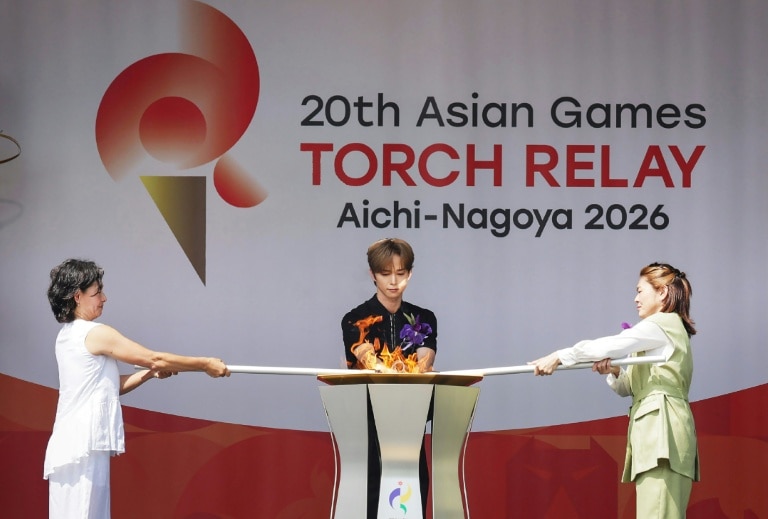
Just one month out from the opening of the 2026 Asian Games in central Japan, local organizers are facing an unprecedented accommodation and budget crisis that has forced them to issue an extraordinary mandate: any extra participants added after initial planning will have to source and pay for their own lodging. The multi-sport continental event is scheduled to run from September 19 to October 4 across Nagoya city and the wider Aichi Prefecture region, bringing together thousands of athletes and officials from across Asia.
When the host city agreement was first signed, both the local organizing committee and the Olympic Council of Asia (OCA), the governing body of the continental Games, agreed on a maximum cap of 15,000 total participants including athletes and team officials. That number was already larger than the typical delegation size for a Summer Olympic Games, putting early strain on local planning resources. But last week, the OCA updated the projected participant count to 17,000, splitting the total into 11,000 competing athletes and 6,000 accredited officials, a jump of 2,000 people that organizers say they cannot absorb.
To cut down on infrastructure costs that have ballooned for large international multi-sport events in recent decades, Japanese organizers opted against building a purpose-built permanent athletes’ village, a common cost-saving strategy for smaller host regions. Instead, they designed a distributed accommodation model that relies on three separate sources: a chartered international cruise ship, repurposed temporary shipping container-style wooden huts, and pre-booked blocks at commercial hotels across the region, with some even booked in Tokyo for athletes competing in the city’s hosted events of swimming, diving and equestrian. Under this model, 4,000 to 5,000 athletes will be housed on the chartered Italian cruise ship Costa Serena, while 2,000 additional participants will stay in the temporary container huts, and the remaining will occupy the pre-booked hotel blocks.
The increase in participants stems from a decision by the OCA back in March to add two new sports to the 2026 Asian Games program: teqball, a fast-growing tabletop football hybrid sport, and padel, a popular racket sport that blends elements of tennis and squash. While the additions expand the scope of the Games to include increasingly popular emerging sports, they have directly led to the unexpected growth in delegation sizes that caught local organizers off guard.
In press comments this week, Hideaki Omura, president of the local organizing committee and governor of Aichi Prefecture, made clear that the organizing body has neither the extra manpower, available space, nor allocated budget to accommodate the 2,000 extra participants. “The host city agreement specifies a delegation of 15,000 people,” Omura said. “We have not set aside a budget for any more than that. There is simply nowhere for them to stay.”
Local organizers confirmed this week that they have formally requested the OCA adjust and reduce the projected participant number to align with the original agreed cap. But for any delegations that still choose to send extra participants beyond the initial cap, Omura said, the requirement is clear: “If they still wish to come, they will have to make their own arrangements.”
Nagoya Mayor Ichiro Hirosawa, acting chairman of the local organizing committee, echoed Omura’s comments in a Wednesday briefing, noting that both time constraints and limited physical capacity make accommodating the extra numbers impossible. “From a cost perspective we are operating on a tight budget and it is difficult,” Hirosawa added.
Agence France-Presse has repeatedly reached out to the OCA for comment on the dispute, but as of Thursday, no response from the Olympic Council of Asia has been made public.