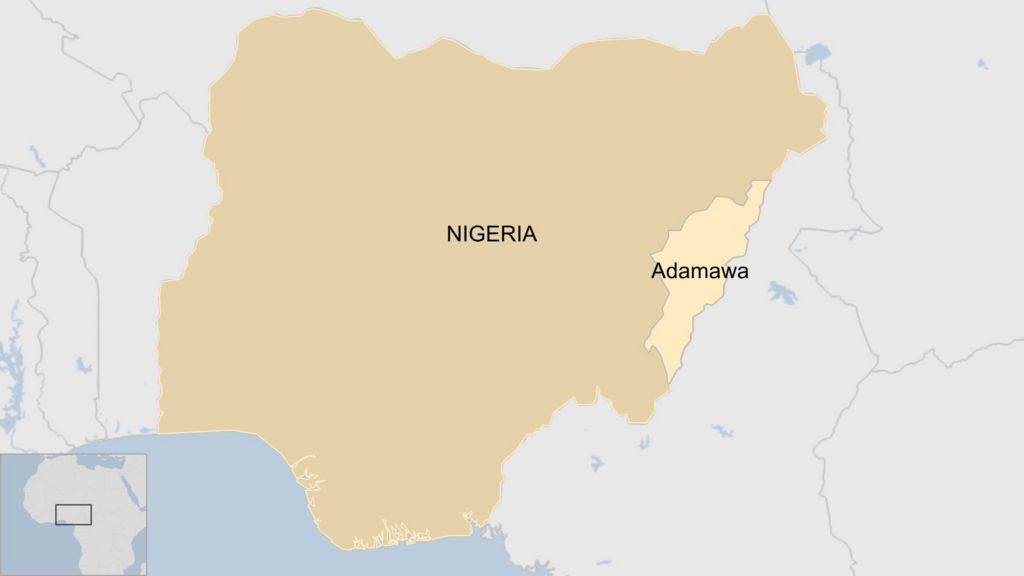
In a devastating act of violence that has deepened concerns over persistent insecurity in Nigeria’s restive northeast, gunmen aligned with the Islamic State group have killed at least 29 civilians in a targeted assault on a remote village in Adamawa State, local government officials have confirmed. The attack, which the terror group has claimed responsibility for without outlining a clear motive, unfolded in the village of Guyaku, located within the Gombi local government area, and unfolded over the course of several hours, according to state authorities. Witness accounts and official reports detail that militants first stormed a local football pitch where community members had gathered for a public event, opening fire indiscriminately on unarmed civilians before launching a coordinated arson attack that destroyed dozens of residential homes, local places of worship, and hundreds of civilian motorcycles. In the wake of the bloodshed, Adamawa State Governor Ahmadu Umaru Fintiri traveled directly to the attack site to assess the damage and meet with affected community members, sharing on-the-ground photos of his visit and condemning the violence as a fundamental “affront to our humanity”. In a public post shared to his Facebook page, the governor’s spokesperson captured the raw mood gripping the small, close-knit community, writing that “the atmosphere in the community remains tense, with grief and fear evident” following the carnage. Many residents, the spokesperson added, have already fled their homes in search of safer ground, driven out by widespread anxiety that follow-up attacks could target the area in the coming days. Governor Fintiri moved quickly to reassure the public in a statement posted to X, formerly Twitter, affirming that “We are intensifying security operations immediately to restore peace and ensure every resident feels safe in their home again.” The region where the attack took place, which sits along Nigeria’s porous border with Cameroon, has been plagued by near-constant violence linked to Islamist militant factions and local criminal gangs for more than a decade. The current wave of instability traces its origins back to 2009, when the jihadist group Boko Haram launched a full-scale insurgency focused on establishing an Islamic caliphate in northeast Nigeria. According to international aid organizations, the decades-long conflict has claimed the lives of more than 35,000 people and forced over 2 million Nigerians to flee their homes as internally displaced persons, while violence has spilled across national borders into neighboring Niger, Chad, and Cameroon. In recent years, Boko Haram has fractured into rival factions, with the larger breakaway group, the Islamic State West Africa Province (ISWAP), aligning itself with the global Islamic State network and carrying out regular attacks against civilian and military targets across the region. Earlier this month, Nigerian courts concluded mass trials that saw almost 400 convicted individuals handed down sentences for their ties to both Boko Haram and ISWAP, marking one of the largest crackdowns on militant affiliation in the country’s recent history. The latest attack comes as the Nigerian federal government faces mounting domestic and international pressure to rein in widespread insecurity across the country, with general elections scheduled for January drawing increased global scrutiny of the administration’s ability to protect civilians and maintain stability. Late last year, the United States launched what it described as “powerful and deadly” drone strikes against IS-aligned militants operating in northwest Nigeria, marking a escalation of international counter-terrorism cooperation in the region even as militant factions continue to carry out high-profile attacks against soft civilian targets.
作者: admin
-
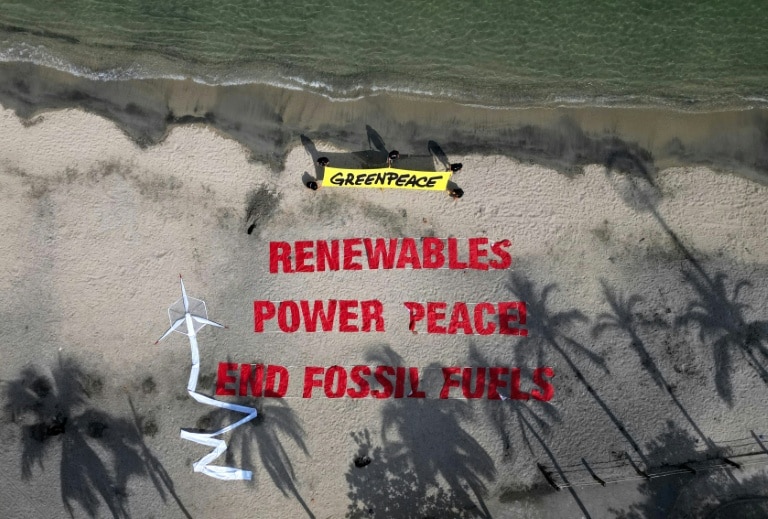
Nations to kick off world-first fossil fuel exit talks
Against a backdrop of escalating geopolitical tensions, global energy market volatility, and growing alarm over accelerating climate change, more than 50 national delegations have gathered in the Colombian Caribbean port city of Santa Marta this week for the world’s first dedicated international conference focused on phasing out fossil fuels, the primary driver of anthropogenic global warming.
Co-hosted by fossil fuel-dependent Colombia and the Netherlands, the two-day summit is being held outside the framework of long-running United Nations climate negotiations, a deliberate choice that reflects widespread frustration among participating nations over the UN process’s repeated failure to make meaningful progress on fossil fuel reduction. Santa Marta, the host city, is a fitting backdrop for the talks: it sits at the heart of one of Colombia’s busiest coal exporting hubs, a reminder of the deep economic ties many nations still retain to planet-warming fossil fuels.
As delegates arrived for the opening of talks on Tuesday, climate activists and Indigenous community groups marched through the city’s streets and along its beaches to demand urgent action, with coal tankers clearly visible lined up on the ocean horizon beyond the shore. The summit is not mandated to produce binding international commitments, but an independent scientific advisory panel has put forward a sweeping 12-point policy menu for attending nations to consider, headlined by a call for an immediate halt to all new fossil fuel extraction and infrastructure expansion projects.
The attendee list includes a diverse cross-section of major fossil fuel producers, large energy consumers, and climate-vulnerable nations: major developed producers Canada, Norway and Australia, developing energy giants Brazil, Nigeria and Angola, European Union member states, coal-dependent emerging economies Turkey and Vietnam, and small island developing states that face existential risk from rising sea levels driven by climate change. Notably absent from the talks are the world’s three largest greenhouse gas emitters—the United States, China and India—as well as oil-rich Gulf nations.
Organizers first announced the summit in late 2024, but recent geopolitical upheaval, including the ongoing Iran conflict and subsequent oil and gas market disruptions, has only sharpened the urgency of the conversation, according to speakers. UK special climate envoy Rachel Kyte told reporters on the ground in Santa Marta that the current crisis has underscored a core truth long argued by climate advocates: global reliance on fossil fuels is a major source of geopolitical and economic instability.
“People seem refreshed to be able to talk about these issues without having to sort of argue the existential question of — do we need to do this at all?” Kyte said. “Many nations are here in good faith to really work through what is a very complex challenge made more urgent by the crisis.”
Alongside calls to halt new fossil fuel development, the summit’s agenda includes work to map out a framework for equitable reductions in global fossil fuel production and consumption, and strategies to reform harmful fossil fuel subsidies that currently skew global energy markets and block much-needed investment in renewable energy. A new analysis released Monday by the International Institute for Sustainable Development highlights the scale of this challenge: the research found that governments around the world still spend five times more public funding on fossil fuel support than they invest in renewable energy alternatives.
Scientists leading the advisory panel have stressed that there is no possible justification for opening new fossil fuel extraction sites, even as renewable energy investment hits record highs. Speaking to AFP in Santa Marta, Carlos Nobre, a Brazilian climate scientist and former member of the UN Intergovernmental Panel on Climate Change, warned that even if no new fossil fuel projects are developed, the existing reserves of coal, oil and gas already in production or development are enough to push global average temperatures 2.5 degrees Celsius above pre-industrial levels by 2050.
The planet has already warmed 1.1 degrees Celsius above pre-industrial averages, and current policy trajectories put the world on track to blow past the 1.5 degree Celsius warming threshold that scientists identify as the limit for avoiding catastrophic, irreversible climate impacts. Beyond that threshold, scientists warn of irreversible losses including the complete disappearance of the world’s coral reef systems and the full collapse of the Greenland ice sheet, which would eventually raise global sea levels by more than seven meters, displacing hundreds of millions of people worldwide.
-
Horses unlikely saviours for those who serve in uniform
For uniformed service members and police officers who routinely risk their lives in service to the public, breaking points are rarely discussed openly. But behind the stoic public image, many struggle with crippling physical injuries and unmanaged mental health trauma that traditional therapies often fail to address. For three British servicemen and law enforcement officers, the path to recovery did not come from a human clinician — it came from an unlikely source: horses.
Former Royal Air Force reservist John Lewis, serving police officer Nick Morton, and ex-military intelligence operative Al Strudwick all reached catastrophic lows in their post-service or on-duty lives. Lewis, whose 12-year military career ended abruptly after a traffic accident left him with multiple broken bones that forced him into medical retirement, grappled with constant suicidal thoughts. Morton, a 20-year veteran police officer, suffered a total mental breakdown after years of responding to unspeakably traumatic incidents, including child murders. Strudwick, who underwent a double leg amputation after a life-threatening sepsis infection, lost all sense of self-worth and confidence after the procedure. Oddly enough, all three shared one additional common trait: a deep-seated fear of horses.
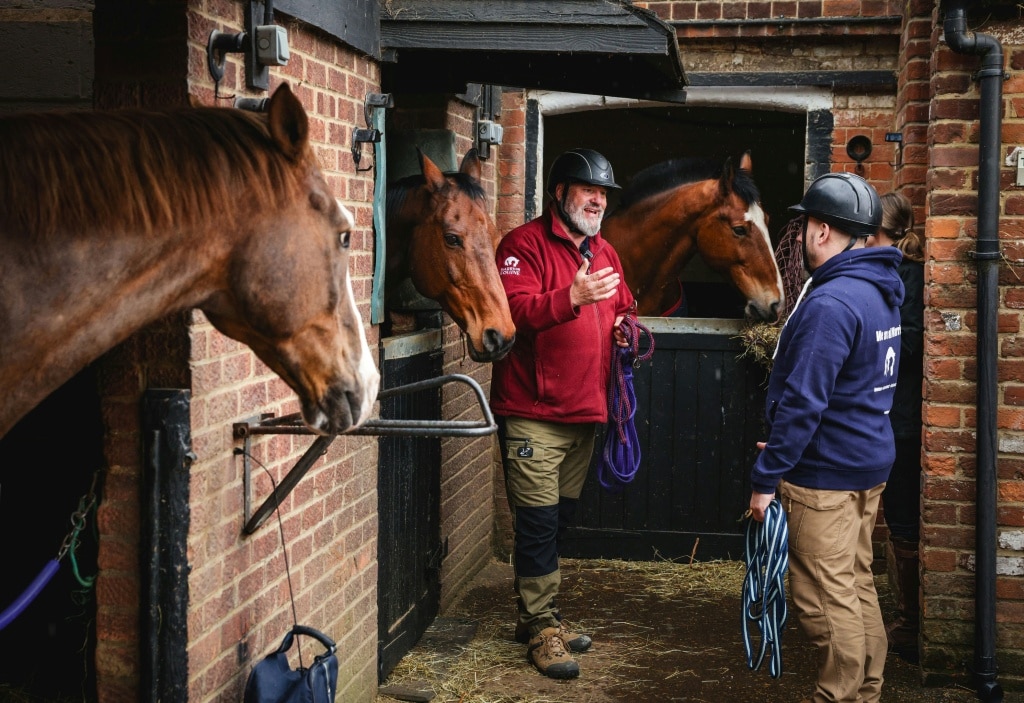
Today, all three men credit their dramatic recovery to Warrior Equine, a small British charity that uses equine interaction to support vulnerable current and former service members. Founded in 2019 by Ele Milwright, whose husband is a serving RAF officer, the organization grew out of Milwright’s years of informal observation of the unaddressed trauma many veterans bring home after overseas deployments.
“I did notice a lot of our friends and colleagues were coming back a little bit quirky,” Milwright told AFP. “You couldn’t quite put your finger on it, but they came back and it was different. Nobody told you what to do about it. It was the elephant in the room. So three things: understanding the value of horses, understanding how horses think, their psychology, and my commitment to help people with a military background or those who serve, all came together.”
To keep operating costs low, the charity does not own permanent facilities or a herd of its own horses. Instead, it partners with civilian equestrian centers and borrows military horses to run three-day intensive therapy courses, hosting between six and eight cohorts of participants each year. Milwright works alongside chief equine instructor Jim Goddard, who has years of experience working with veterans.
The core of the charity’s approach centers on the natural connection between equine psychology and emotional regulation for traumatized humans. During the courses, participants are tasked with leading a horse into an enclosed pen and using only their body language, breath control, and energy to encourage the animal to move and interact with them. Horses are innately attuned to tension and emotional instability; only when a participant can achieve a calm, focused state that feels safe to the animal will it choose to engage voluntarily. This exercise becomes a tangible, immediate reward for participants learning to manage their own overwhelming stress and trauma responses.
For Lewis, who tried multiple traditional talk therapies and was so skeptical of the equine program that he turned around three times on his drive to his first course, the experience proved transformative. He ultimately pushed through his doubt, recognizing that he had nothing left to lose and wanted to build a stable life for his two children.
“That vulnerability became exacerbated every time I was away from my family and my kids,” Lewis explained. “It became so overwhelmingly controlling. Even if I went into a supermarket to buy a loaf of bread and there wasn’t any bread on the shelf, that was me failing to be able to protect them. Then I would get into conflict in the supermarket just because there wasn’t bread on the shelf.”
After working with the horses, Lewis says his life is unrecognizable. “The point where the horse can detect that you’re in control of those stress emotions going on inside you, they will, of their own free will, walk over to you and follow you around with no lead,” he said. “They’ll stay close to you in this amazing way. And the way it’s been described to us, and you can really see it, is that they just want to sit there and trust you.” Today, Lewis says his crippling controlling behaviors are gone, and while he acknowledges the trauma he experienced will always be part of his story, he is no longer trapped by it: “That dark tunnel doesn’t even stare me in the face. I know it’s there. But I’m able to turn my back on it every single time.”
For Strudwick, the program restored the self-confidence he lost after his amputation, so much so that he was able to climb Wales’ Pen y Fan mountain — a core training test for British SAS candidates — from his wheelchair. “It made me realise how far I had come, from lying in a hospital bed for 50 nights, and being released with damaged kidneys and a slowly recovering liver, to climbing a mountain,” he said. Known for his sharp, self-deprecating humor even after his trauma — his upcoming memoir about his recovery is titled *Finding My Feet Again* — Strudwick says the program gave him his joy of life back.
In recognition of the organization’s extraordinary track record of success, Warrior Equine has been selected as the official charity partner of the 2025 Royal Windsor Horse Show, one of the most prestigious equestrian events in the United Kingdom, running from May 14 to 17. The partnership is expected to raise critical funds to expand the charity’s reach and help hundreds more uniformed service members find healing through the unexpected connection with horses.
-
Crude extends gains as Trump considers latest Iran proposal
Global financial markets traded with heightened volatility on Tuesday, as crude oil prices extended upward momentum while equity indexes struggled for direction, driven by ongoing geopolitical negotiations between the United States and Iran that could reshape Middle Eastern energy security and end an eight-week-old regional conflict.
Tehran has submitted a written peace proposal to Washington via diplomatic channels through Pakistan, outlining its core negotiating red lines that cover both its nuclear program and the future status of the Strait of Hormuz, the world’s most critical energy chokepoint. Under the reported interim framework, Iran has offered to immediately reopen the Strait of Hormuz — through which roughly 20 percent of global oil and liquified natural gas supplies transit daily — in exchange for the United States lifting its ongoing blockade of Iranian ports. More contentious negotiations over Iran’s nuclear activities, a long-standing sticking point for the Trump administration, would be deferred to a later date under the plan.
The White House confirmed that President Donald Trump convened a meeting with senior advisors on Monday to review the Iranian proposal, but press secretary Karoline Leavitt declined to comment on whether Trump would accept the terms. The news comes just days after Trump abruptly scrapped a planned trip to Islamabad by top envoys Steve Witkoff and Jared Kushner, dashing earlier market hopes for a quick breakthrough. Top U.S. diplomat Secretary of State Marco Rubio already poured cold water on the proposal during an interview with Fox News, arguing that Iran’s offer does not meet Washington’s requirements. “If what they mean by opening the straits is, ‘yes, the straits are open as long as you coordinate with Iran, get our permission or we’ll blow you up and you pay us,’ that’s not opening the straits,” Rubio said.
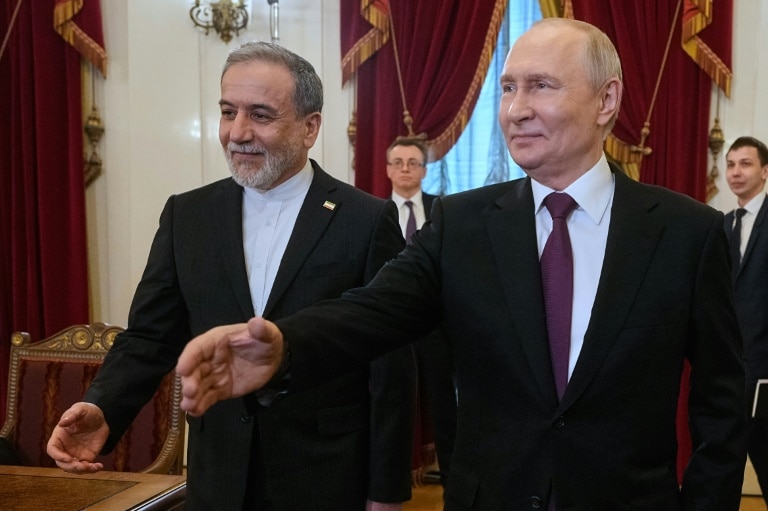
Separately, during a meeting with Iranian Foreign Minister Abbas Araghchi in Saint Petersburg on Tuesday, Russian President Vladimir Putin pledged that Moscow would deploy all possible efforts to bring an end to the ongoing Middle East conflict. Iran’s UN envoy Amir Saeid Iravani also told a UN Security Council session that Tehran requires binding guarantees that both the U.S. and Israel will halt future military strikes before it can offer full security assurances for Gulf waterways.
Energy markets responded directly to the diplomatic developments, with both major global crude benchmarks extending gains. By 0230 GMT, West Texas Intermediate crude climbed 1.0 percent to settle at $97.32 per barrel, while Brent North Sea crude rose 1.0 percent to $109.27 a barrel, approaching the key $110 threshold that has stoked global inflation concerns. Equity markets were far more mixed, with most major Asian indexes ending the session in negative territory: Tokyo’s Nikkei 225 fell 0.5 percent to 60,238.21, Hong Kong’s Hang Seng Index dropped 0.3 percent to 25,851.82, and Shanghai’s Composite Index slipped 0.2 percent to 4,079.78. Gains were limited to a handful of regional exchanges including Seoul, Singapore, Taipei and Jakarta. In prior New York trading, the S&P 500 and Nasdaq notched new all-time record closes, while the Dow Jones Industrial Average edged 0.1 percent lower to 49,167.79 at close. London’s FTSE 100 also fell 0.6 percent to 10,321.09 on Tuesday.
Tony Sycamore, a market analyst at IG, noted that mounting domestic pressures may push Iran toward a faster agreement. The country’s aging crude storage facilities are projected to hit full capacity this week, and if storage is exhausted, Iran will be forced to shut in production. “If forced shut‑ins follow, Tehran risks irreversible long‑term damage to its reservoirs and a serious hit to future production and revenue streams,” Sycamore explained. While he called the latest Iranian proposal a step in the right direction, Sycamore added that “it is hard to see the US accepting anything less than a comprehensive deal that both opens the Strait of Hormuz and addresses Iran’s nuclear weapons programme.”
Beyond Middle Eastern geopolitics, global investors are also bracing for a packed week of high-stakes economic and corporate events. The Bank of Japan is set to announce its latest interest rate decision later Tuesday, with most market analysts expecting the central bank to hold policy steady. The U.S. Federal Reserve, European Central Bank and Bank of England are all scheduled to announce their own rate decisions this week, and most are expected to keep borrowing costs unchanged as the recent surge in energy prices stokes fresh fears of a renewed inflation spike. On the corporate side, earnings reports are due this week from three of the world’s largest technology companies — Apple, Meta Platforms and Microsoft — as well as major industrial and energy firms including Ford and ExxonMobil, which will give investors greater insight into the health of the U.S. and global economy.
-

Philippine museum brings deadly, lucrative galleon trade to life
Manila, Philippines – A striking new cultural landmark has opened on the shores of Manila Bay, inviting visitors to step back into one of the most transformative yet under-told chapters of global history: the 250-year era of Spanish Pacific galleon trade. At the heart of the newly opened Museo del Galeon sits a full-scale, meticulously crafted replica of the *Espiritu Santo*, a 17th-century galleon that once plied the deadly trade route connecting Manila, Acapulco, and Spain.
Unlike many historical accounts of the galleon trade that center on European colonial powers, this new museum deliberately frames the story through the experiences of the Filipino people who built, crewed, and suffered under the colonial enterprise. From 1565 to 1815, 181 galleons completed hundreds of trans-Pacific crossings, forging the first sustained interconnected trade network linking Asia, the Americas, and Europe – a milestone many historians recognize as the dawn of early modern globalization. The *Espiritu Santo*, constructed with forced Filipino labor in 1603, was one of the most formidable vessels of its era.
Manuel Quezon, the museum’s executive director and a noted historian, emphasizes that the institution does not shy away from the brutal human and environmental cost of the galleon trade. For centuries, Spanish colonial authorities required able-bodied Filipino men to complete 40 days of unpaid forced labor annually felling old-growth hardwoods and constructing the massive ships. Many others were conscripted to serve as crew for voyages that could last more than a year, with death tolls averaging one out of every three sailors per crossing.
Cramped, overcrowded hulls loaded with luxury cargo left crewmembers surviving on a meager, often rotten diet of hardtack, spoiled salted meat, and rotting fish. Disease and starvation were rampant, and deadly uprisings against the exploitative system broke out across multiple shipbuilding sites, including the Cavite coast near Manila. Even as the trade reshaped global commerce and introduced new foods, religions, cultural practices, and ideas to the Philippines that shape modern Filipino identity today, it left a trail of environmental destruction, decimating local old-growth forests and shattering Indigenous communities.
“It was the first global trade, connecting three continents. It made the world smaller,” explained Francis Navarro, archives director at Manila’s Ateneo de Manila University, of the trade’s historical significance. Quezon added that the long legacy of Filipino seafaring persists to this day: Filipinos still make up one quarter of the world’s merchant sailors, a tradition rooted in the exploitative galleon era that has never been fully highlighted in mainstream historical narratives.
After 14 years of planning and development, the museum opened its doors to the public on May 1. Visitors can walk the decks of the replica *Espiritu Santo*, surround by immersive, wraparound LED displays that recreate the open Pacific skies. Artifacts recovered from actual galleon wrecks line the surrounding exhibit halls, including a fragment of a Chinese tomb stone once used as ballast in a 17th-century ship’s hold.
The $16.5 million (billion-peso) project ultimately secured funding from some of the Philippines’ wealthiest families after attempts to secure government financing and support from a Mexican billionaire fell through. Unlike the original *Espiritu Santo*, the modern replica is not built from native hardwood – a choice made out of environmental responsibility. The original 1,000-ton galleon required 800 mature old-growth water-resistant hardwood trees, a stock that has been completely wiped out in the Philippines due to centuries of unsustainable logging for shipbuilding. Today, those trees can only be found in remote Myanmar forests, and clearing that many ancient trees to build a static display would have been unethical, Quezon explained. Instead, the replica was constructed from fiberglass and other synthetic materials while remaining scrupulously accurate to the original ship’s design and dimensions.
Quezon notes that the museum fills a critical gap in Philippine historical memory. “We’re filling the blanks in with this museum,” he said during a pre-opening tour. “The child who comes through, we want them to realise that many of the things that they take for granted have absolutely amazing stories behind them.”
-
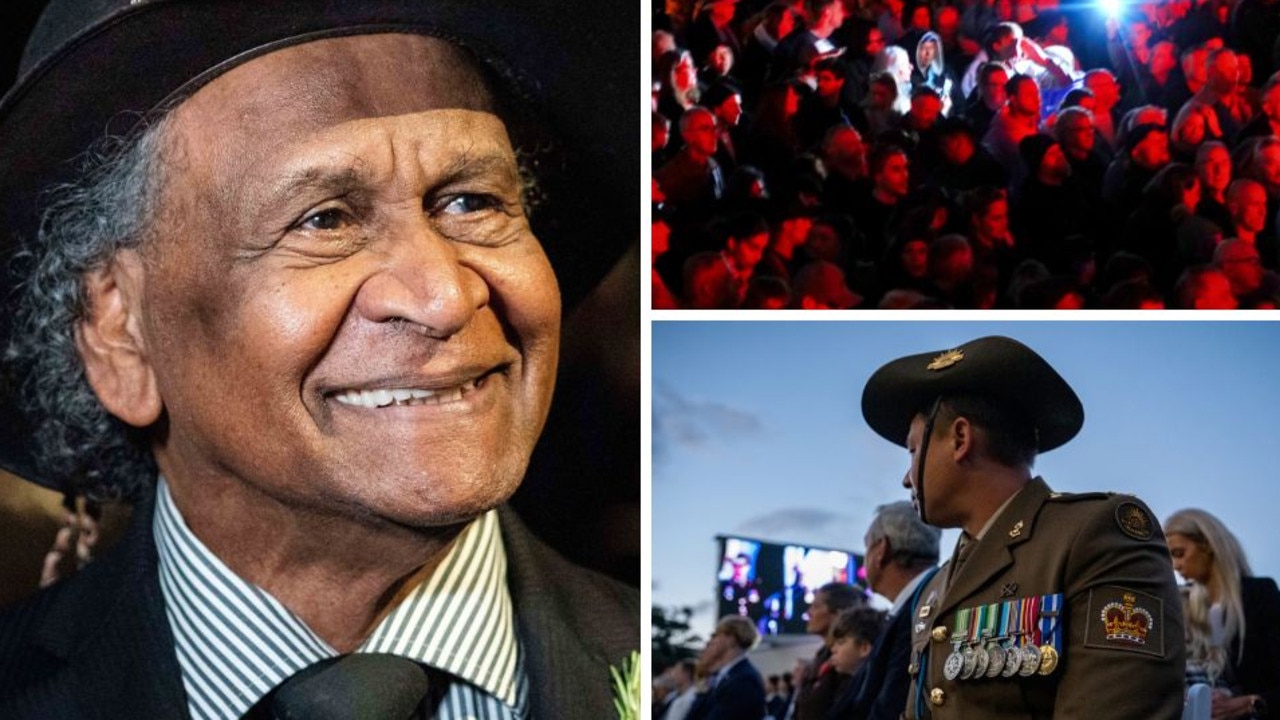
Queensland RSL’s Anzac Day decision condemned by Indigenous elder
Australia’s annual Anzac Day commemorations have been roiled in fresh national debate this year over the inclusion of Welcome to Country and Acknowledgment of Traditional Custodians ceremonies, after a regional Queensland Returned and Services League (RSL) branch drew widespread backlash for removing the Indigenous recognition ritual from its flagship Dawn Service.
The controversy centered on the Townsville RSL, based in the northern Queensland garrison city with deep, enduring ties to Australia’s military history. Thousands attended the city’s 2024 Anzac Day Dawn Service, where the traditional Welcome to Country and acknowledgment of First Nations peoples was omitted from the official program.
Prominent Indigenous elder and academic Professor Gracelyn Smallwood condemned the RSL’s decision in comments to Seven News, calling the move “very disgraceful”. She emphasized the erased contributions of Indigenous Anzacs, who fought for Australia alongside non-Indigenous soldiers but returned home to systemic exclusion: denied the pensions, land grants, and citizen rights granted to their white counterparts.
When approached for comment on the decision, Townsville Mayor Nick Dametto’s spokesperson distanced the local government from the choice, noting that event programming falls exclusively under the RSL’s control. The Townsville RSL itself has not yet issued a public response to the criticism, after repeated requests for comment.
Townsville was not the only site of division around the ritual this Anzac Day. Booing broke out during Welcome to Country ceremonies at major Dawn Services in three of Australia’s largest cities: Perth, Sydney, and Melbourne, stoking national discussion over the place of Indigenous recognition in major public events.
The backlash has drawn commentary from senior political figures across the ideological spectrum. Federal Opposition Leader Angus Taylor told ABC Insiders that while the public booing was “absolutely unacceptable”, he echoed the frustrations of some Australians by arguing that Welcome to Country ceremonies have become “overused” in national events. Taylor claimed that frequent, widespread inclusion of the ritual has diluted its meaning, saying “they are devalued” through overuse, and argued for fewer ceremonies to preserve their significance.
Western Australia’s Aboriginal Affairs Minister Don Punch hit back at Taylor and state opposition leader Basil Zempilas, accusing the pair of embracing a populist stance that ignores the cultural importance of the ritual. Punch pushed back against critics of the practice, noting that while some hold strongly negative, often racist views of Welcome to Country, the ritual is a core part of respecting Australia’s First Nations heritage. “What a Welcome to Country is, it’s saying g’day, saying welcome to the land, it’s respecting First Nations culture,” he explained.
Elsewhere across the country, many Anzac Day services maintained the longstanding practice of including Indigenous recognition. In far north Queensland’s Cairns, for example, the official program included an acknowledgment of country paired with a traditional didgeridoo performance, mirroring protocols at most major services including Sydney’s Martin Place Dawn Service, where Aunty or Uncle Raymond Minniecon delivered the official Welcome to Country this year.
-
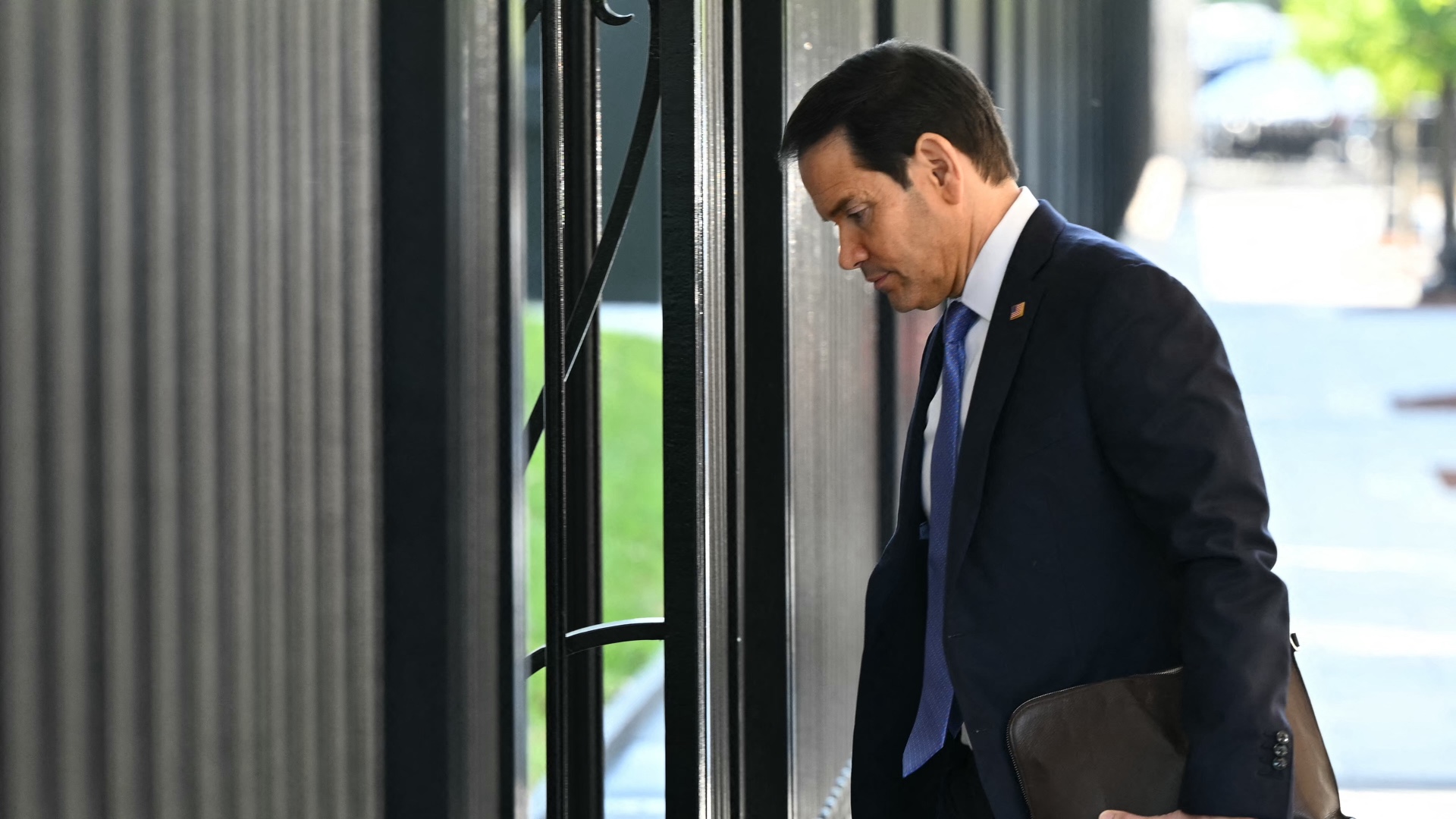
US considering sending stranded Afghans in Qatar to the Congo, advocacy group says
Nearly three years after the chaotic 2021 U.S. withdrawal from Afghanistan, more than 1,100 Afghan allies with verified ties to the U.S. military and government remain trapped in a geographic and bureaucratic limbo at Camp As Sayliyah, a U.S.-operated military base tucked into Qatar’s arid desert. What was supposed to be a maximum 21-day waiting period for U.S. resettlement has stretched into years, leaving the group confined to the base with no legal permission to reside in Qatar, forbidden from leaving the compound. One resident previously described the facility to Middle East Eye as little more than an open-air prison.
Now, a new and deeply controversial proposal has sparked outrage from refugee advocacy groups: transfer the entire cohort to the Democratic Republic of Congo for permanent resettlement, according to #AfghanEvac, a leading advocacy organization working to evacuate and resettle Afghan allies.
The Trump administration, which took office in 2025, originally ordered the Camp As Sayliyah facility closed by March 31 of this year, giving the stranded Afghans a firm deadline to find a new host country after the administration reversed prior commitments to bring all vetted allies to the U.S. To date, no permanent resettlement destination had been publicly confirmed, until details of the DRC plan emerged during a recent virtual press briefing held by #AfghanEvac last week.
Shawn VanDriver, president of #AfghanEvac, told reporters that the current proposal would send Afghan interpreters, former special operations personnel, and immediate family members of more than 150 current and recently separated U.S. service members to a country grappling with multiple overlapping crises. The DRC already hosts over 600,000 displaced people from regional conflicts, is engaged in active armed hostilities with Rwanda, and is classified by the United Nations as one of the world’s worst humanitarian displacement emergencies. The U.S. State Department also maintains a Level 3 travel advisory for the DRC, a strong official warning that advises U.S. citizens against all non-essential travel to the country due to widespread violence, crime, and political instability.
“This plan cannot stand,” VanDriver emphasized, arguing that forcing vulnerable Afghans who worked alongside the U.S. to resettle in an active conflict zone violates every commitment Washington made to these allies.
U.S. State Department officials have neither confirmed nor denied the DRC proposal, stating only that the agency is actively working to identify viable resettlement options for all Camp As Sayliyah residents. In a statement emailed to Middle East Eye, a department spokesperson framed third-country resettlement as a “positive resolution” that would allow Afghans to build new lives outside Afghanistan while upholding U.S. national security priorities. The spokesperson added that the agency maintains regular direct communication with residents, and would not disclose details of ongoing negotiations due to the sensitivity of the process.
Middle East Eye’s request for comment to the Department of Homeland Security, asking whether new DHS Secretary Markwayne Mullin – who has a public record of supporting Afghan ally resettlement efforts – has been involved in discussions, was redirected to the State Department.
The controversy has already sparked partisan finger-pointing over the years-long delay. The Trump administration has blamed the prior Biden administration for what it calls a rushed, flawed vetting process for Afghan allies evacuated after the 2021 withdrawal. But Jon Finer, Biden’s former deputy national security advisor, pushed back against that characterization during the #AfghanEvac briefing. He clarified that the evacuation operation for Afghan allies, dubbed Operation Enduring Welcome, was not an unplanned emergency pullout, but a structured, deliberate resettlement pipeline.
Finer also confirmed that the Biden administration preserved and strengthened the strict enhanced vetting frameworks developed over decades, including those put in place during the first Trump administration. “They are, by design and by implementation, the most vetted lawful immigrants to the United States among all the categories of people who come,” Finer said of the Camp As Sayliyah residents, adding that all 1,100 people currently held at the base have already completed full vetting for U.S. immigration. #AfghanEvac’s data confirms that more than 200,000 Afghans have already successfully been resettled in the U.S. through this exact same vetting process with no reported security incidents.
Earlier this year, the State Department launched a controversial voluntary departure program, offering cash payments to Afghans who leave the base on their own. Then-Assistant Secretary of State Samir Paul Kapur told lawmakers in February that 150 Afghans had already accepted the payments, but Camp As Sayliyah residents told Middle East Eye that many of those who accepted the offer had no other viable option and chose to return to Afghanistan, where they face targeted violence from the Taliban for their past work with the U.S.
VanDriver rejected framing the program as a voluntary choice, noting that Afghans were given only two unacceptable options: return to Taliban-controlled Afghanistan or relocate to a conflict zone in the DRC. “You cannot call a choice voluntary when the two options are Congo and the Taliban, civil war or an oppressor who wants to kill you,” VanDriver said. “That is not a choice. That is a confession extracted under duress.”
Last weekend, VanDriver led a bipartisan congressional delegation to visit the Camp As Sayliyah facility, where his organization collected a video plea from 14-year-old stranded resident Zahra. In her message, addressed to U.S. First Lady Melania Trump, Zahra asked simply for “a peaceful life, a chance to get a better education, and a brighter future” that the U.S. had promised her and her family for their service alongside American forces.
-
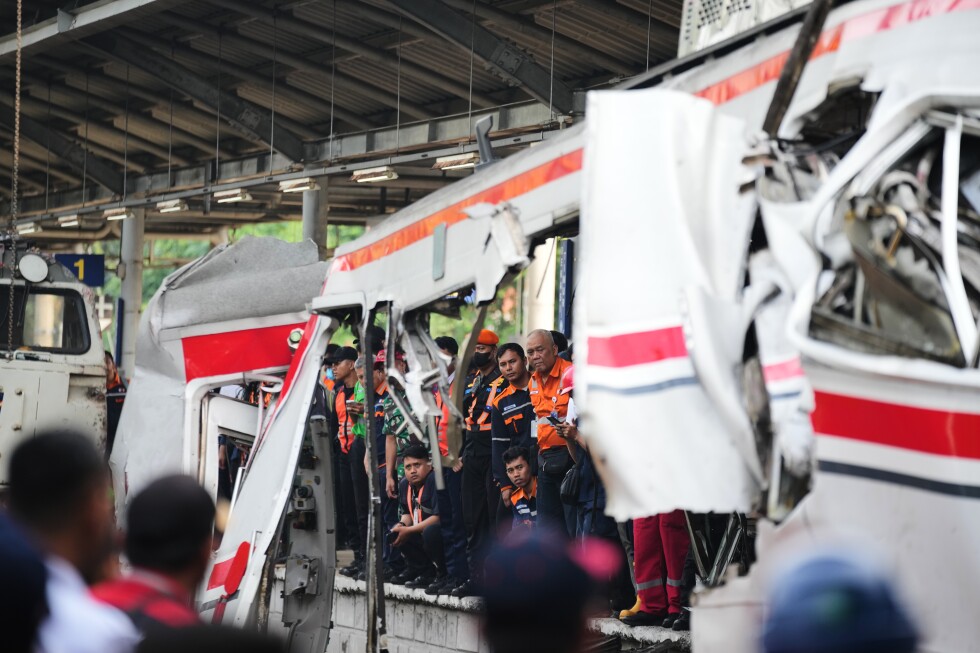
Rescuers trying to reach 3 people trapped in damaged train car after crash in Indonesia
BEKASI, INDONESIA – Rescue operations stretched into a second day Tuesday as first responders fought to free three people still trapped inside a crumpled women-only commuter rail car following a high-impact rear-end collision that claimed at least seven lives on the outskirts of Indonesia’s capital Jakarta.
The crash unfolded Monday at Bekasi Timur Station, when a long-distance intercity train, identified as the Argo Bromo Anggrek, collided with the back of a stationary commuter train. The targeted rear car was a designated women-only carriage, a widely implemented policy across Indonesia’s public transit system designed to reduce sexual harassment of female passengers.
Officials from state-owned railway operator PT Kereta Api Indonesia confirmed that 81 people injured in the collision have been transported to area hospitals for urgent medical care. All 240 passengers aboard the long-distance train escaped without life-threatening harm, according to agency updates.
PT Kereta Api Indonesia CEO Bobby Rasyidin told reporters Tuesday that the complex extrication process has moved deliberately, prioritizing the safety of trapped victims and responding first responders. “The evacuations are taking a long time … and we’re doing it very carefully,” Rasyidin said from the crash site.
Jakarta Police Chief Asep Edi Suheri confirmed that law enforcement and national transport investigators have launched a full probe into what led to the fatal incident. Rasyidin noted preliminary observations suggest a signal disruption may have been a contributing factor, tied to an earlier separate incident where another commuter train hit a broken-down taxi on a nearby level crossing.
“For the full, accurate chronology of events, we are leaving it to the National Transportation Safety Committee to investigate the cause of this accident in greater detail,” Rasyidin added.
This deadly collision adds to a growing pattern of preventable disasters on Indonesia’s aging, underfunded national railroad network. Just 10 months prior to this incident, in January 2024, another head-on collision between two trains in West Java province left four people dead and dozens more injured.
-

Trump uses assassination try to justify expanding spying powers
On a Saturday evening just outside the venue of the annual White House Correspondents’ Dinner, a violent exchange of gunfire erupted between an armed suspect identified as Cole Tomas Allen and law enforcement officers. The shooting came just days before a critical congressional deadline to reauthorize Section 702 of the Foreign Intelligence Surveillance Act (FISA), a controversial law granting U.S. intelligence agencies broad warrantless surveillance powers that is set to expire at the end of this week. Within hours of the incident, former President Donald Trump moved quickly to tie the shooting to his ongoing campaign to extend the program, arguing the attempted attack proved the FBI must retain the authority to collect the communications of U.S. citizens without prior judicial approval.
In a Sunday interview with Fox News, Trump doubled down on his earlier position, stating he is personally willing to forgo his own security protections to secure a multi-year extension of Section 702, and claimed all Americans should be willing to make the same tradeoff for the sake of national safety. “It’s really needed for national security,” Trump told Fox anchor Jacqui Heinrich. “Iran is decimated, and we got a lot of information by using FISA… I’m willing to give up my security for the military because ultimately that’s to me the highest cause is, you know, the safety of our nation.”
Unlike traditional surveillance authorities that require judges to approve individual warrants for targeting U.S. persons, Section 702 explicitly permits U.S. intelligence agencies to collect the electronic communications of foreign nationals located overseas without a warrant. Because thousands of these foreign targets regularly communicate with American citizens, the law also allows agencies to vacuum up the emails, text messages, and phone calls of unwitting U.S. residents without prior judicial review, with approximately 350,000 foreign targets currently monitored under the program. When Heinrich noted that investigators have not confirmed whether Allen was radicalized by any foreign individual or extremist group, she asked Trump if the shooting highlighted the urgent need to retain the surveillance tool, prompting Trump to pivot to longstanding grievances over past FISA use against his 2016 campaign.
Trump complained that former FBI Director James Comey abused FISA powers to obtain a warrant to surveil a former Trump campaign aide during the agency’s investigation into 2016 Russian election interference, before incorrectly claiming FISA powers had been used to support U.S. military actions against Iran and in an incursion into Venezuela earlier this year. To date, no public evidence has connected Allen, the suspected shooter, to any foreign actors; investigators have confirmed Allen appears to have acted alone, and a document he left behind references his Christian beliefs and criticizes the Trump administration’s policies on immigrant detention, anti-drug bombing operations in maritime waters off the Americas, and military strikes in Iran that hit an elementary school.
Critics of an un reformed Section 702 extension have pushed back on Trump’s attempts to tie the shooting to the surveillance debate, noting that the incident actually undermines the argument that the program is necessary to stop lone attacks with no foreign ties. Jordan Liz, an associate professor of philosophy at San José State University, argued in a recent Common Dreams column that despite sweeping claims from Trump, congressional Republicans, and intelligence leaders that Section 702 has stopped dozens of terror attacks, there is almost no public evidence to back up these assertions. Liz pointed out that only one independently verified, well-documented case exists of the program disrupting a terror attack on U.S. soil: the 2009 plot to bomb the New York City subway system. In that case, the NSA used Section 702 to track communications between an al-Qaeda courier and plotter Najibullah Zazi, who was residing in the U.S., but the NSA only obtained the courier’s email address from British intelligence partners — meaning the successful disruption was as much a product of international intelligence sharing as it was of Section 702 itself. Worse, Liz argued, the incident actually highlights how Trump’s repeated attacks on U.S. allies ultimately weaken, rather than strengthen, American national security.
The push to extend Section 702 has already roiled Congress in recent weeks, with two separate extension bills — one for an 18-month term and another for five years — failing to pass earlier this month. Opponents of the bills uniformly objected to the lack of meaningful privacy reforms, particularly a critical loophole that allows government agencies to purchase private personal data about U.S. citizens from commercial data brokers without first obtaining a warrant. After the initial proposals failed, House Speaker Mike Johnson, a Louisiana Republican, unveiled a new compromise last week that would extend the program for three years, require the FBI to submit monthly reports on its searches of American data to an internal oversight official, and impose nominal penalties for misuse of the program. Privacy advocates have dismissed these reforms as wholly inadequate, noting they do nothing to end the practice of warrantless backdoor searches of U.S. citizens’ data.
The House Rules Committee was scheduled to convene Monday to advance the new bill to a full floor vote, and top congressional Democrats have already mobilized opposition to the measure. Rep. Jamie Raskin of Maryland circulated a memo to colleagues last week urging them to reject the Republican proposal, arguing that it “continues the disastrous policy of trusting the FBI to self-police and self-report its abuses of Section 702 and backdoor searches of Americans’ data… FBI agents can still collect, search, and review Americans’ communications without any review from a judge.”
The bill’s path to passage remains uncertain, as four House Democrats broke with their party earlier this month to support a procedural vote advancing the reauthorization, joining all House Republicans. Privacy advocacy groups have ramped up pressure on these four Democrats — Josh Gottheimer and Tom Suozzi of New Jersey, Marie Gluesencamp Perez of Washington, and Jared Golden of Maine — to flip their positions on the latest proposal. “It all comes down to those four and where they are going to land,” Hajar Hammado, senior policy adviser at advocacy group Demand Progress, told The Intercept on Monday. “If they are going to continue to try to hand Trump and White House homeland security adviser Stephen Miller warrantless surveillance authorities without any sort of checks or reforms that make sure they’re not violating civil liberties.”
-

AFL 2026: Hawthorn has plans to stop Collingwood’s Nick Daicos in Thursday’s blockbuster
Ahead of one of the most anticipated AFL matches of the season, Hawthorn Football Club senior coach Sam Mitchell has remained tight-lipped about his full game plan, but confirmed his coaching staff has prepared multiple strategic approaches to shut down Collingwood Magpies superstar Nick Daicos when the two sides face off on Thursday night.
Currently riding a six-match winning streak, the Hawks have emerged as one of the most in-form teams in the 2024 AFL competition. However, Mitchell acknowledges that securing a seventh consecutive victory will depend heavily on his side’s ability to limit Daicos’ impact across the ground. While Hawthorn defender Finn Maginness successfully neutralized Daicos in their 2023 matchup, Mitchell stressed that relying on a single tactic would be insufficient against the young, rapidly improving star.
In a playful press interaction, Mitchell joked about keeping his strategies under wraps, telling reporters: “That’s a good question, have you got any ideas? No? Me neither.” He later confirmed: “We’ve got a couple of things up our sleeve that we’ll use, you’ll find out on Thursday night, hopefully we can stop him.”
Mitchell noted that Maginness’ 2023 performance remains a reliable option in Hawthorn’s tactical toolkit, but the 22-year-old Collingwood gun has elevated his game considerably since that clash. “Just because it worked once, it doesn’t mean it works again. Nick, even though he was a star from the first game he played, he’s improved his game year-on-year. He’s better now than what he was this time last year, so how we stop him is a big challenge,” Mitchell explained.
The coach also emphasized that his staff has mapped out multiple contingency plans, accounting for the ripple effects of limiting Daicos’ involvement. “So if we stop him, what does it open up for them is something we need to weigh up because he’s obviously a potent player wherever he plays and we certainly need to have plan A, B and C for Nick Daicos,” he added.
The blockbuster comes off the back of a hard-fought win for Hawthorn against the Gold Coast Suns in Tasmania last weekend. Mitchell used the post-match press conference to highlight clear growth in his young side, particularly in their ability to manage momentum shifts throughout matches – a key area of focus following their exit from the 2023 finals series at the preliminary final stage.
“One of the areas we needed to work on was managing momentum and with that comes a little bit of maturity,” Mitchell said. “When I looked at our game last week, it felt like a bit more of a mature performance. It wasn’t just run and gun at all costs and it wasn’t slow it down at all costs. We picked and chose how to defend and how to attack different moments in the game and we felt like that gave us better opportunities to control momentum.”
Mitchell acknowledged that the side still has room for improvement after conceding several unforced goals against the Suns, but framed the overall performance as a clear step forward in the team’s development. “We didn’t get it all right – we gave away some easy goals at different stages – but the thinking behind it I felt was a much more mature version of what we want to be,” he said.
Drawing a parallel to past premiership-winning sides, Mitchell noted that consistent success at the highest level requires a foundational level of team maturity that complements the club’s young, exciting playing group. “If you look at premiership sides historically, there’s a level of maturity across their team. Hopefully we play with a young, vibrant energy that people want to come and see and they’re still going to do their celebrations. But underlying it is a level of maturity that is needed to win big games.”