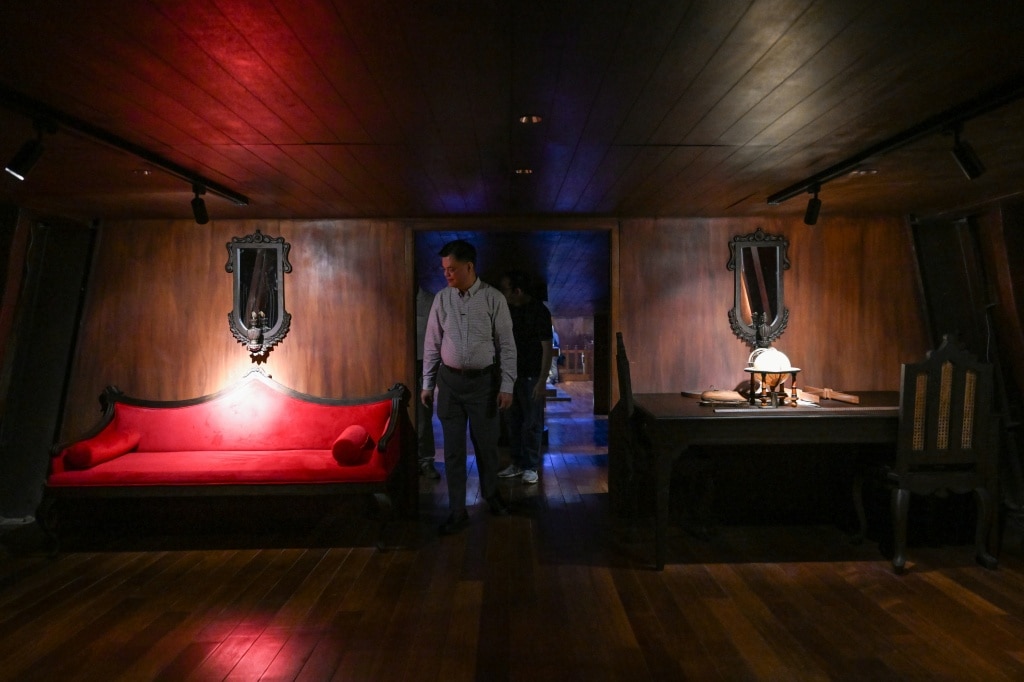
Manila, Philippines – A striking new cultural landmark has opened on the shores of Manila Bay, inviting visitors to step back into one of the most transformative yet under-told chapters of global history: the 250-year era of Spanish Pacific galleon trade. At the heart of the newly opened Museo del Galeon sits a full-scale, meticulously crafted replica of the *Espiritu Santo*, a 17th-century galleon that once plied the deadly trade route connecting Manila, Acapulco, and Spain.
Unlike many historical accounts of the galleon trade that center on European colonial powers, this new museum deliberately frames the story through the experiences of the Filipino people who built, crewed, and suffered under the colonial enterprise. From 1565 to 1815, 181 galleons completed hundreds of trans-Pacific crossings, forging the first sustained interconnected trade network linking Asia, the Americas, and Europe – a milestone many historians recognize as the dawn of early modern globalization. The *Espiritu Santo*, constructed with forced Filipino labor in 1603, was one of the most formidable vessels of its era.
Manuel Quezon, the museum’s executive director and a noted historian, emphasizes that the institution does not shy away from the brutal human and environmental cost of the galleon trade. For centuries, Spanish colonial authorities required able-bodied Filipino men to complete 40 days of unpaid forced labor annually felling old-growth hardwoods and constructing the massive ships. Many others were conscripted to serve as crew for voyages that could last more than a year, with death tolls averaging one out of every three sailors per crossing.
Cramped, overcrowded hulls loaded with luxury cargo left crewmembers surviving on a meager, often rotten diet of hardtack, spoiled salted meat, and rotting fish. Disease and starvation were rampant, and deadly uprisings against the exploitative system broke out across multiple shipbuilding sites, including the Cavite coast near Manila. Even as the trade reshaped global commerce and introduced new foods, religions, cultural practices, and ideas to the Philippines that shape modern Filipino identity today, it left a trail of environmental destruction, decimating local old-growth forests and shattering Indigenous communities.
“It was the first global trade, connecting three continents. It made the world smaller,” explained Francis Navarro, archives director at Manila’s Ateneo de Manila University, of the trade’s historical significance. Quezon added that the long legacy of Filipino seafaring persists to this day: Filipinos still make up one quarter of the world’s merchant sailors, a tradition rooted in the exploitative galleon era that has never been fully highlighted in mainstream historical narratives.
After 14 years of planning and development, the museum opened its doors to the public on May 1. Visitors can walk the decks of the replica *Espiritu Santo*, surround by immersive, wraparound LED displays that recreate the open Pacific skies. Artifacts recovered from actual galleon wrecks line the surrounding exhibit halls, including a fragment of a Chinese tomb stone once used as ballast in a 17th-century ship’s hold.
The $16.5 million (billion-peso) project ultimately secured funding from some of the Philippines’ wealthiest families after attempts to secure government financing and support from a Mexican billionaire fell through. Unlike the original *Espiritu Santo*, the modern replica is not built from native hardwood – a choice made out of environmental responsibility. The original 1,000-ton galleon required 800 mature old-growth water-resistant hardwood trees, a stock that has been completely wiped out in the Philippines due to centuries of unsustainable logging for shipbuilding. Today, those trees can only be found in remote Myanmar forests, and clearing that many ancient trees to build a static display would have been unethical, Quezon explained. Instead, the replica was constructed from fiberglass and other synthetic materials while remaining scrupulously accurate to the original ship’s design and dimensions.
Quezon notes that the museum fills a critical gap in Philippine historical memory. “We’re filling the blanks in with this museum,” he said during a pre-opening tour. “The child who comes through, we want them to realise that many of the things that they take for granted have absolutely amazing stories behind them.”