作者: admin

  • Chad warns Sudan it will retaliate after drone strike on mourners kills 17

    Chad warns Sudan it will retaliate after drone strike on mourners kills 17

    Chadian President Idris Mahamat Déby has issued a definitive military response directive following a lethal drone assault originating from Sudan that killed 17 individuals and wounded multiple others during a funeral ceremony in the border town of Tiné. The president, appearing in full military regalia, convened an urgent security council meeting Wednesday evening, mandating heightened military alert status and instituting a comprehensive closure of the nation’s frontier with Sudan.

    President Déby characterized the incident as ‘an outrageous and blatant aggression’ against Chad’s territorial sovereignty, emphasizing that the assault occurred despite prior diplomatic warnings to warring factions in Sudan and previous border security measures. Chad had initially sealed its border last month to prevent incursions by Sudanese armed groups, though humanitarian exemptions remained permissible with official authorization.

    Local Tiné residents confirmed the victims were mourners participating in Quranic recitation ceremonies at a residential compound. The attack has drawn widespread condemnation from Chad’s legislative bodies, including the National Assembly and ruling party representatives. A government spokesperson expressed profound sorrow for the victims and extended official condolences to bereaved families while announcing reinforced defensive postures along the border region.

    The paramilitary Rapid Support Forces (RSF), which maintains control over much of Sudan’s Darfur region adjacent to Chad, stands accused of executing the attack—an allegation the group denies while counter-accusing Sudan’s national army. This incident exacerbates existing tensions between the nations, with Sudan historically accusing Chad of supplying weapons and mercenaries to the RSF, claims consistently refuted by N’Djamena.

    The broader context remains Sudan’s devastating civil war, ignited in April 2023 through violent power struggles between the national army and RSF forces. According to United Nations data, the conflict has resulted in hundreds of thousands of fatalities and displaced over 13 million people, including nearly one million refugees who have sought sanctuary in Chad across the nations’ 1,400-kilometer porous border. President Déby’s retaliation order now raises international concerns about potential regional escalation and widening violence.

  • Asia scrambles to conserve energy as Iran war disrupts oil and gas supplies

    Asia scrambles to conserve energy as Iran war disrupts oil and gas supplies

    The escalating conflict in the Middle East has triggered a severe energy crisis across Asia, forcing governments to implement emergency measures as supply disruptions ripple through economies heavily dependent on imported fuels. With the strategic Strait of Hormuz becoming increasingly precarious, approximately 90 vessels—primarily from India, Pakistan, and China—have successfully navigated this critical chokepoint since hostilities intensified on February 28.

    According to Michael Williamson of the United Nations Economic and Social Commission for Asia and the Pacific, the Asia region faces disproportionate exposure to these supply disruptions. Ramnath Iyer of the Institute for Energy Economics and Financial Analysis warns of potential ‘cascading impacts into all economic activities’ across the continent.

    Japan, which relies on the strait for 93% of its oil imports, has responded by releasing strategic reserves—15 days from private stockpiles followed by a month’s supply from national reserves. Despite maintaining approximately 250 days of reserves, analysts caution about potential parallels to the 1970s oil shock, prompting calls for accelerated renewable energy adoption.

    South Korea, importing 70% of its oil and 20% of liquefied natural gas from the Middle East, is bolstering energy security through increased coal-fired power generation, expanded nuclear output, and potential resumption of Russian crude imports.

    China remains relatively insulated due to substantial strategic reserves and renewable energy accounting for 30% of its power mix, though consumers face rising travel costs as airlines increase fares on international routes.

    Vietnam’s export-driven industries confront rising production expenses, with steel, textiles, and footwear manufacturers reporting increased input prices. Transportation and agriculture sectors face diesel price hikes, while aviation authorities warn of potential jet fuel shortages.

    Thailand has suspended petroleum exports and increased coal and hydropower generation after disruptions to LNG supplies from the Middle East. Indonesia faces difficult decisions regarding energy subsidies post-Eid al-Fitr, while the Philippines has initiated cash assistance programs for transportation workers and reduced government workweeks.

    Pakistan has implemented school closures, reduced government fuel allocations, and canceled national celebrations to conserve energy. India has prioritized household cooking gas distribution, affecting commercial users, while Nepal has instituted cooking gas rationing and promoted induction cookers as alternatives.

  • Bayern teenager Lennart Karl set for Germany debut and Rüdiger returns to squad

    Bayern teenager Lennart Karl set for Germany debut and Rüdiger returns to squad

    FRANKFURT, Germany — German national team coach Julian Nagelsmann has unveiled a squad blending youthful promise with experienced returns for upcoming international friendlies. The most notable inclusion is 18-year-old Bayern Munich forward Lennart Karl, who received his first senior call-up following a spectacular breakthrough Champions League campaign.

    Karl’s selection comes fresh off his impressive performance against Atalanta, where he contributed both a goal and an assist. The teenager has now registered four goals and two assists across just seven appearances in Europe’s premier club competition, establishing himself as Bayern’s youngest-ever scorer in the Champions League since his first start in October.

    Another potential debutant is Karl’s Bayern teammate Jonas Urbig, who has capably filled the goalkeeper position during Manuel Neuer’s absence due to calf injuries. Urbig recently returned from a concussion to help secure Bayern’s comprehensive 10-2 aggregate victory over Atalanta.

    The squad also welcomes back Real Madrid defender Antonio Rüdiger, returning to international duty for the first time since September after recovering from a hamstring injury that sidelined him for much of the season’s first half and Germany’s final four World Cup qualifying matches.

    Stuttgart striker Deniz Undav makes a compelling return following an exceptional scoring streak, having found the net in each of his last five Bundesliga appearances. With 16 league goals, Undav stands as the Bundesliga’s second-highest scorer, trailing only Bayern’s Harry Kane.

    Germany will face Switzerland in an away friendly on March 27th before hosting Ghana in Stuttgart three days later. The four-time World Cup champions have been drawn into a group with Curaçao, Ivory Coast, and Ecuador for the upcoming tournament.

  • Dutch youth internationals cleared to play for Suriname in World Cup qualifying playoffs

    Dutch youth internationals cleared to play for Suriname in World Cup qualifying playoffs

    In a significant development for international football, FIFA has officially granted eligibility clearance for Netherlands youth internationals Joël Piroe and Melayro Bogarde to represent Suriname in upcoming World Cup qualifying playoffs. The authorization, published late Wednesday, enables both players with Surinamese heritage to switch national team allegiance ahead of crucial matches.

    Leeds United forward Piroe and LASK defender Bogarde, both products of the Dutch football system, will now bolster Suriname’s squad as they prepare to face Bolivia on March 26 in Monterrey, Mexico. This intercontinental playoff represents a critical pathway to World Cup qualification within the CONCACAF region, which encompasses Caribbean and Central American nations despite Suriname’s geographical position on South America’s northern border with Brazil.

    The strategic recruitment under former Ajax coach Henk ten Cate focuses exclusively on European-based talent, with none of the called-up players currently featuring for domestic Surinamese clubs. The playoff bracket winner will advance to face Iraq five days later, with the ultimate prize being qualification to a challenging World Cup group featuring football powerhouses France, Norway, and Senegal.

    In a parallel development, the Netherlands football federation has approved the international transfer of 18-year-old PSV Eindhoven midfielder Benjamin Khaderi, who will now represent Morocco. These eligibility changes highlight the increasing globalization of football talent and the complex relationships between former colonial powers and their independent territories in the sporting arena.

  • Michael Bambang Hartono, tobacco tycoon and Indonesia’s richest man, dies at 86

    Michael Bambang Hartono, tobacco tycoon and Indonesia’s richest man, dies at 86

    JAKARTA, Indonesia — Michael Bambang Hartono, the visionary industrialist who transformed Indonesia’s Djarum Group into a multi-sector business empire, has died at age 86. The billionaire passed away Thursday afternoon at a Singapore hospital, according to an official statement released by the conglomerate he co-led with his brother Robert Budi Hartono.

    The Djarum Group’s announcement expressed profound grief while acknowledging Hartono’s extraordinary dedication and service. While the precise cause of death remains undisclosed, the tycoon had previously disclosed struggles with chronic obstructive pulmonary disease and cardiac issues.

    Together with his brother, Hartono expanded their inherited tobacco enterprise into a diversified conglomerate with substantial interests across banking, palm oil plantations, real estate development, electronics manufacturing, telecommunications, and digital commerce. Their flagship enterprise, PT Djarum, gained international recognition primarily through its kretek (clove-infused) cigarette production, manufacturing dozens of domestic and international brands.

    The Hartono brothers maintained controlling ownership in Bank Central Asia, Indonesia’s largest financial institution, which reported revenues exceeding 57.5 trillion rupiah ($3.43 billion) in the previous fiscal year. Their combined net worth surpassed $43.8 billion, establishing them as Indonesia’s wealthiest individuals. According to Forbes’ December 2024 assessment, Michael Hartono’s personal fortune amounted to approximately $25.1 billion, ranking him 76th among global billionaires.

    Beyond tobacco, the Hartono legacy includes the transformative redevelopment of Jakarta’s historic Hotel Indonesia into the Grand Indonesia complex—a premium mixed-use development featuring luxury retail, office spaces, and residential units. Through their holding company PT Dwimuria Investama Andalan, the brothers strategically diversified into technology, banking, and food sectors.

    The magnate’s influence extended into professional sports through ownership of PB Djarum, Indonesia’s premier badminton club that has produced numerous world champions, and the Italian football club Como 1907. Under Hartono family ownership since 2019, Como achieved a remarkable ascent to Serie A in 2024 after two decades in lower divisions, currently competing for Champions League qualification while outperforming established clubs like Juventus and Roma.

    In a personal tribute, Como 1907 acknowledged Hartono’s transformative leadership that ushered the club into a new historical chapter. The billionaire was also an accomplished bridge athlete, serving as president of the South East Asia Bridge Federation and earning recognition from the World Bridge Federation for his successful advocacy to include bridge in the Asian Games. At the 2018 Asian Games, Hartono won a bronze medal with the Indonesian team, becoming the nation’s oldest medalist at the competition.

    Born October 2, 1939, Hartono grew up observing his father hand-rolling tobacco with native cloves to create kretek cigarettes—named for their distinctive crackling sound when burned. The brothers assumed control of the business following their father’s 1963 death, pioneering new blends and initiating exports to the United States and other markets by 1972. Their innovation produced Indonesia’s first machine-manufactured kretek cigarettes (Djarum Filter, 1976) and the iconic Djarum Super brand (1981), which remains dominant in the world’s fourth-most populous nation where over 64 million adults smoke daily.

    Following U.S. restrictions on flavored cigarettes, Djarum adapted by marketing its clove products as “filtered cigars” using tobacco-leaf wrapping. The company continues to employ approximately 60,000 workers who manually produce cigarettes primarily targeting lower-income consumers.

    Hartono is survived by his brother, wife, and son, leaving behind a legacy that reshaped Indonesian industry and commerce across multiple sectors.

  • Former counter-terrorism head investigated by FBI over alleged leaks

    Former counter-terrorism head investigated by FBI over alleged leaks

    The Federal Bureau of Investigation has launched a criminal probe into former National Counterterrorism Center director Joe Kent regarding alleged unauthorized disclosures of classified intelligence, according to multiple sources familiar with the matter. The investigation predates Kent’s sudden resignation earlier this week, which followed his public opposition to the Trump administration’s military engagement with Iran.

    Kent, a decorated military veteran and longtime Trump loyalist, submitted his resignation on Tuesday with a sharply worded letter addressed directly to the president. In the document, he asserted that Iran presented ‘no imminent threat’ to American interests and characterized the decision to initiate hostilities as being driven primarily by ‘pressure from Israel and its powerful American lobby.’ These remarks prompted immediate condemnation from the Anti-Defamation League, which identified them as recycling ‘old-age antisemitic tropes.’

    The White House swiftly dismissed Kent’s assessment, maintaining that President Trump possessed ‘compelling evidence’ of an impending Iranian attack. In subsequent comments, the president described Kent as a ‘nice guy’ but expressed relief about his departure, noting he had always considered him ‘very weak on security.’

    Taylor Budowich, former deputy White House chief of staff, amplified these criticisms, alleging that Kent had been ‘often at the center of national security leaks’ and consistently worked to ‘subvert the chain of command and undermine the President of the United States.’

    In media appearances following his resignation, including an interview with conservative commentator Tucker Carlson, Kent elaborated on his objections. He claimed there was ‘no intelligence’ indicating Iran planned a ‘sneak attack’ on the U.S. and disputed that Tehran was nearing nuclear weapons capability. He further alleged that key decision-makers surrounding the president had restricted access to Trump in the period leading up to the conflict, preventing a ‘robust debate’ on the matter.

    Despite the brewing investigation and public friction, Kent stated that his personal relationship with Trump remained intact, characterizing their final conversation as ‘great’ and suggesting they ‘departed personally on good terms.’ Kent, who twice failed to secure a congressional seat, was initially nominated by Trump and confirmed to lead the National Counterterrorism Center in July 2025.

  • Wuhan cherry blossoms forecast: Peak bloom arrives

    Wuhan cherry blossoms forecast: Peak bloom arrives

    Wuhan, the capital of China’s Hubei province, has entered its most picturesque season as cherry blossoms throughout the city reach their magnificent peak bloom. According to the latest floral forecasts, the iconic blossoms have achieved optimal viewing conditions, transforming the urban landscape into a breathtaking pastel wonderland.

    The city’s renowned East Lake Cherry Blossom Park has emerged as the premier destination for both residents and international visitors seeking to immerse themselves in the spring spectacle. Meanwhile, an unexpected phenomenon has captured public imagination: the city’s elevated rail system now glides through cascades of pink and white blossoms, creating a unique fusion of urban infrastructure and natural beauty that has become an Instagram sensation.

    Foreign expert Samar Kerkeni, collaborating with China Daily Website, has documented this annual transformation, describing Wuhan’s spring as more than merely a seasonal change but rather as an experiential journey into botanical splendor. Her social media coverage has highlighted how the blossoming trees symbolize the city’s vibrant renewal and resilience.

    The convergence of optimal viewing conditions and innovative urban planning has positioned Wuhan as a must-visit spring destination, offering both traditional park experiences and unexpected visual delights where modern transportation infrastructure harmonizes with nature’s temporary masterpiece.

  • War in the Middle East: latest developments

    War in the Middle East: latest developments

    The Middle East conflict has escalated into a widespread regional crisis with direct attacks on global energy infrastructure, triggering significant economic repercussions and heightened geopolitical tensions.

    Global energy markets experienced severe volatility following Iranian strikes on Qatar’s Ras Laffan Industrial Area, the world’s largest liquefied natural gas facility. Initial reports confirmed extensive damage to multiple LNG installations, prompting oil prices to surge by 10% and European gas prices to jump 35% amid supply disruption fears. Qatari authorities later contained the fires without reporting casualties, though damage assessment continues.

    Iran intensified its offensive across the Gulf region, with drone attacks targeting critical refineries in Saudi Arabia and Kuwait. A drone crashed into Saudi Arabia’s Samref refinery in Yanbu—a strategic terminal for the Petroline pipeline that bypasses the choked Strait of Hormuz. Simultaneously, Kuwait’s Mina Abdullah and Mina Al-Ahmadi refineries, with combined capacity of 800,000 barrels daily, suffered fire damage before being contained by emergency crews.

    The Islamic Republic issued renewed threats to destroy regional energy infrastructure if its facilities face counterattacks. Iranian lawmakers further proposed imposing tolls and taxes on vessels navigating the Strait of Hormuz, where maritime traffic has nearly halted since conflict initiation.

    International responses amplified as China condemned Israel’s targeted killing of Iranian national security chief Ali Larijani, labeling the act ‘unacceptable.’ Meanwhile, Iran executed three individuals convicted of killing police officers and allegedly conducting operations for the United States and Israel during recent unrest.

    Saudi Foreign Minister Prince Faisal bin Farhan declared the kingdom reserves the right to military response following repeated Iranian attacks, stating Saudi Arabia ‘will not succumb to pressure.’

    The conflict’s regional spillover claimed two fighters from Iraq’s Popular Mobilisation Forces in northern operations, with the group blaming Israel and the United States for the strikes.

    Commercial repercussions emerged as Cathay Pacific suspended flights to Dubai and Riyadh until April’s end, reflecting the conflict’s expanding impact on global connectivity and trade.

  • Trump says US had ‘no idea’ Israel would attack Pars gas field in Iran

    Trump says US had ‘no idea’ Israel would attack Pars gas field in Iran

    Former U.S. President Donald Trump has publicly declared that the United States had no advance knowledge of Israel’s recent military strike against Iranian oil facilities in the South Pars and Asaluyeh regions. The announcement, made via his Truth Social platform on Thursday, comes amid rapidly escalating tensions across the Persian Gulf following retaliatory attacks on Qatari energy infrastructure.

    Trump characterized Israel’s action as a response driven by ‘anger for what has taken place in the Middle East,’ noting that the strike targeted a section of the massive South Pars Gas Field complex. He explicitly absolved Qatar of any involvement or foreknowledge of the Israeli operation.

    The former president issued a severe warning to Iran, stating that any additional attacks on Qatar’s liquefied natural gas (LNG) facilities would trigger an overwhelming U.S. military response. “With or without the help or consent of Israel,” Trump wrote, the United States would “massively blow up the entirety of the South Pars Gas Field at an amount of strength and power that Iran has never seen or witnessed before.”

    This exchange of attacks began when Israel struck Iran’s portion of the South Pars gas field, the world’s largest natural gas reservoir shared between Iran and Qatar. Iran subsequently launched retaliatory strikes against energy facilities in Qatar, Saudi Arabia, and the United Arab Emirates.

    Qatar reported significant damage at its Ras Laffan Industrial City, a critical global LNG production hub. Qatari authorities condemned the Iranian attacks as violations of international law that threaten global energy security. QatarEnergy confirmed ‘sizeable fires’ at multiple LNG facilities with ‘extensive damage’ to the Pearl GTL facility.

    The Gulf Cooperation Council issued a strong rebuke, with Secretary-General Jasem Mohamed Albudaiwi condemning Iran’s strike on Qatar’s industrial complex as ‘dangerous aggression.’ Meanwhile, Saudi Foreign Minister Prince Faisal bin Farhan signaled a hardening regional stance, stating that Riyadh’s ‘patience with Iranian aggression is not unlimited’ and that trust in Tehran has been ‘completely shattered.’

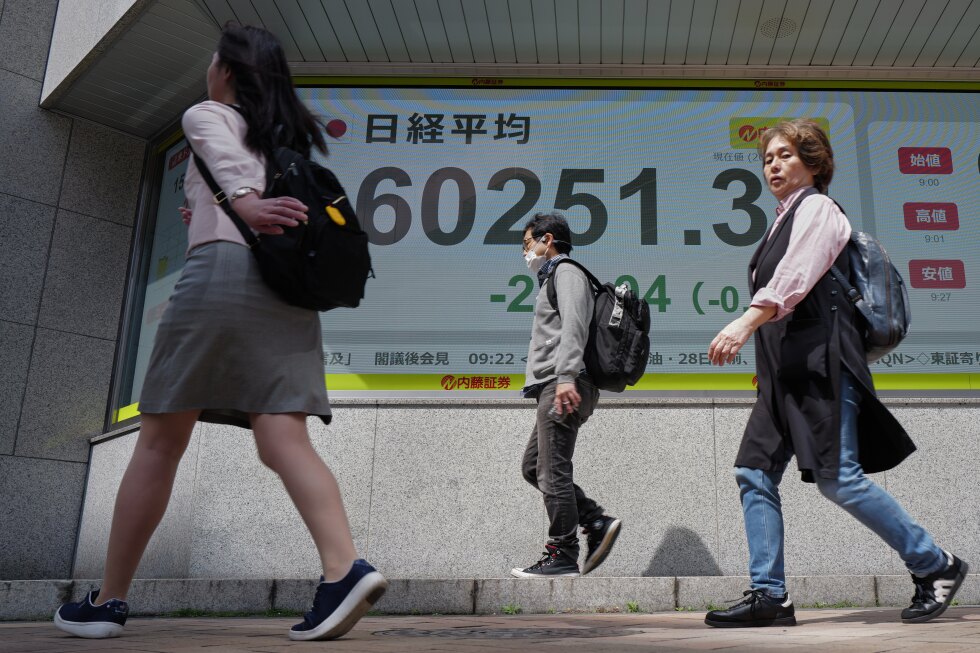
    The escalating conflict has already reverberated through global markets, with Asian indexes falling sharply and oil prices surging above $110 per barrel. Analysts warn that continued attacks on energy infrastructure could trigger broader economic consequences, including higher fuel costs and supply chain disruptions, while increasing the risk of a wider regional conflict.

  • Cyprus leader calls for frank discussion on ‘colonial’ UK bases

    Cyprus leader calls for frank discussion on ‘colonial’ UK bases

    Cyprus President Nikos Christodoulides has characterized Britain’s two military installations on the island as lingering “colonial consequences” and called for forthcoming diplomatic discussions regarding their status and future. In statements made to the BBC during his arrival at an EU leadership summit in Brussels, Christodoulides emphasized the necessity for “an open and frank discussion with the British government” once Middle East tensions subside.

    The UK maintains sovereignty over the Akrotiri and Dhekelia bases under the 1960 treaty that established Cypriot independence. These installations recently gained strategic significance when RAF Akrotiri came under drone attack earlier this month, believed to have been launched by Iranian-backed Hezbollah forces from Lebanon. While two drones were intercepted, a third struck the base causing minimal damage. The incident has sparked local protests arguing that the British presence makes Cyprus a target for regional conflicts.

    Despite the bases not being utilized for US operations against Iran, the UK has authorized American forces to conduct “specific defensive operations” from these locations. The installations cover 98 square miles of Cypriot territory and provide employment for over 10,000 Cypriot citizens, creating complex socioeconomic ties alongside the political dimensions.

    Any potential negotiations would involve multilayered diplomatic considerations, as the original agreements involved the UK, Greece, Turkey, and representatives from both Greek and Turkish Cypriot communities. When pressed on whether he sought complete removal of the bases, Christodoulides declined to negotiate publicly while maintaining “a clear approach with regard to the future of the British bases.”

    In response to these developments, the UK Ministry of Defense highlighted Defense Secretary John Healey’s recent parliamentary comments noting that Cyprus’s National Guard leader stated military cooperation “has never been closer.” The UK has enhanced its military presence following the drone attack, with HMS Dragon recently entering the Mediterranean to bolster defenses. NATO allies including France, Greece, Germany, and Spain have also deployed naval assets to the region in a show of collective security support.