作者: admin

  • ‘New reality’ for Australia as One Nation surge takes hold in South Australia

    ‘New reality’ for Australia as One Nation surge takes hold in South Australia

    Australia’s political establishment confronts an unprecedented fragmentation as Pauline Hanson’s One Nation party achieves a seismic electoral breakthrough in South Australia. The populist movement captured a substantial 21% of first-preference lower house votes, fundamentally altering traditional political dynamics and signaling voter disillusionment with mainstream parties.

    Flinders University political analyst Associate Professor Rob Manwaring characterizes this development as Australia’s entry into a ‘new political reality’ previously witnessed in European nations like Sweden, Germany and France over the past decade. Despite Labor’s technical victory with approximately 40% primary vote and the Liberal Party securing eight seats, the electoral landscape demonstrates increasing fluidity with a significant bloc of voters actively rejecting major party alternatives.

    The right-wing faction faces particular challenges according to Dr. Manwaring, who notes that internal division potentially benefits Labor by preventing consolidation of opposition forces. This dynamic manifests acutely in Sussan Ley’s former constituency of Farrer, where One Nation confronts both established parties and independent candidates while navigating complex preference flows.

    One Nation MP Barnaby Joyce acknowledged organizational hurdles, including candidate vetting challenges after one South Australian candidate reportedly faced assault charges in the United Kingdom. Joyce simultaneously dismissed leadership tensions with Senator Hanson while advocating for strategic voter prioritization of One Nation in upcoming Victorian and federal elections.

    Federal Employment Minister Amanda Rishworth emphasized the Liberal Party’s particular need to differentiate itself from populist alternatives, citing visible fraternization between Liberal Senator Alex Antic and former conservative politician Cory Bernardi during the campaign.

    South Australian Premier Peter Malinauskas, securing a second term despite voter fragmentation, observed that One Nation’s appeal extended beyond traditional conservative bases to include disaffected Labor supporters. He criticized the party’s campaign as rhetoric-heavy but policy-deficient, emphasizing mainstream parties’ dual responsibility to maintain cultural relevance while advancing substantive economic agendas focused on prosperity and opportunity distribution.

  • The Gulf countries may retaliate if Iran attacks continue, Turkey says

    The Gulf countries may retaliate if Iran attacks continue, Turkey says

    Turkish Foreign Minister Hakan Fidan revealed on Saturday that Gulf Cooperation Council members have delivered their ultimate cautions to Iran regarding its ongoing assaults against regional infrastructure. The diplomatic declaration emerged from an emergency regional summit in Riyadh, where participating nations collectively condemned Tehran’s targeted operations against civilian and economic facilities.

    Minister Fidan, attending the critical meeting in Saudi Arabia’s capital, stated that Gulf representatives expressed profound frustration at being drawn into the conflict between Iran and the Israeli-American alliance. The participating nations emphasized their neutrality in the original conflict and denounced what they characterized as unjustified aggression against their sovereign territories.

    The summit convened specifically to address Iran’s recent escalation, including missile and drone strikes directed at Riyadh during the ministerial gathering itself—an act perceived as deliberately provocative. Particularly damaging were Iran’s attacks on Qatari natural gas installations and Saudi petroleum infrastructure, which prompted serious reevaluation of regional security strategies.

    According to Fidan’s assessment, Gulf states have clearly communicated that continued assaults will necessitate defensive countermeasures. This hardening stance coincides with strategic shifts, including Saudi Arabia’s reported decision to permit American utilization of King Fahd Air Base in Taif, signaling strengthened cooperation with Western allies.

    Turkish diplomatic channels remain actively engaged in de-escalation efforts, with Ankara opposing both Israeli military expansionism and Iran’s regional proliferation of hostilities. Fidan warned against the conflict transforming into a prolonged regional war, noting potential transformations in Gulf defense cooperation and industrial capabilities.

    Turkey’s growing role as a defense supplier to Middle Eastern nations, including existing partnerships with Egypt, Saudi Arabia, and the UAE regarding drone technology and munitions, positions it uniquely within the emerging security architecture. The minister indicated that sustained conflict might accelerate regional defense industrialization efforts.

  • ‘Peace is a gradual thing’: How land, cattle and identity fuel a deadly Nigerian conflict

    ‘Peace is a gradual thing’: How land, cattle and identity fuel a deadly Nigerian conflict

    In the heart of Nigeria’s Plateau State, a complex humanitarian crisis unfolds against a backdrop of historical tensions and competing narratives. The April 2025 nighttime assault on Zike village, where 52 members of the Christian Irigwe community perished, represents just one episode in a decades-long cycle of violence that has claimed thousands of lives.

    Eyewitness Joseph Ize Zino recounts the terror of that night: ‘Around midnight, I heard the first gunshots. All of us in the house, we ran. That was how we survived.’ As he hid in surrounding fields, he heard attackers chanting ‘Allahu Akbar’ while proclaiming ‘We will finish them today.’

    The conflict defies simple characterization. While Christian communities describe targeted persecution, Muslim Fulani herders tell mirror stories of victimization. Ardo Wada Waziri, a 70-year-old Fulani elder, remembers the 2001 violence that shattered generations of coexistence: ‘The Irigwe youth just went into our settlements and set them on fire. Fifty-two of our people were killed.’ His own son fell victim to an ambush mere months ago.

    Beneath surface-level religious tensions lies a multifaceted struggle over land rights, political representation, and economic survival. The state’s classification system creates entrenched divisions—’indigenes’ (predominantly Christian farmers) receive preferential access to resources, while ‘settlers’ (including Muslim Fulani with generations of residence) face systemic marginalization.

    The competition for diminishing resources intensifies as Nigeria’s population grows. Traditional symbiotic relationships between farmers and herders have deteriorated into violent confrontations. Aliyu Abdullahi Isa, a 25-year-old Fulani herder, explains the economic stakes: ‘A cow is worth around 1 million naira ($700)—that represents a family’s wealth built over generations.’ His family lost everything when attackers killed 37 cattle and stole 48 others, murdering his 14-year-old brother in the process.

    Despite the violence, islands of coexistence persist. In Mista Ali, Chief Dr Danladi Akinga Kasuwa demonstrates how determined leadership can prevent conflict escalation. ‘Muslim, Christian, no problem. The Fulani are our brothers, the indigenes are our brothers, all,’ declares the Christian traditional ruler who immediately convened community leaders during the 2001 violence to prevent local spillover.

    International involvement adds another dimension to the conflict. Recent US military intervention—including missile strikes against suspected Islamist hideouts and deployment of 200 training personnel—has focused primarily on combating extremist groups rather than addressing underlying communal tensions.

    Grassroots initiatives offer glimmers of hope. British-funded agricultural projects bring together farmers and herders from opposing communities. As Berom farmer Amos explains while working alongside Fulani friend Abdullahi: ‘We are all together, Berom and Fulani. That’s unity. We want to live together in peace like it was before.’

    The path to lasting peace remains fraught with challenges. Jacob Choji Pwakim, founder of Youth Initiative Against Violence and Human Rights Abuse, identifies how criminal elements profit from instability: ‘Some people do not want peace restored because they benefit from it—cattle rustling, robbery, kidnapping.’

    Ultimately, the solution may lie in local relationships rather than national policies. As Abdullahi observes while working alongside former adversaries: ‘We have started to see change.’ Amos adds: ‘Peace is a gradual thing that you build and build. We will continue until we get a perfect peace.’

  • A secularism law some women say makes them feel like ‘outsiders’ heads to Canada’s top court

    A secularism law some women say makes them feel like ‘outsiders’ heads to Canada’s top court

    Quebec’s controversial secularism legislation, known as Bill 21, is undergoing a pivotal constitutional review at Canada’s Supreme Court this week amid mounting evidence of its profound impact on religious minorities. The four-day hearing represents a critical juncture for a law that has reshaped the professional landscape for visibly religious public sector employees since its implementation in 2019.

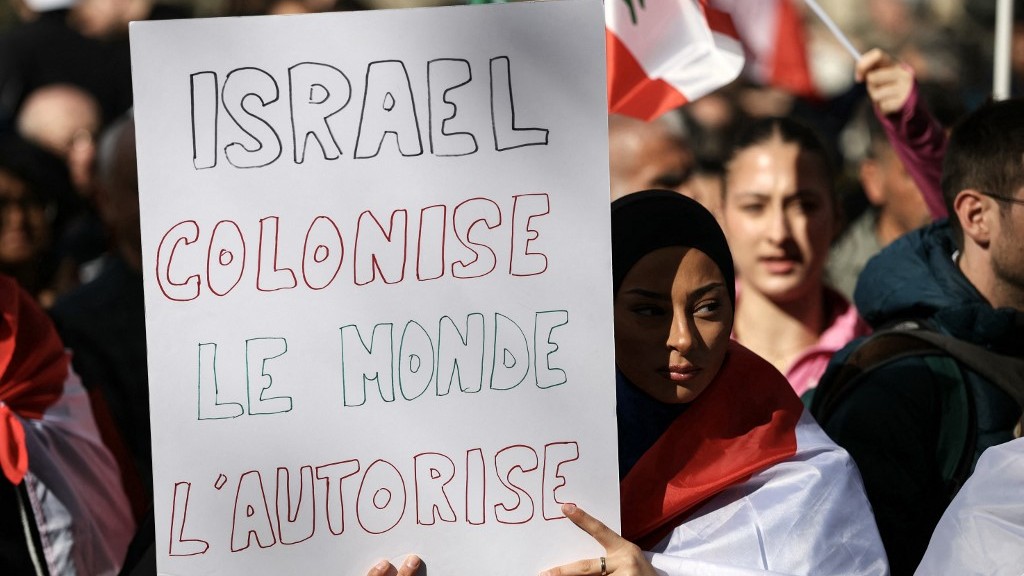
    The legislation prohibits public servants in positions of authority—including teachers, police officers, and judges—from wearing religious symbols while performing official duties. While the provincial government maintains the law promotes state neutrality and secularism (laïcité), affected communities describe it as institutionalized discrimination that has forced career changes, provincial migration, and profound personal distress.

    Lisa Robicheau, a 41-year-old single mother and hijab-wearing support worker for students with disabilities, exemplifies the law’s human toll. Though currently exempt due to her pre-law employment status, she describes living under constant anxiety about her professional future. “I’ve spent the majority of my life here, but it never feels like home,” she told the BBC. “I am constantly being treated like an outsider.” This sentiment has driven her to pursue university education with hopes of securing alternative employment or leaving Quebec entirely.

    Research conducted by York University’s Nadia Hasan reveals disturbing trends: 73% of Muslim women surveyed reported Bill 21 affected their job prospects, with over half experiencing workplace prejudice and similar numbers considering provincial relocation. The law has inadvertently fostered social segregation by pushing religious minorities toward community-specific employment within Muslim businesses and private institutions.

    The constitutional challenge, brought by thirteen appellants including civil liberties organizations and school boards, questions both the law’s validity and the controversial “notwithstanding clause” used to enact it. This constitutional provision allows provinces to temporarily override certain charter rights, including religious freedom and equality protections.

    Historical context illuminates Quebec’s unique relationship with religion. The province’s 1960 Quiet Revolution dramatically secularized public institutions that were once dominated by Catholic clergy. Recent decades have seen growing tensions between preserving French-Canadian identity and accommodating religious diversity, with debates increasingly mirroring France’s strict secularism model.

    The current government seeks to expand the law’s reach to include all public school staff and daycare workers while banning prayer in public spaces—measures supported by majority polling but criticized as further marginalizing religious communities. Whatever the Supreme Court’s ruling, Bill 21 has already fundamentally altered Quebec’s social fabric and raised urgent questions about religious freedom in pluralistic societies.

  • Italy is voting on whether to change its constitution. What does this mean for Meloni?

    Italy is voting on whether to change its constitution. What does this mean for Meloni?

    Italian Prime Minister Giorgia Meloni faces a critical political showdown as the nation prepares for a constitutional referendum this weekend that has transformed into a de facto plebiscite on her leadership. The proposed judicial reforms, which would separate career paths for judges and prosecutors while establishing distinct governing bodies, have ignited fierce debate across Italy’s political spectrum.

    In an unprecedented outreach effort, Meloni appeared on the popular Pulp podcast alongside rapper Fedez and co-host Luca Marra, exchanging her customary formal attire for casual wear to connect with younger voters. During the hour-long discussion, she vigorously defended the reforms as essential for creating a “more meritocratic, more responsible, more efficient” justice system while dismissing opposition claims as politically motivated attacks.

    The referendum has polarized the nation, with trade unions and opposition parties staging large demonstrations in Rome’s Piazza del Popolo, where protesters spelled out “Vote No” in white tape on cobblestones. Opposition forces frame the reform as a dangerous threat to democratic balances established in Italy’s post-fascist constitution, warning it could subject the judiciary to political control.

    Meloni’s government maintains that the changes address longstanding issues within Italy’s overloaded judicial system, which suffers from some of Europe’s longest trial durations. However, critics point to the proposal’s origins in Silvio Berlusconi’s Forza Italia party—which frequently clashed with courts during his leadership—and express concern about Meloni’s own adversarial relationship with the judiciary.

    The prime minister has employed dramatic rhetoric, claiming without evidence that rejecting the reforms would lead to “more immigrants, rapists, paedophiles, and drug dealers being freed.” Such statements have intensified concerns among opponents who note Meloni’s political beginnings as an admirer of Mussolini.

    With recent polls suggesting low turnout might benefit the “no” campaign, and amid economic pressures from global uncertainty and rising energy prices, the referendum has become a vessel for broader public discontent. Political analysts suggest that while Meloni would not resign following a defeat, her political standing would be significantly weakened, potentially shaking the stability she has brought to Italy’s traditionally volatile governance.

  • ‘Not there yet’: Why Australia is ‘not contemplating’ emergency fuel powers

    ‘Not there yet’: Why Australia is ‘not contemplating’ emergency fuel powers

    Despite soaring fuel prices and sporadic station shortages across Australia, Energy Minister Chris Bowen has confirmed the Albanese government is “not contemplating” the activation of emergency fuel powers. The declaration comes as the nation’s strategic reserves show stabilization, with current supplies indicating 38 days of petrol and approximately 30 days of diesel and jet fuel availability.

    Minister Bowen, speaking on ABC Insiders, attributed recent supply challenges primarily to consumer panic buying rather than systemic failure. “Both our refineries are working absolutely full pelt,” Bowen stated, noting that fuel levels remain consistent with pre-crisis measurements despite market volatility.

    The government’s multi-pronged response has included controlled releases from strategic reserves, temporary adjustments to sulfur content standards, and the recent appointment of a fuel supply task force coordinator. While Bowen previously warned of potential shipment uncertainties from mid-April, he now reports only six cancelled shipments out of an average monthly total of 81, with alternatives being secured for affected deliveries.

    Australia’s fuel supply chain faces broader challenges as traditional Asian refiners in Malaysia, South Korea and Singapore reduce output. This has prompted diversification efforts including potential imports from the United States and India, though the latter raises concerns about indirectly supporting Russian oil exports through blended products.

    Bowen explicitly ruled out invoking the Liquid Fuel Emergency Act 1984—never used despite previous Gulf Wars and COVID—emphasizing its designation for extreme circumstances affecting defense and health sectors. Any implementation would require consultation with the National Oil Emergency Committee and approval from the Governor-General.

    With 74 of 80 expected fuel shipments scheduled for April and May, the government maintains that rationing measures remain distant possibilities under state jurisdiction, currently deemed unnecessary despite ongoing price pressures at the pump.

  • Records shattered as US heatwave moves eastward

    Records shattered as US heatwave moves eastward

    An extraordinary heatwave of historic proportions continues its relentless advance across the United States, transitioning from western regions toward the nation’s heartland while establishing unprecedented temperature benchmarks for the month of March. Meteorological authorities confirm this anomalous weather event has rewritten climate records from California to Colorado, with numerous cities experiencing their highest March temperatures since record-keeping began.

    The thermal surge produced remarkable readings across central states on Saturday, with Kansas City, Missouri and North Platte, Nebraska both registering 92°F (33.3°C). The temperature escalation reached particularly dramatic proportions in Chanute, Kansas, where the mercury swung from a record low of 13°F (-10.5°C) on March 16 to a record high of 91°F (32.8°C) within just four days.

    Phoenix, Arizona witnessed its earliest occurrence of a daily minimum temperature at 70°F (21.1°C), while Denver, Grand Island (Nebraska), and Midland (Texas) all established new daily records. The heatwave’s intensity peaked Friday along the California-Arizona border, where temperatures reached 112°F (44.4°C) – setting a new national record for March.

    The National Weather Service has responded by issuing extreme heat warnings for desert regions and red flag warnings across Nebraska, Kansas and Oklahoma, indicating critically high wildfire risks due to dry conditions and elevated temperatures.

    Climate scientists emphasize that such extreme early-season heatwaves provide compelling evidence of accelerating global warming patterns, primarily driven by fossil fuel consumption. The unseasonable warmth coincides with the official transition from winter to spring in the northern hemisphere, disrupting ecological cycles and prompting unusually early vegetation growth following substantial December and January precipitation.

  • The Bachelorette’s messy break-up with its unlikely star Taylor Frankie Paul

    The Bachelorette’s messy break-up with its unlikely star Taylor Frankie Paul

    In an unprecedented move that has sent shockwaves through the entertainment industry, ABC abruptly canceled the 22nd season of The Bachelorette just three days before its scheduled premiere. The decision came after newly surfaced footage showed lead contestant Taylor Frankie Paul, a TikTok personality with six million followers, allegedly engaging in domestic violence against her ex-boyfriend with their daughter present.

    The controversy represents a spectacular miscalculation by ABC, which had invested heavily in promoting Paul as the first Bachelorette not selected from the Bachelor Nation pool. The 31-year-old star of Hulu’s ‘Secret Lives of Mormon Wives’ brought both substantial social media clout and a documented history of personal turmoil that ultimately proved too risky for the family-friendly Disney brand.

    Industry insiders reveal the casting was essentially a ‘Hail Mary’ attempt to revitalize the aging franchise by tapping into Paul’s controversial reputation and cross-promotion potential with Disney-owned Hulu. Her notoriety stemmed from publicly discussing her divorce and participation in ‘soft-swinging’ within her Mormon social circle, which had driven successful viewership for the Secret Lives of Mormon Wives series.

    The cancellation marks the first time in The Bachelor franchise’s 24-year history that a season has been scrapped so close to airing. The fallout has been immediate and severe: sponsor Cinnabon terminated its collaboration, planned appearances on The Tonight Show were canceled, and production on Season 5 of Secret Lives of Mormon Wives has been paused indefinitely.

    Entertainment attorneys estimate the financial impact could reach eight figures, with Warner Bros Television and ABC now negotiating how to manage losses with advertisers. Legal experts note that Disney likely had contractual ‘morality clause’ protections that allowed them to exit the situation without greater liability.

    The incident has sparked broader conversations about reality television’s perpetual conflict between entertainment value and ethical responsibility. Industry vetting professionals emphasize that Paul’s criminal history, alcohol use, and mental health issues should have raised red flags during the casting process. As one insider noted: ‘They just got it wrong.’

    The debacle serves as a cautionary tale about the dangers of prioritizing social media influence over thorough background checks, particularly for broadcast networks held to higher standards than their streaming counterparts.

  • Turkey, Saudi Arabia, Egypt and Pakistan meet as Ankara pushes for a security pact

    Turkey, Saudi Arabia, Egypt and Pakistan meet as Ankara pushes for a security pact

    In a significant diplomatic development, the foreign ministers of Turkey, Saudi Arabia, Egypt, and Pakistan convened in Riyadh on Thursday to establish a groundbreaking regional security framework. The meeting, held alongside an Islamic countries summit, marked the first substantive discussions about combining these nations’ strategic capabilities to address regional challenges independently.

    Turkish Foreign Minister Hakan Fidan articulated the initiative’s philosophy, emphasizing that regional powers must develop collective solutions to prevent external hegemony from imposing self-serving arrangements. ‘We are exploring how, as countries with a certain degree of influence in the region, we can combine our strengths to solve problems,’ Fidan stated on Saturday, underscoring the principle of regional ownership.

    The emerging security platform represents a strategic pivot from Turkey’s earlier efforts to establish bilateral security arrangements. Since last year, Ankara has pursued a security pact with Pakistan and Saudi Arabia, with discussions reportedly ongoing for approximately twelve months. More recently, Turkish diplomatic sources confirmed efforts to incorporate Egypt into the arrangement, though officials clarify the agreement won’t mirror NATO’s mutual defense commitments but will instead facilitate enhanced cooperation in defense industries and broader security matters.

    The ministerial discussions addressed pressing regional conflicts, including the escalating tensions between Israel and Iran, though the participating countries issued a statement notably critical of Tehran’s attacks on Gulf targets while making only brief reference to Israel’s ‘expansionist’ policies in Lebanon—a contrast to Ankara’s consistent characterization of Israel as the primary instigator of regional conflict.

    Each nation brings distinct capabilities to the proposed alliance: Turkey’s advanced domestically-produced drone and missile systems, Pakistan’s nuclear deterrent, Saudi Arabia’s emerging technological hub status, and Egypt’s substantial conventional military forces and demographic weight as the Arab world’s most populous nation. The foundation for deeper Turkish-Egyptian cooperation was already established in February when both countries signed a bilateral military agreement during President Erdogan’s Cairo visit, accompanied by a $350 million defense export contract between Turkish arms manufacturer MKE and Egypt’s Ministry of Defense.

  • Brazil’s Lula slams ‘interference’ in previously colonized countries, without naming Trump

    Brazil’s Lula slams ‘interference’ in previously colonized countries, without naming Trump

    At a major international gathering in Colombia on Saturday, Brazilian President Luiz Inácio Lula da Silva delivered a scathing critique of what he characterized as resurgent colonial practices targeting developing nations. Speaking before delegates from Africa and the Community of Latin American and Caribbean States (CELAC), the left-wing leader pointed to specific actions against Venezuela and Cuba as evidence of contemporary imperialism.

    Lula challenged the democratic legitimacy of interventions in sovereign states, stating: ‘It’s not possible for someone to think that they own other countries. What are they doing with Cuba now? What did they do with Venezuela? Is that democratic?’ His remarks, though not explicitly naming the United States, clearly referenced Washington’s historical influence in the region.

    The Brazilian president expanded his criticism to include recent military actions, drawing parallels between the U.S. and Israel’s February 28 offensive against Iran and the previously discredited justification for the Iraq War. ‘Iran has been invaded under the pretext that Iran was building a nuclear bomb,’ Lula noted. ‘Where are Saddam Hussein’s chemical weapons? Where are they? Who found them?’

    Lula asserted that developing nations continue to face resource exploitation, declaring that after historical plundering of gold, silver, diamonds and minerals, powerful nations now seek control over critical minerals and rare earth deposits. ‘They want to colonize us again,’ he warned.

    The summit also featured strong condemnation of the United Nations’ failure to prevent global conflicts. Lula described the UN as experiencing ‘total and absolute failure,’ particularly referencing situations in Gaza, Ukraine and Iran. He joined Colombian President Gustavo Petro in calling for urgent reform of the Security Council, whose veto-wielding permanent members (the United States, Russia, China, Britain and France) have consistently hampered effective action.

    Petro, designated a ‘priority target’ by the U.S. Drug Enforcement Administration, echoed Lula’s assessment, stating the UN ‘is acting in impotence, and that is not what it was created for.’ He emphasized the simultaneous need for effective international institutions to address climate change while warning that diminishing tools for collective action ‘leads only to barbarism.’

    The relatively limited attendance of Latin American and Caribbean leaders at the Colombia summit highlighted the continent’s deep political divisions amid these ongoing geopolitical tensions.