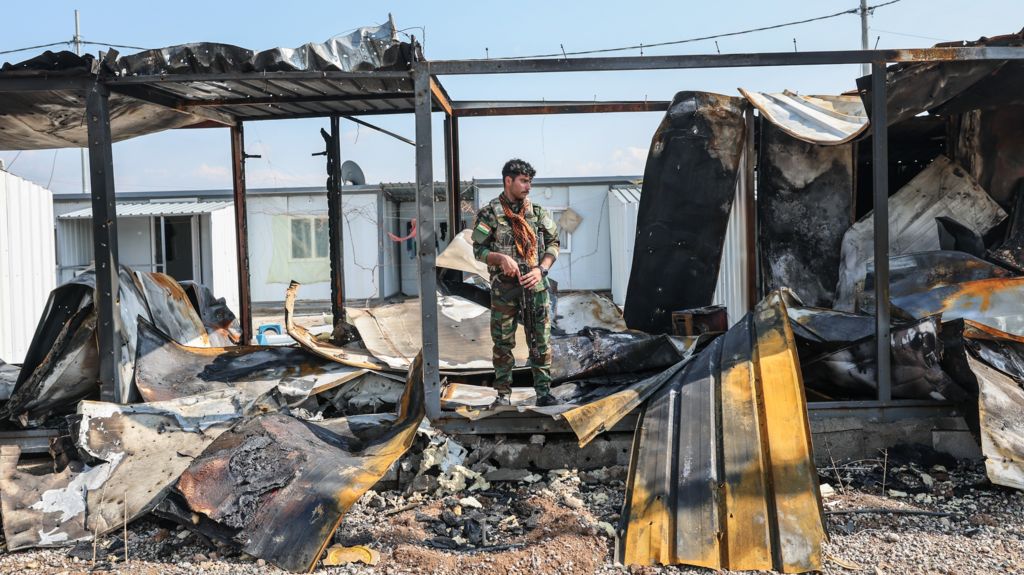
Two months after a fragile ceasefire halted open hostilities between Israel and Iran, the region has been jolted by a fresh escalation: the first mutual missile strikes between the two adversaries since the truce took effect. This sudden breakdown of the ceasefire has reignited urgent debate over the scope of U.S. influence over Israeli security policy, particularly surrounding the question of whether former U.S. President Donald Trump, who oversaw a dramatic shift in Washington’s Iran strategy during his tenure, retains any meaningful control over the trajectory of the long-running Israeli-Iranian conflict. The precarious ceasefire, which had been held together by behind-the-scenes diplomatic pressure and informal understandings, had raised cautious hopes that de-escalation could lead to broader talks. Instead, the exchange of missile strikes has pushed the already volatile Middle East closer to open full-scale conflict, leaving regional and global powers scrambling to assess the new security landscape. Analysts note that the resumption of hostilities underscores the deep mistrust between Israel and Iran, with each side viewing the other’s actions as a deliberate provocation. For Washington, the new outbreak of violence also revives longstanding debates about the extent of U.S. leverage over its closest Middle Eastern ally, as well as the consequences of the Trump administration’s maximum pressure campaign against Iran that reshaped the regional security order years ago.
作者: admin
-

ICC bureau suspends Prosecutor Karim Khan pending final vote on misconduct probe
In a move that has thrown the International Criminal Court (ICC) into unprecedented institutional uncertainty, the 21-member executive bureau of the ICC’s Assembly of States Parties (ASP) voted on Monday to immediately suspend Chief Prosecutor Karim Khan, directly rejecting the findings of an independent judicial panel that cleared Khan of all wrongdoing. The suspension paves the way for a full vote by the broader 125-member ASP on whether to permanently remove Khan from his post, in a disciplinary process that legal experts warn risks eroding the court’s independence.
The bureau announced that a qualified majority of its members backed the suspension, which will remain in force until the full ASP issues a final ruling on the case. The decision invoked Rule 28 of the ICC’s Rules of Procedure and Evidence, after two-thirds of voting bureau members supported a formal finding of “serious misconduct”—a procedural step required to advance the matter to a full vote of the ASP. In its official statement, the bureau emphasized that the suspension is not the final outcome of the disciplinary process, and it has moved to convene a special session of the full ASP as quickly as possible to resolve the dispute.
The bureau’s determination drew on an investigation conducted by the United Nations Office of Internal Oversight Services (OIOS), along with underlying evidence, input from an ad hoc expert judicial panel, and submitted written arguments. The body has also committed to keeping all related documentation and deliberations confidential, calling for full respect for the privacy and legal rights of all parties involved, as well as the integrity of the ongoing process.
Per ASP rules, the full body will first need to uphold the finding of serious misconduct via a two-thirds majority of states present and voting. If that threshold is met, a second vote will be held on removing Khan, which requires an absolute majority of the 125-member ASP—at minimum 63 votes—to pass.
The controversy stretches back to May 2024, when unproven allegations of sexual misconduct emerged against Khan, which he has repeatedly and vehemently denied. After the complainant declined to cooperate with the ICC’s internal investigative body, the ASP commissioned the independent OIOS-led probe. The UN investigation’s findings were then passed to a three-judge expert panel, tasked with advising the bureau on whether Khan had committed serious misconduct, minor misconduct, or no misconduct at all.
Middle East Eye (MEE) first reported in March that the judicial panel issued a unanimous ruling that the evidence presented in the UN investigation failed to establish any misconduct or breach of duty under ICC rules. Just weeks later, however, a majority of the bureau voted to set aside the panel’s independent finding, moving forward with the disciplinary process anyway.
Legal observers have raised sharp alarms about the decision to overrule the independent judicial panel, warning that the move risks turning the misconduct probe into a politicized process. The entire affair has already left the ICC in uncharted institutional limbo, with ongoing uncertainty surrounding Khan’s future and unauthorized media leaks of the unproven allegations against him.
Khan has already signaled his next steps if the full ASP votes to remove him: he has confirmed he will appeal any dismissal to the Administrative Tribunal of the International Labour Organization (ILOAT), the independent body that handles employment appeals for ICC staff. A separate legal opinion shared with ICC member states last month, prepared by former International Court of Justice judge Abdul Koroma, supports this path: Koroma found that the ILOAT could order Khan to be reinstated and order the ICC to pay up to €1.5 million (equivalent to $1.74 million) in damages if his removal is found to be unlawful.
Critics have also noted that the disciplinary proceedings against Khan align with a sustained campaign by the United States and its allies to derail his office’s high-stakes investigation into alleged war crimes and genocide committed by Israeli officials in Gaza. Khan, a British barrister elected as the ICC’s third chief prosecutor in 2021, has overseen investigations into serious international crimes against leaders across the globe: his office has issued arrest warrants for Russian President Vladimir Putin, Israeli Prime Minister Benjamin Netanyahu, Myanmar’s junta leadership, and Taliban officials in Afghanistan.
Khan’s aggressive pursuit of high-profile cases against powerful leaders has already drawn retaliation from opposing states: the Trump administration imposed sweeping sanctions on Khan in February 2025, and Russian courts have issued an arrest warrant for him in absentia. While the U.S., Russia, and Israel are not ICC member states, the court exercises jurisdiction over crimes committed by their nationals on the territory of any member state. The U.S. later expanded sanctions to target two additional deputy prosecutors, eight sitting ICC judges involved in the Palestine and Afghanistan investigations, the UN special rapporteur on Palestine, and multiple Palestinian non-governmental organizations that provided evidence to the court’s investigations.
-

Watch: Southern Lights timelapse filmed from space
A breathtaking new timelapse sequence has given humanity a one-of-a-kind perspective on one of Earth’s most dazzling natural phenomena: the aurora australis, more commonly known as the Southern Lights. The remarkable footage was not captured from a remote viewing spot on the planet’s southern surface, but from the unique vantage point of low-Earth orbit, taken by NASA astronaut Jessica Meir during her mission aboard the International Space Station (ISS).
Auroras like the Southern Lights form when charged particles released from the sun collide with gaseous molecules in Earth’s upper atmosphere. These interactions spark the glowing, dancing waves of green, purple and blue that draw skywatchers to polar regions year after year. While ground-level photographs and timelapses are common for this event, Meir’s capture from space offers an unprecedented, sweeping view that shows the full scale of the auroral oval as it wraps around the Earth’s southern pole.
The timelapse compresses hours of activity into a brief, mesmerizing sequence, revealing how the lights shift and undulate across the upper atmosphere against the backdrop of the dark, star-studded expanse of space. Space agencies including NASA regularly share imagery captured by ISS astronauts to engage the public with Earth science and astronomy, highlighting the dynamic beauty of our planet that can only be fully appreciated from orbit. Meir’s footage joins a growing archive of extraordinary astronomical and geophysical observations collected from the ISS, helping both scientists and the public better understand the behavior of space weather and its visible impacts on Earth.
-

Gaza doctor Hussam Abu Safiya placed in solitary confinement, lawyer says
A prominent Palestinian doctor taken into Israeli custody from Gaza late last year is being held in solitary confinement under severely abusive conditions that have exacerbated his preexisting chronic health problems, his legal representative has confirmed, drawing sharp condemnation from global human rights groups. Hussam Abu Safiya, a hospital director abducted by Israeli forces in December 2024, has faced consistent mistreatment including medical neglect, physical violence, and insufficient access to food and water since his detention began, according to his lawyer Nasser Odeh. Odeh shared these details following his most recent contact with the detainee during a visit on 26 May, one of the limited opportunities for communication between Abu Safiya and his legal team. During that visit, Odeh documented that Abu Safiya remained physically restrained throughout the meeting, which was held in a camera-monitored room with a glass barrier separating the two men and armed guards positioned on both sides. Odeh described the meeting as extremely short, noting that Abu Safiya was too afraid of retaliation from prison staff to openly discuss many details of his treatment behind bars. Physicians for Human Rights Israel (PHRI), an independent rights organization, had previously revealed that Abu Safiya lives with serious health conditions including severe scabies and chronic heart disease, and has lost a dangerous amount of weight since being taken into custody. As of 3 June, Abu Safiya was transferred from Negev Prison to Nafha Prison in southern Israel, where prison authorities immediately placed him in solitary confinement. Odeh confirmed that no updates have been shared on Abu Safiya’s condition or wellbeing since the transfer, leaving his legal team with no information about his current status. Despite being a civilian healthcare worker who was seized while carrying out his medical duties, Abu Safiya has been classified as an “unlawful combatant” under controversial Israeli legislation that has been widely decried by rights groups as a blatant violation of international humanitarian law. This designation allows Israeli authorities to hold detainees indefinitely without formal indictment, court approval, or guaranteed access to legal representation, and permits officials to withhold information about a detainee’s location and condition from outside parties. In response to Abu Safiya’s ongoing detention under this framework, Odeh confirmed that his legal team has filed an appeal with the Israeli High Court of Justice, which is scheduled to hold a hearing on the request on 10 June. The case of Abu Safiya is far from isolated: he is one of at least dozens of Palestinian doctors, nurses, and emergency medical workers who have been arbitrarily detained and targeted by Israeli forces since the outbreak of the current conflict, with many seized while treating patients in Gaza hospitals. According to tallies from Palestinian prisoner advocacy groups, the total number of Palestinian detainees held in Israeli prisons as of early June stands at roughly 9,500. This figure does not include thousands more uncounted detainees, mostly people abducted from Gaza, who are being held in undisclosed Israeli military camps with no public accounting of their status. Since 7 October 2023, multiple independent human rights investigations have documented widespread, systematic abuse of Palestinian detainees in Israeli custody. Reports from leading rights organizations outline patterns of starvation, deliberate medical neglect, routine physical violence, psychological humiliation, sexual assault, theft of personal property, and the use of mass solitary confinement on an unprecedented scale. Agnes Callamard, Secretary General of Amnesty International, is among the leading global rights figures who have publicly called for Abu Safiya’s immediate release, joining a growing chorus of condemnation over the mistreatment of detained Palestinian healthcare workers.
-

Platini switches to French courts in long-running FIFA feud
Just four days before the kickoff of the 2026 FIFA World Cup, a long-simmering power struggle at the top of global football has erupted into a new legal battle. Seventy-year-old Michel Platini, the legendary French footballer who led the organization of the 1998 World Cup on home soil, announced Monday he has launched legal action against current FIFA president Gianni Infantino in French judicial system, marking the latest turn in a feud stretching back almost a decade.
In an official statement shared with Agence France-Presse, Platini confirmed his legal team has submitted two separate court filings targeting the plot he claims was hatched to keep him from claiming the FIFA presidency he says was promised to him. The French legal system, the statement noted, is now charged with fully unravelling this conspiracy.
The roots of the conflict stretch back to 2015, when long-time FIFA president Sepp Blatter was forced out of office amid a sweeping corruption scandal. At the time, Platini served as the head of UEFA, European football’s governing body, and was widely seen as the overwhelming favorite to succeed Blatter. But just as his campaign got underway, the former France captain and national team coach was pulled into the expanding scandal, derailing his bid entirely. In his place, Infantino — Platini’s own deputy at UEFA — stepped in and won the FIFA presidency, setting off a years-long bitter feud between the two men.
Platini’s new legal action names three key figures as defendants: 56-year-old Infantino, and former FIFA officials Marco Villiger and Domenico Scala. He is also calling on French prosecutors to open investigations into former Swiss Attorney General Michael Lauber and other officials from his department. The first filing is a civil lawsuit, which seeks full financial compensation for all harms Platini has endured since the alleged conspiracy blocked his 2015 presidential run. The second is a criminal complaint that pushes for a formal investigation into charges of criminal conspiracy, false accusations, influence peddling, and aiding and abetting influence peddling, all aimed at removing Platini from the 2015 presidential race.
This is not the first time Platini has turned to the courts to seek redress. He previously filed two separate legal complaints in Switzerland, but neither case ever proceeded to a public trial. For their part, Swiss prosecutors spent years pursuing criminal action against Platini over a $2 million 2011 payment he received from FIFA, but three separate attempts to secure a conviction all ended in failure. Swiss authorities have also opened investigations into Infantino over his use of private jets and three undisclosed closed-door meetings he held with Lauber between 2016 and 2017.
In his statement Monday, Platini doubled down on his claim that he was the victim of a coordinated unjust plot. “The Parisian investigating judge, along with investigative agencies, police, and gendarmerie, are tasked with uncovering and exposing the internal manoeuvres within FIFA, with the possible complicity of Swiss magistrates, to block the path of the three-time Ballon d’Or winner to the helm of world soccer,” the statement read.
-

Trump calls on Iran and Israel to ‘stop shooting immediately’
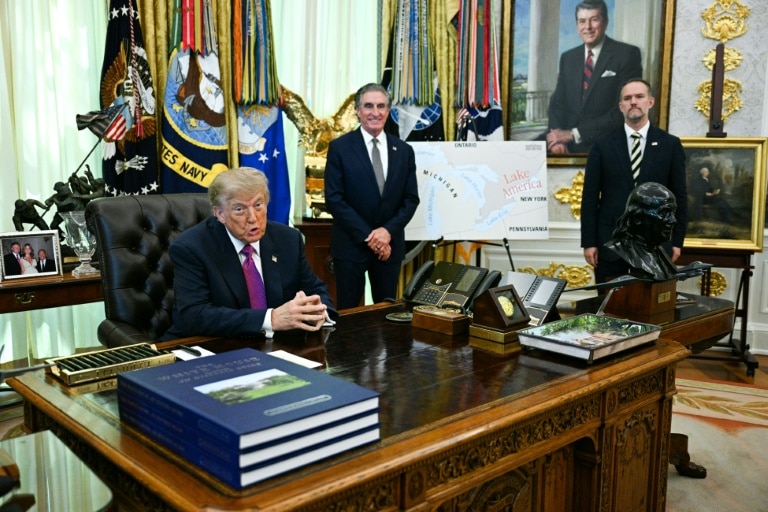
A fragile regional ceasefire between Iran and Israel has collapsed into open tit-for-tat missile exchanges, prompting outgoing U.S. President Donald Trump to issue urgent public and private calls for an immediate end to hostilities amid growing global alarm over wider conflict.
In a public post to his Truth Social platform over the weekend, Trump stressed that the two nations “must immediately stop ‘shooting’”, as cross-border attacks reignited long-simmered tensions that a fragile April ceasefire had temporarily paused. The escalation comes even as the Trump administration has pursued behind-the-scenes diplomatic efforts to lock in a new peace deal, with the president directly pressuring Israeli Prime Minister Benjamin Netanyahu to hold off on retaliatory strikes, according to senior U.S. administration sources.
The current cycle of violence was triggered Saturday when Israeli warplanes struck Beirut’s southern suburbs, killing at least two people and wounding 20 more. In a deliberate, proportional response, Iran launched a barrage of missile strikes toward northern Israel on Sunday, fulfilling long-stated pledges to retaliate for attacks on Iranian interests and allied assets. Despite Trump’s last-minute phone call urging Netanyahu to stand down to save faltering peace negotiations, Israel launched its own wave of counter-strikes against targets inside Iran.
A senior anonymous U.S. official outlined that Trump told Netanyahu during the Sunday call that Washington was “close to doing something good in terms of a deal”. The official added that Netanyahu initially pushed back against the request before offering a tentative, non-binding agreement to hold fire, and confirmed the Trump administration never issued “the green light” for Israel’s strike on the Lebanese capital. Ahead of the call, Trump had already publicly expressed dissatisfaction with the Beirut attack, telling Fox News he was “not happy” about the strike on Lebanon’s capital. In separate comments to the Financial Times, Trump also claimed Netanyahu would have “no choice” but to accept a negotiated deal with Iran, asserting that “I call the shots” on regional diplomacy.
The failed diplomatic push has drawn sharp criticism from political opponents in Washington. U.S. Democratic Senator Chris Murphy argued that the new wave of cross-border attacks compounds what he called Trump’s diplomatic “humiliation”, marking a clear failure of the administration’s efforts to constrain Israeli military action.
Iran has meanwhile formally pinned responsibility for the escalation on the United States, in comments carried by the country’s state-run Tasnim news agency. Foreign ministry spokesperson Esmaeil Baghaei noted that Washington is a signatory to the April 8 ceasefire agreement, saying “Whatever happens in the region… the direct responsibility of the United States is established, and it will also bear responsibility for the consequences of any escalation.” He added that the original negotiation framework was intended to end broader hostilities against Iran and resolve the ongoing conflict in Lebanon as core components of the ceasefire deal.
On Monday, multiple reports from Iran’s official IRNA news agency confirmed widespread “powerful explosions” were heard across key Iranian cities including Tehran, Isfahan, and Tabriz. Israeli military officials confirmed they had targeted military sites across western and central Iran, including a strike on a major petrochemical facility in the port city of Mahshahr. To date, neither side has released official casualty figures from the latest exchange of strikes, though emergency management and hospital systems in both countries have activated full response protocols to prepare for the risk of prolonged open hostilities.
In response to Israel’s strikes, Iran’s Islamic Revolutionary Guard Corps (IRGC) launched a coordinated retaliatory operation codenamed “Operation Nasr”. The IRGC announced its aerospace division fired precision missiles at two key Israeli air bases: Nevatim Air Base and Tel Nof Air Base, saying the operation was launched in response to earlier Israeli strikes on Iranian radar installations across multiple locations. This marked the first major direct Iranian attack on Israeli territory since the April ceasefire came into force. Israeli air defense systems reported intercepting roughly 10 incoming missiles bound for northern Israel, with no casualties reported on the Israeli side as of Monday morning.
In an official statement, the IRGC noted the operation was the first phase of a broader retaliatory campaign, added that the strike was dedicated to fallen Iranian service members killed during the previous year’s 12-day war, and carried out under the alternate code name “Ya Heydar Karrar”. The group stressed all of its combat units remain at full operational readiness to respond to any further escalation, warning that additional strikes will follow if Israel continues its military campaign across the region.
-

Apple tries again on AI, turns to Google for help
Two years after a high-profile but unfulfilled initial push into artificial intelligence left the tech giant facing public criticism and legal action, Apple has launched a sweeping AI upgrade for its iPhone ecosystem — and it is turning to long-time partner Google to power core capabilities of the new system. Monday’s announcement, made at Apple’s annual Worldwide Developers Conference, also carried historic corporate news: it marked the final keynote appearance from CEO Tim Cook, who will step down from his role in September to hand leadership to veteran hardware executive John Ternus.
Back in 2022, Cook used the same developer stage to announce Apple Intelligence, a major initiative meant to catapult the company into the global AI race that had already become a top priority for fellow U.S. tech giants. The centerpiece of that announcement was a promised revamp of Apple’s Siri voice assistant, but the overhaul never fully materialized. The unkept promise led to a class-action lawsuit from disgruntled U.S. consumers, which Apple settled earlier this year.
Unlike many competitors that have poured hundreds of billions of dollars into building custom AI infrastructure and in-house large language models, Apple has adopted a more gradual, cost-conscious approach that has won approval from some industry analysts. At this year’s conference, Apple leaders doubled down on this strategic framing, arguing that rushing to deploy AI for competitive prestige ignores the needs of end users. “AI is incredibly powerful technology with the potential to shape society in profound ways, and with proper care, unlock meaningful benefits for people everywhere,” Apple software chief Craig Federighi said in a pre-recorded launch video. “Still, some appear to be racing forward, seemingly pursuing AI for the sake of AI, without clear regard for the people… that it’s ultimately meant to serve.”
The centerpiece of Apple’s 2024 AI announcement is a redesigned Siri, rebranded as Siri AI, that will support natural language conversations, cross-app data tracking and task execution across tools including Maps, Mail and other core iPhone applications. Notably, rather than relying on fully in-house developed AI models, Apple has integrated a customized version of Google’s Gemini large language model to power these new features. This partnership builds on an already lucrative existing relationship between the two companies: Google already pays Apple tens of billions of dollars annually to retain its position as the default search engine on iPhone’s Safari browser.
Most of the AI-powered capabilities Apple unveiled Monday have already been available to consumers through Google, which has rolled out similar generative AI features across its Gmail, Maps and Android operating system products. Prominent Apple tech commentator John Gruber noted that the company’s strategy represents a high-stakes bet on a low-investment AI model. “Apple is making an enormous bet on AI — but their bet is that they don’t need to spend hundreds of billions per year on AI infrastructure…to reap the benefits,” Gruber explained.
Alongside its AI announcements, Apple used the conference to highlight expanded parental control tools designed to address growing global scrutiny of tech companies over child screen safety and social media addiction. The updated controls include more flexible and robust time management features that specifically target engagement with social media platforms and mobile games.
Even as Apple lagged behind competitors in rolling out consumer-facing AI features over the past two years, the company’s financial performance has remained strong. Apple stock has defied broader market expectations, rising roughly 15 percent since the start of 2024, and iPhone sales recorded double-digit growth across nearly all of the company’s global markets in the first quarter of the year.
-

FIFA settles $75M transfer claim from former France player Lassana Diarra with no payment
CORAL GABLES, Fla. – Global soccer governing body FIFA announced on Monday that former French international midfielder Lassana Diarra has ended his 65 million euro ($75 million) damages claim against the organization through a settlement that requires no financial payment from FIFA.
Diarra, who has played for top European clubs including Arsenal, Real Madrid, and Paris Saint-Germain, originally launched the damages lawsuit against FIFA and the Belgian Football Association last year. The legal action followed a landmark 2024 ruling from the European Union’s highest court that struck down key parts of FIFA’s global transfer regulations.
In an official public statement, FIFA confirmed that the two sides have reached a global agreement that dismisses all ongoing legal proceedings between Diarra and the organization. The statement also clarified that “FIFA has not made any admission of liability nor payment by way of compensation” as part of the settlement deal.
As of Monday, it remains uncertain whether this resolution will impact the separate class-action lawsuit that Diarra’s legal team has brought against FIFA growing out of the earlier Luxembourg-based European Court of Justice case. Representatives from Dupont Hissel, the Belgian law firm representing Diarra, have been contacted for additional comment on the settlement terms and the status of the class-action suit.
This recent legal resolution brings an end to one chapter of a decade-long dispute between Diarra and international soccer’s governing body. The conflict first erupted back in 2014, when Diarra’s contract with Russian top-flight club Lokomotiv Moscow broke down acrimoniously. Following the split, FIFA and the Court of Arbitration for Sport ruled in favor of the Russian side, finding that Diarra had terminated his contract without valid just cause. The ruling imposed a 10.5 million euro ($12.1 million) liability that fell on both Diarra and any new club that sought to sign him after the split.
That original dispute pushed Diarra to challenge the legality of FIFA’s centralized global transfer system, a fight that ultimately led to his case being heard by the European Court of Justice. In the 2024 landmark decision, judges ruled that core elements of FIFA’s transfer rules violated both European Union competition legislation and the EU’s principle of free movement for workers.
-

England says alleged protocol breach after Stokes and Atkinson at nightclub incident
The England and Wales Cricket Board (ECB) has launched an official investigation into a potential violation of internal team rules, just days after England’s opening Test match victory over New Zealand at Lord’s Cricket Ground.
In an official statement confirming the inquiry, the ECB revealed that Ben Stokes, the team’s star captain, and fast bowler Gus Atkinson attended a central London nightclub in the early hours of Monday, where an alleged incident occurred that may have breached the squad’s code of conduct. The governing body noted that it has already notified the UK’s national cricket regulator of the ongoing investigation and is working to gather additional details from all involved parties before moving forward with any decisions.
The announcement comes on the heels of a landmark 115-run win for England over New Zealand in the first Test, which wrapped up at the iconic Lord’s venue on Sunday. This match marked England’s first Test appearance since January’s devastating 4-1 Ashes series defeat in Australia, making the opening victory a much-welcome boost for the side. Both Stokes and Atkinson played critical roles in securing the win: Atkinson delivered a career-best five-wicket haul for just 30 runs on the fourth and final day of play, while captain Stokes also picked up a wicket to help consolidate England’s dominant position.
Fans and analysts will have to wait for further clarity on the outcome of the investigation, as the ECB confirmed that any updates, including the official announcement of the squad for the second Test, will be released in due course. The upcoming second match of the two-Test series is not scheduled to begin until June 17 at London’s Oval, leaving the governing body several weeks to complete its inquiry before the next fixture gets underway.
-

Britain set to announce new sanctions against Israel over ‘E1’ settlement expansion
The United Kingdom is preparing to roll out a new package of sanctions targeting Israel’s controversial E1 settlement project this week, joining a coalition of Western nations pushing back against a development plan that critics say will permanently fragment the occupied West Bank and eliminate any path to a contiguous, sovereign Palestinian state.
Multiple media and insider reports have laid out the expected scope of the upcoming measures. The Guardian cited diplomatic sources indicating the Foreign Office will formally penalize UK-based companies that enter into any commercial or construction involvement with the E1 project, alongside targeted sanctions against entities documented as supporting violent Israeli settler activity against Palestinian communities in the occupied territory.
Last week, Middle East Eye first reported that the UK government was actively considering a full import ban on all goods produced in illegal Israeli settlements across the West Bank, though it remains uncertain whether this week’s announcement will go as far as implementing that full ban.
First proposed in the 1990s, the E1 development zone plan has been delayed for decades by sustained international pushback. The project’s geographic location east of Jerusalem would cut off the northern and southern portions of the West Bank from one another, destroying any possibility of a geographically unified Palestinian state. Israeli Finance Minister Bezalel Smotrich, who also supervises settlement expansion and civilian governance in the occupied West Bank, has openly acknowledged the project’s impact, stating publicly that it “effectively kills the Palestinian state.”
International pressure to block the project has mounted sharply in recent months. In late May, nine nations including the UK, France and Australia issued a joint formal warning that no businesses should participate in any E1-related activity. A growing number of European governments have already moved to restrict trade with illegal settlements: Spain has implemented a full import ban, while Ireland, the Netherlands and Belgium are currently advancing similar legislation through their domestic processes.
The push for action has also gained significant traction within UK domestic politics. Over the weekend, more than 140 members of parliament signed an open letter organized by Labour MP Melanie Ward, urging Foreign Secretary Yvette Cooper to immediately end all trade with illegal Israeli settlements. The letter carries unusual political weight: it was signed by the Labour chair of every parliamentary select committee, including senior party figures like former Health Secretary Wes Streeting, a prominent potential candidate for future prime minister.
The letter directly criticizes the current government for what it calls an “unacceptable” failure to take sufficient action to curb settlement expansion, and explicitly calls for a formal import ban on settlement goods. Signatories point to a 2024 advisory opinion from the International Court of Justice (ICJ) that ruled Israel’s 58-year occupation of Palestinian territory is illegal under international law, and requires third-party states to avoid any trade dealings that would legitimize or support the occupation and settlement activity.
Insider accounts confirm that Middle East Minister Hamish Falconer privately told Labour MPs late last year that an import ban is a desirable policy step, but the final authority for any major policy shift rests with 10 Downing Street.
Emily Thornberry, senior Labour MP and chair of the parliamentary Foreign Affairs Committee, who was among the letter’s signatories, told Middle East Eye that “the situation in Palestine is intolerable, and yet we tolerate it.” She argued that the UK must use economic leverage to change Israeli policy, saying “we have to make it so economically painful for Israel that settlement expansion becomes untenable.”
Internal party polling released Wednesday underscores the depth of support for the policy among UK Labour’s base: a staggering 87 percent of Labour members back a ban on trade with Israeli settlements, with only 6 percent opposed.
Parliamentary pressure is set to intensify further in the coming weeks: Labour MP Abtisam Mohamed, a member of the Foreign Affairs Committee, has secured a formal parliamentary debate on the proposed settlement goods ban. While a date for the debate has not yet been finalized, it will add additional public and political pressure on the government to adopt the full ban. Mohamed noted that the ICJ’s landmark ruling requiring states not to aid or assist in Israel’s illegal occupation is now two years old, and said the UK “is falling behind our allies” in meeting its international legal obligations.
On-the-ground data confirms a sharp rise in settler violence and displacement since the October 7 2023 Hamas attacks. Israeli human rights organization B’Tselem reports that Israel has forcibly displaced 59 Palestinian communities comprising more than 4,000 people from the West Bank since October 2023. United Nations data recorded nearly 2,000 separate settler attacks against Palestinian communities in 2025, averaging roughly five attacks per day.
The current Labour government has already taken incremental steps on the issue: in May 2024, it sanctioned several high-profile extremist Israeli settlers in the West Bank, including long-time settler activist Daniella Weiss, head of the hardline Nachala settlement movement. The following June, the UK joined a coalition of allied nations to sanction two far-right Israeli cabinet ministers, National Security Minister Itamar Ben Gvir and Finance Minister Bezalel Smotrich, over their repeated open incitement of violence against Palestinian communities in Gaza and the West Bank.