作者: admin

  • Iran attacking Israel seeks to shape the region on its own terms

    Iran attacking Israel seeks to shape the region on its own terms

    On June 7, 2026, Iran launched a large-scale barrage of missile strikes against Israel, marking its first direct attack on Israeli territory in two months. The immediate catalyst for this assault came hours earlier, when Israeli forces carried out a targeted strike on a Hezbollah position in Beirut, Lebanon’s capital – an operation that former U.S. President Donald Trump had explicitly urged Israeli Prime Minister Benjamin Netanyahu to avoid just days prior.

    Within hours of Iran’s initial missile volley, the Israeli military launched retaliatory air strikes against military and infrastructure targets across western and central Iran, once again ignoring the Trump administration’s repeated calls for regional de-escalation and restraint. In response, Iran quickly organized a second wave of missile attacks, before official Iranian military spokesperson announced the conclusion of Tehran’s offensive operations. In an official public statement, Tehran issued a stark warning: if Israel continues its military campaign against Hezbollah positions in Lebanon, Iran will launch a far more severe military response in the future.

    What sets this round of cross-border escalation apart from prior confrontations is the distinct geopolitical context in which it unfolds. Over the course of the ongoing regional conflict, Iran has moved steadily to establish a new regional order structured around revised rules of engagement that it dictates – and a growing body of evidence suggests Tehran is on track to successfully implement this new framework.

    The first defining feature of this emerging order is Iran’s growing willingness and ability to dictate acceptable military action to both Israel and the United States. Critically, Iran initiated this latest round of fighting not in response to an attack on its own sovereign territory, but to push back against Israeli military operations in Lebanon, aiming to set clear limits on what Israel can do in its own neighboring border region. Just six months ago, Israel was able to conduct unrestricted military operations across Lebanon without fear of direct Iranian retaliation. Today, shifted regional dynamics brought on by months of open conflict have left Tehran sufficiently emboldened to impose explicit constraints on Israeli military activity.

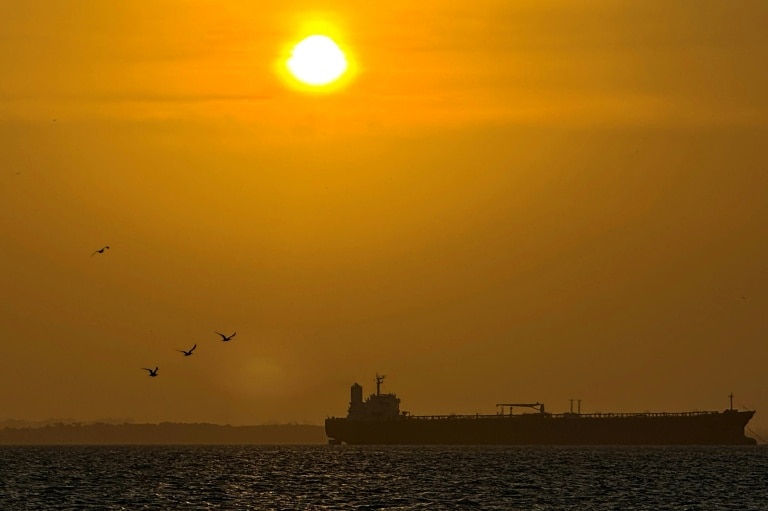
    This same dynamic of Iranian assertiveness has played out more gradually over the past month in the Strait of Hormuz, the vital global energy chokepoint through which nearly 20% of the world’s oil supplies pass daily. Shortly after the full-scale regional war began in late February, Iran established de facto control over movement through the waterway, and has shown no indication that it plans to relinquish this leverage. This control, too, is a core component of Iran’s new regional order: Tehran is sending a clear message to its rivals that compliance with its demands is required, or it will tighten its chokehold on the global energy economy. So far, U.S. policy has reflected a clear willingness to accept this new status quo rather than risk the consequences of military confrontation to reverse it.

    The second key element of this new order is Iran’s expanding toolkit of coercive options to pressure its opponents into accepting the new rules, all while avoiding meaningful punitive consequences. Tehran has now proven it can launch large-scale missile barrages into Israel, strike critical infrastructure across U.S.-aligned Gulf Arab states, target American military personnel operating in the region, and disrupt global energy supplies – all without triggering the large-scale regime-change intervention that long deterred such actions. Iran still retains a wide range of unplayed leverage as well: it can expand targeting of energy and water desalination infrastructure across the Gulf, or reactivate its Houthi allies in Yemen to disrupt global shipping through the Red Sea. Already, following the latest escalation, the Houthis have announced a full ban on all Israeli-flagged commercial shipping transiting the Red Sea.

    While the U.S. has issued repeated public threats to retaliate against Iran – including strikes on Iranian civilian infrastructure, a seizure of Iran’s critical Kharg Island oil export terminal, or the deployment of naval convoys to enforce free passage through the Strait of Hormuz – Washington has backed down from every planned action, driven by fear of the catastrophic regional escalation that would follow.

    The third defining feature of Iran’s emerging order is the growing rift in longstanding coordinated policy between the U.S. and Israel, a development that has long been a core strategic goal for Tehran. In response to Iran’s initial missile strikes against Israel, Trump emphasized that his top priority was preventing Israel from launching a major retaliatory campaign. “I am going to call Bibi right now and tell him not to retaliate,” Trump stated publicly immediately after the first Iranian assault. The current situation, in which a sitting Republican U.S. president is urging Israel not to respond to direct Iranian missile attacks targeting civilian populations, would have been considered nearly unimaginable just six months ago, a testament to how dramatically regional dynamics have shifted.

    While Trump has not yet threatened to withhold American missile interceptor defense supplies from Israel over its resumption of hostilities, even with continued U.S. defensive support, sustaining a major new conflict with Iran poses significant challenges for Jerusalem. For example, large-scale ground operations to target Iranian missile launchers would stretch Israeli air power thin, particularly without active U.S. assistance in targeting enemy positions, and the ongoing active front against Hezbollah in the north would draw down already strained Israeli military resources even further.

    Looking ahead, a critical open question remains: how long will the U.S. be willing to deplete its own domestic stocks of missile interceptors to defend Israel, in a conflict that the U.S. president explicitly urged Israel not to initiate? In the short term, this arrangement may hold, but over the long run, it is not sustainable for the U.S. to dedicate a large share of its national missile defense inventory to protect Israel in an ongoing open conflict.

    The fourth and final feature of the new regional order is that a lasting regional peace settlement appears increasingly out of reach. Netanyahu cannot politically accept an Iranian veto over Israeli military action in Lebanon, nor can he afford to erode longheld Israeli deterrence by allowing unpunished Iranian missile attacks on Israeli territory. At the same time, Trump cannot advance his stated goal of negotiating a new peace deal with Iran while Israel continues its military campaign in Lebanon. For its part, Iran has every incentive to keep increasing pressure on its opponents, inflicting steadily rising costs with little fear of meaningful consequences under the new regional order it has built.

    Ultimately, this shifting dangerous landscape is the outcome of a poorly considered war of choice that will go down as one of the most ill-conceived military engagements in modern American history.

    This analysis is contributed by Andrew Gawthorpe, a lecturer in history and international studies at Leiden University, republished under a Creative Commons license from The Conversation.

  • Armed group kidnaps 39 people during negotiations in northwestern Nigeria

    Armed group kidnaps 39 people during negotiations in northwestern Nigeria

    ABUJA, Nigeria — A brazen act of violence has deepened fears over Nigeria’s spiraling security crisis, after armed bandits abducted 39 people during a community-led peace negotiation meeting in the restive northwestern state of Zamfara, regional police confirmed in a public statement released Monday.

    The attack unfolded Sunday in the Magamin Diddi community of Maradun Local Government Area, when a gathering of 47 local residents had assembled to discuss reconciliation and peace negotiations with family members of a notorious regional bandit kingpin linked to widespread abductions in the area. According to police spokesperson Yazid Abubakar, the suspected bandit leader himself unexpectedly arrived at the venue alongside a contingent of armed fighters, who seized 39 attendees before departing. The remaining eight people at the meeting managed to escape unharmed.

    For communities across northwestern Nigeria, such unofficial peace talks have become a grim necessity. Many local residents say the Nigerian military has failed to provide consistent protection against near-constant raids, kidnappings for ransom, and cattle rustling carried out by criminal bandit networks, pushing communities to pursue independent negotiations with armed groups in hopes of securing a fragile local truce.

    The high-profile abduction comes amid a sprawling, long-running security emergency that has engulfed large swathes of northern Nigeria. For more than a decade, the country has grappled with an Islamic insurgency centered in the northeast that has spread beyond its original borders, alongside a surge in violent criminal activity by bandit groups in the northwest and central regions. Per United Nations estimates, the insurgency alone has killed thousands of civilians and displaced millions more from their homes, while criminal gang attacks have become increasingly frequent across virtually all of northern Nigeria.

    The latest incident also comes just one day after the Nigerian military announced a major counter-insurgency win: a raid that freed 360 captives held by the Boko Haram militant group in the Mandara Mountains of southern Borno State, a traditional stronghold for the insurgent faction. Boko Haram and its offshoot, the Islamic State West Africa Province (ISWAP), remain the two most powerful militant groups operating in Nigeria’s northeast. Just one month prior, Nigerian authorities announced that a joint military operation with U.S. forces had killed 175 ISWAP fighters, marking one of the largest single-counterterrorism strikes in recent years.

    Despite these high-profile military victories, security analysts warn that the Nigerian government has failed to implement the systemic changes needed to curb widespread violence, even as President Bola Tinubu has repeatedly made public promises to resolve the country’s security crisis since taking office. The abduction of peace negotiators underscores the persistent vulnerability of civilian communities caught between armed groups and an overstretched, underperforming state security apparatus.

  • U.S. Steel pledges up to $2.5 billion in upgrades to Mon Valley Works

    U.S. Steel pledges up to $2.5 billion in upgrades to Mon Valley Works

    Less than a year after closing its $15 billion acquisition by Japan-based Nippon Steel, U.S. Steel has announced a major up to $2.5 billion modernization investment at its historic Mon Valley Works complex in southwestern Pennsylvania, a project framed as a pivotal commitment to revitalizing one of the birthplaces of the American steel industry. The new investment, which doubles the company’s earlier $1 billion pledge for the site, forms a core part of U.S. Steel’s broader $11 billion domestic expansion initiative slated for completion by 2028, and independent economic analysis projects it will deliver $1.7 billion in total economic benefit to Pennsylvania over the construction period.

    The centerpiece of the upgrade is a state-of-the-art hot strip mill to be constructed at Mon Valley’s Edgar Thomson plant in Braddock. This new facility will replace an outdated 87-year-old mill at the complex’s nearby Irvin plant in West Mifflin, enabling U.S. Steel to manufacture high-strength steel products for the automotive sector that the current operations cannot produce competitively, according to company materials shared with local community leaders. Beyond expanded production capabilities, the modernization will integrate lower-emission technology to create a cleaner, more energy-efficient manufacturing process, aligning with ongoing climate action planning in Allegheny County, where Mon Valley Works currently accounts for roughly a quarter of the county’s total greenhouse gas output.

    Beyond manufacturing upgrades, the project delivers clear near-term economic and labor benefits, the company’s official economic impact report confirms. It will permanently protect the roughly 3,000 existing jobs at the three-site Mon Valley Works complex (which also includes the Clairton Coke Works) and support nearly 3,200 indirect and induced jobs across the region over the three-year construction timeline. Over that same period, the project is projected to generate up to $58 million in combined state and local tax revenue. The economic impact analysis was conducted by Philadelphia-based independent consulting firm Parker Strategy Group.

    The announcement was made official at a Monday press conference where U.S. Steel President and CEO David Burritt was joined by U.S. Secretary of Commerce Howard Lutnick, who credited the Trump administration for clearing the path to finalize the Nippon Steel acquisition. The deal, which was approved by U.S. Steel shareholders in April 2024, faced significant political and labor opposition during the Biden administration, with then-President Biden blocking the transaction via executive order over cited national security concerns. The acquisition ultimately closed after Donald Trump returned to office, with a negotiated “golden share” provision granting the U.S. federal government limited oversight rights, including the ability to appoint one board member and require presidential approval for any cuts to Nippon’s capital commitments. At the press conference, Lutnick noted that Nippon has fully complied with all terms of the agreement, and he does not expect the federal government will need to exercise its golden share authority.

    “The Mon Valley Works is where the American steel industry was first forged, and this investment is proof that its best days are still ahead,” Burritt said in his official remarks, adding that U.S. Steel intends to maintain a long-term presence in Pennsylvania: “We’re here to stay not for the next generation, but generations and generations to come. All I can say about the way we do business in Pennsylvania — you ain’t seen nothing yet.”

    The announcement comes amid growing industry shifts, as many U.S. steel manufacturers have increasingly shifted new investment to non-unionized Southern states, where operations are located close to the fast-growing Southern automotive corridor that stretches from South Carolina to Mississippi. U.S. Steel itself has already outlined a $3 billion investment in its Big River Steel facility in Arkansas, with $1.9 billion earmarked for a low-emission direct reduced iron plant that Burritt called the “beating heart of America’s steel industry” during a November 2024 address. Direct reduced iron production and the electric-arc furnaces used at Big River generate far fewer carbon emissions than the traditional blast furnaces that still power most operations at Mon Valley Works.

    Local community leaders have welcomed the Mon Valley investment, which comes after months of outreach to encourage the company to keep its core operations in the region. “We need to be thinking about what it is we can do in our communities to help U.S. Steel want to stay here. If they don’t build here, what are we going to be left with?” An Lewis, executive director of the Steel Rivers Council of Governments, a regional collaborative of Mon Valley community governments, told the organization’s board in June. Lewis confirmed that company officials met with local stakeholders last week to walk through details of the investment plan.

    While the project has been broadly celebrated, it comes amid ongoing environmental and safety scrutiny of the Mon Valley complex. None of the $2.5 billion in allocated funding is earmarked for upgrades to either the Irvin plant or the Clairton Coke Works, which was the site of a fatal explosion in 2024 that killed two workers and injured 10 more. U.S. Steel was later fined $118,000 by federal OSHA, which cited the facility for inadequate safety procedures, insufficient training, and faulty equipment. On the environmental front, Allegheny County’s upcoming climate action plan, set to be finalized by the end of August, calls on U.S. Steel to phase out its current high-emission processes and invest in carbon capture technology, which is not included in the current upgrade package. The company is also currently appealing more than $4 million in air quality fines issued by the Allegheny County Health Department for alleged hydrogen sulfide violations between 2020 and 2023, and reached a $1.5 million class action settlement in 2025 to compensate local residents for odor and emissions issues, while denying all wrongdoing related to the claims.

    As the third-largest steel producer in the world, Nippon Steel has committed to reaching full carbon neutrality across its global operations by 2050, a target that U.S. Steel has aligned with since the acquisition closed. Company officials frame the Mon Valley investment as a balance between honoring the site’s iconic legacy in American industrial history and building a more sustainable, competitive future for domestic steel manufacturing.

  • Serena Williams to return to tennis in Queen’s doubles on Tuesday

    Serena Williams to return to tennis in Queen’s doubles on Tuesday

    The global tennis community is buzzing with excitement after organisers at London’s Queen’s Club confirmed that 23-time Grand Slam singles champion Serena Williams will step back onto a professional court for the first time in nearly four years this Tuesday. Williams, who last competed at the 2022 US Open where she signaled she was “evolving away from tennis”, has accepted a wildcard entry into the women’s doubles draw of the pre-Wimbledon warm-up grass-court tournament.

    The 44-year-old American tennis icon will pair with 19-year-old Canadian rising star Victoria Mboko to face third seeds Erin Routliffe and Nicole Melichar-Martinez in their opening match. The unexpected comeback has sent shockwaves through the global sporting landscape, capturing the attention of fans and pundits alike who have followed Williams’ legendary career for decades.

    In her first public comments since announcing her return, Williams revealed the core motivation behind stepping back into competitive tennis: she wants her two young daughters with husband and tech entrepreneur Alexis Ohanian to see her compete before she retires from the sport for good. “It’s really about the kids seeing me play,” Williams told reporters at Queen’s on Sunday. “Olympia is a little bit older, Adira is very young. It’s components like that.”

    Following her appearance at Queen’s Club, Williams is already scheduled to compete in doubles at the Berlin Open, which runs from June 15 to 21. When pressed about speculation that she could extend her comeback to singles competition – particularly at Wimbledon, where she has claimed seven career singles titles – Williams struck a careful balance, neither confirming nor ruling out a potential singles appearance.

    “For singles, I can’t say ‘yeah’ and I can’t say ‘no’,” Williams explained. “Right now, no. I feel like I probably need to train a little bit more if I want to play singles. We will see if I get there and if not, it is not my journey right now.”

    Williams’ return comes as one of the most unexpected developments in men’s or women’s professional tennis in recent years, with the all-time great already cemented as one of the most influential athletes in the history of the sport. Fans around the world are already waiting anxiously to see her back in action this week, with speculation continuing to build around what comes next for the tennis legend.

  • Somali referee axed from World Cup after being denied entry to US: FIFA

    Somali referee axed from World Cup after being denied entry to US: FIFA

    In a development that has sent ripples through the global football community, award-winning Somali referee Omar Abdulkadir Artan will not take part in the upcoming 2026 FIFA World Cup co-hosted by Canada, Mexico and the United States, after U.S. authorities barred him from entering the country, global governing body FIFA confirmed Monday.

    Upon his arrival at Miami International Airport, Artan was refused entry by U.S. immigration officials, a decision FIFA says it has no ability to challenge or reverse. In an official statement provided to Agence France-Presse, a FIFA spokesperson clarified that immigration and visa rulings fall exclusively under the authority of host nation governments, a long-standing policy for all FIFA-sanctioned international events. “FIFA is not involved in host country immigration processes, including visa adjudications, and has been informed by authorities that Mr Artan’s status will not be changed at present,” the spokesperson said. “In line with previous FIFA events, a host government ultimately determines who receives a visa and approved entry into their country.”

    While U.S. officials have not publicly released a reason for the entry denial, Somalia is one of the nations included in the travel restriction policy first implemented by former U.S. President Donald Trump’s administration. Notably, Somali government advisors confirmed Artan held a valid U.S. visa at the time of his attempt to enter the country. Following the rejection, Artan departed the U.S. and returned to Istanbul, where he had been based ahead of World Cup preparations.

    Artan’s selection to the 2026 World Cup roster marked a historic milestone: he was set to become the first Somali referee ever to officiate at a men’s World Cup finals. Named to the 52-person referee panel by FIFA earlier this year, Artan has built a reputation as one of Africa’s most respected match officials. He earned FIFA certification in 2018, has overseen top-tier matches in the Somali national league, officiated at the 2023 African Cup of Nations finals, and was named the Confederation of African Football’s Men’s Referee of the Year in 2025. When his historic selection was announced earlier this year, Somali President Hassan Sheikh Mohamud publicly praised Artan, highlighting his professionalism and framing him as a symbol of inspiration for young Somalis across the globe.

    Senior Somali sports officials have condemned the decision to bar Artan, arguing it undermines core principles of global football. Ciise Aden Abshir, senior advisor to Somalia’s Ministry of Youth and Sports and a former captain of Somalia’s national men’s football team, called the outcome a blow to both Artan personally and the sport’s commitment to fairness. “Denying him entry to the United States and preventing him from officiating scheduled matches harms not only him personally but also undermines football’s commitment to fairness, merit, and the spirit of fair play,” Abshir told AFP. He added that Artan deserves widespread support from the global football community for his trailblazing work to reach the highest levels of the sport.

  • Pentagon labels tech giant Alibaba and electric car maker BYD as aiding Chinese military

    Pentagon labels tech giant Alibaba and electric car maker BYD as aiding Chinese military

    WASHINGTON D.C. – In a move that escalates bilateral economic and diplomatic tension between the United States and China, the U.S. Department of Defense announced Monday it has added three of China’s highest-profile civilian-led corporations — e-commerce and technology giant Alibaba, global electric vehicle leader BYD, and top search engine operator Baidu — to its official register of Chinese military-linked companies. The designation bars these firms from accessing any U.S. federal defense contracts.

    The updated publication of the list marks a notable shift in U.S. policy: for the first time, it explicitly targets large, publicly traded, non-state-owned Chinese enterprises that do not operate primarily in the defense or national security sectors. This expansion reflects deepening U.S. skepticism over what Pentagon officials describe as Beijing’s long-term strategy of integrating civilian commercial innovation into China’s military and defense industrial supply chain.

    Established by congressional mandate in 2021, the list was created to identify any Chinese entity the Pentagon assesses has ties to China’s military apparatus. This scope extends beyond firms directly owned and operated by the Chinese military and security services to include any company that contributes to the development, expansion, or supply of China’s domestic defense industry. In last year’s update, Pentagon officials emphasized that the People’s Liberation Army actively pursues advanced technology and technical expertise developed by seemingly civilian Chinese companies, academic institutions, and research initiatives, framing this as a core national security concern for the U.S.

    Monday’s expansion has grown the total number of listed Chinese entities to 188, up from roughly 130 entities included in last year’s iteration. Major consumer drone manufacturer DJI was already added to the register in a previous update. While companies on the list are not outright barred from all commercial activity within U.S. borders, they face significant indirect costs: widespread reputational damage among Western investors and partners, and they become eligible for additional restrictive measures that can be imposed by U.S. regulators in the future.

    In its justification for adding Alibaba, a New York Stock Exchange-listed firm, the Pentagon claimed the technology conglomerate is affiliated with China’s Ministry of Industry and Information Technology, and that this connection allows it to contribute to the growth of China’s defense industrial base. Both BYD and Baidu were added under the same rationale of institutional affiliation with the Chinese ministry, which oversees China’s national technology and industrial development policy.

    BYD’s inclusion marks a striking reversal from earlier this year, when former U.S. President and 2024 presidential candidate Donald Trump stated he would welcome Chinese EV makers including BYD to the U.S. market, provided they construct domestic manufacturing facilities and hire American workers. Despite that opening, a growing bloc of bipartisan U.S. lawmakers has already pushed forward legislation that would implement a full ban on Chinese-manufactured electric vehicles in the U.S.

    Another notable addition to the 2024 update is Unitree Robotics, a Chinese consumer robotics firm that gained global viral fame after its dancing robot contestants earned widespread praise from judge Simon Cowell during a 2023 appearance on NBC’s *America’s Got Talent*. According to the Pentagon, Unitree “knowingly received assistance” from the Chinese government through a national support program for small- to medium-sized enterprises deemed highly innovative, globally competitive, and critical to China’s domestic supply chains.

    As of Monday evening, none of the four newly added firms — Alibaba, BYD, Baidu, or Unitree — had issued public statements or responded to press inquiries sent by reporters seeking comment.

    In an official statement released hours after the Pentagon published the updated list, the Chinese Embassy in Washington issued a sharp rebuke of the U.S. action. The embassy accused the U.S. of “overstretching the concept of national security” and using discriminatory, arbitrary blacklists to target legitimate Chinese commercial enterprises. The statement emphasized that all Chinese companies operating globally comply with the laws and regulations of the host countries where they conduct business, and called on the U.S. to immediately end what it labeled a wrongful practice. “The U.S. should stop its wrong practice and create a fair, just and non-discriminatory environment for Chinese companies,” the statement concluded.

  • China’s HQ-16F primed for Taiwan war far beyond the Strait

    China’s HQ-16F primed for Taiwan war far beyond the Strait

    As cross-strait military dynamics evolve rapidly, China’s deployment of an advanced new medium-range air defense system opposite Taiwan signals a critical shift in Beijing’s strategic thinking: growing recognition that any future conflict over the island will not be limited to the Taiwan Strait, but will likely extend deep into mainland Chinese territory.

    According to reporting from the South China Morning Post this month, Beijing has deployed the cutting-edge HQ-16F surface-to-air missile (SAM) system to frontline People’s Liberation Army units positioned directly across the strait from Taiwan. Just weeks after the deployment was first reported, China’s state broadcaster CCTV released footage on June 5 showing the 73rd Group Army — a strategic PLA unit headquartered in Fujian’s Xiamen, just across the strait from Taiwan — completing its first live-fire exercises and operational evaluation of the new system.

    During the drills, the unit traveled thousands of kilometers to testing grounds in the Gobi Desert of northwest China, where a mobile-launched HQ-16F successfully intercepted an incoming target at a range of 50 kilometers. Designed specifically to boost the defensive capabilities of the PLA’s Eastern Theater Command, which oversees all operations related to Taiwan, the HQ-16F is an advanced wingless missile that incorporates four tail fins, an integrated propulsion motor, and cutting-edge thrust vectoring technology. These design features allow it to engage highly maneuverable threats, including low-altitude infiltrators and supersonic incoming projectiles.

    While full technical specifications for the domestic variant remain classified, military analysts note that the HQ-16F’s capabilities meet or outperform those of its export counterpart, the HQ-16FE. The export model is equipped with an active electronically scanned array (AESA) radar that can track targets at distances exceeding 250 kilometers. This latest upgrade significantly narrows the technological gap between Chinese air defense systems and the U.S.-made Patriot PAC-2 and PAC-3 systems that form the core of Taiwan’s current air defense network, while the addition of a directional fragmentation warhead improves its ability to counter existing cross-strait defense infrastructure.

    Analysts widely believe the HQ-16F program was accelerated and the system deployed in response to the rapid development of Taiwan’s precision strike capabilities, which can now reach potential invasion staging areas on the mainland. In a February 2026 analysis published by the U.S. Army 75th Reserve Innovation Command, researchers Brennan Deveraux and Kyle Marcrum argued that U.S.-supplied Army Tactical Missile System (ATACMS) platforms give Taiwan the ability to strike targets across a 300-kilometer ring extending from the island into mainland China. This capability, they note, has forced Beijing to position advanced air defense assets like the HQ-16F near key invasion embarkation points and command-and-control facilities within that strike range.

    The ATACMS threat poses a particularly difficult challenge for Chinese air defense planners, Deveraux and Marcrum added. At just 180 kilometers across at its narrowest point, the Taiwan Strait places most of China’s coastal military infrastructure well within ATACMS range, and Taiwan has dispersed a large arsenal of the missiles across multiple hidden sites across the island. Additionally, ATACMS missiles travel at Mach 3 during their terminal approach, giving traditional air and missile defense systems only seconds to detect and react to an incoming threat, making interception extremely difficult.

    ATACMS is not the only threat driving China’s air defense upgrades. Taiwan has also developed and fielded an arsenal of domestic long-range cruise missiles, most notably the Hsiung Feng IIE. Data from Missile Threat shows that extended-range variants of the Hsiung Feng IIE have a maximum range of 1,200 kilometers — a distance that allows them to strike targets deep inside the Chinese mainland when launched from Taiwan.

    Like the U.S. Tomahawk cruise missile, the Hsiung Feng IIE is designed to evade enemy air defenses through low-altitude flight. It can be routed around known radar coverage gaps, follow indirect, unpredictable flight paths instead of the easily detectable ballistic trajectories used by traditional ballistic missiles, fly at high subsonic speeds below radar detection thresholds, and use terrain masking to avoid being picked up by defensive systems — all tactics that drastically reduce the chance of interception.

    China’s vast landmass, long considered a key strategic advantage that provides depth for defensive operations, has become a liability in the era of long-range precision strikes, much as it has for Russia in its ongoing invasion of Ukraine. Russia’s experience has shown that defending an enormous territory comprehensively is functionally impossible, allowing attackers to target critical military, industrial, and energy infrastructure far from the front lines.

    China faces the same dilemma: its size makes nationwide air defense coverage impractical, forcing military planners to concentrate limited defensive assets around key military, political, and strategic sites rather than protecting the entire country. Taiwan’s long-range missile arsenal, led by ATACMS and the Hsiung Feng IIE, can exploit these gaps in China’s air defense network to target invasion staging areas and critical assets deep in the Chinese mainland. These strikes could inflict major economic damage, undermine public confidence in Beijing’s leadership, and impose significant psychological costs on the Chinese government. While such attacks could theoretically erode public support for a Chinese invasion of Taiwan, they could also harden Chinese public sentiment against the self-governing island and push Beijing to escalate military operations.

    Beijing’s security concerns extend beyond Taiwan’s growing strike capabilities to include the threat of advanced conventional strike power from the United States, which can also target strategic sites deep inside the Chinese mainland. Beyond countering Taiwan’s missile arsenal, military analysts believe the HQ-16F will also be used to defend China’s nuclear arsenal and core leadership facilities against potential U.S. intervention in a Taiwan conflict. The June 2025 U.S. airstrikes on Iranian nuclear facilities underscored this risk, proving that U.S. long-range strike capabilities could be used against Chinese strategic assets in the event of a cross-strait conflict. In those strikes, seven U.S. B-2 stealth bombers dropped 14 13,600-kilogram Massive Ordnance Penetrator (MOP) bombs on three key underground Iranian nuclear sites: Natanz, Fordow, and Isfahan. While it remains unclear whether the strikes completely destroyed Iran’s nuclear program, they inflicted severe damage on underground centrifuge facilities, collapsed critical tunnel networks, and likely cut off Iran’s access to its fissile material stockpiles and enrichment infrastructure.

    In line with this strategic shift, the HQ-16F is expected to be deployed to defend key strategic sites including the Hami nuclear silo field in northwest China. A May 2026 Reuters report found that the Hami facilities are already protected by camouflaged defensive positions carved into the desert, which are widely believed to house air defense batteries. Beyond nuclear sites, the system will also be used to defend critical leadership and command-and-control facilities, such as the massive underground Beijing Military City complex, which was built to house China’s top leadership and serve as a wartime command center during a large-scale conflict.

    Even with the deployment of the advanced HQ-16F system, China cannot fully eliminate its vulnerability to long-range precision strikes against its strategic rear. While the new system strengthens China’s defenses against evolving long-range strike threats, its deployment also highlights a stark new reality: Beijing now openly expects that any conflict over Taiwan will extend far beyond the Taiwan Strait and into core mainland Chinese territory.

    For regional and global powers, this shifting strategic landscape creates a new defining challenge: how to maintain deterrence without crossing China’s explicit nuclear red lines in any future Taiwan crisis.

  • Apple unveils Siri AI makeover as Tim Cook bids farewell

    Apple unveils Siri AI makeover as Tim Cook bids farewell

    At Apple’s 2026 annual Worldwide Developers Conference (WWDC) held at Apple Park, the tech giant announced two major updates alongside marking a historic leadership transition: this event will be outgoing CEO Tim Cook’s last WWDC at the helm before he steps down in September after 15 years leading the company.

    Cook, who took over the role from co-founder Steve Jobs shortly before Jobs’ passing in 2011, received a warm standing ovation from thousands of attending developers and employees. Opening his farewell remarks with a lighthearted joke about the sea of personal devices in the room, Cook grew emotional as he reflected on his tenure. “It has been the honor of a lifetime to serve as Apple’s CEO,” he said, adding that the creativity and impact of Apple’s developer community had inspired him throughout his 15 years in the top role. Cook’s successor, current hardware engineering head John Ternus, did not speak during Monday’s main keynote address but appeared alongside Cook at a post-event media briefing for the new Siri AI launch and greeted attendees at a Sunday welcome reception, which industry analysts frame as an informal introduction to his new leadership.

    The headline announcement from the conference is a full overhaul of Apple’s longstanding digital assistant, reintroduced as Siri AI. The move comes after years of industry criticism that Apple has fallen behind competing tech giants in generative artificial intelligence development. The upgraded Siri AI will be integrated across Apple’s full product ecosystem and all native third-party apps, with a new standalone experience similar to the chat interfaces offered by OpenAI and Anthropic for their AI tools.

    Apple says the new assistant will leverage context from a user’s past interactions, visual recognition capabilities and broad general knowledge to deliver a far more capable, natural conversational experience than the current Siri. Craig Federighi, Apple’s senior vice president of Software Engineering, used the launch to push back against what he framed as reckless AI development across the industry, saying: “We’ve seen AI built for the sake of AI, without considering the people it is supposed to serve. Truly helpful AI has to be centered around you and your needs.” Federighi emphasized that user privacy was baked into Siri AI’s design at every stage of development, a key differentiator from competing offerings.

    Industry analysts note that the launch marks Apple’s formal answer to growing calls for the company to close its AI gap with rivals. “Apple had to address its long-recognized shortcomings in AI, and WWDC gave the company a platform to lay out its plan,” said Ben Wood, chief analyst at industry research firm CCS Insight. “Now Apple must prove that its privacy-first, deeply integrated approach delivers a meaningfully better everyday experience, not just parity with competitors. Success will ultimately be judged by how users respond once the new features are in their hands.”

    A beta version of Siri AI will roll out to supported English-language devices later this year, but users in the European Union will not gain access immediately. Apple confirmed in a Monday release that EU regulators rejected all of the company’s proposed compliance frameworks that would allow Siri AI to launch while meeting the bloc’s requirements for supporting competing virtual assistants. The new Siri AI is built on Apple Foundation Models, a partnership announced earlier this year that leverages Google’s Gemini architecture and cloud infrastructure.

    Alongside the AI overhaul, Apple also announced a suite of updated trust and safety features for iOS 27 aimed at improving child protection, responding to ongoing criticism from child safety advocates that the company has not done enough to protect young users. Ahead of Monday’s keynote, a small group of protesters gathered outside Apple Park to demonstrate against Apple’s existing policies. Sarah Gardner, a representative of advocacy group the HEAT Initiative, chained herself to a tree outside Apple’s visitor center, demanding that Apple remove all AI “nudification” tools from the App Store and purge all known child sexual abuse material (CSAM) from iCloud. Gardner claimed Apple has earned at least $177 million in revenue from sexually explicit AI deepfake applications available on its platform. Apple has countered that nudification apps violate its platform guidelines, and that the company proactively rejects and removes non-compliant apps from the store.

    The new safety tools include an expansion of Apple’s parental control “ask” feature, which requires parental approval before a child can initiate a conversation with an unknown contact. The company will also automatically filter and censor any image sent to a registered child’s device that its systems flag as inappropriate sexual or violent content. “We’re delivering powerful, easy-to-use tools for parents to manage what kids can see, who they can talk to, and when they can access their devices,” Federighi said. The announcement comes the same day that UK Labour leader Keir Starmer gave a speech calling on all major tech firms including Apple and Google to block under-18s from accessing non-consensual nude images on mobile devices.

    Industry analysts say the 2026 WWDC sets a clear strategic direction for Ternus’ upcoming tenure. “WWDC 2026 gives Ternus a clear strategic runway: more personal devices, more contextual software, more intelligent services and a tighter integration between silicon, hardware and AI,” said Francisco Jeronimo, vice president for data and analytics at IDC EMEA. “If Apple delivers the experience with the reliability, elegance and user trust that the brand is known for, this could go down as the moment Siri and Apple Intelligence moved from the background of Apple’s ecosystem to the center of the company’s future.”

  • Palestinians in Chile push back over new president’s pivot toward Israel

    Palestinians in Chile push back over new president’s pivot toward Israel

    Across Latin America, a growing wave of conservative right-wing leadership is reshaping decades of regional foreign policy, abandoning the longstanding pro-Palestine solidarity that defined the so-called “pink tide” of left-wing governance to deepen strategic and diplomatic ties with Israel. Nowhere is this policy reversal more striking than in Chile, home to the largest Palestinian diaspora community outside the Arab world and North Africa.

    Chile’s new president, Jose Antonio Kast, took office in December 2023 after a campaign focused on curbing immigration, strengthening national security, and slashing public spending. A self-professed admirer of Chile’s former authoritarian dictator Augusto Pinochet, Kast’s populist, hardline rhetoric aligns closely with other rising right-wing leaders across the hemisphere: Argentina’s austerity-focused Javier Milei, El Salvador’s authoritarian leader Nayib Bukele, and former U.S. President Donald Trump, whose approach to cementing U.S. influence in the Americas has been dubbed the “Donroe Doctrine” by political observers.

    Kast is far from alone in this regional shift: newly elected leaders in Bolivia, Costa Rica, and Honduras have also rushed to reset diplomatic relations with Israel, even amid widespread international condemnation of Israel’s military campaign in the occupied Gaza Strip, which has killed more than 73,000 Palestinians since October 2023. For Chile’s 400,000-strong Palestinian community, this policy reversal represents a direct break with decades of national tradition, and a deep threat to their longstanding advocacy for Palestinian statehood.

    Ricardo Marzuca, a Chilean-Palestinian historian at the University of Chile’s Center for Arab Studies, notes that the shift marks an unprecedented break: “And that, indeed, is a problem for the Palestinian community in Chile.”

    Under Kast’s predecessor, former left-wing President Gabriel Boric, Chile emerged as one of the most outspoken global critics of Israel’s military operations in Gaza. Boric’s government recalled Chile’s ambassador to Tel Aviv, withdrew the country’s military and defense attachés from Israel, and joined South Africa’s landmark case accusing Israel of genocide at the International Court of Justice. Shortly before leaving office in March 2024, Boric co-sponsored four United Nations resolutions condemning Israel’s war crimes in occupied Palestine and the Syrian Golan Heights. He also introduced legislation to ban imports of goods from Israeli-occupied territories and supported Spain’s push for a full regional arms embargo on Israel. However, Boric’s proposed import ban never passed the Chilean legislature, and Chile never followed Spain’s lead in codifying a full arms embargo into law.

    Stephanie Elias Musalem, executive director of the Palestine Information Centre in Santiago, argues that Boric’s tenure marked the strongest political and symbolic support for Palestine from any Chilean president in modern history. “Yet most of his measures lacked long-term institutional safeguards, making them vulnerable to reversal,” she explained.

    Kast has wasted no time undoing Boric’s legacy, having previously described Boric’s pro-Palestine policy as “irresponsible and markedly ideological.” Within weeks of taking office, he authorized Israeli weapons manufacturers to participate in FIDAE, Chile’s premier international military and aerospace trade fair, reversing a ban on Israeli defense firms implemented by the Boric administration. In early May, during a bilateral meeting with Israeli President Isaac Herzog held in Costa Rica, Kast confirmed plans to return Chile’s ambassador to Tel Aviv within a matter of weeks. The two leaders also discussed expanding bilateral cooperation across key sectors, including agriculture, public health, artificial intelligence, and advanced technology.

    The meeting drew immediate and fierce condemnation from the Palestinian Community of Chile. Elias points out that even past center-right Chilean leaders embraced the Palestinian cause: former President Sebastian Piñera formally recognized the State of Palestine in 2011, becoming the first Chilean head of state to make an official visit to Ramallah.

    At the same time, Elias notes that Chile has maintained deep, underreported material ties with Israel dating back to the 1970s. After the United States imposed restrictions on military aid and arms sales to Pinochet’s military junta over widespread human rights abuses in 1976, Israel stepped in to become one of Chile’s primary suppliers of military equipment and defense technology. Decades later, despite rhetorical commitments to a “real, secure and permanent peace” between Israel and Palestine, Piñera expanded economic, technological, and defense cooperation with Israel, pushing bilateral trade to $281 million by 2018. This dual track policy – rhetorical support for Palestine paired with deepening material ties to Israel – has long been “a core contradiction” at the heart of Chile’s foreign policy, Elias said.

    Kast’s close alignment with Israel is further reflected in the senior advisors he has appointed to his administration. Eitan Bloch, a 32-year-old Argentine international advisor with deep ties to global Zionist networks, holds a senior position on the second floor of La Moneda, Chile’s presidential palace. Bloch previously worked at the Israeli embassy in Santiago, and in December 2023, he joined a delegation of Chilean senators on an official trip to Israel led by the Jewish Community of Chile (CJCH), where the group met with Herzog and leading Israeli experts in artificial intelligence and cybersecurity.

    Elias explains that Bloch’s proximity to the president gives him outsize influence: “The second floor is made up of the president’s most trusted people. As such, Bloch is considered one of the key architects behind the administration for foreign policy.”

    Kast has also appointed Gabriel Zaliasnik, a self-identified Zionist and former president of the CJCH – an organization dedicated to entrenching close diplomatic ties between Chile and Israel – as Chile’s new ambassador to Israel. “I cannot conceive of a Jew not being one,” Zaliasnik said in a 2020 interview. He has repeatedly criticized Boric and the Chilean left, falsely claiming that progressive pro-Palestine advocacy “embraces Islamic jihadism,” and has defended Israel’s military campaign in Gaza as “any democracy defending itself against terrorism.”

    The appointment has drawn sharp criticism from Chile’s Palestinian community, which calls it “a very serious decision, contrary to the national interest, incoherent with Chile’s history of defending international law, and deeply offensive to the hundreds of thousands of Chileans of Palestinian origin.”

    Kast’s pro-Israel policy also creates unexpected internal friction within his own conservative base: it alienates right-wing members of Chile’s Palestinian community, who have long supported the Palestinian cause regardless of their partisan alignment. The first wave of Palestinian migration to Chile began decades before the 1948 Nakba, when hundreds of thousands of Palestinians were forcibly expelled from their homeland by Zionist militias. Predominantly Christian migrants fleeing economic collapse and forced conscription under Ottoman rule built successful businesses, entered Chilean politics, and established a lasting cultural legacy that remains central to national life today.

    Marzuca emphasizes that Chile’s Palestinian community is ideologically diverse, spanning the full political spectrum from former communist presidential candidate Daniel Jadue on the left to Francisco Chahuán, Chile’s current right-wing ambassador to Mexico. “The point that unites them all is a commitment to the Palestinian cause,” Marzuca told Middle East Eye. While left-wing Chilean Palestinians frame their support for Palestine through an internationalist lens rooted in human rights and anti-imperialism, right-wing members reject framing the Palestinian struggle alongside Indigenous liberation movements in Latin America, and hold a more narrow focus on establishing an independent Palestinian state. Even so, the community has built a cross-party parliamentary bloc that unites left and right lawmakers in solidarity with Palestine, meaning Kast’s policy creates a contradiction for even conservative Palestinian Chileans.

    The tension over Kast’s policy has been thrown into sharp relief by the recent interception of the Global Sumud Flotilla, an activist mission seeking to break Israel’s blockade of Gaza. On May 18, four Chilean activists were illegally intercepted and abducted by Israeli forces in international waters. Nelson Hadad, a Chilean-Palestinian lawyer representing the activists, says his legal team will file a complaint with the International Criminal Court accusing Israel of war crimes and crimes against humanity.

    “An illegal detention has been committed in international waters… this cannot go unpunished,” Hadad said. He added that the four activists were “subjected to torture, interrogated with physical violence, beatings and sexual violence” at a detention facility in the Israeli city of Ashdod.

    The Kast administration issued a mild statement of displeasure to Israel’s ambassador, and called for the immediate release of the detainees, and Hadad confirmed that Chilean consular officials in Tel Aviv and Ankara provided limited assistance to the activists. But Macarena Chahuan, a Chilean-Palestinian journalist and activist who was aboard the flotilla during an earlier interception on April 30, says the government provided no support whatsoever for her, and her safe return was coordinated entirely by the flotilla’s local Chilean delegation.

    Maurice Khamis Massu, president of the Palestinian Community of Chile, has publicly condemned the administration’s response as ambiguous and insufficient. “The government cannot remain silent when Chilean citizens are deprived of their liberties in international waters,” he said. “This is about the obligation of the state to protect its citizens. What we defend is not an ideology, but the pillars of our international coexistence: unrestricted respect for international law, international humanitarian law, and human rights.” For Chile, he argues, support for Palestinian self-determination is not a partisan issue – it is a longstanding, cross-party state policy that has remained firm for more than 50 years.

  • Iranian strikes surprise Israel and raise concern of strategic setback

    Iranian strikes surprise Israel and raise concern of strategic setback

    The sudden escalation of cross-border hostilities between Iran and Israel has triggered fierce, divided debate across Israeli political and media circles, exposing deep rifts over Prime Minister Benjamin Netanyahu’s strategic leadership and the country’s next steps in an increasingly volatile regional crisis.

    The sequence of violence unfolded on a Sunday, when Israeli forces carried out a strike on a building in southern Beirut that killed two Lebanese civilians. Iran condemned the attack as a clear violation of an existing ceasefire agreement, with Israeli military correspondent Alon Ben David of Channel 13 News later describing the strike as little more than a symbolic gesture. That same evening, Iran launched a retaliatory attack that caught Israeli defense and intelligence establishments completely off guard. Ben David noted that prior to the strike, both Israeli and U.S. officials had assessed Iran would never dare launch direct fire at Israel, a prediction that proved drastically wrong.

    In the hours after Iran’s rocket and missile assault, Israel launched retaliatory air strikes across Tehran and other Iranian cities, while cross-fire exchanges continued into Monday. From the start of the crisis, much of the domestic debate has centered on the public intervention of U.S. President Donald Trump, who has repeatedly urged Netanyahu to avoid further full-scale attacks on Iran and called for an immediate ceasefire from both sides.

    Critics across the Israeli political spectrum have slammed what they see as Netanyahu’s willingness to cede control of core national security decisions to Washington. Veteran Israeli journalist Ben Caspit, writing in *Ma’ariv*, went so far as to argue that Israeli national security has effectively been “privatized” and handed over to Trump, requiring all major military decisions to win approval from the White House. Right-wing voices within both the governing coalition and opposition have been particularly vocal in rejecting U.S. pressure to stand down. Finance Minister Bezalel Smotrich was expected to push for a harsh response at a Monday cabinet meeting, reportedly calling for Israel to raze dozens of buildings in southern Beirut’s suburbs for every Iranian missile fired into Israeli territory. National Security Minister Itamar Ben Gvir declared bluntly that “Tehran must burn,” while Culture Minister Miki Zohar urged Netanyahu to continue strikes, arguing that regional actors only respect overwhelming military power. Even opposition figures from the right wing echoed this call: former Prime Minister Naftali Bennett framed the moment as a test of Israeli sovereignty, demanding immediate action to strike Iran’s strategic infrastructure, while former Israel Defense Forces Chief of Staff Benny Gantz called the April ceasefire a strategic mistake that must be corrected with a forceful response.

    But not all opposition figures back further escalation. Centrist and left-leaning opposition leaders have accused Netanyahu of deliberately stoking regional unrest to distract from domestic political pressure and avoid early national elections. Yair Golan, leader of the Democrats party, argued that “our enemies recognize what everyone can see: Netanyahu is weak,” adding that the current government has no mandate to drag the country into another full-scale war. Fellow Democrat lawmaker Gilad Kariv added that Netanyahu has failed in his core duty to protect Israeli citizens, and that the coalition’s policies are putting every Israeli at risk.

    Security analysts have largely framed the current escalation as proof of the strategic failure of the joint Israeli-U.S. military campaign against Iran launched earlier this year. Danny Citrinowicz, an Iranian affairs expert at Israel’s prestigious Institute for National Security Studies (INSS), noted that the campaign failed to achieve its core goal of toppling the Iranian government, leaving Israel in a far weaker strategic position. “Israel finds itself with less freedom of action, Iran with greater self-confidence, and the U.S. with a growing desire to resolve the crisis through a diplomatic settlement,” Citrinowicz wrote in a post on X. He added that Netanyahu now faces a fateful dilemma: launch a full-scale attack and risk a direct public clash with the U.S. president, or hold back and face restrictions on Israel’s ongoing military campaign in Lebanon. Haaretz military analyst Amos Harel echoed this assessment, pointing out that Netanyahu has pushed consistently to resume full-scale war against Iran since the April ceasefire, and the current escalation lays bare the growing rift between the Israeli prime minister and Trump.

    In response to the crisis, Israeli authorities have implemented a series of emergency measures across the country. All school classes and public events have been canceled, public transportation and hospital operations are running at reduced capacity, and military officials have ordered strict limits on passenger arrivals at Ben Gurion Airport. The Israeli military has also begun mobilizing reservists, with Channel 12 News reporting that top army commanders are preparing for a multi-day conflict, and view the current escalation as an opportunity to finish the work left undone by the earlier joint campaign against Iran. As of Monday, Netanyahu himself has not issued any public comment on the escalation, leaving the fractious debate within Israeli politics and media to continue unabated.