Nestled at the southernmost tip of Argentina, Ushuaia has built its global reputation as the dramatic “End of the World” — a premier gateway for Antarctic expeditions and a starting point for explorers seeking the raw, untamed beauty of Patagonia’s landscapes. But in recent weeks, the popular tourist hub has been thrust into an unwanted spotlight, linked to a hantavirus outbreak that has spread to the Dutch cruise ship MV Hondius, currently anchored off Spain’s Canary Islands where all passengers and crew are being evacuated and repatriated.
The MV Hondius departed Ushuaia, located in Argentina’s Tierra del Fuego province, on April 1 on a voyage that would end with an outbreak that has already claimed two lives. With 114 passengers and 61 crew members from 22 nations on board, public health investigators have operated under the working theory that the virus was introduced to the vessel during its stop in Ushuaia. But despite widespread media speculation, the exact origin of the infection and the full chain of transmission remain shrouded in uncertainty.
The most prominent unconfirmed hypothesis, shared by anonymous Argentine officials with multiple media outlets, points to a popular birdwatching landfill on Ushuaia’s outskirts, where accumulated waste attracts large populations of rodents. But local health authorities have pushed back hard against this theory, emphasizing that Tierra del Fuego has no documented history of hantavirus infections anywhere in the province’s records.
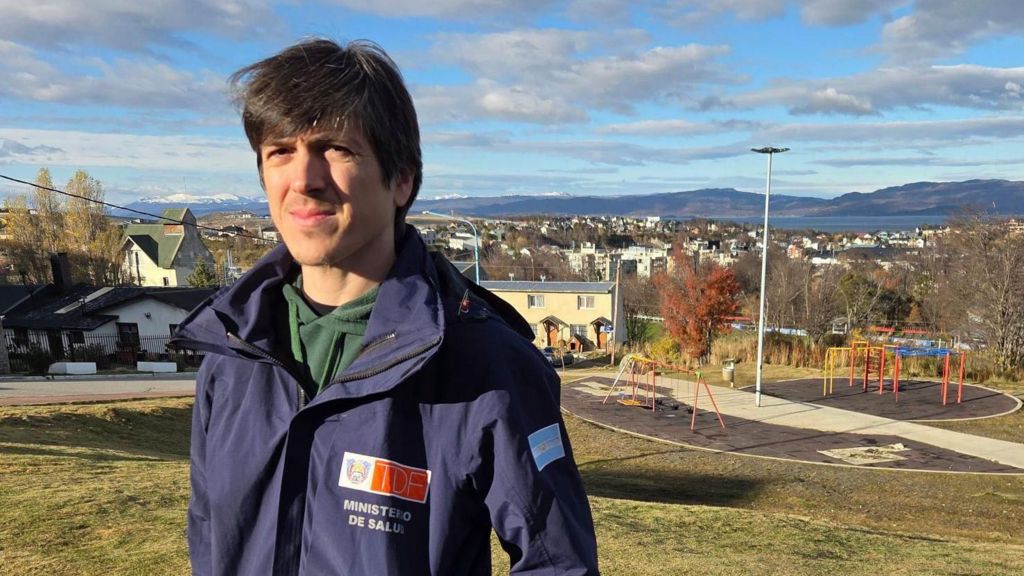
Juan Facundo Petrina, Tierra del Fuego’s Director General of Epidemiology and Environmental Health, has repeatedly defended his province against the ground zero claims in all recent press briefings and interviews. “In Tierra del Fuego we have no record of hantavirus cases in our history,” Petrina stated. “And specifically, since 1996 — when the National Surveillance System included it among mandatory reporting diseases — we haven’t had a single case in Tierra del Fuego.”
Petrina, who took up his role in 2021 amid the COVID-19 pandemic, noted that the established endemic zone for hantavirus in Argentina sits more than 1,500 kilometers north of Tierra del Fuego, and the province lacks the conditions to support the disease’s primary vector. “To begin with, we do not have the subspecies of the long-tailed mouse which transmits the disease, nor do we share the same climatic conditions as northern Patagonia — neither in humidity nor temperature — for its development,” he explained. “And if rodents were to start moving, since they don’t respect geographical boundaries, it’s important to remember that we are an island. They would face the limitation of crossing the Strait of Magellan in order to infect local species, so that is an additional difficulty, beyond the climate.”
Based on the World Health Organization’s estimated 1- to 8-week incubation period for hantavirus, Petrina estimates the original infection likely occurred between February 16 and March 13 — several weeks before the couple at the center of the outbreak arrived in Ushuaia. He believes the pair, a Dutch national who later died from the virus and is considered the likely patient zero, most likely contracted the disease in a northern Patagonian province such as Chubut, Neuquén or Río Negro. Chilean and Uruguayan health authorities have already ruled out their territories as the origin, based on the couple’s travel timeline.
While many epidemiologists share Petrina’s skepticism that the outbreak began in Tierra del Fuego, Argentina’s national government has still authorized a team of specialist investigators to travel to the province to test for viral traces and confirm whether the disease-carrying rodent subspecies has expanded its range to the region. The team will collaborate with local biologists to trap rodents at the Ushuaia landfill and run hantavirus tests. Two days after the investigation was announced, however, the national expert team had not yet arrived, and a BBC visit to the site found no active testing or trapping underway.
Eduardo López, head of the Department of Medicine and Infectious Diseases at Buenos Aires’ Ricardo Gutiérrez Children’s Hospital, argues that expanded investigation is still a necessary step, as shifting ecosystems have already altered rodent ranges across Argentina. “The case requires more study because ecosystems are changing,” López noted. “For example, the long-tailed pygmy rice rat, whose original habitat was the Patagonian Andes and north-western Argentina, can now be found in the province of Buenos Aires alongside other rodents that transmit the disease.”
Beyond the public health urgency, resolving the origin question carries major economic stakes for Tierra del Fuego. Argentina’s youngest and least populated province relies on a mix of hydrocarbon extraction, fishing and tourism for its livelihood, and the cruise sector supporting Antarctic expeditions is a core economic pillar. Juan Manuel Pavlov of the Fuegian Tourism Institute confirms that more than 95% of all Antarctic-bound ships depart from Ushuaia’s port, with more than 500 vessel calls each year making the cruise industry fundamental to the provincial economy.
To date, no official cruise cancellations have been recorded, though the industry’s summer season ended in mid-April, so any long-term impact on future bookings may not emerge for months. Local tourism stakeholders are pushing forward with preparations for the upcoming winter season, which they expect to be a strong one after years of investment in marketing and public safety protocols.
On the ground in Ushuaia, daily life and tourist activity have continued largely as normal. Visitors still stroll the waterfront, book short excursions to landmarks like the iconic End of the World lighthouse on Isla de los Estados, and cruise the Beagle Channel. Tour operators report that the lack of local confirmed cases has helped keep visitor anxiety low.
“The absence of cases here is very reassuring,” said Adonis Carvajal, an employee at a local tour operator. “People ask whether there are infections in the province, and the fact there are no reports of sick people here brings calm. The strain may be from the south — that’s not denied — but it didn’t originate here.”
Many current tourists echoed that sentiment, saying they proceeded with their long-planned trips after confirming no local cases had been confirmed. David Bomparp, a Venezuelan expat living in Medellín, Colombia, who arrived in Ushuaia with his partner Daniela Sandoval just days after the outbreak news broke, said the couple decided not to cancel after checking official updates. “We planned this trip back in October, and only the day before boarding the plane did we find out what had happened,” Bomparp said. “As far as we understood, nothing had been confirmed here, so we came without worrying, following safety measures.”
Sandoval added that while her mother was panicked enough to send constant worried updates through social media, she remained unconcerned by the unconfirmed claims. “I told her not to worry because there were no confirmed cases here,” she said. Costa Rican tourist Jordan Bermúdez, whose group traveled to Ushuaia from Chile’s Punta Arenas earlier this month, said the group researched the outbreak before departing and opted to keep their plans. “We arrived, found the city quite calm, did all the tours we had planned, and we think everything is normal,” Bermúdez said.
Argentina’s National Ministry of Health has so far declined to endorse a definitive origin theory, noting that while a Tierra del Fuego origin cannot be completely ruled out, the province’s 27-year history of zero confirmed hantavirus cases is a critical contextual detail. Investigators hope that testing of passengers and crew evacuated from the MV Hondius in Tenerife will yield new genetic clues that help narrow down the virus’s origin. For now, however, with patient zero deceased and the couple’s full travel timeline not fully reconstructed, key questions about how the outbreak began remain unanswered.