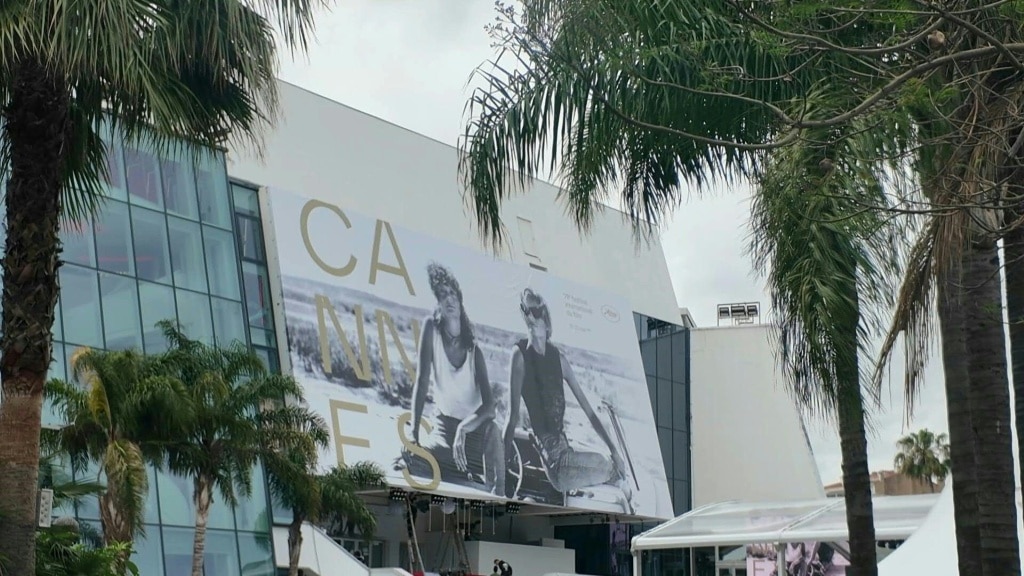
The iconic Croisette coastline of Cannes rolled out its legendary red carpet on Tuesday for the launch of one of the film industry’s most anticipated annual events, the Cannes Film Festival. This year’s gathering comes at a pivotal moment for global cinema, as organizers and attendees grapple with two defining industry tensions: the rapid, disruptive rise of artificial intelligence and the unprecedented absence of major Hollywood studios from the official lineup.
In the festival’s flagship competition, 22 standout features from across the globe are competing for the coveted Palme d’Or, the festival’s highest honor for best film. Last year’s award went to Iranian director Jafar Panahi’s politically charged work *It Was Just an Accident*, capping a memorable edition of the event. But much of the conversation leading up to this year’s opening has centered on off-screen issues that are reshaping the future of filmmaking, rather than the slate of competing movies themselves.
Cannes’ top leader Thierry Fremaux made his stance on artificial intelligence clear during a pre-festival press conference on Monday, aligning the event firmly with creative workers whose livelihoods are increasingly threatened by unregulated AI adoption. The technology has already driven growing job losses for dubbing artists and translation professionals, while screenwriters and performers across the industry warn that AI could erase entire career pathways. “What is certain… is that here in Cannes, we stand with the artists, we stand with the screenwriters and we stand with everyone in these professions, with actors and voice actors alike,” Fremaux asserted. He even floated a radical proposal for future festivals: labeling films in a similar vein to organic food and wine, with a special marker that reads “this film has been made without artificial intelligence” to signal transparency for audiences and creators.
Despite this firm stance, the festival sparked mild controversy with an announcement on Monday: it has signed a multi-year sponsorship agreement with Meta, the social media and technology giant that is also a major investor in cutting-edge AI development. The Meta tie-in intersects directly with this year’s AI debate, thanks to a high-profile documentary screening at the festival from Oscar-winning director Steven Soderbergh. Soderbergh collaborated with Meta to create AI-generated footage of late Beatles icon John Lennon and his wife Yoko Ono for his new film *John Lennon: The Last Interview*, bringing the ethics of AI use in creative work directly into the festival’s spotlight.
AI has already roiled the global film industry in recent years: the technology was the core sticking point behind the 2023 Hollywood writers’ and actors’ strikes that shut down most major productions for months, as creative workers warned that unregulated AI would erode royalties, job security, and creative control. In February of this year, thousands of French performers and filmmakers signed an open letter warning that AI tools are “plundering” creative talent across the industry, describing the technology as a “devouring hydra” that threatens to upend traditional creative work.
Beyond the AI debate, this year’s festival also faces a noticeable gap: nearly all major Hollywood studios have opted not to premiere big-budget blockbusters at the event, a break from longstanding tradition. Soderbergh is one of the few high-profile American filmmakers in attendance, with A-list directors like Steven Spielberg and Christopher Nolan — who organizers had hoped would attend — absent from the official program. The trend also played out at the Berlin International Film Festival in February, where no major U.S. studios brought major premieres, leaving industry analysts questioning why leading studios like Disney, Universal, and Warner Bros. Discovery are stepping back from major European film events.
Fremaux pushed back against concerns about Hollywood’s absence, noting that the gap stems from temporary scheduling shifts and ongoing industry turmoil rather than a permanent split. “I really hope that the studios come back,” he said Monday. He also emphasized that American cinema remains well-represented in this year’s main competition, with two high-profile U.S. productions in the running: James Gray’s *Paper Tiger*, starring A-listers Adam Driver and Scarlett Johansson, and Ira Sachs’ *The Man I Love*, featuring Academy Award winner Rami Malek.
Audiences and celebrity watchers will still no shortage of big-name star power on the red carpet this year. In a last-minute addition to the lineup, the festival will host a reunion cast for the 25th anniversary of the blockbuster hit *The Fast and the Furious*, with franchise stars Vin Diesel, Michelle Rodriguez, and Jordana Brewster set to attend a special anniversary screening on Wednesday. Hollywood legend John Travolta will also bring star power to the event, with the premiere of his directorial debut *Propeller One-Way Night Coach*, a story following a young boy’s adventure during the “golden age of aviation.”
The festival officially kicked off with an opening screening of the French feature *The Electric Kiss*, with main competition screenings set to begin Wednesday. This year’s jury is led by South Korean director Park Chan-wook, marking the first time a Korean filmmaker has held the role of jury head. “I cannot help but feel a sense of emotion, realising that for the first time a Korean has become the head of the jury,” Park told AFP Monday on the ground in Cannes. “The moment has finally come.” The jury also includes Hollywood icon Demi Moore and other leading industry figures from across the globe, who will deliberate over the 22 competition films before awarding the Palme d’Or at the festival’s closing ceremony.