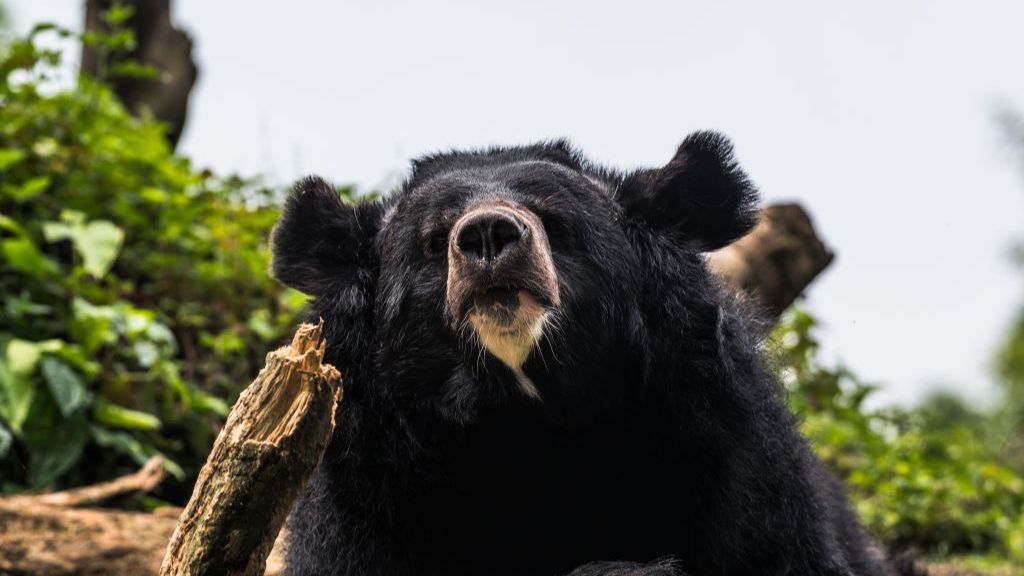
Japan is grappling with an unprecedented surge in human-bear conflicts that has pushed annual attacks to record highs, leaving authorities scrambling to contain two rogue bruins that have terrorized populated areas near Tokyo in recent days.
In Utsunomiya, a city of 500,000 located roughly 100 kilometers north of Tokyo, law enforcement and wildlife officials successfully captured an approximately 100-kilogram black bear on Tuesday, concluding a days-long search that disrupted daily life for the entire community. The operation, which took 1 hour and 40 minutes after the bear’s position was confirmed 2.5 kilometers south of the city’s main railway station, was far from straightforward: a veterinarian’s first tranquilizer shot missed the target, and two additional doses fired 15 minutes apart were required to subdue the animal. Since the bear was first spotted on Saturday, local residents reported more than 20 sightings across residential and public spaces, including near family homes, elementary schools, urban parks, a local river where the bear was seen swimming, and backyards where it scaled privacy fences. The repeated, unprecedented close encounters prompted city officials to close all 94 public primary and middle schools in Utsunomiya as a precaution, and warnings were issued that a second bear may still be roaming the area, urging locals to lock all exterior doors and windows day and night.
Some 100 kilometers north of Utsunomiya in Fukushima Prefecture, a second bear described by local officials as “extremely intelligent” remains at large after injuring four people in a residential neighborhood last week. Multiple attempts to tranquilize the animal have failed, and it has repeatedly outmaneuvered search teams. In one notable incident, the bruin broke into an electronics factory, then surprised surrounding police officers by unlocking a window and escaping the surrounded building. Fukushima’s mayor added that search teams have even observed the bear drinking from a public water tap, suggesting it may have figured out how to turn the tap handle on its own, cementing the animal’s reputation for unusual cunning. Authorities have now launched a large-scale aerial search using surveillance drones to track the bear across the region’s mixed residential and forested terrain.
This pair of high-profile incidents comes as Japan faces a growing public safety crisis around bear encounters. Data from Japan’s Ministry of the Environment shows that bear attacks hit an all-time record in 2025, with 238 people injured and 13 killed across the country in encounters with wild bears. In response to the rising casualty numbers, the Japanese national government launched a coordinated response earlier this year, establishing a cross-ministerial task force and rolling out new emergency response protocols to reduce harm to residents. Local governments and private firms are increasingly turning to cutting-edge technology to address the problem, as traditional bear management strategies struggle to keep pace with growing conflicts. One small village in Fukushima Prefecture is currently testing an AI-powered image analysis system that can automatically identify bears in footage from remote trail cameras, cutting down on the time wildlife teams spend reviewing footage. Telecom firm KDDI SmartDrone has developed an unmanned aerial system equipped with thermal imaging cameras that can track bears through thick woodland without requiring specialized training for local operators, allowing teams to follow animals until hunters or police can arrive on scene. Other firms have developed creative non-lethal deterrent tools: Ohta Seiki, a manufacturing company, launched the “Super Monster Wolf” back in 2016, a solar-powered robotic wolf designed to scare off bears and other unwanted wildlife by mimicking the predator’s appearance and calls. The company reports that it has already received dozens of orders for the device in 2026, far exceeding the typical annual demand for the product.