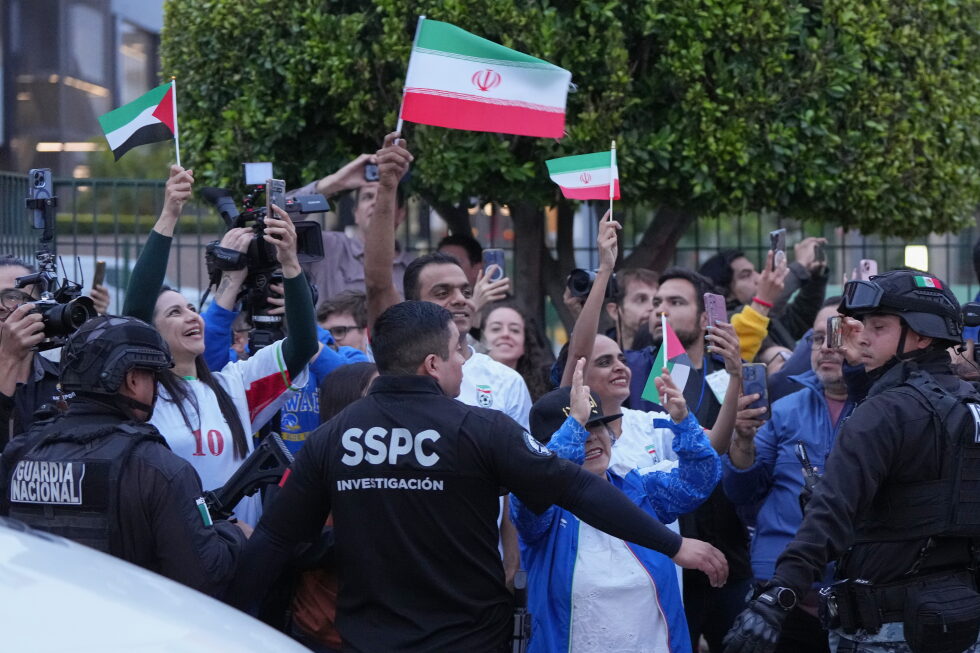
Just three days before Iran kicks off its 2026 FIFA World Cup campaign against New Zealand at the 70,000-seat SoFi Stadium in Inglewood, California, the Iranian Football Federation announced Tuesday that FIFA has fully revoked its ticket allocation for all three of the team’s group stage matches held on U.S. soil. This development marks a new low in growing frictions between Iranian football authorities, global governing body FIFA, and tournament co-host the United States, tensions that have escalated steadily since U.S. military strikes against Iran in late February.
Under standard FIFA tournament rules, each of the 48 participating national federations is allocated 8% of the total stadium capacity for every one of its matches, a quota that typically amounts to thousands of tickets per team. These allocations are customarily distributed by federations to their most loyal supporters, who follow the national team across both home and international fixtures. However, in a statement carried by Iran’s semi-official state media, the federation confirmed that it is now unable to release even a single ticket to Iranian supporters following the sudden cancellation of its quota.
The Iranian federation directly pointed to political interference from the United States, noting that while FIFA holds formal authority over all World Cup ticketing operations, Washington has deliberately moved to block Iranian fans from accessing the host venues. “This incident raises serious questions about the influence of non-sporting and political considerations on the organization of the world’s biggest football event,” the federation said in its official statement. FIFA has not yet issued any public response to the claims, despite multiple requests for comment.
The revoked ticketing quota is not the only complication Iran has faced in preparation for this tournament, the team’s seventh appearance at a men’s World Cup. Originally, the squad planned to hold pre-tournament training camps in Tucson, Arizona, but those arrangements were scrapped, and the team has instead relocated its base to the Mexican border city of Tijuana. Multiple senior federation officials have also been denied entry visas to the United States for the tournament. Iran is scheduled to face Belgium in Inglewood on June 21, followed by a final group stage match against Egypt in Seattle on June 26.
U.S. travel restrictions have long complicated access for Iranians ahead of the tournament: Washington has enforced a full travel ban on Iranian citizens since last year, making entry visas for the World Cup all but impossible for fans based inside Iran. It remains unclear how many of the originally allocated tickets had already been sold to members of the Iranian diaspora, including those already residing in the United States, prior to the revocation.
With the first match just days away, FIFA now faces a tight timeline to resell the roughly 5,600 tickets that had been reserved for the Iran-New Zealand opener. As of Tuesday, the official FIFA ticketing website still showed dozens of field-level seats available for the match, priced at $450 each, though no large blocks of tickets were listed as available.
The revocation also stands in direct contradiction to public promises made by FIFA President Gianni Infantino back in 2017, when the United States, Canada and Mexico were campaigning for their successful joint hosting bid. At the time, Infantino explicitly stated that unimpeded access for fans and officials is a non-negotiable requirement for any World Cup. “It’s obvious when it comes to FIFA competitions as well (that) any team, including the supporters and the officials of that team, who would qualify for a World Cup need to have access to the country, otherwise there is no World Cup,” Infantino said nine years ago. “That is obvious.”
Iran’s ticketing dispute is part of a broader pattern of access issues for global football stakeholders ahead of the 2026 tournament, fueled by restrictive U.S. immigration policies. Over the weekend, a FIFA-appointed match referee from Somalia was denied entry to the United States at Miami International Airport, and was subsequently removed from the tournament’s 104-referee roster earlier this week. An Iraqi player was detained for multiple hours upon arrival in Chicago, while a photographer traveling with the Iraqi delegation was barred from entering the country entirely.
Piara Powar, executive director of the Fare Network, FIFA’s official anti-discrimination monitoring partner, issued a scathing rebuke of the ongoing disruptions Tuesday. “The disruption is such that one has to ask who is running the World Cup. Is it FIFA or is it the U.S. government with its racially charged immigration policies?” Powar said. “Before a ball has been kicked, the sense that this World Cup is anything but the celebration of global humanity a World Cup should be is beginning to take over.”