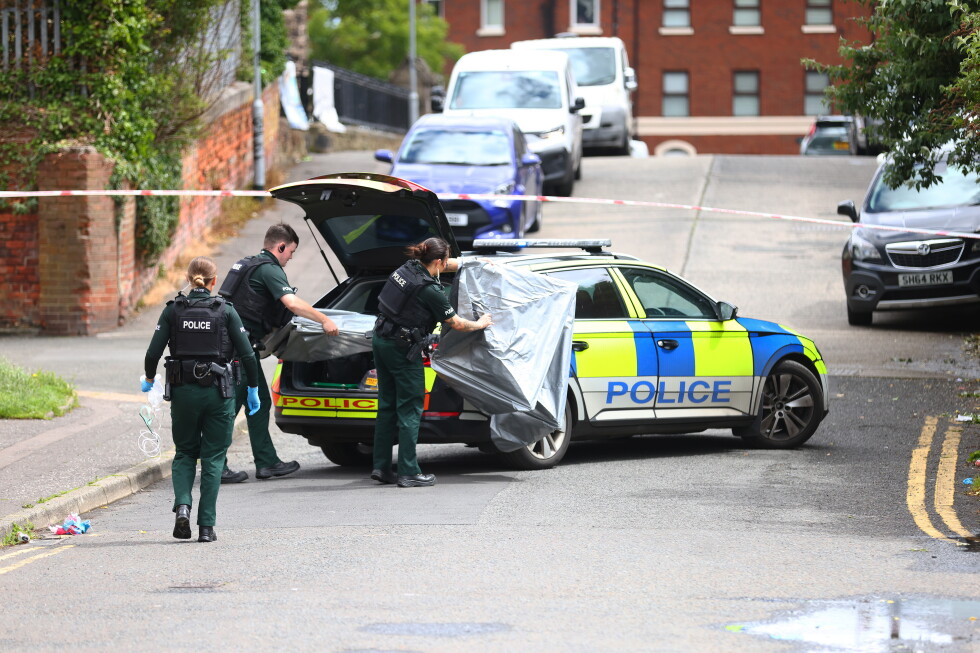
LONDON – A violent stabbing in a residential neighborhood of Belfast, Northern Ireland, has thrown the United Kingdom into a fresh public conversation about violence, immigration, and online misinformation, after law enforcement took a Sudanese man into custody this week in connection with the attack. The incident, which took place late Monday, gained rapid national attention after graphic videos of the assault were widely circulated across social media platforms.
According to local law enforcement, the victim, a man in his 40s, was rushed to a local hospital with severe, life-altering injuries to his face, eyes, and back. The suspect, a 30-something Sudanese national, was arrested on suspicion of attempted murder and remains in police custody, with a kitchen knife recovered at the attack site. As of Tuesday, investigators are still working to map out a clear motive for the assault, though senior police officials have confirmed there is no current evidence linking the attack to terrorist activity. Ryan Henderson, assistant chief constable of the Police Service of Northern Ireland, confirmed Wednesday that no additional persons of interest are being sought in connection with the case, and that the suspect had been granted official permission to reside in the U.K. and lived close to where the stabbing occurred. Henderson declined to release further details, noting that the active investigation is still ongoing.
In response to questions in Parliament about the suspect’s immigration status, Northern Ireland Secretary Hilary Benn stated he could not confirm whether the man had entered the U.K. through legal or irregular channels. Gavin Robinson, leader of the Democratic Unionist Party, told lawmakers Wednesday that the suspect had been allowed to stay in the U.K. on a five-year visa, and used the incident to push for stricter government controls on what he called “uncontrolled immigration.”
The Belfast stabbing comes just one week after another high-profile stabbing murder in southern England amplified national tensions around immigration and policing. In that case, 21-year-old university student Henry Nowak, who was white, was stabbed to death in Southampton in December by Vickrum Digwa, a Sikh man who falsely told responding officers that Nowak had assaulted him in a racist attack. First responders initially treated the wounded Nowak as a suspect before recognizing his critical injuries and attempting lifesaving resuscitation. Digwa was convicted of murder last week and sentenced to life in prison with a minimum 21-year term before eligibility for parole. The case has sparked fierce public debate over policing protocol and racial dynamics in the justice system, and a public protest over Nowak’s death turned violent when attendees attacked police officers with chairs and rocks. Multiple people have since been charged with violent disorder in connection with the unrest. U.S. Vice President JD Vance and right-wing activists have already seized on the Southampton case to publicly blame lax U.K. immigration policies for the violence.
Prime Minister Keir Starmer, whose Labour party took power earlier this year, has publicly condemned the Belfast attack as a “sickening” act of violence. “We have no tolerance for abhorrent scenes of violence like this on our streets,” Starmer said. On Tuesday, his office issued a formal public call for collective calm, stressing that investigators need adequate time and space to conduct a full, unpressured inquiry into the stabbing. Senior political and law enforcement leaders have also joined a coordinated appeal to the public: urging people not to share the graphic attack videos circulating online, and to avoid spreading unconfirmed misinformation that could inflame community tensions.