作者: admin

  • Naomi Girma set to return home to San Jose for USWNT match against Japan

    Naomi Girma set to return home to San Jose for USWNT match against Japan

    For the first time since the 2023 FIFA Women’s World Cup send-off series, Northern California native Naomi Girma will pull on the United States women’s national soccer team jersey in front of her hometown crowd this April, a homecoming USWNT head coach Emma Hayes made official with her roster announcement Wednesday.

    Girma, who was born in San Jose and rose to collegiate stardom at nearby Stanford University, is named to the 26-player squad for the U.S. team’s three-game friendly series against reigning Asian Cup champions Japan. The series kicks off April 11 at San Jose’s PayPal Park, a ground just minutes from where Girma grew up playing youth club soccer.

    The 25-year-old defender’s last appearance on a national team roster in her home region came in a 2-0 pre-World Cup win over Wales in 2023, and she called the upcoming match a surreal, deeply meaningful opportunity. “Playing for the national team in the Bay always just feels like kind of surreal,” Girma said. “Seeing a lot of people who come to support me, who were there when I was playing club soccer, just playing for fun, and being like, ‘Wow, I can’t believe that we’re all here and we’ve made it this far.’ So it always is really special for me.”

    Girma’s career has reached new heights since her last hometown appearance. She made her USWNT debut in 2022, has earned 52 caps to date, and claimed a gold medal as part of the 2024 Paris Olympic roster. Earlier this year, she made a high-profile move to Women’s Super League side Chelsea in a $1.1 million transfer from NWSL’s San Diego Wave, and just last weekend she notched her first WSL goal in a dramatic 4-3 win over Aston Villa that pushed Chelsea into second place in the league table, just behind leader Manchester City.

    Girma is not the only familiar Stanford product returning to the national team fold for this series. Her former collegiate teammate Sophia Sophia Wilson has earned her first USWNT call-up in 15 months, after stepping away from the game last year to welcome her first child. Experienced defender Tierna Davidson, who suffered an ACL tear last NWSL season, will also make her return to the squad after more than a year out of international play. The left-back last represented the U.S. in February 2025 before her injury, and Hayes confirmed Wednesday that Davidson will be on limited minutes for the series.

    Wilson, who plays her club soccer with the Portland Thorns, was omitted from the recent SheBelieves Cup roster as she worked her way back to full match fitness following maternity leave. She has earned 58 caps for the USWNT, netting 24 goals including three during the Paris Olympic run. With 67 international caps to her name, Davidson’s return adds further depth to the U.S. defensive line, while Wilson’s comeback brings a proven attacking threat back to the pool.

    Girma emphasized that the upcoming series against Japan will serve as a valuable measuring stick for the USWNT 15 months ahead of the 2027 Women’s World Cup hosted by Brazil. “They’re a great side, just won the Asian Cup,” Girma said. “I think they’re very organized in their defense, but then also in their attack and they bring something different to a lot of other opponents that we play. So I think it’s always a good test for us to measure ourselves against them.”

    Looking ahead to the 2027 tournament, Girma said the combination of returning veteran players and the program’s ongoing integration of emerging under-23 talent has the team in a strong position. “Seeing a lot of younger players be able to come into a full team camp and not really miss a beat, and not seem like they don’t know what’s going on, or feel like it’s a little bit too much, I think that transition has become really smooth,” she explained. “And I think with having some players come back in that weren’t in last year, it’s a really exciting time for our team. We have a big pool who now has experience, whether it’s in the last year, in the last couple years, ready to fill any role that we need.”

    After the opening match in San Jose, the series will travel to Seattle’s Lumen Field for the second fixture on April 14, before wrapping up on April 17 at Dick’s Sporting Goods Park in Commerce City, Colorado. The full roster, with position breakdowns and club affiliations, is as follows:
    – Goalkeepers: Jane Campbell (Houston Dash), Claudia Dickey (Seattle Reign), Phallon Tullis-Joyce (Manchester United)
    – Defenders: Tierna Davidson (Gotham FC), Emily Fox (Arsenal), Naomi Girma (Chelsea), Avery Patterson (Houston Dash), Lilly Reale (Gotham FC), Emily Sams (Angel City), Emily Sonnett (Gotham FC), Gisele Thompson (Angel City), Kennedy Wesley (San Diego Wave)
    – Midfielders: Sam Coffey (Manchester City), Lindsey Heaps (OL Lyonnes), Claire Hutton (Bay FC), Rose Lavelle (Gotham FC), Olivia Moultrie (Portland Thorns), Jaedyn Shaw (Gotham FC), Lily Yohannes (OL Lyonnes)
    – Forwards: Michelle Cooper (Kansas City Current), Jameese Joseph (Chicago Stars), Trinity Rodman (Washington Spirit), Emma Sears (Racing Louisville), Ally Sentnor (Kansas City Current), Alyssa Thompson (Chelsea), Sophia Wilson (Portland Thorns)

  • Japanese scholar demands government apology over embassy intrusion

    Japanese scholar demands government apology over embassy intrusion

    A senior Japanese academic and Sino-Japanese friendship leader is pressing the Japanese government to issue a formal public apology to Beijing over a deeply alarming breach of diplomatic protocol that took place in late March. Hisashi Inoue, honorary professor at Surugadai University and chairman of the Japan-China Friendship Association, has labeled the March 24 incident — where an active officer of the Japan Self-Defense Forces forced entry into the Chinese Embassy in Japan while armed with a knife — an extraordinarily severe violation of long-established international diplomatic norms. Inoue emphasized that the incident, which shocked diplomatic circles on both sides, constitutes a clear and grave breach of the 1961 Vienna Convention on Diplomatic Relations, a foundational international treaty that guarantees the inviolability of diplomatic mission premises and the safety of diplomatic staff. As of the report’s update on April 1, 2026, the Japanese government has not extended a formal apology to China over the intrusion, only issuing a vague expression of regret over the event. Inoue argues that this mild, indirect response is wholly insufficient to address the severity of the incident and the risks it poses to bilateral ties. The long-time advocate for friendly Japan-China relations is calling on Japan’s top elected leader, the prime minister, and the country’s defense minister to deliver a formal, public apology to the Chinese government over the unacceptable incursion.

  • DR Congo declares national holiday after reaching World Cup for first time in 52 years

    DR Congo declares national holiday after reaching World Cup for first time in 52 years

    Jubilation erupted across the Democratic Republic of Congo (DRC) this week after the national men’s football team, the Leopards, booked their first place at the FIFA World Cup in more than half a century, prompting the government to declare an immediate national public holiday to honor the historic achievement.

    The dramatic qualification came in an inter-confederation playoff against Jamaica on Tuesday, where former Manchester United defender Axel Tuanzebe, a Congolese native born in conflict-torn Bunia, netted the winning goal in the 100th minute of extra time to seal a 1-0 victory. When the final whistle blew, elated fans poured into the streets of the capital Kinshasa in the early hours of Wednesday morning, waving national flags, chanting slogans, and celebrating a moment decades in the making.

    Within hours of the win, DRC’s Ministry of Labour and Employment announced that Wednesday would be a nationwide public holiday, allowing all Congolese citizens to mark the “momentous” victory “in unity, fervour and national pride”. Most businesses, banks and retail outlets across Kinshasa shut their doors for the day to accommodate celebrations, though a small number of workplaces continued operations as normal, due to the very short notice of the holiday announcement, which was made at 8 a.m. local time on Wednesday itself.

    This milestone marks only the second time DRC has qualified for the World Cup. The nation’s only previous appearance came back in 1974, when the country was still known internationally as Zaire. The Leopards will kick off their 2026 World Cup campaign against Portugal — led by global superstar Cristiano Ronaldo — in Houston, United States, on June 17, before facing Colombia and Uzbekistan in the group stage. The 2026 tournament, expanded to 48 teams and co-hosted by the U.S., Mexico and Canada, will see DRC join nine other African nations in the finals.

    For a country that has endured decades of persistent armed conflict, with renewed violence escalating in the eastern region over the last two years following territorial advances by the M23 rebel group, the historic win has offered a rare moment of collective national joy. One Congolese supporter spoke to the BBC amid the Kinshasa celebrations, saying, “Whatever we may be feeling at the moment, amidst pain and war and occupation, this victory makes us proud… I feel so emotional and happy.”

    Tuanzebe, whose hometown of Bunia sits at the center of the ongoing unrest, called his game-winning goal “without a doubt the most important” of his entire professional career. “I’m so grateful to have scored that goal for the team, for the nation. I realise the magnitude of what it represents and the joy it brings to people,” he said after the match.

    Notably, the congratulations have crossed tense regional political divides. Even as diplomatic relations between DRC and neighboring Rwanda remain sharply strained, with Rwanda widely accused of backing the M23 insurgency — a claim Rwandan authorities deny — the Rwandan government issued a public message of celebration for DRC’s qualification. Deputy government spokesperson Jean Maurice Uwera wrote in a post on X, “Leopards stepping up for Africa! Congratulations DR Congo, go make the continent proud on the world stage.”

    In the Kinshasa neighborhood of Kingabwa, jubilant fans took to the streets chanting “Christiano Ronaldo is next”, already looking ahead to the team’s opening group stage match against the five-time Ballon d’Or winner’s side this summer.

  • Marina Silva steps down as Brazil’s environment minister to run for Congress

    Marina Silva steps down as Brazil’s environment minister to run for Congress

    SAO PAULO — One of the world’s most respected climate advocates, Brazil’s Environment Minister Marina Silva, announced Wednesday that she will depart her cabinet post in President Luiz Inácio Lula da Silva’s administration to compete in Brazil’s upcoming national congressional election this fall.

    Per Brazil’s strict election regulations, any cabinet official seeking elected office must resign from their government position no later than six months before the October 4 vote, clearing the way for her transition. João Paulo Ribeiro Capobianco, a career environmentalist who has served as executive secretary of the Ministry of Environment and Climate Change, will step into the role to succeed Silva.

    In a public statement shared to her Instagram account, Silva framed her departure as the completion of a core mandate: “I fulfilled the tasks assigned to me, which involved rebuilding and moving forward Brazil’s environmental policy following years of decline.” A veteran legislator who first won a congressional seat in 1994 and was re-elected most recently in 2022, Silva added that she will return to her legislative mandate and actively campaign for Lula’s re-election bid this year.

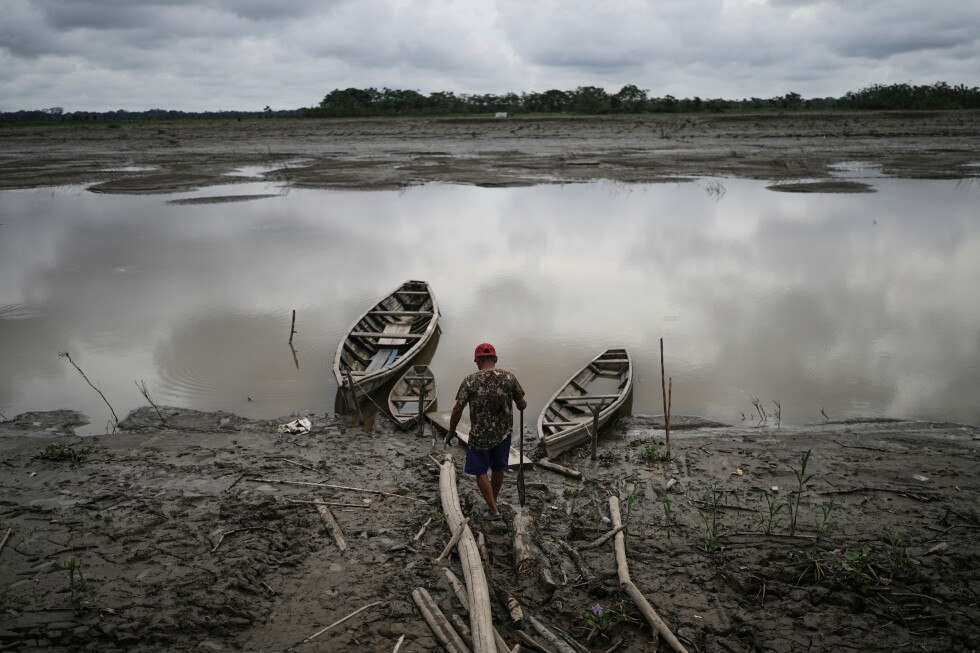
    This departure marks the end of Silva’s second tenure leading Brazil’s environmental policy under Lula, and for the second time in her career, she leaves behind a historic drop in Amazon deforestation. When she retook the ministerial post in 2023, the country was grappling with a near-doubling of forest loss that occurred during the four-year administration of former President Jair Bolsonaro, who held office from 2019 to 2022. After taking office, Silva pledged to eliminate all illegal deforestation in Brazil by 2030, and data from her tenure shows policies rolled out under her leadership have already cut Amazon forest loss by more than 50%.

    Marcio Astrini, executive director of the Climate Observatory, a leading coalition of Brazilian environmental nonprofits, called Silva’s progress transformative. “If nothing exceptionally negative happens, we should have, if not the lowest, one of the lowest deforestation rates in the Amazon’s recorded history,” Astrini said. He added that Silva’s administration also delivered robust protections for the Cerrado savanna biome and implemented sustained, effective policies to curb the severe forest fires that ravaged the region in 2023 and 2024 amid extreme drought conditions.

    Bolsonaro, who is currently serving a 27-year prison sentence for his role in the 2022 coup attempt, centered his environmental policy on advancing agribusiness interests that opposed the creation of protected Indigenous and conservation territories and pushed for the legalization of illegally grabbed public forest land. His administration froze all new designated protected areas, gutted the budget and authority of federal environmental enforcement agencies, and transferred oversight of forest management to the agriculture ministry, which is historically aligned with agribusiness. By the year ending July 2021, Amazon deforestation under Bolsonaro hit a 15-year peak, with only a minor slowdown in destruction recorded in the following 12 months.

    Astrini noted that Silva moved quickly to reverse these changes upon her return to office: she reorganized the structure of the Environment Ministry and federal protection agencies, and restructured the Amazon Fund — the world’s largest dedicated rainforest conservation initiative, which she originally helped design during her first tenure as minister. The restructured fund secured record new international contributions, funding expanded on-the-ground enforcement operations that had been halted under Bolsonaro.

    “The environmental sector started working again in Brazil,” Astrini said. “That was the first major achievement: She put the house in order.”

    Silva was also the key driving force behind Brazil’s successful bid to host the 2025 UN Climate Change Conference (COP30) in the Amazon city of Belém, and remains the most authoritative voice on Brazil’s national climate agenda. Still, Astrini acknowledged that even with Silva’s leadership, the Lula administration has faced major pushback on environmental protection from congressional factions. Last year, lawmakers passed a bill to streamline environmental licensing for large strategic infrastructure projects, cutting a process that previously took six to seven years and required multiple layers of approval down to just 12 months. Lula has also pushed forward with plans to approve exploratory offshore oil drilling at the mouth of the Amazon River, an ecologically critical region that scientists warn is highly vulnerable to oil spill damage. Silva was publicly critical of both measures, but lacked the political capital to block them.

    Born in the Amazon region and a former rubber tapper in her youth, Silva has a decades-long track record of environmental leadership. During her first tenure as environment minister under Lula’s initial two presidential terms from 2003 to 2008, she oversaw the creation of dozens of new protected conservation areas, built the country’s world-leading satellite deforestation monitoring system, and launched large-scale crackdowns on illegal environmental crime. She also helped design and launch the original Amazon Fund during that first term.

    Silva resigned from her first ministerial post in 2008 after high-profile clashes with Lula, who was shifting policy to court agribusiness interests during his second term. The two political figures reconciled years later, and Silva threw her support behind Lula’s successful 2022 election campaign that ousted Bolsonaro, clearing the way for her return to the environment ministry.

    This reporting on climate and the environment from The Associated Press receives financial support from multiple private foundations. AP retains full editorial control over all content. More information on AP’s philanthropic partnership standards, a list of supporters, and funded coverage areas is available at AP.org.

  • Macron calls for ceasefire in Mideast during visit to Japan

    Macron calls for ceasefire in Mideast during visit to Japan

    During an official state visit to Tokyo on Wednesday, French President Emmanuel Macron publicly called for an immediate ceasefire to end escalating conflict in the Middle East, alongside joint commitments with Japanese Prime Minister Sanae Takaichi to deepen cross-sector bilateral cooperation spanning defense, critical resources, nuclear energy and space exploration.

    Following closed-door bilateral talks, the two leaders outlined shared foundational principles during a joint press conference held at Tokyo’s Akasaka Palace. Macron emphasized that both Paris and Tokyo are united in their commitment to upholding international law, a rules-based global order, and shared democratic values. “This is why … we both advocate for a return to peace, a ceasefire, calm, and free passage through the Strait of Hormuz,” Macron stated. Takaichi echoed this position, noting the two leaders reached consensus on the urgent need to de-escalate regional tensions, guarantee unimpeded access through the strategically critical waterway, and protect global supply chain stability. Amid growing geopolitical uncertainty across the globe, Takaichi noted that strengthening ties and collaboration between Japan and France carries particular strategic weight.

    Beyond regional diplomacy, the summit delivered concrete progress on multiple long-standing bilateral cooperation initiatives. A day prior to the leaders’ meeting, Japanese Defense Minister Shinjiro Koizumi and his French counterpart Catherine Vautmir signed a formal road map outlining expanded defense cooperation through 2030, centered on increasing joint military exercises and personnel exchanges across the Indo-Pacific. In a separate signing ceremony, the two nations’ trade ministers formalized an agreement to collaborate on joint rare earths development projects. Rare earth elements are critical components for high-performance heat-resistant magnets used in defense systems and electric vehicle batteries, a market currently dominated by Chinese production. The two leaders also confirmed a new partnership to advance fast reactor technology and nuclear fuel recycling, an area where Japan has faced repeated technical and regulatory setbacks in recent years.

    The bilateral summit comes amid a shifting geopolitical landscape in the Indo-Pacific, where Japan and France have steadily ramped up defense cooperation over the past decade. France maintains permanent military forces, civilian populations and economic assets across its Indo-Pacific overseas territories, and has positioned itself as a key security partner for regional democracies seeking to counter balance growing Chinese influence across the region.

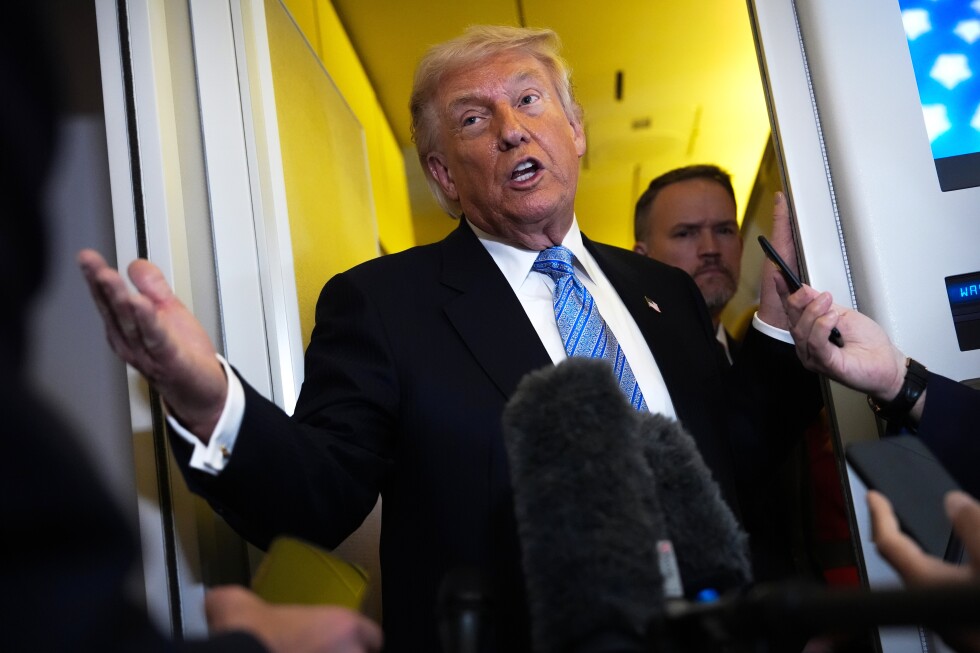
    Macron’s visit to Japan also unfolded hours after U.S. President Donald Trump made controversial remarks shifting responsibility for security of the Strait of Hormuz to regional consumer nations. “That’s not for us. That’ll be for France and whoever’s using the strait,” Trump stated overnight. The U.S. president has publicly criticized European allies for what he frames as insufficient support for U.S.-backed Israeli military operations, and specifically called out France for being “very unhelpful” in the conflict. Macron did not address Trump’s comments during his prepared remarks at Wednesday’s press conference, where reporters were not given the opportunity to ask questions.

    Looking ahead to the final day of Macron’s Tokyo visit on Thursday, he and Takaichi are scheduled to tour a Japanese private firm specializing in innovative space debris removal technology, a reflection of the two nations’ expanding collaboration in the space sector. Following the site visit, Macron will hold a formal courtesy meeting with Japan’s Emperor Naruhito and attend an official palace luncheon, before departing for South Korea to continue his East Asian diplomatic tour.

  • South African army arrive in crime hotspots to help tackle gangs

    South African army arrive in crime hotspots to help tackle gangs

    Facing a persistent national crisis of staggering violent crime rates, South Africa has formally rolled out a one-year military deployment across five high-risk provinces to support overstretched local police forces grappling with organized gang activity and unregulated illicit mining. The deployment, first announced by President Cyril Ramaphosa earlier in 2026, will see 2,200 soldiers deployed to the five of the country’s nine provinces that have been hit hardest by widespread criminal violence. An initial advance contingent of troops was sent to targeted high-gang areas in Gauteng province – home to South Africa’s largest city, Johannesburg – back in March, with the main full deployment kicking off across Eastern Cape, Free State, North West and Western Cape starting April 1, 2026, for a 12-month mandate. The core stated goal of the operation is to reestablish public order in communities that have been overwhelmed by persistent lawlessness. But the deployment has already sparked sharp debate over its long-term effectiveness and the appropriateness of using the military for domestic civilian policing.

    South Africa’s ongoing crime epidemic has reached alarming levels, with one of the highest intentional homicide rates in the world. The most recent official crime statistics, covering the final quarter of 2025 from October through December, show that an average of 71 people are killed across the country every day. Illicit, unregulated mining and intergenerational gang violence are two of the primary drivers of this bloodshed, particularly in densely populated urban and semi-rural hotspots across the affected provinces.

    Interviews with residents of Eldorado Park, a Johannesburg suburb that was part of the initial March deployment and targeted for its chronic gang violence, reveal sharply divided views on the military’s presence. Many locals expressed deep scepticism that the deployment would deliver any lasting change to the dangerous conditions they face daily. Leola Davies, a 74-year-old retired resident, described the suburb as an unlivable “hell-hole”, saying “Sodom and Gomorra have nothing on this place. I stay indoors all day because I just don’t want to be the next victim. Things are getting worse.” Elviena le Roux, a mother of three living in the area, said she fears the military presence will only escalate tensions rather than improve safety, predicting it would “make the violence worse”. Even some residents who welcomed the visible military patrols warned that the current 12-month mandate is not enough to bring permanent change. Ronald Rabie, a 56-year-old father of three, noted that the visible patrols have created a temporary sense of safety for local families, but warned that “Once they leave, things return to chaos – they need to be here permanently.”

    This latest deployment marks the third time Ramaphosa has called on the military to assist with domestic security challenges during his presidency. In 2023, more than 3,000 soldiers were deployed for six months to target illicit mining operations across the country. In July 2021, troops were sent into major urban centers to put down deadly widespread rioting that broke out following the arrest of former president Jacob Zuma. Under current South African law, military personnel have very limited authority to arrest civilians, and are required to turn any detained suspects over to police as quickly as possible.

    Security analysts and criminologists have raised widespread concerns about the deployment, echoing many residents’ doubts about its long-term impact. Experts point out that the South African military is trained for combat operations, not the community-centered trust-building policing that is required to reduce violent crime over time. The legacy of apartheid also looms large over the deployment: the former white minority apartheid regime regularly used the military to enforce repressive rule over Black South African communities, a history that continues to shape widespread suspicion of uniformed soldiers operating in residential neighborhoods. Guy Lamb, a leading South African criminologist, told the BBC he remains unconvinced the deployment will deliver sustainable improvements in safety. “Soldiers are not designed to engage in policing, but rather to engage in combat and use maximum force,” he explained, warning “There’s danger that they will escalate situations or respond very aggressively in tense situations.”

    Lamb pointed to the military’s controversial conduct during the Covid-19 pandemic as a cautionary precedent. At that time, troops were deployed to enforce national lockdown curfews and movement restrictions, and the operation drew widespread international and domestic condemnation after multiple reports emerged of excessive force, unlawful detention, and harassment of ordinary civilians. While national authorities have expressed confidence that the new deployment will reduce crime rates, Lamb argued that without targeted action to address the root causes of violent crime in high-risk communities, any gains will be temporary. “Without a dedicated plan to try and address why crime is so violent in these sort of places, there was a strong likelihood it would flare up again once the soldiers leave,” he said, adding “So we’re likely to see this happening into the foreseeable future, because this plan of addressing what are the root causes of crime in these areas is not in place.”

  • Trump signs order to create voter eligibility lists, restrict mail ballots

    Trump signs order to create voter eligibility lists, restrict mail ballots

    Less than 24 hours after the formal signing ceremony held in the Oval Office of the White House in Washington, D.C., a new executive order from U.S. President Donald Trump aimed at overhauling core parts of the nation’s election administration has ignited immediate political and legal firestorm across the country. Dated March 31, 2026, the directive marks the second major executive action Trump has taken to reshape voting procedures since he returned to office, following a 2025 order that was largely blocked by federal courts.

    Under the terms of the new order, the U.S. Department of Homeland Security is mandated to work in direct partnership with the Social Security Administration to assemble comprehensive, state-by-state rosters of voters who have been formally confirmed as U.S. citizens aged 18 and older, the minimum voting age in the country. Once compiled, these national voter eligibility lists will be turned over to state-level election authorities for use in verifying who is eligible to cast ballots in federal elections.

    Beyond creating centralized eligibility rolls, the order also imposes new restrictions on mail-in and absentee voting, a method of voting that has been the subject of fierce partisan debate in U.S. politics for years. The U.S. Postal Service is instructed to only deliver ballot packages to voters whose names appear on the state-approved eligibility lists compiled under the new federal framework. Additionally, all election mail will be required to use official, pre-marked envelopes with tracking barcodes to monitor delivery and confirm receipt by election officials.

    The move has triggered swift pushback from legal experts, election administrators, voting rights advocates and Democratic party officials, nearly all of whom question the foundational legality of the order. Under the U.S. Constitution, authority over the administration of federal, state and local elections is primarily granted to individual state governments, with limited rule-setting power reserved for Congress. Legal analysts widely agree that the executive order oversteps federal authority granted under the Constitution, making it vulnerable to being struck down by the courts.

    Within hours of the order being signed, voting rights organizations and Democratic leaders from multiple states announced they would immediately file legal challenges to block the directive from taking effect. This latest effort to alter election rules follows a similar executive order Trump issued in 2025, which sought to tighten voter registration requirements and stop the counting of ballots that arrive after Election Day. Courts ultimately blocked key provisions of that 2025 order, a precedent that opponents of the new directive say suggests a similar outcome is likely this time around.

  • Pond skimming marks end of snow season in Xinjiang’s Altay

    Pond skimming marks end of snow season in Xinjiang’s Altay

    As spring temperatures rise and winter snowpack begins to melt across northern Xinjiang, the 2025-2026 snow season came to a festive close this weekend at Altay’s Jiangjunshan International Ski Resort, where hundreds of skiing enthusiasts gathered for the beloved annual tradition of pond skimming. A thrilling celebration of the season’s final days, the event invited participants of all skill levels to test their balance and courage gliding across an open pool of meltwater at the base of the resort’s slopes.

    Event organizers carved out two separate courses to accommodate attendees of varying experience: a full 35-meter main track for seasoned thrill-seekers, and a shorter, gently sloped mini-track built specifically for first-time participants and beginners. On the main course, skiers pushed off from the top of the snow-covered slope, building speed as they descended before launching onto the surface of the pool, sending up plumes of water as they attempted to skim all the way across to the opposite bank. While some skilled skiers managed to glide the full distance without falling, many challengers lost their footing mid-crossing and plunged into the chilly water, emerging soaked, grinning, and eager to share photos of their playful mishaps with fellow attendees.

    Mao Xiaoshuai, a visitor who traveled from the southwestern city of Chengdu, Sichuan province to join the event, described the experience as unforgettable. “Combining the speed of downhill skiing with the playful fun of splashing through water makes for a totally unique rush,” he explained in an interview on Sunday. “You get the best of both winter and early spring all in one run, and it’s the perfect way to let go of all the stress that’s built up over months of work.”

    Over on the beginner track, organizers intentionally designed a gentler gradient to lower the barrier to entry, ensuring that even first-time skiers and families with young children could join in the fun without feeling intimidated. The welcoming atmosphere drew crowds of spectators who cheered on every participant, regardless of whether they made it across the pool or took an unexpected dip.

    Jiangjunshan International Ski Resort will officially close its 2025-2026 snow season this coming Wednesday. Beyond the festive closing event, the resort celebrated a standout winter: official data shows the facility welcomed 1.3 million total visits over the past four months, marking a 46 percent jump compared to the previous winter season. The number of dedicated ski visits specifically rose even more sharply, hitting 870,000 — a 66 percent year-on-year increase that highlights Altay’s growing reputation as one of China’s top winter sports destinations.

  • Peter Magyar, the former Orban ally vying for power in Hungary

    Peter Magyar, the former Orban ally vying for power in Hungary

    As Hungary gears up for its 12 April parliamentary elections, the political landscape of the Central European nation has been upended by a surprising challenger whose rapid rise has sent shockwaves through Viktor Orban’s long-dominant ruling party. Forty-five-year-old Peter Magyar, a one-time insider within Orban’s Fidesz party who only entered full opposition politics two years ago, now stands as the most serious threat to Orban’s 16 consecutive years in power since the prime minister first won office in 2010. Opinion polls currently place Magyar within striking distance of an election victory.\n\nMagyar’s campaign has been defined by relentless energy and a urgent, nationally rooted message. Borrowing his original slogan “Now or Never” from a 19th-century Hungarian revolutionary poet’s rallying cry for national independence, he has condensed the message to just “Now” on campaign materials, crossing out the “or Never” to amplify the sense that this is Hungary’s critical moment for change. Over the course of the campaign, he has crisscrossed every corner of the country, with plans to visit all 106 of Hungary’s parliamentary constituencies, delivering up to six public speeches a day. Over more than two years of grassroots organizing, he has built a robust support base even in the small towns and rural villages that have long been Fidesz’s strongest electoral strongholds. In 2024, he completed a 300-kilometer walk from Budapest to the Romanian border, framing the journey as an effort to “reunite” a divided nation and win over disillusioned traditional Fidesz voters.\n\nMagyar’s break from the party he once belonged to did not come out of nowhere, but it was accelerated by a high-profile 2024 political scandal that brought down two of Fidesz’s top female leaders. Before February 2024, Magyar was deeply embedded in the Fidesz political machine: he joined the party as a university student in 2002, married rising Fidesz star Judit Varga (who would later become Hungary’s justice minister), and held a series of key positions, including a diplomatic posting to Hungary’s permanent mission in Brussels, leadership of Fidesz’s European Parliament negotiating team, and board seats on multiple state-owned enterprises.\n\nThe scandal that shattered Fidesz’s ranks erupted when Hungarian President Katalin Novak granted a pardon to an official who helped cover up systemic sexual abuse at a state-run children’s home. Public outrage forced Novak to resign, and Varga – who had co-signed the pardon as justice minister and was slated to lead Fidesz’s 2024 European election campaign – was also forced to step down, ending her rising political career within the party. With his ex-wife pushed out of Fidesz and their marriage having already ended in 2023, Magyar made a bombshell move: he appeared live on a leading pro-opposition YouTube channel Partizán to publicly renounce the Fidesz leadership. The interview, watched by more than a million viewers in a country of just 9.6 million people, instantly went viral.\n\n”Everyone warned me against it – friends, family, people I’ve known for years,” Magyar told the host during the interview. “I’ve been inside this system, inside this circle, for a very long time.” In a subsequent Facebook post, he declared he would no longer remain part of a system where top leaders hid behind female subordinates to take the blame for their mistakes. Speaking to the BBC after the interview, Magyar noted that his disillusionment with Fidesz had grown gradually over years: “The Fidesz we see today is very, very different from the one I joined in 2002. For a long time, I accepted the argument that holding power required the compromises they made. But 2024 became the turning point.” He also acknowledged he feared for the future of his three children after making the leap into opposition, but said the need for change outweighed those personal risks.\n\nA month after his viral interview, on Hungary’s 15 March national holiday marking the 1848 revolution against Habsburg rule, Magyar cemented his status as the leading opposition voice. While Orban delivered a fiery speech from Budapest’s National Museum attacking the European Union and calling for Hungary to “occupy Brussels,” Magyar addressed a crowd of an estimated 10,000 supporters, accusing Fidesz of widespread systemic corruption and economic mismanagement. He used the event to announce the formation of his new political movement, later taking over a small dormant party called Tisza to qualify for elections. He further escalated his attacks by releasing a secretly recorded 2023 conversation with his ex-wife that referenced a high-profile corruption trial, a move that drew condemnation from Varga, who accused him of abuse – a charge Magyar has repeatedly denied. Orban’s inner circle has attacked Magyar as a traitor who betrayed his family first, then his country, framing him as a proxy for Brussels. Orban himself has downplayed the challenge, dismissing Magyar simply as “someone who left Fidesz.”\n\nDespite the attacks, Magyar’s political momentum proved unstoppable. In the 2024 European Parliament elections, Tisza won 29.6% of the national vote and seven seats, finishing behind Fidesz’s 44.8% but demonstrating that Magyar could draw significant support away from the ruling party. By autumn 2024, Tisza had pulled ahead of Fidesz in national opinion polls. During commemorations of the 1956 anti-Soviet uprising last year, Magyar led a rival march to Orban’s, directly challenging the prime minister’s long-standing close ties to the Kremlin. He pointedly asked Orban, who rose to political prominence calling for Soviet troops to withdraw from Hungary in 1989: “Mr. Prime Minister, why won’t you say ‘Russians go home’ any more?” He accused Orban of betraying the legacy of 1956 to remain what he called “the Kremlin’s most loyal ally,” pushing back against Orban’s framing of Tisza as a “warmonger” movement carrying out a “Brussels war agenda.”\n\nA key factor in Magyar’s rise is his positioning as a non-liberal alternative to Orban, unlike the fragmented liberal opposition that repeatedly failed to unseat the prime minister in previous elections. Magyar has openly criticized the old liberal opposition, dismissing former Socialist leader Ferenc Gyurcsany as no better than Orban, and has systematically consolidated anti-Orban support under his own banner. He has also directly confronted the pro-Orban media outlets that dominate Hungary’s media landscape, going public early this year to reveal an alleged Russian-style smear and honey-trap campaign targeting him.\n\nMagyar announced that intelligence operatives had leaked surveillance footage implying he had used drugs during a private meeting with an ex-girlfriend. He pre-empted the leak by acknowledging he had consensual sex with the woman but denied any drug use, calling the incident a set-up by state security services. He subsequently passed multiple drug tests to prove his innocence, and none of the corruption or personal scandals that Orban’s camp has leveled against him have damaged his public support to date.\n\nAs a former insider, Magyar argues he has a unique advantage over Orban: he knows the ruling party’s tactics and vulnerabilities intimately. “I know them, I know their tricks, and I know they are terrified,” he told reporters. For Hungarians, he says, this election is a once-in-a-generation opportunity to change the course of the country after 16 years of Orban’s rule. \n\nOn policy, Magyar has centered his campaign on promises to root out systemic corruption, revitalize Hungary’s stagnant economy, reach out to the country’s marginalized Roma community, and unlock billions of euros in frozen EU development funds that have been withheld due to Brussels’ concerns over rule of law erosion under Orban. For his part, Orban has campaigned on framing Magyar as a puppet of the EU and Kyiv, positioning himself as the champion of national sovereignty and a “real party of peace” amid the ongoing war in Ukraine.

  • Key suspect in cross-border gambling, fraud syndicate repatriated from Cambodia to China

    Key suspect in cross-border gambling, fraud syndicate repatriated from Cambodia to China

    China’s Ministry of Public Security confirmed on Wednesday that a high-profile key figure connected to a large transnational criminal network focused on illegal gambling and telecom fraud has been successfully sent back to Chinese territory from Cambodia. The suspect, identified as Li Xiong, is considered a core member of the operation that victimized countless individuals through illegal financial scams and unregulated gambling activities, according to official statements.

    This repatriation marks a significant milestone in China’s ongoing coordinated crackdown on cross-border organized crime, which has increasingly targeted criminal syndicates that operate across international borders to avoid domestic law enforcement. Criminal networks involved in transnational fraud and illegal gambling have long posed major threats to public safety and financial stability both in China and neighboring Southeast Asian nations, prompting bilateral law enforcement cooperation to dismantle these operations and bring fugitive suspects to justice.

    The handover of Li Xiong underscores the growing collaborative relationship between Chinese and Cambodian law enforcement agencies in addressing shared transnational security challenges. For years, these criminal syndicates have exploited gaps in cross-border regulation to run large-scale scams that steal billions of yuan from Chinese residents and global victims annually, making coordinated repatriation efforts a critical component of regional anti-crime initiatives.

    This operation aligns with China’s broader national strategy to combat transnational telecommunications fraud, online gambling, and other cross-border criminal activities that harm public interests. Chinese law enforcement officials have repeatedly emphasized that the country will continue to work with international partners to track down fugitive criminal suspects operating overseas, ensuring that no offenders can evade justice by fleeing beyond national borders.