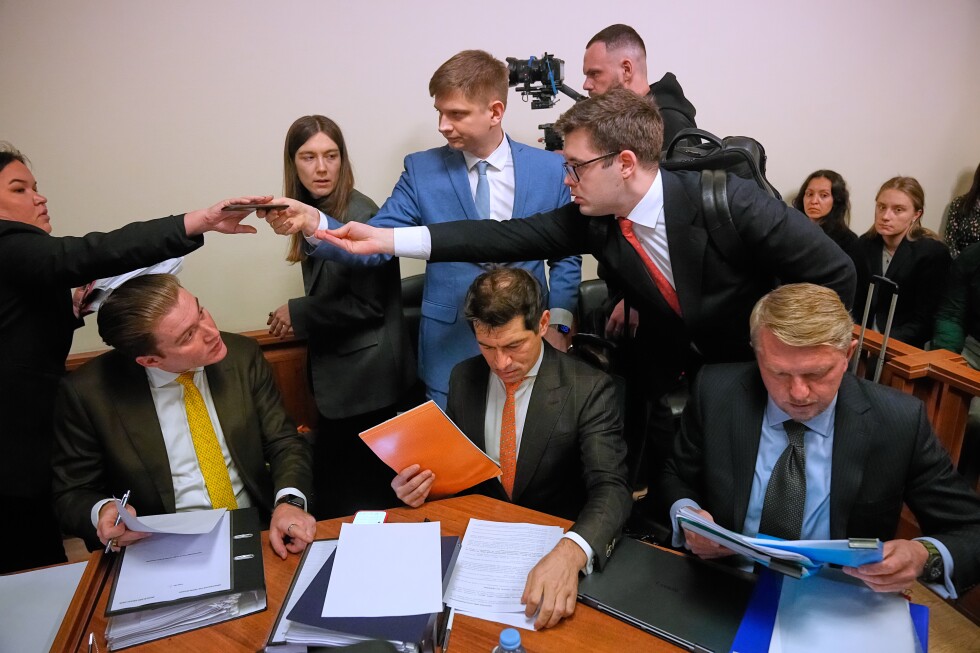
A Moscow arbitration court has fully upheld a massive $249.7 billion damages claim brought by the Russian Central Bank against Euroclear, the European Union-based securities clearing institution that holds the vast majority of the bloc’s frozen Russian sovereign assets, Russian media outlets confirmed Friday. The legal action stems from sweeping EU sanctions imposed on Moscow following the 2022 full-scale invasion of Ukraine, which locked the Russian Central Bank out of accessing and managing its more than $200 billion in reserves held with Euroclear.
作者: admin
-
Israeli-born Dutch politician calls for violence worse than Gaza against Palestinians
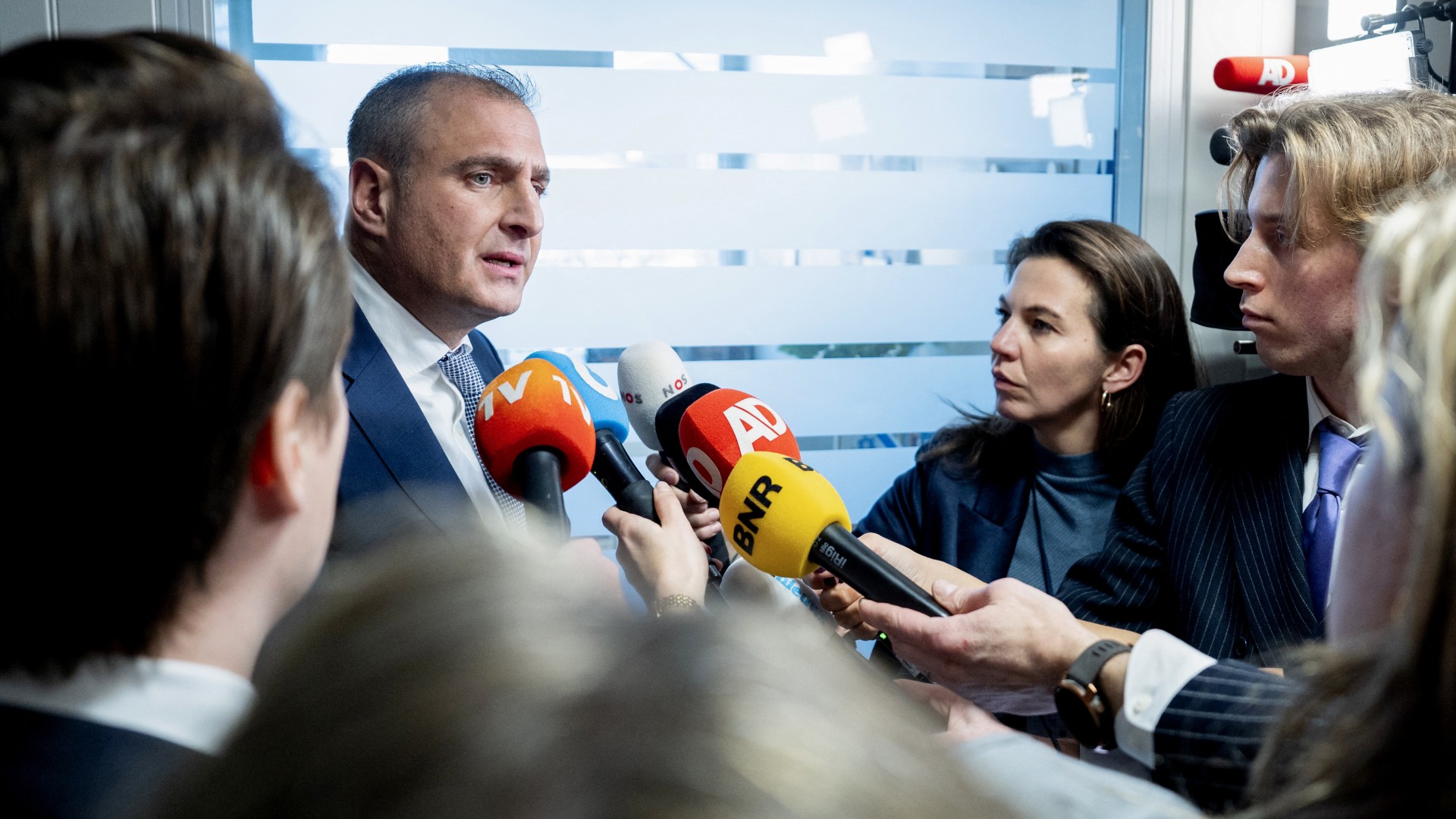
A controversial Israeli-born right-wing Dutch politician has ignited a national firestorm after calling for European borders to be shut to Palestinian refugees through the use of lethal, excessive force, drawing formal accusations of incitement to violence and widespread condemnation across the Dutch political spectrum.
Gidi Markuszower, who split from Geert Wilders’ far-right Party for Freedom (PVV) earlier this year to launch his own nationalist party, The Dutch Alliance, made the inflammatory remarks during a recorded video interview with independent Dutch media platform Left Laser.
During the discussion about the entry of Palestinian asylum seekers to the Netherlands, Markuszower repeatedly insisted that force must be used to block their arrival. “We need to stop them with force, even more force than they are fleeing from,” he said. “The Netherlands and all of Europe must turn them away at the border with force.” When pressed by the interviewer to clarify whether this meant using greater violence than the Israeli military currently employs in Gaza, Markuszower affirmed, “If necessary, with force.”
When asked directly if that would mean border security forces shooting unarmed Palestinians attempting to cross into the country, Markuszower did not back down. “With force, yes,” he replied. Pressed further on whether Royal Netherlands Marechaussee border guards should use service rifles to shoot people seeking entry, the lawmaker doubled down: “They do not have a valid visa, so they have no right to enter. If they persist in trying to cross, you have to defend yourself. Use maximum force.”
Markuszower went even further in his anti-Palestinian rhetoric, claiming that roughly 90% of Palestinians vote for Hamas and are inherently committed to a “culture of destruction.” He added that Palestinians should remain in “Arabia” or “wither away” in the Gaza Strip, echoing far-right tropes that have drawn widespread rebuke from human rights groups.
The Rights Forum, a leading Dutch human rights organization, has announced it will file a formal criminal complaint against Markuszower for incitement to violence against asylum seekers. The group labeled the lawmaker’s comments “morally reprehensible,” arguing that in a democratic constitutional state, such dangerous rhetoric demands review by the Public Prosecution Service and adjudication by the courts.
The controversy comes amid ongoing debate over asylum policy in the Netherlands. Data shows that just under 6,000 people applied for asylum in the country during the first quarter of 2026, with roughly 1,100 applicants listed as holding “unknown nationality” – a classification that includes Palestinian refugees, as the Netherlands does not formally recognize Palestinian statehood.
This is not the first time Markuszower has been mired in controversy over extremist rhetoric and security concerns. Born in Tel Aviv, he previously served as a spokesperson for the Dutch branch of Israel’s ruling Likud Party. In 2024, Wilders’ far-right incoming government planned to appoint Markuszower as deputy prime minister and migration minister, but withdrew the nomination following undisclosed security concerns flagged by Dutch intelligence services. This marks a decades-long pattern: in 2010, Markuszower dropped out of a parliamentary race after intelligence linked him to an unnamed foreign security service, widely reported by local media to be Israel’s Mossad. Despite that scrutiny, he won election to the Dutch Senate in 2015 and to the House of Representatives two years later. He has also been detained by police on weapons possession charges, though he was never ultimately prosecuted. In 2023, he drew outrage for claiming “the African jungle” was coming to the Netherlands “en masse.”
This latest set of remarks has drawn sharp condemnation from across mainstream Dutch political parties this week. Jesse Klaver, leader of the center-left GroenLinks-PvdA alliance, called the comments “deeply abhorrent language, an absolute low point” for Dutch politics. Jan Paternotte, a senior lawmaker with the social liberal Democrats 66 party, echoed the criticism, saying: “What complete idiocy. Stop this dangerous contest of outbidding the radical right.”
The report was originally published by Middle East Eye, an independent media outlet covering the Middle East and North Africa region.
-
Drake calls out DJ Khaled’s silence on Palestine in new track
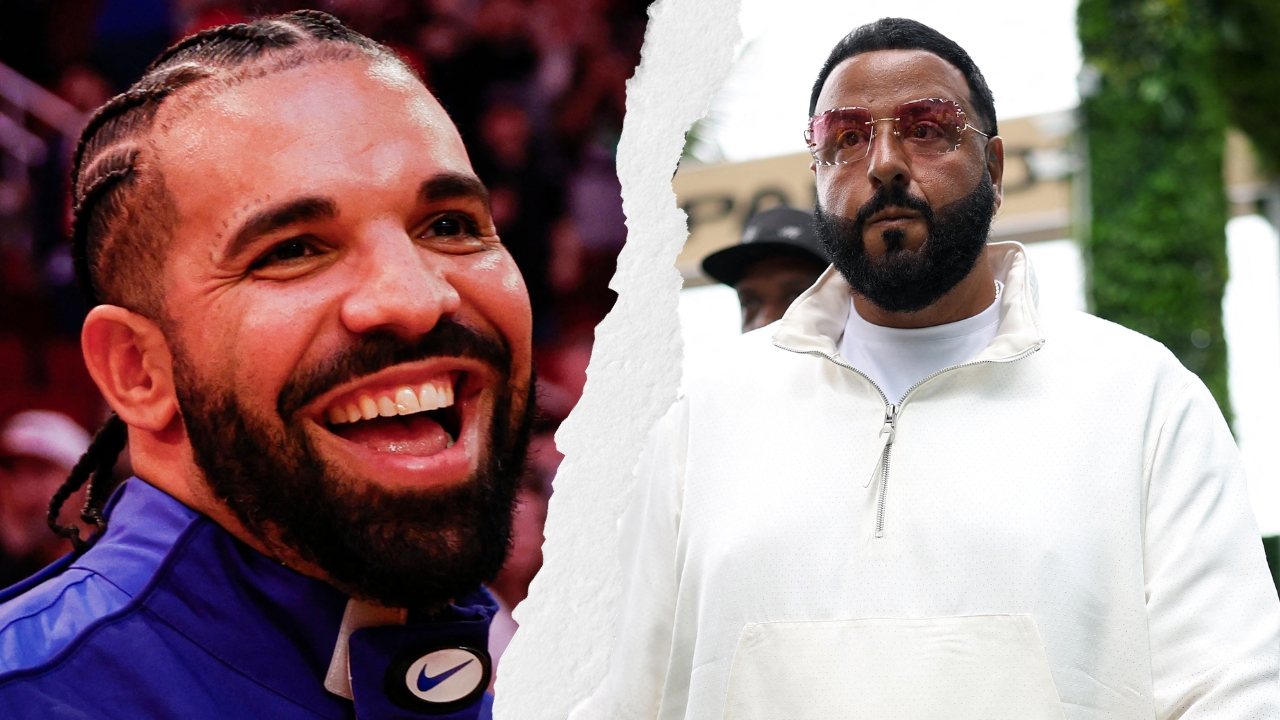
In a surprising drop of three new studio albums released last Friday, global hip-hop superstar Drake has reignited public debate over celebrity silence on the crisis in Gaza, with a pointed lyrical diss targeting Palestinian-American hitmaker DJ Khaled for his failure to speak up in support of the Palestinian people.
The scathing verse appears on *Make Them Pay*, a track pulled from Drake’s surprise-released album *Iceman*, one of three full-length projects the Canadian rapper dropped unannounced to shock fans worldwide. The lines in question directly name DJ Khaled – whose full legal name is Khaled Mohammed Khaled – and call out his public silence amid Israel’s ongoing military campaign in Gaza. Drake raps: “And, Khaled, you know what I mean / The beef was fully live, you went halal and got on your deen / And your people are still waitin’ for a free Palestine / But apparently everything isn’t black and white and red and green.”
This is not the first time DJ Khaled has faced public backlash for his refusal to address the Gaza crisis. Since 2023, the renowned producer and artist, who regularly highlights his Palestinian heritage in public interviews and musical content, has been widely criticized by fans, activist groups and high-profile public figures for staying silent on Israel’s military operations in the besieged enclave. Last year, American comedian Dave Chappelle famously called out DJ Khaled’s inaction during a stand-up set, saying, “DJ Khaled, let me tell you something. For a Palestinian, this man is awfully quiet right now, and as a Palestinian, how could you be that quiet right now?” To date, DJ Khaled has not issued any public response to the repeated criticism, nor has he made any public statement addressing the crisis in Gaza. Middle East Eye attempted to reach DJ Khaled’s team for comment ahead of this report, but received no response by the time of publication.
Supporters of Drake’s stance have quickly pointed to the Canadian rapper’s long-standing early support for Palestinian calls for peace. Political commentator Hasanabi noted on social media platform X that even amid broader criticism of Drake, he was among the first high-profile major recording artists to sign the *Artists4Ceasefire* open letter calling for an immediate end to hostilities in Gaza, just 23 days after the October 7 attacks in 2023.
Drake’s latest batch of surprise releases is scattered with repeated references to Middle Eastern culture and Islamic practice, beyond the diss verse targeting DJ Khaled. On the track *Whisper My Name*, he raps “My YGs are fastin’ and prayin’ / You lucky it’s Ramadan”, while *Make Them Cry* includes a shoutout to “the Bulgari in Turkey”. One of the three albums dropped Friday is even titled *Habibti*, an Arabic term that translates to “my love”.
Online discourse around the verse has remained divided: while many have praised Drake for holding a prominent Palestinian celebrity accountable for public inaction, others have pushed back, arguing that Drake himself has not maintained consistent, outspoken advocacy for Palestine despite his criticism of DJ Khaled.
-
Spain’s Sanchez slams Israeli minister for attack on Yamal over Palestinian flag
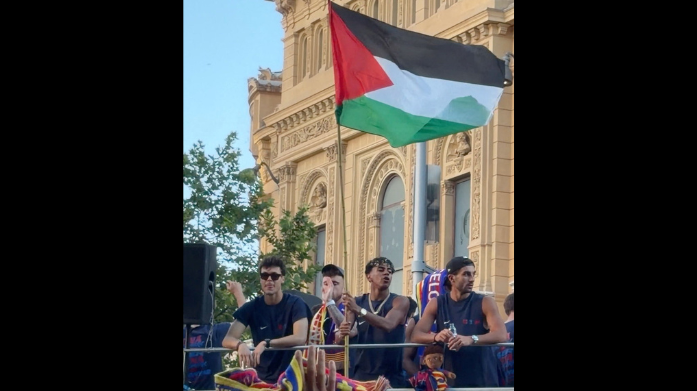
A diplomatic and public controversy has erupted over a symbolic gesture by Spanish football star Lamine Yamal, drawing in top political leaders from Spain and Israel and sparking fierce global debate online over the meaning of the Palestinian flag. The 18-year-old Barcelona forward, one of the most talented young players in global football, waved the Palestinian flag from an open-top parade bus last Monday as the club celebrated its second straight La Liga title, with roughly 750,000 supporters lining the streets of Barcelona to mark the achievement. Thousands of fans immediately praised Yamal for the public expression of solidarity, but the gesture drew sharp condemnation from Israeli Defense Minister Israel Katz four days later.
Katz took to the social platform X (formerly Twitter) to launch his rebuke, accusing Yamal of direct incitement against Israel and the Jewish people. In his public post, Katz called on the storied Barcelona club to publicly reject the player’s actions, writing: “I expect a great and respected club like @FCBarcelona to distance itself from these statements and make it unequivocally clear that there is no place for incitement or for support of terrorism.”
Within hours, Spanish Prime Minister Pedro Sanchez issued a blistering public response in defense of Yamal, pushing back against Katz’s accusations. Sanchez, whose left-wing government has been openly critical of Israel’s military campaign in Gaza and formally recognized Palestinian statehood in 2024, argued that critics of Yamal’s gesture have abandoned fair judgment. “Those who consider waving the flag of a state to be ‘inciting hatred’ have either lost their judgment or been blinded by their own ignominy,” Sanchez wrote. The prime minister added that Yamal’s simple act reflected widespread public feeling across Spain, noting it was “a reflection of solidarity with Palestine felt by millions of Spaniards” and “another reason to be proud of him.”
Officials at Barcelona have so far declined to issue an official public statement on the controversy. In comments to reporters earlier this week, Barca manager Hansi Flick acknowledged that he does not typically approve of players mixing political expression into title celebrations, but said he ultimately left the decision to Yamal, noting the player is an adult and fully capable of making his own choices. “I spoke with him. I said if he wants this, it is his decision. He is old enough. He’s 18 years old,” Flick said, adding that his top priority during the parade was celebrating the back-to-back titles with the club’s fanbase.
The clash of words between the two top political officials quickly went viral across social media, drawing widespread reaction from users around the world. A large share of commenters praised Sanchez for his unflinching public support of Yamal, with many echoing the prime minister’s rejection of the claim that waving a Palestinian flag equals incitement or support for terrorism. “In this era, you are truly rare men of honor. Gaza holds profound gratitude for all that Spain has done on her behalf. We love you with all our hearts,” one user wrote. Palestinian writer Mosab Abu Toha echoed that praise, writing: “All respect to you, to Spain, and to Lamine Yamal! And to Barcelona, who I have been a fan of since the age of 13. Barcelona: more than a club. Lamine Yamal: more than a player. Spain: more than a country.”
Many other users condemned Katz for equating the display of the Palestinian national flag with support for terrorism, arguing that the accusation itself exposes deep prejudice against the Palestinian people. “It is a shame and a disgrace that an Israeli Minister accuses Lamine Yamal of supporting terrorism and attacking his country just for holding a Palestinian flag,” one user commented. “It only evidences the hatred and lies of this genocidal government of Israel.” Another added: “Lamine Yamal didn’t say anything, he just raised a Palestinian flag, but for Israel’s Defence Minister, he ‘incited hatred.’ This only makes sense if you consider the existence of the Palestinian people intolerable.”
Yamal, who is widely regarded as one of the best active players in global football, is scheduled to represent the Spanish men’s national team in the upcoming 2026 FIFA World Cup, set to kick off in June across North America.
-
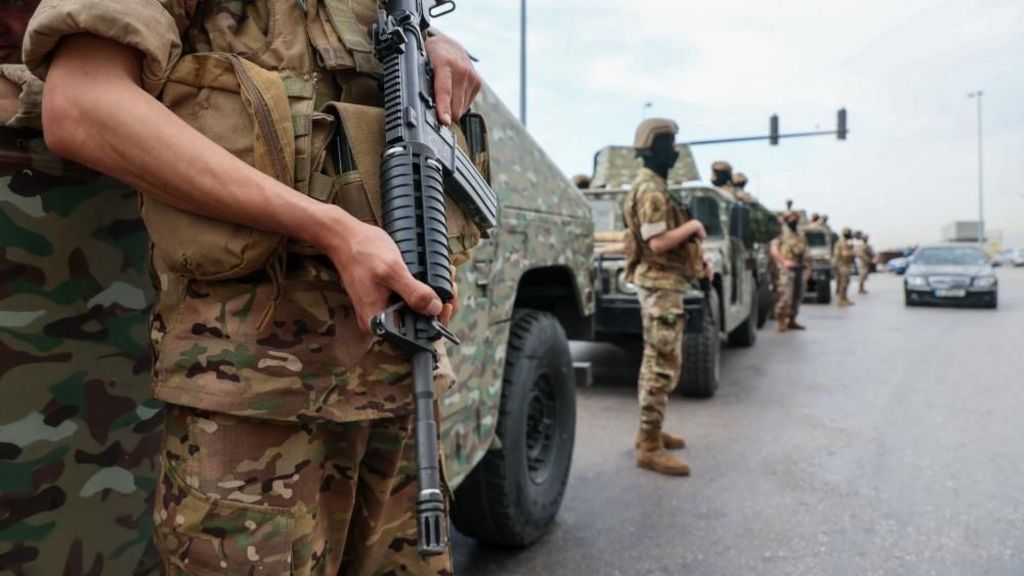
Israel and Lebanon agree to extend ceasefire, US state department says
After two days of intensive diplomatic negotiations hosted in Washington D.C., Israel and Lebanon have formally agreed to extend their fragile existing ceasefire for an additional 45 days, the U.S. State Department has confirmed. The announcement marks a tentative step toward de-escalation, even as sporadic deadly exchanges of fire have persisted across the shared Israel-Lebanon border since an initial truce was first announced by former U.S. President Donald Trump in mid-April.
State Department spokesperson Tommy Pigott outlined U.S. hopes that the extended ceasefire window will create space for meaningful dialogue that paves the way for a durable long-term peace agreement between the two nations. “We hope these discussions will advance lasting peace between the two countries, full recognition of each other’s sovereignty and territorial integrity, and establishing genuine security along their shared border,” Pigott stated in an official press release.
To move the diplomatic process forward, the State Department confirmed that formal political-level negotiations will reconvene in June, with a parallel security-focused negotiating track set to launch at the Pentagon on May 29. Military delegations from both Israel and Lebanon will take part in the security-focused talks, which are expected to center on border stability and de-escalation frameworks, according to Pigott.
Despite the initial ceasefire that took effect in April, cross-border exchanges of fire between the Israeli military and the Lebanese armed group Hezbollah have remained an almost daily occurrence. In recent days, Israel has ramped up air and artillery strikes across southern Lebanon, with Israeli officials stating that all operations target Hezbollah fighters and militant infrastructure. The Lebanese Ministry of Health has pushed back against these claims, accusing Israeli forces of deliberately targeting civilian populations and medical first responders — an allegation Israeli authorities have repeatedly denied.
The Israeli military has articulated a strategic goal of establishing a formal buffer zone across southern Lebanon, designed to prevent future cross-border attacks by Hezbollah. This military tactic mirrors the approach Israeli forces have deployed in the Gaza Strip, where entire residential villages in southern Lebanon have been left completely destroyed. International human rights organizations have raised alarm that some of the tactics used by Israeli forces in southern Lebanon may qualify as war crimes, another allegation that Israeli officials reject outright.
For its part, Hezbollah has continued to carry out retaliatory attacks against Israeli military positions in southern Lebanon and northern Israeli territory, using a combination of rocket fire and drone strikes. The broader conflict between the two sides erupted on March 2, just two days after the U.S. and Israel launched a joint military strike targeting Iranian assets. Hezbollah launched an intensive rocket barrage into Israeli territory in response, triggering widespread Israeli air strikes and a limited ground incursion into southern Lebanon that has continued in various forms ever since.
Official casualty figures underscore the devastating human cost of the two-month conflict. Lebanon’s health ministry reports that at least 2,896 people have been killed in Lebanese territory since hostilities began. In the most recent deadly incident this week, Lebanese health officials confirmed that Israeli air strikes across southern Lebanon killed 22 people on Wednesday, including eight children. On the Israeli side, government authorities report that 18 soldiers and four civilians have been killed since the conflict began in March.
-
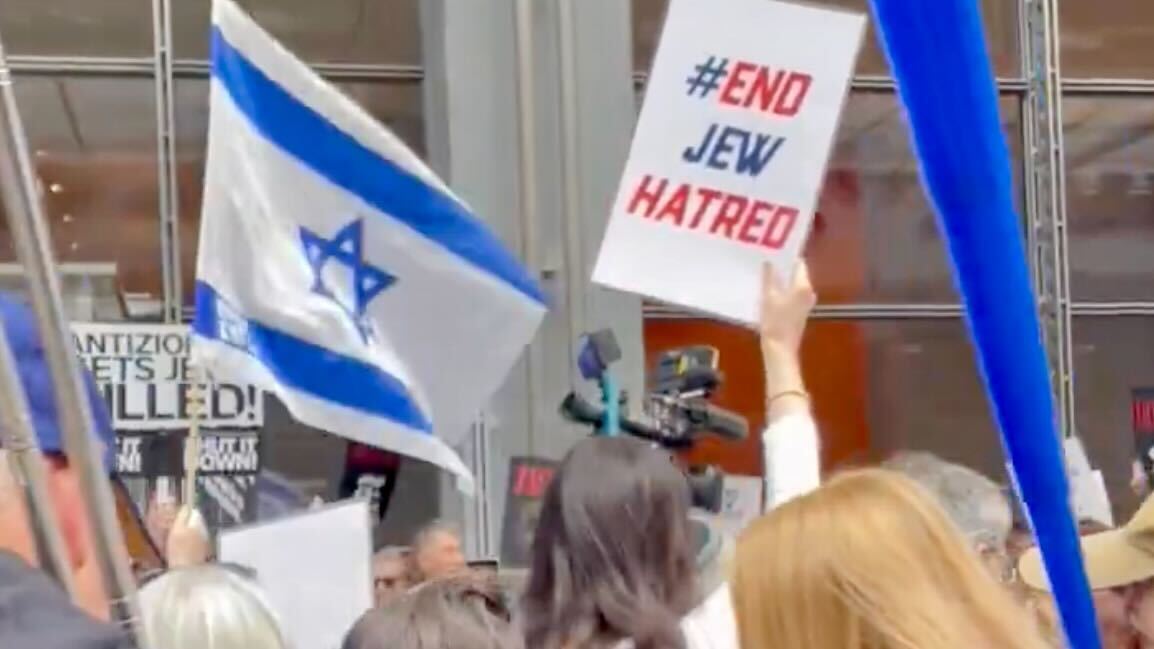
Israeli activists protest at New York Times building after article exposes rape of Palestinians
A fresh wave of controversy erupted this week over a high-profile investigative report published by the *New York Times*, which detailed horrific accounts of sexual violence and rape committed against Palestinian detainees by Israeli personnel in state-run prisons. On Thursday, dozens of pro-Israel activists gathered outside the *New York Times* headquarters in midtown Manhattan to stage a public demonstration against the outlet’s coverage, amplifying long-simmering anger over the piece.
Video footage of the protest, circulated widely on the social platform X, showed demonstrators carrying banners that demanded an end to antisemitic sentiment and framed anti-Zionist ideology as a direct threat to Jewish lives. Central to the protestors’ demands was the immediate firing of Nicholas Kristof, the veteran *New York Times* journalist who authored the controversial report.
Kristof’s published investigation featured harrowing, firsthand testimonies from survivors that detailed brutal abuse: Palestinian prisoners described being sexually assaulted with dogs, penetrated with carrots, and sustaining severe rectal tearing from beatings with batons. In response to the report, high-profile Israeli influencers and sitting political figures quickly pushed back, dismissing the testimonies as a modern iteration of the blood libel — a centuries-old antisemitic falsehood that was repeatedly used to justify mass violence against Jewish communities across medieval and early modern Europe.
After the *New York Times* reaffirmed its commitment to the reporting and stood by Kristof’s work, Israel’s Ministry of Foreign Affairs announced Thursday that it would pursue legal action against the American newspaper.
Claims of systemic sexual abuse against Palestinian detainees are not new: multiple independent human rights organizations have documented such abuses for years, and allegations featured in Kristof’s report have already been verified by independent regional outlet Middle East Eye. Past incidents of abuse have exposed deep rifts within Israeli society: multiple Israeli media personalities have publicly trivialized the use of dogs in sexual assaults against Palestinian detainees, and when Israeli prosecutors attempted to bring charges against soldiers accused of rape, widespread public backlash from hardline groups ultimately forced the release of the accused. In a high-profile example of public support for the accused soldiers, thousands of Israelis joined so-called “right to rape” demonstrations in the aftermath of the abuse allegations.
One of the most striking developments in related investigations came in November, when Israeli authorities arrested a military prosecutor charged with leaking footage that documented the rape of a Palestinian detainee. Separately, Yifat Tomer-Yerushalmi, the Israeli military’s chief military advocate, staged a fake suicide attempt while reportedly attempting to dispose of a mobile phone that held incriminating evidence connected to the case. The Israeli military subsequently launched a formal criminal investigation into the evidence leak.
Most recently, in March of this year, the United Nations Independent Commission of Inquiry on the Occupied Palestinian Territory released its own findings, confirming it had uncovered evidence of widespread, systematic sexual violence perpetrated by Israeli officers against Palestinian people, dating back to the start of military operations in Gaza. The commission’s final report documented dozens of cases of rape and sexual assault against male Palestinian detainees, including accounts of abuse involving electrical probes used to burn anal tissue, and the insertion of objects including fingers, sticks, broom handles and vegetables into detainees’ anuses and rectums.
-

The balikbayan box: The way Filipino Americans have sent love all the way back home
For nearly five decades, the balikbayan box has stood as one of the most recognizable cultural and emotional touchstones for Filipino communities across the United States, linking millions of immigrant households to their loved ones back in the homeland through carefully packed shipments of American goods. This enduring tradition traces its origins not to grassroots diaspora culture alone, but to a 1973 state-led tourism initiative launched by then-Philippine President Ferdinand Marcos Sr., just one year after he imposed martial law across the country.
-
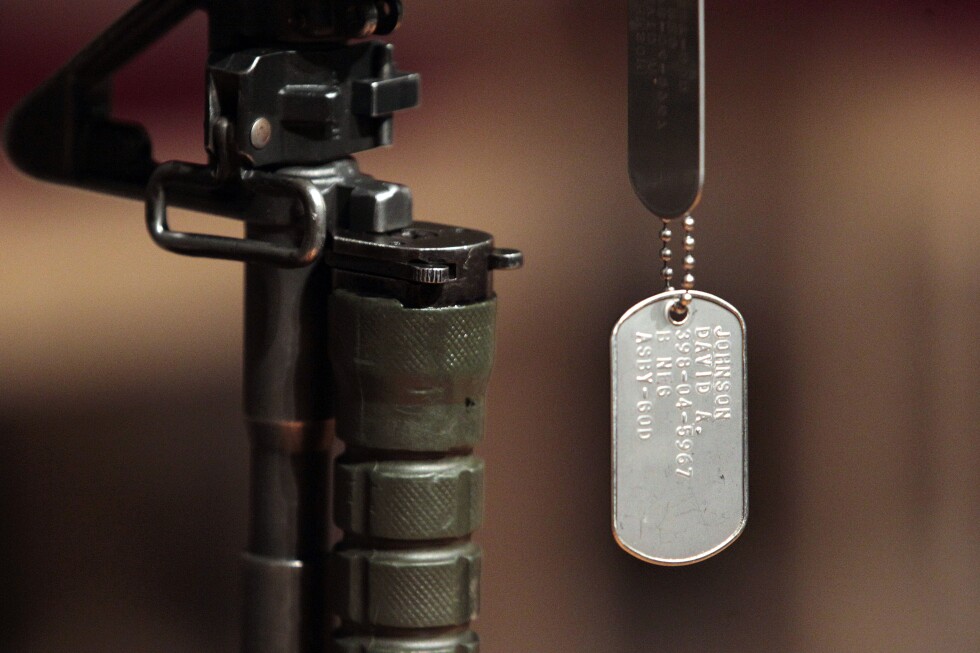
Created as IDs, dog tags became a crucial link between military families and fallen troops
For grieving military families across the United States, a small pair of worn metal rectangles often holds more weight than any memorial. Many survivors clench these items in their palms, as if they can still feel the hand of the service member they lost gripping back. Even battle-hardened fellow troops have broken down in tears reading the engraved names and details etched into their surfaces.
More than a century after an Army chaplain first advocated to make these identification tokens – universally known as dog tags – standard issue for all American service members, they have evolved far beyond a practical tool for battlefield identification to become one of the most sacred and tangible links between fallen troops and their loved ones left behind.
Stationed at Dover Air Force Base, the facility where the remains of U.S. service members killed overseas are repatriated to American soil from conflicts ranging from Afghanistan to recent tensions in the Middle East, Air Force Major and Chaplain Benjamin Quintanilla Jr. has witnessed this connection firsthand. “What families are searching for when they hold these tags is a connection to the person they lost,” Quintanilla explained. “That is what makes these dog tags such a sacred symbol for them.”
From the brutal trenches of the World Wars to the jungles of Vietnam and decades of ongoing conflict across the Middle East, military dog tags have also stood as a quiet, enduring emblem of the sacrifice American service members have made in global engagements. Even so, Pentagon historians note that the origin of the common term “dog tags” for these identification tokens remains unconfirmed to this day.
The urgent need for standardized battlefield identification first emerged into public consciousness during the American Civil War, when tens of thousands of troops were buried in unmarked graves as “unknown” soldiers. National Park Service data underscores this gap: at Vicksburg National Cemetery alone, 75% of the 17,000 Union troops interred there are recorded as unknown.
It was not until the end of the Spanish-American War, the 1898 conflict that cemented the United States’ status as a rising global power, that a formal push for standard issue identification tags began. Serving as morgue director in the Philippines following the conflict, Army Chaplain Charles C. Pierce became the first official to formally request that all Army service members be issued individual identification tags.
By the time the United States entered World War I, mandatory dog tag wear was required for all combat troops. The small metal tokens were officially integrated as a required part of the standard military uniform by World War II, a policy that remains in place today.
In the modern era, dramatic advances in forensic science and biometric identification have reduced the historical reliance on dog tags for confirming the identity of fallen service members. Even so, the small tokens still hold critical practical value for military chaplains deployed to combat zones: the standard listing of religious affiliation allows chaplains to deliver appropriate, respectful end-of-life care and funeral rites for dying and fallen troops, according to Quintanilla.
It is the deep symbolic meaning of connection, however, that makes dog tags irreplaceable for military communities. Surviving family members treasure the dog tags their loved ones wore during their service, as well as the honorary tags placed on fallen troops’ caskets during formal dignified transfer ceremonies. So profound is this attachment that many survivors choose to wear their loved one’s tags daily, or even get permanent tattoos replicating the engraved text.
For currently serving troops, dog tags also act as the simplest, most immediate marker of shared belonging. Quintanilla, who originally joined the Air Force as a dental technician before becoming a chaplain, explained this bond: “I can trust somebody who is wearing the same identification as me. It’s a reminder that I was part of something bigger than myself.”
This story is part of *American Objects*, a recurring series marking the 250th anniversary of the founding of the United States that explores the stories of ordinary objects that shaped the nation’s history.
-

Bam! Pow! Krakoom! The everlasting allure of the American comic book
BARCELONA, Spain — From their glossy eye-catching covers to depictions of impossibly muscular heroes clad in skintight costumes, American superhero comics draw readers in instantly with the promise of high-stakes battles, triumph over villains and thrilling adventure. For decades, these slim, serialized publications have carved out a one-of-a-kind space in global pop culture, often contrasted sharply with other regional sequential art forms.
Against Europe’s more literary, substantive graphic novels, traditional American superhero comics are often dismissed as flimsy, juvenile entertainment. When stacked against Japanese manga’s sprawling, genre-spanning narratives with complex thematic layers, American superhero stories read as earnest and uncomplicated, rooted in a bygone era of American cultural identity. Once sold for mere nickels and dimes before climbing to quarter price points, today single issues typically cost as much as a coffee shop latte — a clear marker of their place as a product of American consumer capitalism, widely labeled as junk-food literature: eye candy for casual readers, light entertainment that requires little deep engagement. But this surface reading overlooks the deeply American identity that has been baked into these 32-page monthly stories for generations.
The turning point for modern American superhero comics came in 1961, when Stan Lee and Jack Kirby launched the Fantastic Four. In the team’s origin story, a fateful unplanned space journey exposes four explorers to cosmic radiation, leaving them with extraordinary abilities they never asked for. This origin rewrote the rules of superhero storytelling: for the first time, all-powerful heroes were also reluctant, relatable figures, shaped by the unintended consequences of scientific progress and random chance — flawed, modern people first, heroes second.
This blueprint shaped countless iconic characters that followed. Spider-Man, the Hulk, Wolverine, and dozens more were marked by their otherness: their incredible powers turned them into outcasts, casting them as imperfect, burdened messiahs rather than perfect, unflappable paragons. Tied to a core thread of the American cultural psyche, nearly all of these characters abide by Peter Parker’s iconic moral mandate: “With great power comes great responsibility.” Like a distinctly American reimagining of the Greek myth of Sisyphus, they are bound to an endless cycle of sacrifice, repeatedly stepping forward to save the world even when victory offers them no personal reward.
What could be more fundamentally American than this core belief: that when raw power is anchored to a commitment to justice, it will ultimately prevail? It is a worldview that is simultaneously deeply honorable and unapologetically naïve, a reflection of the national identity that has shaped the country for centuries.
Today, even as storytelling has grown grittier and more complex, the two giants of the American comic industry — Marvel and DC — continue to reimagine what American character looks like for new eras. Long sidelined as supporting players to white male lead characters, female fan-favorites including Gwen Stacy, Jean Grey, and Susan Storm have emerged as central leaders in recent years, breathing new life into iconic sagas for Spider-Man, the X-Men, and the Fantastic Four. DC’s *Absolute Wonder Woman* has pushed creative boundaries with groundbreaking, cinematic artwork, while half-Latino, half-Black Miles Morales has become the Spider-Man for a new, more diverse generation of readers.
Even with these evolutions, the core tensions that have long defined American superhero stories remain unchanged. Bruce Wayne, the Batman, is unable to form deep meaningful connections with anyone beyond his longtime butler Alfred — a perfect portrait of the isolated individual in modern, atomized American society. Steve Rogers, Captain America, carries the weight of representing the World War II “Greatest Generation,” forever an outsider out of time even in his own country. And Lex Luthor, Superman’s villainous megalomaniacal nemesis, stands as one of the most iconic depictions of a power-hungry tech tycoon meddling with humanity’s future for his own gain — a trope that feels just as relevant today as it was decades ago, leaving readers to joke that the modern world could use a mild-mannered Clark Kent keeping watch on powerful elites, just in case.
This feature is part of the recurring series “American Objects,” created to celebrate the 250th anniversary of the United States, exploring the everyday and cultural items that have shaped the nation’s identity over its history.
-
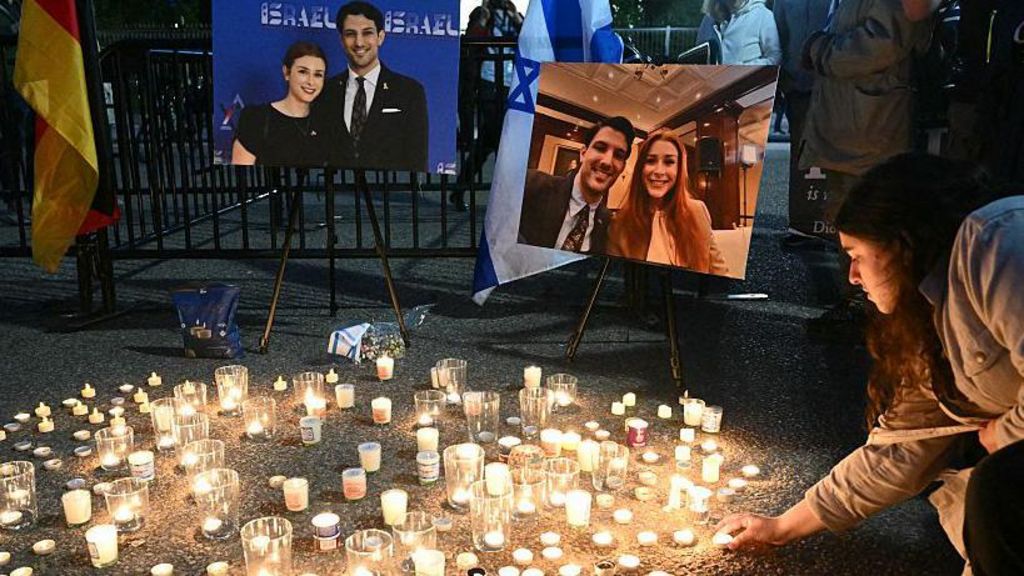
Suspect in killing of Israeli embassy staff members to face death penalty
On a quiet spring evening in downtown Washington D.C., hundreds gathered across from the White House on May 22, 2025, holding flickering candles to honor the lives of Yaron Lischinsky and Sarah Lynn Milgrim, two young Israeli embassy employees killed in a targeted attack months earlier. Now, federal prosecutors have formally notified the court they will pursue the ultimate legal punishment for the man accused of their murder, in a case that intersects with the Trump administration’s sweeping reversal of Biden-era restrictions on the federal death penalty.
Thirty-one-year-old Elias Rodriguez, the suspect in the May 2024 shooting outside the Capital Jewish Museum, has entered a plea of not guilty to all 13 charges filed against him. Among those counts are three capital offenses: murder of a foreign official, discharge of a firearm during a violent felony, and second-degree murder by firearm, for which US Attorney for the District of Columbia Jeanine Pirro confirmed Friday her office will seek execution if Rodriguez is convicted. Additional charges against Rodriguez include federal hate crime violations and counts related to acts of domestic terrorism.
Prosecutors have laid out a detailed account of premeditation tied to ideological anti-Israel sentiment. According to their filings, Rodriguez traveled from his home in Chicago to Washington D.C. armed with a handgun, after researching a scheduled networking event for young Jewish professionals to be held at the downtown museum. Lischinsky, 30, and Milgrim, 26, were leaving the museum when Rodriguez opened fire, discharging 20 rounds that killed both victims immediately. Multiple law enforcement and media reports confirm the pair were in a committed relationship, and Lischinsky had purchased an engagement ring with plans to propose during an upcoming trip to Israel.
After the shooting, prosecutors allege Rodriguez entered the museum, displayed a red keffiyeh, and openly stated he carried out the attack “for Palestine” and “for Gaza.” During his arrest, he shouted “Free Palestine,” and court documents show he left behind a written manifesto titled “explication,” where he expressed explicit support for violence against Israelis, claimed Israel was carrying out an extermination campaign against Palestinians, and attempted to justify his violent actions to encourage future copycat attacks. Multiple social media posts attributed to Rodriguez in the months before the shooting contain the slogan “Death to Israel” and repeated endorsement of violent targeting of Israeli civilians.
FBI Assistant Director Darren Cox, head of the bureau’s Washington Field Office, emphasized the severity of the attack in a February 2025 press statement, noting “In addition to allegedly murdering two innocent people and terrorizing the survivors of his attack at the Capital Jewish Museum, Rodriguez wrote and published a manifesto attempting to morally justify his actions and inspire others to commit political violence.”
Pirro reiterated her office’s commitment to full accountability in comments earlier this year, saying “My office will not rest in our efforts to hold Elias Rodriguez accountable for this horrific, and targeted act of terror against Yaron Lischinsky, Sarah Milgrim and our Jewish community.”
The decision to pursue the death penalty comes amid a sweeping reversal of federal justice policy under the second Trump administration. During Trump’s first term in office, the White House reinstated federal executions after a 17-year informal moratorium, only to see the Biden administration roll back those policies and impose a formal halt on all federal executions after taking office in 2021.
On his first day back in the White House following the 2024 presidential election, Trump issued an executive order directing the Department of Justice to prioritize capital punishment in eligible cases, speed up execution schedules, and expand legal methods of execution beyond lethal injection to include practices such as firing squad. Department of Justice records confirm the administration has already resumed federal executions and streamlined court processes to reduce delays in death penalty cases.
The case has sparked renewed national conversation about political violence targeting Jewish communities in the U.S., tensions over the Israeli-Palestinian conflict spilling over into domestic attacks, and the future of the federal death penalty under the current administration.