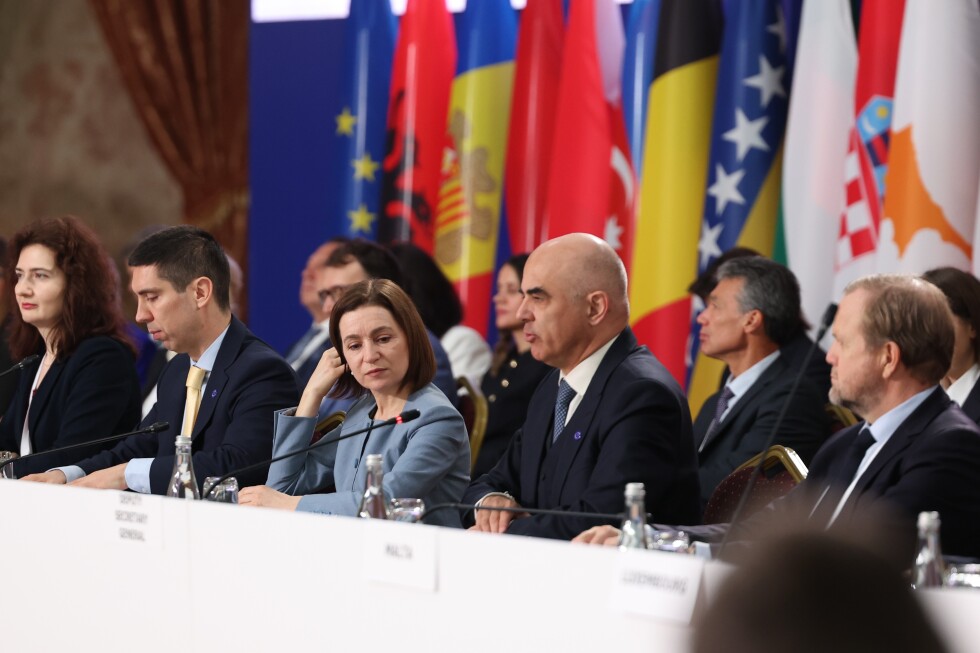
BRUSSELS, May 20 (Rewritten) — In a landmark meeting held Friday in Chisinau, the capital of Moldova, all 46 member states of the Council of Europe have formally adopted a non-binding political declaration that reinterprets the landmark European Convention on Human Rights for migration-related cases, including a controversial provision that explicitly allows member states to establish deportation processing centers, officially called return hubs, in non-member third countries. The agreement comes as growing political pressure from right-wing and conservative national governments across the continent has pushed for stricter, more enforceable measures to curb irregular migration and streamline cross-border deportation processes.
作者: admin
-
ICE releases wife of US soldier and Afghanistan veteran from detention
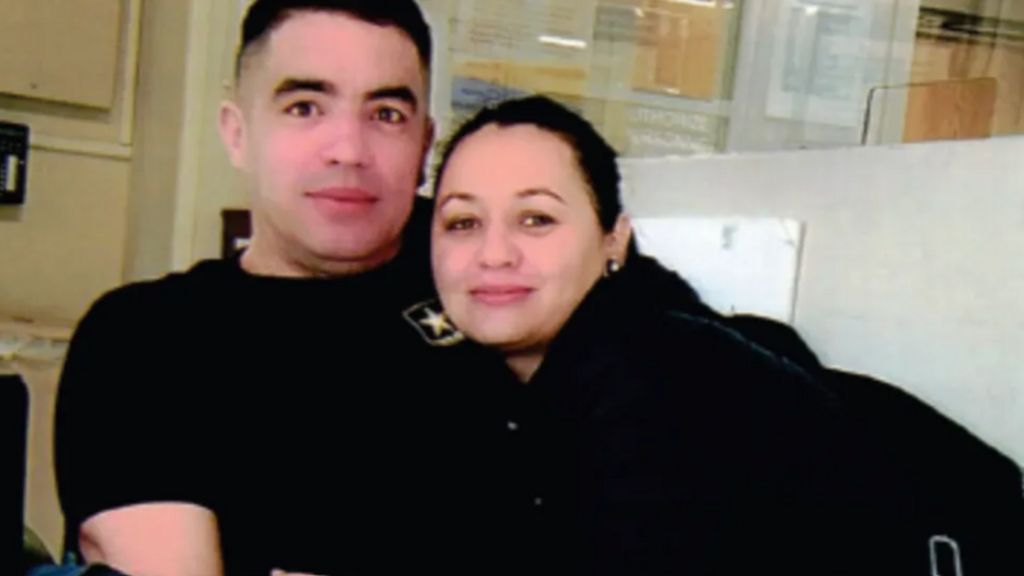
A months-long immigration drama that sparked national outrage over the treatment of military families has come to a temporary resolution, after U.S. Immigration and Customs Enforcement freed Deisy Rivera Ortega, the wife of a decades-long U.S. Army Afghanistan veteran, from custody, her legal representative has confirmed to the BBC.
Rivera Ortega, a native of El Salvador, was taken into immigration custody on April 14 during a routine scheduled immigration check-in in El Paso, Texas, that she attended alongside her husband, Sgt. Jose Serrano. Serrano, who has served the U.S. military for nearly 28 years and was born a U.S. citizen in Puerto Rico, told reporters his wife’s detention left him deeply distraught.
In an official statement following the release, the couple’s attorney Matthew James Kozik simply said, “We celebrate her release.” Footage shared with CBS News shows Serrano driving away from the detention facility with Rivera Ortega in the passenger seat, confirming she had been freed and the pair were returning home.
At the time of her arrest, the couple was in the process of applying for parole-in-place, a federal program specifically designed to allow spouses of active-duty service members and veterans to remain in the U.S. while their immigration applications are processed. Court and legal documents provided to the BBC show the pair married in 2022, had compiled all required documentation covering their marriage, employment, and immigration status ahead of the appointment, and complied fully with all check-in requirements.
Serrano recalled that during the meeting, officials flagged what they claimed was an issue with their submitted paperwork. After escorting the couple down a hallway, officers separated Rivera Ortega and took her into custody without prior warning.
In the wake of the arrest, the Department of Homeland Security (DHS) characterized Rivera Ortega as a “criminal illegal alien”, noting she crossed the U.S.-Mexico border without inspection in 2016 and was convicted of a federal illegal entry offense. A 2019 immigration judge ordered her removal to El Salvador, but simultaneously granted her withholding of removal protection under the U.N. Convention Against Torture, which bars immigration authorities from deporting her to El Salvador over credible concerns she would face severe harm if returned.
This legal protection left immigration officials in a position to consider deporting Rivera Ortega to Mexico instead, a move that Serrano and Kozik said officials actively explored after her arrest.
The case quickly drew political pushback, with U.S. Sen. Tammy Duckworth, an Illinois Democrat and Iraq War veteran, personally placing a call to DHS Secretary Markwayne Mullin on Wednesday to raise concerns over the detention, according to Duckworth’s office.
In a public statement after the release, Duckworth said, “I am so incredibly grateful for Deisy’s release and for her to be reunited with her family. Deisy was doing everything ‘the right way’: attending her military parole in-place interview when she was detained by ICE with no warrant and no explanation. There is no higher betrayal to our heroes than to have one of their family members deported by the same nation they sacrificed to defend.”
DHS has not yet responded to repeated requests for comment from the BBC, including inquiries about Duckworth’s outreach to Mullin and the details of Rivera Ortega’s release.
This incident marks the second high-profile case in April of ICE detaining the spouse of an active-duty U.S. service member. Earlier that month, Annie Ramos, the Honduran-born wife of Sgt. Matthew Blank who was brought to the U.S. as a child, was held in ICE custody for five days before being released.
-
New York Times defends journalist after Israel threatens to sue
A sharp public conflict has erupted between senior Israeli officials and The New York Times after the prominent U.S. newspaper published an opinion column alleging a systemic pattern of sexual violence against Palestinian detainees at the hands of Israeli security personnel, settlers and prison staff. The escalation, which has reignited debates over press freedom and journalistic accountability in the context of the decades-long Israeli-Palestinian conflict, began Monday when veteran NYT journalist Nicholas Kristof released a 3,700-word column titled “The Silence that Meets the Rape of Palestinians.”
In the column, Kristof documented first-hand accounts from 15 alleged victims, who detailed incidents ranging from sexual assault and humiliation to rape by forced bestiality. While Kristof explicitly stated there was no evidence that senior Israeli leaders ordered the abuse, he argued that the country’s security architecture had allowed sexual violence to become what a 2025 UN report labeled a “standard operating procedure” and “core component of the mistreatment of Palestinian detainees.”
By Thursday, Israeli Prime Minister Benjamin Netanyahu and Foreign Minister Gideon Saar released a scathing joint statement, announcing they had ordered legal officials to launch defamation proceedings against The New York Times. The pair called Kristof’s column “one of the most hideous and distorted lies ever published against the State of Israel in the modern press,” while the Israeli Foreign Ministry further claimed the reporting relied on unvetted sources with ties to Hamas-linked networks.
In an immediate response, The New York Times pushed back forcefully, dismissing the legal threat as entirely baseless. The newspaper framed the lawsuit threat as a predictable political tactic designed to weaken independent reporting and suppress journalism that deviates from the Israeli government’s preferred narrative. “This threat, similar to one made last year, is part of a well-worn political playbook that aims to undermine independent reporting and stifle journalism that does not fit a specific narrative,” the NYT statement read. “Any such legal claim would be without merit.”
The column has sparked furious pushback across Israel’s political and media landscape. Israel’s U.S. Ambassador Yechiel Leiter released a video statement arguing that the only clear violation committed in the case was a breach of basic journalistic standards by Kristof and his outlet. On the same day as the Israeli leadership’s statement, dozens of Jewish protesters gathered outside The New York Times’ Manhattan headquarters, holding demonstrations calling for Kristof’s immediate termination.
The allegations published by Kristof are not without precedent, however. For years, independent reports from both Israeli and Palestinian non-governmental organizations have collected extensive evidence of systemic sexual violence against Palestinian detainees held by Israeli authorities. In 2025, two separate Palestinian men told the BBC they had endured sexual abuse while in Israeli custody, including one account of sexual humiliation using a military dog — a claim identical to one included in Kristof’s column. At the time, the Israeli Prison Service said it had no record of the first man’s claims and asserted it always operates in full compliance with Israeli law, and declined to comment on the second man’s account.
Another high-profile incident from 2025 also underscores the deep polarization surrounding these allegations in Israel: five Israeli soldiers were charged with assaulting a Palestinian detainee from Gaza at the Sde Teiman military prison, including one count of stabbing the detainee’s buttock with a sharp object. The case split public opinion, with right-wing factions accusing left-wing groups of exploiting the incident to damage the reputation of Israeli security forces. After the then-Israeli Military Advocate General, Major General Yifat Tomer-Yerushalmi, leaked CCTV footage of the incident, she resigned and was arrested, and all charges against the five soldiers were dropped in March 2026.
Legal experts note that moving forward with a defamation case in Israeli courts carries significant procedural and policy hurdles. Israeli defamation lawyer Liat Bergman Ravid explained that civil claims of this type face a very low chance of success under Israeli law, which blocks collective entities from bringing defamation suits and bars government bodies from pursuing such claims as a matter of public policy designed to protect freedom of speech. While Israeli law does permit the Attorney General to file criminal defamation charges against the author of the alleged defamatory statement, Ravid noted that such action is extremely rare, “bordering on non-existent.”
Another Israeli defamation attorney, Idan Seger, added that if the case does proceed, The New York Times will face a much higher burden of proof than it would under U.S. law. Unlike U.S. precedent, which protects media outlets from liability as long as no malicious intent is proven, Israeli law requires outlets to either prove the absolute factual accuracy of their reporting or demonstrate that they strictly followed standards of responsible journalism to avoid a guilty verdict. As of this report, it remains unclear whether Israeli officials will actually follow through on their threat to file suit, and what legal pathway they would use to do so.
-
Inside Israel’s Flag March and the erasure of Palestinians in Jerusalem
By midday on Jerusalem Day 2026, the narrow, usually bustling lanes of Jerusalem’s Old City Muslim Quarter had fallen eerily silent. Most storefronts were shuttered with metal security shutters pulled tight, and Palestinian residents who once filled the area had locked themselves indoors or fled entirely.
Fadi, a 48-year-old local shop owner, summed up the harsh reality facing local traders as he dragged his outdoor display table inside and secured his shop for the day. “If I don’t want to get attacked, I have to close,” he explained.
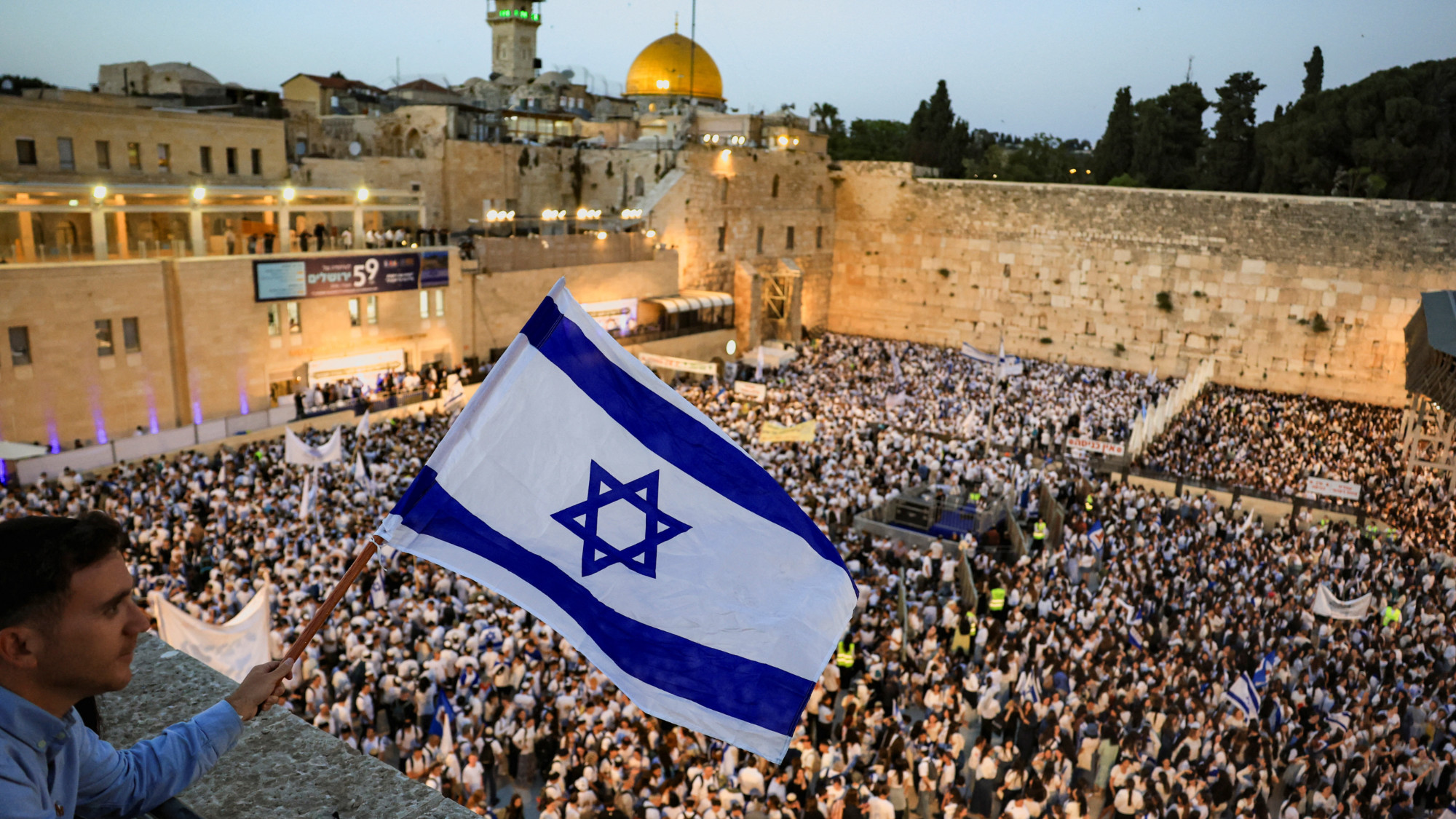
Under ordinary conditions, Thursdays draw throngs of visitors and locals to the Old City’s historic markets, turning the quarter into a vibrant hub of commerce and community. This year, however, the annual ultra-nationalist Flag March, a provocative event marking Israel’s capture of East Jerusalem in the 1967 Six-Day War, forced local Palestinians to cede their own neighborhood to the procession. Organizers intentionally route the march directly through the Muslim Quarter as a deliberate show of dominance, turning the area into a flashpoint for sectarian violence year after year.
Even hours before the official event was set to kick off, far-right Israeli settlers, identifiable by their traditional knitted kippahs and long side curls (peyot), began roaming the quarter. A group of teenage settlers passing a still-open Palestinian shop launched into a torrent of anti-Palestinian slurs, and the confrontation quickly escalated into a physical assault on two shop owners. The shopkeepers defended themselves with plastic chairs while activists from the grassroots group Protective Presence stepped in to de-escalate the clash. The entire confrontation lasted less than 30 seconds, but it set the tone for the rest of the day: the young attackers faced no immediate intervention or arrest, offering an early preview of the impunity that would define the day’s violence.
Despite a heavy visible deployment of armed Israeli police across the Old City, dozens of Palestinian business owners later reported their storefronts had been vandalized or ransacked by march participants. This pattern of violence repeats annually, tied directly to Israel’s national celebration of its 1967 occupation of East Jerusalem and the formal declaration of Jerusalem as Israel’s unified capital. In recent years, the march has been increasingly dominated by far-right political factions, growing more aggressive and volatile as it is weaponized to assert unchecked Israeli control over the city’s majority-Palestinian resident population.
Human rights and community activists have repeatedly documented that Israeli security forces rarely intervene to stop attacks on Palestinians or protect their property during the march, even when offenders are young and easily contained. To fill this gap left by intentional state neglect, local and international activist groups have organized volunteer protective presence teams to monitor the event and support Palestinian residents.
“Every year there is bullying, verbal hate and physical violence,” explained Yonatan Shargian, an organizer with the grassroots movement Standing Together. He noted that while the number of volunteers has grown in lockstep with rising violence, their work serves a broader purpose beyond de-escalation: sending a message that “this place belongs to all of us, and everyone deserves to feel safe and protected”.
Further tension ignited near the holy site of Al-Aqsa Mosque, when far-right National Security Minister Itamar Ben Gvir led a group of hundreds of settlers into the mosque compound. The politician waved an Israeli flag and declared “The Temple Mount is in our hands”, echoing the extremist movement’s demand for full Israeli sovereignty over the site, which is the third-holiest in Islam. Joining Ben Gvir was lawmaker Yitzhak Kroizer, who later posted on Facebook calling for the full removal of Al-Aqsa Mosque and the construction of a Third Jewish Temple in its place.
As the afternoon wore on, hundreds of ultra-nationalist marchers gathered at Damascus Gate, the main entry point to the Muslim Quarter and Al-Aqsa Compound. Groups of teenage boys and adult men took turns chanting virulent hate speech, including calls for “Death to Arabs” and overtly racist, misogynistic slurs targeting Palestinian people. While activist volunteers stayed close to escort the few Palestinians who remained in the area to their homes, both volunteers and on-site journalists soon became the primary targets of aggression.
At one point, a crowd of young ultra-nationalists surrounded a working journalist, shoved him against a wall, threw his phone to the ground, and spat in his face. As they had after every attack throughout the day, Israeli police intervened only to break up the confrontation after the violence was already over, allowing the attackers to break into celebratory victory chants. In this instance, the crowd jeered “May your village burn” as they dispersed.
Shortly after the incident, activists and journalists were forced out of the procession route to clear the way for the main Flag March. What began as scattered small groups swelled into a massive sea of participants, moving through Damascus Gate in successive waves toward the Western Wall. The entire area was flooded with Israeli national flags, alongside dozens of the so-called Third Temple flags: a widely recognized symbol of the movement to demolish Al-Aqsa Mosque and build a Jewish temple on the site.
Provocative signage and accessories dotted the crowd, including a large banner reading, “It’s not Al-Aqsa, it’s the Temple Mount. You want a massacre? You’ll get the Nakba,” referencing the 1948 displacement of hundreds of thousands of Palestinians during the founding of Israel. Many marchers also wore stickers featuring Ben Gvir’s image alongside a noose, a reference to the recently passed death penalty bill for Palestinian political prisoners that the minister championed in the Israeli Knesset.
Before entering the Old City, each group of marchers paused to sing nationalist and religious hymns, openly celebrating their display of control over the Palestinian neighborhood. While the day was marked by widespread violence, many long-time activist observers noted that 2026’s event felt comparatively less chaotic than previous years—a shift they attributed not to less extremism, but to the fact that most Palestinians had already been forced out of the area, leaving far fewer targets for abuse.
For a national holiday that celebrates the unification of Jerusalem under Israeli control, the mass absence of Palestinian residents from their own neighborhood offered the clearest possible reflection of what that “unification” actually entails: the quiet, systematic erasure of the Palestinian community that has lived in the city for generations.
-

A look at major Ebola outbreaks and when the disease was first identified
CAPE TOWN, South Africa – African public health authorities have confirmed a new Ebola outbreak in the Democratic Republic of the Congo’s northeastern Ituri province, reporting at least 246 suspected infections and 65 fatalities as authorities move to contain the spread of the highly lethal pathogen.
First identified nearly 50 years ago following two back-to-back outbreaks in what is now South Sudan and the Democratic Republic of Congo (then known as Zaire), Ebola has remained an endemic threat almost exclusively to sub-Saharan Africa, with all major recorded outbreaks concentrated in West and Central African regions, according to the World Health Organization (WHO).
The disease is triggered by a group of RNA viruses within the Filoviridae family, with three strains — Ebola virus, Sudan virus, and Bundibugyo virus — responsible for all large-scale public health emergencies in recorded history. Researchers trace the virus’s natural reservoir to fruit bat populations native to the African continent, though other wild animals including gorillas, chimpanzees, and monkeys can also carry and transmit the pathogen to humans. Human-to-human transmission occurs exclusively through direct contact with infected bodily fluids — such as blood, feces, or vomit — or contact with contaminated surfaces and materials, making frontline health workers particularly vulnerable to infection during outbreaks.
According to the U.S. Centers for Disease Control and Prevention (CDC), Ebola symptoms develop between two days and three weeks after initial exposure, with most patients showing signs of infection roughly one week after contact. Early infection presents with flu-like indicators including fever, muscle aches, general fatigue, and sore throat, progressing in severe cases to gastrointestinal distress, organ damage, skin rashes, seizures, and internal or external bleeding. WHO data puts the average Ebola fatality rate at around 50%, though historical outbreaks have recorded mortality rates ranging from 25% to as high as 90% depending on the viral strain and speed of public health response. While approved vaccines and targeted treatments exist for the Ebola virus strain, no comparable medical countermeasures are currently cleared for other pathogenic Ebola strains.
This new outbreak marks the latest in a long history of Ebola emergencies across Central Africa, with the most severe event on record occurring just over a decade ago between 2013 and 2016 across West Africa. That epidemic, which began when a young child in southeastern Guinea came into contact with infected fruit bats according to researcher estimates, spread across Guinea, Liberia, and Sierra Leone, causing more than 28,000 confirmed and suspected cases and over 11,000 deaths. A small number of secondary cases were also recorded in Europe and the United States, linked to returning travelers and healthcare workers who had responded to the outbreak.
The second-largest Ebola outbreak in history took place between 2018 and 2020, centered in Congo’s North Kivu, South Kivu, and Ituri provinces, with a small number of cases spreading across the border to Uganda. Caused by the Ebola virus strain, that outbreak recorded more than 3,400 cases and over 2,200 deaths, resulting in a 66% fatality rate per CDC data. Congo has recorded more than a dozen major Ebola outbreaks in modern history, including one as recent as late 2024.
A notable 2000-2001 outbreak in Uganda, caused by the Sudan virus strain, resulted in 425 reported cases and 224 deaths. Ugandan public health authorities were widely commended for their rapid, community-centered response, which included widespread public education on transmission risks and efforts to counter dangerous misinformation, limiting the outbreak’s geographic spread. The East African nation has also faced multiple smaller Ebola events in the decades since.
The first officially recognized Ebola outbreaks were recorded back in 1976, 48 years before the current event. The first, in what was then Sudan (now part of South Sudan), was traced to a cotton factory where workers came into contact with roosting bats, and was later identified as the Sudan virus strain. That initial outbreak caused 284 confirmed cases and at least 151 deaths, with many secondary infections among healthcare workers who treated patients before the unknown virus was identified. Just months later, a separate outbreak in a remote village near the Ebola River in northern Zaire (now the Democratic Republic of Congo) resulted in 280 deaths and an extremely high fatality rate, leading scientists to identify and name the Ebola virus. The first recorded Ebola infection outside Africa occurred the same year, when a British laboratory technician accidentally pricked himself with a contaminated needle while studying virus samples; he ultimately recovered. To date, only a tiny handful of Ebola cases have been recorded outside of the African continent.
Public health teams have not yet released additional details on the current outbreak’s genetic sequencing or ongoing containment efforts as of the initial announcement.
-
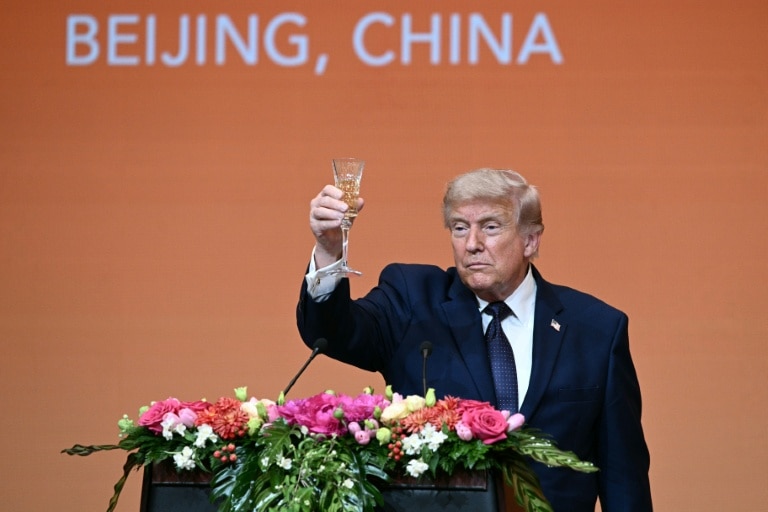
Stocks tumble as US-Iran impasse fuels inflation fears
On Friday, international financial markets suffered widespread downturns as geopolitical gridlock in the Middle East and underwhelming outcomes from the high-stakes US-China leaders’ summit reignited investor anxiety over sustained inflation that threatens to undermine global economic expansion. The standoff over the Strait of Hormuz, a critical chokepoint for global energy shipments, sent crude prices jumping by as much as 3.5%, lifting benchmark Brent crude to nearly $109 per barrel by mid-afternoon GMT.
The much-anticipated summit between US President Donald Trump and Chinese President Xi Jinping failed to deliver the concrete breakthroughs investors had hoped for, both on Middle East de-escalation and bilateral trade negotiations. While Trump claimed the two sides had struck “fantastic trade deals”, he offered no detailed specifics, only noting that Beijing had expressed interest in purchasing American oil and soybean exports, and confirmed he did not raise the contentious issue of existing tariffs during discussions. China’s top diplomatic officials later clarified that the two nations had agreed to uphold previously reached accords and set up new bilateral trade and investment working councils, but offered no new commitments to resolve ongoing tensions.
Market analysts characterized the meeting as heavy on symbolic goodwill but light on tangible policy progress. With diplomatic efforts to reopen the Strait of Hormuz — where commercial oil tanker traffic has slowed to a near halt following the outbreak of regional conflict — stuck in limbo, fresh uncertainty flooded through global energy and financial markets. The White House confirmed that both leaders agreed the strait must remain open for global energy trade, but investors had pushed for more concrete action to restore full shipping access, which has been blocked amid the ongoing US-Iran impasse. Trump amplified geopolitical jitters Thursday in an interview with Fox News, saying he would “not be much more patient” with Iran, leaving energy markets on edge over potential further supply disruptions.
Rising crude oil futures triggered a sharp jump in government bond yields across major developed economies, as investors demanded higher returns to compensate for growing inflation risk. In the United Kingdom, where newly inaugurated Prime Minister Keir Starmer is already facing fresh challenges to his leadership, 30-year government bond yields climbed to 5.869% — their highest level since 1998, surpassing the previous record set just three days earlier. In Japan, 30-year bond yields hit the 4% threshold for the first time since 1999.
“Bond yields have continued to march higher, and this has introduced more volatility to the wider financial markets as investors worry about the impact of increased government borrowings across the developed economies and what they mean for their economies,” explained Fawad Razaqzada, a senior market analyst at FOREX.com.
Across global equity markets, losses were broad and deep. In Asia, Japan’s Nikkei 225 closed 2% lower, while Hong Kong’s Hang Seng Index and China’s Shanghai Composite dropped 1.6% and 1% respectively. Major European bourses fared worse: London’s FTSE 100 closed down 1.7%, Paris’ CAC 40 fell 1.6%, and Frankfurt’s DAX 30 slid 2.1% by the end of trading. On Wall Street, the Dow Jones Industrial Average and S&P 500 both dropped 0.9% from the fresh all-time highs set Thursday, driven by a cooling in the ongoing AI-fueled tech rally that pulled the Nasdaq Composite down 1.1%. The US dollar strengthened against all major global currencies, including the British pound, euro, and Japanese yen.
“Stalled US-Iran diplomacy keeps supply fears firmly in focus,” noted Matt Britzman, senior equity analyst at Hargreaves Lansdown. “Even if resolved next month, the oil market could remain undersupplied through October, keeping inflationary pressures high and adding another headache for consumers, central banks, and, eventually, investors.”
Susannah Streeter, chief investment strategist at Wealth Park, echoed that assessment, adding: “With diplomatic efforts aimed at resolving the Middle East conflict in limbo, fresh uncertainty has flooded in.”
By 1530 GMT, key market metrics stood at: Brent North Sea Crude up 3.0% at $108.88 per barrel; West Texas Intermediate up 3.5% at $104.71 per barrel; Dow Jones at 49,636.63 (down 0.9%); S&P 500 at 7,436.28 (down 0.9%); Nasdaq Composite at 26,335.25 (down 1.1%); FTSE 100 at 10,195.37 (down 1.7%, close); CAC 40 at 7,952.55 (down 1.6%, close); DAX 30 at 23,950.55 (down 2.1%, close); Nikkei 225 at 61,409.29 (down 2.0%, close); Hang Seng Index at 25,962.73 (down 1.6%, close); Shanghai Composite at 4,135.39 (down 1.0%, close); GBP/USD at 1.3324 (down from 1.3400); EUR/USD at 1.1624 (down from 1.1673); USD/JPY at 158.68 (up from 158.33); EUR/GBP at 87.25 pence (up from 87.09 pence).
-

A political dynasty heiress and a former trade minister advance to Peru’s presidential runoff
LIMA, Peru — After final vote tallies were certified Friday, Peru has locked in its two candidates for the June 7 presidential runoff election, pitting a scion of one of the country’s most powerful political families against a nationalist former trade minister who has vowed to upend Peru’s long-standing mining policy. This runoff will shape the future of a nation that has seen eight presidents in just a decade, grappling with widespread public anger over crime and corruption even as its resource-driven economy holds strong against chronic political instability.
Final official results from the April 12 first-round vote confirm that conservative Keiko Fujimori, leader of the Fuerza Popular party and daughter of disgraced former president Alberto Fujimori, secured first place with 17.18% of the vote. Trailing narrowly at 12.03% was nationalist congressman Roberto Sánchez of the Juntos por el Perú party, who edged out 33 other contenders to claim the second runoff spot. Both candidates have centered their campaigns on addressing Peru’s skyrocketing violent crime rate, which ranks as the top concern for most Peruvian voters.
The first-round election was marred by widespread logistical failures, including widespread ballot shortages that left thousands of eligible voters both in Peru and overseas unable to cast their ballots on election Sunday. Authorities responded by extending voting for more than 52,000 Lima voters on Monday, as well as for Peruvian citizens registered in two U.S. voting locations: Orlando, Florida, and Paterson, New Jersey. Ballot access issues have already spurred an official investigation, with police raiding the former election chief’s home and a Peruvian court setting a mid-May deadline for the completion of official vote counting.
The election unfolded against a backdrop of soaring violent crime and persistent corruption scandals that have left most Peruvian voters deeply disillusioned, with widespread public distrust of nearly all candidates’ integrity and preparedness to lead. In response to voter anger, dozens of first-round candidates put forward hardline crime proposals, including plans for mega-sized prisons, restricted inmate meals, and a return of the death penalty for serious offenses.
Against this turbulent political landscape, Peru’s economy has emerged as an unexpected bright spot. As the world’s second-largest copper producer, the country has posted consistent 3% annual growth across 2024 and 2025, defying predictions that the constant turnover of presidents—three have held office since October alone—would derail economic performance. The mining sector that drives this growth is now one of the biggest points of contention between the two runoff candidates.
The upcoming June contest echoes Peru’s 2021 presidential runoff, which also featured Fujimori as a candidate. That year, she faced off against rural schoolteacher and political outsider Pedro Castillo, whom Sánchez has openly supported and even emulates by wearing Castillo’s signature wide-brimmed campaign hat. Castillo defeated Fujimori by a narrow margin of roughly 42,000 votes, fueled by overwhelming support from low-income rural communities, but his presidency ended in impeachment and arrest in December 2022 after he attempted to dissolve Congress to block an impeachment vote.
This marks Fujimori’s fourth run for the presidency. She has run on a promise of a hardline crackdown on rising crime, but her record is contradictory: her party supported legislation in recent years that legal experts say undermines criminal prosecutions, including measures that eliminated preliminary detention for certain offenses and raised the legal bar for seizing assets tied to organized crime. Sánchez has pledged to repeal these same laws, while also promising to strengthen police intelligence units to combat extortion, a crime that has increased fivefold across Peru in the last five years.
On economic policy, Sánchez has broken with the market-friendly policies that have defined Peru for the last two decades. His core proposal is a sweeping overhaul of the country’s mining sector: he has promised to renegotiate existing contracts with foreign mining firms to increase state tax revenues, grant rural indigenous communities partial ownership stakes in mines operating on their land, and ban harmful open-pit mining operations. Political analysts note these reforms face steep odds, however, as Sánchez’s party does not currently hold a majority in congress.
Will Freeman, a Latin America Studies fellow at the Council on Foreign Relations, noted that Fujimori holds a key structural advantage: she is one of Peru’s only remaining national career politicians, heading the country’s only enduring political organization with a full nationwide infrastructure. Freeman argued this structure could help her deliver on crime policy, but that her track record suggests any crackdown would be inconsistent. He pointed to the irony of Fujimori’s history: in the 2010s, her party supported anti-organized crime legislation that prosecutors later used to open corruption investigations against Fujimori herself, leading the party to roll back many of those same anti-crime measures in subsequent years.
The winner of the June 7 runoff will be sworn in for a five-year presidential term on July 28.
-
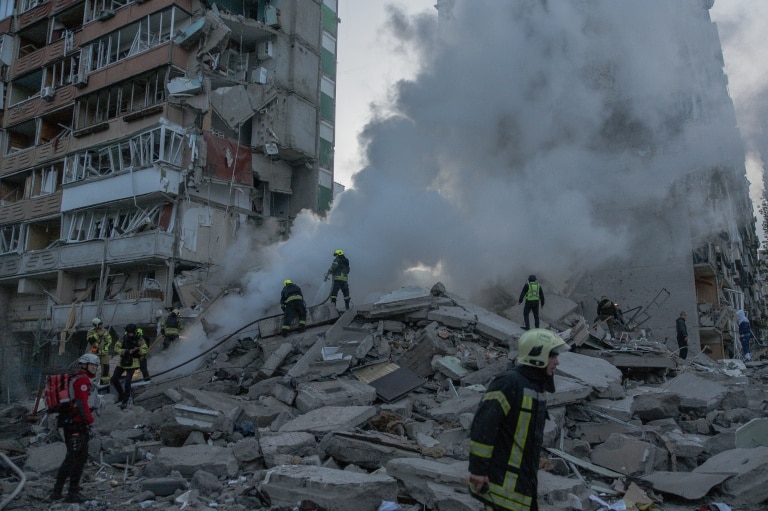
Ukraine can down Russian drones en masse. But missiles are a problem
A devastating seven-hour Russian aerial assault on Ukraine’s capital Kyiv earlier this week that killed 24 civilians and left residential buildings in ruins has laid bare a critical and dangerous divide in Ukraine’s air defense capabilities, nearly four years into the full-scale invasion.
After years of constant combat, Ukraine has honed an extremely effective homegrown network to combat Russian long-range drones – a success that has drawn admiration even from advanced global militaries. In this latest wave of attacks, Russia launched 675 drones and 56 missiles targeting Kyiv and other populated areas. Ukraine’s integrated defense system, which combines electronic jamming technology, anti-aircraft artillery, fighter jets and helicopters, and small interceptor drones, managed to shoot down all but 22 of the incoming drones, a 97% success rate. President Volodymyr Zelensky publicly commended his air forces for achieving a 94% overall drone interception rate across recent attacks.
But when it comes to Russian ballistic and cruise missiles, the picture is drastically different. Fifteen of the 56 missiles fired in this week’s barrage penetrated Ukrainian defenses, and Ukrainian officials confirm these missiles were responsible for nearly all of the attack’s civilian casualties and structural damage. This gap exposes a chronic, acute shortage of the advanced Western anti-missile systems and their costly ammunition that Ukraine needs to stop incoming projectiles.
“The real damage was done by missiles, especially in Kyiv,” said Sergii Beskrestnov, an advisor to Ukraine’s defense minister, following the assault. Zelensky echoed the assessment, acknowledging that “the most difficult challenge is defending against ballistic missiles.”
Zelensky has repeated urgent calls to Western allies for additional support, pushing for faster arms deliveries through the PURL procurement platform that partner nations use to source U.S.-made weapons for Kyiv. Shortly after the attack, British Defense Secretary John Healey announced London would speed up deliveries of British air defense and counter-drone systems to Ukraine. But a growing global shortage of anti-missile ammunition, exacerbated by concurrent defense demands in the Middle East, has left Ukraine in a precarious position.
The most capable system Ukraine operates against ballistic missiles is the U.S.-made Patriot battery, whose PAC-3 interceptor missiles cost roughly $4 million apiece. The U.S. only produces around 600 of these interceptors annually, and multiple interceptors are often required to destroy a single incoming missile. Zelensky noted that Middle Eastern allies recently used 800 PAC-3 interceptors to fend off Iranian drone and missile attacks – a total number Ukraine has never had access to across its entire four-year war. One senior Ukrainian official told AFP bluntly that the interceptors “have become harder to find.”
Even before this latest massive barrage, Ukrainian air force spokesman Yuriy Ignat told local media that ammunition was already being rationed due to persistent supply chain issues. “The launchers that are part of certain units and batteries are half-empty — and that’s putting it mildly,” Ignat said, adding that stockpiles were already depleted after Russia’s sustained winter campaign targeting Ukraine’s energy infrastructure. He added that Ukrainian negotiators are often forced to beg allies for as few as five to 10 additional Patriot interceptors at a time.
While short-term solutions remain scarce, long-term and even some medium-term pathways do exist. Ukraine’s proven track record defeating Iranian-designed drones has caught the attention of wealthy Gulf nations, which have faced repeated attacks from the same type of drones. On multiple diplomatic visits to the region, Zelensky has signed several new air defense cooperation agreements, with details still under wraps. He has publicly proposed a trade: Ukraine shares its hard-earned anti-drone expertise with Gulf states, in exchange for Patriot ammunition or investment in Ukraine’s domestic defense production. Lockheed Martin, the manufacturer of the Patriot system and PAC-3 interceptors, has also announced plans to ramp up production over the next seven years to meet global demand. Over time, Ukraine can also expand its own domestic defense production with Western backing.
Yet for the immediate threat Russia poses, options are severely limited, according to Jade McGlynn, a research fellow in the Department of War Studies at King’s College London. “Bluntly I can’t see any significant solution or significant improvement that is available in the short term, beyond just giving Ukraine more of the air defence systems that are a bit more available than the Patriots,” McGlynn told AFP.
-

UK media regulator says X promises to crack down on terrorist and hate content
LONDON – Britain’s national media and telecommunications regulator Ofcom announced Friday that Elon Musk-owned social platform X has formally committed to sweeping new measures to crack down on the proliferation of illegal terrorist and hate speech content across its service within the United Kingdom.
Under the terms of the public commitments laid out by Ofcom, X will implement strict geoblocking restrictions that bar UK-based users from accessing accounts operated directly or indirectly by terrorist organizations officially proscribed by the British government. The platform has also agreed to strict timelines for content review: it will average a 24-hour turnaround time for assessing user-flagged posts suspected of violating UK laws against terrorist and hate content, with a target of completing reviews of 85 percent of all flagged material within 48 hours of a user report being submitted.
The new commitments come in direct response to longstanding criticism from British civil society organizations, which have repeatedly accused X of failing to take meaningful action on illegal content after it is reported by users. To address these gaps, X has agreed to collaborate with independent online safety experts to refine its user reporting and content moderation systems. Over the next 12 months, the platform will also submit quarterly performance data to Ofcom, allowing the regulator to publicly verify whether X is meeting its stated targets.
Ofcom officials emphasized that clear evidence confirms illegal terrorist content and hate speech remains a persistent problem across major social media platforms, and that the regulator expects all digital service providers operating in the UK to take decisive, accountable action to protect users. For the UK, this issue carries particular urgency in the wake of a recent surge in hate-motivated violence targeting the country’s Jewish community, noted Oliver Griffiths, director of Ofcom’s online safety division.
The UK is home to roughly 300,000 Jewish people, and community members have faced a sharp rise in both offline and online antisemitic attacks in recent months. High-profile violent incidents include multiple targeted arson attacks and a fatal double stabbing, events that have stoked widespread fear and outrage across British Jewish communities.
This is not the only regulatory pressure X is currently facing over content moderation failures. Earlier this year, the platform drew intense global backlash after Grok, Musk’s AI chatbot integrated directly into X’s service, was found to generate non-consensual deepfake pornography. Ofcom launched a formal investigation into whether Grok violated UK requirements to protect users from illegal content, and Griffiths confirmed Friday that the probe remains ongoing.
The Grok controversy also prompted European Union regulators to open their own inquiry into whether X is doing enough to curb the spread of illegal content across its platform. Separately, French prosecutors confirmed last week they are pursuing criminal charges against both Musk and X, including charges related to the denial of crimes against humanity. As of Friday afternoon, X’s UK communications team had not responded to requests for comment on the new commitments.
-
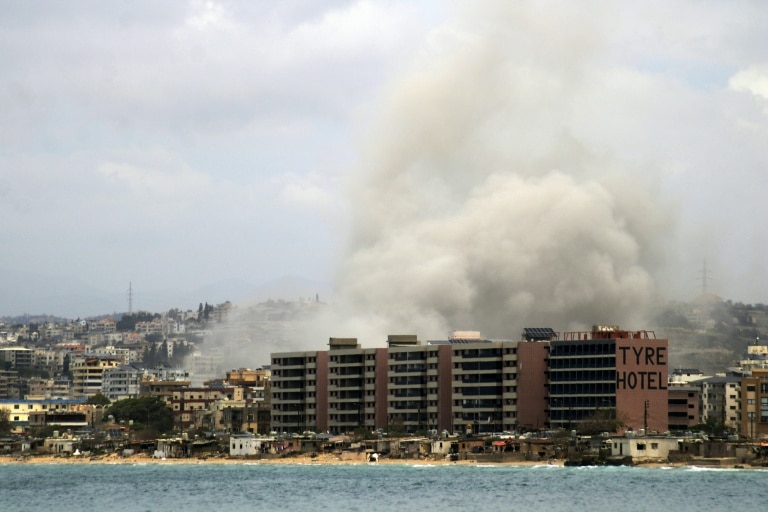
Israeli strikes wound dozens in Lebanon as talks in US enter second day
As US-mediated negotiations between Lebanese and Israeli envoys entered their second day in Washington on Friday, Israel launched a new wave of airstrikes targeting Hezbollah positions across southern Lebanon, leaving at least 37 people injured and deepening civilian hardship in the already war-battered region. The Israeli military confirmed in an official statement that it had targeted Hezbollah infrastructure sites in the vicinity of Tyre, a major coastal city in southern Lebanon. Multiple rounds of blasts were documented by an Agence France-Presse correspondent on the ground, with two strikes hitting areas close to Tyre proper. Lebanon’s state-run media added that one strike hit a facility operated by a local non-governmental organization, located just adjacent to a local hospital.
Lebanon’s Ministry of Public Health released casualty figures confirming that among the 37 wounded were six hospital staff members, nine women and four children. Local resident Hafez Ramadan, who lives near the targeted structure, revealed the building was sheltering displaced families who had already fled their hometowns to escape ongoing cross-border violence. The site also sits next to a hotel that houses additional displaced people. Ramadan noted, “There are only women, children and the elderly here. Because of this strike, people have been displaced again.”
Prior to Friday’s attacks, the Israel Defense Forces (IDF) issued evacuation orders for five towns and villages in and around southern Tyre, followed by a second warning for five additional southern Lebanese communities shortly after the strikes. The IDF also confirmed that one Israeli soldier was killed in clashes with Hezbollah in southern Lebanon, pushing the total number of Israeli soldiers killed in hostilities with the group since early March to 19. One Israeli civilian contractor was also killed in recent clashes. Lebanon’s official National News Agency reported additional strikes on southern locations that were not covered by prior Israeli evacuation warnings, expanding the scope of the offensive beyond areas Israel had flagged. In tandem with the Israeli airstrikes, Hezbollah announced it had carried out multiple coordinated attacks against Israeli troops in at least six southern Lebanese towns.
The strikes drew immediate condemnation from Imran Riza, the United Nations Humanitarian Coordinator for Lebanon, who decried the “unacceptable” civilian cost of persistent attacks. “The reality on the ground in Lebanon has been deeply alarming,” Riza said. “Airstrikes and demolitions continue daily, with an unacceptable toll on civilians and civilian infrastructure.” Despite the escalation of violence, Riza stressed that ongoing diplomatic efforts in Washington represent a critical opening to end the bloodshed, expressing hope that the talks would “pave the way toward a political solution” between the two long-belligerent neighbors.
The negotiations, hosted at the U.S. State Department, resumed shortly after 9 a.m. ET Friday, bringing together representatives from Lebanon and Israel — two countries that have remained officially at war for more than seven decades. U.S. mediators characterized the first day of talks on Thursday as productive and positive, though neither Lebanese nor Israeli officials have issued public comments on the negotiations’ progress to date. Lebanon’s core negotiating demand is a lasting extension of the current ceasefire, which is set to expire this Sunday if no extension agreement is reached, and a formal Israeli commitment to halt all offensive strikes on Lebanese territory.
The current fragile truce between Israel and the Iran-backed Hezbollah went into effect on April 17, but the agreement has failed to stop hostilities entirely. Hundreds of people have been killed in cross-border strikes since the truce took effect, with both sides repeatedly accusing one another of violating the terms of the ceasefire. According to Lebanese official data, more than 2,900 people have been killed in Israeli attacks across Lebanon since hostilities reignited in March, when Hezbollah launched a rocket barrage against Israel in retaliation for the killing of a senior Iranian leader. More than 400 of those deaths have occurred since the April truce went into force.
Leading the two negotiating delegations are veteran political figures with long-standing, hardline positions on the conflict. Lebanon’s team is headed by 76-year-old Simon Karam, a former ambassador to Washington and independent politician known for his advocacy for Lebanese national unity amid the country’s deep sectarian divides. Israel’s delegation is led by Yechiel Leiter, Israel’s current ambassador to the U.S. and a long-time close ally of Israeli Prime Minister Benjamin Netanyahu, with deep roots in Israeli conservative activism, settler politics and hardline diplomatic approach.
The negotiations are taking place amid heavy pressure from the U.S. and Israel for Lebanon to disarm Hezbollah, a demand that has sparked intense pushback domestically. Senior Hezbollah official Mahmud Qamati issued a scathing rejection of the talks Friday, describing direct negotiations between Beirut and Israel as “humiliating” and part of a broader conspiracy against Lebanese sovereignty and the group’s armed resistance. “Beirut going to direct, humiliating negotiations with the Israeli enemy is not a separate issue from a comprehensive conspiracy against the nation, its sovereignty and its resistance,” Qamati said, noting that the talks are unfolding while “the south is being destroyed and martyrs are being killed daily.”
Hezbollah has long refused any formal direct engagement with Israel, maintaining its position of non-recognition of the Israeli state. Israeli forces have already occupied swathes of southern Lebanon since the outbreak of current hostilities, carrying out widespread demolition of residential villages and infrastructure over the past several weeks, leaving thousands more Lebanese residents displaced.