作者: admin

  • Congo to receive third-country deportees from the US under new deal

    Congo to receive third-country deportees from the US under new deal

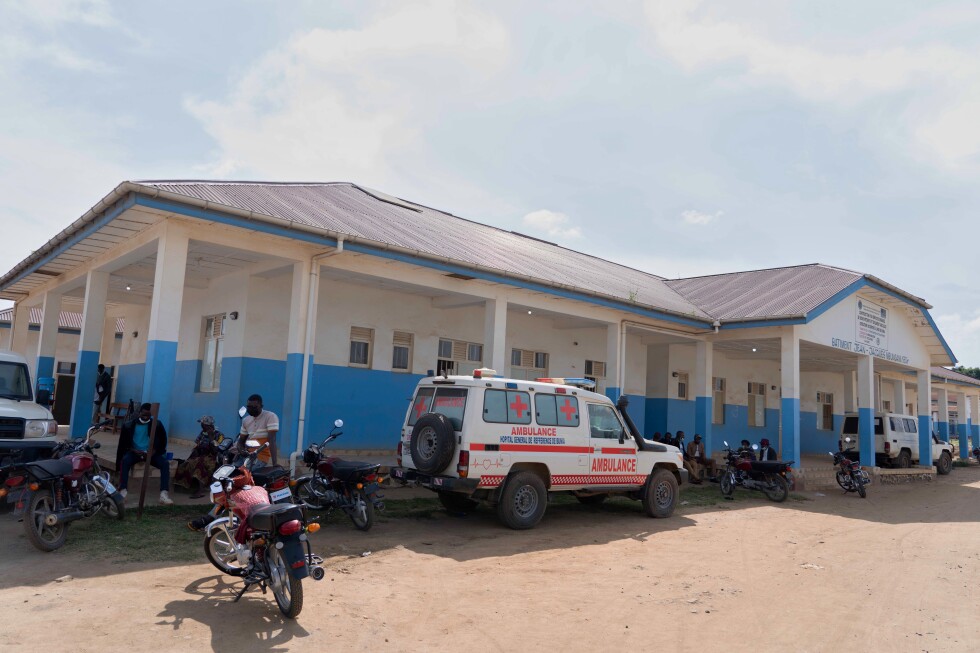
    KINSHASA, Democratic Republic of Congo – The Congolese government announced Sunday it has agreed to accept deported migrants from the United States under the Trump administration’s controversial third-country deportation program, making it the latest African nation to sign on to the controversial policy framework. According to an official statement released by the Congolese Ministry of Communications, the first group of deportees is scheduled to arrive in the country before the end of this month. The government did not release additional details, including an exact arrival date or the total number of migrants that will be transferred to Congolese territory.

    Congo’s government framed the arrangement as a temporary commitment, emphasizing that the agreement aligns with the country’s stated dedication to upholding human dignity and advancing international solidarity. The statement also clarified that the deal will impose no financial burden on Congolese public finances, with the U.S. government covering all logistical costs associated with the migrant transfers.

    This new agreement puts Congo among at least eight African nations that have now reached similar third-country deportation deals with the U.S. Many of these participating nations have already been heavily impacted by other Trump administration policies, including sweeping restrictions on trade, foreign aid and legal migration pathways. Recent data from a report compiled by Democratic staff of the U.S. Senate Foreign Relations Committee shows the Trump administration has allocated at least $40 million in public funding to deport roughly 300 migrants to third-party countries outside the migrants’ native nations.

    Human rights lawyers and migration activists have raised widespread concerns over the structure and ethics of these deals with African partner states. Multiple nations that have already agreed to the pacts are led by notoriously repressive regimes with documented poor human rights records, including Eswatini, South Sudan and Equatorial Guinea.

    A central point of controversy is that many of the migrants being transferred via these programs already hold formal protection orders from U.S. immigration judges, which bar the U.S. from deporting them back to their home countries due to extreme safety risks including violence, persecution, and threats to their lives. Unlike some previous agreements that have allowed for blanket transfers, the Congolese government has confirmed it will not implement automatic, mass transfers of incoming deportees. Instead, officials noted every migrant’s case will undergo individual review, with assessments conducted in alignment with Congolese national law and domestic national security requirements.

  • Pope Leo calls for global leaders to choose peace in his first Easter Mass

    Pope Leo calls for global leaders to choose peace in his first Easter Mass

    On Easter Sunday, thousands of devout worshippers packed Vatican City’s St. Peter’s Square to witness a historic moment: the first ever Easter Mass and address delivered by Pope Leo XIV, the first pontiff born in the United States.

    Framed by elegant arrangements of white roses on the central balcony of St. Peter’s Basilica, the new pontiff opened his message with a urgent plea directed at global power holders. Standing against a backdrop of vibrant spring decor—rows of sunny daffodils interspersed with thousands of purple, red, and white blooms arranged for the holiest day on the Christian liturgical calendar—Leo called for an end to the violence tearing through communities across the globe.

    “On this day of celebration, let us abandon every desire for conflict, domination and power, and implore the Lord to grant his peace to a world ravaged by wars,” he told the gathered crowd. Expanding on his critique of global inaction in the face of bloodshed, the pontiff highlighted a dangerous cultural shift taking root across the world: “We are growing accustomed to violence, resigning ourselves to it, and becoming indifferent, indifferent to the deaths of thousands of people.”

    He doubled down on his core appeal, stating clearly: “Let those who have weapons lay them down. Let those who have the power to unleash wars choose peace.” In a departure from recent papal tradition, Leo chose not to name specific nations or ongoing conflicts in his main Easter address, though his track record of public criticism makes his priorities clear: he has emerged as a prominent vocal opponent of the ongoing war between the United States and Iran, and has used every recent public platform to denounce global armed conflict and push for immediate de-escalation. Earlier this week, he made an uncommon direct appeal to U.S. President Donald Trump, urging him to pursue a diplomatic “off-ramp” to end the Iran conflict.

    Before closing his address, Leo paid respectful tribute to his predecessor, Pope Francis, who delivered his final Easter address exactly one year prior, only hours before his death. Drawing a connection between the core Easter narrative of Jesus Christ’s resurrection after crucifixion and modern calls for peace, Leo emphasized that Christ remained entirely nonviolent even in the face of unjust suffering.

    Following his address, the pontiff delivered the traditional “Urbi et Orbi” blessing—Latin for “to the city [of Rome] and the world”—to the crowd below, waving to thousands of gathered faithful before concluding the service. As Vatican bells rang out across the city-state and the assembled worshippers erupted in applause, Leo closed the event by offering Easter greetings in multiple languages, including Latin, Arabic, and Chinese.

    Consistent with his sustained push for peace advocacy, the pope also announced he would return to St. Peter’s Basilica on April 11 to lead a special prayer vigil dedicated to global peace. This public event marks the next step in a weeks-long campaign by Pope Leo to draw attention to the human cost of war: during Holy Week leading up to Easter, he delivered a series of addresses warning against growing public apathy toward suffering caused by armed conflict. During his sermon at the Easter Vigil held Saturday night, he urged Christian believers across the world not to grow numb to the scale of global violence, but to actively work toward reconciliation between divided groups.

  • Sweden releases sanctioned tanker due to lack of evidence it caused oil spill

    Sweden releases sanctioned tanker due to lack of evidence it caused oil spill

    In a recent development out of the Baltic Sea region, Swedish law enforcement authorities have released an EU-sanctioned oil tanker that was held last week over suspicions it was responsible for a major offshore oil leak. The vessel, identified as the *Flora 1*, was boarded and detained after a 12-kilometer (8-mile) long oil slick was spotted in the Baltic Sea on Thursday.

    Sweden’s Coast Guard announced Tuesday that after a full evidentiary review, investigators did not uncover enough concrete proof to tie the tanker to the spill, clearing the way for its release. The agency also noted that investigators have now confirmed the *Flora 1* is legally registered under the flag of Cameroon — a detail that remained unconfirmed at the time the vessel and its 24-person crew were taken into custody on Friday.

    The *Flora 1* was added to the European Union’s sanctions list of vessels linked to Russian oil trade over what officials describe as consistent “irregular and high-risk shipping practices.” These unsafe operational habits frequently include disabling the automatic identification systems (AIS) that broadcast a vessel’s real-time location to other maritime traffic, a common tactic to obscure a ship’s movements and cargo origin.

    This round of EU sanctions targets what has become known as the “shadow fleet” of oil tankers, a network that emerged following the Group of Seven democracies’ implementation of a price cap on Russian crude. The cap was designed to cut into the revenue Russia uses to fund its ongoing full-scale invasion of Ukraine, and it operates by banning Western-linked insurance and shipping providers from handling Russian cargo sold above the set price threshold.

    Shadow fleet vessels are typically aging ships with opaque ownership and insurance registered in nations that do not abide by the G7 price cap. Maritime safety experts have long warned that the advanced age of these vessels, combined with their lack of Western-backed insurance coverage, creates major environmental risks — including higher likelihood of accidental oil spills, and widespread uncertainty over who would be held financially responsible for cleanup costs if a major incident occurs.

    According to data from the Ukrainian government, the *Flora 1* was most recently owned by a Hong Kong-based company as of late 2025, and has been sanctioned not only by the EU but also by the United Kingdom, Canada, Australia, Switzerland, and New Zealand. Open-source maritime tracking records show the tanker has changed its name six times and re-flagged in nine different countries over its operational history. It has also previously been documented disabling its AIS tracking system and conducting unscheduled ship-to-ship oil transfers — a common tactic to hide the true origin of crude cargoes. Under current international sanctions, all economic and operational transactions involving the listed vessel are strictly prohibited.

  • War in the Middle East: latest developments

    War in the Middle East: latest developments

    The ongoing conflict across the Middle East has entered a new phase of widespread escalation, with fresh violence, diplomatic overtures, and global calls for peace unfolding across multiple nations over the past 24 hours.

    In his inaugural Easter address to thousands gathered in St Peter’s Square, Pope Francis delivered a stark rebuke of rising global violence, urging leaders holding the power to initiate conflict to prioritize peaceful resolution. “We have slowly grown numb to bloodshed, accepting violence as an unchangeable reality and becoming desensitized to the deaths of thousands of innocent people,” the Pope stated, a message that comes as regional casualty counts continue to climb.

    One of the deadliest recent incidents occurred in the southern Lebanese town of Kfar Hatta, where an Israeli airstrike took the lives of seven people, including an entire family of six. Lebanese civil defense sources confirm the family had gathered in the town, located 45 miles from the Israeli-Lebanese border, to await evacuation after Israeli orders to clear the area. This strike comes amid a broadening Israeli offensive against Hezbollah targets across Lebanon, including the capital Beirut. The Israeli military confirmed it launched a new wave of strikes on Beirut targeting what it calls Hezbollah infrastructure sites, with eyewitnesses on the ground reporting low-flying Israeli warplanes and missile impacts on residential buildings in the city’s southern districts.

    Tensions between the U.S. and Iran have also spiked following a high-stakes rescue mission for a downed U.S. fighter jet crew. U.S. President Donald Trump hailed the recovery of the missing airman in what he called a “daring” special operations mission, noting the service member was injured but expected to make a full recovery. A second crew member was rescued a day earlier. However, Iranian military spokesman Ebrahim Zolfaghari rejected Trump’s account, claiming the operation was “completely foiled” by Iranian forces, who he says destroyed two U.S. C-130 transport planes and two helicopters during the confrontation.

    Iran has also launched a widespread aerial campaign against Gulf nations aligned with Israel and the U.S., causing widespread disruption to critical energy and infrastructure facilities. In Bahrain, an Iranian drone strike ignited a large blaze at a storage tank operated by state energy giant Bapco Energies. While the fire has been fully contained and no injuries have been reported, the company confirmed assessments of structural damage are still ongoing. Across the border in the United Arab Emirates, Abu Dhabi emergency crews battled fires at a major petrochemical plant caused by falling debris from Iranian attacks. The facility has suspended all operations pending damage assessments, with no casualties reported to date. Iranian forces specifically targeted UAE aluminum production facilities, according to statements from the UAE’s defense ministry, which confirmed its air defense systems are actively intercepting incoming missile and drone threats. Further north, two of Kuwait’s power and water desalination plants were damaged in an Iranian drone strike, forcing the shutdown of two major electricity generating units. No casualties have been reported in the Kuwaiti attack.

    Hezbollah, the Lebanese militant group, announced it had conducted its first cruise missile strike on an Israeli warship off the Lebanese coast, a significant escalation of cross-border hostilities. The Israeli military however said it had no confirmation of the attack taking place.

    On the Iranian domestic front, a record-breaking national internet shutdown has entered its 37th day, making it the longest sustained nationwide internet blackout ever recorded globally, according to internet monitoring group NetBlocks. In a separate development, U.S.-Israeli joint strikes killed five members of Iran’s Islamic Revolutionary Guard Corps in the country’s northwestern Ardabil province, Iranian state news agency IRNA confirmed.

    Amid the escalating violence, diplomatic efforts are still underway to de-escalate key flashpoints. Oman and Iran held bilateral talks focused on securing safer freedom of navigation through the strategic Strait of Hormuz, a critical chokepoint for nearly 20% of the world’s daily oil supplies, Omani state media reported Sunday. Both sides’ technical experts put forward a series of proposals to ease tensions around the strait, according to the agency. Lebanese President Joseph Aoun has also reiterated his call for urgent negotiations with Israel, saying he seeks to prevent southern Lebanon from suffering the same level of widespread destruction that Gaza has endured. “It is an open secret that Israel intends to replicate the Gaza campaign in southern Lebanon,” Aoun said in a national televised address following the launch of expanded Israeli airstrikes and ground operations in southern Lebanon.

  • Pope Leo urges peace in first Easter Mass as Christians celebrate in Jerusalem, Gaza and Tehran

    Pope Leo urges peace in first Easter Mass as Christians celebrate in Jerusalem, Gaza and Tehran

    VATICAN CITY – In his inaugural Easter Mass as head of the Catholic Church, Pope Leo XIV delivered a impassioned plea for global disarmament and peacebuilding through dialogue on Sunday, marking a notable departure from longstanding papal tradition during his iconic Urbi et Orbi blessing from St. Peter’s Basilica’s central loggia. The first American-born pontiff centered his celebration on Easter’s core message of hope tied to the Christian belief in Jesus Christ’s resurrection following crucifixion.

    “Let us allow our hearts to be transformed by his immense love for us! Let those who have weapons lay them down! Let those who have the power to unleash wars choose peace! Not a peace imposed by force, but through dialogue! Not with the desire to dominate others, but to encounter them!” Leo urged the crowd of roughly 50,000 faithful gathered in St. Peter’s Square. The open-air altar where he spoke was flanked by white roses, with spring perennials lining the steps leading to the piazza, a visual echo of the renewal at the heart of his message.

    Against the backdrop of two active major global conflicts – the second month of U.S.-Israeli military operations in Iran and Russia’s continued invasion of Ukraine – Leo called out widespread global indifference to human suffering caused by war. “We have grown indifferent to the deaths of thousands of people … to the repercussions of hatred and division that conflicts sow … to the economic and social consequences they produce,” he said. He drew on the words of his late predecessor, Pope Francis, who from the same loggia a year prior warned of a “great thirst for death, for killing, we witness each day.” Francis, who had been weakened by prolonged illness, died just one day after that 2024 Easter appearance, on Easter Monday.

    Unlike traditional Urbi et Orbi blessings – which have long included a named list of global conflicts and crises – Leo did not explicitly name the wars at the center of global attention. He had followed the traditional naming practice during his Christmas blessing just months earlier, and no official explanation for the shift was offered immediately after the address. From the loggia, the pope announced a special prayer vigil for peace will be held in St. Peter’s Basilica on April 11.

    Alongside the break from naming conflicts, Leo has already signaled small but noticeable shifts in papal tradition early in his tenure. He revived the practice of greeting the global faithful in 10 languages, including Arabic, Chinese, and Latin – a custom Francis had allowed to lapse. After his blessing, he stepped out of the loggia’s shadow to wave directly to the cheering crowd before departing via popemobile, traveling all the way down Via della Conciliazione to the Tiber River and back to greet attendees in the piazza. On Holy Thursday, he reclaimed the tradition of washing only priests’ feet, a gesture of encouragement for clergy, after Francis expanded the practice to include women, non-Christians, and prisoners during visits to prisons and care facilities for disabled people. The 70-year-old pontiff also became the first pope in decades to carry a light wooden cross for the entire 14-station Good Friday Way of the Cross procession.

    Beyond the Vatican, Easter celebrations across conflict zones were shaped by ongoing violence and uncertainty this year. In the Holy Land, traditional ceremonies at the Church of the Holy Sepulchre – revered as the site of Jesus’ crucifixion and resurrection – were scaled back under an agreement with Israeli police, who imposed crowd size limits due to ongoing missile attacks. The restrictions have also disrupted the Muslim holy month of Ramadan and Eid al-Fitr, as well as the ongoing Jewish Passover festival: the annual priestly blessing at the Western Wall, which usually draws tens of thousands, was capped at just 50 attendees on Sunday. Tensions between Israeli authorities and Christian leaders have escalated in recent days, after police blocked two senior church leaders, including Latin Patriarch Pierbattista Pizzaballa, from entering the Church of the Holy Sepulchre for Palm Sunday celebrations last week.

    In Gaza, the tiny Palestinian Christian community held its first Easter celebrations following a recent ceasefire, bringing a long-awaited sense of relief after years of conflict. At Gaza City’s Holy Family Church, Catholics of all ages gathered for traditional Mass, forming a line to kiss a sketch of Jesus held by clergy, with the glass frame cleaned between each visitor. “There is great joy, especially after the ceasefire and after nearly three years of suffering and being unable to celebrate all the holy holidays,” said George Anton of Gaza City. “People are somewhat relieved and more stable.”

    In Iran, five weeks into the U.S.-Israeli military campaign, Armenian Christians gathered in the capital Tehran to celebrate Easter, working to maintain a sense of normalcy for their community amid daily airstrikes. At St. Sarkis Cathedral in central Tehran, families hugged and children exchanged hand-painted Easter eggs. “Whether we like it or not, we have young children who do not understand what’s going on,” said 40-year-old English teacher Juanita Arakel. “They just need to feel normal.” Iran is home to roughly 300,000 Christians, most of whom are Armenian, and three seats in the country’s parliament are reserved for Christian representatives. “Our calls and prayers are that we will be able to end this war,” said Sepuh Sargsyan, archbishop of the Armenian Diocese of Tehran, repeating the plea to emphasize the community’s longing for peace.

    This report was contributed by Barry reporting from Milan, with additional reporting from Associated Press journalists Josef Federman in Jerusalem, Wafaa Shurafa in Deir al-Balah, Gaza Strip, and Bassem Mroue in Tehran, Iran.

  • Artemis astronauts glimpse Moon’s ‘Grand Canyon’ ahead of historic lunar flyby

    Artemis astronauts glimpse Moon’s ‘Grand Canyon’ ahead of historic lunar flyby

    Nearly five decades after the last Apollo lunar mission, humanity is once again on the cusp of a groundbreaking space milestone. Four astronauts traveling aboard NASA’s Orion capsule as part of the Artemis II mission have already captured never-before-seen views of the Moon’s surface, even before completing their highly anticipated close lunar flyby, the U.S. space agency confirmed Sunday.

    By the end of their fourth day in orbit, the 10-day mission had passed its two-thirds completion mark. Per NASA’s real-time mission tracking dashboard, the crew was positioned roughly 200,000 miles from Earth and 82,000 miles from the Moon as they ended their workday Sunday. The handout image released by NASA, taken by a crew member earlier that day, reveals the massive Orientale Basin—nicknamed the Moon’s “Grand Canyon”—stretching across the distant lunar surface, a sight no human had ever witnessed directly before this mission.

    “This mission marks the first time the entire basin has been seen with human eyes,” NASA stated in an official release. While orbiting robotic probes have previously photographed the bullseye-shaped impact crater, the crater formed by an ancient asteroid collision has only now been observed by human vision.

    During a live public Q&A session with Canadian schoolchildren hosted by the Canadian Space Agency, mission specialist Christina Koch shared the crew’s excitement over the unprecedented view. “It’s very distinctive and no human eyes previously had seen this crater until today, really, when we were privileged enough to see it,” she said. Koch also added that the crew had already observed the Moon’s far side for the first time, describing the view as “absolutely spectacular.”

    The mission’s next key milestone is scheduled for overnight Sunday into Monday, when Orion will enter the Moon’s sphere of influence—the point where lunar gravity exerts a stronger pull on the spacecraft than Earth’s gravity. If all systems operate as planned, the flyby that follows will make history: the four-person crew, made up of Americans Reid Wiseman, Victor Glover, and Christina Koch, alongside Canadian Jeremy Hansen, will travel farther from Earth than any human in history.

    To prepare for the flyby, the crew has already completed a manual piloting test and a full review of their flight plan, which includes mapping and photographing key lunar surface features during their pass. The crew’s day-to-day operations have blended rigorous mission work with small, personal moments: the team began one recent day with a breakfast of scrambled eggs and coffee, woken by Chappell Roan’s hit pop song “Pink Pony Club,” and mission commander Wiseman noted that morale onboard remains high following a chance to video call his two daughters.

    “We’re up here, we’re so far away, and for a moment, I was reunited with my little family,” Wiseman told a live press conference. “It was just the greatest moment of my entire life.” Wiseman called the entire mission a Herculean feat, one humanity has not attempted in more than 50 years.

    Unlike the Apollo missions of the 1960s and 1970s, which orbited just 70 miles above the lunar surface, Artemis II will make its closest approach at roughly 4,000 miles from the Moon. This higher vantage point allows the crew to observe the entire circular face of the Moon, including polar regions never before seen by human observers. Crew members completed extensive geology training ahead of launch to help them identify and document key lunar features, from ancient lava flows to massive impact craters. The crew has even been permitted to use personal smartphones to capture imagery, a new policy approved by NASA for crewed spaceflights.

    Before the release of the Orientale Basin image, NASA had already published a stunning full portrait of Earth captured from Orion, showing the planet’s deep blue oceans and swirling cloud formations against the black of deep space.

    Artemis II serves as a critical crewed test flight for NASA’s broader Artemis program, which aims to establish a permanent sustainable outpost on the Moon as a stepping stone for future crewed missions to Mars. For the astronauts on board, however, the mission is also the fulfillment of decades-long dreams of space exploration, with crew member Jeremy Hansen describing the simple joy of floating in microgravity: “It just makes me feel like a little kid.”

  • Girls dies following horror ATV rollover in Adelaide

    Girls dies following horror ATV rollover in Adelaide

    A devastating off-road accident on the outskirts of Adelaide has claimed the life of a young child, just 48 hours after the all-terrain vehicle she was riding in flipped, leaving her critically injured. The incident unfolded on Friday afternoon at a private property in Yattalunga, a semi-rural community on Adelaide’s northern fringe, when the recreational vehicle overturned in an open paddock while carrying three people.

    As the only critically injured person in the crash, the young girl, who was riding as a passenger on the ATV, was rushed by emergency responders to a nearby major Adelaide hospital for urgent treatment. Despite medical teams’ efforts to stabilize her and address her severe injuries, South Australian Police confirmed on Sunday that the child had passed away from complications related to the crash.

    Two other people involved in the rollover — an adult woman and a second child — escaped with only minor physical harm. They were also transported to hospital for evaluation and treatment of their non-life-threatening injuries.

    Authorities have launched a formal investigation into the circumstances of the fatal crash, with the South Australian Police Major Crash Investigation Unit taking lead on the case to determine what caused the vehicle to lose control and overturn, and whether any safety protocols were violated during the recreational outing.

    The report of the incident was originally prepared by court reporter Steve Zemek for NCA NewsWire. Zemek, a Queensland native who got his start in regional Australian journalism, joined the outlet in 2020 after transitioning from sports reporting to court and general news coverage.

  • Cameroon lawmakers revive vice presidency, handing aging president sweeping control over the post

    Cameroon lawmakers revive vice presidency, handing aging president sweeping control over the post

    In a move that has reignited long-simmering political tensions across the Central African nation, Cameroon’s parliament has passed a deeply divisive constitutional amendment that reinstates the office of vice president, a change opponents warn will solidify 93-year-old President Paul Biya’s hold on power after more than four decades in office.

    Biya, the world’s oldest sitting head of state, has led Cameroon since 1982 and secured his seventh consecutive term in 2018, with his most recent 2025 reelection结果 widely contested by opposition groups and international observers. The amendment, which is all but certain to be signed into law by Biya, was approved during a Saturday joint sitting of the National Assembly and Senate, with the main opposition party boycotting the vote entirely. Final tallies showed 200 lawmakers backing the bill, 18 voting against it, and 4 abstentions.

    Under the terms of the new amendment, the sitting president retains unchecked authority over the vice presidency. Biya will have the unilateral power to appoint and remove a vice president at any time, and the appointee will only be able to exercise powers explicitly delegated to them by the president. Critically, if the president dies, resigns, or is permanently unable to carry out his duties, the vice president will automatically serve out the remainder of the seven-year presidential term, rather than triggering a new national election.

    Lawmakers from the ruling Cameroon People’s Democratic Movement (CPDM) have framed the change as a critical safeguards for institutional continuity, arguing that a clear line of succession will prevent political chaos in the event of a sudden leadership vacuum. But critics across the political and legal spectrum have decried the amendment as a direct attack on Cameroon’s democratic foundations, arguing it replaces electoral legitimacy with a system of presidential appointment that concentrates power even further in Biya’s hands.

    The main opposition Social Democratic Front (SDF) said in an official statement that the amendment “fails to guarantee democratic legitimacy, inclusiveness, and proper institutional balance.” Fusi Namukong, an SDF member of parliament, told the Associated Press that the new law effectively lays the groundwork for authoritarian dynastic rule. “It’s not democratic. This is a republic, and in a republic, those who wield power at the highest level of the state should be elected and not appointed,” Namukong said.

    The Cameroon Bar Association has echoed these concerns, warning that the change “erodes the democratic legitimacy (of) the presidential office” and undermines the core guardrails of the country’s constitution. The vice presidency was first eliminated from Cameroon’s political structure in 1972, following a national constitutional referendum.

    Biya’s health has been the subject of persistent public speculation for years, with the aging leader spending the majority of his time abroad in Europe, leaving day-to-day governance to a small circle of senior party officials and family members. His 2025 reelection sparked widespread mass protests across the country, which left at least four people dead and highlighted deepening friction between Cameroon’s largely young population and one of the longest-ruling, oldest leaders in the world.

  • ‘Deeply infuriating’: The Irish speakers fed up over fada-less forms and flights

    ‘Deeply infuriating’: The Irish speakers fed up over fada-less forms and flights

    Over the past few years, the Irish language has experienced a remarkable cultural renaissance that has captured attention far beyond the shores of Ireland. From the chart-topping bilingual work of hip-hop group Kneecap and country artist CMat’s dual-language hit *Euro-Country* to Oscar-winner Jessie Buckley’s Irish-language acceptance speech, cúpla focal – the common phrase meaning “a few words” – is now popping up on city streets, university classrooms and social media feeds as far from Dublin as New York and Sydney. Even in Northern Ireland, where Irish only gained official language status a few years ago, official data shows student enrollment in Irish-medium education has jumped nearly 400% over the last 25 years, with learners of all ages and backgrounds flocking to classes.

    But for a language that has held the status of Ireland’s first official language for nearly 90 years, a surprising and persistent gap remains: many major public and private entities across the Republic of Ireland still lack the ability to process fadas – the critical rising diacritics that mark long vowels in Irish orthography. This small accent is far more than a decorative mark: it alters both word pronunciation and, crucially, core meaning. A common example highlights the stakes: omitting the fada from cáca (the Irish word for cake) turns it into caca – an altogether different, and unappetizing, term.

    This oversight has frustrated countless Irish speakers, even high-profile public figures. Labour Party MEP Aodhán Ó Ríordáin says he rarely encounters misspellings of his name, which includes two fadas, when working across the European Parliament in Brussels or Strasbourg, or when traveling in the United Kingdom. But back in Dublin, he received an official nameplate that stripped the fadas from his name, rendering it as “Aodhan O’Riordain.”

    “It’s deeply infuriating that the only country where I struggle to get my full name, with correct fadas, recognized is my own,” Ó Ríordáin told reporters. “Corporate entities and state agencies should be far more receptive to allowing people to use the proper form of their name.” He argues the fada accessibility issue points to a long-standing, complicated relationship the island of Ireland has had with its native tongue.

    That perspective is shared by historian and Irish language academic Caoimhín de Barra, who traces the current apathy toward fadas back to the founding of the Irish state in 1922. When Ireland gained independence, the language was framed as a core pillar of the new nation’s distinct cultural identity, but de Barra says the young government failed to follow through on meaningful revival efforts. After mandating Irish in primary and secondary schools, the state stepped back and assumed community groups would carry the momentum of revival, while ordinary Irish citizens expected the government to lead the work – leaving the effort stalled entirely.

    Centuries of language shift had already pushed Irish to minority status by the 19th century, a process driven by the Anglo-Norman invasion, colonial plantations, economic upheaval and the mass devastation of the Great Famine. Today, as Ireland remains firmly integrated into the global English-speaking world, de Barra says that long-standing government indifference toward the language has translated into broad reluctance to accommodate linguistic markers like fadas, with many systems treating the accent as an unnecessary foreign character.

    That indifference has become most visible in recent months at two of Ireland’s most high-profile flagship organizations: national airline Aer Lingus and Bank of Ireland. Both institutions currently operate IT systems that reject fadas in customer names, triggering a system prompt that only allows standard letters, spaces, apostrophes and hyphens. When Aer Lingus’s policy was revealed last month, language campaigners slammed the rule as “ludicrous” and “insulting” to Irish speakers. A BBC investigation found that competing international carriers including British Airways and KLM already allow fadas in customer booking names, putting Ireland’s national carrier out of step with global industry standards. In response to criticism, Aer Lingus issued a public apology to affected customers, noting that its core booking technology was first developed in the 1960s, but that the airline is “considering implementing reasonable steps to address this issue as part of future systems development.”

    As interest in the Irish language continues to grow, more people are choosing to restore their family names to their original Irish spelling – meaning the number of people affected by the fada barrier will only rise in coming years, according to Sinn Féin’s Irish language spokesperson Aengus Ó Snodaigh. “Your name is core to your personal identity, and the Irish state has a responsibility to recognize that, especially when accommodating fadas is entirely technologically feasible in the modern era,” he said.

    A recent change to Irish law already requires all public bodies to record full names and addresses, including fadas, correctly. But Ó Snodaigh has proposed a new bill before Dáil Éireann that would expand this requirement to cover private sector companies, and create a formal complaint process through the national ombudsman for people who are denied proper fada recognition by public or private entities. The bill would set an implementation deadline of January 1, 2030, giving organizations time to update their outdated IT systems to accommodate the characters.

    Even as advocates push for systemic change, Irish language educators say shifting cultural attitudes are already driving progress. Alexandra Galbraith, an Irish language teacher in Northern Ireland, says growing up she was constantly asked what career use she could get out of a “dying language” – but today, learning Irish has become a popular, even trendy, pursuit. She notes that while fadas are a core, non-negotiable part of Irish grammar and syntax, the language remains accessible to new learners, and the growing mainstream interest in Irish is a promising sign for the language’s long-term future. “It’s a joy and a privilege to be able to teach it to those who maybe have never had the opportunity to learn before,” Galbraith said, adding that the current cultural moment for Irish is just the beginning of a broader revival.

  • UAE arrests flight attendant over war image in ongoing Dubai crackdown

    UAE arrests flight attendant over war image in ongoing Dubai crackdown

    A 25-year-old British cabin crew member has been taken into custody in the United Arab Emirates (UAE) after sharing an image of drone strike damage in a private WhatsApp conversation with colleagues, in a case that has thrown a spotlight on widening restrictions on documentation of regional conflict and sparked fresh debate over Dubai’s reputation as an open, globally connected hub.

    The young worker posted a photograph of destruction close to Dubai International Airport to the group chat, where he simply asked his coworkers whether it remained safe to pass through the airport grounds, according to initial reporting from the Daily Mail. After he was detained, law enforcement officials searched his personal mobile device and filed charges against him under the country’s strict cybercrime legislation. If convicted, he could face a maximum sentence of two years in prison and financial penalties exceeding $50,000.

    This arrest is not an isolated incident: it forms part of a sweeping surge in detentions that began when the Israel-U.S. conflict against Iran launched on February 28, rights campaigners and media investigations confirm. To date, dozens of British citizens — including leisure travelers, long-term expatriate residents, and aviation workers just like the detained flight attendant — have been taken into custody for filming or circulating imagery connected to recent missile and drone attacks across the UAE.

    Detained in Dubai, an advocacy organization that supports foreign nationals held in the emirates, reports that most detainees are charged under laws that criminalize any content ruled to “disturb public security.” The group estimates the total number of affected British nationals could climb as high as 70. In one high-profile example already documented, a 60-year-old British tourist was detained after capturing footage of a strike, even though witnesses confirm he deleted the clip immediately when approached by police officers.

    The ongoing crackdown comes at a time when the UAE has invested heavily in marketing Dubai as a welcoming global crossroads for international tourism, cross-border business, and digital content creators. Expatriate communities make up the overwhelming majority of Dubai’s total population, and critics warn the wave of arrests risks alienating the very groups that form the foundation of the emirate’s economic strength and global soft power.

    The UAE’s attorney general has publicly reaffirmed that anyone sharing conflict-related content during periods of crisis will face “immediate criminal accountability.” But human rights advocates argue the strict new measures threaten to erode the carefully crafted image of openness Dubai has built over decades, as state officials move to tightly control how the ongoing regional conflict is reported and discussed within the country’s borders.

    Radha Stirling, CEO of Detained in Dubai, noted in a public statement that countless pieces of imagery, video, and reporting on the conflict circulate freely online across global platforms. “People understandably assume that if something is already widely shared or published by media outlets, it must be acceptable to comment on or repost it. In the UAE, that assumption can be extremely dangerous,” Stirling said.