作者: admin

  • A long Mideast war could take away from support for Ukraine, Zelenskyy tells the AP

    A long Mideast war could take away from support for Ukraine, Zelenskyy tells the AP

    In an exclusive interview with The Associated Press held in Istanbul on the evening of April 4, 2026, Ukrainian President Volodymyr Zelenskyy laid out a stark warning: a drawn-out U.S.-led war against Iran risks diverting critical Western military backing from Kyiv, just as Ukraine prepares to fend off a new large-scale Russian spring offensive. More than four years into Russia’s full-scale invasion, Ukraine’s most pressing gap in air defense capabilities remains a chronic shortage of U.S.-manufactured Patriot air defense systems, the only tool Kyiv currently has to reliably intercept Russian ballistic missiles targeting civilian and infrastructure sites.

    Zelenskyy emphasized that Russia has maintained relentless, devastating airstrikes on Ukrainian rear-area urban centers, killing thousands of civilians and systematically targeting national energy infrastructure. These attacks are designed to disrupt domestic production of Ukrainian-built drones and missiles, while also leaving civilian populations without heating or clean water during the cold winter months. Despite Ukraine’s ongoing diplomatic outreach to Washington for continued security support, Zelenskyy acknowledged that Kyiv is no longer the top foreign policy priority for the United States amid a growing conflict in the Middle East. “That’s why I am afraid a long [Iran] war will give us less support,” he told AP.

    The last round of U.S.-brokered peace negotiations between Russian and Ukrainian envoys concluded in February with no substantive progress, a standoff Zelenskyy blames on Russia’s deliberate strategy of dragging out talks while continuing offensive operations. Ukraine has remained engaged with U.S. mediators and continues to push for binding, long-term security guarantees from Western allies, but even these diplomatic efforts are being sidelined by the shifting global focus to the Iran conflict, he said.

    Patriot systems were never delivered to Ukraine in quantities sufficient to cover the country’s entire territory, Zelenskyy noted. With the Iran conflict now entering its sixth week, he projected that the already small military aid packages destined for Kyiv will shrink even further if the war drags on. “The package — which is not very big for us — I think will be smaller and smaller day by day,” he said. “That’s why, of course, we are afraid.”

    Zelenskyy had previously pinned hopes on European partners to fill gaps in Patriot supplies, even amid tight global stockpiles and limited U.S. production capacity. But the Iran war has roiled global defense supply chains, diverted already scarce missile stockpiles to Middle East allies, and left major Ukrainian population centers far more exposed to Russian ballistic missile attacks. Beyond eroding military support, the conflict has handed Russia unexpected economic benefits: the closure of the Strait of Hormuz has driven a sharp spike in global oil prices, while the U.S. has issued temporary sanctions waivers for Russian crude to avoid global energy shortages. These developments have boosted Kremlin oil revenues, strengthening Moscow’s ability to sustain its invasion of Ukraine.

    “Russia gets additional money because of this, so yes, they have benefits,” Zelenskyy said. As one of the world’s top oil exporters, Russia has seen growing demand for its crude from Asian nations amid the unfolding global energy crisis, giving Moscow a substantial financial windfall that it can redirect to its war effort. In response to this windfall, Ukraine has ramped up long-range drone strikes on Russian oil infrastructure, attacks that have disrupted Russian energy operations and rattled Kremlin officials. Over the weekend, Russian authorities reported one drone strike that sparked a fire at a key oil refinery in the Nizhny Novgorod region, and a second attack that damaged an oil pipeline at the major Baltic export terminal of Primorsk, with no reported casualties.

    To keep Ukraine at the center of global security discussions and shore up much-needed air defense supplies, Zelenskyy has launched a new diplomatic outreach campaign, positioning Ukraine as a critical security partner for Western and Middle Eastern nations grappling with Iranian threats. Drawing on years of frontline experience countering Iranian-made Shahed drones (modified by Russia into the Geran-2 loitering munition with enhanced capabilities to evade air defenses), Ukraine has developed low-cost, highly effective interceptor drones that have proven far more accessible than traditional high-end air defense systems. Zelenskyy announced that Ukraine is ready to share this proven technology and battlefield expertise with Gulf Arab states targeted by Iran, in exchange for much-needed anti-ballistic missile systems to reinforce Kyiv’s air defenses.

    The Ukrainian president also offered Ukraine’s experience securing the Black Sea grain initiative to help reopen the Strait of Hormuz, a critical global trade chokepoint whose closure has disrupted energy markets worldwide. In late March, Zelenskyy completed a tour of Gulf Arab states focused on promoting this counter-drone expertise, which resulted in new bilateral defense cooperation agreements. Even as the Iran war siphons attention and resources away from Kyiv, Zelenskyy is working to build new security partnerships to fill gaps left by shifting Western priorities.

    Zelenskyy traveled to Istanbul to hold talks with Turkish President Recep Tayyip Erdogan, meeting just one day after Erdogan held a call with Russian President Vladimir Putin. The pair discussed the status of peace negotiations, the possibility of a new leaders’ peace summit in Istanbul, and upcoming new bilateral defense agreements between Ankara and Kyiv. Following the Istanbul talks, Zelenskyy and Turkish Foreign Minister Hakan Fidan made an official visit to Damascus on Sunday, where Zelenskyy met with Syrian President Ahmed al-Sharaa. In a post on X, Zelenskyy noted that the two leaders discussed the interconnected conflicts in the Middle East and Ukraine, and agreed there is strong mutual interest in exchanging military and security expertise.

    Back on the 1,250-kilometer front line stretching across eastern and southern Ukraine, Ukrainian forces are bracing for a new, large-scale Russian spring offensive. As weather warms each year, Russia typically ramps up its grinding war of attrition, though it has failed to capture major Ukrainian cities and has only made incremental territorial gains in rural areas over the past year. Russia currently occupies roughly 18 percent of Ukraine’s internationally recognized territory, including the Crimean Peninsula seized in 2014. Ukraine’s armed forces Commander-in-Chief General Oleksandr Syrskyi confirmed that Russian troops have launched simultaneous attempts to break through Ukrainian defensive lines at multiple key strategic points in recent days. For Zelenskyy, any compromise that would require Ukraine to cede sovereign territory remains completely off the table, a non-negotiable position he says he will maintain regardless of shifting global priorities.

    Over the weekend, Russia continued its airstrike campaign across Ukraine: overnight drone attacks killed at least one civilian and seriously wounded another in the southern city of Nikopol, while a separate strike on the Black Sea port of Odesa left three civilians wounded.

  • English choirs seek to protect a musical tradition little changed since Queen Elizabeth I

    English choirs seek to protect a musical tradition little changed since Queen Elizabeth I

    On a muted overcast afternoon in the final days leading up to Easter 2026, a small group of schoolchildren wandered through the entrance of Rochester Cathedral’s auxiliary building, ready to step into one of Britain’s oldest unbroken cultural traditions. They set aside their everyday jackets and backpacks, slipping on the deep burgundy cassocks and crisp white surplices that have marked choristers for generations. Falling into orderly formation, they marched into the grand, vaulted main space of the cathedral, opened their mouths, and lifted their voices in unified song. What began as a casual gaggle of young students had transformed into a choir, carrying forward a choral music tradition of the Church of England that has remained largely unchanged for nearly 500 years.

    To Adrian Bawtree, Rochester Cathedral’s director of music, this centuries-old practice is more than just religious ceremony — it is a defining sound of the United Kingdom. “All of our cathedrals are beautiful, sacred spaces where you can come and just sit and be,” Bawtree explained, “and you can be immersed, bathed, nourished, sent out back into the world transformed by an experience in 30 minutes.”

    The beating heart of this tradition is Choral Evensong, an evening service of hymns, psalms, and quiet prayer first formalized in 1549 by Thomas Cranmer, the first Protestant Archbishop of the Church of England following the English Reformation. Unique to the tradition, the congregation takes on a quiet role, participating simply by listening to the choir’s performance. But for all its deep historical roots and cultural resonance, the beloved tradition now faces growing threats: shifting demands of modern life, plummeting church attendance across the country, and chronically tight budgets have made recruiting and training the next generation of choristers far more difficult than ever before.

    To reverse this decline, heritage advocates have launched a new campaign: they are pushing to have English choral services recognized as a critical part of British intangible cultural heritage under a United Nations protection program, a designation that would help secure support and funding for struggling choirs. This effort aligns with a broader UK government initiative to build a national inventory of at-risk cultural traditions — from Morris dancing to traditional dry stone wall craft — to preserve practices that strengthen community identity. The government notes that heritage tourism already generates billions of pounds in annual economic activity, making preservation a boon for both cultural identity and national prosperity.

    While most non-churchgoers are familiar with British choral music through the iconic performances of robed choristers at royal weddings and national Christmas carol services, daily Evensong services are held across the country in quiet, modest cathedral settings that rely entirely on local funding and community support. The Cathedral Music Trust, an organization founded in 1956 to halt the decline of church music after World War II, reports that most cathedral choirs are currently in a precarious financial position. Last year alone, the trust distributed £500,000 ($661,000) in grants to 28 cathedrals and churches across the UK to keep their choral programs running. Even with this support, the costs are substantial: Rochester Cathedral, a mid-sized provincial house of worship, spends roughly £250,000 ($330,000) annually on its choral program — a major expenditure that is smaller than what many larger cathedrals face.

    Trust leaders say UNESCO intangible cultural heritage recognition would draw much-needed public attention to the tradition and unlock new funding streams, beyond just supporting religious practice. The trust’s chief executive Jonathan Mayes notes that cathedral choral programs serve as a critical training ground for the next generation of professional musicians, both in religious and secular fields. “Whilst it happens every day, it is actually quite fragile,” Mayes said. “It takes an awful lot of work and it takes a lot of funding to actually make it happen, and that doesn’t come without effort.”

    Historians add that preserving Choral Evensong carries enormous historical significance beyond its musical and religious value, as the service played a pivotal role in shaping and spreading the modern English language. Diarmaid MacCulloch, emeritus professor of the history of the church at the University of Oxford and a leading expert on Christianity, explains that Evensong is rooted in Thomas Cranmer’s Book of Common Prayer, created after the Church of England split from Rome to replace Latin Catholic services with worship in the language of everyday English people. “It is very much a drama, and it is a drama which has been performed by the people of England from 1549 through to the present day,” MacCulloch said. “It’s far more a vehicle of public consciousness performance than any play of Shakespeare.” While the tradition has evolved modestly to include girls as well as boys in most choirs today, MacCulloch notes that the core service has remained remarkably consistent: “The service would be really quite recognizable to Queen Elizabeth I as much as Queen Elizabeth II, and that’s quite remarkable.”

    For Bawtree, the work of passing the tradition to a new generation is deeply personal. He first fell in love with church choral music at around 9 years old, when he first heard an organ paired with a live choir in a cathedral space. “When I heard it, it was like big octopus arms came and grabbed me and said, ‘You’ve got to be part of this,’” he recalled. Today, he oversees the Rochester program, training choristers ages 9 to 13 alongside an older youth choir, backed by a core of professional adult singers. Bawtree emphasizes that Evensong is open to anyone, regardless of religious belief, offering a rare space for quiet reflection and transformative connection in an increasingly chaotic modern world. “We talk in the world of mindfulness and the power of music to transform lives,” Bawtree said. “This is an extraordinary arena where that can happen. And because I had that experience, I would like to share that with future generations.”

  • Pro-Palestine rallies sweep Syria amid Gaza genocide and Israeli occupation

    Pro-Palestine rallies sweep Syria amid Gaza genocide and Israeli occupation

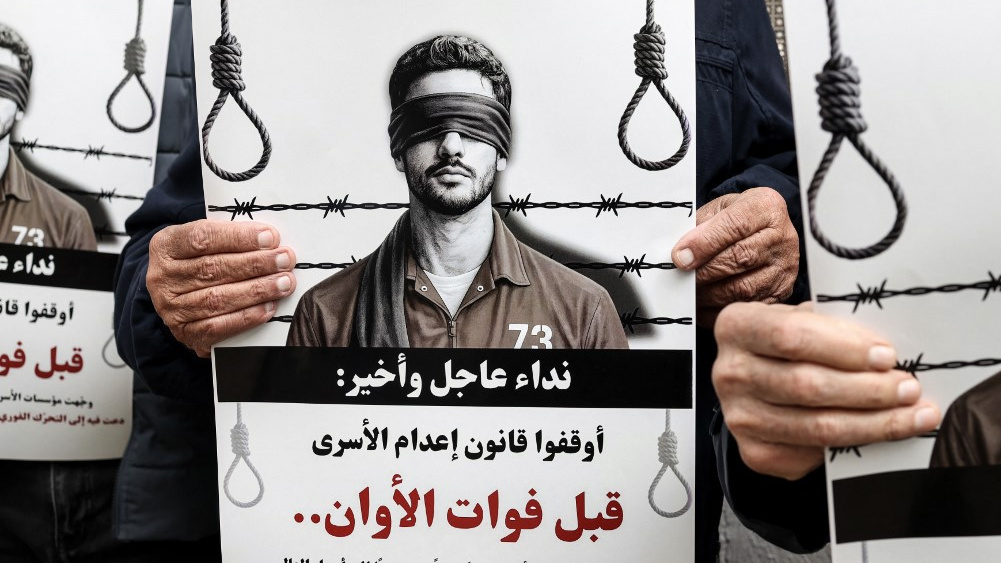
    Thousands of Syrian citizens have mobilized across nearly every major region of the country to join mass pro-Palestine demonstrations, condemning two key Israeli actions: a newly enacted discriminatory execution law targeting Palestinian prisoners and the ongoing illegal occupation of Syrian sovereign territory.

    The wave of protests ignited on Friday afternoon in the capital Damascus, before rapidly spreading to cities and provinces including Daraa, Quneitra, Aleppo, Latakia, Homs and Idlib, as well as long-standing Palestinian refugee camps such as Yarmouk and Khan al-Sheikh. Demonstrators assembled in large crowds to organize peaceful marches, solemn vigils and student-led rallies, uniting in shared opposition to Israeli policy.

    The mass mobilization was directly triggered by the passage of Israel’s controversial new prisoner law, which codifies the execution of Palestinian detainees within a racially segregated legal framework that explicitly excludes Jewish citizens from the policy. This discriminatory legislation has already drawn widespread international condemnation for its violation of basic human rights norms.

    At Aleppo University, thousands of student demonstrators packed the campus grounds, waving both Syrian and Palestinian flags and holding hand-painted banners carrying messages including “Palestinian prisoners are not numbers” and “Executing prisoners is a crime against humanity.” Crowds repeatedly chanted iconic solidarity slogans, including “With our souls, with our blood, we will redeem you, Palestine” and “Freedom for the prisoners of Palestine.”

    Beyond solidarity with Palestinian prisoners, the demonstrations also channeled deep, long-simmering anger over Israel’s ongoing occupation of southern Syrian territory, most notably the disputed Golan Heights region. In the frontier province of Quneitra, where local residents face repeated Israeli military incursions into their communities, a group of protesters advanced toward front-line confrontation zones, prompting Israeli forces to respond by firing illumination flares into the area.

    Hours earlier on the same Friday, Israeli military forces shelled a civilian vehicle traveling through the Quneitra countryside, killing all occupants inside the car. Syria’s Ministry of Foreign Affairs quickly issued a formal condemnation of the strike, labeling it a “flagrant violation of international humanitarian law” and accusing Israel of systematically endangering innocent civilian lives. The ministry issued an urgent call for the international community to intervene to stop what it described as Israel’s “repeated violations” of Syrian sovereignty and global legal norms.

    In the southern city of Daraa, additional demonstrations drew crowds of angry protesters who waved national and solidarity flags and pledged unwavering support for the people of Gaza. Many speakers at the Daraa protests explicitly linked the Palestinian struggle against Israeli occupation to Syria’s own decades-long experience of fighting foreign territorial encroachment, framing both conflicts as part of a shared fight for self-determination.

  • ‘No doubt he’d be ready’: Casey McLean explodes into Origin contention thanks to stunning form and eligibility rule changes

    ‘No doubt he’d be ready’: Casey McLean explodes into Origin contention thanks to stunning form and eligibility rule changes

    As the 2026 State of Origin series approaches, NSW Blues head coach Laurie Daley faces what every coach dreams of: a pleasant selection dilemma at the centre position. Among a stacked field of star candidates, a 19-year-old Penrith Panthers prodigy has rocketed into contention, turning heads across the rugby league community with his scorching early-season form.

    Casey McLean, the Panthers’ dynamic left centre, has not yet received a call-up from Daley, but the young star says he would jump at the chance to represent the Blues in next month’s series opener. Just a few months ago, a senior State of Origin debut would have been out of the question for McLean; the teenager had already represented New Zealand at the international level, which under old eligibility rules would have barred him from competing for NSW. A recent rule change has swept that barrier away, clearing the path for his possible selection, while his dominant on-field performances have cemented his status as a legitimate contender.

    Despite his youth, McLean has already proven he can compete with the sport’s very best. In a memorable match-up against representative star Stephen Crichton last year, he held his own to help the Panthers secure a win over the Bulldogs, and has continued to elevate his game through the opening rounds of the 2026 season. He enters the selection conversation alongside established stars including Crichton, Tom Trbojevic, Latrell Mitchell and Kotoni Staggs, making for one of the most competitive centre selection races in recent Origin history.

    Speaking after a man-of-the-match performance against Melbourne Storm on Friday, McLean made his stance clear: “If the phone call arose, I suppose I wouldn’t turn it down. But at the end of the day, I’m just focusing on my job at Penrith, taking it week by week and not thinking too far ahead. I’m just thinking about how I can put my best foot forward for this team.”

    The young centre demonstrated his professionalism off the field after Friday’s game, too: having already left the stadium before reporters could reach the Penrith change rooms, he graciously agreed to a phone interview to discuss his form and Origin prospects. McLean, who represented NSW’s under-19 side in 2024, acknowledged that the updated eligibility rules created this unexpected opportunity, even as he emphasizes that representing New Zealand, his father’s home country, remains his first priority.

    “I’d hope to say I’m ready to play Origin. But then again, it just comes down to what’s right for the Blues, and hopefully, if that opportunity comes, I’ll take it with both hands,” he said, adding that he still sees room for growth in his defensive game: “I’m still not quite happy with how I’m defending. We’re still leaking points out our edge, so there are many different ways for improvement throughout that at training.”

    That self-awareness and drive to improve has impressed his veteran teammates at Penrith. Scott Sorensen, a long-serving Panthers forward, pointed to a match-winning defensive play in round four as evidence of McLean’s commitment to shoring up his defence: McLean chased down Parramatta Eels centre Sean Russell from behind to stop a certain try, a play that sums up his work ethic.

    “If he was called upon, I have no doubt he’d be ready,” Sorensen said. “Attack is obviously beautiful to watch with his speed and the way that he’s backing himself and scoring some pretty incredible tries. But he’s saving them as well. We speak about a defensive mindset here and it’s awesome that he’s acknowledging that and going after it defensively.”

    Penrith and NSW halfback Nathan Cleary, while declining to comment on selection so far out from the first Origin match, said he has been stunned by McLean’s rapid rise. “What Casey is doing at the moment is quite incredible,” Cleary said. “He’s looking more and more dangerous each week, and I think he’s starting to feel that confidence. The fact that he’s 19 is mind-blowing, but that’s a testament to him and the work he’s doing. He’s coming into training each week and he’s trying to get better.”

    McLean’s versatility only adds to his appeal as a candidate. While he has dominated on the left edge for Penrith this season, he has said he is happy to switch to the right centre position if required, and has already proven he can play on the wing – scoring four tries in his debut match for New Zealand in 2024.

    Looking back on his 2024 decision to represent New Zealand, McLean explained that the choice was rooted in family and heritage. “At that time, the thought crossed my mind that I’m not able to represent the junior clubs in Penrith I was able to represent. But at the end of the day, the decision wasn’t really too hard because I just wanted to represent my family and where I come from, my father back in New Zealand. That’s a big factor of why I’ve been playing this game for how long I have been,” he said.

    “I sat ahead with my parents and my family just thinking what’s best for me, and they kind of just said whatever you think you want to do. I wanted to put on the black jersey and represent where my parents come from as a way of giving back to them.”

    Since making his international debut, McLean has elevated his game to extraordinary new heights. Through the opening five rounds of the 2026 NRL season, he and Panthers winger Tom Jenkins have formed one of the most devastating attacking combinations in the league, combining for a string of spectacular tries. His solo try against the Storm on Friday – which showcased his signature mix of footwork, power and blistering speed – was the pick of the bunch, and highlighted exactly why many analysts argue his individual brilliance makes him a must-pick for the Blues when they name their side for the May 27 Origin opener.

  • Baby killer Keli Lane’s schoolteacher partner to be reinstated after court action

    Baby killer Keli Lane’s schoolteacher partner to be reinstated after court action

    After 27 years of loyal service at one of Sydney’s most prestigious private high schools, a secondary teacher has secured a landmark legal victory after an independent workplace tribunal ruled his termination was harsh, unjust, and unreasonable.

    Patrick Cogan, the long-time partner of convicted baby killer Keli Lane, was sacked by St Pius X College Chatswood in 2025. The school issued three formal show-cause letters between May and October that year, outlining three core allegations against the 50-year-old educator: that he misused his official work email to conduct personal business related to Lane’s parole advocacy, that he failed to notify the institution ahead of a scheduled 60 Minutes program segment covering his partner’s case, and that he did not submit a medical certificate the school deemed acceptable when he took unpaid personal leave. The college argued that Cogan’s actions amounted to a deliberate disregard of school policies and a breach of his employment contract, adding that his relationship with Lane and public advocacy on her behalf posed an unacceptable reputational risk to the elite campus.

    Following the dismissal, Cogan took his case to Australia’s Fair Work Commission, arguing his termination was unwarranted. In a final judgment delivered on April 1, FWC Deputy President Tony Slevin rejected every one of the school’s claims. Slevin found that neither Cogan’s failure to pre-notify the college of the upcoming media segment nor the disputed medical certificate met the standard for a contractual breach. He further noted that Cogan never denied using his work email to coordinate legal and advocacy efforts for Lane—contacts that included correspondence with lawyers, psychologists, political representatives, journalists, and New South Wales Corrective Services. Slevin ruled that Cogan’s use of the work account was justified by his extraordinary personal circumstances, and that the educator had long been careful to balance his public support for his partner with the school’s reputational concerns.

    The judgment also criticized the school’s hasty handling of the case. With Cogan already on unpaid personal leave at the time of the proceedings, Slevin said there was no urgent reason for the college to move forward with a termination as quickly as it did. The institution failed to give Cogan adequate opportunity to respond to all accumulated concerns before issuing the dismissal, a procedural failure that amounted to a lack of proper notification of the reason for his firing, the ruling found. Even when Cogan proposed a voluntary retrenchment deal that would have eliminated the school’s claimed reputational risk, administrators rejected the offer.

    In rejecting the school’s argument that Cogan could not be trusted to manage reputational risks if reinstated, Slevin emphasized that Cogan’s demonstrated devotion to his partner was matched by his longstanding commitment to his career and the college. “From 2010, with the conviction of Ms Lane, and no doubt earlier, Mr Cogan was conscious of the need to balance the support he gave to his partner with the potential reputational impact that support may have on the College,” Slevin wrote in his ruling. He also confirmed that the school had not suffered any provable reputational harm from Cogan’s advocacy for Lane.

    Lane, a former champion water polo player, was found guilty in 2010 of the 1996 murder of her newborn daughter, and sentenced to 18 years in prison in 2011, with a non-parole period of 12 years and five months. While the ruling made her eligible for parole in 2024, her release was denied under New South Wales’ controversial “No Body, No Parole” laws, which block parole for convicted murderers who do not reveal the location of their victim’s remains. Lane has consistently maintained her innocence throughout her imprisonment. Earlier this year, she was granted a rare supervised day release from Sydney’s Silverwater Maximum Security Prison to attend the FWC hearings and support Cogan during his case.

    Slevin’s final order requires St Pius X College to immediately reinstate Cogan to his teaching position and reimburse him for all unpaid wages lost during his wrongful dismissal, with the two parties to negotiate the final amount of back pay.

  • UAE condemns pro-Palestine protests targeting its embassy in Syria

    UAE condemns pro-Palestine protests targeting its embassy in Syria

    As public fury over Israel’s military campaign in Gaza continues to sweep across the Middle East, pro-Palestinian protests in the Syrian capital Damascus have escalated into direct anger against the United Arab Emirates, with demonstrators targeting the Gulf state’s diplomatic mission over its open support for Israel amid the ongoing conflict.

    On Friday, dozens of protesters assembled outside the UAE embassy in Damascus, with some chanting provocative slogans labeling the compound a “Zionist embassy,” according to a reporter on the ground from Reuters. This demonstration was one of many coordinated protests held across Syria, all sparked by widespread international condemnation of Israel’s policies toward Palestinians that has stoked deep resentment across the entire region. The unrest also comes on the heels of a controversial move by Israel’s legislative system, which approved a new law earlier that week that permits the execution of Palestinian prisoners; critically, the law does not extend this penalty to Jewish citizens of the state.

    A senior Syrian security official confirmed to Reuters that a group of demonstrators split off from a much larger rally held in central Damascus’ Umayyad Square and attempted to force entry into the embassy compound. “Internal security forces prevented them from doing so and dealt with the situation,” the official stated, adding that order was restored without major casualties.

    The UAE has faced growing backlash across the Arab and Muslim world ever since it normalized diplomatic and economic relations with Israel in 2020 as part of the U.S.-brokered Abraham Accords, building a deepening strategic and economic alliance with Tel Aviv that many regional actors view as a betrayal of Palestinian national aspirations. Back in January, a prominent Saudi academic publicly denounced the UAE, accusing the country of throwing itself “into the arms of Zionism” and acting as “Israel’s Trojan horse in the Arab world” to undermine Saudi regional influence and claim regional dominance for itself.

    In an official statement released the day after the Damascus protest, the UAE condemned what it described as “riots, acts of vandalism, and assaults” outside its embassy and the private residence of its top diplomatic envoy in Syria. The country’s foreign ministry called on Syrian government authorities to uphold their international obligations to protect diplomatic missions operating on its territory, launch a full investigation into the incident, and prosecute all individuals found responsible for the unrest.

    Syria’s foreign ministry has not issued a direct comment on the specifics of the protest, but it did reaffirm the country’s long-held “firm and unwavering stance” against any intentional targeting of foreign diplomatic compounds on Syrian soil.

    The Friday demonstration was not the first time the UAE embassy in Damascus has faced protests in recent weeks. Earlier demonstrations were organized over the unresolved detention of senior Syrian official Issam Bouidani by UAE authorities. A former leader of the militant group Jaish al-Islam, Bouidani was taken into custody during a stop at Dubai International Airport this past April, and he currently holds a senior leadership role in Syria’s national defense institutions. UAE officials have never publicly disclosed the reasoning behind his arrest, leaving the case shrouded in ambiguity.

    As public anger over Israel’s military campaign in Gaza continues to resonate across the Middle East, mass protests are increasingly being directed at regional governments that have chosen to normalize relations with or align themselves closely with Tel Aviv, reflecting a major shift in public opinion across the region that is reshaping geopolitical dynamics.

  • ICE wanted to build a detention centre –  this small farming town said no

    ICE wanted to build a detention centre – this small farming town said no

    Nestled in rural Georgia, the tiny town of Social Circle — population roughly 5,000, founded in 1832 and once famous for its iconic Blue Willow Inn buffet — has found itself at the center of an unlikely fight against federal immigration policy. What began as a quiet community shock last December, when a *Washington Post* report revealed the town’s vacant 1 million-square-foot industrial warehouse was marked as one of 23 new sites for U.S. Immigration and Customs Enforcement (ICE) detention centers, has evolved into a rare bipartisan movement that has forced the U.S. Department of Homeland Security (DHS) to hit pause on the project.

    For months, the unlikeliest of allies have led the charge: Gareth Fenley, a local Democrat, and John Miller, a conservative horse farmer and Trump supporter whose property sits directly across the road from the proposed facility. Every morning, the pair drives the tree-lined, farm-dotted roads to the warehouse to check for any sign of construction work, breathing a quiet sigh of relief each time the sprawling gray structure remains untouched.

    The proposal to convert the warehouse into a 10,000-person detention center was part of a broader $38.3 billion Trump administration plan to expand the national immigration detention network by opening dozens of new facilities across the country. What has made Social Circle’s resistance notable is that it crosses deep political lines: the town voted overwhelmingly for Trump in the most recent election, and most residents support his pledge to deport millions of undocumented immigrants. But shared concerns over strained infrastructure, community identity and public safety have united conservatives and progressives under a single slogan: *Detention center, not welcome here.*

    “People have different reasons for aligning with the exact same message,” Fenley explained. For Fenley and other local progressives, the opposition stems from deep concern over human rights abuses widely reported in ICE facilities. Between January and early March 2026 alone, 13 immigrants have died in ICE custody, and civil rights groups have documented systemic issues including overcrowding, insufficient food and medical neglect. Proponents also argue the massive, empty industrial structure was never designed for long-term human habitation. For local conservatives like Miller, the core issue is basic infrastructure that simply cannot support a population that would triple the town’s size overnight.

    Social Circle’s aging public utilities have emerged as the flashpoint of the fight. City Manager Eric Taylor explains the town is only permitted to draw 1 million gallons of water per day from the nearby Alcovy River, and summer demand already hits 800,000 gallons daily. The proposed detention center alone would require a full 1 million gallons per day — more than the entire town’s current peak usage. The town’s sewage system, first built in 1962 and in need of full replacement for 20 years, also lacks the capacity to handle the additional outflow from the facility.

    In March, Taylor took the extraordinary step of locking the warehouse’s water meter, cutting off access to the city’s water supply and turning the one-stoplight town into the national face of resistance to the administration’s expansion plans. “If you open up that water meter, it gives them full access to the entire supply of the whole city,” Taylor told the BBC. “I can’t let that happen without knowing what the ultimate impact is going to be.”

    Federal officials have floated workarounds: drilling private wells on the warehouse property or trucking in 1 million gallons of water daily. But local residents say both solutions create new problems. Drilling new wells would deplete the groundwater that sustains local farms, while hourly water truck traffic on Social Circle’s narrow two-lane roads would create constant congestion and safety hazards.

    Despite early outreach from residents that raised these concerns, DHS purchased the vacant warehouse in February for nearly $130 million — more than four times the property’s initial estimated value. Since then, local residents have organized protests, meetings and advocacy campaigns, drawing support from Georgia’s Democratic Senator Raphael Warnock, whose office confirms it still has many unanswered questions about the project. Even Social Circle’s Republican U.S. Representative Mike Collins has publicly come out against the facility, writing, “Although I am aligned with the mission of ICE to detain and deport the criminal illegal aliens who have flooded across our border due to Joe Biden’s reckless policies, I agree with the community that Social Circle does not have the sufficient resources that this facility would require.”

    Social Circle is not alone in its pushback. Just last week, Michigan filed a lawsuit to block a similar ICE facility conversion in Romulus, citing risks to nearby residential neighborhoods and flood hazards. New Jersey and Maryland have also filed lawsuits to halt planned detention projects, while residents in Merrimack, New Hampshire, successfully lobbied local officials to block a facility in their town.

    Recent changes at the top of DHS have thrown the Social Circle project into limbo. Early in March, President Trump fired Homeland Security Secretary Kristi Noem following backlash over a controversial immigration raid in Minneapolis that left two U.S. citizens dead. He nominated Senator Markwayne Mullin to replace her, and DHS has since announced it is conducting a full review of all ongoing detention expansion policies under the new leadership. The department canceled a scheduled public meeting on the Social Circle project, and has signaled it is pausing plans to purchase additional warehouse sites across the country — though it has not clarified the future of sites like Social Circle’s that have already been purchased.

    Local residents remain cautiously optimistic about the pause. The facility was originally scheduled to open in April, but no construction contracts have been awarded, and no conversion work has begun on the empty warehouse. “We’re anxious to see what happens out of this review. They have already pulled the trigger on it. They have already bought the building, so there’s going to be some effects no matter what’s done or not done,” Miller said. “We’re still whispering up the chain as much as we can to make sure that if they are indeed reviewing it, we can give input.”

    For many long-time residents, the fight is as much about community identity as it is infrastructure or policy. Miller, who supports ICE’s core mission of immigration enforcement, acknowledged the contradiction of his opposition: “You can’t say that it’s something that’s needed and then not be somewhat willing to allow a facility to be there. But realistically, no community wants such a facility tarnishing the reputation of their town. I miss the days we were known for the Blue Willow Inn. Now we’re going to be known as Georgia’s greatest little detention center.”

    For the time being, however, residents can breathe a little easier. The pause gives the small town extra time to continue its advocacy, and lets residents hold onto their quiet small-town life just a little longer. “The decision gives locals ‘a little time to breathe, since we wake up nearly every day wondering if today will be the day the trucks start rolling in,’” said local resident Valerie Walthart. “We can enjoy our small town life, for at least a little while longer, we hope.”

  • ‘Absolutely spectacular’: Artemis II crew see first glimpse of far side of Moon

    ‘Absolutely spectacular’: Artemis II crew see first glimpse of far side of Moon

    In a landmark moment for human space exploration, the four-member crew of NASA’s Artemis II mission has become the first group of astronauts in more than 50 years to lay eyes on the Moon’s little-seen far side, marking a major milestone on their four-day lunar flyby journey.

    Wednesday marked the third day of the mission, which launched earlier this week from NASA’s Kennedy Space Center in Florida. As the Orion capsule completed its critical maneuver to swing around the far side of the Moon — the portion of the lunar surface that never faces Earth — the crew pulled back the capsule’s observation window covers and got their first unobstructed look at the rugged, crater-pocked landscape that is rarely viewed directly by human eyes.

    Mission control confirmed that the crew described the view as “absolutely spectacular”, sharing the first crew-captured images of the far side back to Earth for both scientific analysis and public release. Unlike the familiar near side of the Moon, which features large, dark maria (ancient volcanic plains), the far side is dominated by heavily cratered highland terrain, a geological difference that has puzzled planetary scientists for decades.

    This mission is the first crewed lunar voyage since NASA’s Apollo program ended in 1972, and it serves as a critical test flight to validate all systems for future crewed landings, including the first Artemis III landing that will put the first woman and person of color on the lunar surface as early as 2026. Data and observations from Artemis II will help engineers refine safety protocols and navigation systems ahead of the landing mission, while also giving the crew a chance to test human observation capabilities in deep space that cannot be replicated by robotic probes.

  • Albanese government mum on capital gains reform as budget looms

    Albanese government mum on capital gains reform as budget looms

    As Australia’s federal government prepares to hand down its May budget, speculation over broad-based tax reform has intensified, with Treasurer Jim Chalmers openly embracing the idea of the budget being remembered for delivering long-awaited changes to the nation’s tax system.

    In comments to Nine Entertainment’s newspapers on Sunday, Chalmers said he would be “pretty happy” if the 2026-27 budget made headlines as a landmark tax reform package. The statement has fueled widespread speculation that the Albanese administration is considering rolling back one of Australia’s most generous tax concessions: the 50% discount on capital gains tax (CGT) applied to assets held for longer than 12 months. For context, CGT is levied on profits earned from selling assets including residential property, shares and other investments, and is counted toward an individual’s annual taxable income.

    Beyond CGT, multiple reports indicate the government is also evaluating changes to negative gearing, a tax arrangement that allows property investors to deduct rental losses from their overall taxable income. Any changes to negative gearing would reportedly be grandfathered, meaning the new rules would only apply to future property purchases rather than existing investment arrangements.

    The prospect of CGT reform has already sparked partisan debate, with a Liberal Party-chaired Senate inquiry currently investigating potential changes to the tax. Speaking to Sky News on Sunday, Assistant Immigration Minister Matt Thistlethwaite pushed back against questions over whether the government broke an election promise by considering changes it did not take to voters. Thistlethwaite noted that the government has not yet finalized any changes to CGT policy, and is currently focused on delivering the tax reforms it already campaigned on during the last election cycle – including stage three income tax cuts and adjustments to tax concessions for high-balance superannuation accounts.

    “Our priority right now is stabilizing inflation and lifting national productivity,” Thistlethwaite said, adding that the government regularly reviews all existing policies to ensure they align with core electoral goals. “Inflation remains our top economic priority, especially amid ongoing global volatility in fuel markets. We are constantly assessing whether our policies are helping us meet that target.” On the government’s housing agenda, Thistlethwaite acknowledged growing public concern over intergenerational inequity in access to home ownership, saying the government’s core focus remains on expanding overall housing supply, including adjustments to migration policy to support construction targets.

    Coalition Senator Dave Sharma, a member of the Senate inquiry into CGT, told Sky News that independent testimony to the committee has repeatedly shown that changing the CGT discount would do nothing to improve housing affordability for first-time buyers. He argued that scaling back the discount would actually reduce new housing supply at the margins, by disincentivizing property investment and pushing investors to move their capital into other asset classes.

    “Fundamentally, changing CGT is just tinkering around the edges of Australia’s housing crisis,” Sharma said. “The core problem remains the government’s failure to deliver the rapid construction needed to hit its own housing supply targets.”

    For weeks, senior government figures have remained deliberately vague on the specifics of potential tax changes, declining to confirm or deny whether CGT or negative gearing adjustments will be included in the final May budget. Chalmers’ recent comments, however, have made clear that the government is open to delivering major tax changes before the next federal election, as it grapples with long-term challenges of inflation, housing inequality and productivity growth.

  • Man charged over fatal shooting of baby in pram in New York

    Man charged over fatal shooting of baby in pram in New York

    A senseless act of gang violence in Brooklyn has left an innocent infant dead, sending shockwaves through the New York City community and reigniting longstanding conversations about the persistent crisis of gun violence across the United States. Seven-month-old Kaori Patterson-Moore was fatally shot on April 1 while sitting in her pushchair in the Williamsburg neighborhood, in what investigators have confirmed was a mistaken, unintended attack tied to gang activity.

    Two suspects are now in police custody following the incident. Twenty-one-year-old Amuri Greene, who law enforcement officials identify as the gunman, faces three counts of murder and one count of attempted murder. He has also been hit with additional charges including five counts of criminal weapon possession, two counts of attempted criminal weapon possession, and two counts of assault. During his court appearance on Friday, Greene entered a plea of not guilty to all charges. Per reporting from CBS News, the BBC’s U.S. affiliate partnership, Greene was thrown from the suspect vehicle moments after the shooting, requiring hospital treatment before he was taken into official police custody.

    The second suspect, 18-year-old Matthew Rodriguez, is accused of driving the scooter that carried Greene during the attack. Police confirmed he was arrested days later in Pennsylvania, with formal charges still pending against him as investigators continue to piece together details of the incident. Surveillance footage of the attack, reviewed by law enforcement, captures the two men riding against the direction of traffic through Williamsburg on a scooter. After the shooting, the driver lost control, crashed into oncoming vehicles, and fled the scene before he was eventually apprehended out of state.

    In the wake of the tragic killing, community members, family, and friends of the infant gathered for a moving candlelight vigil at the intersection where the shooting unfolded on Friday evening. A makeshift memorial of flowers, candles, and handwritten tributes has continued to grow at the site as locals mourn the unnecessary loss of a young life, one of the latest victims of the rampant gun violence crisis that plagues communities across the United States.