作者: admin

  • Wallaby flanker Carlo Tizzano says ‘benvenuto’ to Italy ahead of Nations Championship match

    Wallaby flanker Carlo Tizzano says ‘benvenuto’ to Italy ahead of Nations Championship match

    When Rugby Australia set out to build hype for Italy’s long-awaited return to Australian soil, it could not have picked a better ambassador than Carlo Tizzano.

    Nine years have passed since Italy last competed in a rugby test match on Australian shores, and on July 18, the Azzurri will face off against the Australian Wallabies at Perth’s Optus Stadium as part of the newly launched World Rugby Nations Championship. This groundbreaking competition marks a historic shift in international rugby, pitting six top teams from the Southern Hemisphere against six leading Northern Hemisphere sides across a full annual calendar, with a grand final weekend scheduled for London this coming November to crown the first-ever overall champion of the new competition.

    For Tizzano, the 100-day countdown to the clash carries a uniquely personal twist. The back-row flanker, who currently plies his trade for Super Rugby’s Perth-based Western Force after a 2022-23 stint with England’s Ealing Trailfinders, was born and raised in Australia to parents of Italian origin. Back in 2018, former Italy head coach Conor O’Shea reached out to Tizzano to recruit him to the Italian national side, but the flanker ultimately chose to hold off on committing, a decision he has since reflected on by saying “Lucky I didn’t pull the trigger.” In 2024, he made his test debut for the Wallabies against South Africa, fulfilling a lifelong dream of representing the country of his birth.

    This upcoming test also comes against a backdrop of shifting momentum in the Italy-Australia rugby rivalry. Before 2022, Italy had never secured a victory over Australia across 20 previous meetings between the two sides. But Italy’s 28-27 win in Florence that year was no one-off upset: last November, the Azzurri claimed a second consecutive victory over the Wallabies, winning 26-19 in Udine thanks in part to two star players with deep Australian connections. Louis Lynagh, son of Australian rugby legend Michael Lynagh, and Melbourne-born Monty Ioane, nephew of former Wallabies winger Digby Ioane, scored consecutive second-half tries to power Italy’s comeback win.

    Italy’s recent rise in form has extended beyond matches against Australia, too. In March of this year, the Azzurri notched their first ever victory over England in international test rugby, signaling that the side has become a consistent contender at the top of the international rugby circuit.

    As anticipation builds in Perth for the historic July clash, Tizzano’s dual heritage offers a fitting symbolic bridge between the two nations set to face off on the pitch.

  • Australian sharemarket surges as US-Iran ceasefire sends gold and dollar soaring

    Australian sharemarket surges as US-Iran ceasefire sends gold and dollar soaring

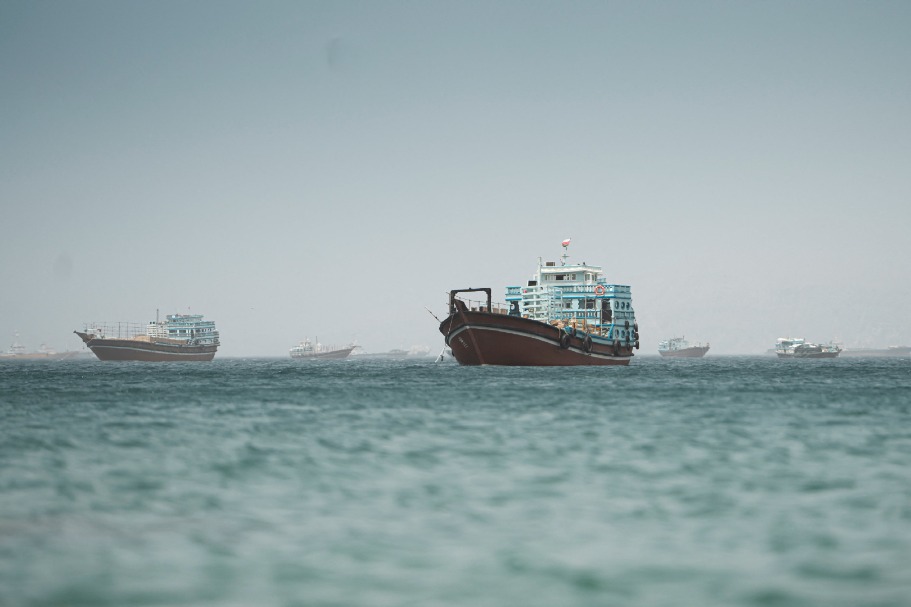
    A last-minute two-week ceasefire brokered by Pakistan between the United States, Israel and Iran has triggered a massive upswing across Australian financial markets, after the agreement reopened the strategically critical Strait of Hormuz shipping lane that had been a flashpoint for global energy instability.

    The truce came together just two hours before a previously set bombing deadline, when former US President Donald Trump announced the suspension of military operations via social media. Pakistan negotiated the deal after appealing to Trump to extend his original deadline, creating a 14-day window that clears the way for commercial shipping to resume transit through the strait, a key chokepoint for 20% of the world’s daily oil supply.

    News of the ceasefire sent the Australian Securities Exchange surging Wednesday, with benchmark indexes logging their largest single-day gains in months. The benchmark ASX 200 jumped 228.80 points, a 2.62% increase that closed the index at 8957.60, while the broader All Ordinaries gained 249.5 points, or 2.8%, to finish at 9170.70. The rally pushed the ASX 200 within striking distance of its all-time closing high of 9202 points set on March 11, hitting a fresh 20-day high in the session. Eight of the exchange’s 11 sectors ended the day in positive territory, with only consumer staples, utilities and energy closing lower.

    Market analysts note the sharp market movement was largely predictable, as weeks of rising tensions had dragged valuations lower heading into the deadline. “The moves have been large and predictable,” said Kyle Rodda, a market analyst at financial trading platform Capital.com. Still, Rodda warned that underlying geopolitical risks remain unresolved. “The risks haven’t disappeared entirely. There’s a chance the ceasefire collapses or a permanent deal doesn’t materialise before the two-week deadline. If either happens, we could see the strait closed again and markets could plunge back into crisis,” he explained.

    Beyond equities, the ceasefire triggered major shifts across commodity and currency markets. For the energy sector, the end of the strait closure eliminated fears of widespread supply shortages that had driven prices sharply higher between February and March. Brent crude oil plunged 14.07% to settle at $US93.89 per barrel, while West Texas Intermediate crude fell 15.15% to $US95.84 a barrel.

    Precious metals, by contrast, rebounded sharply after heavy sell-offs during the height of regional tensions. Gold climbed 2.49% to hit $US4825.40 per ounce, while silver surged 5.88% to $US77.23 an ounce. Mining giant BHP recorded a more than 3% gain in local trading, while major Australian banks all posted solid upswings as investors bought back shares that had been sold off during March’s tension-fueled dip. National Australia Bank led the banking rally with a 3.85% gain to close at $44.53, while ANZ rose 2.9% to $38.34, Westpac gained 2.82% to $41.95, and Commonwealth Bank added 1.85% to finish at $180.21.

    The Australian dollar also hit its highest level against the US dollar since mid-March, climbing more than 1% to hit 70.7 US cents — marking the greenback’s weakest level against the Aussie in a full month.

  • Jet fuel supplies to take ‘months’ to recover from war disruption: IATA

    Jet fuel supplies to take ‘months’ to recover from war disruption: IATA

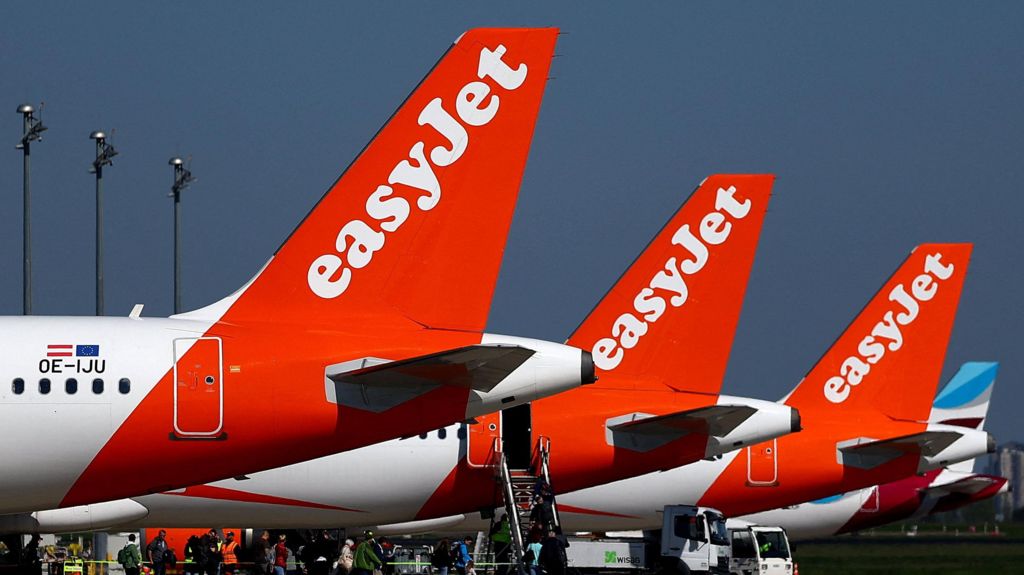
    The global aviation industry is facing a months-long recovery for jet fuel supply chains and pricing, even after the recent reopening of the critical Strait of Hormuz following a Middle East ceasefire, the leader of the International Air Transport Association (IATA) confirmed Wednesday.

    For weeks, ongoing regional conflict had effectively paralyzed activity through the strategic waterway, which carries roughly 20 percent of the world’s total oil and natural gas shipments. The disruption sent shockwaves through global energy markets, driving sharp upward pressure on crude oil and refined fuel prices across the board.

    Speaking to reporters on the sidelines of an industry event in Singapore, IATA Director General Willie Walsh warned that restoring stable jet fuel supplies will not be a quick fix, even with crude shipments resuming through the strait. “It will still take a period of months to get back to where supply needs to be given the disruption to the refining capacity in the Middle East,” Walsh said, pushing back against suggestions that normalization could happen in a matter of weeks.

    The breakthrough ceasefire between the United States and Iran, reached just one hour before a Trump administration deadline for Iran that carried a threat of military action, paved the way for a temporary two-week halt to hostilities and Iran’s commitment to reopen the strait. The news triggered an immediate sharp drop in global oil prices on Wednesday, but Walsh emphasized that refining disruptions leave lasting supply bottlenecks that will not disappear overnight.

    “Even if you have the flow of crude start again, if you’ve had disruptions in refining capacity, then the problem continues for some time,” he explained. Walsh also noted that many industry stakeholders have underestimated how concentrated global energy refining capacity is in key Middle Eastern regions, leaving the entire supply chain more vulnerable to regional conflict than many had anticipated.

    Looking ahead to the impact on air passengers, Walsh said past industry trends make one outcome inevitable: higher jet fuel costs will be passed to consumers through increased airfare prices. On the topic of shifting air traffic routes, Walsh noted that some services previously routed through Middle Eastern airspace have been redirected to non-regional carriers, but characterized this shift as a temporary arrangement. Non-Middle Eastern airlines cannot fully replace the extensive network capacity offered by major Gulf carriers, he added, predicting that Gulf aviation hubs will rebound quickly once supply and stability are restored.

  • War in the Middle East: latest developments

    War in the Middle East: latest developments

    In a last-minute breakthrough that halted an imminent escalation of conflict between Washington and Tehran, the United States and Iran reached a two-week ceasefire agreement on Tuesday, just an hour before a self-imposed American deadline for military action against Iran was set to expire. The deal, which also counts Israel as a signatory according to the White House, requires Iran to immediately reopen the strategic Strait of Hormuz, a critical global energy chokepoint that had been closed to Gulf tanker traffic amid rising hostilities.

    The 11th-hour agreement followed diplomatic outreach by Pakistani leadership, who formally requested a pause in fighting to open space for negotiations, according to US officials. Even as the truce eases core US-Iran tensions, conflict continues unabated in southern Lebanon. Israel confirmed on Wednesday that it backs the ceasefire deal but emphasized the agreement explicitly excludes Lebanon, where Israeli forces have been engaged in ongoing clashes with the Iran-backed militant group Hezbollah. Shortly after Israel issued its evacuation warning for residents of the Lebanese city of Tyre, the Israel Defense Forces renewed airstrikes on southern Lebanon, contradicting an earlier statement from Pakistani Prime Minister Shehbaz Sharif that claimed the truce would apply to “everywhere including Lebanon”.

    Global financial and energy markets reacted swiftly to the ceasefire news on Wednesday, with significant shifts across asset classes. European natural gas prices plummeted 20% in opening trading, while global oil prices also dropped sharply following the announcement that the Strait of Hormuz would reopen. The US dollar, typically a safe-haven asset for investors during geopolitical turmoil, fell roughly 1% against the euro and British pound in early European trading. Asian stock markets surged on optimism that a broader regional conflict would be avoided, and European futures pointed to strong opening gains following the overnight agreement.

    Multiple diplomatic moves are already underway to cement the temporary truce into a long-term solution. British Prime Minister Keir Starmer is set to travel to the Gulf region on Wednesday to meet with regional leaders, a trip Downing Street says aims to shore up the ceasefire and support diplomatic efforts. Pakistan will host US and Iranian delegations this Friday for further negotiations aimed at reaching a conclusive, permanent agreement to resolve all outstanding disputes between the two nations, Prime Minister Sharif confirmed via social media platform X. US President Donald Trump announced the US will assist in clearing the backlog of ship traffic that built up in the Strait of Hormuz during the closure, writing on his Truth Social platform that “there will be lots of positive action! Big money will be made. Iran can start the reconstruction process.”

    In post-agreement comments to AFP, Trump credited China for facilitating Iran’s decision to come to the negotiating table, confirming that Beijing, a key long-term ally of Tehran, played a role in pushing for truce talks. The president also addressed ongoing concerns over Iran’s uranium program, telling reporters the issue would be “perfectly taken care of” under the terms of the ceasefire, adding he would not have agreed to the truce if that were not the case. Trump framed the agreement as a major win for the United States, calling it a “total and complete victory” that was “100 percent” successful. White House Press Secretary Karoline Leavitt echoed that sentiment in a post on X, noting that US military pressure had created the leverage needed to open the door for a diplomatic path to long-term regional peace.

    The truce comes even as unconfirmed reports of new unrest emerged Wednesday morning, with an AFP journalist on the ground reporting hearing multiple explosions in Manama, the capital of Bahrain, just hours after the ceasefire was announced. No group has yet claimed responsibility, and no official casualty or damage reports have been released.

    Looking ahead, NATO Secretary General Mark Rutte will meet with President Trump in Washington on Wednesday to discuss the new security landscape created by the ceasefire, as well as continued Russian aggression in Ukraine. The meeting comes as anti-war protesters gathered near the White House ahead of the ceasefire announcement, demonstrating against the risk of a full-scale regional war in the Middle East.

  • Trump says he agrees to suspend bombing and attack of Iran for two weeks

    Trump says he agrees to suspend bombing and attack of Iran for two weeks

    In a major development that eases immediate regional tensions across the Middle East, former U.S. President and current U.S. political figure Donald Trump has confirmed he has approved a 14-day pause on planned bombing operations and offensive military attacks targeting Iran. The announcement, first reported by Xinhua News Agency, was updated on April 8, 2026.

    The unexpected move marks a sharp shift from escalating rhetoric and military posturing between the United States and Iran in preceding weeks, which had stoked widespread international fears of a full-scale armed conflict that could disrupt global energy supplies and drag neighboring regional powers into open hostilities. A 14-day suspension of offensive operations creates a narrow window for diplomatic stakeholders to pursue de-escalation talks and open channels for negotiation to address long-standing disagreements between the two nations.

    Global governments and international observers are currently monitoring the situation closely to see whether both parties will use this pause to advance productive dialogue. The decision marks one of the most significant U.S. foreign policy moves in the Middle East so far this year, with the potential to alter the trajectory of regional security if both sides uphold the proposed truce and move toward sustained diplomatic engagement.

  • US-China space race shifts into a higher lunar gear

    US-China space race shifts into a higher lunar gear

    Following NASA’s landmark successful crewed lunar flyby mission, Artemis II, which wrapped up its 10-day lunar approach and began its return voyage to Earth, China has announced a ramp-up of its own lunar exploration program, reigniting discussion of the growing technological and geopolitical competition in deep space exploration.

    Launched on April 1, Artemis II carried four astronauts into space aboard NASA’s heavy-lift Space Launch System rocket and Orion capsule, marking the first crewed test flight for NASA’s flagship Artemis program, which aims to return humans to the lunar surface for the first time since the Apollo era. The U.S. has set a 2028 target for its first crewed landing via the Artemis III mission, while China has formally committed to landing its own astronauts on the moon by 2030, creating a tight, overlapping timeline that underscores the high stakes of this new space race.

    To advance its crewed landing goals, China is moving forward at an accelerated pace on critical heavy-lift launch infrastructure, most notably the Long March 10A rocket, a reusable next-generation launch vehicle purpose-built to carry crewed spacecraft and lunar landing hardware to orbit. According to chinastarmarket.cn, which cited Lian Jie, deputy chief engineer of the Lijian-2 rocket program, the China Manned Space Agency (CMSA) has formally approved a plan to conduct the first ever launch of the Long March 10A in mid-2026. For this mission, the Long March 10A will serve as the first-stage booster, paired with an upper stage from the commercial Lijian-2 rocket, to deliver navigation satellites into a trans-lunar injection (TLI) bound for cislunar space — the region between Earth and the moon where the two bodies’ gravitational fields interact.

    This 2026 mission will mark a number of key milestones for China’s space program: it is the first test flight of the Long March 10A, and it will also mark the first time a rocket built by a Chinese commercial space enterprise has operated in cislunar space. The Lijian-2 rocket, developed by CAS Space — a commercial spin-off from the Chinese Academy of Sciences — just completed a successful launch on March 30, placing three satellites into their intended orbits. Like SpaceX’s workhorse Falcon 9 rocket, Lijian-2 uses kerosene and liquid oxygen as propellants. Lian added that a second Lijian-2 mission, carrying a carbon-monitoring satellite focused on terrestrial ecosystem research, is scheduled for September 2026, with an upgraded design that will substantially increase the rocket’s payload capacity.

    Prior to this formal announcement, CMSA had only confirmed that the Long March 10A would launch sometime in 2026, without sharing a specific timeline. Progress on the rocket’s development has proceeded steadily in recent months: on February 11, 2026, the Long March 10A first stage completed a successful controlled sea-landing test in Wenchang, Hainan, validating key rocket recovery technologies as well as low-altitude flight performance and maximum dynamic pressure escape capabilities for China’s next-generation crewed spacecraft.

    China has also completed key ground infrastructure to support its lunar ambitions, finishing construction of two dedicated spacecraft and launch vehicle assembly towers at the Wenchang Space Launch Site. These new facilities are designed to enable parallel processing of mission hardware and cut down preparation time between crewed lunar launches.

    Observers of China’s space program note that while progress appears slower to some observers following Artemis II’s successful flight, China is sticking to its own well-defined roadmap. A Sichuan-based space columnist outlined the coming milestones: following the Long March 10A’s maiden flight in mid-2026, tests of the Mengzhou crewed lunar spacecraft are scheduled for the second half of the year, with a combined test of the Long March 10A and Mengzhou expected as early as November. If all these milestones are met, the 2030 landing target remains firmly achievable, with preparations proceeding incrementally ahead of a long-term plan to establish a sustained human presence on the moon. The Long March 10A itself is designed to be reusable, capable of lifting 14 tons to low Earth orbit (LEO), or carrying a crew capsule with up to seven astronauts.

    For the actual 2030 crewed landing mission, China will use a modified Long March 10 configuration, created by adding two additional boosters to the base Long March 10A design. This upgraded rocket will generate a total thrust of 26,250 kN, capable of lifting 70 tons to LEO and 27 tons to trans-lunar injection. For comparison, the Saturn V rocket that carried Apollo 11 to the first historic lunar landing in 1969 delivered between 43.5 and 47 metric tons to TLI.

    China will use a dual-launch architecture for its 2030 landing: one Long March 10 will launch the Mengzhou crew capsule carrying three astronauts, while a second will launch the Lanyue lunar lander. The two craft will rendezvous and dock in lunar orbit; two astronauts will transfer to the lander and descend to the lunar surface, while the third remains in orbit aboard Mengzhou. After completing surface operations, the crew will ascend back to lunar orbit, re-dock with Mengzhou, and return to Earth together.

    On the U.S. side, the Artemis program plans to conduct its first crewed landing with Artemis III in 2028, followed by Artemis IV in 2029, which will begin assembly of the Lunar Gateway orbital space station. Both missions rely on SpaceX’s Starship as the human landing system to transport crews between lunar orbit and the surface. Artemis V, targeted for 2030 or later, will expand sustained lunar operations, using Blue Origin’s Blue Moon lander under a second NASA contract. SpaceX founder Elon Musk has also stated that the company aims to build a permanent human settlement on the moon within the next decade, pairing lunar development with its long-term goal of crewed missions to Mars.

    Many industry analysts point out that as both the U.S. and China ramp up investment in lunar exploration and base development, more capital will flow into lunar infrastructure, creating more immediate commercial opportunities for space equipment suppliers and related private industries than the more distant, long-term goal of Mars exploration.

    Beyond the 2030 crewed landing, China has laid out a clear long-term lunar exploration roadmap. In August 2026, China plans to launch the Chang’e-7 probe to the lunar south pole, a region believed to hold significant deposits of water ice in permanently shadowed craters. Sun Zezhou, a senior researcher at the China Academy of Space Technology, explained that Chang’e-7 will conduct comprehensive surveys of the local polar environment, analyze lunar surface composition, map geological structures, and search for water ice that could be processed into hydrogen and oxygen for rocket fuel and life support. The mission also reflects China’s commitment to international collaboration, carrying six scientific payloads provided by international partners including Italy, Russia, Egypt, Bahrain, Switzerland and Thailand.

    Chang’e-8 is scheduled for launch around 2028, and will test key technologies for in-situ resource utilization — the ability to extract and use materials found on the moon — laying the technical groundwork for a future permanent lunar research station. After Chinese astronauts complete the 2030 landing, China plans to begin construction of the initial International Lunar Research Station (ILRS) by around 2035, developed in partnership with a coalition of international partners including Nicaragua, the Asia-Pacific Space Cooperation Organization, and the Arab Union for Astronomy and Space Sciences. The ILRS is designed as a long-term, multi-node research network linking lunar surface facilities, orbital infrastructure, and ground control systems, capable of sustained operation with periodic crewed missions.

  • Perth parents jailed for allegedly starving ballerina have convictions quashed after appeal

    Perth parents jailed for allegedly starving ballerina have convictions quashed after appeal

    In a dramatic late development that has upended a high-profile child mistreatment case in Western Australia, the convictions of two Perth parents found guilty of starving their 16-year-old aspiring ballerina daughter have been overturned on appeal, and the couple has been released on bail ahead of a planned retrial.

    The pair, who cannot be identified publicly due to ongoing legal restrictions, were found guilty by a jury in November 2024 following a two-year investigation that traced back to an alarming hospital admission in early 2021. The case first came to authorities’ attention on April 7, 2021, when the teenager was brought to Perth Children’s Hospital in a state of extreme severe malnourishment. At 16 years old, she weighed just 28 kilograms — a body mass roughly matching the average weight of an 8-year-old child, half her chronological age.

    During the original trial, the mother was convicted on charges that she failed to protect her daughter from harm between 2019 and 2021, and willfully deprived the teen of adequate support for her emotional, social and physical development. The father faced separate conviction for two offences: reckless child care that led to the teen’s suffering, and forging his daughter’s birth certificate to falsely record her as younger than her actual age. Throughout the entire legal process, both parents have maintained their innocence, claiming there was nothing abnormal about their daughter’s health or physical appearance.

    The appeal ruling, handed down Tuesday by the Western Australian Court of Appeal, reversed the guilty verdict and ordered the couple’s release on bail, with a fresh retrial scheduled to begin later this month. The parents appeared for the appeal hearing via video link; reporters in court noted that the mother broke down in tears when the quashing of her conviction was read aloud.

    “The two accused have been released on bail, and there will be a retrial,” the couple’s defence lawyer Tom Percy told 9News following the ruling.

    While the mother had previously argued in her bail application that she was denied a fair trial because she suffered illness that left her unwell for multiple days during the original proceeding, that initial appeal for bail was rejected by the court before this week’s full overturning of convictions. As of Wednesday, full written reasons for the appeal court’s decision to quash the convictions have not yet been published by the judiciary.

  • Rwanda tries to protect farmland in Africa’s most densely populated nation

    Rwanda tries to protect farmland in Africa’s most densely populated nation

    On a crisp chilly morning in Kigali, the hum of bulldozers and rhythmic clatter of construction work drown out the soft thud of farmers’ hoes against the soil. For Rwanda, a nation that holds the title of Africa’s most densely populated country, this sensory clash represents a growing crisis: how to balance booming urban expansion with the critical need to safeguard shrinking agricultural land and shore up long-term food security.

    For 84-year-old Mukarusini Purisikira, the crisis is deeply personal. A lifelong farmer who fled to neighboring Congo to escape the 1994 Rwandan genocide, she returned home to find her family’s sprawling hillside farm seized for residential and commercial development. Today, she cultivates maize and sweet potatoes on a plot barely larger than a small cottage, a patch that barely produces enough to put food on her table. Standing near her crops, she glances nervously at construction idling on a nearby ridge: “It is all I have,” she says.

    Now, Purisikira and other small-scale Rwandan farmers have a new layer of protection. Starting in September 2024, the Rwandan government launched an ambitious initiative to map all officially designated agricultural land across the country, leveraging satellite imagery to track unauthorized development that encroaches on protected farm and forest land. With Rwanda’s national population projected to hit 22 million within the next two years, and global fertilizer prices spiking sharply following the outbreak of the Iran war that has disrupted global supply chains, food security has become a top policy priority for the government.

    In Kigali, the nation’s capital, city planners have already locked in 22% of the total land area specifically for agricultural use under the city’s updated master development plan. To enforce the new protections, authorities have imposed strict penalties for unauthorized encroachment: fines of up to $3,000 and prison sentences of as long as six months for violators. Multiple unapproved construction projects have already been demolished to enforce the rules, though stakeholders connected to the buildings declined to speak publicly over fears of government retaliation. Moving forward, the government plans to add drone surveillance to its monitoring toolkit, enabling real-time tracking of unauthorized land use across the country.

    City officials acknowledge that unmet housing demand creates strong economic pressure to approve new construction projects, but they argue that prioritizing agriculture will deliver greater long-term value. “Farming will be even more productive” than unplanned urban expansion, city data projections show, especially as domestic food demand continues to climb alongside population growth. City leaders argue that with targeted innovation, productive farming can thrive on smaller, more efficiently managed plots of land.

    Emma-Claudine Ntirenganya, a spokeswoman for the Kigali mayor’s office, explained that the pressure on farmland extends far beyond the capital. While most of Kigali’s current food supply is sourced from other districts across Rwanda, those rural agricultural areas are also losing land to development at a rapid pace. Over the past year, the national government has printed and publicly distributed detailed maps across all Rwandan districts, clearly marking land zoned for agriculture and land open for construction, to bring transparency to land use rules.

    Ntirenganya says the initiative is rooted in a new vision of “urban agriculture” that redefines how Rwandans think about farming within city limits. “We will be able to show Kigalians that they can also do agriculture and be productive,” she explained. To model this approach, the city administration is already building a demonstration greenhouse on the roof of its headquarters, and now requires all developers applying for new building permits to integrate green spaces and community gardens into their project designs.

    Beyond protecting existing open land, Kigali has become a testing ground for innovative, space-efficient urban farming techniques. Vertical farms, which grow leafy greens, strawberries and other produce in stackable modular plastic containers, have gained traction among local entrepreneurs. Christian Irakoze is the co-founder of Eza Neza, which translates to “grow well,” a local startup that installs small-scale vertical farms across Kigali. During a visit by the Associated Press, reporters saw one vertical farm growing 600 plants in vertical rows stretched along just 50 meters of perimeter wall, proving the model can produce significant amounts of food in minimal space.

    Irakoze describes his work as a fundamental shift from traditional large-scale rural farming to a flexible, accessible system that fits urban contexts. “It is a different way of thinking about farming, from traditional large-scale upcountry farming to something smaller, modular, and that anyone can really do,” he said. To reduce reliance on volatile imported agricultural inputs, Irakoze’s company uses locally sourced manure and volcanic sediment in place of commercial potting soil, adapting farming practices to buffer against global market shocks. “We really have to find ways to find our own solutions, whether through inputs like fertilizers or seeds. Some of these global events are always a reminder that we should definitely have some alternatives,” he added.

    A group of young Rwandan agronomists are also working to spread adoption of hydroponics, a soil-free farming technique that uses nutrient-infused water to grow crops, maximizing output per square meter of land. “The population is increasing, yet our land is not increasing. We make sure that we find solutions that can help farmers to overcome that, and then they produce more,” explained Richard Bucyana, one of the agronomists leading the training program. Bucyana echoed Irakoze’s view that local, homegrown solutions like those being rolled out in Rwanda help insulate the country from global supply chain disruptions, and called on other African governments to prioritize agricultural self-sufficiency. “African governments should start thinking how they can be self-sustainable,” he said.

  • The Iran war doesn’t immediately jeopardize Taiwan

    The Iran war doesn’t immediately jeopardize Taiwan

    The global ripple effects of the United States and Israel’s joint military campaign against Iran have extended across continents, reaching deep into Asian geopolitics – and nowhere is this indirect influence more consequential than for Taiwan’s security amid ongoing cross-Strait tensions with mainland China. This analysis explores two core, interconnected questions that sit at the center of regional security calculations: first, how the Iran conflict alters perceptions of U.S. willingness to intervene militarily to defend Taiwan, and second, how it shifts Beijing’s calculus of whether to launch an invasion of the island.

    Critics of the U.S. campaign against Iran have raised a host of objections: they argue the operation was unnecessarily aggressive, that Washington skipped over ongoing diplomatic negotiations with Tehran without cause, that Iran posed no immediate threat justifying a large-scale attack, that U.S. leaders failed to consult allies before moving forward, and that they underestimated Iran’s capacity to sustain retaliatory action even after heavy damage to its conventional military forces. But for Taiwan, the central concern runs in the opposite direction: whether the current U.S. administration is bold enough to commit American troops to the island’s defense, rather than stepping back from a cross-Strait conflict.

    For years, many foreign policy observers have framed former President Donald Trump’s approach to global affairs as leaning toward isolationism. Prominent commentators, including Temple University Tokyo campus Professor Robert Dujarric, former U.S. National Security Advisor John Bolton, and The Guardian foreign affairs analyst Simon Tinsdall, have all argued that Trump prioritizes avoiding a major war in Asia over blocking China from annexing Taiwan.

    It is true that China would be a far more formidable opponent than Iran, so willingness to engage in large-scale operations in the Middle East does not automatically translate to willingness to fight a great-power conflict in the Indo-Pacific. Even so, the Iran campaign demonstrates that this U.S. administration is willing to rule out the option of deploying large conventional forces in distant conflicts outside of the Western Hemisphere – a key shift that Beijing cannot ignore.

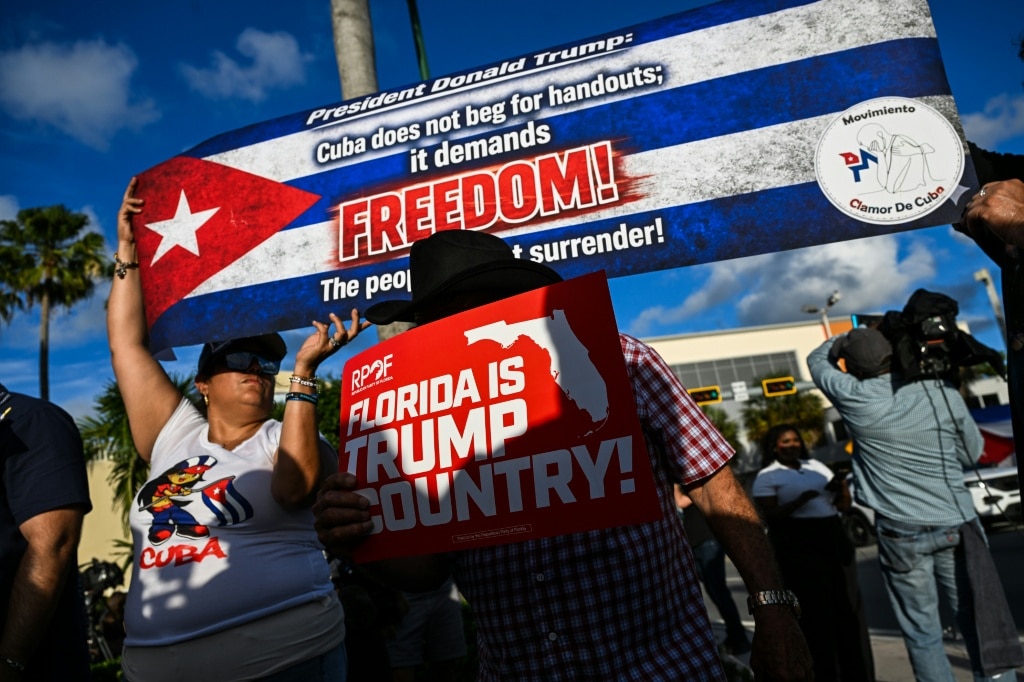
    Beijing’s longstanding strategic approach to territorial expansion follows a framework of cautious aggression: it first probes for weakness, only advancing further if it encounters minimal resistance. This aligns with the classic strategic guidance often attributed to early Soviet leaders Josef Stalin and Vladimir Lenin: “If you hit mush, keep going; if you hit steel, pull back.” For a Chinese leadership that relies heavily on gray zone tactics to advance its interests without open war, the pattern of bold actions taken by the Trump administration – from the targeted strike that killed Quds Force commander Qasem Soleimani during his first term, to the political intervention in Venezuela, the tightening of Cuba’s oil blockade, the large-scale bombardment of Iran, and even public discussions of seizing Greenland – comes as a striking departure from previous expectations of U.S. restraint.

    Given this track record of unilateral, forceful action, it is now effectively impossible for Chinese planners to confidently conclude the U.S. would refuse to militarily intervene to defend Taiwan.

    This uncertainty around U.S. intervention leads to the second critical question: how the Iran conflict changes the likelihood that China will choose to launch an invasion of Taiwan.

    Some analysts have argued that Washington’s adoption of a “might makes right” approach, visible in its actions against Iran and Venezuela, gives Beijing a green light to pursue its own territorial goals by force against Taiwan. But this argument misses key realities of Chinese strategic planning. Beijing does not tie its policy decisions to a normative standard set by the United States. The Chinese government has long maintained it will use force against Taiwan if its leadership deems it necessary, a threat formalized in the 2005 Anti-Succession Law.

    For years, Chinese state propaganda has emphasized the narrative that the U.S. is a declining “paper tiger,” pointing to the 2021 withdrawal from Afghanistan as proof of American weakness. But the U.S. military’s smooth, successful execution of the complex large-scale operation in Iran, thousands of miles from the American homeland, offers a stark counterpoint. Meanwhile, Chinese-supplied military equipment – particularly air defense systems – performed poorly in both Venezuela and Iran, offering Chinese leadership an unvarnished reminder that the U.S. armed forces remain the most capable in the world.

    While Chinese officials and state media publicly condemned the U.S. campaign as illegal and brutal, many independent and state-aligned Chinese analysts openly acknowledged American operational competence. Prominent Chinese foreign affairs scholar Zheng Yongnian concluded the U.S. “still [ranks] number one” in global military power. Analyst Niu Tanqin noted he “cannot but admire” the U.S. military’s performance, and leading international relations scholar Shi Yinhong confirmed that the tactical success of American forces “strongly impressed the leaders [in Beijing].” This clear demonstration of coordinated, advanced military capability carries tangible deterrent weight for Beijing’s Taiwan planning.

    At the same time, Chinese observers have also noted that the Iran campaign has diverted U.S. military focus and depleted stockpiles of key weapons that would be used to counter Chinese expansion in the Indo-Pacific. U.S. officials have insisted the conflict has not delayed pre-planned weapons deliveries to Taiwan that the island has already purchased, noting that munitions used in Iran are drawn from existing U.S. military stockpiles rather than from production lines allocated for foreign sales. Even so, the U.S. has temporarily reallocated significant military capabilities from Asia to the Middle East for the Iran campaign, including Patriot interceptors, THAAD anti-missile systems, the USS Abraham Lincoln carrier strike group, two additional guided-missile destroyers, and two Marine expeditionary units.

    U.S. forces have also expended large stockpiles of high-value precision weapons, most notably Tomahawk cruise missiles – a system that would play a critical role in any Indo-Pacific conflict thanks to its long range, powerful warhead, and newly developed anti-ship variant. To date, the U.S. has fired between 850 and 1,000 Tomahawks in the Iran campaign, and replacing the entire stockpile will take two to three years at a cost of roughly $3.5 million per missile. This has led some analysts to speculate that the diversion of forces and depletion of munitions creates a new window of opportunity for China to attack Taiwan, arguing that U.S. military stockpiles were already stretched thin before the Iran conflict, and China could now count on U.S. forces running out of critical munitions far more quickly in a cross-Strait war.

    This window-of-opportunity argument holds weight only if one accepts the premise that Chinese leader Xi Jinping has already decided to forcibly annex Taiwan as soon as the odds of success appear favorable. But that premise fails to account for the massive risks and downsides that a full-scale invasion would pose for China’s leadership.

    In any invasion scenario, China would have to plan for a coordinated defensive response from Taiwanese, U.S., and Japanese forces. Even as the U.S. draws down its precision munition stockpiles, Taiwan is on track to assemble what it calls “the world’s highest density of anti-ship missiles” by the end of 2026. Japan has also begun mass production of its new Type 25 anti-ship cruise missile – a system with range covering the entire Taiwan Strait – and began deploying the weapon in March 2026.

    A Chinese victory is far from guaranteed, and even a limited victory would likely be pyrrhic. The U.S. Navy would almost certainly interdict China’s seaborne energy imports, and a full-scale war in the Taiwan Strait would halt commercial shipping along most of China’s eastern coast for weeks or months. The resulting economic turmoil could trigger widespread social and political unrest within mainland China, and Beijing would face a generations-long challenge to pacify and govern a hostile Taiwanese population.

    Beyond these immediate military and economic risks, Beijing has no pressing need to resort to force against Taiwan in the near term. Chinese strategic thinking holds that U.S. comprehensive power is in gradual decline, while China continues to advance in industrial and technological capacity. Over time, this shift improves Beijing’s relative position, increasing the likelihood that Washington will eventually choose to step back from competition for strategic leadership in East Asia on its own.

    Domestically, Xi is still in the midst of a sweeping purge of roughly half of China’s senior military commanders, with a disproportionate share of those removed coming from the People’s Liberation Army Rocket Force – the service branch that would play a central role in any invasion of Taiwan. This ongoing leadership reshuffle creates significant internal uncertainty that discourages any high-stakes military gambit in the near term.

    Politically, Beijing also has reason to wait for a more favorable outcome through peaceful means. Taiwan’s main opposition Kuomintang (KMT) accepts Beijing’s core position that Taiwan is part of a single China, and Beijing holds out hope that the KMT will regain control of Taiwan’s presidency in the 2028 election. Recent political developments have bolstered these hopes: KMT Chairwoman Cheng Li-wun’s high-profile visit to mainland China in April 2025 underscored the party’s willingness to engage with Beijing, and the KMT holds a legislative majority in coalition with the Taiwan People’s Party. Incumbent President Lai Ching-te of the ruling Democratic Progressive Party (DPP) has struggled with low approval ratings – his ratings were negative for most of 2025 and hover around 50 percent in 2026 – and the KMT successfully defeated a 2025 DPP recall campaign that attempted to remove 31 KMT legislators, with all 31 retaining their seats. While it remains far from certain that the KMT will win the presidency in 2028 and implement a more Beijing-friendly cross-Strait policy, current trends give Beijing ample reason to wait and watch rather than rush to war.

    Diplomatically, Beijing also has incentives to avoid conflict this year. Trump and Xi are scheduled to hold two formal summits in 2026, and Beijing is eager to stabilize bilateral economic relations, which are currently under a temporary truce after a years-long trade war that saw the U.S. impose steep tariffs on Chinese imports and China threaten to restrict rare earth exports to the U.S. A sudden invasion of Taiwan would derail this economic stabilization effort. Additionally, Beijing will have the opportunity during the summits to push for limited U.S. concessions on Washington’s support for Taipei; the U.S. has already agreed to delay the announcement of a major new arms sale to Taiwan until after Trump’s first May 2026 meeting with Xi, creating an opening for Beijing to secure a limited political win without resorting to force.

    Finally, the Iran conflict has drawn new attention to underrecognized vulnerabilities in Taiwan’s energy security: the island relies on seaborne imports for more than 95 percent of its oil and liquid natural gas (LNG), with LNG accounting for roughly half of Taiwan’s electricity generation. Taiwan’s strategic LNG reserve only covers 8 to 11 days of demand, and while its 100-day oil reserve is more robust, the island remains highly exposed to any disruption of maritime supply routes. Addressing these energy vulnerabilities, along with hardening Taiwan’s western coastline with mobile, survivable anti-ship and anti-air missile batteries, should be a top priority for Taipei’s security planners.

    Even with these new challenges highlighted by the Iran conflict, the campaign does not create immediate additional risk of an invasion for Taiwan. Despite the depletion of U.S. precision munitions and the diversion of some regional forces to the Middle East, Beijing faces a host of compelling domestic, political, and strategic incentives to hold off from launching a high-risk invasion attempt for the foreseeable future.

  • Australians stranded in Fiji as Cyclone Vaianu sparks flight chaos and flooding fears

    Australians stranded in Fiji as Cyclone Vaianu sparks flight chaos and flooding fears

    As Severe Tropical Cyclone Vaianu pummels large swathes of Fiji, hundreds of Australian holidaymakers are trapped on the island nation, enduring rolling blackouts, violent wind gusts and widespread travel disruptions that have thrown their plans to return home into chaos. With a second severe tropical storm already forming in the broader South Pacific, stranded travellers are facing a tense and uncertain wait for rescheduled flights.

    One of those caught in the extreme weather is Australian tourist Melanie Harris, who travelled to Fiji for a dream vacation with her young son. What was supposed to be a relaxing getaway has quickly morphed into a frightening ordeal, as the category cyclone unleashes its power across the island chain.

    “The wind is loud, relentless, and completely unpredictable,” Harris told 9News in an interview from her resort, located roughly an hour’s drive south of Fiji’s main tourist hub Nadi. “You can hear it constantly, even through the thick walls of our accommodation. It just puts you on edge the entire time.”

    Harris described a harrowing scene during dinner on Wednesday, when she and her son heard debris flying through the air outside, hurled by wind gusts that have hit speeds of over 100 kilometres per hour. Repeated, unannounced blackouts have made overnight stays particularly unsettling, she said. “Everything suddenly goes dark and the wind is still howling outside,” she explained. “It just didn’t feel safe at all.”

    The danger has already led to one scare for the pair: Harris’ son slipped on rain-soaked tiles amid the wild conditions and hit his head, a moment that left the already stressed mother panicking. “You’re already on edge from the storm, and then something like that happens,” Harris said. “It just takes everything to another level.”

    Nearly all scheduled day trips and tourist activities across Fiji have been cancelled as resort management prioritize guest safety, leaving many visitors waiting for refunds while they shelter in place. Harris said that while resort staff have attempted to assist trapped guests, they are stretched thin by the scale of the emergency and have little updated information to share. “They have almost been downplaying the cyclone and don’t have much information to give,” she said. Harris is now making plans to relocate to a more structurally secure hotel, as she anxiously waits to see if her scheduled flight back to Australia on Sunday will still depart.

    Travel disruptions are already being felt across regional air routes. One commercial flight from Sydney to Fiji was forced to divert to Nuku’alofa in Tonga earlier this week after encountering severe turbulence and dangerous weather conditions linked to Cyclone Vaianu.

    Australia’s Department of Foreign Affairs and Trade (DFAT) has issued an official advisory for travellers in Fiji, urging people to stay alert and follow guidance from local emergency authorities. “Flights may be delayed or cancelled, and essential services may be disrupted,” the DFAT statement read. “Know your accommodation’s evacuation plan. If a cyclone is approaching your area, find your nearest shelter and follow the advice of local authorities.” Travellers have been advised to reach out directly to their airlines and accommodation providers to get the latest updates on changes to their travel plans.

    Forecasters warn the regional weather situation could grow even more unstable in the coming days. Australia’s Bureau of Meteorology is currently monitoring a second severe system, Severe Tropical Cyclone Maila, which is currently tracking across the Solomon Sea near the Solomon Islands. The system is expected to track towards Papua New Guinea in the next 48 hours, before potentially moving closer to Australia’s far northern coast.

    As for Vaianu, current forecasting models show the cyclone will track south towards New Zealand, where it is expected to bring heavy rain, strong winds and potential flooding to parts of the North Island, including Auckland, later this week.