作者: admin

  • Rutte the ‘Trump whisperer’ faces a fresh test as Trump turns on NATO over Iran

    Rutte the ‘Trump whisperer’ faces a fresh test as Trump turns on NATO over Iran

    BRUSSELS – Tensions between Washington and its trans-Atlantic allies have reached a new boiling point, as NATO Secretary-General Mark Rutte finds himself once again managing diplomatic fallout from U.S. President Donald Trump’s anger over the Iran conflict – a war that the 31-nation defensive alliance was never consulted on, and which falls far outside its core defense mandate. Since the U.S.-led war against Iran began, Trump has launched a series of scathing attacks against U.S. allies, labeling many of them cowards, dismissing NATO itself as a toothless paper tiger, and drawing a damaging comparison between British Prime Minister Keir Starmer and Neville Chamberlain, the former UK leader widely associated with failed appeasement policy toward Nazi Germany. This latest confrontation only adds to a growing rift that has already been stretched thin by Trump’s repeated threats to annex Greenland, a move that has alarmed European allies and sparked fears that a unilateral U.S. power grab could unravel the alliance entirely. The current friction centers on Trump’s frustration that NATO allies refused to back the U.S. after Iran shut down the Strait of Hormuz, the strategically critical global oil and trade chokepoint. Following Wednesday’s closed-door talks between Rutte and Trump, the U.S. leader made his disappointment public in a fiery social media post, writing: “NATO WASN’T THERE WHEN WE NEEDED THEM, AND THEY WON’T BE THERE IF WE NEED THEM AGAIN.” When pressed by CNN reporters on whether Trump planned to pull the U.S. out of the trans-Atlantic alliance – a threat he first issued during his first term in 2018 – Rutte acknowledged Trump’s deep dissatisfaction, admitting “He is clearly disappointed with many NATO allies, and I can see his point.” Known widely as a skilled “Trump whisperer” who has managed to keep the mercurial U.S. leader engaged with the alliance since taking the top NATO job in 2024, Rutte has previously scored diplomatic wins: he helped broker a deal that saw European allies and Canada purchase U.S. weapons for Ukraine, keeping the U.S. invested in managing Europe’s largest armed conflict in 70 years. Keeping the U.S. anchored in NATO has become Rutte’s top priority, especially as Washington has increasingly shifted its strategic focus to other global flashpoints, from the Indo-Pacific to Venezuela and now the Middle East. To maintain goodwill, Rutte has leaned into flattery, praising Trump for pushing NATO allies to meet their mandatory 2% GDP defense spending targets, congratulated the U.S. leader on the Iran war, and refused to push back on Trump’s apocalyptic warning that “a whole civilization will die” if Iran does not reopen the Strait of Hormuz. Describing his meeting with Trump as “very frank, very open discussion but also a discussion between two good friends,” Rutte declined to confirm unreported claims that Trump is weighing pulling U.S. troops out of European nations that refuse to back the war. When asked if the world is safer following the U.S.-Iran war, Rutte replied plainly: “Absolutely.” What makes this dispute particularly unusual is that NATO has no natural role in the conflict. As a defensive alliance built to protect the collective territory of its Euro-Atlantic members, NATO only stepped in once to back member Turkey after Iranian retaliatory missile strikes targeted Turkish soil. The war itself was launched unilaterally by the U.S., a NATO member, but no attack on the alliance prompted it. Rutte has repeatedly stated NATO will not join the conflict, and there is no public evidence that the U.S. formally brought the request for alliance support to NATO’s Brussels headquarters, though informal discussions have not been ruled out. When asked about security efforts for the Strait of Hormuz, NATO declined comment, referring all questions to the United Kingdom, which is leading a standalone non-NATO initiative to secure the waterway once a ceasefire holds. Smaller NATO allies have signaled they are open to discussions if a formal request is submitted. Estonian Foreign Minister Margus Tsahkna told CNBC Thursday that “If the U.S. or any other NATO ally is asking (for) our support, we are always ready to discuss it. But for that, we need of course the official ask to discuss then what is the mission, what is the goal? If allies need our support, then we need to plan together.” Rutte has doubled down on his position that NATO will only act to defend its own territory, and will avoid entanglement in conflicts outside the Euro-Atlantic area. “This is Iran, this is the Gulf, this is outside NATO territory,” he explained. While NATO has launched out-of-area operations in the past – most notably in Afghanistan and Libya – the alliance has little appetite for new foreign deployments after the chaotic 2021 U.S.-led withdrawal from Afghanistan, which former NATO Secretary-General Jens Stoltenberg openly labeled a defeat. Much of Trump’s anger has been directed specifically at two NATO members, Spain and France, rather than the alliance as an institution. Spain has already closed its airspace to U.S. military aircraft involved in the Iran war and blocked U.S. forces from accessing shared military bases on Spanish territory. After a two-week ceasefire was announced, Spanish Prime Minister Pedro Sánchez took to social media to criticize the war, writing that his government “will not applaud those who set the world on fire just because they show up with a bucket. What’s needed now: diplomacy, international legality, and PEACE.” France has also taken a critical stance, arguing the war was launched in violation of international law and that Paris was never consulted ahead of time. While France has not issued blanket restrictions on U.S. use of shared bases or French airspace, authorities have confirmed they will review all requests on an individual, case-by-case basis.

  • Tanzanian leader orders smaller convoys and shared buses to cut fuel use as prices rise

    Tanzanian leader orders smaller convoys and shared buses to cut fuel use as prices rise

    DAR ES SALAAM, Tanzania – As global oil markets roil and pump prices skyrocket across the African continent, Tanzania’s President Samia Suluhu Hassan has announced a sweeping cut to the oversized fleet of official and luxury vehicles in her presidential motorcade, a high-profile move aimed at slashing national fuel consumption amid a growing regional energy crisis.

    Hassan, whose pre-reform motorcade was widely cited as one of the largest of any sitting head of state on the African continent, made the announcement Wednesday, detailing that all security and administrative personnel accompanying her on official travels will now travel in consolidated small-group transport rather than separate dedicated vehicles.

    Prior to this policy shift, the president’s procession regularly included dozens of luxury vehicles assigned to government officials, protocol teams, and security detail. A viral video of a 30-vehicle Hassan motorcade circulated online in recent years, sparking widespread public discourse about the excessive scale of presidential motorcades across many African nations.

    “This step is being taken to cut fuel use and bring down operational costs during this period of global price instability,” Hassan explained in her address.

    Hassan’s reform comes as a wave of energy policy adjustments sweeps the African continent, with multiple national governments rolling out emergency measures to counter crippling fuel shortages and runaway price hikes. On Tuesday, Madagascar’s government declared a national state of emergency specifically to enforce mandatory fuel consumption cuts. South Africa has moved to ease consumer burden by cutting the national fuel levy, while Ethiopia has implemented formal fuel rationing to stem overuse. Senegal, for its part, has issued a blanket ban on non-essential foreign travel for all government ministers to cut national fuel expenditure.

    While Hassan assured the public that Tanzania currently holds enough strategic fuel reserves to cover national demand for up to three months, she issued a stern warning to private fuel businesses against exploiting the crisis to artificially inflate prices and gouge consumers.

    The current surge in global fuel prices, which has added roughly $0.40 per liter to Tanzanian pump costs over just the last two weeks, is being driven by escalating geopolitical conflict in the Middle East: ongoing hostilities between Iran and Israel and the associated risk of disruption to shipping through the Strait of Hormuz, a critical chokepoint through which roughly 20% of the world’s daily oil supply passes. Market volatility tied to this disruption has pushed up crude prices globally, with low- and middle-income importing nations like Tanzania bearing the brunt of the shock.

  • Kenya disputes UN report on rape allegations against its Haiti personnel

    Kenya disputes UN report on rape allegations against its Haiti personnel

    A long-simmering dispute between Kenya and the United Nations has boiled over into public view, after Nairobi formally pushed back against a published UN report that accuses Kenyan troops serving in the Haiti security mission of involvement in sexual abuse and exploitation, including assaults on minor children.

    The Kenya-led Multinational Security Support Mission (MSS) was first deployed to Haiti in 2024, following a formal authorization from the UN Security Council. The deployment’s core mandate was to support Haitian authorities in quelling the rampant gang violence that has plunged the Caribbean nation into years of humanitarian and security crisis. Plagued by persistent underfunding, operational hurdles, and recruitment shortfalls, the 2,500-person target for the mission was never met, and the force ultimately failed to rein in the widespread bloodshed terrorizing Haitian communities. The MSS has since been phased out and replaced by a larger international contingent, the Gang Suppression Force, as international efforts to stabilize Haiti continue.

    Last week, a public report from UN Secretary-General António Guterres linked Kenyan officers serving with the MSS to four separate incidents of rape and other sexual violence. Three of the reported victims are children: one 12-year-old and two 16-year-olds. The UN report notes that all four allegations were shared with the MSS force commander, and adds that investigations carried out by the Office of the United Nations High Commissioner for Human Rights found the claims to be credible and substantiated. The document emphasizes that any form of sexual exploitation and abuse by peacekeeping or security mission personnel constitutes a fundamental breach of the trust extended by local communities to the UN and its international partners, and the UN confirms the allegations remain under formal review.

    In response to the public release of the report, Kenya’s Foreign Minister Musalia Mudavadi submitted a formal letter of protest to UN chief António Guterres, pushing back firmly against the claims. Mudavadi noted that the allegations first emerged back in August of last year, and that Kenyan authorities launched an immediate, full inquiry into the claims shortly after they were raised. The inquiry’s results, he said, found the accusations completely unsubstantiated.

    “No formal complaints were filed with any national or international authority, and we shared the findings of our investigation transparently with both Haitian government bodies and relevant UN agencies,” Mudavadi stated in the letter. The minister added that all Kenyan personnel serving with the MSS have consistently adhered to every code of conduct and operational rule mandated for the mission, and no official inquiry has ever produced evidence of misconduct by Kenyan troops.

    Despite widespread domestic opposition to the deployment and the well-documented operational and financial challenges that hampered the mission, Mudavadi reaffirmed that Kenya’s participation in the MSS reflected the East African nation’s steadfast commitment to supporting international efforts to restore peace and security to Haiti.

    The dispute comes as international stakeholders continue to grapple with how to address Haiti’s ongoing security collapse, which has left hundreds of thousands of people displaced and millions in need of humanitarian assistance, with gangs controlling large swathes of the capital Port-au-Prince and other major urban centers.

  • Films by Almodovar, Pawlikowski and Hamaguchi lead an auteur-heavy Cannes Film Festival lineup

    Films by Almodovar, Pawlikowski and Hamaguchi lead an auteur-heavy Cannes Film Festival lineup

    The 79th annual Cannes Film Festival, one of the most prestigious and influential film gatherings on the global cultural calendar, is set to kick off next month from May 12 to 23 on the French Riviera. Organizers officially announced the highly anticipated 2025 lineup at a Paris press conference Thursday, assembling a slate packed with award-winning international auteurs that reaffirms the festival’s reputation as a launching pad for the year’s most acclaimed cinematic works. This year’s edition, however, marks a stark shift: major Hollywood studios are largely absent, a trend festival leadership has acknowledged as reflective of larger shifts in global film production and distribution.

    The festival’s most prestigious category, the main competition for the coveted Palme d’Or, features 21 competing films from established and beloved filmmakers across the globe. Multiple previous Palme d’Or winners are returning to contest the top prize this year, adding extra prestige to the 2025 lineup. Polish filmmaker Paweł Pawlikowski, who earned international acclaim for *Ida* and *Cold War*, will premiere *Fatherland*, a Cold War-era drama starring Oscar-nominated performer Sandra Hüller. Japanese director Ryusuke Hamaguchi, whose *Drive My Car* won the Oscar for Best International Feature Film after its Cannes debut, will present *All of a Sudden* — his first French-language feature. Spanish cinematic icon Pedro Almodóvar’s *Bitter Christmas*, which has already launched in Spanish cinemas, will also make its world premiere in competition.

    Past Palme recipients returning to the lineup include Romanian director Cristian Mungiu, whose 2007 winner *4 Months, 3 Weeks and 2 Days* remains a landmark of global art house cinema. His 2025 entry *Fjord*, set in Norway, stars recently Oscar-nominated Renate Reinsve and Sebastian Stan. Japanese filmmaker Hirokazu Kore-eda, who took home the Palme in 2018 for *Shoplifters*, will debut a new sci-fi work, *Sheep in the Box*, which follows a grieving couple in the near future who welcome a humanoid android into their home as their late son. Other notable returning competitors include Russian auteur Andrey Zvyagintsev, whose previous works *Loveless* and *Leviathan* both earned Oscar nominations after Cannes premieres, with his new drama *Minotaur*. Additional competition entries come from two-time Oscar winner Asghar Farhadi with *Parallel Stories*, Lukas Dhont with *Cowboy*, and László Nemes with *Moulin*.

    American filmmakers are underrepresented in competition this year, with only a small handful of U.S. projects selected. The lone American competitive entry is Ira Sachs’ *The Man I Love*, a 1980s New York-based drama centered on the AIDS crisis, starring Rami Malek. In the festival’s Un Certain Regard sidebar, Jane Schoenbrun will premiere *Teenage Sex and Death at Camp Miasma* — their follow-up to 2024’s cult hit *I Saw the TV Glow* — a story about the production of a 1980s slasher film starring Hannah Einbinder and Gillian Anderson. Two prominent American directors will screen documentaries in special out-of-competition screenings: Steven Soderbergh’s *John Lennon: The Last Interview* and Ron Howard’s *Avedon*, a portrait of iconic fashion and fine art photographer Richard Avedon. John Travolta’s directorial debut *Propeller One-Way Night Coach* will also screen in the Cannes Premiere section.

    Independent U.S. distribution company Neon has already secured distribution rights to three of the most anticipated competition titles: *Fjord*, *Sheep in the Box*, and *All of a Sudden*. The acquisition puts Neon in a position to extend an unprecedented historic streak: the distributor has won the Palme d’Or six consecutive years, most recently with Jafar Panahi’s *It Was Just an Accident* in 2024. Neon is also backing Nicolas Winding Refn’s out-of-competition thriller *Her Private Hell*, starring Sophie Thatcher and Charles Melton, which marks Refn’s first feature film since 2016’s *The Neon Demon*.

    Festival leadership used the press conference to reaffirm the core mission of Cannes in a turbulent global era. “In this moment, bringing together films and artists from around the world is not a luxury, it’s a necessity,” festival president Iris Knobloch said. “Because when the world darkens, we lose our bearings. Showcasing films from all horizons is not a trivial act. It is defending what is most precious to humanity, its ability to dream and think freely.” Artistic director Thierry Frémaux added that 2,541 feature films were submitted for consideration this year, and that Thursday’s announcement covered roughly 95% of the official selection, with a small number of additional entries to be revealed in the coming weeks. He addressed the absence of major Hollywood studios, noting that while American filmmakers are still present, reduced studio participation reflects a broader retreat from the type of prestige theatrical cinema that once defined major studio output. Large studio blockbusters that made splashy Cannes debuts in recent years, such as *Top Gun: Maverick* and *Mission: Impossible — The Final Reckoning*, will not be on the 2025 lineup.

    True to longstanding festival rules, all competition entries require a theatrical release in French cinemas, a stipulation that has excluded streaming platforms such as Netflix from the competitive lineup since 2017, aligned with France’s strict theatrical window protection laws. The festival will open with the 1920s French drama *The Electric Kiss*, screening out of competition, which will meet the requirement of opening day-and-date in French theaters this May.

    This year’s Palme d’Or will be decided by a nine-member jury led by iconic Korean filmmaker Park Chan-wook. The festival will also bestow honorary Palme d’Or awards to two entertainment legends: singer, actor and filmmaker Barbra Streisand, and New Zealand director Peter Jackson, the visionary behind *The Lord of the Rings* trilogy. Coming off a 2024 edition that launched multiple Oscar contenders, including two Best Picture nominees Joachim Trier’s *Sentimental Value* and Kleber Mendonça Filho’s *The Secret Agent*, the 2025 Cannes Film Festival is positioned to uphold its status as the global premier stage for ambitious cinematic storytelling.

  • McIlroy ready for early start as 90th Masters begins

    McIlroy ready for early start as 90th Masters begins

    The 90th edition of the Masters Tournament officially got underway on Thursday at Augusta National Golf Club, with three of golf’s most legendary figures stepping into the spotlight for the traditional honorary opening tee ceremony ahead of defending champion Rory McIlroy’s bid for history.

    Three icons of the sport — 86-year-old Jack Nicklaus, 90-year-old South African Gary Player, and 76-year-old Tom Watson — delivered the ceremonial opening drives to a cheering crowd gathered at the first tee under the early morning sun. Between them, the trio boasts 33 major championship titles, 11 of which were claimed at Augusta National: Nicklaus holds the all-time record of six Masters victories as part of his 18 total major titles, Player captured three green jackets among his nine major crowns, and Watson won two Masters titles as part of an eight-major career that also includes five Open Championship wins.

    With the opening ceremony complete, attention turns to the 91-player field competing across four rounds for the sport’s most iconic green jacket. Defending champion Rory McIlroy, the Northern Irish five-time major winner ranked second in the world, is among the first to tee off, starting his first round at 10:31 a.m. local time (1431 GMT). He will be grouped alongside world number three Cameron Young, the American who claimed victory at the Players Championship last month, and 2023 U.S. Amateur champion Mason Howell. McIlroy’s goal this week is historic: a win would make him only the fourth golfer in Masters history to claim back-to-back green jackets, following Nicklaus, Nick Faldo, and Tiger Woods.

    World number one Scottie Scheffler, who is hunting a third Masters title in five seasons, tees off later in the day at 1:44 p.m. local time as part of the penultimate group. He is joined by American compatriot Gary Woodland and Scottish golfer Robert MacIntyre.

    Tournament organizers are predicting firm, fast playing conditions across the course this week, with lightning-fast greens that will challenge players to hold their approach shots on target. Hard fairways and quick putting surfaces are expected to test every competitor’s accuracy and course management from the opening round.

    McIlroy and Scheffler are far from the only title contenders eyeing the 2025 crown. Former major champions in the chasing pack include LIV Golf stars Jon Rahm and Bryson DeChambeau, both two-time major winners, alongside American Xander Schauffele and England’s Matt Fitzpatrick. A number of top players are also chasing their first career major victory at Augusta this year, including Sweden’s rising star Ludvig Aberg and England’s consistent contender Tommy Fleetwood.

  • Century-old Tianjin skincare brand breaks ground on industrial park

    Century-old Tianjin skincare brand breaks ground on industrial park

    A century-old heritage skincare brand rooted in Tianjin, China, has cemented its remarkable market comeback with the groundbreaking of a cutting-edge new industrial park, marking one of the most successful revitalization stories for China’s time-honored local consumer brands in recent years.

    Wanzi Qianhong, the 115-year-old skincare label, launched construction on the integrated facility in Tianjin’s Xiqing District this month. The milestone comes on the heels of three straight years of 100% annual online sales growth, a staggering expansion that has pulled the once-forgotten brand back into the national spotlight.

    Designed to integrate multiple core functions under one roof, the new industrial park will house scaled production lines, dedicated livestreaming e-commerce hubs, and public cultural exhibition spaces. Beyond its operational role, the site will also be added as an official stop on Tianjin’s developing industrial tourism route, offering visitors a chance to explore the brand’s long history and modern manufacturing processes.

    The brand’s dramatic resurgence is no accident: it stems from a customer-centric innovation strategy that company leaders call “listening-style research and development.” Rather than relying solely on in-house design, Wanzi Qianhong has centered its product updates on the evolving preferences of young Chinese consumers, the largest demographic driving today’s domestic skincare market. When widespread customer feedback noted the brand’s classic cream felt too heavy for daily use, the development team quickly rolled out a lighter, non-greasy formulation. When shoppers asked for more travel-friendly packaging, the brand launched a convenient portable pouch version. As consumer demand for diversified facial care routines grew, the label expanded its catalog to include entirely new product lines tailored to modern needs.

    “Our fans share their wishes, and we work to make them come true,” explained Kuang Huaqin, Wanzi Qianhong’s deputy general manager, in outlining the brand’s core philosophy.

    Founded in 1911, Wanzi Qianhong rose to become a household name across northern China for its trusted, affordable skincare products, but gradually faded from public view amid rising competition from international and domestic new brands in the 1990s. The turning point for its comeback came in 2023, when a viral livestream appearance led to the entire available inventory selling out in just a few hours, catapulting the brand back into mainstream consciousness.

    Today, the beloved “Great-Grandma brand,” as it is affectionately called by Chinese consumers, is setting its sights beyond China’s borders. Company leaders are preparing to expand into North American and European markets, bringing a century of Chinese skincare heritage to global consumers.

    The success story of Wanzi Qianhong offers a compelling case study for how legacy consumer brands can remain relevant and thrive in the modern market: by embracing evolution and aligning product development with changing customer needs, heritage does not have to mean outdated. For this iconic century-old label, growth is just getting started.

  • US approves non-critical staff to leave embassy in Nigeria on security grounds

    US approves non-critical staff to leave embassy in Nigeria on security grounds

    The United States has given authorization for non-emergency diplomatic personnel and their family members to depart its Abuja-based embassy in Nigeria, a move triggered by what Washington describes as a rapidly worsening nationwide security landscape.

    Released on Wednesday, the updated State Department travel guidance also urges all American citizens to rethink any planned trips to Nigeria, pointing to pervasive threats of terrorism, spontaneous civil unrest and widespread kidnapping. At least 23 high-risk Nigerian states have been bumped to the agency’s strictest warning category, which strictly prohibits any travel to those affected regions.

    This new advisory lands in the middle of a sharp uptick in fatal attacks across multiple parts of the West African nation, and it comes even as the US and Nigeria have expanded their long-standing bilateral security partnership in recent years. For years, Washington has collaborated closely with Abuja on counter-terrorism operations, maritime domain security, cross-border intelligence sharing and military training. Most recent joint efforts have included targeted surveillance and reconnaissance support, plus the provision of aircraft and helicopters that Nigerian forces now deploy against Islamist insurgents and violent armed factions.

    The decision to draw down non-essential embassy staff lays bare a stark disconnect: deep strategic military cooperation between the two nations has not translated to improved safety for ordinary civilians navigating daily life across large swathes of Nigeria. The travel advisory explicitly warns US citizens that violent attacks can strike with little to no advance warning in public gathering spots, including open-air markets, hotels, houses of worship, educational institutions and major transportation hubs.

    As of Thursday, the US embassy in Abuja has not released details on when the departing staff will leave the country, nor has it clarified whether the order applies exclusively to American personnel or extends to Nigerian staff employed at the mission. Nigerian federal authorities have also not yet issued an official public response to the new directive.

    In previous cases, Nigerian officials have pushed back against similar high-level travel warnings, arguing that such blanket advisories overlook tangible security gains made in some regions and risk unfairly damaging the country’s global reputation. There are growing local concerns that this latest warning will deal an additional blow to Nigeria’s already fragile economic recovery goals: the government is currently actively courting foreign direct investment, and restrictions could discourage diaspora travel, derail planned international conferences and disrupt ongoing international development projects across the country.

    US officials also pointed to a growing dangerous trend in the country: increasing collaboration between transnational extremist groups and local criminal gangs, a shift that has significantly complicated counter-insurgency and stability efforts across Nigeria. While the country as a whole remains classified at Level 3 (“reconsider travel”) in the updated advisory, the 23 states upgraded to Level 4 (“do not travel”) include multiple northwestern and central states: Plateau, Jigawa, Kwara, Niger and Taraba. They join long-standing Level 4 states in the northeast, including Borno and Yobe, which have borne the brunt of a 15-year Islamist insurgency.

    Weeks of recurrent violence linked to armed banditry, intercommunal clashes and retaliatory attacks have killed dozens of civilians in Plateau and Benue states alone in recent weeks. In the northeast, Boko Haram and its offshoot, the Islamic State West Africa Province (ISWAP), continue to launch regular attacks on civilian communities, military convoys and humanitarian aid workers, with the worst violence concentrated in Borno.

    As violence spreads beyond long-established conflict hotspots and public frustration with government inaction grows among Nigerian citizens, many see the US travel warning as a stark wake-up call: urgent action is needed to restore full security across the country and rebuild public and investor confidence, both domestically and internationally.

  • Confusion over ceasefire leads to dueling claims

    Confusion over ceasefire leads to dueling claims

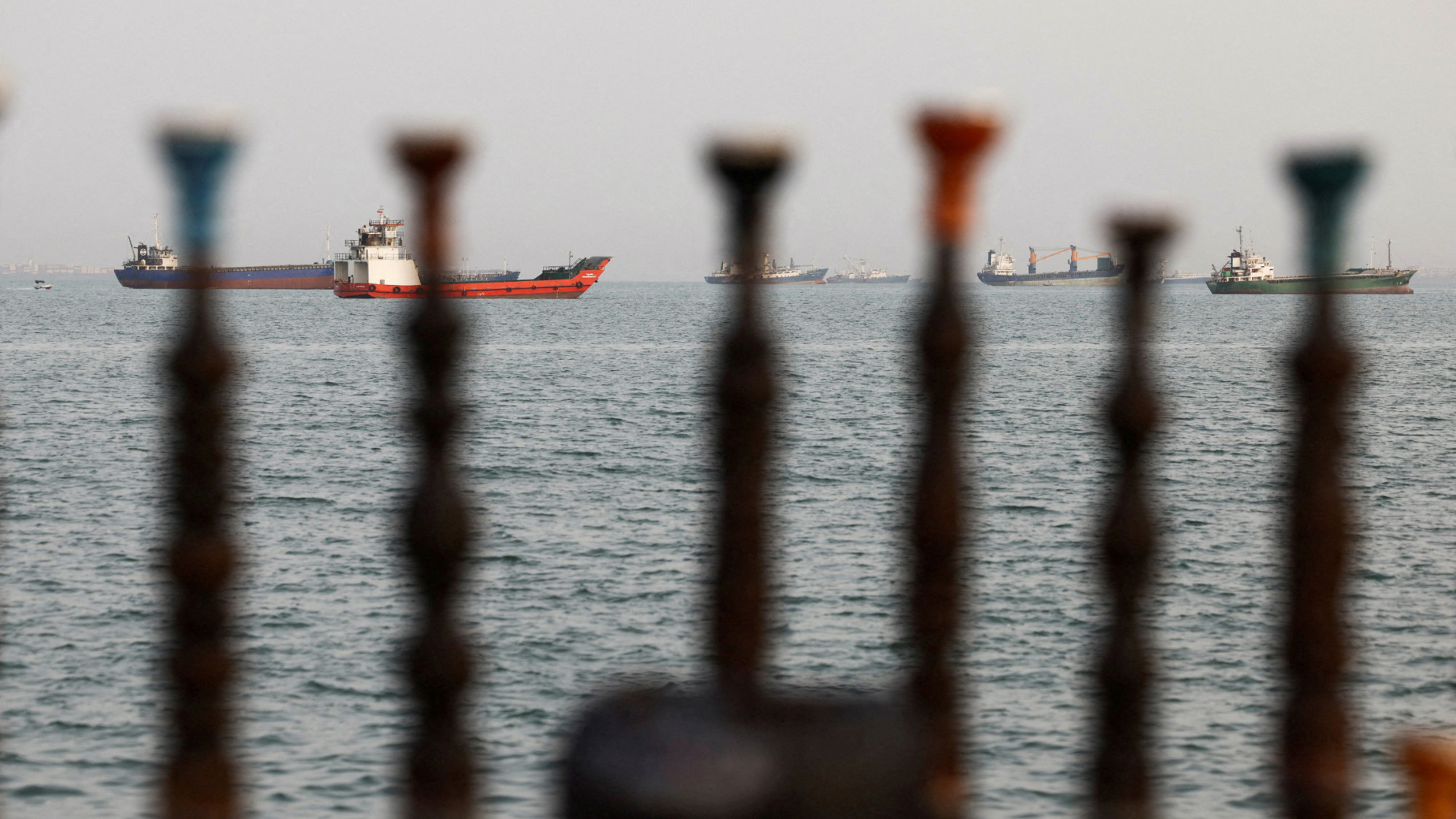
    Less than 24 hours after a two-week ceasefire between the United States and Iran was first announced, deep divisions and conflicting claims have thrown the truce into chaos, with disputes over its geographic scope, shipping access through the Strait of Hormuz and core terms on Iran’s nuclear program blocking progress on planned peace talks. The breakdown began Wednesday when Israel launched large-scale strikes against Hezbollah positions in Lebanon, which Lebanon’s civil defense service confirmed killed at least 254 people and left hundreds more wounded. In the wake of the attacks, Iran immediately accused the U.S. of breaking the terms of the ceasefire, insisting the truce explicitly included Lebanon and all allied factions operating in the country. This claim has been met with starkly opposing stances from Washington and Jerusalem, both of which argue that Lebanon was never part of the negotiated truce, while Pakistan — the third-party mediator that brokered the ceasefire — has confirmed Iran’s position that the agreement does extend to Lebanese territory. Mohammad Bagher Ghalibaf, speaker of Iran’s parliament, reaffirmed Tehran’s stance in an official statement, saying that any valid ceasefire must include Hezbollah in Lebanon regardless of U.S. and Israeli objections. The planned next step for the ceasefire — a new round of negotiations led by U.S. Vice President JD Vance in Islamabad, Pakistan’s capital — now hangs in the balance. Following the Israeli strikes, Iranian officials have repeatedly characterized moving forward with bilateral talks as unreasonable under current circumstances. Ghalibaf emphasized that launching negotiations or upholding a bilateral ceasefire is impossible in the context of ongoing attacks. The two sides also remain irreconcilably divided on another core sticking point: Iran’s nuclear program, the issue U.S. President Donald Trump has repeatedly cited as a primary justification for launching the war. Trump wrote on social media that the U.S. would work with Iran to locate and eliminate all undeclared nuclear material, which he referred to as nuclear “dust.” Ghalibaf pushed back against this framing, noting that the ceasefire explicitly permits Iran to continue its domestic uranium enrichment activities. Disputes have also erupted over access to the Strait of Hormuz, one of the world’s most critical energy chokepoints. Iranian state media outlet Fars News reported that all tanker traffic through the strait was suspended Wednesday afternoon in direct response to Israel’s strikes in Lebanon. White House press secretary Karoline Leavitt rejected this claim during Wednesday’s press briefing, asserting that traffic through the waterway had actually increased, and that she had received private confirmation that the strait was open and operating as required by the Trump administration. On-the-ground reporting from the BBC tells a different story: by 2 p.m. local time Wednesday, only three bulk carriers — the NJ Earth, Daytona Beach, and Hai Long 1 — had successfully transited the strait, leaving nearly 800 commercial ships stranded on either side. Multiple shipping sources also confirmed that Iran has been broadcasting English-language warnings to all tankers in the Persian Gulf, stating that any vessel that attempts to pass through the strait without prior authorization from Iranian authorities will be targeted and destroyed by military force. Hamid Hosseini, spokesperson for Iran’s Oil, Gas and Petrochemical Products Exporters’ Union — an organization that works closely with the Iranian government — told the Financial Times that Iran’s new requirement is designed to let Tehran inspect passing vessels and collect transit tolls. Hosseini explained that Iran needs to monitor all traffic moving through the strait to prevent weapons from being transferred to opposing forces during the 14-day truce. He added that while commercial traffic is technically allowed, the new inspection process will slow transit significantly, and Tehran has no urgency to speed up procedures. Despite the widespread chaos and conflicting claims that have emerged just hours after the ceasefire was announced, U.S. stock markets reacted with clear optimism to the announcement of a truce. All three major U.S. indexes — the Dow Jones Industrial Average, S&P 500, and Nasdaq — posted solid gains between 2.5% and 2.8% following news of the ceasefire. Analysts attribute the rally to investor hopes that a sustained truce would reduce global energy market volatility and lower the risk of a broader regional conflict that could disrupt global economic growth.

  • Philippines opens key coast guard base in the disputed South China Sea

    Philippines opens key coast guard base in the disputed South China Sea

    MANILA, Philippines – In a high-stakes move that underscores its longstanding territorial claims in the contested South China Sea, the Philippines formally inaugurated a new coast guard district command on Thursday on Thitu Island, a Spratly chain outpost held by Filipino forces and communities for decades but claimed by multiple parties including Beijing. The launch was timed to coincide with the Philippines’ national Day of Valor, a holiday honoring wartime sacrifice, and framed by Philippine officials as a permanent assertion of national sovereignty in a region where Chinese maritime assets maintain constant, close presence.

    China has not yet issued an immediate official response to the opening of the new base. Thitu, known to Filipinos as Pag-asa (meaning “hope” in Tagalog), is also claimed by Vietnam and Taiwan, and Chinese coast guard vessels and state-linked maritime militia ships regularly conduct patrols in the waters surrounding the island. While past encounters between Chinese and Filipino maritime forces have largely remained low-level, the regional security environment has grown increasingly tense in recent years amid overlapping territorial claims.

    China asserts sweeping jurisdiction over nearly the entire South China Sea, a critical global maritime trade route that carries trillions of dollars in annual commerce. However, a landmark 2016 international arbitration ruling, issued under the United Nations Convention on the Law of the Sea, fully invalidated Beijing’s expansive claims. Beijing refused to participate in the arbitration process, has rejected the ruling’s outcome, and continues to disregard it in its maritime operations.

    Top Philippine officials including Transport Secretary Giovanni Lopez, Senator Erwin Tulfo, and Philippine Coast Guard Commandant Admiral Ronnie Gil Gavan traveled to Thitu for the brief inauguration ceremony. In remarks at the event, Lopez emphasized that the new command marks a permanent commitment to defending Philippine maritime interests, protecting the livelihoods of Filipino fishermen, and upholding national sovereignty. A commemorative marker inside the new coast guard building describes the outpost as the “vanguard and steadfast sentinel of our sovereignty, sovereign rights and maritime jurisdiction.”

    The new district command will be headed by a commodore, staffed by a dedicated contingent of personnel, and supported by patrol vessels and aircraft to carry out a range of missions: maritime law enforcement, regional surveillance, environmental protection, and search and rescue operations. Philippine coast guard officials also announced plans to construct smaller auxiliary outposts on other smaller outcrops occupied by the Philippines in the Spratlys.

    The tadpole-shaped Thitu Island, ringed by white sand beaches, is home to roughly 400 Filipino civilian villagers. It is one of nine Spratly features occupied by Philippine forces since the 1970s, when Manila offered incentives like free rice to encourage fishing families to relocate to the island as a way to solidify its territorial claim. Today, the 37-hectare outpost has been upgraded with modern infrastructure including internet and cellular service, more reliable power and water systems, a newly paved airstrip, a coastal wharf, an elementary school, a community gymnasium, and a typhoon evacuation center. Even with these improvements, the settlement remains a small, modest frontier outpost when compared to China’s heavily developed nearby facility on Subi Reef, located just 24 kilometers (15 miles) southeast of Thitu. Over the past decade, Beijing has transformed seven formerly submerged disputed reefs into full-fledged man-made island bases with military infrastructure, including a functional runway at Subi.

    For the civilian community on Thitu, the arrival of the permanent coast guard command has delivered a significant boost to morale. “Everyday, our villagers see Chinese coast guard and militia ships all around the island,” said Rene Albayda, vice mayor of the island municipality that the Philippines recognizes as its most remote offshore township, administered under Palawan province. Speaking to the Associated Press, Albayda framed the new base as a critical step toward greater security for the island’s permanent residents.

  • Argentina passes bill loosening protection of its glaciers

    Argentina passes bill loosening protection of its glaciers

    BUENOS AIRES, Argentina — Argentina’s lower congressional chamber has given final approval to a hotly contested amendment to the country’s landmark 2010 Glacier Law, opening the door to expanded mining activity in sensitive glacial regions and sparking fierce pushback from environmental activists and water protection advocates. The original 2010 legislation, widely hailed as a pioneering global conservation measure, imposed a total ban on mining and mineral exploration across all glacial zones, designating these frozen landscapes as critical national water reserves.

    The approved reform shifts regulatory authority: the power to map and define which glacial areas will receive protected status is transferred from the national Argentine Institute for Snow, Ice and Environmental Sciences (Ianigla) to individual provincial governments. President Javier Milei, a prominent supporter of the overhaul, framed the change as a step toward decentralized resource governance, saying it empowers provincial leaders to leverage their own natural assets and permits mining activity only in areas that do not require environmental protection.

    The bill cleared the Argentine Senate in February 2026, leaving lower house approval as the final procedural barrier. Its passage has deepened political and social divides across the country, with opponents organizing mass public demonstrations outside congressional buildings. Protesters carried signs reading “La Ley de Glaciares no se toca” — “Hands off the Glacier Law” — to demand the legislation be withdrawn.

    Opponents warn the amendment puts Argentina’s most essential freshwater supply at existential risk. “Without water, we cannot even begin to plan for growth or development,” opposition Congresswoman Natalia de la Sota argued. Supporters of the reform, however, reject claims that the change weakens glacial protections. Backbench Congresswoman Nancy Picón Martínez, a proponent of the bill, said the mining industry has been unfairly demonized in public debate, insisting “this law protects glaciers, no matter how much some people want us to believe otherwise.”

    Under the terms of the new framework, existing glaciers and periglacial environments — frozen landscapes that may not be permanently covered in ice but remain frozen for a large part of the year — will retain protected status under Ianigla’s national inventory until provincial governments formally prove these areas do not function as strategic water reserves.

    Argentina is home to more than 16,900 glaciers, which feed 36 river basins spanning 12 provinces that supply freshwater to nearly seven million people. Meltwater from these glacial systems plays a critical role in buffering the impact of droughts, a growing threat across Argentina’s semi-arid northern and central regions driven by accelerating climate change. In provinces like Mendoza, glacial meltwater is often the only reliable water source for communities and agricultural production during extended dry periods.

    Governors of five mineral-rich provinces — Catamarca, Jujuy, Salta, Mendoza and San Juan — united in support of the amendment, arguing the 2010 law blocked efforts to drive inclusive, sustainable economic growth for both provincial and national economies without compromising resources for future generations.

    Leading environmental organizations have sharply condemned the reform, pushing back on the core argument that only a subset of glacial and periglacial areas qualify as strategic water reserves. “The primary function of all glaciers and the entire periglacial environment is to act as a freshwater reservoir,” explained Agostina Rossi Serra, a biologist with Greenpeace Argentina. “Periglacial environments hold water within their structure, and their gradual melt feeds the rivers and streams that sustain our country. A large portion of the regions pushing hardest for this amendment are arid and semi-arid areas where water is already an extremely scarce resource.”