As international talks of a proposed two-week ceasefire in the conflict with Iran made headlines Wednesday, Sudan’s military-led administration made a public move: releasing an official statement condemning recent Iranian strikes on energy facilities in Saudi Arabia’s key Jubail industrial zone. This condemnation marks the latest step in a careful diplomatic repositioning by Abdel Fattah al-Burhan, Sudan’s de facto head of state and commander of the Sudanese Armed Forces (SAF), six weeks after the United States and Israel launched strikes on Iran. The move comes as a stark contrast to open public support for Tehran from several factions within Burhan’s own ruling coalition.
作者: admin
-

Coachella kicks off with Sabrina Carpenter and surprise guests
One of the world’s most iconic and highly anticipated annual music gatherings, the Coachella Valley Music and Arts Festival, kicked off its 2026 iteration in the Southern California desert this Friday, bringing together more than 100,000 daily attendees across two consecutive weekends of performances. The opening night of the festival, hosted at Indio’s Empire Polo Club, delivered a series of showstopping surprises, led by first-time headliner Sabrina Carpenter’s elaborately produced Hollywood-themed set.
Carpenter reimagined her stage as a faux Los Angeles landmark, rebranding the space “Sabrinawood” to match her creative concept. The 26-year-old pop star opened her performance with a pre-taped short film, where actor Sam Elliott pulled her over for a late-night traffic stop before letting her proceed to the main stage. Midway through her set, Academy Award-winning actor Susan Sarandon made an unannounced guest appearance, delivering a heartfelt monologue portraying an older version of Carpenter. Later, funnyman Will Ferrell joined the lineup of surprise guests, taking the stage in character as a quirky stage electrician to the delight of the crowd. The opening night bill also featured a roster of other high-profile acts, including global girl group KATSEYE — formed in 2023 via the reality competition series Dream Academy — British electronic duo Disclosure, and hip-hop legend Snoop Dogg.
However, the opening evening was not without disruptions, as pre-forecasted severe weather conditions forced organizers to cancel a scheduled performance by DJ Anyma immediately following Carpenter’s set. In a public statement posted to the festival’s official Instagram account Friday night, event leadership explained the cancellation was a joint decision made with the artist to prioritize attendee safety, as strong sustained winds had damaged the structural integrity of Anyma’s custom stage build.
The National Weather Service had issued advance warnings for the area, predicting wind gusts reaching up to 25 miles per hour throughout Friday. Compounding the weather concerns, the Coachella Valley also remained under an air quality advisory from Friday afternoon through Sunday morning, driven by windblown particulate dust that poses heightened health risks for vulnerable populations. The National Weather Service cautioned that fine particle pollution can penetrate deep into lung tissue, triggering asthma attacks, exacerbating existing heart and lung conditions, and increasing susceptibility to respiratory infections. While Indio was named as one of the areas at potential risk of poor air quality, the local air quality management district reported that pollution levels stayed between good and moderate from midday Thursday onward.
Looking ahead to the rest of the weekend, pop superstar Justin Bieber is slated to take the headline spot on Saturday, with reggaeton icon Karol G closing out the first weekend’s performances on Sunday. A strong contingent of UK talent is also featured across this year’s lineup, including indie rock outfit Wet Leg, punk group Lambrini Girls, rapper Little Simz, and experimental artist FKA Twigs. The full lineup of performances will repeat again for the festival’s second weekend, which draws the same massive scale of crowds to the Southern California desert. First launched in 2002, Coachella has grown from a small regional gathering to one of the most high-profile cultural events on the global entertainment calendar.
-

Pakistan reiterates support for constructive US-Iran engagement
ISLAMABAD, April 11, 2026 — As delegations from the United States and Iran prepare to sit down for negotiations aimed at de-escalating recent Middle Eastern hostilities, Pakistan has publicly reaffirmed its full commitment to supporting constructive diplomatic engagement between the two rival nations.
Pakistan’s Deputy Prime Minister and Foreign Minister Mohammad Ishaq Dar released an official statement through the country’s Foreign Ministry on Saturday, outlining the nation’s long-standing position on the escalating tensions. Dar emphasized that Islamabad remains convinced that dialogue and collaborative negotiation are the only sustainable paths to resolving deep-rooted international disputes. He expressed clear hope that all stakeholders involved in the ongoing conflict will approach the upcoming discussions in good faith, prioritizing constructive engagement to move the region closer to a permanent, peaceful resolution.
Dar further reiterated Pakistan’s consistent willingness to continue acting as a neutral facilitator for the talks, standing ready to support both sides as they work toward a lasting and durable agreement that addresses core concerns on all fronts.
The statement from Pakistan’s top diplomat came hours after a US diplomatic delegation touched down in Islamabad on Saturday. Iran’s negotiation team had already arrived in the Pakistani capital earlier in the week, setting the stage for the face-to-face talks that many regional observers see as a critical turning point for easing escalating violence across the Middle East. The negotiations, hosted on Pakistani soil, mark a high-stakes diplomatic push to end the recent wave of hostilities that have raised widespread global concern over regional stability.
-

China’s Middle East billions still woefully reliant on US gunboats
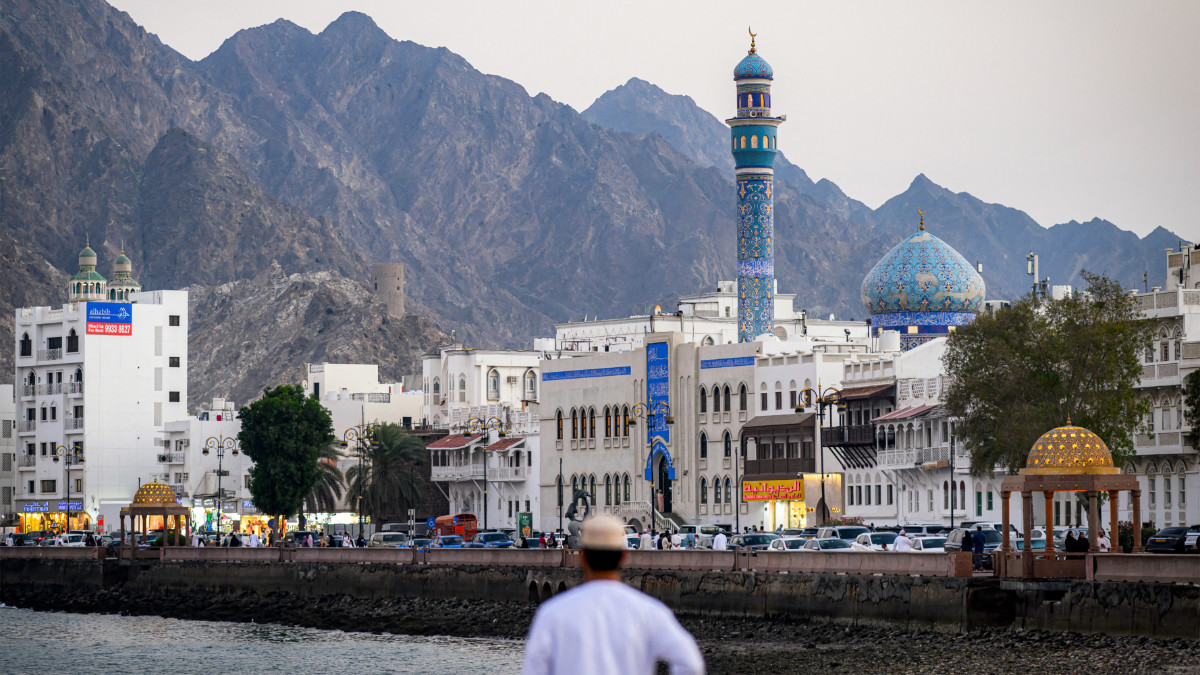
Over the past two decades, China has built a massive economic stake across the Middle East, committing roughly $145 billion to cross-regional investments and infrastructure construction contracts. Alone, Iranian crude oil makes up 13 to 14 percent of China’s total annual oil imports, and in 2024 alone, Arab and Gulf Cooperation Council states received $39 billion in direct Chinese investment. Today, Chinese state and private firms operate deep-water ports, special industrial zones, and critical energy infrastructure from Oman to Iran, embedding regional economies into Beijing’s sprawling global trade networks. One flagship example is the $10 billion China-Oman Industrial Park at Duqm, a project designed to serve as a key hub for Chinese trade and energy access along the Arabian Sea.
Alongside this deep economic integration, Beijing has built its regional influence around a second core pillar: diplomatic mediation. Its most high-profile success came in 2023, when it brokered a historic rapprochement between longtime regional rivals Iran and Saudi Arabia, positioning Beijing as a neutral alternative to Western-aligned powers. This two-pillar strategy has allowed China to expand its regional footprint dramatically without engaging in direct military confrontation or triggering widespread pushback from local states.
Yet this strategy carries a fundamental, structural flaw: Beijing has no permanent military presence in the Middle East. Its only overseas military installation is located thousands of kilometers away in the Horn of Africa nation of Djibouti, leaving the $145 billion in economic assets and critical energy supply lines that China depends on entirely protected by a U.S.-led security architecture that Beijing does not control.
This mismatch was laid bare in stark terms following recent U.S. and Israeli airstrikes on Iran, which triggered a near-total shutdown of the Strait of Hormuz — the strategic chokepoint through which roughly 20 percent of the world’s daily oil and gas supplies transit. Tehran’s blockade cut normal traffic through the strait by more than 90 percent, stranding more than 600 vessels, including hundreds of oil tankers, inside the Persian Gulf. Iran implemented a selective transit regime, granting passage only to ships from what it terms “friendly nations” including China, Russia, and India, while barring vessels linked to Western states. The disruption sent global energy markets into chaos, with some European and Asian refiners paying close to $150 per barrel for scarce crude grades. The head of the International Energy Agency called the blockade more impactful than the combined oil market disruptions of 1973, 1979, and 2022. The crisis has become a core agenda item for upcoming U.S.-Iran peace negotiations set to take place in Pakistan.
For China, the crisis laid bare just how exposed its interests are to regional volatility. While Beijing was granted conditional access for its flagged vessels, that access depended entirely on Iranian goodwill — not on China’s own ability to secure its supply lines. Unlike the United States, which now meets most of its energy needs through domestic production and imports from Canada and Mexico, China is the world’s largest crude importer, with 70 percent of its total oil imports transiting through vulnerable chokepoints like the Strait of Hormuz. As U.S. dependence on Middle Eastern energy continues to decline, Washington’s strategic priorities in the region are increasingly misaligned with Beijing’s growing need for unimpeded energy flows and regional stability, leaving China in a precarious position.
This exposure has forced a long-simmering dilemma into the open for Beijing: should it continue relying on a U.S.-led security system it cannot control, or should it build out its own regional security architecture to protect its expanding interests? The choice is heavily constrained by China’s long-held foreign policy doctrine. A 2019 Chinese government white paper formally outlines Beijing’s commitment to an “independent foreign policy of peace”, which rejects formal military alliances and emphasizes non-interference in other nations’ internal affairs. President Xi Jinping has repeatedly framed China’s rise as a peaceful one, and the country’s Global Security Initiative explicitly criticizes Cold War-era military blocs and great power interventionism.
Beyond doctrinal commitments, a more assertive security role in the Middle East would also undercut the global narrative Beijing has built around its peaceful rise, risking backlash from regional states that have deep historical sensitivity to foreign military intervention and great power competition. Even if Beijing chose to move past these constraints, establishing a sustained permanent military presence in the region would face steep political headwinds, a reality reflected in China’s very limited and cautious track record of establishing overseas bases to date.
These constraints mean Beijing has very limited room to convert its massive economic influence into a corresponding military and security role. As China’s global economic footprint continues to expand and U.S. commitments to Middle East security grow increasingly unpredictable, the costs of this structural mismatch are expected to rise, putting growing pressure on Beijing to reassess its approach.
To date, Beijing has given no public signal of a major strategic shift, but escalating risks to its overseas interests may force incremental adjustments. Analysts broadly expect any adjustment to fall into one of two categories: a modest expansion of Chinese naval patrols, or deeper security partnerships with host regional states.
Since 2008, the People’s Liberation Army Navy has maintained continuous anti-piracy deployments in the Gulf of Aden, completing more than 1,600 escort missions for thousands of commercial vessels from across the globe. Extending these patrols into the Arabian Sea and closer to the Strait of Hormuz would allow China to take a more active role in protecting its own commercial shipping. Even this limited expansion would require additional logistical support and basing access, however, and China’s existing base in Djibouti has already generated repeated diplomatic friction with the United States, underscoring the high political sensitivity of any further expansion of China’s overseas military footprint. What is more, anti-piracy patrols are not designed to protect inland infrastructure or manage interstate conflict, meaning even a modest expansion would leave most of China’s regional exposure unaddressed.
The second option, strengthening host-state security arrangements, aligns more closely with Beijing’s existing doctrine of non-interference. Beijing has already tested this model in Pakistan, where the Pakistani government established a dedicated 15,000-strong security force to protect Chinese personnel and infrastructure linked to the $62 billion China-Pakistan Economic Corridor. This approach allows China to reduce its exposure to threats against its projects at a relatively low political and financial cost, while remaining consistent with its public commitment to non-interference. However, host-state security forces are poorly equipped to counter large-scale interstate conflict or regime instability, leaving critical gaps in protection.
Taken together, these two partial solutions amount to a strategy of risk management, not fundamental resolution of the core dilemma. For the foreseeable future, China is expected to continue expanding its economic presence in the Middle East while only taking incremental steps to boost its security capacity, leaving a growing gap between its economic stakes and its ability to protect them.
History suggests that no rising power has been able to sustain a massive global economic footprint without eventually taking on the security responsibilities that come with it. As Beijing’s regional exposure deepens, many analysts expect it will ultimately be forced to break with its current doctrine to address the growing risk.
-

Nearly 400 sentenced in Nigeria for links to militant Islamists
More than a decade of brutal Islamist insurgency in northeastern Nigeria has pushed the country’s government to take landmark judicial action, convicting nearly 400 suspects on charges tied to banned extremist organizations in mass trials that wrapped up in Abuja this week.
Of the 505 suspects arraigned at the Federal High Court in Nigeria’s capital, 386 were found guilty of ties to either Boko Haram or its splinter faction, the Islamic State West Africa Province (ISWAP), officials confirmed Friday. Sentences for the convicts run from a five-year prison term to life behind bars, reflecting the varying severity of the charges ranging from direct participation in militant attacks to facilitating extremist activities through funding, weapons smuggling, logistical support, or sharing intelligence. Two defendants were acquitted, eight were released without conviction, and proceedings for 112 additional suspects were adjourned to a later date. Early in the judicial process, five defendants entered guilty pleas, admitting they had supplied food, livestock and insider information to the militant networks.
The mass convictions come as Nigeria’s federal government faces mounting public and international pressure to rein in a sprawling security crisis that has destabilized large swathes of the country. Africa’s most populous nation is currently confronting overlapping threats from multiple armed factions: alongside the long-running Islamist insurgency in the northeast, security forces are also battling separatist movements in the southeast and rampant kidnapping-for-ransom gangs that operate across many northern and central states.
The Boko Haram insurgency, which first erupted in 2009, has left a devastating humanitarian toll in its wake. Aid organizations estimate the conflict has killed tens of thousands of people and forced more than 2 million residents to flee their homes, creating one of the world’s largest displaced populations.
The deteriorating security landscape has prompted international warnings in recent days. On Wednesday, the U.S. State Department updated its travel advisory, urging American citizens to reconsider all trips to Nigeria due to heightened risks of violence, crime and kidnapping. This is not the first time Washington has taken direct action in response to militant activity in the region: on Christmas Day during the Trump administration, U.S. forces carried out an airstrike in northern Sokoto State targeting the lesser-known militant group Lakurawa. The strike followed then-President Trump’s public claim that Christians were being specifically targeted for persecution in Nigeria—a claim Nigerian officials rejected at the time, noting that people of all religious faiths, and those with no religious affiliation, have fallen victim to the country’s ongoing violence.
As security conditions continue to fluctuate across the Sahel region, Nigeria’s judicial crackdown on militant suspects marks a major step by the government to demonstrate progress in its fight against extremism, even as insurgent attacks and intercommunal violence remain persistent threats across much of the north.
-

KMT leader Cheng Li-wun pays tribute to Sun Yat-sen at cenotaph in Beijing
BEIJING, April 11, 2026 (Xinhua Updated) — In a landmark cross-strait engagement marking a new chapter in exchanges between the two sides of the Taiwan Strait, Cheng Li-wun, chairwoman of the Chinese Kuomintang (KMT), led a senior KMT delegation to pay formal respects to Sun Yat-sen, the great pioneer of China’s modern democratic revolution, at his cenotaph in Beijing on Saturday.
The revered revolutionary memorial sits within Biyun Temple, nestled among the tree-covered slopes of Fragrant Hills in Beijing’s western suburbs. The site carries profound historical meaning for both the KMT and all Chinese people: after Sun Yat-sen — a founding leader of the KMT who spearheaded the movement that ended centuries of imperial rule in China — passed away in Beijing in 1925, his remains were temporarily interred at the temple for four years before being moved to the Sun Yat-sen Mausoleum in Nanjing in 1929.
Arriving at the temple shortly before 9 a.m., the delegation proceeded to the Sun Yat-sen memorial hall, where members performed a formal three-bow tribute before a full-length white marble statue of the revolutionary leader. They then moved to the cenotaph to lay their respects, honoring Sun Yat-sen’s enduring legacy of national revolution and unity.
The visiting delegation included three of the KMT’s top vice-chairpersons: Lee Chien-lung, Chang Jung-kung and Hsiao Hsu-tsen, underscoring the importance the party places on this cross-strait visit.
Cheng’s trip marks a notable milestone in cross-strait relations: she is the first KMT chairperson to lead a party delegation to the Chinese mainland in 10 years. The 6-day visit, scheduled from Tuesday to Sunday, saw the delegation complete stops in Jiangsu Province and Shanghai ahead of their arrival in Beijing, with a packed itinerary focused on rebuilding people-to-people and party-to-party ties across the strait.
-

US Vice-President Vance arrives in Pakistan
On Saturday, April 11, 2026, United States Vice President JD Vance touched down in Islamabad, Pakistan, touching off a highly anticipated round of diplomatic negotiations between US and Iranian officials on Pakistani soil. Vance arrived via Air Force Two, with official photos documenting his arrival at the Islamabad airport ahead of the scheduled talks.
The meeting, hosted by Pakistan, marks a rare high-level engagement between Washington and Tehran at a time of heightened regional tension and stalled diplomatic progress between the two nations. Pakistan’s role as a neutral host underscores its ongoing engagement as a diplomatic bridge in South Asian and Middle Eastern geopolitics, bringing the two long-adversarial parties to the negotiating table in a third-party location that both sides have accepted.
Global observers have framed the upcoming discussions as a pivotal moment for regional security, with a wide range of contentious issues expected to be on the agenda, from regional nuclear non-proliferation to ongoing conflicts in the Middle East. The outcome of these talks carries potential implications for global energy markets, regional stability, and the future of US-Iran relations, making Vance’s arrival in Islamabad a closely watched development for governments and analysts across the world. The visit was first reported and updated by Xinhua News Agency on the same day of Vance’s landing.
-

Peru election highlights lack of plans to tackle illegal mining despite growing environmental crisis
As Peru prepares for a pivotal general election on Sunday that will install a new president and full Congress, one of the country’s most damaging and profitable illicit activities — unregulated illegal gold mining — has been almost entirely sidelined by political candidates, even as the industry pushes deeper into the Amazon rainforest and protected Indigenous territories.
Industry and policy experts warn this widespread silence from campaigners exposes a systemic national failure to confront what is now Peru’s largest illicit economy, a multi-billion dollar trade that inflicts escalating damage on critical ecosystems, public health, and Indigenous communities that have called the Amazon home for millennia.
“Political parties do not grasp that illegal mining has become the country’s dominant criminal enterprise, generating more illicit revenue than any other activity,” said César Ipenza, a prominent Peruvian environmental lawyer. “There is either profound ignorance about what this crisis means for Peru’s future — or, in too many cases, political actors have already become complicit participants in this illegal economy.”
Projections from the Peruvian Institute of Economics estimate illegal mining will generate more than $11.5 billion in revenue in 2025, accounting for over 100 tons of annual gold exports. The scale of the illicit industry now rivals the size of Peru’s formal legal gold mining sector and outpaces the revenue generated by drug trafficking, long considered the country’s top illegal trade.
A small number of candidates have put forward limited proposals to address the crisis, including former officials and technocratic candidates Jorge Nieto and Alfonso López Chau. Their plans include measures such as mandatory gold traceability systems, enhanced financial intelligence tracking, and expanded protections for at-risk environmental defenders. But these proposals remain scattered across platforms and fall far short of a comprehensive national strategy to curb the industry’s growth.
Many other leading candidates, representing Peru’s most influential conservative and populist parties, have centered their campaigns on issues like public security, broad economic growth, and expanded extractive development, with no direct mention of illegal mining or its deep ties to systemic corruption and illegal territorial control in the Amazon. A handful of high-profile candidates — including media personalities turned politicians Ricardo Belmont and Carlos Álvarez — omit the issue entirely from their published policy platforms.
“Illegal mining and other large illicit economies are not a priority in any major party’s governing plans,” said Magaly Ávila, director of environmental governance at Proetica, a leading Peruvian anti-corruption organization. According to Proetica’s analysis, roughly 64% of all party platforms fail to address the illegal mining crisis in any meaningful way, while only 5% of parties tackle the issue “clearly and explicitly.”
A March 2026 analysis from Peru’s official Observatory of Illegal Mining reinforces these findings. The audit found that only 12 of the country’s 36 registered political parties have released specific policy proposals to address illegal mining, while the remaining parties either offer only vague general statements without actionable measures or do not mention the issue at all.
Peruvian governments have repeatedly announced new crackdown operations and national strategies to combat illegal mining in past years, but enforcement of these policies remains severely limited, experts say. The Associated Press reached out to multiple Peruvian government entities to request comment on illegal mining and protections for Indigenous territories ahead of the election, but received no response prior to publication.
Peruvian lawmakers have repeatedly extended a temporary regulatory program that allows informal miners to continue operating while they pursue formal legal status. Critics of the program argue it has been widely abused by criminal networks and has directly enabled the expansion of illegal mining across the country.
At the same time, recent changes to Peruvian national legislation have weakened the ability of prosecutors and judges to pursue organized criminal groups, including large-scale illegal mining networks, according to international human rights and environmental groups. Analysts say these policy rollbacks came in response to intense political pressure from small-scale miner associations, which have organized large public protests to demand looser regulations. These protests have made tightening enforcement far more politically difficult for incumbent and aspiring politicians alike.
Julia Urrunaga, Peru program director for the London-based Environmental Investigation Agency (EIA), noted that many small-scale miner protests appear to be highly coordinated from behind the scenes, indicating that powerful criminal networks are pulling the strings to advance their policy interests.
The rapid expansion of illegal mining in recent years has been largely driven by soaring global gold prices, which have climbed to between $4,500 and $5,000 per ounce, making even small deposits of gold extremely profitable for miners. Once concentrated almost exclusively in the southern Amazon region of Madre de Dios, illegal mining operations have now spread to new parts of the Amazon basin and beyond Peru’s traditional mining corridors.
“Gold prices have hit historic highs, and that has directly driven the explosive expansion of illegal mining across the country,” Ipenza said. “The Peruvian state simply does not have the institutional capacity to respond to or prosecute this activity at its current scale.”
Illegal mining operations almost universally rely on liquid mercury to separate gold from ore, a cheap but highly toxic process that releases massive amounts of the heavy metal into Peruvian Amazon rivers. From there, mercury builds up in the tissue of fish, entering the food chain that millions of Peruvians rely on for sustenance.
“In Amazonian river communities, between 50% and 70% of the daily diet comes from local fish,” explained Mariano Castro, Peru’s former vice minister of environment. “So human exposure to mercury grows exponentially. Mercury is extremely toxic, and it causes severe, permanent neurological damage for people exposed over long periods.”
Environmental and public health experts have already confirmed that mercury contamination in many affected regions exceeds international safety standards, creating long-term public health risks for local populations. Ipenza warned that continued expansion of illegal mining across the Amazon “will bring widespread contamination, growing influence for transnational criminal groups, and direct existential harm to Indigenous and local populations.”
“Illegal mining already puts our health, the Amazon’s biodiversity, and our traditional ways of life at grave risk,” said Tabea Casique, a board member of AIDESEP, Peru’s largest national Indigenous organization. “Most political parties are still not taking this problem seriously or presenting concrete plans to address it.”
Castro, the former environment vice minister, called past state efforts to rein in illegal mining “completely insufficient,” noting that lawmakers have systematically weakened legal tools to prosecute criminal mining networks. These changes include reduced penalties for illegal mining and new restrictions that make it harder to classify large-scale mining operations as organized crime. Widespread gaps in regulatory oversight also allow illegally mined gold to be laundered into formal legal supply chains, most often through small-scale processing plants that mix illicit and legal gold for export.
Ipenza called for sweeping reforms, including stronger regulatory oversight of small-scale gold processing plants and improved inter-agency coordination between customs officials, financial intelligence units, and criminal prosecutors to track gold flows and crack down on illegal activity. Analysts agree that weak gold traceability systems are one of the central vulnerabilities enabling illegal mining’s expansion.
“There is no functional system to trace gold mining production in Peru,” EIA’s Urrunaga said. “Different authorities hold fragmented bits of information, but there is no unified system — and apparently no political will — to connect those pieces and track illegal gold.”
“We are talking about more than $12 billion in illegal gold exports every year,” she added. “How can this activity continue with almost total impunity?”
Policy and environmental experts warn that delaying action on the crisis will only make it far harder to contain in coming years. The next Peruvian government will immediately face mounting pressure to confront a crisis that is already spiraling out of control.
“Authorities cannot fulfill their fundamental responsibility to protect Peruvian citizens if they continue to normalize an activity that causes such widespread, irreversible harm,” Castro said.
-

McIlroy’s Masterpiece remains the buzz at Augusta
As players prepared to tee off for Saturday’s third round of the Masters Tournament at Augusta National Golf Club, all conversations still centered on one astonishing achievement: Rory McIlroy’s record-breaking 36-hole performance that gave him an unprecedented six-stroke advantage over the entire field.
The 36-year-old Northern Irish golfer put on a late-round clinic on Friday, carding birdies on six of his final seven holes – including the last four in a row – to storm into the top position, leaving fellow pros struggling to find words to describe the display of dominance. “Rory played great, made the most of pretty much everything he could out there and that’s what it takes to be beating the field by six,” said world number three Cameron Young, who competed alongside McIlroy on Friday.
As the defending Masters champion, McIlroy fired a seven-under-par 65 in his second round, pushing his cumulative score to 12-under 132 at the halfway mark of the year’s first men’s major championship. A victory this weekend would see him join an exclusive club of golf legends: only Tiger Woods, Jack Nicklaus and Nick Faldo have ever successfully defended their green jacket titles.
McIlroy navigated Augusta’s notoriously tricky Amen Corner with poise, notching birdies on both the challenging par-three 12th and par-five 13th holes. He closed out his round with a stunning 29-yard chip-in birdie at 17, followed by a clinical six-foot putt for birdie at 18 to etch his name into Masters record books. Even before Friday’s historic round, 1992 Masters champion Fred Couples predicted McIlroy’s momentum after he shared the first-round lead, saying, “Rory may never lose this thing again.”
Heading into Saturday’s play, Americans Patrick Reed and Sam Burns are tied for second place at six-under 138. A further stroke back at five-under 139, Ireland’s Shane Lowry, England’s Justin Rose and Tommy Fleetwood remain within striking distance if McIlroy slips.
McIlroy is set to tee off alongside Burns in Saturday’s coveted final pairing at 2:50 p.m. local time (1850 GMT), aiming to extend his commanding lead. Reflecting on his mindset ahead of the third round, McIlroy said he plans to stick to the strategy that has worked so far: “I have to go out there with the same free, trusting mindset I have the first two days.”
The five-time major champion has delivered a masterclass in adaptive play through the first two rounds. Notably, he has yet to hit a fairway on any of the tournament’s par-five holes, but still has played those holes seven-under par thanks to elite iron play and precision putting. Even with only 13 of 28 fairways found – ranking last among the 54 players who made the cut in driving accuracy – McIlroy ranks second in the field in scrambling percentage. His 334.2-yard average driving distance is second in the tournament, and he has needed only 51 putts through two rounds.
“I haven’t panicked when I’ve hit it off course and into the trees,” McIlroy explained. “When I was in the trees I didn’t mind. I sort of feel like I’m playing with the house’s money, which is a nice place to be.”
Last year’s Masters victory was a career-defining moment for McIlroy, ending a 10-year major championship drought and completing his career Grand Slam, and his comfort at Augusta is clear. “I’ve always loved this course and this tournament even when I felt it didn’t love me back,” he said.
Historically, only two 36-hole leads in major championship history have been larger than McIlroy’s six-stroke advantage: Henry Cotton’s nine-stroke lead at the 1934 British Open and Brooks Koepka’s seven-stroke edge at the 2019 PGA Championship. Friday’s 65 was also McIlroy’s 10th career major round of 65 or lower, matching a record previously shared only by Tiger Woods and Dustin Johnson. For context, Woods holds the 54-hole Masters lead record of nine strokes set during his 12-stroke victory in 1997, while Jordan Spieth and Dustin Johnson share the 54-hole scoring record of 200, set in 2015 and 2020 respectively.
-

Sinner brushes past Zverev to reach Monte Carlo final
In a commanding display of top-tier tennis on Saturday, World No. 2 Jannik Sinner delivered a clinical performance to defeat Germany’s Alexander Zverev in straight sets 6-1, 6-4, securing his first-ever berth in the Monte Carlo Masters final and etching his name into ATP Tour history.
The 24-year-old Italian’s victory marks a historic milestone: he becomes the first men’s player to reach the final of the opening three ATP Masters 1000 events of a single season since legendary Serbian star Novak Djokovic accomplished the same feat back in 2015. Only two other all-time greats, Roger Federer in 2006 and Rafael Nadal in 2011, have managed to match this impressive run of consistent deep runs at the sport’s most prestigious non-Grand Slam tournaments.
From the opening game, Sinner came out with blistering aggressive intent that left Zverev struggling to find any rhythm. He broke the German’s serve three times across the opening set, wrapping up a dominant 34-minute first set win that put Zverev immediately on the back foot. While Zverev, currently ranked World No. 3, managed to shore up his game in the second set—recovering his first serve accuracy and putting up far stiffer resistance—he was forced to fight tooth and nail just to hold his serve in every service game.
Ultimately, Zverev could not stop Sinner’s momentum. The match ended after one hour and 22 minutes, with Zverev unable to handle another crushing forehand winner from the Italian. This victory extends Sinner’s incredible recent form at Masters 1000 events: he has dropped just one set across his last 21 matches at this level, and he has also extended his dominant head-to-head winning streak against Zverev. Zverev has not beaten Sinner since their Round of 16 clash at the 2023 US Open, continuing a cold streak for the German against the Italian.
Sinner now turns his attention to the final, where he will await the winner of the second semi-final clash between top-ranked defending champion Carlos Alcaraz and French home crowd favorite Valentin Vacherot, who is ranked 23rd in the world. If Alcaraz emerges victorious from that match, the Monte Carlo final will be the first meeting this season between the world’s top two men’s singles players. It will also carry high stakes for the ATP rankings: the winner of that potential head-to-head will claim the World No. 1 ranking when the new ATP rankings are released on Monday.