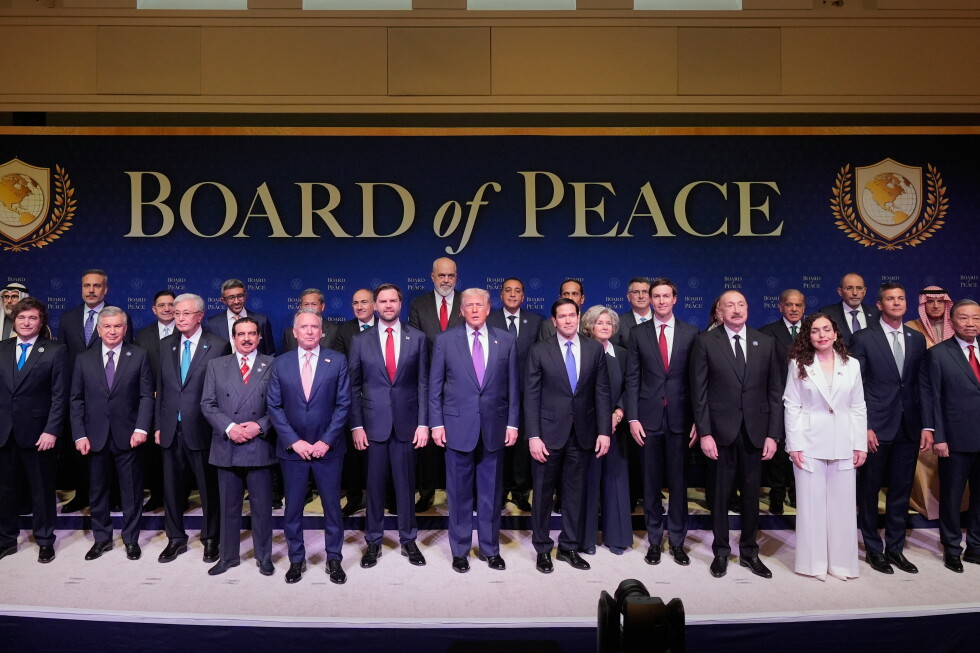
Three months after the International Stabilization Force for Gaza was launched with grand promises of bringing lasting peace and long-term prosperity to the war-ravaged Palestinian enclave, the ambitious U.S.-backed initiative has ground to a near-standstill, with no meaningful troops deployed and ceasefire efforts deadlocked between Israeli and Hamas forces. The 20,000-strong stabilization force was first unveiled in February at the inaugural gathering of U.S. President Donald Trump’s newly created Board of Peace, with U.S. Major General Jasper Jeffers tapped to lead the mission. Today, Jeffers commands no deployed forces, as none of the five nations that publicly pledged troop contributions have followed through on their commitments.
The single largest blow to the plan came just over a week after the U.S. and Israel launched a joint military strike against Iran in late February, when Indonesia — which had promised the largest contingent of 8,000 troops — put its entire commitment on indefinite hold. Under the original schedule, 1,000 Indonesian personnel were set to deploy in April, with the remaining 7,000 arriving the following June. The other four contributing nations — Morocco, Kazakhstan, Kosovo, and Albania — have also failed to deploy any significant on-the-ground forces three months on.
Indonesia’s defense minister Sjafrie Sjamsoeddin explained the suspension to parliament last week, citing a lack of clear implementation guidance from a Washington administration distracted by escalating tensions with Tehran. “New dynamics have emerged,” Sjamsoeddin told lawmakers. “Because the intensity of the conflict between U.S. and Iranian forces remains very high, the Board of Peace has tended to be left behind. Since the Board of Peace has been left behind, the International Stabilization Force has also been left behind.”
Regional analysts note that domestic political and economic pressures also heavily influenced Indonesia’s decision. As the world’s most populous Muslim-majority nation, public opposition to the U.S.-Iran war runs extremely deep in the country. The conflict has already sent global energy prices soaring, pushing Indonesia’s already fragile economy into further strain, and public skepticism of the Trump administration’s Board of Peace initiative is widespread.
“If you talk to the people on the street, I don’t think they believe that the Board of Peace will actually help the people of Gaza,” explained Muhammad Zulfikar Rakhmat, director of the Indonesia-Middle East/North Africa desk at Jakarta’s Center for Economic and Law Studies. Rakhmat added that there is broad public unease about deploying troops to the volatile Middle East while Indonesia’s domestic economy falters. Past experiences have also soured public opinion: four Indonesian peacekeepers serving with the United Nations Interim Force in Lebanon were killed during fighting between Israeli forces and Iran-backed Hezbollah, further eroding support for new international military commitments in the region.
Still, Rakhmat argues that a complete Indonesian withdrawal from the initiative is not yet a foregone conclusion. Indonesian President Prabowo Subianto, a former army general, has made expanding Indonesia’s global diplomatic and security profile a core priority, and is reluctant to jeopardize key economic ties with the United States. “Prabowo wants to strengthen ties to Washington and sign different agreements with the U.S., so to completely withdraw and completely cancel the plan, I don’t think it’s on the table,” Rakhmat said.
Efforts to shore up the already fragile Gaza ceasefire have stalled completely amid competing blame from both sides. Hamas has refused to disarm, a core requirement of the Trump administration’s 20-point ceasefire plan, while Israel has continued seizing additional territory in Gaza and carrying out repeated strikes on targets it labels militant positions — strikes that local health officials confirm have killed more than 880 Palestinians since the ceasefire was first agreed. Israeli troops currently control approximately 60% of Gaza’s total territory.
The ongoing conflict with Iran has compounded these challenges, making it politically risky for Arab and Muslim leaders to openly cooperate with the U.S. and Israel, which are widely viewed as aggressors across much of the region. The resulting global energy crisis has also drained government resources that could have been used to support the stabilization mission.
Board of Peace officials have placed the entirety of the blame for the deadlock on Hamas. Nickolay Mladenov, a former Bulgarian defense minister appointed by Trump to lead the Board of Peace, told the United Nations in May that the international force cannot begin operations until a second ceasefire phase — requiring Hamas to disarm and Israel to begin a troop withdrawal — is agreed and implemented. “You cannot build a future with armed groups running the streets, hiding in tunnels and stockpiling weapons,” Mladenov said during remarks in Jerusalem this month. “You cannot deliver reconstruction with militias on every corner.” Hamas’ disarmament, he added, remains “non-negotiable.”
Hamas in turn blames Israel for the delay, accusing the Israeli government of repeatedly violating the ceasefire and Mladenov of openly siding with Tel Aviv. The group is demanding that Israel withdraw from all territory it has seized since the ceasefire went into effect, an Egyptian official with knowledge of closed-door mediation talks confirmed on condition of anonymity. The official added that most pledged troop-contributing nations have refused to deploy forces until a formal agreement on Hamas disarmament is reached.
To date, only token, non-combat contributions have been confirmed, and no deployed troops are known to be on the ground in Gaza. Kazakhstan has limited its commitment to humanitarian support, including a planned field hospital and medical unit, but has not provided any update on deployment timelines. Albania’s defense ministry has described its contribution as a “dynamic and ongoing process,” with military chief Lieutenant General Arben Kingji confirming earlier this month that only a small contingent of personnel for the force’s headquarters will be sent, with no troops deployed to date even after preliminary reconnaissance work. Kosovo, which has pledged 20 troops, confirmed in April it was in the “final phase of preparations” but has not released an update since. Morocco has only committed to deploying high-ranking military officers to the force’s joint command, and has not shared further details. All four nations declined to respond to requests for comment on their current commitments.
U.S. Central Command declined to comment on the status of the force or make General Jeffers available for interview, referring all inquiries to the Board of Peace. Board of Peace spokesman Brad Klapper also declined to comment on Indonesia’s suspension or the future of the mission, directing reporters to Mladenov’s May remarks to the United Nations.