作者: admin

  • European leaders celebrate Péter Magyar’s victory in a stunning Hungarian election

    European leaders celebrate Péter Magyar’s victory in a stunning Hungarian election

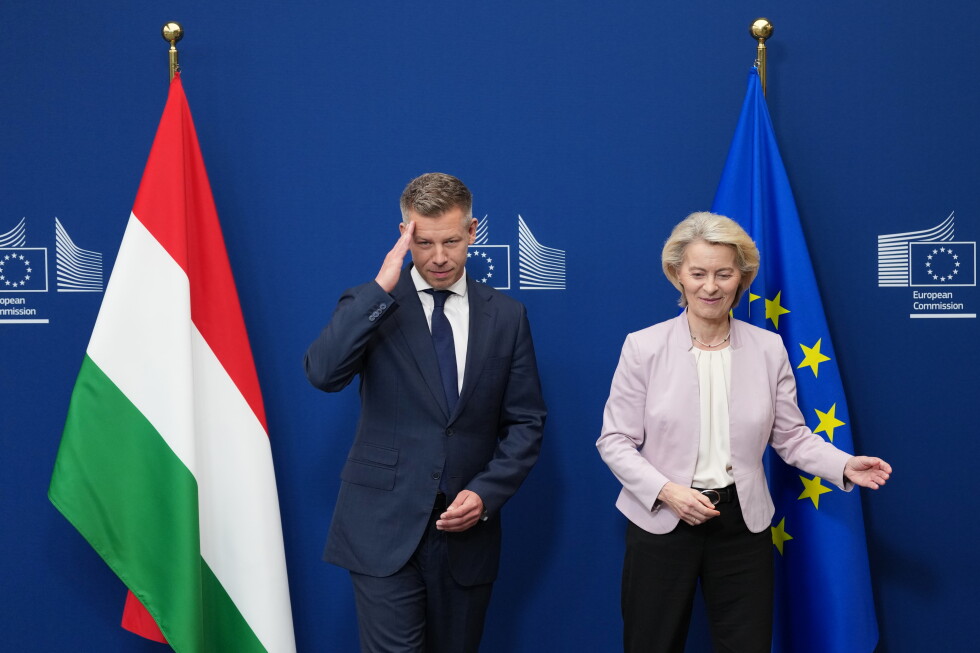
    In a seismic political shift that has sent ripples across the European continent, Hungarian opposition leader Péter Magyar has claimed a historic election victory that ends 16 years of authoritarian-leaning rule by Viktor Orbán, drawing an outpouring of congratulatory messages from top European Union leaders and key global figures.

    The sweeping celebration of Magyar’s win stems not only from what the new incoming prime minister has pledged to accomplish, but from what his victory represents: the end of Orbán’s Euroskeptic, populist rule that long destabilized EU collective governance and frustrated the bloc’s unified policy goals. For years, Orbán positioned himself against Brussels-centric strategy, framing his agenda as a defense of Hungarian national interests against overreach from EU institutions. His repeated vetoes of coordinated EU action, most notably collective military and political support for Ukraine following Russia’s full-scale 2022 invasion, put him at constant odds with the 27-nation bloc. Most recently, his administration’s admission that it maintained secret backchannel communications with Moscow during key EU summits sparked outright outrage among European leaders.

    In the wake of the election result, congratulations flooded official social media channels and poured in via personal calls from the bloc’s most senior figures. Even before Magyar delivered his victory speech on the banks of the Danube River in downtown Budapest on Sunday night, he had already received congratulatory calls from French President Emmanuel Macron, European Commission President Ursula von der Leyen, NATO Secretary-General Mark Rutte, and German Chancellor Friedrich Merz. Online, messages of celebration came from British Prime Minister Keir Starmer, Irish Prime Minister Micheál Martin, Swedish Prime Minister Ulf Kristersson, European Parliament Speaker Roberta Metsola, Danish Prime Minister Mette Frederiksen, Romanian President Nicușor Dan, and European Council President António Costa, among many others.

    Spanish Prime Minister Pedro Sánchez summed up the prevailing mood among pro-European leaders in a post on X, writing simply: “Today Europe wins and European values win.” Polish Prime Minister Donald Tusk echoed the enthusiasm, posting “Back together! Glorious victory, dear friends!” Starmer framed the outcome as a defining moment for democratic governance across the continent, noting “This is an historic moment, not only for Hungary, but for European democracy.” Macron emphasized that France welcomed the Hungarian people’s clear commitment to EU values, while Merz called for renewed collective action: “Let’s join forces for a strong, secure and, above all, united Europe.” Kristersson framed the result as a new chapter for both Hungary and the bloc, adding that he looked forward to close collaboration as NATO allies and EU partners. Von der Leyen, who was a frequent target of Orbán’s anti-Brussels rhetoric, struck a unifying tone, writing: “Hungary has chosen Europe. Europe has always chosen Hungary. Together, we are stronger. A country returns to its European path. The Union grows stronger.”

    Slovenian Prime Minister Robert Golob went further, framing Magyar’s win as a victory for the entire European project: “His victory over right-wing populism is also a great victory for the EU and its future. Only a more united and more effective EU will be able to respond to the extremely serious challenges of the times ahead.” German lawmaker Daniel Freund noted that the upset would have far-reaching implications for populist movements globally, arguing that Orbán, long the icon of illiberal anti-European politics, was brought down by his own government’s failures: “Hungarians are sending a signal to the world. The icon of illiberal anti-European forces has now failed – brought down by a disastrous economy, corruption, and his own unfair electoral system.”

    Ukraine’s official government account also offered congratulations, leaning into the shared geographic and political future of the two nations within Europe. “The Dnipro and the Tisza flow through a shared home — Europe,” the post read.

    Beyond his commitment to repairing Hungary’s strained relationship with the EU, which Magyar confirmed to the Associated Press ahead of the vote, the new prime-minister-elect has struck a unifying tone in his first public remarks. “All Hungarians know that this is a shared victory. Our homeland made up its mind. It wants to live again. It wants to be a European country,” he told supporters gathered for his victory celebration.

    Notably, Magyar has avoided taking firm stances on several divisive policy issues carried over from the Orbán era, including Orbán’s widely criticized anti-LGBTQ+ policies and the question of whether his administration will expand Hungary’s military and humanitarian support for Ukraine.

    Not all reactions to the power shift were uniformly celebratory. Italian Prime Minister Giorgia Meloni, a fellow right-wing leader, congratulated Magyar but also extended thanks to Orbán for years of close collaboration. Far-right French politician Jordan Bardella, a leading contender in France’s 2027 presidential election, praised Orbán’s legacy advancing populist causes in a social media post, and made no mention of the new winner. Israeli opposition leader Yair Lapid, a descendant of Hungarian Holocaust survivors, was among non-European figures to offer congratulations to Magyar.

    European People’s Party President Manfried Weber, another frequent critic of Orbán, summed up the broader shift for the EU, writing simply: “Hungary is back at the heart of Europe.”

  • Backlash to Labor’s $20m fuel crisis ad campaign  grows

    Backlash to Labor’s $20m fuel crisis ad campaign grows

    A $20 million taxpayer-funded national advertising campaign designed to encourage voluntary Australian fuel conservation has ignited fierce political debate this week, with opposition figures slamming the initiative as a wasteful, out-of-touch expenditure while the ruling Labor government defends it as a critical investment in national fuel security.

    Titled “Every Little Bit Helps”, the campaign officially launches on Monday, delivering practical guidance to Australian motorists on small steps to cut fuel use: cutting excess weight from vehicle boots, removing unused roof racks, inflating tyres to optimal pressure, and shifting to walking, cycling or public transit for short trips where possible. Social Services Minister Tanya Plibersek defended the initiative during a tense Monday morning interview on Channel 7’s *Sunrise*, arguing the campaign is a necessary counter to widespread online misinformation that fueled dangerous panic buying during the current fuel supply crisis.

    The effort ties directly to Australia’s four-stage National Fuel Security Plan, which is currently operating at Level 2. Under this framework, national fuel supplies remain secure overall, but localized distribution disruptions have been recorded, prompting precautionary government action and a call for voluntary public participation to stabilize demand. Plibersek pushed back against on-air pushback from host Nat Barr, who questioned why $20 million would be spent on basic advice many motorists already know. The minister noted the campaign’s price tag pales in comparison to the $340 million spent on a 2000 public health campaign run by the previous Howard-era Liberal government, framing the current outlay as a small cost to deliver clear, verified information about national fuel security to the public.

    Opposition leaders have rejected that framing. Deputy Liberal leader Jane Hume told Sky News that the expenditure is deeply misaligned with the current economic pressure facing Australian households. She argued that $20 million could instead cover fuel costs for roughly 100,000 Australian motorists amid skyrocketing pump prices, arguing that lecturing the public about minor driving and vehicle adjustments is not a responsible use of public funds at a time of crisis. Prime Minister Anthony Albanese has pushed back against that criticism, describing the $20 million investment as “modest” and the campaign as “sensible” policy.

    Albanese highlighted that unregulated panic buying, stoked by misinformation on social media, created unnecessary localized shortages earlier in the crisis. He noted that common panic-driven behaviors, such as storing extra fuel in jerry cans in the back of utes, not only distorted demand but also created serious public safety risks. “There was in some cases a more than doubling of demand when it wasn’t necessary. So that shows that there was misinformation out there. This campaign is a modest campaign but it’s important as well that we get that direct information to people,” the Prime Minister told the ABC.

    The campaign comes amid real global supply chain pressures that have hit Australia’s fuel market. Australia imports 90 percent of its overall fuel needs, with most refined product coming from Singapore, South Korea and Japan, which in turn source crude oil from Middle Eastern suppliers. Disruptions tied to recent conflict that led to the closure of the Strait of Hormuz after attacks on Iran in late February have tightened global supplies, sending domestic fuel prices soaring across the country.

    As of last week, Energy Minister Chris Bowen confirmed Australia holds 38 days of petrol reserves, 31 days of diesel, and 28 days of jet fuel, with enough supply to meet national demand through May. To shore up long-term supplies, the Albanese government has ramped up diplomatic outreach in the Indo-Pacific. On Friday, Canberra secured a critical agreement with Singapore that rules out export restrictions on refined fuel and commits the city-state to supporting Australian fuel stockpiles, so long as global upstream crude supplies remain steady. In exchange, Australia offered a reciprocal guarantee for continued liquefied natural gas exports to Singapore, and the Prime Minister has left the door open to approving new domestic gas projects to support the arrangement.

    Albanese will travel to Malaysia and Brunei this week to continue negotiations for more stable fuel and fertilizer supply. Brunei currently supplies 9 percent of Australia’s diesel imports and 11 percent of Australia’s urea imports, a key input for fertilizer. Malaysia ranks as Australia’s third-largest source of refined fuel, and provides 10 percent of the nation’s urea imports.

    The political row over the advertising campaign continues as the government works to secure long-term fuel stability, with more updates expected as diplomatic negotiations progress this week.

  • The Dutch village at risk of being demolished

    The Dutch village at risk of being demolished

    Tucked along the sun-dappled shores of the Hollands Diep estuary, 21 miles south of Rotterdam, Moerdijk has been a tight-knit fishing community for more than a century. Home to roughly 1,100 residents, generations of families have built their lives, livelihoods, and legacies here: third-generation fishmongers have trawled its waters since 1918, homeowners have built their houses with their own hands, and generations of ancestors rest in its quiet village cemetery. Today, however, this centuries-old settlement stands at the center of a national conflict that threatens to wipe it entirely off the map.

    The Dutch government’s ambitious push to expand offshore wind energy has created an urgent need for large-scale high-voltage substations, facilities that connect power carried by undersea wind farm cables to the country’s national electricity grid. With the Netherlands being one of Europe’s most densely populated countries, available developable land is an extremely scarce resource. Government planners have identified Moerdijk as an ideal candidate for the site: its coastal position adjacent to existing ports, major motorways, and established power infrastructure aligns perfectly with the technical requirements of the substation project. If the plan moves forward, the entire village will be demolished within the next 10 years, its homes and community replaced by industrial energy infrastructure.

    For residents who have rooted their lives in Moerdijk, the news has been devastating. Jaco Koman, a third-generation fishmonger whose family has operated in the village for more than a century, sees the proposal as an unnecessary sacrifice of a thriving community. His business, which supplies traditional smoked eel to high-end restaurants across the country, depends on the deep coastal waters and open land that drew planners to Moerdijk in the first place. “You go to bed with it and you wake up with it,” Koman said of the constant threat of displacement. While he does not oppose the country’s transition to clean energy, he argues that the burden of this transition should not fall on his community. “Why does our village have to disappear? We could connect these wind farms further out at sea, away from inhabited areas,” he asked.

    The atmosphere of uncertainty hangs heavy over Moerdijk’s quiet streets. For-sale signs dot residential driveways, but few buyers are willing to invest in a community marked for demolition. Many residents have flown their flags at half-mast, a quiet act of mourning for a village that still stands, but is already considered lost by many who live here. For Andrea, owner of the local grocery store, the threat is deeply personal: her husband built the family home by hand, all three of her children were born within its walls, and her grandparents and in-laws are buried in the village cemetery. “I’m scared I’ll lose my house,” she said. “There’s so much life here. But in 10 years’ time it may be nothing.”

    The conflict unfolding in Moerdijk is not an isolated incident; it lays bare a growing national dilemma across the Netherlands. For decades, the country has grappled with competing demands for its limited land: housing development, agricultural production, conservation, transportation networks, industrial development, and now the new infrastructure required to deliver large-scale renewable energy. The country’s existing electricity grid is already at maximum capacity, delaying new business and housing projects across the nation, while the government’s target to expand North Sea offshore wind will require massive new onshore infrastructure to bring that power to consumers.

    Geerten Boogaard, a professor of local government at Leiden University, explained that the Moerdijk conflict exposes the core dynamics of Dutch governance. “In the end we are a centralist state,” Boogaard noted. When the national government labels a project a “vital national interest”, it holds the legal authority to push the project forward over local objections. While local councils can protest and residents can challenge the decision in court, the central government ultimately holds the power. Beyond the legal and planning issues, Boogaard frames the conflict as a larger clash of priorities: “It is a collision between two ways of life – that of a local, tightly knit community, and that of a country trying to transform its energy system in response to climate change, security concerns and pressure to phase out fossil fuels.”

    For 71-year-old retired engineer Jacques, who built an eco-friendly home on the edge of Moerdijk in the 1990s, the transformation of the area has already been dramatic. When he moved in, the horizon was clear of industrial development; today, it overlooks one of Europe’s largest logistics hubs, and the constant rumble of passing trucks drowns out local birdsong. “This village will be demolished. That I know for sure,” he said.

    The Dutch government has delayed a final decision on Moerdijk’s fate, but an announcement is expected later this year. Ministers declined to comment for this report. Aart Jan Moerkerke, mayor of the Moerdijk municipality, described the pressure on local leaders as immense. The central government is seeking roughly 450 hectares of land – an area equivalent to more than 700 full-size football pitches – to develop not just the substation, but also new hydrogen production facilities and major pipeline routes for transporting hydrogen and ammonia from the Port of Rotterdam to southeastern Netherlands.

    In a painful compromise, the municipal council has already agreed in principle to accept the relocation of Moerdijk, choosing to sacrifice one small village to avoid major disruption and declining quality of life in four nearby settlements. The central government could still reverse course, opting instead to squeeze the new infrastructure around existing communities to save Moerdijk, but that alternative carries its own risks of wider disruption. The municipality is currently waiting for the national government to provide binding guarantees on compensation, relocation timelines, and development conditions before moving forward with any formal agreement. For Moerkerke, telling the residents of Moerdijk that their homes and community could be gone within a decade was “the hardest decision of my career”.

    What is at stake in Moerdijk extends far beyond the future of this single small village. The decision will serve as a critical test of how nations balance the urgent need for green energy transition against the rights and lives of small local communities that stand in the way of that progress. For the 1,100 residents of Moerdijk, that abstract policy dilemma is a daily reality. For now, they live in limbo, never knowing whether the village they call home will exist in 10 years, or whether it will live on only as a memory and a line on an old map.

  • McIlroy underlines greatness by defending Masters title

    McIlroy underlines greatness by defending Masters title

    Augusta National Golf Club played host to another iconic chapter of Masters history this Sunday, as Northern Ireland’s Rory McIlroy etched his name into golf lore by clinching consecutive green jackets, becoming only the fourth player in the tournament’s storied history to defend his title successfully.

    The 36-yearold entered Sunday’s final round with a narrowed lead after competitors clawed back their deficit on Saturday, but delivered a gritty one-under-par 71 to end the tournament at 12-under overall, holding off world No.1 Scottie Scheffler of the U.S. by a single stroke to claim his sixth career major championship, tying legendary English golfer Sir Nick Faldo’s tally. He is now just the 15th player in the sport’s history to secure at least six major wins.

    McIlroy’s back-to-back victory capped a remarkable personal journey. Twelve months prior, he ended an 11-year drought to complete his career Grand Slam at Augusta, a breakthrough he predicted would unlock his game and let him compete with greater freedom. He proved that prophecy correct at his first opportunity to defend the title.

    “I can’t believe I waited 17 years to get one Green Jacket and now I get two in a row,” McIlroy told reporters after clinching the win. “All my perseverance at this golf course over the years has started to pay off. It was a tough weekend but I’m so happy to hang in there and get the job done. I wanted to come back and prove last year wasn’t a fluke.”

    Sunday’s race for the title delivered all the drama the tournament is famous for. English veteran Justin Rose, who lost a playoff to McIlroy at Augusta last year, once again pushed the eventual champion to the wire. The 45-year-old, who was aiming to become the oldest first-time Masters champion, grabbed a one-shot lead midway through the final round, putting him in position to avenge his 2025 defeat as McIlroy’s putting cooled off.

    But the narrative reversed course from 2025’s thrilling playoff, when a charging Rose forced extra holes after McIlroy faltered down the stretch. This time, the pressure got to Rose: he dropped critical shots on Amen Corner’s 11th and 12th holes, losing momentum and never recovered. He finished tied third at 10-under, denied what would have been his fourth career second-place finish at the Masters. “It is another little stinger,” Rose said. “I was by no means free and clear, and nowhere close to having the job done, but I was right in position.”

    McIlroy faced his own hurdles throughout the four-day tournament. After grabbing a record six-shot lead at the halfway mark despite inconsistent performance off the tee, the same accuracy issues plagued him in Saturday’s third round, letting the packed field close the gap. True to his reputation as one of the game’s all-time greats, McIlroy adjusted his strategy: he traded driving distance for improved accuracy to smooth out swing kinks, a tweak that laid the groundwork for his steady final round performance.

    When asked whether he would have had the resilience to pull off the win before claiming his first green jacket last year, McIlroy said his breakthrough was truly transformative, changing both his approach to the game and his mindset.

    Scheffler, the 2022 and 2024 Masters champion, turned in a stunning performance to finish as McIlroy’s closest challenger, making history of his own as the first player since 1942 to card a bogey-free weekend on his way to a fourth consecutive top-10 finish at the tournament. The 29-year-old American ultimately fell short due to a slow opening round, a recurring issue for him in recent months. “I knew I was going to have to do something special if I wanted to catch [McIlroy] or [Young],” Scheffler said. “I was close but it was just a few shots here or there.”

    Rose tied for third with England’s Tyrrell Hatton and Americans Russell Henley and Cameron Young. For Hatton, the top-three finish marked a major turnaround at Augusta: the 34-year-old had a well-documented volatile relationship with the course, publicly criticizing its undulations and even calling it “unfair” in 2022. “This is my 10th Masters, so I’ve been fortunate to be here a lot and my results the last three years have definitely improved,” Hatton said.

    With his back-to-back win, McIlroy joins an exclusive club of defending Masters champions that includes only Jack Nicklaus, Nick Faldo, and Tiger Woods, cementing his status as one of golf’s modern greats.

  • ‘Massive dream of mine’: Jacob Preston firms for Origin debut as Blues sweat on Liam Martin’s fitness

    ‘Massive dream of mine’: Jacob Preston firms for Origin debut as Blues sweat on Liam Martin’s fitness

    A potential season-altering knee injury to NSW State of Origin veteran Liam Martin has opened up a rare opportunities for rising NRL star Jacob Preston, who is now among the top contenders to earn his long-awaited debut in rugby league’s most high-profile representative series.

    Martin was forced off the field during Penrith Panthers’ Thursday night match against Canterbury-Bankstown Bulldogs, where current reports point to a moderate MCL sprain that could keep him sidelined for six to eight weeks. The 15-time Origin representative will undergo formal scans this week to confirm the injury severity, with early analysis from sports medical experts noting Martin reported a “loose” feeling in the knee, a symptom commonly linked to grade 2 or higher MCL damage requiring extended recovery time.

    The 2026 State of Origin series opener is scheduled for May 27, exactly six weeks from Martin’s injury. Even if the star back-rower hits the earliest projected return mark, he would have no match fitness leading into the blockbuster clash, making his participation highly unlikely. For NSW Blues coach Laurie Daley, a potential absence would count as a major blow to his starting lineup — but the team is not short of in-form candidates to fill the vacant edge forward spot. Among the leading options are Hudson Young and Haumole Olakau’atu, both of whom have previous Origin experience and are in strong club form this season. Standing out among the contenders, however, is 24-year-old Bulldogs back-rower Jacob Preston, who has been building toward his first Origin call-up for more than a year.

    Preston came tantalizingly close to Origin selection last year, when he earned a spot in the Blues’ training squad in Leura, and has since turned in consistently elite performances for Canterbury that have caught the eye of representative selectors. He was also named to the Australian Men’s Test squad for last year’s Ashes series, giving him valuable experience training alongside some of the game’s top talent.

    “That’s a massive dream of mine. It’s something I’ve wanted to do ever since I was a little kid,” Preston told NewsWire in a recent interview. “All I can do is take it week by week playing good football for the Bulldogs. As long as we’re winning games, we’ll be in contention for those spots, and a lot of other boys will be too. So if I play good footy, then whatever happens from there, happens from there.”

    Since making his NRL debut in 2023, Preston has been a standout core player for the resurgent Bulldogs, turning in a career-defining performance in the club’s stunning upset win over Penrith earlier this season. In that match, he scored one try and set up another with his signature hole-running ability to seal the upset victory, cementing his reputation as one of the league’s most promising young edge forwards.

    Reflecting on his experience with the Australian Test squad last year, Preston said the tour shaped his approach to the game far more than any individual coaching tip. “I learnt so much from that tour. It was a great experience, and I have heaps of lifelong memories I’ll cherish forever,” he said. “I want to put on those (rep) jerseys. I just took what I learnt from all the elite players I was around, implemented it into my training, and hopefully it keeps showing on the field. It wasn’t necessarily a single person (who really helped me). It was more so the level they train at and the accountability they hold themselves to. I think that’s the two main things I took from the tour, and I’m just trying to bring that back to the Bulldogs in my own training.”

    Preston also credited Bulldogs club legend Josh Jackson, a former Origin representative himself, for guiding his development through club training over the past two years. Additionally, his growing on-field combination with young halfback Lachlan Galvin has helped lift both his form and the team’s overall performance this season. Galvin turned in his best NRL performance just last week, and Preston said the pair have spent the pre-season building chemistry that now shows on game day.

    “He was outstanding,” Preston said of Galvin. “He’s been doing it at training, it’s coming out on the field, and as long as he keeps going after it, I’m sure there are going to be plenty more performances like that. We’ve had a pre-season to kind of work on our combinations and learn each other’s little intricacies. It’s only going to continue to build.”

    This season has also seen Preston step into a new level of on-field confidence, most recently marked by a spontaneous post-try celebration that has gone viral among fans: sticking his tongue out after scoring crucial tries against Canberra and Penrith. When asked about the celebration, Preston laughed and said the habit is entirely unplanned. “To be honest, I don’t even know (where it comes from) so it just kind of happens. I don’t even mean to do it, so I probably should stop doing it,” he joked.

  • Pope prioritises world’s fastest-growing Catholic region in major Africa tour

    Pope prioritises world’s fastest-growing Catholic region in major Africa tour

    Pope Leo XIV is set to kick off a high-stakes 11-day pastoral tour across four African nations this Monday, with a core mission to shift global focus to the continent amid its rapidly growing role in global Catholicism, a senior Vatican official has confirmed. This trip marks only the second major international visit the Pope has undertaken since his election to the papacy in May last year, underscoring the Vatican’s growing prioritization of African Catholic communities.

    Recent 2024 demographic data underscores why the tour is ranked as a personal priority for Pope Leo: more than 288 million Catholics — over one-fifth of the global Catholic population — currently reside in Africa, making the continent one of the fastest-growing regions for the Catholic Church. Latest Vatican surveys also confirm a striking, consistent increase in the number of baptized Catholics across the region, further cementing Africa’s centrality to the Church’s future.

    Covering nearly 18,000 kilometers across 18 separate flights, the Pope’s itinerary includes stops in 11 cities across Algeria, Cameroon, Angola, and Equatorial Guinea. In a deliberate symbolic choice, Pope Leo has selected Algeria — a majority Sunni Muslim nation and the only stop on the tour without a large Catholic population — as his first port of call. The country holds deep personal significance for the Pope: it is the birthplace of 4th-century theologian St. Augustine, and Pope Leo is the first pontiff from the religious order that follows Augustine’s teachings of community and humility, principles that have shaped his papacy.

    This visit will mark the first time any pope has traveled to Algeria. A core focus of the Algeria leg will be advancing interfaith dialogue between Christianity and Islam: the Pope will visit the Great Mosque of Algiers, as well as the Basilica of Our Lady of Africa, a shared pilgrimage site for both Muslims and Christians. The basilica’s iconic Black Madonna statue bears an inscription reading “Pray for us and the Muslims,” a testament to the shared spiritual heritage of the two faiths in the region. Father Peter Claver Kogh, rector of the basilica, shared with the BBC that the Catholic community expects Pope Leo to encourage their work building a peaceful, harmonious world where people of all faiths coexist. Still, the choice to open the tour in Algeria has drawn criticism from international human rights groups, which have documented the imprisonment of Christian and Ahmadi Muslim minorities for charges of “unauthorized worship” and offending Islam, a practice that remains widespread in the country.

    After departing Algeria, the Pope will travel to Cameroon, where a decade-long separatist conflict in the country’s two Anglophone regions will frame his visit. The United Nations estimates that at least 6,000 people have been killed in the violence, which grew out of tensions between English-speaking separatists and the Cameroonian government dominated by French-speaking leaders, and more than 500,000 people have been displaced from their homes. Bamenda, the capital of the conflict-battered North-West region, will host a papal Mass for peace and justice at the city’s airport, a gathering many local residents hope will become a catalyst for national reconciliation. Ernestine Afanwi, a 45-year-old displaced woman who fled Bamenda after separatist fighters destroyed her home and shop, now lives with her six children in a makeshift settlement for internally displaced people in Yaoundé, the capital. She told the BBC that if she could meet the Pope personally, she would share her story and ask him to bless the war-torn region, saying she believes his visit can bring long-awaited resolution to the conflict.

    The third stop on the tour, Angola, will center on the themes of peace and post-conflict reconstruction, following a 27-year bloody civil war that ended in 2002. Between 40% and 55% of Angolans identify as Catholic, with the Church’s presence in the country dating back to the late 15th century, when Portuguese explorers and missionaries first arrived on the Angolan coast. During his visit, the Pope will meet with local bishops and celebrate an open-air Mass expected to draw roughly 200,000 faithful worshippers.

    The final stop on the tour is Equatorial Guinea, where more than 70% of the population identifies as Catholic. The Pope is expected to address issues of social justice during his visit, as the country’s long-ruling President Teodoro Obiang Nguema has held power for nearly 50 years, making him one of the longest-serving sitting heads of state in the world. Critics have repeatedly accused Obiang’s government of widespread human rights abuses and systemic oppression, allegations the regime has consistently denied. In addition to meeting with national authorities, Pope Leo will visit a local psychiatric hospital and a prison, and hold a gathering with the country’s youth.

    While this is Pope Leo’s first pastoral visit to Africa since his election to the papacy, the 70-year-old pontiff is no stranger to the continent: before his elevation, when he was still Cardinal Robert Prevost, he traveled to multiple African nations including Kenya and Tanzania. Over the 11-day tour, he will deliver roughly 25 public addresses, meet with national political leaders, engage with local Catholic communities, and host a series of interfaith engagement events.

    Vatican officials note that the ambitious, intensive itinerary is a clear signal of the Holy See’s commitment to deepening its engagement with African Catholicism. By choosing to undertake such an extensive tour of the continent, Pope Leo aims to reinforce Africa’s central role in global Catholic life, framing it as a region defined by profound faith, enduring resilience, and massive potential for future growth, according to Vatican statements.

  • Frostbite is least of worries for Canada forces grappling with new Arctic reality

    Frostbite is least of worries for Canada forces grappling with new Arctic reality

    After 52 days of traversing some of the harshest frozen landscapes on the planet, two Canadian Rangers crossed a simple finish line marked by a row of spruce trees in Churchill, Manitoba, on Friday, capping the largest northern mission in the 75-year history of the Canadian Armed Forces reserve unit. The 5,200-kilometer journey, which retraced a route not attempted in 80 years, stood as a landmark test of Canada’s military readiness, indigenous knowledge, and sovereign claims to a rapidly changing Arctic region.

    The patrol formed the core of 2026’s annual Operation Nanook-Nunalivut, a Canadian Armed Forces initiative designed to reinforce the country’s military presence across its northern territories — a region that makes up 40% of Canada’s total landmass and 70% of its entire coastline. More than 1,300 military personnel from Canada and allied nations joined this year’s operation, with broad objectives ranging from land surveying and climate change research to opening new navigation routes and testing cold-weather survival and combat capabilities.

    The mission has taken on urgent new relevance in recent years, as melting Arctic ice driven by climate change unlocks access to vast untapped natural resources, triggering a global geopolitical scramble for influence in the region. The timing of this year’s patrol comes just months after former U.S. President Donald Trump’s controversial January threat to annex Greenland, an autonomous Danish Arctic territory that borders Canada, which sent shockwaves through NATO and prompted alliance members to reaffirm their commitment to defending regional sovereignty. While Brigadier General Daniel Rivière, commander of the army task force leading the operation, emphasized that Trump’s remarks had “zero effect” on collaborative work between Canadian forces and their allies, the incident underscored growing global interest in the Arctic’s strategic importance.

    In response to shifting security dynamics, Canadian Prime Minister Mark Carney — the first Canadian prime minister born in the Northwest Territories — has unveiled a multi-billion-dollar defense plan focused on upgrading existing northern military infrastructure and boosting civilian access to the region through improved airports and highways. Carney has criticized previous Canadian administrations for decades of piecemeal, insufficient investment in the North, framing Arctic sovereignty as the country’s most urgent national security priority. The plan has faced pushback from the Conservative opposition, who argue that decades of Liberal neglect have left the country with a “gaping vulnerability” in the region, and have called for the construction of new permanent military bases to counter growing foreign influence. Despite the political debate, both military leaders and local northern residents have welcomed the new funding, with Rivière noting that it signals Canada is finally serious about building its northern capacity.

    Security analysts and military leaders point to Russia’s ongoing military buildup in the Arctic as a key driver of Canada’s renewed focus on the region. Russia currently operates dozens of permanent military bases along its Arctic coast, while Canada maintains none. Rivière told the BBC that while Russia does not pose an immediate threat to Canadian sovereignty, it remains “a formidable force” that continues to conduct air probes and expand joint military exercises with China in international Arctic waters. “Is that an immediate threat? No. But are they getting smarter about Arctic waters? Absolutely,” he said. “This mission is about preparing for the worst-case scenario.”

    Beyond geopolitical tensions, the patrol also highlighted the growing challenges posed by climate change to Arctic navigation. Lieutenant Colonel Travis Hanes, one of the lead Rangers on the 52-day journey, shared firsthand observations of shifting ice conditions: rivers that have reliably frozen solid for generations are now experiencing unseasonal overflow, creating layered, unstable ice sheets that pose major hazards to overland travel. At the same time, this winter brought unusually frigid temperatures that opened new travel passages across waters that have remained ice-free in recent decades.

    A cornerstone of the Canadian Rangers’ success in the harsh Arctic environment has long been the unit’s large contingent of Indigenous Inuit members, whose generations of traditional knowledge have proven irreplaceable for navigating the landscape and surviving extreme conditions. “We would’ve failed without them,” Hanes said of the Inuit rangers and local community members who supported the patrol. Inuit members served as local guides between remote hamlets, shared traditional “country food” including dried Arctic char and caribou to supplement military rations, and provided handcrafted fur gear made from coyote and caribou to protect team members from life-threatening cold. One Inuk ranger from Aklavik, Julia Elanik, carried a high-powered rifle along the entire route to fend off potential polar bear encounters. More than a dozen Inuit communities along the route also provided housing and logistical support to the patrol.

    Barnie Aggark, an Inuk Canadian Ranger with 27 years of experience who guided the patrol through its final 500 kilometers from Chesterfield Inlet, Nunavut, framed his participation as a responsibility to both his community and his country. “It has everything to do with our land and sea and how we control it, and who is allowed in it,” he said. “We have to let the rest of the world know that we are here, and this is our home, and we are going to protect it with everything that we have.”

    The 52-day journey was defined by relentless hardship: team members traveled for hours daily between remote communities on snowmobiles, navigated repeated blizzards and gale-force winds, and camped on frozen ice in tents when temperatures plunged as low as -60°C (-76°F). Constant hazards including polar bear encounters, frostbite, and cold-weather dehydration required constant vigilance. On the final night before reaching Churchill, the team camped on the frozen shores of Hudson Bay beside an abandoned trading post, with shifting ice crackling under their tents and the northern lights swirling overhead.

    Not all elements of the operation went according to plan: an artillery live-fire exercise in Cambridge Bay, Nunavut, was canceled due to an extreme blizzard, a small group of rangers suffered food poisoning linked to military rations, one ranger cracked a rib when his snowmobile flipped (and continued on with the mission), and another was evacuated by air after developing frostbite to prevent the injury from worsening. Despite these setbacks, Hanes classified the mission as a resounding success, noting that only one major injury among 250 participating personnel marked a far better safety record than comparable Arctic operations. “It is a testament to Canada’s growing expertise in an unforgiving climate,” he said.

    In addition to Inuit traditional knowledge, the patrol also tested new satellite intelligence and ice-monitoring technologies, with air support from the Royal Canadian Air Force provided by Twin Otter survey planes flying ahead of the snowmobile team. Reflecting on the mission’s completion, Chief Warrant Officer Sonia Lizotte noted: “We have tested the limits, and we can now see the future.” Military leaders say the lessons learned from the historic patrol will inform Canada’s expanding Arctic security strategy, as the country works to build its capacity to defend its sovereign claims in a rapidly changing region. This year’s operation also included international cooperation: observers from Greenland joined the patrol, military personnel from the U.S. and UK monitored progress from a command center in Edmonton, and French and Belgian soldiers conducted joint ice-diving exercises with Canadian troops.

  • Democrats join calls to expel Eric Swalwell from Congress over misconduct claims

    Democrats join calls to expel Eric Swalwell from Congress over misconduct claims

    Bipartisan pressure is mounting on U.S. Representative Eric Swalwell to leave Congress immediately, as multiple sexual misconduct allegations upend his once-promising bid for California governor and bring renewed scrutiny to congressional ethics. Multiple Democratic lawmakers have publicly called for Swalwell’s expulsion from the House of Representatives, with a key condition that the same process be applied to Texas Republican Congressman Tony Gonzales, who is also facing abuse allegations connected to a former staff member.

    Virginia Democratic Representative Eugene Vindman made the position clear during an interview with CNN on Sunday, stating, “We should not tolerate this behaviour. Representative Eric Swalwell needs to go.” Before the claims emerged, Swalwell was widely viewed as a leading frontrunner in the 2026 California gubernatorial Democratic primary, a race for the nation’s most populous state that has been held by Democratic governors for more than two decades.

    Notably, both men are already scheduled to end their congressional terms in January regardless of the expulsion push. Last month, Gonzales withdrew from his re-election campaign after publicly confirming he had an extramarital affair with a member of his congressional staff. The House’s independent ethics committee has launched a formal investigation into Gonzales’ conduct to examine potential rule violations.

    For Swalwell, four different women have come forward with accusations that span from sexual harassment to sexual assault, according to U.S. media reports. One alleged incident that took place in New York City has already triggered an official investigation by the Manhattan District Attorney’s office. The BBC has not independently confirmed the identities or claims of the anonymous accusers, consistent with standard reporting protocol for unvetted allegations.

    First elected to represent his San Francisco Bay Area congressional district in 2012, Swalwell, a married father of three, has forcefully pushed back against the claims. In a formal statement released Friday, he said, “For nearly 20 years, I have served the public – as a prosecutor and a congressman, and have always protected women. I will defend myself with the facts and where necessary bring legal action.”

    Within hours of the allegations becoming public, Swalwell lost endorsements from key national Democratic figures, including House Democratic Leader Hakeem Jeffries. Now, an increasing number of his congressional colleagues are moving beyond withdrawing support to demanding he leave Congress months before his scheduled departure in January.

    California Democratic Representative Jared Huffman said he would back expulsion if both Swalwell and Gonzales refuse to resign voluntarily. Washington Democratic Representative Pramila Jayapal also confirmed she would vote in favor of expulsion, noting that the move is critical to send a message to all congressional staff across Capitol Hill that workplace abuse will not be ignored, even when committed by sitting members of Congress.

    While California Democratic Representative Ro Khanna stopped short of explicitly committing to support an expulsion motion, he joined other lawmakers in condemning the alleged behavior. “There needs to be consequences to that,” Khanna said. “And I have said not only does he need to step aside, there needs to a House ethics investigation and a law enforcement investigation.” He added that Gonzales also needs to leave office immediately.

    The calls for both lawmakers to resign or be expelled have garnered bipartisan support, breaking along typical party lines. New York Republican Representative Mike Lawler emphasized, “Congress must hold itself to the highest ethical standard, regardless of party.” Florida Republican Representative Byron Donalds told NBC News, “That vote comes to the floor, I will be voting yes on both measures… As far as I am concerned, both gentlemen need to go home.”

    Florida Republican Representative Anna Paulina Luna confirmed Saturday that she plans to officially introduce a motion to expel Swalwell from the House. The BBC has reached out to spokespeople for both Swalwell and Gonzales to request additional comment on the growing demands.

    Expulsion from the U.S. House of Representatives is an extremely rare step in congressional history, requiring a two-thirds majority vote from all members present and voting when the motion is considered. Over the 237-year history of the chamber, only six sitting members have ever been removed via expulsion.

    The allegations against Swalwell come at a particularly critical juncture for the California gubernatorial race, which is a wide-open Democratic primary with no clear frontrunner after the collapse of Swalwell’s campaign. Postal ballots are set to be mailed to voters in just a few weeks, leaving little time for the race to reconfigure amid the unfolding controversy.

  • Iran talks were a major test for JD Vance. How did he do?

    Iran talks were a major test for JD Vance. How did he do?

    After 21 hours of high-stakes, historic negotiations in Islamabad, US Vice President JD Vance returned to Washington on Sunday with no major breakthrough to end the six-week war between the United States and Iran, leaving the world’s most volatile geopolitical flashpoint hanging in the balance as a temporary ceasefire deadline rapidly approaches. The talks marked the highest-level diplomatic engagement between Washington and Tehran in decades, but deep divides remain unaddressed on all core sticking points, multiple anonymous US officials familiar with the negotiations have confirmed.

    The single largest point of contention remains Iran’s nuclear program, specifically the future of the country’s stockpiles of enriched uranium. No consensus was reached on this critical issue during the marathon negotiating sessions, the official said. Other unresolved priorities for the Trump administration include the reopening of the Strait of Hormuz without the toll charges Iran has imposed, and a binding Iranian commitment to end financial and military support for regional proxy groups including Hezbollah and Hamas.

    According to the US official, Vance presented Iranian negotiators with a final US proposal during talks on Saturday, though details of the offer remain undisclosed. While the negotiations did not deliver a breakthrough, they were not entirely unproductive: the dialogue was described as tough but cordial, with both sides exchanging substantive, actionable proposals. Vance left Islamabad convinced that Iran is overstating its negotiating leverage, but remains optimistic that a final agreement can still be reached, the official added.

    Iranian President Masoud Pezeshkian struck a cautiously optimistic tone in response, saying a final deal “will certainly be found” if the United States “abandons its totalitarianism and respects the rights of the Iranian nation.”

    But President Donald Trump made his frustration with the lack of progress clear just hours after Vance’s departure, announcing via social media that the United States would implement an immediate blockade of the Strait of Hormuz to increase pressure on Tehran. The US military confirmed it would halt all maritime traffic entering and exiting Iranian ports starting Monday morning.

    The two sides agreed to a two-week temporary ceasefire last week to create space for negotiations, but Trump’s latest post on Truth Social carried a sharp overtone of military threat, writing that “at an appropriate moment, we are fully ‘LOCKED AND LOADED,’ and our Military will finish up the little that is left of Iran.”

    Iran’s top negotiator, parliament speaker Mohammad Bagher Ghalibaf, pushed back against Trump’s rhetoric in a statement shortly after returning to Tehran, saying Iran would not be intimidated. “If you fight, we will fight, if you come forward with logic, we will respond with logic,” Ghalibaf said, adding, “We will not submit to any threat. If they test our resolve once more, we will teach them an even greater lesson.”

    The sharp exchange of rhetoric underscores the massive gap that remains between the two sides, and the steep obstacles to reaching a comprehensive deal to end the conflict that has gripped the Middle East for six weeks. The war has already sent global oil prices soaring, creating ripple effects across the world economy.

    For Vance, 41, the Islamabad negotiations represented a critical early test of his foreign policy credentials, as he widely expected to mount a bid for the Republican presidential nomination in 2028. Trump tapped Vance to lead the US negotiating delegation, which also included special envoy Steve Witkoff and Trump’s son-in-law and former senior White House advisor Jared Kushner. Vance was tasked with defusing the largest foreign policy crisis of Trump’s second term in office.

    The mission was always fraught with challenges, not least because of mixed messaging from Trump himself on the war. Early in April, Trump joked that he would blame Vance if the talks collapsed, while claiming full credit for himself if a deal was reached. Though Vance has publicly supported the military campaign, multiple reports indicate he has expressed private skepticism about the ongoing military action to Trump. Vance has a long record of positioning himself as an anti-interventionist, a stance that resonates strongly with Trump’s core MAGA base.

    As Vance led closed-door talks in the Pakistani capital, Trump made a public appearance in Miami, Florida, where he attended a UFC fight alongside Secretary of State Marco Rubio, who is also widely seen as a potential 2028 presidential contender and a rival to Vance for the Republican nomination.

    With the two-week ceasefire deadline looming later this month, time is running out for diplomatic negotiators to strike a deal, and a breakthrough remains as elusive as ever.

  • ‘Out of control’ diesel prices threaten Australia’s crucial freight industry

    ‘Out of control’ diesel prices threaten Australia’s crucial freight industry

    As the ongoing conflict in Iran sends global oil prices soaring to unprecedented levels, Australia’s critical road freight sector is grappling with an unprecedented crisis, where skyrocketing diesel costs have doubled operational expenses for thousands of trucking operators and left many small businesses on the edge of collapse.

    The global energy market shockwaves have hit Australia particularly hard, with the country recording one of the steepest spikes in transport fuel prices in its modern history. Latest official data from the Australian Institute of Petroleum confirms the national average retail price of diesel has jumped to 312.7 cents per liter, more than 70 percent higher than the pre-conflict average of 180.2 cents per liter. Petrol prices have also surged, rising from 171 cents to 240.1 cents per liter in the same period. For a sector almost entirely dependent on diesel to power heavy long-haul vehicles, the cost surge has delivered a crippling blow.

    In a rare primetime televised national address recently, Australian Prime Minister Anthony Albanese acknowledged the scale of the unfolding fuel challenge, urging the public to adjust their fuel consumption to preserve critical supplies for essential transport workers. “These are uncertain times,” Albanese told the nation. “But I am absolutely certain of this: we will deal with these global challenges, the Australian way.” He called on motorists to prioritize public transit where possible and “think of others” when fueling up, to ensure diesel supplies remain available for workers who have no alternative to driving for their livelihoods.

    But for small independent trucking operators across the country, the prime minister’s appeal has done little to ease the crippling financial pressure they face day-to-day. Aaron Fischer, an owner-operator whose business is based in Howlong, a border town between New South Wales and Victoria, says he now lies awake at night poring over spreadsheets trying to keep his firm afloat. “Before all this stuff happened, it used to cost me A$3,600 to fill up a single tank… now I’m spending $7,500. That’s the problem: it’s literally doubled my bill,” he explained in an interview with the BBC. Where Fischer once spent around A$150,000 a month to keep his fleet of 12+ long-haul road trains on the road, that monthly fuel outlay has now jumped to A$300,000 – an expense he has to cover out of pocket long before clients pay their invoices.

    Fischer’s fleet crosses the harsh, treeless expanse of the 1,200-kilometer Nullarbor Plain between South Australia and Western Australia every week, with stretches of up to 200 kilometers between available fueling stations. Already, reports of intermittent diesel shortages along the route have forced drivers to detour or risk running out of fuel mid-journey. “We’ve had a few [drivers] that went to put fuel in and they’ve had none,” Fischer said. Compounding the cash flow pressure is the standard 60-day waiting period for freight operators to receive payment for completed jobs, meaning Fischer must front roughly A$600,000 in operating costs before he recovers any revenue from recent runs. “This is where a lot of people are going to come unstuck,” he warned.

    The crisis is hitting new entrants to the industry particularly hard. William Hawkes launched his own trucking business just three months ago, and has already been forced to re-price every existing contract, raising rates by roughly a third to offset fuel costs – a move that has strained newly formed client relationships and driven many customers to cancel or delay jobs. “That’s pretty catastrophic when you’re starting out,” Hawkes said. His company specializes in transporting essential heavy equipment to areas facing emergency works, including flood-affected outback New South Wales and regions requiring emergency road repairs in Queensland. When one of his drivers was tasked with moving modular homes 5,300 kilometers from Bendigo, Victoria to Broome, Western Australia recently, reports of empty diesel tanks at Nullarbor Plain service stations shared via UHF radio forced a last-minute detour that added hours to the multi-day journey. While Hawkes has adjusted rates to keep his profit margin stable, the volume of work has plummeted as clients pull back on projects.

    Even veteran drivers with more than 40 years of experience in the industry say they have never seen conditions this bad. Terry Snell, 68, has cut his weekly runs to once every fortnight, after skyrocketing costs left his profit margin “very slim”. “We used to run every week. We now run every fortnight, because with the increase in the fuel charges, if we run weekly, we need to go off to a bank or a financial institution to borrow to cover costs,” he explained. After completing a recent run from Perth to Brisbane transporting a combined crane truck, Snell charged the client A$18,000 – double the rate he would have charged just a few weeks prior. He warned that dozens of small operators have already parked their trucks permanently, unable to cover operating costs, creating a shortage of available freight capacity that will soon ripple through the entire national economy. “If we don’t get this problem sorted and get it sorted very quickly, we are going to have a supply chain crisis,” Snell said. “Everything that you get has come off a truck at one point – whether it’s your food, your drinks, the shirt you’re wearing, the phone you’re using,” added Michael Webb, a 10-year industry veteran who currently drives for Fischer. “We need far more support than what we’re getting right now.”

    To address the sector’s distress, the federal government has announced a A$1 billion package of interest-free loans available to transport and freight operators, as well as fuel and fertilizer producers. But industry advocates say the measure falls far short of what small businesses need. “Interest-free loans are still debt,” said Alex Randall of freight marketplace Loadshift. “If you’re a small carrier whose fuel bill has just doubled and your customers are cancelling jobs, the last thing you need is more debt on the books.” Randall and other operators are calling for direct cash grants and faster targeted relief to help small carriers cover the sudden surge in fuel costs, rather than pushing them to take on more financial risk that could sink their businesses.