作者: admin

  • Karol G to dance her ‘Tropicoqueta’ at Coachella

    Karol G to dance her ‘Tropicoqueta’ at Coachella

    The 2024 Coachella Valley Music and Arts Festival’s opening weekend is drawing to a close in the sunbaked California desert, and history is on the line Sunday as Colombian reggaeton icon Karol G takes the main stage as the event’s first-ever Latina headliner. The chart-topping artist, who first wowed Coachella crowds in 2022, is prepping a career-defining performance that promises never-before-seen choreography centered on her latest Caribbean-influenced project *Tropicoqueta*.

    In an exclusive interview with AFP ahead of Sunday’s headline set, Karol G’s longtime makeup artist Duvan Foronda teased that audiences will see a new side of the star. “She is going to look absolutely stunning; you’ve never seen her dance the way she’s going to dance today,” Foronda shared. The *Mañana Sera Bonito* singer’s 2022 Coache debut quickly became one of the festival’s most iconic Latin sets, turning the stage into a raucous cross-cultural celebration that featured surprise guests including fellow Colombian star J Balvin, Dutch DJ legend Tiesto and rapper Becky G, with whom she performed her female-empowering hit “Mamiii.”

    Since that breakout 2022 set, Karol G has cemented her status as a global Latin music leader, dropping two full-length studio albums capped by 2023’s *Tropicoqueta*, the Caribbean-flavored project anchored by the fan-favorite anthem “Latina Foreva.” For Sunday’s performance, the singer is leaning into the record’s tropical aesthetic, taking inspiration from vintage Caribbean showgirls for a look that is designed to get thousands of fans dancing from the first note. Beyond the stage, Karol G has extended her support for the Latinx community off the festival grounds, partnering with small businesses to host a pop-up market near the Indio festival grounds that centers Latinx-owned brands from across the U.S. — a initiative she promoted heavily across her social media channels to drive foot traffic.

    For long-time fan Cristina Medina, who traveled to the festival specifically for Karol G’s headline set, the moment was already emotional before the first chord. “I’m so emotional,” Medina told reporters, tearing up as she browsed the Bichota Records-organized vintage pop-up market, which was curated to help fans replicate Karol G’s iconic signature style. “’Latina Foreva’ represents strength and pride in being Latinx, and in supporting one another. Just look at this opportunity she’s created for the Latinx community. She is truly special.” Medina even got a surprise interaction with Foronda, who was on-site at the market giving fans custom *Tropicoqueta*-inspired makeup looks and promoting his own beauty line. “People want to wear lots of glitter — lots of sparkle. They’re ready to see ‘La Bichota,’ but looking absolutely dazzling,” Foronda explained, noting that the signature *Tropicoqueta* aesthetic balances glowing skin with warm orange tones for a look that feels “super natural” to the Medellín-born star.

    Karol G’s landmark headlining set is the capstone of a diverse, star-studded Sunday lineup that includes British rising songwriter flowerovlove, electronic dance group Major Lazer, punk godfather Iggy Pop, experimental British artist FKA twigs, big beat pioneer Fatboy Slim, Atlanta rapper Young Thug and legendary K-pop group BIGBANG. This year’s opening Coachella weekend, which officially kicks off the North American summer festival season, launched Friday with a standout set from pop star Sabrina Carpenter, who brought her cinematic “Sabrinawood” concept to the stage with surprise appearances from Hollywood icons Sam Elliott, Susan Sarandon and Will Ferrell.

    Saturday’s schedule brought no shortage of viral moments and surprise guests, starting with electrifying sets from techno-industrial collaboration Nine Inch Noize — a joint project from Nine Inch Nails and German producer Boys Noize — and New York indie rock mainstays The Strokes. The biggest surprise of the day came when Canadian superstar Justin Bieber made his first major public performance in nearly four years, reconnecting with a adoring crowd after an extended hiatus from large-scale touring. Additional unplanned appearances included Smashing Pumpkins frontman Billy Corgan, who joined rising indie artist Sombr for a performance of the 1990s hit “1979,” and pop icon Jennifer Lopez, who joined French DJ David Guetta during his headlining set.

    After Karol G closes out the musical portion of opening weekend, Coachella will cap the weekend with a special advance screening of the first episode of *Euphoria* Season 3, the hit HBO drama that returns to television Sunday after a four-year production hiatus. The festival’s second weekend, which will replicate the full opening weekend lineup, kicks off next Friday in Indio.

  • McIlroy wins second Masters in a row for sixth major title

    McIlroy wins second Masters in a row for sixth major title

    In a dramatic day of golf at Augusta National Golf Club, Northern Ireland’s Rory McIlroy etched his name into Masters tournament history on Sunday, clinching consecutive green jackets and capturing his sixth career major championship with a one-stroke win over world No. 1 Scottie Scheffler.

    The 36-year-old world No. 2 overcame a rocky start to his final round, carding a double bogey on the fourth hole and another bogey on the sixth to fall off his early pace. But McIlroy dug in, sinking four birdies across the next seven holes to climb back into contention, and held off a late charge from the field despite a series of wobbly final-hole tee shots to claim the historic win and the tournament’s record $4.5 million top prize.

    With the victory, McIlroy becomes just the fourth player in Masters history to win back-to-back titles, joining golf legends Jack Nicklaus, Tiger Woods and Nick Faldo. He finished the final round with a one-under-par 71, ending the four-day tournament at 12-under-par 276—one stroke ahead of Scheffler, who carded a bogey-free 68 on Sunday to finish at 277.

    The win comes one year after McIlroy claimed his first ever Masters title in 2025, completing his career Grand Slam and snapping a 10-year drought without a major championship win. This year’s win marked the rare wire-to-wire triumph, after McIlroy set a 36-hole Masters record with a six-stroke lead heading into the weekend. “I just can’t believe I waited 17 years to get one green jacket and you know I get two in a row. It’s just sort of the way,” McIlroy told reporters after the round. “I think all of my perseverance at this golf tournament over the years has really started to pay off.”

    Due to his defending champion status, Augusta National chairman Fred Ridley stepped in to place the iconic green jacket on McIlroy, a ceremonial role normally reserved for the previous year’s winner. McIlroy acknowledged that the final two days of play were far from his best, noting he did the majority of his scoring work in the opening rounds Thursday and Friday, and had to fight to maintain his lead through the weekend. “It was a tough weekend. I did the bulk of my work on Thursday and Friday,” McIlroy said. “But just so, so happy to hang in there and get the job done.”

    McIlroy struggled with driving accuracy all tournament, ranking third-from-last in the field for the week. He pulled off a critical par save from the trees on the 15th hole, but faced a do-or-die moment on the 18th, when he sent his tee shot sailing over the right-side pines and landed near the fairway of the adjacent 10th hole, putting his victory in serious jeopardy. With the title on the line, McIlroy pulled off a spectacular approach shot that curled around the pine trees and landed in a greenside bunker. He blasted out to 12 feet from the pin and two-putted for bogey to lock in the win.

    “It’s nice to have that two-shot cushion instead of the one like I had last year,” McIlroy said, referencing his 2025 victory that required a playoff to secure. After sinking the final putt, McIlroy shouted in celebration and lifted his arms in triumph, before walking off the 18th green to hug his wife Erica, daughter Poppy and his parents.

    Scheffler, a four-time major champion who was seeking his third Masters title in five seasons, praised McIlroy after the round, acknowledging he had put up a strong fight but fell just short. “Over the weekend I put up a good fight, did a lot of good stuff in order to give myself a chance and ultimately came up a couple shots short,” Scheffler said.

    Four players tied for third place at 278: England’s Tyrrell Hatton and Justin Rose, and Americans Russell Henley and Cameron Young. For Rose, the 2013 US Open champion who has now finished second at the Masters three times, the near-miss left him frustrated. Rose had climbed into a share of the lead at 12-under after birdieing four of the last five holes on the front nine, but bogeys on 11 and 12 opened the door for McIlroy to take the lead for good. “I felt like there was an opportunity to do better, so obviously that’s frustrating for sure,” Rose said.

    McIlroy capitalized on the opening, sinking a seven-foot birdie putt on the par-three 12th after a stellar tee shot, then followed it up with an 11-foot birdie putt on the par-five 13th to extend his lead to three strokes. McIlroy pointed to those two holes as the turning point of the final round. “I think the tee shot on 12 and then the tee shot on 13, just to give me the option to go for the green in two, were the day’s key shots,” he said. “I made a really good committed swing off the 13th tee, and that enabled me to go for the green in two and to make a birdie there, following the birdie on 12. That was massive.” Four consecutive pars and the closing bogey were enough to hold off the field and secure McIlroy’s place in Masters history.

  • US, Iran fail to reach a deal after talks in Pakistan

    US, Iran fail to reach a deal after talks in Pakistan

    After 21 hours of marathon face-to-face negotiations hosted in Islamabad, Pakistan, the United States and Iran have failed to strike any binding agreement, throwing a fragile two-week truce into severe jeopardy just six weeks into a conflict that has already claimed thousands of lives and roiled global energy markets.

  • Queensland due for soaking as ex-tropical cyclone Maila downgrades into tropical low

    Queensland due for soaking as ex-tropical cyclone Maila downgrades into tropical low

    Australia’s Queensland is bracing for days of widespread rainfall this week, as a moisture-laden low-pressure system spawned by weakening ex-tropical cyclone Maila tracks toward the state after forming off northern Southeast Asia. While most of the country is set to see mild, stable conditions over the coming days, Queensland residents will face steady, soaking rain starting Tuesday, driven by tropical moisture carried by the former cyclone system. Though Maila remains active far off Australia’s northeast coast, bringing disrupted conditions across Micronesia and the Philippine Sea, its residual atmospheric moisture is set to push across northern Queensland over the coming days, senior Bureau of Meteorology (BOM) meteorologist Dean Narramore confirmed. The system, which is currently generating heavy rain storms near Willis Island, will move steadily westward to cover most of northern Queensland north of the Rockhampton corridor, Narramore explained. “It will generally be a widespread soaking rain for many communities across the region,” he noted, adding that while Mt Isa is forecast to see the bulk of precipitation, officials do not anticipate widespread severe flooding from the event. Forecast data from the BOM shows wet conditions will persist through the weekend for most regions north of Rockhampton. Over the four-day period from Tuesday to Friday, most affected areas can expect total rainfall between 25 and 50 millimeters. Further north, stretching from the Whitsundays through Cairns, Townsville, the Gulf of Carpentaria, and the Cape York Peninsula, totals are expected to reach between 50 and 100 millimeters. By the end of the week, the rain system is projected to drift west into the Northern Territory. Across the rest of Australia, conditions will remain far drier than in Queensland. Western Australia is forecast to see a mostly warm, dry week, with only isolated thunderstorms that may reach Perth on Tuesday and Wednesday. South Australia, Victoria, and Tasmania will all see cool, dry conditions through the week, while eastern Australia and most of New South Wales will experience mild temperatures below the seasonal average. This report was updated most recently on the day of publication, by reporter Jack Nivison.

  • European leaders celebrate Péter Magyar’s victory in a stunning Hungarian election

    European leaders celebrate Péter Magyar’s victory in a stunning Hungarian election

    In a seismic political shift that has sent ripples across the European continent, Hungarian opposition leader Péter Magyar has claimed a historic election victory that ends 16 years of authoritarian-leaning rule by Viktor Orbán, drawing an outpouring of congratulatory messages from top European Union leaders and key global figures.

    The sweeping celebration of Magyar’s win stems not only from what the new incoming prime minister has pledged to accomplish, but from what his victory represents: the end of Orbán’s Euroskeptic, populist rule that long destabilized EU collective governance and frustrated the bloc’s unified policy goals. For years, Orbán positioned himself against Brussels-centric strategy, framing his agenda as a defense of Hungarian national interests against overreach from EU institutions. His repeated vetoes of coordinated EU action, most notably collective military and political support for Ukraine following Russia’s full-scale 2022 invasion, put him at constant odds with the 27-nation bloc. Most recently, his administration’s admission that it maintained secret backchannel communications with Moscow during key EU summits sparked outright outrage among European leaders.

    In the wake of the election result, congratulations flooded official social media channels and poured in via personal calls from the bloc’s most senior figures. Even before Magyar delivered his victory speech on the banks of the Danube River in downtown Budapest on Sunday night, he had already received congratulatory calls from French President Emmanuel Macron, European Commission President Ursula von der Leyen, NATO Secretary-General Mark Rutte, and German Chancellor Friedrich Merz. Online, messages of celebration came from British Prime Minister Keir Starmer, Irish Prime Minister Micheál Martin, Swedish Prime Minister Ulf Kristersson, European Parliament Speaker Roberta Metsola, Danish Prime Minister Mette Frederiksen, Romanian President Nicușor Dan, and European Council President António Costa, among many others.

    Spanish Prime Minister Pedro Sánchez summed up the prevailing mood among pro-European leaders in a post on X, writing simply: “Today Europe wins and European values win.” Polish Prime Minister Donald Tusk echoed the enthusiasm, posting “Back together! Glorious victory, dear friends!” Starmer framed the outcome as a defining moment for democratic governance across the continent, noting “This is an historic moment, not only for Hungary, but for European democracy.” Macron emphasized that France welcomed the Hungarian people’s clear commitment to EU values, while Merz called for renewed collective action: “Let’s join forces for a strong, secure and, above all, united Europe.” Kristersson framed the result as a new chapter for both Hungary and the bloc, adding that he looked forward to close collaboration as NATO allies and EU partners. Von der Leyen, who was a frequent target of Orbán’s anti-Brussels rhetoric, struck a unifying tone, writing: “Hungary has chosen Europe. Europe has always chosen Hungary. Together, we are stronger. A country returns to its European path. The Union grows stronger.”

    Slovenian Prime Minister Robert Golob went further, framing Magyar’s win as a victory for the entire European project: “His victory over right-wing populism is also a great victory for the EU and its future. Only a more united and more effective EU will be able to respond to the extremely serious challenges of the times ahead.” German lawmaker Daniel Freund noted that the upset would have far-reaching implications for populist movements globally, arguing that Orbán, long the icon of illiberal anti-European politics, was brought down by his own government’s failures: “Hungarians are sending a signal to the world. The icon of illiberal anti-European forces has now failed – brought down by a disastrous economy, corruption, and his own unfair electoral system.”

    Ukraine’s official government account also offered congratulations, leaning into the shared geographic and political future of the two nations within Europe. “The Dnipro and the Tisza flow through a shared home — Europe,” the post read.

    Beyond his commitment to repairing Hungary’s strained relationship with the EU, which Magyar confirmed to the Associated Press ahead of the vote, the new prime-minister-elect has struck a unifying tone in his first public remarks. “All Hungarians know that this is a shared victory. Our homeland made up its mind. It wants to live again. It wants to be a European country,” he told supporters gathered for his victory celebration.

    Notably, Magyar has avoided taking firm stances on several divisive policy issues carried over from the Orbán era, including Orbán’s widely criticized anti-LGBTQ+ policies and the question of whether his administration will expand Hungary’s military and humanitarian support for Ukraine.

    Not all reactions to the power shift were uniformly celebratory. Italian Prime Minister Giorgia Meloni, a fellow right-wing leader, congratulated Magyar but also extended thanks to Orbán for years of close collaboration. Far-right French politician Jordan Bardella, a leading contender in France’s 2027 presidential election, praised Orbán’s legacy advancing populist causes in a social media post, and made no mention of the new winner. Israeli opposition leader Yair Lapid, a descendant of Hungarian Holocaust survivors, was among non-European figures to offer congratulations to Magyar.

    European People’s Party President Manfried Weber, another frequent critic of Orbán, summed up the broader shift for the EU, writing simply: “Hungary is back at the heart of Europe.”

  • Backlash to Labor’s $20m fuel crisis ad campaign  grows

    Backlash to Labor’s $20m fuel crisis ad campaign grows

    A $20 million taxpayer-funded national advertising campaign designed to encourage voluntary Australian fuel conservation has ignited fierce political debate this week, with opposition figures slamming the initiative as a wasteful, out-of-touch expenditure while the ruling Labor government defends it as a critical investment in national fuel security.

    Titled “Every Little Bit Helps”, the campaign officially launches on Monday, delivering practical guidance to Australian motorists on small steps to cut fuel use: cutting excess weight from vehicle boots, removing unused roof racks, inflating tyres to optimal pressure, and shifting to walking, cycling or public transit for short trips where possible. Social Services Minister Tanya Plibersek defended the initiative during a tense Monday morning interview on Channel 7’s *Sunrise*, arguing the campaign is a necessary counter to widespread online misinformation that fueled dangerous panic buying during the current fuel supply crisis.

    The effort ties directly to Australia’s four-stage National Fuel Security Plan, which is currently operating at Level 2. Under this framework, national fuel supplies remain secure overall, but localized distribution disruptions have been recorded, prompting precautionary government action and a call for voluntary public participation to stabilize demand. Plibersek pushed back against on-air pushback from host Nat Barr, who questioned why $20 million would be spent on basic advice many motorists already know. The minister noted the campaign’s price tag pales in comparison to the $340 million spent on a 2000 public health campaign run by the previous Howard-era Liberal government, framing the current outlay as a small cost to deliver clear, verified information about national fuel security to the public.

    Opposition leaders have rejected that framing. Deputy Liberal leader Jane Hume told Sky News that the expenditure is deeply misaligned with the current economic pressure facing Australian households. She argued that $20 million could instead cover fuel costs for roughly 100,000 Australian motorists amid skyrocketing pump prices, arguing that lecturing the public about minor driving and vehicle adjustments is not a responsible use of public funds at a time of crisis. Prime Minister Anthony Albanese has pushed back against that criticism, describing the $20 million investment as “modest” and the campaign as “sensible” policy.

    Albanese highlighted that unregulated panic buying, stoked by misinformation on social media, created unnecessary localized shortages earlier in the crisis. He noted that common panic-driven behaviors, such as storing extra fuel in jerry cans in the back of utes, not only distorted demand but also created serious public safety risks. “There was in some cases a more than doubling of demand when it wasn’t necessary. So that shows that there was misinformation out there. This campaign is a modest campaign but it’s important as well that we get that direct information to people,” the Prime Minister told the ABC.

    The campaign comes amid real global supply chain pressures that have hit Australia’s fuel market. Australia imports 90 percent of its overall fuel needs, with most refined product coming from Singapore, South Korea and Japan, which in turn source crude oil from Middle Eastern suppliers. Disruptions tied to recent conflict that led to the closure of the Strait of Hormuz after attacks on Iran in late February have tightened global supplies, sending domestic fuel prices soaring across the country.

    As of last week, Energy Minister Chris Bowen confirmed Australia holds 38 days of petrol reserves, 31 days of diesel, and 28 days of jet fuel, with enough supply to meet national demand through May. To shore up long-term supplies, the Albanese government has ramped up diplomatic outreach in the Indo-Pacific. On Friday, Canberra secured a critical agreement with Singapore that rules out export restrictions on refined fuel and commits the city-state to supporting Australian fuel stockpiles, so long as global upstream crude supplies remain steady. In exchange, Australia offered a reciprocal guarantee for continued liquefied natural gas exports to Singapore, and the Prime Minister has left the door open to approving new domestic gas projects to support the arrangement.

    Albanese will travel to Malaysia and Brunei this week to continue negotiations for more stable fuel and fertilizer supply. Brunei currently supplies 9 percent of Australia’s diesel imports and 11 percent of Australia’s urea imports, a key input for fertilizer. Malaysia ranks as Australia’s third-largest source of refined fuel, and provides 10 percent of the nation’s urea imports.

    The political row over the advertising campaign continues as the government works to secure long-term fuel stability, with more updates expected as diplomatic negotiations progress this week.

  • The Dutch village at risk of being demolished

    The Dutch village at risk of being demolished

    Tucked along the sun-dappled shores of the Hollands Diep estuary, 21 miles south of Rotterdam, Moerdijk has been a tight-knit fishing community for more than a century. Home to roughly 1,100 residents, generations of families have built their lives, livelihoods, and legacies here: third-generation fishmongers have trawled its waters since 1918, homeowners have built their houses with their own hands, and generations of ancestors rest in its quiet village cemetery. Today, however, this centuries-old settlement stands at the center of a national conflict that threatens to wipe it entirely off the map.

    The Dutch government’s ambitious push to expand offshore wind energy has created an urgent need for large-scale high-voltage substations, facilities that connect power carried by undersea wind farm cables to the country’s national electricity grid. With the Netherlands being one of Europe’s most densely populated countries, available developable land is an extremely scarce resource. Government planners have identified Moerdijk as an ideal candidate for the site: its coastal position adjacent to existing ports, major motorways, and established power infrastructure aligns perfectly with the technical requirements of the substation project. If the plan moves forward, the entire village will be demolished within the next 10 years, its homes and community replaced by industrial energy infrastructure.

    For residents who have rooted their lives in Moerdijk, the news has been devastating. Jaco Koman, a third-generation fishmonger whose family has operated in the village for more than a century, sees the proposal as an unnecessary sacrifice of a thriving community. His business, which supplies traditional smoked eel to high-end restaurants across the country, depends on the deep coastal waters and open land that drew planners to Moerdijk in the first place. “You go to bed with it and you wake up with it,” Koman said of the constant threat of displacement. While he does not oppose the country’s transition to clean energy, he argues that the burden of this transition should not fall on his community. “Why does our village have to disappear? We could connect these wind farms further out at sea, away from inhabited areas,” he asked.

    The atmosphere of uncertainty hangs heavy over Moerdijk’s quiet streets. For-sale signs dot residential driveways, but few buyers are willing to invest in a community marked for demolition. Many residents have flown their flags at half-mast, a quiet act of mourning for a village that still stands, but is already considered lost by many who live here. For Andrea, owner of the local grocery store, the threat is deeply personal: her husband built the family home by hand, all three of her children were born within its walls, and her grandparents and in-laws are buried in the village cemetery. “I’m scared I’ll lose my house,” she said. “There’s so much life here. But in 10 years’ time it may be nothing.”

    The conflict unfolding in Moerdijk is not an isolated incident; it lays bare a growing national dilemma across the Netherlands. For decades, the country has grappled with competing demands for its limited land: housing development, agricultural production, conservation, transportation networks, industrial development, and now the new infrastructure required to deliver large-scale renewable energy. The country’s existing electricity grid is already at maximum capacity, delaying new business and housing projects across the nation, while the government’s target to expand North Sea offshore wind will require massive new onshore infrastructure to bring that power to consumers.

    Geerten Boogaard, a professor of local government at Leiden University, explained that the Moerdijk conflict exposes the core dynamics of Dutch governance. “In the end we are a centralist state,” Boogaard noted. When the national government labels a project a “vital national interest”, it holds the legal authority to push the project forward over local objections. While local councils can protest and residents can challenge the decision in court, the central government ultimately holds the power. Beyond the legal and planning issues, Boogaard frames the conflict as a larger clash of priorities: “It is a collision between two ways of life – that of a local, tightly knit community, and that of a country trying to transform its energy system in response to climate change, security concerns and pressure to phase out fossil fuels.”

    For 71-year-old retired engineer Jacques, who built an eco-friendly home on the edge of Moerdijk in the 1990s, the transformation of the area has already been dramatic. When he moved in, the horizon was clear of industrial development; today, it overlooks one of Europe’s largest logistics hubs, and the constant rumble of passing trucks drowns out local birdsong. “This village will be demolished. That I know for sure,” he said.

    The Dutch government has delayed a final decision on Moerdijk’s fate, but an announcement is expected later this year. Ministers declined to comment for this report. Aart Jan Moerkerke, mayor of the Moerdijk municipality, described the pressure on local leaders as immense. The central government is seeking roughly 450 hectares of land – an area equivalent to more than 700 full-size football pitches – to develop not just the substation, but also new hydrogen production facilities and major pipeline routes for transporting hydrogen and ammonia from the Port of Rotterdam to southeastern Netherlands.

    In a painful compromise, the municipal council has already agreed in principle to accept the relocation of Moerdijk, choosing to sacrifice one small village to avoid major disruption and declining quality of life in four nearby settlements. The central government could still reverse course, opting instead to squeeze the new infrastructure around existing communities to save Moerdijk, but that alternative carries its own risks of wider disruption. The municipality is currently waiting for the national government to provide binding guarantees on compensation, relocation timelines, and development conditions before moving forward with any formal agreement. For Moerkerke, telling the residents of Moerdijk that their homes and community could be gone within a decade was “the hardest decision of my career”.

    What is at stake in Moerdijk extends far beyond the future of this single small village. The decision will serve as a critical test of how nations balance the urgent need for green energy transition against the rights and lives of small local communities that stand in the way of that progress. For the 1,100 residents of Moerdijk, that abstract policy dilemma is a daily reality. For now, they live in limbo, never knowing whether the village they call home will exist in 10 years, or whether it will live on only as a memory and a line on an old map.

  • McIlroy underlines greatness by defending Masters title

    McIlroy underlines greatness by defending Masters title

    Augusta National Golf Club played host to another iconic chapter of Masters history this Sunday, as Northern Ireland’s Rory McIlroy etched his name into golf lore by clinching consecutive green jackets, becoming only the fourth player in the tournament’s storied history to defend his title successfully.

    The 36-yearold entered Sunday’s final round with a narrowed lead after competitors clawed back their deficit on Saturday, but delivered a gritty one-under-par 71 to end the tournament at 12-under overall, holding off world No.1 Scottie Scheffler of the U.S. by a single stroke to claim his sixth career major championship, tying legendary English golfer Sir Nick Faldo’s tally. He is now just the 15th player in the sport’s history to secure at least six major wins.

    McIlroy’s back-to-back victory capped a remarkable personal journey. Twelve months prior, he ended an 11-year drought to complete his career Grand Slam at Augusta, a breakthrough he predicted would unlock his game and let him compete with greater freedom. He proved that prophecy correct at his first opportunity to defend the title.

    “I can’t believe I waited 17 years to get one Green Jacket and now I get two in a row,” McIlroy told reporters after clinching the win. “All my perseverance at this golf course over the years has started to pay off. It was a tough weekend but I’m so happy to hang in there and get the job done. I wanted to come back and prove last year wasn’t a fluke.”

    Sunday’s race for the title delivered all the drama the tournament is famous for. English veteran Justin Rose, who lost a playoff to McIlroy at Augusta last year, once again pushed the eventual champion to the wire. The 45-year-old, who was aiming to become the oldest first-time Masters champion, grabbed a one-shot lead midway through the final round, putting him in position to avenge his 2025 defeat as McIlroy’s putting cooled off.

    But the narrative reversed course from 2025’s thrilling playoff, when a charging Rose forced extra holes after McIlroy faltered down the stretch. This time, the pressure got to Rose: he dropped critical shots on Amen Corner’s 11th and 12th holes, losing momentum and never recovered. He finished tied third at 10-under, denied what would have been his fourth career second-place finish at the Masters. “It is another little stinger,” Rose said. “I was by no means free and clear, and nowhere close to having the job done, but I was right in position.”

    McIlroy faced his own hurdles throughout the four-day tournament. After grabbing a record six-shot lead at the halfway mark despite inconsistent performance off the tee, the same accuracy issues plagued him in Saturday’s third round, letting the packed field close the gap. True to his reputation as one of the game’s all-time greats, McIlroy adjusted his strategy: he traded driving distance for improved accuracy to smooth out swing kinks, a tweak that laid the groundwork for his steady final round performance.

    When asked whether he would have had the resilience to pull off the win before claiming his first green jacket last year, McIlroy said his breakthrough was truly transformative, changing both his approach to the game and his mindset.

    Scheffler, the 2022 and 2024 Masters champion, turned in a stunning performance to finish as McIlroy’s closest challenger, making history of his own as the first player since 1942 to card a bogey-free weekend on his way to a fourth consecutive top-10 finish at the tournament. The 29-year-old American ultimately fell short due to a slow opening round, a recurring issue for him in recent months. “I knew I was going to have to do something special if I wanted to catch [McIlroy] or [Young],” Scheffler said. “I was close but it was just a few shots here or there.”

    Rose tied for third with England’s Tyrrell Hatton and Americans Russell Henley and Cameron Young. For Hatton, the top-three finish marked a major turnaround at Augusta: the 34-year-old had a well-documented volatile relationship with the course, publicly criticizing its undulations and even calling it “unfair” in 2022. “This is my 10th Masters, so I’ve been fortunate to be here a lot and my results the last three years have definitely improved,” Hatton said.

    With his back-to-back win, McIlroy joins an exclusive club of defending Masters champions that includes only Jack Nicklaus, Nick Faldo, and Tiger Woods, cementing his status as one of golf’s modern greats.

  • ‘Massive dream of mine’: Jacob Preston firms for Origin debut as Blues sweat on Liam Martin’s fitness

    ‘Massive dream of mine’: Jacob Preston firms for Origin debut as Blues sweat on Liam Martin’s fitness

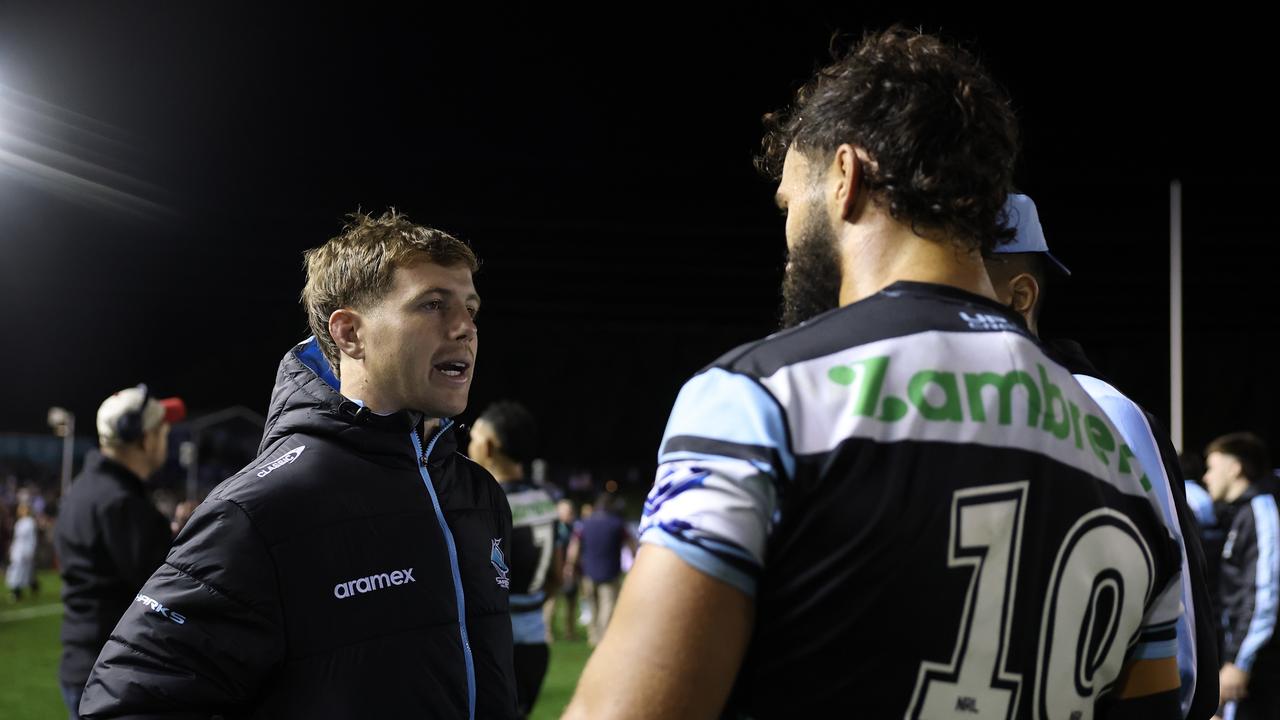
    A potential season-altering knee injury to NSW State of Origin veteran Liam Martin has opened up a rare opportunities for rising NRL star Jacob Preston, who is now among the top contenders to earn his long-awaited debut in rugby league’s most high-profile representative series.

    Martin was forced off the field during Penrith Panthers’ Thursday night match against Canterbury-Bankstown Bulldogs, where current reports point to a moderate MCL sprain that could keep him sidelined for six to eight weeks. The 15-time Origin representative will undergo formal scans this week to confirm the injury severity, with early analysis from sports medical experts noting Martin reported a “loose” feeling in the knee, a symptom commonly linked to grade 2 or higher MCL damage requiring extended recovery time.

    The 2026 State of Origin series opener is scheduled for May 27, exactly six weeks from Martin’s injury. Even if the star back-rower hits the earliest projected return mark, he would have no match fitness leading into the blockbuster clash, making his participation highly unlikely. For NSW Blues coach Laurie Daley, a potential absence would count as a major blow to his starting lineup — but the team is not short of in-form candidates to fill the vacant edge forward spot. Among the leading options are Hudson Young and Haumole Olakau’atu, both of whom have previous Origin experience and are in strong club form this season. Standing out among the contenders, however, is 24-year-old Bulldogs back-rower Jacob Preston, who has been building toward his first Origin call-up for more than a year.

    Preston came tantalizingly close to Origin selection last year, when he earned a spot in the Blues’ training squad in Leura, and has since turned in consistently elite performances for Canterbury that have caught the eye of representative selectors. He was also named to the Australian Men’s Test squad for last year’s Ashes series, giving him valuable experience training alongside some of the game’s top talent.

    “That’s a massive dream of mine. It’s something I’ve wanted to do ever since I was a little kid,” Preston told NewsWire in a recent interview. “All I can do is take it week by week playing good football for the Bulldogs. As long as we’re winning games, we’ll be in contention for those spots, and a lot of other boys will be too. So if I play good footy, then whatever happens from there, happens from there.”

    Since making his NRL debut in 2023, Preston has been a standout core player for the resurgent Bulldogs, turning in a career-defining performance in the club’s stunning upset win over Penrith earlier this season. In that match, he scored one try and set up another with his signature hole-running ability to seal the upset victory, cementing his reputation as one of the league’s most promising young edge forwards.

    Reflecting on his experience with the Australian Test squad last year, Preston said the tour shaped his approach to the game far more than any individual coaching tip. “I learnt so much from that tour. It was a great experience, and I have heaps of lifelong memories I’ll cherish forever,” he said. “I want to put on those (rep) jerseys. I just took what I learnt from all the elite players I was around, implemented it into my training, and hopefully it keeps showing on the field. It wasn’t necessarily a single person (who really helped me). It was more so the level they train at and the accountability they hold themselves to. I think that’s the two main things I took from the tour, and I’m just trying to bring that back to the Bulldogs in my own training.”

    Preston also credited Bulldogs club legend Josh Jackson, a former Origin representative himself, for guiding his development through club training over the past two years. Additionally, his growing on-field combination with young halfback Lachlan Galvin has helped lift both his form and the team’s overall performance this season. Galvin turned in his best NRL performance just last week, and Preston said the pair have spent the pre-season building chemistry that now shows on game day.

    “He was outstanding,” Preston said of Galvin. “He’s been doing it at training, it’s coming out on the field, and as long as he keeps going after it, I’m sure there are going to be plenty more performances like that. We’ve had a pre-season to kind of work on our combinations and learn each other’s little intricacies. It’s only going to continue to build.”

    This season has also seen Preston step into a new level of on-field confidence, most recently marked by a spontaneous post-try celebration that has gone viral among fans: sticking his tongue out after scoring crucial tries against Canberra and Penrith. When asked about the celebration, Preston laughed and said the habit is entirely unplanned. “To be honest, I don’t even know (where it comes from) so it just kind of happens. I don’t even mean to do it, so I probably should stop doing it,” he joked.

  • Pope prioritises world’s fastest-growing Catholic region in major Africa tour

    Pope prioritises world’s fastest-growing Catholic region in major Africa tour

    Pope Leo XIV is set to kick off a high-stakes 11-day pastoral tour across four African nations this Monday, with a core mission to shift global focus to the continent amid its rapidly growing role in global Catholicism, a senior Vatican official has confirmed. This trip marks only the second major international visit the Pope has undertaken since his election to the papacy in May last year, underscoring the Vatican’s growing prioritization of African Catholic communities.

    Recent 2024 demographic data underscores why the tour is ranked as a personal priority for Pope Leo: more than 288 million Catholics — over one-fifth of the global Catholic population — currently reside in Africa, making the continent one of the fastest-growing regions for the Catholic Church. Latest Vatican surveys also confirm a striking, consistent increase in the number of baptized Catholics across the region, further cementing Africa’s centrality to the Church’s future.

    Covering nearly 18,000 kilometers across 18 separate flights, the Pope’s itinerary includes stops in 11 cities across Algeria, Cameroon, Angola, and Equatorial Guinea. In a deliberate symbolic choice, Pope Leo has selected Algeria — a majority Sunni Muslim nation and the only stop on the tour without a large Catholic population — as his first port of call. The country holds deep personal significance for the Pope: it is the birthplace of 4th-century theologian St. Augustine, and Pope Leo is the first pontiff from the religious order that follows Augustine’s teachings of community and humility, principles that have shaped his papacy.

    This visit will mark the first time any pope has traveled to Algeria. A core focus of the Algeria leg will be advancing interfaith dialogue between Christianity and Islam: the Pope will visit the Great Mosque of Algiers, as well as the Basilica of Our Lady of Africa, a shared pilgrimage site for both Muslims and Christians. The basilica’s iconic Black Madonna statue bears an inscription reading “Pray for us and the Muslims,” a testament to the shared spiritual heritage of the two faiths in the region. Father Peter Claver Kogh, rector of the basilica, shared with the BBC that the Catholic community expects Pope Leo to encourage their work building a peaceful, harmonious world where people of all faiths coexist. Still, the choice to open the tour in Algeria has drawn criticism from international human rights groups, which have documented the imprisonment of Christian and Ahmadi Muslim minorities for charges of “unauthorized worship” and offending Islam, a practice that remains widespread in the country.

    After departing Algeria, the Pope will travel to Cameroon, where a decade-long separatist conflict in the country’s two Anglophone regions will frame his visit. The United Nations estimates that at least 6,000 people have been killed in the violence, which grew out of tensions between English-speaking separatists and the Cameroonian government dominated by French-speaking leaders, and more than 500,000 people have been displaced from their homes. Bamenda, the capital of the conflict-battered North-West region, will host a papal Mass for peace and justice at the city’s airport, a gathering many local residents hope will become a catalyst for national reconciliation. Ernestine Afanwi, a 45-year-old displaced woman who fled Bamenda after separatist fighters destroyed her home and shop, now lives with her six children in a makeshift settlement for internally displaced people in Yaoundé, the capital. She told the BBC that if she could meet the Pope personally, she would share her story and ask him to bless the war-torn region, saying she believes his visit can bring long-awaited resolution to the conflict.

    The third stop on the tour, Angola, will center on the themes of peace and post-conflict reconstruction, following a 27-year bloody civil war that ended in 2002. Between 40% and 55% of Angolans identify as Catholic, with the Church’s presence in the country dating back to the late 15th century, when Portuguese explorers and missionaries first arrived on the Angolan coast. During his visit, the Pope will meet with local bishops and celebrate an open-air Mass expected to draw roughly 200,000 faithful worshippers.

    The final stop on the tour is Equatorial Guinea, where more than 70% of the population identifies as Catholic. The Pope is expected to address issues of social justice during his visit, as the country’s long-ruling President Teodoro Obiang Nguema has held power for nearly 50 years, making him one of the longest-serving sitting heads of state in the world. Critics have repeatedly accused Obiang’s government of widespread human rights abuses and systemic oppression, allegations the regime has consistently denied. In addition to meeting with national authorities, Pope Leo will visit a local psychiatric hospital and a prison, and hold a gathering with the country’s youth.

    While this is Pope Leo’s first pastoral visit to Africa since his election to the papacy, the 70-year-old pontiff is no stranger to the continent: before his elevation, when he was still Cardinal Robert Prevost, he traveled to multiple African nations including Kenya and Tanzania. Over the 11-day tour, he will deliver roughly 25 public addresses, meet with national political leaders, engage with local Catholic communities, and host a series of interfaith engagement events.

    Vatican officials note that the ambitious, intensive itinerary is a clear signal of the Holy See’s commitment to deepening its engagement with African Catholicism. By choosing to undertake such an extensive tour of the continent, Pope Leo aims to reinforce Africa’s central role in global Catholic life, framing it as a region defined by profound faith, enduring resilience, and massive potential for future growth, according to Vatican statements.