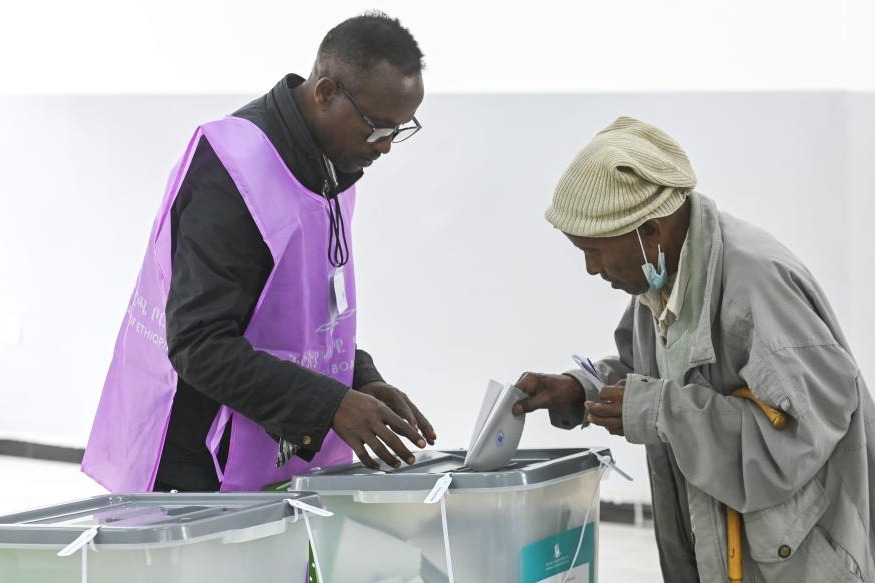
Ethiopia’s seventh national general election, held on Monday, has drawn positive early feedback from regional election monitoring groups, which have highlighted the nation’s innovative use of digital electoral tools and record-breaking voter engagement as key milestones in the country’s ongoing work to consolidate democratic governance — even as persistent security concerns remain a pressing challenge.
This election marks only the second general election held in the East African nation since Prime Minister Abiy Ahmed took office following the 2018 poll. As one of Africa’s most populous countries and a prominent diplomatic actor across the continent, Ethiopia’s electoral developments are being closely monitored by regional governments and global stakeholders alike.
Preliminary assessments published Wednesday by observer delegations from the African Union (AU) and the Intergovernmental Authority on Development (IGAD) outline clear progress in core electoral processes, including voter registration, poll administration, and expanded inclusive access to voting, while confirming that ongoing insecurity continues to disrupt operations in several regions of the country.
Data from the National Electoral Board of Ethiopia (NEBE) shows that total registered voters surpassed 50.5 million — exceeding the board’s original enrollment target and representing a substantial jump in registered voters compared to the previous general election. Under a newly implemented hybrid digital-analog registration system, more than 5.5 million voters completed their enrollment via online digital platforms.
Monitoring teams have singled out the integration of technology as a defining, standout feature of this year’s election. Tech upgrades include GIS-based mapping to digitize, analyze, and map the geographic locations of all voting centers, streamlined digital voter registration tools, and tailored voting accommodations for internally displaced persons (IDPs) and active security service members.
Observers commended NEBE for its strong administrative and operational capacity, noting that these new systemic improvements directly boosted accessibility, transparency, and overall efficiency across the entire voting process.
In a joint media briefing Wednesday, the AU and IGAD observer teams stated: “The way the election board conducted the 7th General Election is commendable,” pointing to the electoral body’s demonstrated neutrality, robust technological preparedness, commitment to inclusive participation, and professional poll administration.
Per mission reports, voting proceeded successfully in 501 of Ethiopia’s constituencies. However, polls were unable to open in the entire Tigray region, as well as parts of Oromia and Amhara, due to active security threats and logistical barriers. Overall, while more than 50,000 polling stations operated as planned across the country, 143 locations remained closed on voting day because of instability, local media reports confirm.
Speciosa Wandira-Kazibwe, head of the IGAD Election Observation Mission, described the level of public engagement in the election as among the most impressive she has observed during decades of election monitoring work across the African continent. “We have never encountered the level of public participation we saw in Ethiopia in other countries,” she said.
Former Kenyan President Uhuru Kenyatta, who led the AU’s observer delegation, also echoed positive assessments, applauding the conduct of the polls and welcoming the efforts by Ethiopian authorities to strengthen the national electoral process.
In line with Ethiopia’s electoral legal framework, official final results are scheduled to be released between one and two weeks after the conclusion of voting.