
When Venezuela opened its massive untapped mineral reserves to private international investment in April 2025, global markets reacted with optimism, marking another step in the country’s post-regime shift following the January ousting of long-ruling leftist leader Nicolas Maduro. What the market excitement overlooks, however, is a deep-rooted security and governance crisis: heavily armed criminal groups have controlled the bulk of the nation’s mining sector for more than a decade, creating a major barrier to legitimate economic development.\n\nVenezuela, already famous for holding the world’s largest proven crude oil reserves, sits on an extraordinary wealth of other critical commodities. The South American nation holds abundant deposits of gold, diamonds, bauxite, and coltan—a mineral critical to modern electronics and defense manufacturing, classified as a strategic critical resource by Western governments—alongside key rare earth elements. Most mining activity is concentrated in the 112,000-square-kilometer Orinoco Mining Arc in eastern Venezuela, with additional mining operations spread across the southern states of Amazonas and Bolivar.\n\nResearcher Lisseth Boon, author of *Oro malandro* (Bandit Gold), an investigative work on Venezuela’s unregulated mining regions, has labeled the country’s illicitly mined gold “blood gold”, a reference to the conflict-fueled “blood diamonds” that funded wars across several African nations. Nearly all active mining operations in Venezuela are under the control of local criminal gangs or Colombian guerrilla groups that operate under the name “sindicatos”, or syndicates, which rule mining territories through a pervasive system of violence and intimidation.\n\n“The syndicates control everything, it’s complicated,” an anonymous local resident from a gang-held territory told AFP, echoing the fear that keeps most locals from speaking out publicly.\n\nSecurity analysts explain that the sindicatos generate massive illicit revenue through systemic extortion of both local residents and mining workers. In many isolated mining regions, the gangs do not just extract profit—they act as de facto government, serving as judge, jury and executioner for local disputes, meting out punishments ranging from brutal beatings to torture for alleged offenses ranging from theft to murder.\n\nYet for some residents in long-neglected mining communities, gang rule has brought a warped form of order. El Dorado, a gritty gold mining town at the center of the Orinoco Mining Arc, is controlled by a notorious gang leader known only by his first name, Fabio—a charismatic figure who has cultivated local support through public charity works, echoing the populist tactics of infamous Colombian drug lord Pablo Escobar.\n\n“Before, if you found a big gold nugget, other miners could kill you for it…Now everyone refrains from doing bad things,” one El Dorado resident told AFP in an interview in Caracas. The resident outlined the patronage system Fabio has built: “When someone is sick he signs a piece of paper and the person goes to the pharmacy and gets everything they need. He buys medicine for hospitals, renovates football grounds, has roads paved and buys food for residents and teachers.”\n\nUnlike small-scale artisanal miners, who make up a large share of the mining workforce and smuggle most of their output out through neighboring Brazil and Colombia, the syndicates generally avoid direct confrontation with large foreign firms, the resident added, allowing new legitimate operations to operate while the groups focus on extracting and smuggling their own illicit gold production.\n\nA 2025 report from Transparency International’s Venezuelan chapter lays bare the scale of criminal and elite collusion in the sector. The report estimates that armed groups, many with direct links to state authorities, control roughly 20 percent of Venezuela’s annual gold output. Overall, 66 percent of the $5.5 billion in annual revenue generated by Venezuelan mining is controlled by political elites who partner with organized crime through opaque informal public-private “strategic alliances”.\n\n“We don’t know the criteria used (by the state) to select partners, their obligations, the duration of the agreements, level of production, the contracts nor the amount of minerals,” Transparency International said, noting a complete lack of transparency around new mining partnerships. The organization also found that while national gold production has surged over the past decade, government revenue from gold mining has not increased, with nearly all profits flowing to criminal networks and corrupt elites.\n\nThe current criminal takeover of Venezuela’s mines traces back to policy decisions made more than a decade ago, Boon explains. When late socialist leader Hugo Chavez suspended all foreign mining concessions in 2011, it created a governance vacuum that criminal syndicates were quick to exploit.\n\n“There was a vacuum. That’s when the syndicates began to force their way in,” Boon said. Over the past 10 years, the violent battle for control of mining revenues has left dozens dead across Venezuela’s mining regions. One of the deadliest single incidents came in 2016, when 17 miners were shot execution-style and buried in a mass grave in the eastern mining town of Tumeremo, but targeted individual killings are an almost daily occurrence across the region.\n\nBoon accuses successive Venezuelan governments of direct complicity in the lawlessness that has consumed the mining sector. “A criminal system of governance was installed….with tacit accords between the syndicates and the state,” she said.\n\nRegional organized crime think tank Insight Crime has echoed these findings, warning that the syndicates exert “deep control” over vast swathes of mining territory. The organization highlighted the Las Claritas syndicate in Bolivar state, which imposes a mandatory “tax” on all mining activity and extracts protection money – colloquially called “vacunas”, or vaccines, from miners and traders in exchange for allowing them to operate.\n\nBoon argues that the syndicates hold local mining communities in a state of “modern-day slavery”, and that dislodging the criminal groups will require unprecedented, unwavering political will from Venezuela’s new transitional government, a challenge that threatens to derail the country’s hopes of revitalizing its battered economy through new private mining investment.
作者: admin
-
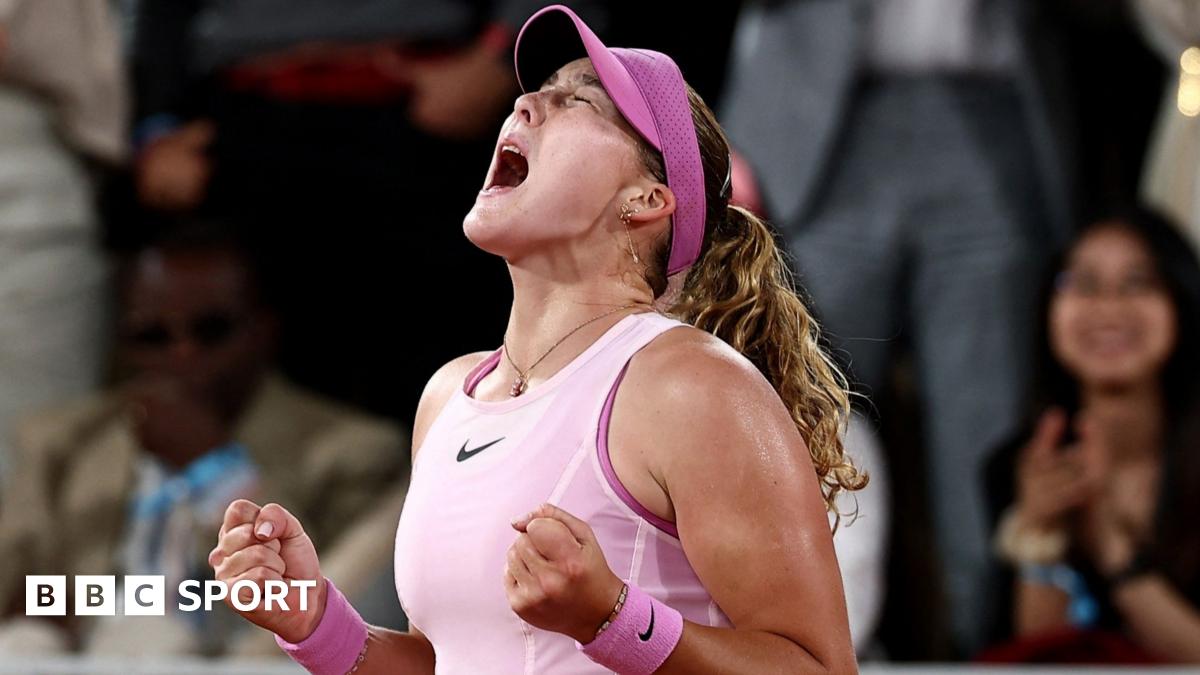
Russian teenager Andreeva beats Kostyuk to reach final
At the 2026 French Open, 19-year-old Russian rising tennis star Mirra Andreeva delivered a clinical 6-1, 6-3 straight-sets victory over Ukraine’s Marta Kostyuk on Thursday to book her spot in the first Grand Slam singles final of her young career. The milestone makes Andreeva the youngest women’s singles Grand Slam finalist since American Coco Gauff reached the same stage of Roland Garros back in 2022, and the first player born after 2005 ever to advance to a major singles championship match.
Already a semi-finalist at the Paris clay-court major in 2024, this run marks another major step forward for a player long marked as a future top competitor in women’s tennis. In the open era, Andreeva ranks as the fourth-youngest woman to reach the Roland Garros final in three decades, joining an elite club of former teenage contenders that includes Martina Hingis, Kim Clijsters and Gauff. If she claims the title on Saturday, she will become the third-youngest first-time Grand Slam champion of the 21st century, trailing only Maria Sharapova and Emma Raducanu.
Entering the semi-final clash, the narrative extended far beyond tennis, shaped by the ongoing Russian invasion of Ukraine that began in February 2022. Kostyuk has been a vocal critic of the war since its start, and has repeatedly condemned Russian athletes who have declined to speak out against the conflict. Sticking to the position Ukrainian players have maintained since the war began, Kostyuk declined to pose for the traditional pre-match handshake photo with Andreeva, and the two players did not shake hands following the conclusion of the contest.
On the court, the form favored neither player on paper: Kostyuk entered the match riding an unbeatable 17-match clay-court winning streak this season, and had beaten Andreeva in both of their prior head-to-head meetings in 2026. But the Russian eighth seed turned the tables completely, producing one of her most mature performances to date even amid blustery on-court conditions. Andreeva’s statistics told the story of her dominance: she committed just 22 unforced errors, 12 fewer than Kostyuk’s 34, and held firm from the baseline while grinding out tough points in defence. Kostyuk, by contrast, could not replicate the high-energy form that carried her to an emotional quarter-final win over fellow Ukrainian Elina Svitolina.
Across her six matches to reach the final, Andreeva has dropped just one set – a second-round comeback win against Spain’s Marina Bassols Ribera. Heading into Saturday’s championship match, she will face either 25th seed Diana Shnaider, her compatriot, or Polish qualifier Maja Chwalinska. As of 2026, Andreeva holds more tour-level wins on clay (21) and overall (35) than any other player on the WTA Tour, a statistic made more notable following the shock early exit of world No. 1 Aryna Sabalenka earlier this week.
Speaking after her semi-final win, Andreeva opened up about the unprecedented emotions of reaching her first major final, admitting pre-match nerves remained a factor even after her deep run a year prior. “I am still very, very nervous. I was nervous coming into this match,” she said. “All of these feelings combined, it is amazing – I have never felt anything like this before.”
Of her opponent, she praised Kostyuk’s impressive form leading into the clash, saying: “Until this match, she has not lost a match on clay. She is an amazing player and a very tough opponent, and I am super happy with the way I played today. I told myself to accept everything that happens on the court and no matter what happens, I am going to fight and give my best. With this kind of mindset, I ended up winning the match.”
With her place in the final secured, Andreeva enters Saturday’s showpiece as the clear betting and form favorite, on the cusp of claiming the biggest title of her burgeoning career.
-
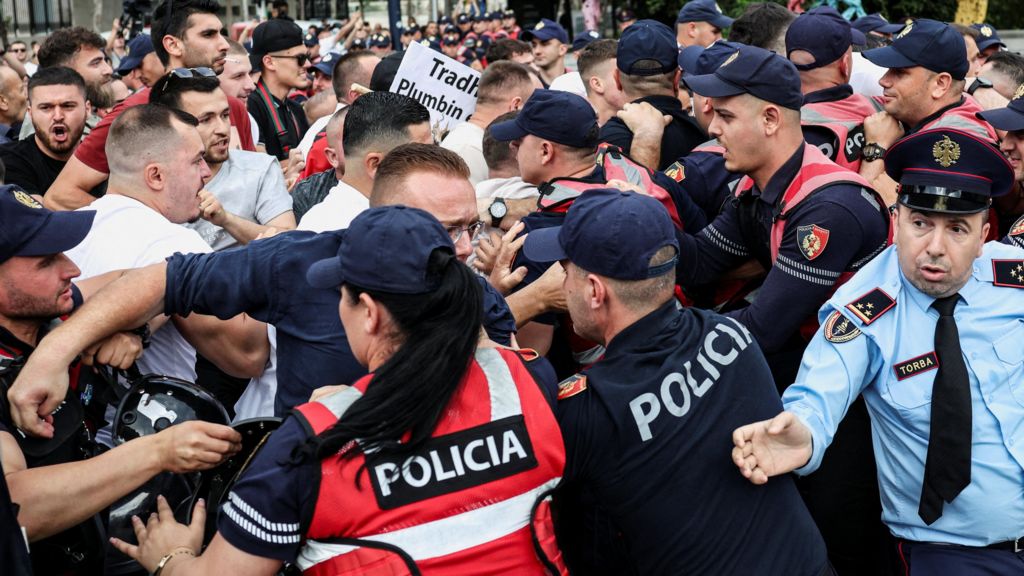
Kushner-backed luxury resort plan sparks protests in Albania
For an entire week, continuous demonstrations have occupied the sidewalk directly outside Albania’s prime ministerial office in central Tirana, turning a normally quiet government district into a hub of grassroots activism. While the small Balkan nation is no stranger to political rallies – the main opposition Democratic Party (PD) has staged them so frequently that locals joke they have become an unexpected landmark for visiting tourists – this week’s nightly gatherings are fundamentally different. Unlike the standard partisan protests that dominate Tirana’s streets, these demonstrations target both Prime Minister Edi Rama’s socialist government and a high-profile foreign investor: Jared Kushner, former US President Donald Trump’s son-in-law and head of the investment firm Affinity Partners.
At the heart of public anger lies a massive proposed luxury tourism development earmarked for Albania’s pristine northern Adriatic coast, spanning Sazan Island and a protected wetland site near the coastal city of Vlora in Zvernec. Affinity Partners is set to be one of the lead investors in the project, which Rama has embraced as a transformative opportunity for Albania’s growing tourism economy. But grassroots protesters have rejected the plan outright, and their movement diverges sharply from the country’s established partisan divides. In a break from opposition norms, many demonstrators have carried signs calling not just for Rama’s resignation but also for the imprisonment of Sali Berisha, PD leader who faces separate public corruption charges, making clear the movement is independent of mainstream political factions.
Adopting a striking pink flamingo as their official emblem, the movement draws inspiration from the 2020s Serbian civic protest movement that used a giant yellow rubber duck as a unifying symbol. For Albanian protesters, the choice is deeply personal: the protected coastal wetlands targeted by the development are a critical habitat for the greater flamingo, a protected species whose survival in the region is already threatened. Beyond wildlife, the development puts dozens of other native plant and animal species that rely on the protected wetland ecosystem at risk, environmental activists argue.
Protesters have also raised sharp questions about the lack of transparency surrounding the deal, noting that negotiations between Affinity Partners and the Albanian government began as early as 2024 without meaningful public input. Many signs carried at the rallies declare “Albania is not for sale,” reflecting widespread anger over the concession of ecologically sensitive public land to foreign developers. While the Albanian government claims all land involved is privately owned and acquired through fully transparent legal procedures, legacy issues from Albania’s 20th-century political history complicate that narrative. After 45 years of total state nationalisation under Communist rule, the post-1990 privatisation process left overlapping, unresolved property claims across much of the country, leaving open questions about the legitimacy of the land transfer.
For the mostly young cohort of demonstrators, however, environmental protection remains the core motivating force. Joni Vorpsi, an ecologist with PPNEA-BirdLife Albania, explained that the proposed development is far more expansive than the government has acknowledged. “This is not a small eco-resort – it would be a new tourist city with around 10,000 accommodation rooms,” Vorpsi said. “It would completely destroy that wild, untouched region. We are demanding all construction halts immediately, and all heavy machinery be removed from the protected area.”
The project has already faced disruption, with police deploying water cannons to disperse demonstrators at one recent rally, escalating tensions between protesters and authorities. Rama has struck a defiant tone in response, appearing openly exasperated by the sustained demonstrations. He has characterised protesters as “well-meaning but misinformed” about the project’s environmental safeguards, arguing that the €4 billion investment would deliver widespread economic benefits, including thousands of new jobs and upgrades to local infrastructure. Going further, Rama has framed the protests as a “hybrid war” driven by economic competition from rival Mediterranean tourism powers, accusing regional actors of sabotaging Albania’s growing tourism sector. That thinly veiled jab at Greece has spilled into public view, with Rama publishing an open rebuke of former Greek Prime Minister Alexis Tsipras over alleged involvement in stoking unrest.
For Kushner, the backlash is not an unfamiliar experience in the Balkans. Earlier this year, he pulled out of a planned Trump International Hotel development in Belgrade, Serbia, after sustained local opposition and the arrest of a senior government minister on corruption charges linked to the project. Backed by the firm, Kushner’s business partner Asher Abehsera has defended the Albanian project’s integrity, stressing that the development prioritises “responsible stewardship” of the coastal environment. “Our focus remains on responsible stewardship, environmental enhancement, job creation, and creating long-term value for local communities,” Abehsera said, echoing the firm’s public commitment to sustainable development.
But with protesters dismissing these assurances and vowing to continue demonstrations until the project is scrapped entirely, the pink flamingo emblem is likely to remain a permanent fixture outside the prime minister’s office for the foreseeable future.
-
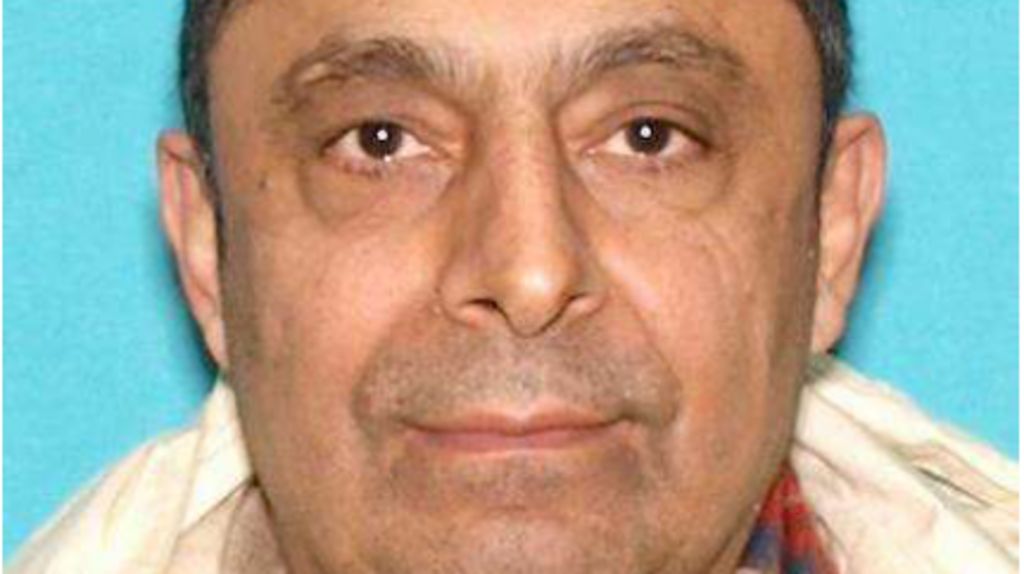
California tech boss accused of smuggling equipment to Iran
In a pre-dawn raid at his Southern California luxury estate, federal law enforcement officials have taken into custody a 63-year-old dual US-Iranian citizen accused of running a more than decade-long sanctions evasion scheme that funneled sensitive American-made computer technology to Iran, including to the country’s nuclear and military institutions.
Jamshid Ghomi, the owner and chief executive of Tehran-based technology firm Faraz Pardaz Rayaneh Co. Ltd (FPR), was arrested Wednesday morning at his Newport Coast home in the Los Angeles metropolitan area, according to announcements from US federal prosecutors. Court documents outline that the alleged illegal operation dates all the way back to 2011, when Ghomi first began organizing illicit shipments of restricted US-origin goods to Iranian buyers.
Prosecutors allege that Ghomi built a complex smuggling network that moved hundreds of tons of specialized networking, cybersecurity, and encryption equipment out of the United States, routing the shipments through the United Arab Emirates to conceal their final destination in Iran. Between 2014 and 2018 alone, the scheme moved more than 250 metric tons of restricted equipment across borders, court records state.
According to the US Department of Justice charging document, FPR served a broad customer base of hundreds of private and public sector entities across Iran. While most clients were civilian entities, prosecutors note that a meaningful share of the company’s business served high-sensitivity end users linked to the Iranian government’s nuclear program and military establishment – violating long-standing US sanctions that ban nearly all commercial trade with Iran.
To hide the profits from his illicit activities, Ghomi allegedly ran an international money laundering network that moved more than $15 million in proceeds through intermediaries in the British Virgin Islands, Hong Kong, Turkey and the United Arab Emirates before sending the funds to his personal accounts in California, prosecutors claim. The illegal earnings were misrepresented to US tax regulators as foreign inheritance, according to the charges.
Prosecutors allege that a large portion of these illegal profits went toward building Ghomi’s Orange County luxury compound. Records show he purchased the land for the property in 2010 for roughly $4.5 million, before pouring an additional $10.5 million into constructing the current $35 million mansion, which federal officials have announced they will seek to seize as part of the criminal case.
Ghomi faces charges of conspiring to violate the International Emergency Economic Powers Act, the federal statute that enforces US economic sanctions. He has not yet made any public statement responding to the allegations, and entered no plea during his initial court appearance Wednesday. His formal arraignment is scheduled for July 13, and a conviction on the charges could carry a maximum sentence of 20 years in federal prison.
“Ghomi is accused of aiding our declared enemies by selling US-origin computer networking parts to Iran and earning millions of dollars in violation of US sanction laws,” said Assistant Attorney Bill Essayli in a statement following the arrest. “Our nation’s laws prohibiting doing business with one of the world’s largest state sponsors of terrorism must be enforced and obeyed. We will hold him accountable by seeking an appropriate prison sentence and by seizing his assets, including his $35 million Newport Beach mansion.”
The arrest comes amid ongoing tense relations between the US and Iran, with long-running disputes over Iran’s nuclear program at the center of the standoff. The Trump administration has repeatedly accused Iran of pursuing a nuclear weapon under the cover of a civilian atomic energy program, an allegation Iranian officials have continuously denied. When questioned by reporters on Tuesday, US President Donald Trump confirmed that diplomatic negotiations between the two countries are ongoing, saying talks “are going on continuously,” though no breakthroughs have been announced to end the years-long conflict.
-

Fifa bans all water bottles from World Cup games
A controversial new policy from Fifa ahead of this summer’s highly anticipated World Cup has drawn sharp criticism, after public health advocates raised urgent warnings that the governing body’s total ban on water bottles inside match venues could put thousands of attending fans in danger.
The sweeping restriction, which applies to all outside water bottles brought into stadiums during World Cup games, marks an unexpected shift in event security protocols for the tournament. While Fifa has not yet publicly elaborated on the full reasoning behind the ban, it aligns with broader security measures often implemented for large-scale global sporting events to restrict outside items entering venues.
However, health experts and fan advocacy groups have pushed back hard against the measure, warning that summer tournament conditions in the host nation bring high temperatures and prolonged periods of exposure to heat during matches. Without access to personal water bottles, fans may struggle to stay properly hydrated throughout games, increasing their risk of heat exhaustion, dehydration, and other heat-related health complications that could require emergency medical intervention.
As of the latest update, Fifa has not issued a formal response addressing the health warnings, leaving fans and public health officials waiting for clarification on whether the policy will be adjusted ahead of the tournament’s opening match. The debate has already sparked widespread discussion among soccer supporters around the world, many of whom have voiced concerns about balancing event security with basic fan health and comfort during the month-long competition.
-
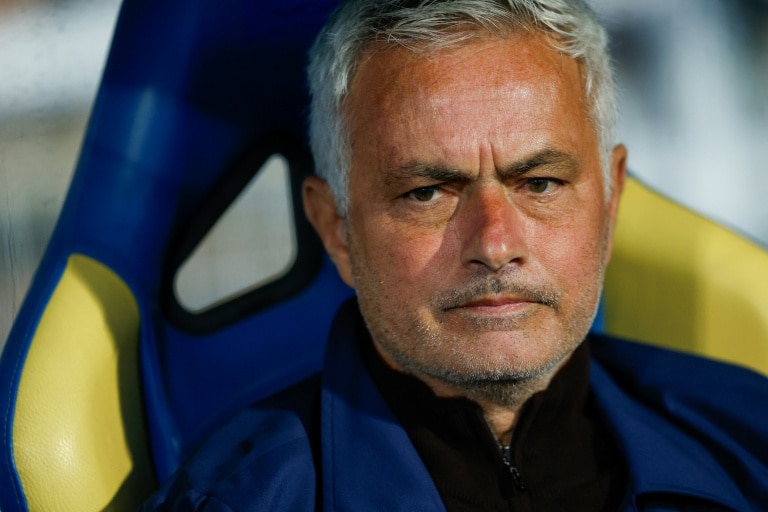
Mourinho takes Turkey to top Europe rights court over sanctions
One of football’s most high-profile and controversial managers, Jose Mourinho, has taken his battle with Turkish football authorities to Europe’s highest human rights court, arguing that disciplinary sanctions imposed on him during his tenure at Turkish powerhouse Fenerbahce violated his fundamental rights. The case was originally lodged with the European Court of Human Rights (ECHR) in March 2025, almost half a year before the Portuguese manager was dismissed from the Istanbul-based Super Lig club following its failure to secure a spot in the UEFA Champions League.
New details of the legal challenge, first obtained by Agence France-Presse via court documents on Thursday, confirm the lawsuit centers on disciplinary action handed down by the Turkish Football Federation (TFF), which penalized Mourinho for what it labeled unsportsmanlike conduct. The controversy dates back to November 2024, when Mourinho made public comments about fans of a rival Turkish club and the country’s match officials. Those remarks triggered an immediate five-match suspension and two separate fines totaling approximately $21,000.
According to an ECHR document dated May 13, Mourinho has raised two core legal complaints rooted in the European Convention on Human Rights. First, under Article 6 of the convention, he argues that the disciplinary dispute against him was not adjudicated by an independent and unbiased judicial body. Second, he claims he never received formal notification of the TFF’s final ruling, and that the penalties imposed on him directly infringed on his right to freedom of expression protected under Article 10 of the convention.
The Strasbourg-based court has already moved forward with the case, confirming it will accept the complaint and issuing a formal list of questions for Turkish state authorities to answer as the legal process progresses.
Mourinho’s 14-month spell at Fenerbahce was marked by fan excitement from the very start, but ultimately ended in disappointment. When the self-styled “Special One” first arrived in Istanbul in June 2024, he was greeted by thousands of cheering supporters clad in the club’s iconic yellow and black kit, reception comparable to that of a global rock star. Despite the high expectations, Mourinho failed to deliver on the club’s top priority: ending a 10-year league title drought that stretches back to Fenerbahce’s last Turkish Super Lig championship in 2014.
Since his departure from Fenerbahce, Mourinho has already taken up a new post as head coach of Portuguese top-flight club Benfica. Recent industry reports, however, suggest the veteran manager could be on the move again within days, with speculation mounting that he will return to Real Madrid, the Spanish giant he managed from 2010 to 2013, to retake the club’s head coaching position.
-

Mboko hails ‘Queen’ Serena ahead of tennis legend’s return
After more than two years away from competitive tennis, 23-time Grand Slam singles champion Serena Williams is gearing up for a stunning return to action, set to compete in women’s doubles at the Queen’s Club Championship with 19-year-old Canadian rising star Victoria Mboko.
The 44-year-old American legend stepped onto the grass practice courts at the west London venue alongside Mboko on Thursday, kicking off preparations for next week’s Wimbledon warm-up tournament. Mboko, the 2025 WTA Newcomer of the Year, later shared a photo of the pair on her Instagram page, showering Williams with praise ahead of their tournament debut.
Calling Williams the “Queen” of tennis, Mboko wrote that sharing a court with one of the greatest athletes of all time is a profound honor, adding that she is extra excited to compete alongside Williams and noting how special the sport of tennis is. The age gap between the new doubles partners is 25 years: Mboko was born decades after Williams launched her legendary professional career.
Williams originally stepped away from competitive tennis following the 2022 US Open, where widespread coverage framed the exit as a retirement. But the icon never explicitly used the term “retirement,” instead describing her exit as “evolving away” from the sport to focus on other life chapters, including raising her two young children with husband Alexis Ohanian. For months, tennis fans and analysts have speculated about a potential return, and Williams officially confirmed her comeback in a public announcement earlier this week.
“Queen’s Club feels like the perfect place to begin this next chapter,” Williams said in her statement, adding that grass courts have produced some of the most meaningful moments of her decorated career, and she is eager to compete again on one of the sport’s most iconic stages. Williams has claimed seven Wimbledon singles titles over her career, making the grass surface a fitting venue for her return.
Williams and Mboko received a wildcard entry into the 16-team Queen’s Club women’s doubles draw, securing their spot in the main tournament draw. While Williams is best known for her record-breaking singles career, she boasts an equally impressive resume in doubles: she holds a career 192-35 win-loss record and claimed 22 of her 23 career doubles titles alongside her sister, Venus Williams. The iconic Williams sisters pair won all 14 Grand Slam doubles finals they competed in, a record that remains unmatched in modern tennis.
With the Wimbledon Championships set to kick off on June 29, Williams has not yet revealed whether her comeback will include entering the singles draw at the sport’s most prestigious grass court tournament. Her last Grand Slam singles title came at the 2017 Australian Open, where she won the championship while pregnant with her first child.
-
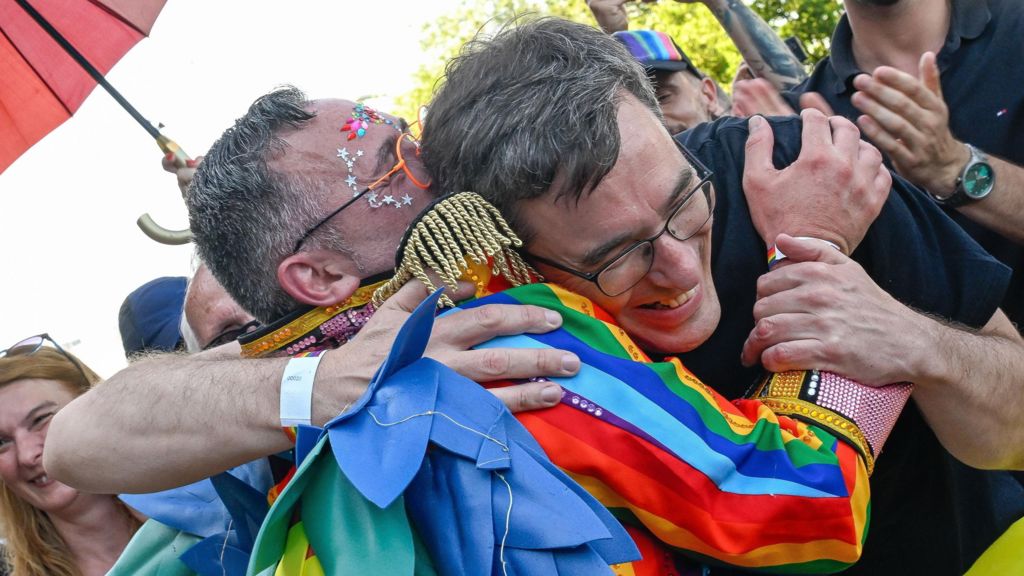
Charges dropped against Budapest mayor over 2025 Pride march
In a major legal shift following the end of Viktor Orbán’s 16-year consecutive rule in Hungary, national prosecutors have officially dismissed all criminal charges against Budapest Mayor Gergely Karácsony connected to his role in organizing an LGBTQ Pride march last year that proceeded despite a nationwide government ban.
The controversial ban on public events involving the LGBTQ community was introduced by Orbán’s administration, which had spent years advancing a conservative agenda targeting queer Hungarians. The 2025 Budapest Pride march went ahead regardless in June that year, with Karácsony openly attending and addressing the massive crowd even after police formally banned the gathering. Organizers confirmed at the time that a record-breaking 200,000 participants joined the march, marking one of the largest public demonstrations against Orbán’s policies in his final years in office. During his speech to attendees, Karácsony declared, “Neither freedom nor love can be banned in Budapest,” a line that quickly became a rallying cry for LGBTQ rights activists across Central Europe.
Hungarian law enforcement formally filed charges against Karácsony this past January, just months before a national election that would upend the country’s political landscape. But a key turning point came in April, when the European Court of Justice (ECJ)—the European Union’s highest judicial body—issued a landmark ruling that found Hungary’s restrictive anti-LGBTQ laws violated core EU regulations. The laws, which framed restrictions as a child protection measure, banned any so-called “promotion” of homosexuality or gender transition to people under 18. The ECJ ruled that the legislation ran counter to EU commitments to equality, non-discrimination, and protection of minority rights.
Nine days after that ECJ ruling, Hungarian voters headed to the polls and ended Orbán’s 16-year streak of continuous governance, bringing a new administration led by Prime Minister Péter Magyar into power. On Thursday, prosecutors formally announced the decision to drop all charges against Karácsony, explicitly tying the move to the ECJ’s landmark decision. “Considering the ruling by the European Court… the prosecutors dropped charges against the Budapest mayor for violating the law on freedom of assembly,” the prosecution service said in its official statement. As of Thursday afternoon, Karácsony has not released any public comment on the dismissal of charges.
-
UK PM says Elon Musk ‘trying to whip up division’ over student’s murder
A high-profile political confrontation has erupted between United Kingdom Prime Minister Keir Starmer and American billionaire tech entrepreneur Elon Musk, after Musk’s incendiary commentary on the highly charged murder of 18-year-old Henry Nowak prompted accusations of foreign interference and deliberate division of British society. The December 2024 stabbing death of Nowak in Southampton, carried out by 23-year-old Vickrum Digwa, has become a flashpoint for far-right political mobilization in the UK, after controversial details of the initial police response emerged.
Digwa, who used a 21-centimeter ceremonial knife to kill Nowak during an altercation over a mobile phone, initially misled investigators by claiming Nowak had racially insulted him and that he was the actual victim of the confrontation. Earlier this week, Digwa was sentenced to a minimum of 21 years in prison for the murder. In the immediate aftermath of the stabbing, responding officers placed the mortally wounded Nowak in handcuffs while waiting for medical support; body camera footage capturing Nowak repeatedly telling officers he could not breathe has been described as “harrowing” by Starmer himself. Far-right political figures have seized on the case to push unsubstantiated claims that British policing systematically prioritizes ethnic minority communities over white citizens — allegations that both Starmer’s newly elected Labour government and national police leadership have forcefully rejected.
Musk, the billionaire owner of social media platform X, has amplified these divisive claims through multiple public posts on his platform. In one incendiary post, Musk asked his hundreds of millions of followers whether they were aware that “official police policy requires them to be racist against Whites?” He has gone further than commentary, publicly offering to fund a private prosecution against Hampshire Police over their handling of the case, and has repeatedly insulted the force publicly. This intervention crossed a red line for Starmer, who called out Musk’s actions during a press briefing Thursday ahead of a scheduled meeting with Nowak’s family at his official 10 Downing Street residence.
Speaking to reporters, Starmer emphasized that Musk’s actions amounted to unwelcome interference in British domestic politics. “We need to also assert who we are as a country, because Musk, again, has been interfering in our politics in the last few days, trying to whip up division. That is not who we are in Britain. In Britain, we are reasonable, tolerant people,” Starmer said. He added that the dignified response of Nowak’s own family set an example for the nation: Nowak’s father has publicly urged that his son’s killing not be exploited “to create further division, hatred or tension.”
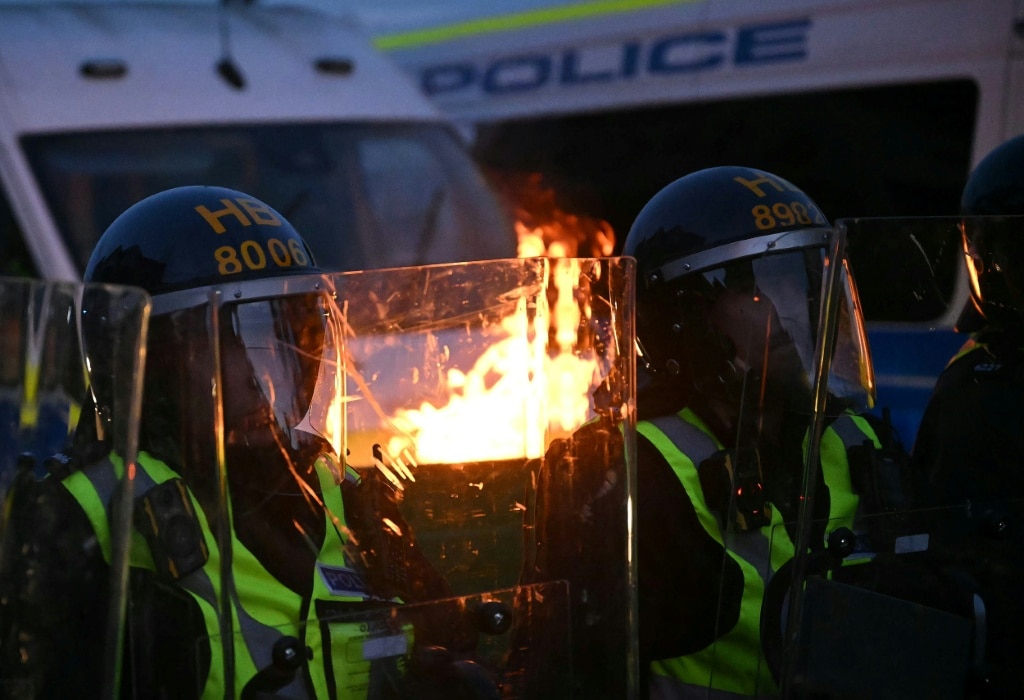
The prime minister also addressed unrest that followed Digwa’s sentencing, when a far-right-organized protest in Southampton on Tuesday night turned violent, with demonstrators throwing bricks, flares, and chairs at responding police officers. On Thursday, a 44-year-old man pleaded guilty to charges of violent disorder and possession of an offensive weapon connected to the protest, while a second individual faces assault charges. Starmer said there was “no justification” for the violence, and also condemned remarks by senior far-right leader Nigel Farage, head of the popular Reform UK party, who publicly called for the public to respond to the murder with “pure cold rage.” Starmer called the comment unforgivable, noting that Farage’s remarks have contributed to rising racial tensions across the country; Farage has publicly defended his comments since they were made public.
While Starmer has joined critics in acknowledging that the case raises major unanswered questions about police conduct, official investigations are already underway. The UK’s Independent Office for Police Conduct (IOPC), the national watchdog for police behavior, launched a probe into the response shortly after the killing, and is expected to release its findings within three months. Officials also announced Thursday that a full coroner’s inquest, convened to determine whether police actions contributed to Nowak’s death, will open before a jury in September 2027.
This public clash between Starmer and Musk is not unprecedented: Musk has been a consistent and vocal critic of Starmer dating back to before the Labour leader won the 2024 UK general election, in large part due to Starmer’s previous career as the UK’s top public prosecutor. The two figures last clashed publicly in 2024 over the long-running “grooming gangs” sexual abuse scandal, when Starmer accused Musk of deliberately “spreading lies and misinformation” to undermine his government and stoke public anger.
-

‘I’m a fan of no bunker’: Wayne Bennett fumes at crucial missed call as his Rabbitohs fall to third loss in a row
In a tense Thursday night NRL clash that ended with Manly Sea Eagles notching up a 28-14 victory over South Sydney Rabbitohs, a contentious uncorrected officiating error has dominated post-match conversation, with veteran Rabbitohs coach Wayne Bennett launching a scathing attack on the sport’s multi-million-dollar bunker review system. The result extended South Sydney’s losing streak to three consecutive games, a run that has left Bennett openly frustrated with his side’s sliding form as the NRL season hits its midpoint. For Manly, the triumph capped off a fairytale week for incoming head coach Kieran Foran, who signed a three-year contract extension to stay at the club he once captained as a player.
The game hung on a knife-edge at 10-8 when Manly’s stand-in fullback Clayton Faulalo broke through the Rabbitohs defensive line to score a pivotal try that pushed the Sea Eagles further ahead. What went unseen by on-field officials at the time, however, was a clear mistake in the preceding play-the-ball from Manly edge forward Ben Trbojevic: match replays clearly showed Trbojevic bobbled the Steeden, with the ball appearing to stick to his hand rather than being placed correctly as NRL rules mandate. On-field referee Adam Gee failed to spot the infraction, and crucially, the bunker review officials did not have the authority to intervene and correct the call on a play-the-ball error.
Speaking to reporters after the final whistle, Bennett did not mince his words when questioning the purpose of the league’s heavy investment in the bunker system. “He didn’t play the ball properly, did he? It’s as simple as that, they pay all this money for the bunker and we still don’t get it right,” Bennett said. While the veteran coach stressed his underperforming side did not deserve to win on the night of the game, he argued that the system had failed its core purpose of getting critical decisions right.
“We weren’t playing well, so I’m not going to use that as an excuse. But the bottom line is that’s what they’re there for,” Bennett explained. “They play the ball, they’ve got to go back to the play the ball because a try was scored and that was all in the one movement. And if that’s an acceptable play the ball, then the game is going to change enormously really quickly.”
Bennett doubled down on his long-standing criticism of the review system, arguing that bunker officials have every advantage including multiple replay angles, hindsight and unlimited time to reach a correct ruling, yet still made costly mistakes. “We’ve got a bunker, it’s supposed to be perfect because they expect us to be perfect,” he said. “They have all the opportunity to make a decision and to see it. And they still get it wrong. I’m a fan of no bunker, I can tell you. I’d rather just the game played on with life and accept it like we always accepted it. Because they don’t get it right all the time, and they should, because they’ve got the benefit of hindsight, and there’s no time limit on their decision making.”
Beyond the officiating controversy, Bennett made clear his deep frustration with his own side’s form, which has seen the Rabbitohs slip down the ladder after a promising start to the season. “We’re not anywhere near where we should be, and we’re well into the season,” he said. “We should be playing some good football and we’ve gone backwards, we’re not going forward at the moment. Our performances are going backwards.” The Rabbitohs’ high error rate choked their much-vaunted attacking line-up for the majority of the clash, leaving them unable to mount a comeback after the controversial try.
For Manly, the win was the eighth in 10 games under Foran’s interim leadership, pushing the Sea Eagles back into the NRL’s top four ahead of their scheduled bye next week. The victory capped off a week of celebrations for Foran, who had confirmed he would continue as head coach for the next three seasons, with the club’s home ground temporarily renamed “Foz Pines Park” for the occasion, and a local KFC even superimposed Foran’s face onto the chain’s iconic Colonel Sanders logo in a playful tribute. Manly captain Jake Trbojevic said the team was determined to deliver a strong performance to reward Foran after a week of hype surrounding the new contract.
“On the way here, everywhere I drove had ‘Fozball’, ‘Foz Pines’, Kieran Foran Chicken, so I’m like, ‘geez, we better play good,’” Trbojevic told reporters after the match. “There was a lot going on but it was a really good performance.” Faulalo, who scored the controversial match-turning try, suffered a low-grade hamstring strain during the build-up to his score, but club officials have confirmed the injury is not expected to keep him sidelined for an extended period.