Mali, the West African nation grappling with a decade-long Islamist insurgency, has entered a new phase of political and security upheaval after a devastating large-scale coordinated attack by an insurgent alliance left its sitting defense minister dead and triggered a major cabinet shakeup.
The violence that unfolded across the country starting on April 25 marked one of the most sweeping insurgent offensives in recent years. Residents of towns and cities from the northern desert regions to areas near the capital Bamako awoke that morning to the sound of sustained gunfire and explosions, as two disparate armed groups — the separatist Azawad Liberation Front (FLA) and Jama’at Nusrat al-Islam wal-Muslimin (JNIM), an al-Qaeda-affiliated jihadist organization — launched synchronized raids targeting military and government positions across the country.
Among the highest-profile casualties of the offensive was Sadio Camara, Mali’s then-defense minister, who died in a suicide truck bombing targeting his residence just outside Bamako. More than a week after the initial attacks began, the country remains mired in a spiraling security crisis that has called into question the capability of Mali’s ruling military government to contain the decade-long insurgency.
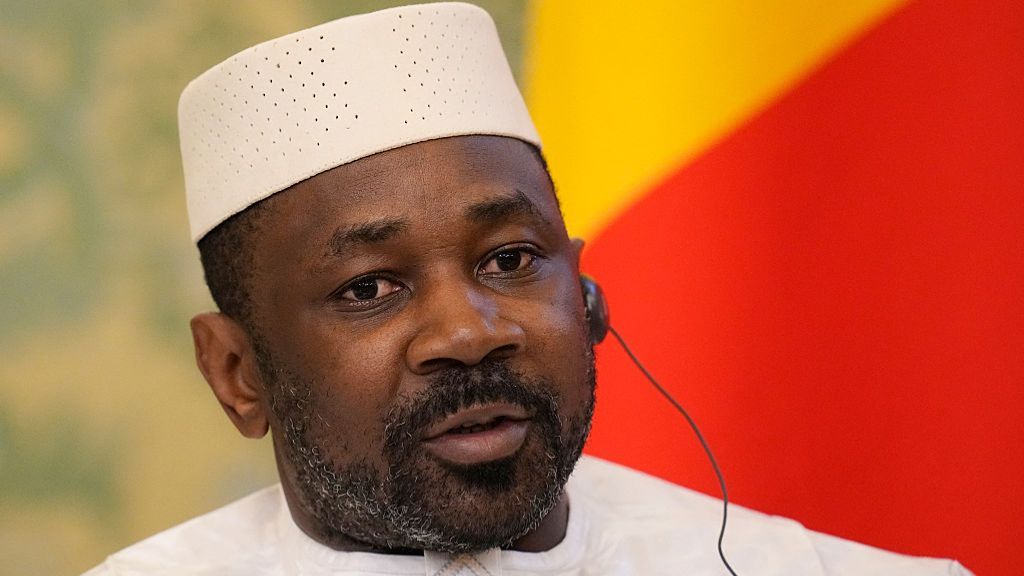
In an official decree broadcast on Malian state television Monday, junta leader General Assimi Goïta announced he would step into the vacant defense minister role to lead the government’s counter-insurgency response. General Oumar Diarra, the Malian army chief of staff, was appointed to support Goïta as a delegate minister, according to the announcement.
Goïta, who first seized power in a 2020 military coup, initially rose to prominence on a promise to resolve Mali’s long-running security crisis and restore stability to the conflict-torn nation. But the recent offensive has delivered a major blow to the junta’s credibility: the coordinated attacks forced Malian government forces and their Russian allied fighters to withdraw from Kidal, a key strategic city in northern Mali, a retreat that has fueled widespread public and international skepticism about the government’s military hold on the country.
In the days following the offensive, Malian authorities have moved to crack down on alleged internal complicity in the attacks. Over the weekend, security services announced the arrest of a group of active and retired Malian soldiers suspected of providing support to the insurgents. The public prosecutor for a Bamako military court confirmed that an ongoing investigation has confirmed links between both serving and former military personnel and the planning and execution of the April 25 raids.
To ramp up counter-insurgency operations, Mali has partnered with military forces from neighboring Niger and Burkina Faso to launch joint air strikes against the insurgent alliance. Officials from Niger confirmed that the coordinated cross-border operation began just hours after the initial insurgent attacks were launched. All three Sahel nations are currently led by military governments, and together they formed the Alliance of Sahel States in recent years after expelling French counter-insurgency troops, the former colonial power that had deployed to the region to combat the insurgency. The three governments instead turned to Russian military fighters to support their counter-insurgency campaigns.
Despite this shift in military partnerships, the insurgency has continued to expand across the Sahel region. Large swathes of territory in all three countries remain outside of government control, and coordinated attacks on military and civilian targets have become increasingly frequent, leaving local populations trapped between ongoing violence and ineffective government security provision.