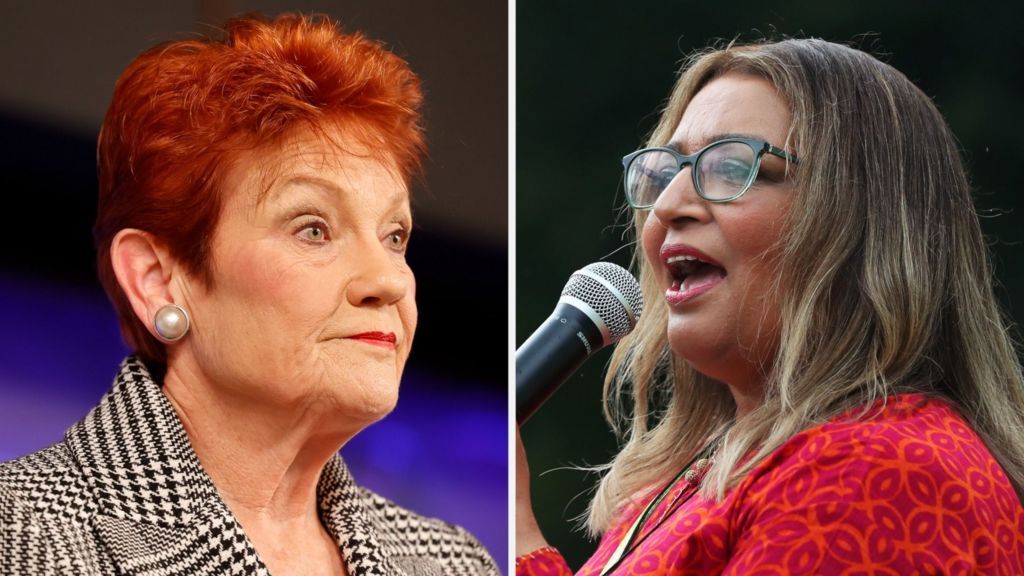
In a landmark decision for anti-racism accountability in Australian politics, the Federal Court of Australia has rejected far-right One Nation leader Pauline Hanson’s appeal against a 2024 ruling that found she racially vilified Greens Senator Mehreen Faruqi in a 2022 inflammatory social media post.
The conflict dates back to September 2022, the day Queen Elizabeth II passed away. Faruqi, a Pakistani-born Australian politician and deputy leader of the Australian Greens, publicly shared a nuanced social media post: she offered condolences to Australians mourning the late monarch, but also openly criticized the British Empire as a racist project built on stolen land, stolen lives, and extracted wealth from colonized nations across the globe. The post drew an immediate angry response from Hanson, who replied by telling Faruqi to “go back to Pakistan” — a comment that would spark years of legal action.
In 2024, Judge Angus Stewart first ruled that Hanson’s comment was a clear variation of the harmful, centuries-old “go back to where you came from” racist trope that has long targeted immigrant and racial minority communities. Stewart found the comment implicitly targeted Faruqi for her Muslim faith and South Asian background, found Hanson in violation of Australia’s Racial Discrimination Act, and ordered her to delete the offending tweet and cover all of Faruqi’s legal costs.
Hanson appealed the ruling to the full Federal Court, arguing that her comment qualified as protected political speech. But on Monday, Justice Melissa Perry dismissed the appeal entirely, upholding the original 2024 finding of racial vilification in full.
Outside the court after the ruling was handed down, Faruqi framed the decision as a victory for all racial and religious minority communities in Australia. “Today’s win is for every single person who has been made to feel that their belonging in this country is conditional,” she told reporters. She emphasized that the legal case was never about personal retaliation, but about holding racist actors accountable for their harmful words. “Hate speech is not free speech,” she reaffirmed.
This ruling comes amid a pattern of inflammatory, anti-minority rhetoric from Hanson that has drawn widespread criticism in recent years. Hanson has long pushed for an outright ban on Muslim immigration to Australia, and earlier in 2025 she faced national backlash for an interview claiming there are no “good” Muslims. Just this month, she was forced to deny she was advocating for a return to the controversial White Australia policy — a 70-year national policy that banned non-white immigration to Australia from 1901 until the 1970s — during a podcast interview with British far-right extremist Tommy Robinson. During that conversation, when Robinson asked Hanson how Australia came to accept “Pakistanis, Somalis, all of these African problems with violent Africans”, Hanson replied that the shift began when the White Australia policy was abolished. Her comments in the interview reinforced longstanding concerns about her commitment to white nationalist ideological positions.