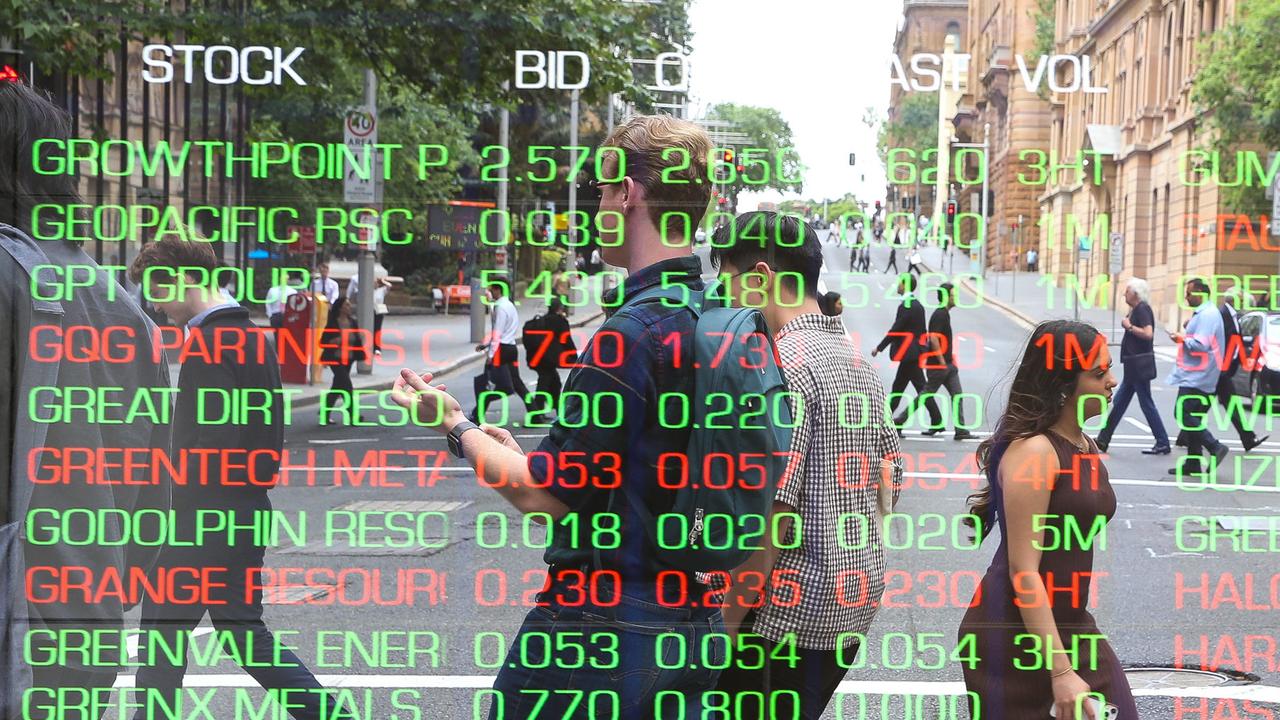
On Friday, a strong five-day rally in Australia’s technology sector failed to offset broader investor caution tied to unresolved Middle East peace negotiations, leaving the country’s key sharemarket benchmark in negative territory. The benchmark S&P/ASX 200 closed down 8.10 points, or 0.09%, at 8946.90, while the wider All Ordinaries index retreated 5 points, or 0.05%, to settle at 9168.60.
Trading was split across the market’s 11 sectors, with six closing in positive territory and five ending the session lower. Technology stocks emerged as the clear outperformer, with the sector’s index notching a 12.99% gain over the previous five trading days, and extending upward momentum into Friday. Standout gainers in the space included logistics software firm WiseTech Global, which rose 2.85% to $46.18, data center operator Next DC Limited, which climbed 1.58% to $14.12, and communications technology firm Codan, which added 0.89% to $33.97.
These gains were more than offset by pullbacks in consumer discretionary shares and financial stocks. Retail conglomerate Wesfarmers, the country’s largest retailer by revenue, dropped 1.63% to $72.85, electronics retailer JB Hi-Fi fell 0.50% to $76.07, and home goods chain Harvey Norman slid 2.97% to $4.57. Australia’s big four banks also posted a mixed performance: Commonwealth Bank of Australia eked out a 0.07% gain to $178.23, and ANZ Group added 0.50% to $37.92, while Westpac Banking Corporation fell 0.72% to $39.73, and National Australia Bank slumped 1.98% to $42.55.
Beyond equities, the Australian dollar saw slight downward movement after hitting a four-year high in the previous session. During Thursday’s Asian trading window, the currency briefly touched a peak of 71.97 U.S. cents before retreating marginally to 71.63 U.S. cents by Friday’s close. Commonwealth Bank senior economist Kristina Clifton projected that the local currency could receive a short-term 1-2 U.S. cent boost if the Strait of Hormuz, a critical global oil chokepoint currently disrupted by regional tensions, reopens to full commercial traffic. Clifton noted that a full reopening remains 3 to 4 weeks away based on current projections.
Investor anxiety over the trajectory of Middle East peace talks and the ongoing uncertainty around maritime access through the Strait of Hormuz has left market strategists warning of elevated downside risk for Australian and global equities. AMP chief economist and head of investment strategy Shane Oliver noted that while major markets have likely absorbed the worst impacts of the regional conflict and associated oil price shock if oil shipments resume quickly, the unresolved uncertainty around peace talks and Strait access means a full 15% peak-to-bottom market correction remains a distinct possibility. Oliver also flagged stretched equity valuations, U.S. political uncertainty tied to former President Donald Trump and upcoming midterm elections, growing concerns over the private credit sector, and unquantified risks tied to artificial intelligence adoption as additional headwinds for markets in the coming months.
In individual company news, buy now, pay later provider Zip emerged as the session’s top gainer, jumping 13.66% to $2.33 after reporting a 41.5% year-over-year surge in third-quarter cash earnings before interest and tax, driven primarily by strong revenue growth across its U.S. operations. Civil contractor NRW Holdings also climbed 2.18% to $6.10 after announcing its fully owned subsidiary Fredon had secured A$160 million in new electrical and mechanical infrastructure contracts. On the downside, online furniture retailer Temple & Webster was the session’s largest loser, sliding 6.45% to $6.66 despite no new public announcements from the company to explain the pullback.