On Thursday, Lebanese President Joseph Aoun will travel to Ankara for a high-stakes one-day meeting with Turkish President Recep Tayyip Erdogan, a diplomatic mission focused on bringing long-overdue clarity to a relationship that has remained formally intact but strategically undefined amid sweeping shifts in Middle Eastern geopolitics. Unlike traditional state visits packed with cabinet delegations and formal treaty signings, Aoun will be accompanied only by a small group of senior presidential advisors, with no binding bilateral agreements scheduled to be finalized during the talks.
Multiple Lebanese and Turkish sources confirmed to Middle East Eye that the discussions will center on mapping out the broader strategic contours of the relationship between Beirut and Ankara. Key topics on the agenda include Turkey’s long-held concerns about Lebanon’s regional alignment, as well as new opportunities to expand bilateral military and diplomatic cooperation. A senior Lebanese insider described the meeting as a critical starting point for a more transparent bilateral dialogue, noting that Lebanon’s fragile domestic politics and exposed geographic position require it to balance relationships across competing regional blocs without alienating any major power.
While diplomatic ties between the two countries have never been severed, both sides have acknowledged a persistent gap in clear communication around their respective core political priorities. The senior Lebanese source emphasized that this lack of regular open dialogue has not risen to the level of public Turkish discontent with Lebanon’s policy direction, but the upcoming meeting is designed to address that gap head-on. “This will be a full, open and honest exchange between the two heads of state,” the source added.
Far from a reconciliation effort to repair broken relations, the visit is an attempt to add explicit political definition to a partnership that has already operated through quiet diplomatic, economic and security channels, but has never been anchored by a shared strategic framework. For Lebanon, the meeting comes as the country walks a careful diplomatic tightrope, managing relationships with Turkey, Gulf Cooperation Council states, the United States, Europe and other regional actors while avoiding any permanent, exclusive alignment with a single bloc.
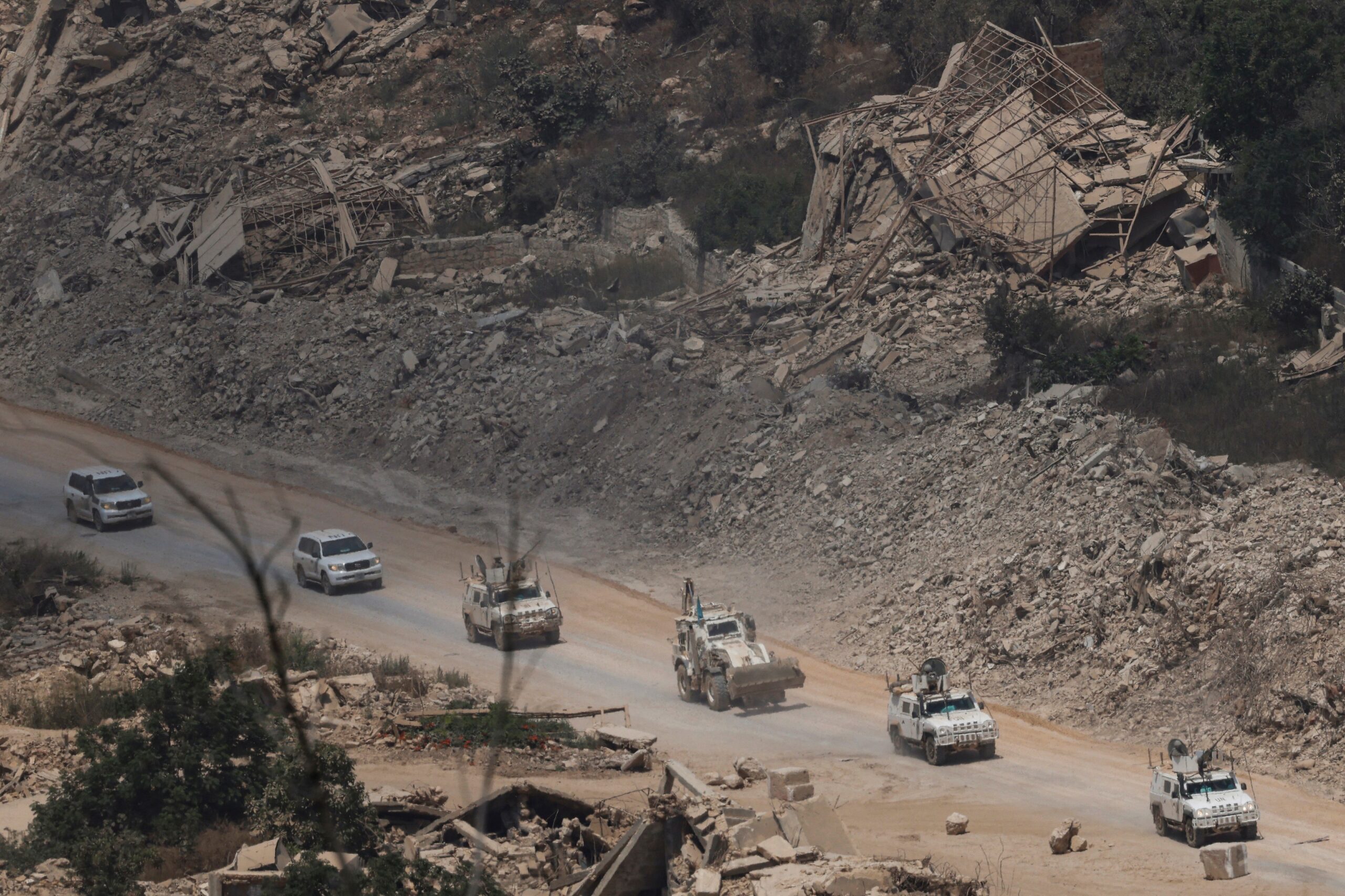
For Turkey, the summit offers a rare opportunity to lay out its clear expectations for Lebanon’s positioning in a region increasingly defined by cutthroat competition over energy transit routes, maritime boundary claims, defense pacts and relationships with Israel. Ahead of his departure, Aoun told Turkey’s state-owned Anadolu Agency that Lebanon welcomes a meaningful Turkish role in any future international governance arrangement for southern Lebanon, particularly as global powers negotiate the future mandate of the United Nations Interim Force in Lebanon (UNIFIL). Turkey has a long history of contributing to UNIFIL’s maritime task force and has maintained steady military and security cooperation with the Lebanese state for decades, and Aoun’s remarks were crafted to signal that Beirut views Ankara as a contributor to Lebanese stability, not just an outside power pursuing its own regional interests.
Aoun is also expected to use the meeting to update Turkey on efforts to implement existing agreements governing southern Lebanon, including calls for a full Israeli withdrawal from contested territory and continued international backing for the Lebanese Armed Forces (LAF). However, Turkish officials plan to use the summit to press Aoun for clear answers on the future direction of Lebanese foreign policy, sparked by Beirut’s 2023 unilateral maritime border agreement with Cyprus.
A senior Turkish official told Middle East Eye that Ankara was caught off guard by Lebanon’s decision to move forward with the deal without any prior consultation with Turkey. The concern extends far beyond Ankara’s exclusion from negotiations: Turkish policymakers argue the agreement carries sweeping regional implications because of Cyprus’s close strategic and energy ties to Greece and Israel. The eastern Mediterranean has emerged as one of the most contested regions in the Middle East, with two competing blocs vying for control of energy and trade infrastructure. One bloc, linking Israel, Cyprus and Greece, is developing cross-border gas infrastructure, electricity interconnectors and shipping routes designed to connect the eastern Mediterranean directly to European markets. Turkey, by contrast, has championed alternative energy and trade corridors that position it as the central hub connecting Asia, the Middle East and European markets.
While Lebanon’s agreement with Cyprus does not formally bring Beirut into an alliance with Israel, Ankara fears the deal could gradually draw Lebanon into the regional framework built around Cyprus, Greece and Israel – a shift that would directly undermine Turkey’s own core strategic ambitions in the region. A senior diplomatic source confirmed that Erdogan will raise the maritime agreement directly with Aoun during their talks, making clear that Turkey cannot accept Lebanon aligning with Israel, a path that some figures close to the Lebanese presidency are rumored to favor. “At a minimum, Ankara expects Lebanon to maintain strict neutrality in regional geopolitical conflicts,” the source stated.
Turkey’s concerns do not stem from a belief that Lebanon has already joined an Israeli-led bloc, but rather from deep uncertainty about how Beirut will position itself as new maritime, energy and security arrangements take shape across the eastern Mediterranean. The summit will give Aoun a platform to reassure Erdogan that Lebanon’s expanding engagement with Cyprus and other regional actors is not intended to counter or isolate Turkey. Aoun will also explain that Lebanon’s negotiations with Israel are focused on securing an Israeli withdrawal from contested territory, strengthening Lebanese state sovereignty and ending cross-border hostilities, not forging a strategic alliance with Israel.
In exchange for greater clarity on Lebanon’s regional posture, Ankara is prepared to expand its security and military support to the Lebanese state, with a particular focus on bolstering the Lebanese Armed Forces. The senior diplomatic source revealed that Ankara plans to invite the LAF commander to tour Turkish defense manufacturing and industry facilities, and Ankara is ready to provide significant military hardware to the LAF if Lebanon formally outlines its equipment requirements and expresses interest in a partnership. Turkey’s domestic defense industry produces a wide range of military technology, including combat drones, armored vehicles, communications systems, and naval platforms, and Ankara has increasingly used defense cooperation as a key tool of regional diplomacy in recent years.
The source also pushed back against any interpretation of Turkey’s engagement with Lebanon through the lens of the Ottoman Empire’s historical rule over the territory, noting “Turkey is a NATO member and approaches Lebanon from a modern strategic perspective, rather than through any Ottoman historical framework.” For Lebanon, additional Turkish military assistance would offer a much-needed supplementary source of support for the LAF, which has taken on expanded security responsibilities across the country and along its volatile borders. But Beirut will need to manage any expanded cooperation carefully to avoid creating the perception that it is moving away from its longstanding military partnerships with the United States, France and other Western powers.
The true significance of Aoun’s visit lies not in the prospect of immediate, headline-grabbing agreements, but in the effort to finally map out the clear political boundaries of the Lebanon-Turkey relationship. The two countries already maintain active diplomatic ties, steady commercial trade and ongoing security cooperation, and Turkey holds meaningful political, cultural and humanitarian influence in multiple parts of Lebanon. But the relationship has remained strategically ambiguous for years, as neither side has fully articulated its expectations of the other amid rapid regional change.
Aoun’s one-day trip is not expected to resolve all outstanding questions in a single meeting. But it is likely to establish a new, direct communication channel between the two presidents, reducing the risk that future Lebanese policy decisions will be misinterpreted in Ankara without prior consultation. As the senior Lebanese source put it: the visit will not mark the start of a new relationship between the two countries, but rather the start of a far more candid conversation about where that relationship is headed in an increasingly divided region.