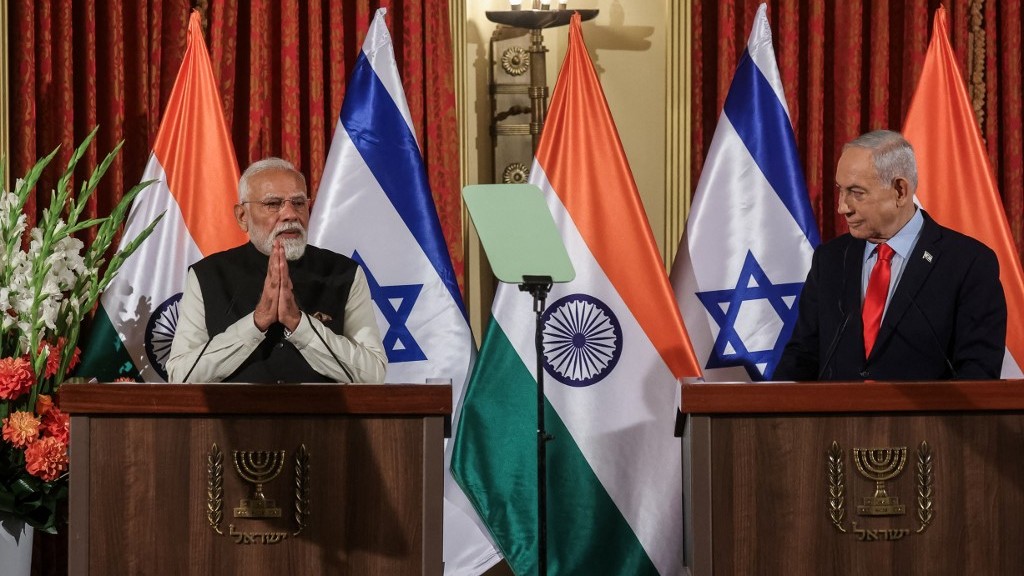
A bombshell new investigation from Amnesty International has uncovered that both Indian state-owned and private firms have delivered at least 2,596 consignments of arms, ammunition, and military components to Israel throughout Israel’s ongoing military campaign in Gaza. The shipments, transported between October 7, 2023, and November 30, 2025, included a wide range of lethal and strategic materiel bound for major Israeli military suppliers, the report confirms. Among the items delivered were machine gun parts, 155mm high-explosive artillery shells supplied to Israeli defense giant Elbit Systems, and explosive warheads for SkyStriker kamikaze drones — a variant of which has already been recovered from the rubble of Khan Younis, the devastated southern Gazan city. Ammunition breakdowns from the analysis show 564,970 explosive ordnance components, including drone warheads and artillery shell casings; 390,516 parts for military-grade small arms; and 298 armored vehicle components sent to large Israeli contractors that supply the Israel Defense Forces. As of July 29, 2026, the confirmed Palestinian death and injury toll from Israel’s military operation, launched in the wake of the October 7, 2023, Hamas-led attacks on southern Israel, stands at more than 247,300 people. Titled *Made in India: The Supply of Weapons and Ammunition to Israel*, the report was published Thursday and notes that its calculations rely on an intentionally conservative counting methodology, meaning the actual scale of India’s role in Israel’s military supply chain is almost certainly larger than the numbers published. This new report is not the first allegation of Indian material support for Israel’s actions in Gaza: prior investigations have already claimed New Delhi authorized deliveries of combat drones, bombs, and weapons components to Israel in the months after October 2023. Back in May 2026, the Palestinian-led Boycott, Divestment and Sanctions (BDS) movement and advocacy group No Harbour for Genocide (NHG) issued a warning about what they described as a “flood” of Indian military supplies flowing to Israel. Speaking to Middle East Eye at the time, an NHG spokesperson explained that even with Israel’s robust domestic defense manufacturing sector, it still depends on imported specialized components, ranging from high-tech aerospace materials to bulk industrial inputs like military-grade steel. A separate earlier investigation by Al Jazeera, which analyzed Israeli Tax Authority import data, reached similar conclusions, finding that India ranked as the second-largest exporter of military-related goods to Israel between October 2023 and October 2025. Al Jazeera also noted that the dataset only captured a portion of total arms transfers, and could not definitively confirm that all shipped items were ultimately used in military operations in Gaza. For its part, Amnesty’s research team built its analysis around shipments classified under specific Harmonized System (HS) codes, the global standard for customs trade classification. The team focused on HS codes 9301–9307, which cover all categories of weapons, ammunition, and their associated parts and accessories, as well as HS code 8710, which applies to armored and combat vehicles and their components. To avoid overcounting, researchers excluded any shipments marked only with internal product or part numbers where the military or civilian nature of the goods could not be confirmed. The analysis also excluded hundreds of shipments of dual-use small arms components, as well as weapons and parts intended for anti-missile defense systems. This strict filtering is what leads Amnesty to conclude that its findings underrepresent the full scope of Indian military supply to Israel. Even with these limitations, the investigation confirms that multiple Indian companies, including state-owned defense enterprises, are actively involved in the supply of military goods to Israel. Amnesty says it contacted nine companies and the Indian government for comment ahead of publication, but received no responses before the report was released. Agnes Callamard, Secretary General of Amnesty International, emphasized in an official statement that following the International Court of Justice’s (ICJ) provisional measures ruling, which recognized a plausible risk of genocide against Palestinians in Gaza, Indian authorities cannot reasonably claim they were unaware that authorizing and enabling arms transfers to Israel carries a major risk of facilitating violations of international law. Callamard added that as the Israeli military continues to inflict mass death and widespread suffering across Gaza, Indian companies continue to profit from supplying critical components and munitions to Israel’s defense sector. Bilateral ties between India and Israel have expanded dramatically over the past decade, driven by the leadership of Indian Prime Minister Narendra Modi and former Israeli Prime Minister Benjamin Netanyahu. Today, India is the single largest buyer of Israeli weapons globally, and dozens of major Israeli arms manufacturers have opened production facilities in India via joint ventures with domestic Indian firms. Earlier this year, during an official visit by Modi to Israel, the two nations elevated their bilateral relationship to a Special Strategic Partnership for Peace, Innovation and Prosperity. Since that announcement, cooperation has deepened further, with multiple new memorandums of understanding signed and ongoing discussions about potential new defense projects, including a plan for India to manufacture Iron Dome interceptor missiles for Israel. Diplomatically, the Indian government has emerged as one of Israel’s most consistent international supporters. New Delhi has declined to join South Africa’s genocide case against Israel at the ICJ, rejected international calls to implement an arms embargo on Israel, and cracked down on pro-Palestine protest and activism within its own borders. In September 2024, when Indian civil society groups petitioned the country’s Supreme Court to order a halt to arms exports to Israel, the court dismissed the case, ruling that foreign policy decisions fall exclusively within the executive branch’s authority, not the judiciary’s. Indian External Affairs Minister Subrahmanyam Jaishankar has repeatedly defended the country’s arms export policy, framing it as rooted in India’s national interest. “The issue of India’s exports, including India’s exports of anything which directly or indirectly has any military implications, is guided by our national interest and by our commitments to various regimes,” Jaishankar stated in December 2024. He added, “Where Israel is concerned, it is a country with which we have a strong record of cooperation in national security. It is also a country that has stood by us at different moments when our national security was under threat.”