For decades, global discourse about China’s extraordinary economic rise has been trapped in a rigid ideological binary. Critics and analysts alike have framed the country’s transformation into the world’s second-largest economy as either a triumph of communist central planning or a quiet embrace of unadulterated capitalism hidden behind a socialist political banner. But as this analysis argues, both of these competing narratives miss a far more important and transformative reality at the heart of China’s modern development.
Modern China’s growth was not built on a pure application of either communist ideology or free-market capitalism. Instead, it has evolved a unique hybrid framework that merges the innovative, competitive dynamism of capitalist markets with the large-scale, long-term organizational capacity of a strong centralized state. The author dubs this model “capunism”: a system that draws key elements from both classical capitalism and communist state structure, with neither ideology defining the entire model.
Capunism can be clearly defined as a strategic combination of capitalism’s ability to drive grassroots innovation and a strong state’s capacity for coordinated long-term planning. Far from being an endorsement of authoritarianism or a rejection of free markets, the model addresses a critical gap exposed by the modern artificial intelligence economy: neither isolated state control nor unregulated free markets alone can meet the complex demands of 21st-century technological progress.
In fact, the defining question of the 21st century is no longer whether capitalism or communism is the superior global system. Instead, the core question now is whether a nation possesses the institutional flexibility to merge strategic state leadership with competitive private markets. Capunism is not a half-hearted ideological compromise between capitalism and socialism; it is a purpose-built institutional response tailored to the unique requirements of the AI age.
Why is this hybrid model uniquely suited to succeed in the AI era? The AI revolution differs fundamentally from the industrial revolution that came before it. Unlike 19th-century manufacturing, which could thrive with either isolated market activity or limited state planning, cutting-edge AI development requires an integrated national ecosystem that combines advanced semiconductor manufacturing, hyperscale data centers, abundant low-cost energy, nationwide high-speed digital infrastructure, top-tier academic research institutions, foundational scientific investment, cloud computing networks, and a workforce of millions of highly skilled engineers. No single private market actor, and no purely centralized state planning apparatus, can deliver all these interconnected components efficiently on its own.
As a result, the nations best positioned to lead the global AI economy will be those that can successfully pair robust state capacity with market-driven dynamism: states that set clear long-term strategic direction, while allowing competitive markets, entrepreneurs, and private firms to experiment and innovate. The AI economy demands both elements, and the hybrid model delivers this balance.
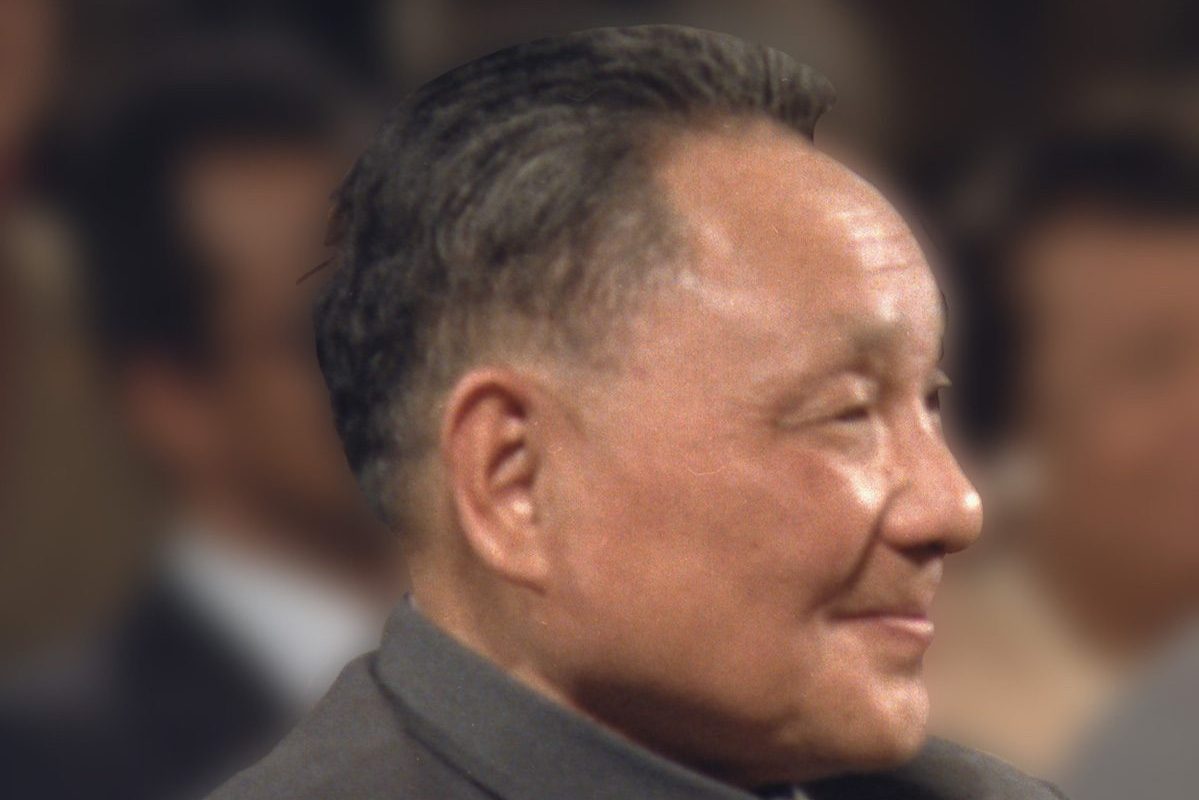
China’s decades-long growth model offers one prominent example of this approach in practice. Since the launch of market-oriented reforms under Deng Xiaoping in the 1980s, China has structured its economy to combine centralized political authority with expanding private markets, independent enterprise, and long-term national industrial planning. Regardless of one’s stance on China’s political system, the country’s track record demonstrates that strategic state coordination and competitive market innovation can coexist successfully within a single economic framework – and this combination is proving particularly effective in the AI era.
Recent high-profile milestones underscore this effectiveness. In one notable example, Chinese AI firm Moonshot AI launched its large language model Kimi K3, which outperformed Anthropic’s leading industry model Claude 3 (cited as Fable 5 in the original text) on standardized coding benchmarks. On August 3, Hugging Face CEO Clément Delangue publicly noted that China is making rapid gains in the global AI race through its open-weight model development, and could close the gap with leading U.S. frontier AI developers as early as 2026.
This progress in AI comes alongside reports that China has begun domestic production of deep-ultraviolet (DUV) lithography systems – a critical core technology for advanced semiconductor manufacturing, and one of the final key components that China previously relied on Western suppliers to provide. Combined with Kimi K3’s benchmark performance, these advances reinforce the core argument that the hybrid model of state-directed strategic coordination and market-driven competition – capunism – delivers tangible results in the AI age.
Critics of state intervention often argue that competitive free markets naturally allocate resources more efficiently than any state-led plan. While this holds true for many traditional sectors of the economy, the unique scale of AI infrastructure development exposes coordination challenges that isolated markets cannot solve. No single private company can independently build out a national electric grid, a complete domestic semiconductor supply chain, and train a workforce of millions of specialized engineers all on its own. These transformative investments require decades of long-term planning and cross-sector coordination that far exceed the short-term incentive structures of individual private firms. Markets remain irreplaceable for driving iterative innovation, but cutting-edge innovation in AI increasingly depends on foundational, strategic public investment to get off the ground.
Looking forward, the central axis of global competition in the AI era will not be capitalism versus communism. It will be institutional capability versus institutional stagnation. Nations that can adapt their frameworks to combine strong state capacity with dynamic private markets will gain a decisive strategic advantage over countries that cling rigidly to either pure market fundamentalism or exclusive centralized planning – a gap that will only widen as the AI revolution accelerates.